Master the Art of Sauce Making: Basic Techniques (2025): How to Make Basic Sauces Like a Pro

Why Sauces Matter in Cooking
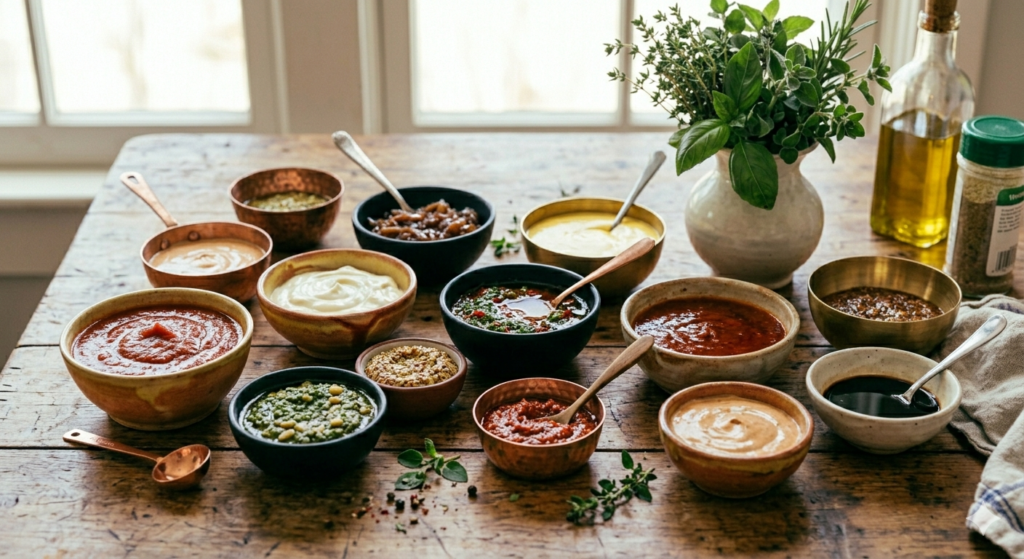
Sauces are one of the most important elements in cooking. They add moisture, enhance flavor, and bring balance to a dish. A properly made sauce can turn simple ingredients into a rich and satisfying meal. Whether you are preparing pasta, meat, or vegetables, sauces help tie everything together.
For beginners, learning how to make sauces is one of the fastest ways to improve cooking skills. Instead of relying on packaged options, you gain control over flavor, texture, and quality. Over time, this skill allows you to experiment and create your own variations.
If you are new to cooking, it is helpful to first understand the basics from how to cook properly before focusing on sauces.
The Five Mother Sauces: Foundation of Culinary Excellence
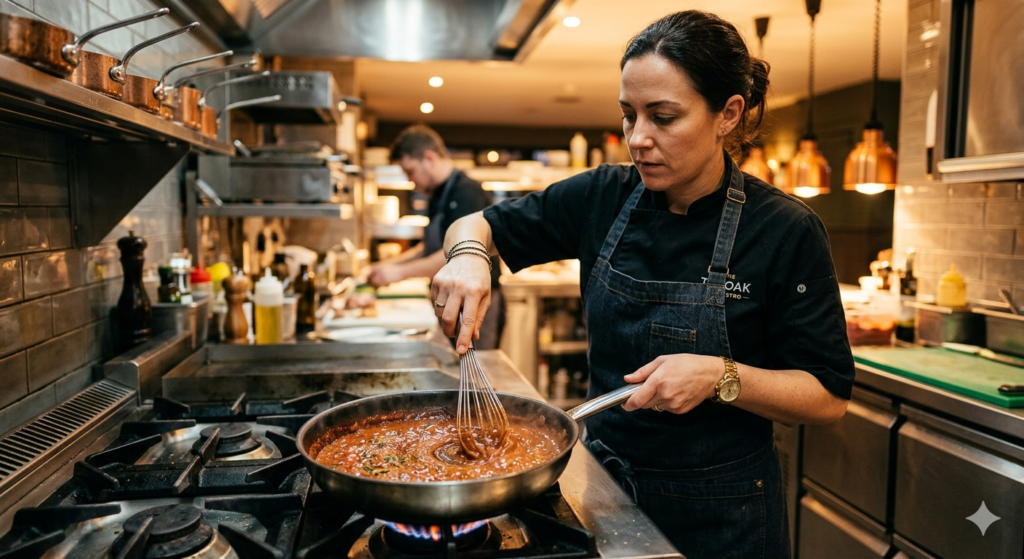
In classical cooking, five sauces form the base for hundreds of variations. These are known as the mother sauces. Mastering them gives you the ability to create countless dishes.
1. Béchamel (White Sauce)
Béchamel is a smooth, creamy sauce made from milk and a white roux. It is widely used in dishes such as pasta, lasagna, and baked casseroles.
Ingredients:
- 2 tablespoons butter
- 2 tablespoons all-purpose flour
- 2 cups whole milk
- Salt and white pepper
- Pinch of nutmeg (optional)
The key to a successful béchamel is patience. Melt the butter gently, add the flour, and cook briefly to remove the raw taste. Then slowly add warm milk while whisking continuously. This prevents lumps and creates a smooth consistency.
Accurate ratios are essential here, so understanding measuring ingredients accurately will help you achieve consistent results.
2. Velouté (Light Stock-Based Sauce)
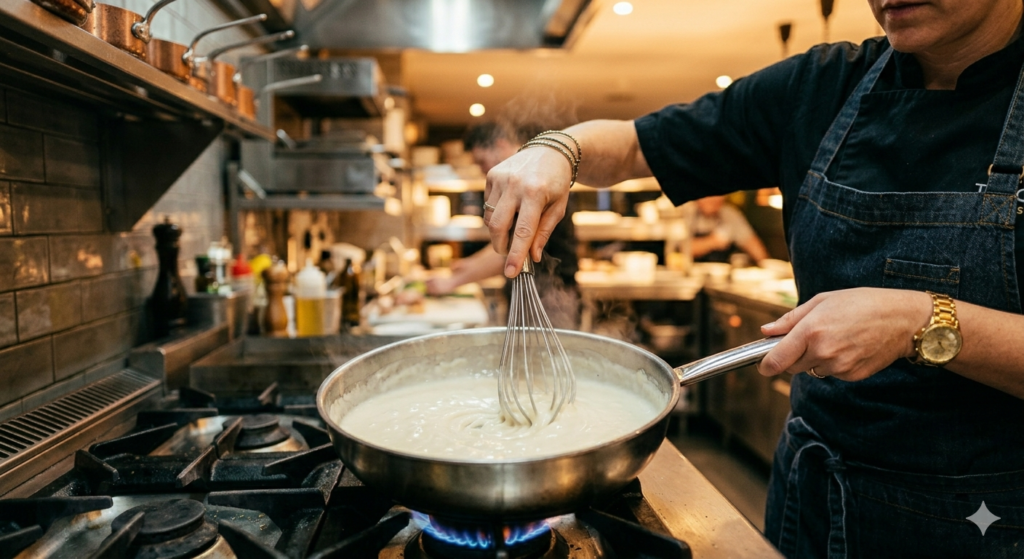
Velouté is a delicate sauce made from light stock combined with a roux. It has a subtle flavor and serves as a base for many other sauces.
Ingredients:
- 2 tablespoons butter
- 2 tablespoons flour
- 2 cups light stock
- Salt and white pepper
The process is similar to béchamel, but instead of milk, you use stock. Gradually adding warm liquid while whisking ensures a smooth finish.
Temperature control is important when making velouté. Applying knowledge from kitchen temperature basics helps prevent uneven cooking.
3. Espagnole (Brown Sauce)
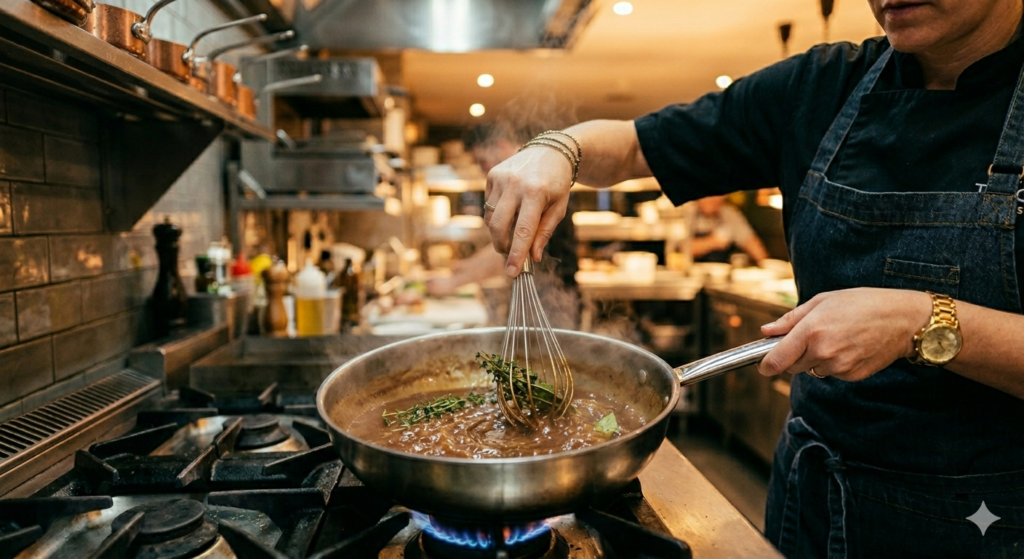
Espagnole is a rich and complex sauce made from brown stock, vegetables, and a dark roux. It is commonly used with meat dishes.
Ingredients:
- 2 tablespoons butter
- 2 tablespoons flour
- 2 cups brown stock
- Mirepoix (carrots, onions, celery)
- Tomato paste
- Herbs (thyme, bay leaf)
This sauce requires slow cooking to develop depth of flavor. Browning the vegetables properly is essential, as it builds the foundation of the sauce.
Preparation is key when making complex sauces. Using mise en place ensures all ingredients are ready before cooking begins.
4. Hollandaise (Emulsion Sauce)
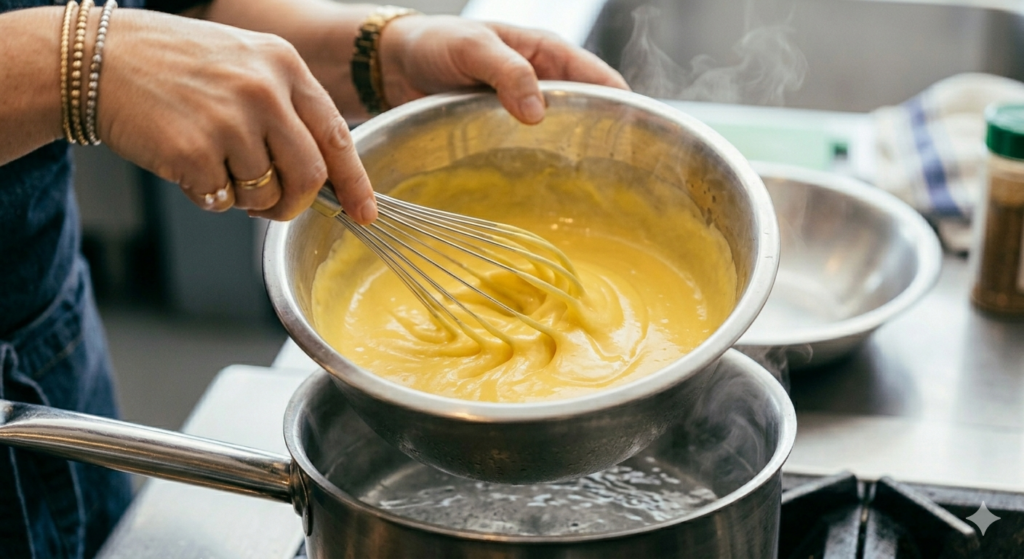
Hollandaise is a smooth and rich sauce made by emulsifying egg yolks and butter. It is one of the most challenging sauces to master.
Ingredients:
- 3 egg yolks
- 1/2 cup clarified butter
- 1 tablespoon lemon juice
- Salt and white pepper
The key to success is controlling the temperature and whisking continuously. Too much heat can cause the sauce to break, while too little heat prevents thickening.
Practicing this sauce improves your understanding of emulsification and temperature control.
5. Tomato Sauce
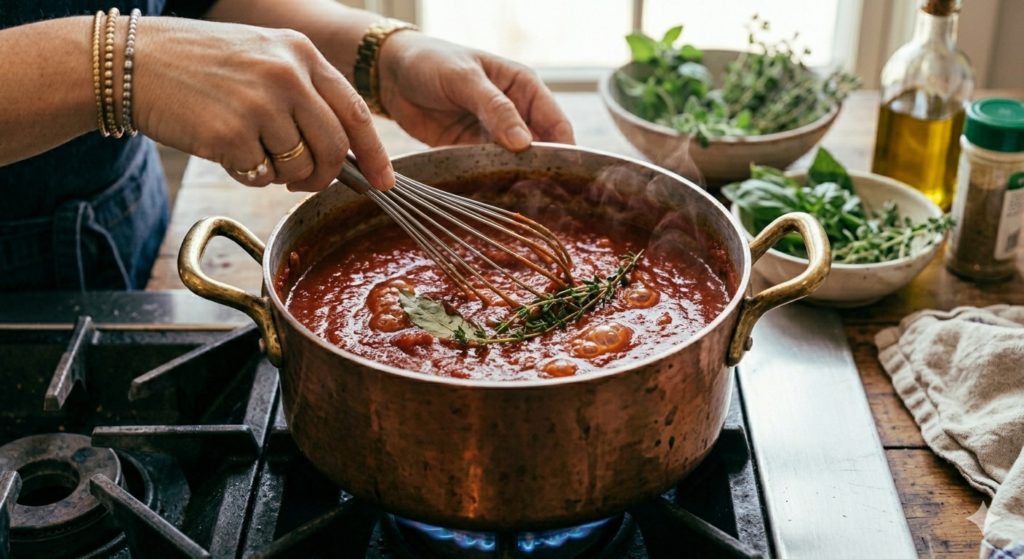
Tomato sauce is one of the most versatile sauces. It can be simple or complex depending on how it is prepared.
Ingredients:
- Olive oil
- Onion, finely chopped
- Garlic
- Tomatoes (fresh or canned)
- Fresh basil
- Salt and pepper
- Pinch of sugar (optional)
Cooking tomato sauce slowly allows flavors to develop fully. Balancing acidity with sweetness is key to achieving a rich taste.
Combining this sauce with simple recipes helps reinforce skills learned from beginner cooking techniques.
Essential Sauce-Making Techniques
Mastering a few core techniques will help you create almost any sauce with confidence.
Roux Basics
A roux is made by cooking equal parts fat and flour. It is used to thicken sauces and soups.
Types of roux include:
- White roux for light sauces
- Blonde roux for mild flavor
- Brown roux for deeper taste
The longer the roux cooks, the darker and more flavorful it becomes.
Reduction Techniques
Reduction involves simmering liquid to concentrate flavor. This technique is essential for creating rich sauces.
Use a wide pan to allow faster evaporation. Maintain steady heat and stir occasionally to prevent burning.
Understanding heat levels from kitchen temperature control helps improve this technique.
Emulsification
Emulsification combines ingredients that normally do not mix, such as oil and water.
To create a stable emulsion:
- Add ingredients slowly
- Whisk constantly
- Maintain a steady temperature
This technique is used in sauces like hollandaise and vinaigrettes.
Building Flavor in Sauces
Flavor development is what separates average sauces from excellent ones. To build flavor effectively:
- Start with aromatics like onions and garlic
- Use quality stocks and fresh ingredients
- Season gradually throughout cooking
- Taste and adjust as needed
Layering flavors over time creates depth and complexity. Rushing this process often results in flat-tasting sauces.
Common Sauce-Making Mistakes to Avoid
Many beginners face challenges when learning sauces. Understanding common mistakes can help you improve faster.
Cooking at incorrect temperatures can cause sauces to burn or separate. Not whisking properly may lead to lumps. Adding liquids too quickly can ruin texture.
Another common issue is a lack of preparation. Organizing your ingredients using mise en place ensures a smoother cooking process.
Pro Tips for Perfect Sauces
Improving your sauce-making skills takes time and practice. These tips can help you get better results:
- Use fresh, high-quality ingredients
- Control heat carefully at every stage
- Taste frequently and adjust seasoning
- Be patient and allow flavors to develop
- Practice consistently to build confidence
Good preparation also plays a role. Using sharp tools improves efficiency, so learning knife-sharpening techniques can support your workflow.
Learn More from Experts
To deepen your understanding of classical cooking techniques, explore this guide to classic French mother sauces by the Culinary Institute of America. It explains the foundations of traditional sauces and how they form the base for countless recipes.
Conclusion
Mastering sauce-making is a valuable skill that can elevate your cooking to a professional level. By learning the five mother sauces and practicing essential techniques, you gain the ability to create a wide range of dishes.
Start with simple recipes and focus on consistency. Over time, you will develop confidence and the ability to experiment with flavors.
Next Steps
To continue improving:
- Practice one sauce at a time
- Focus on technique rather than speed
- Experiment with different ingredients
- Combine sauces with various dishes
- Build confidence through repetition
With consistent effort, sauce-making will become second nature, allowing you to create flavorful and impressive meals at home.