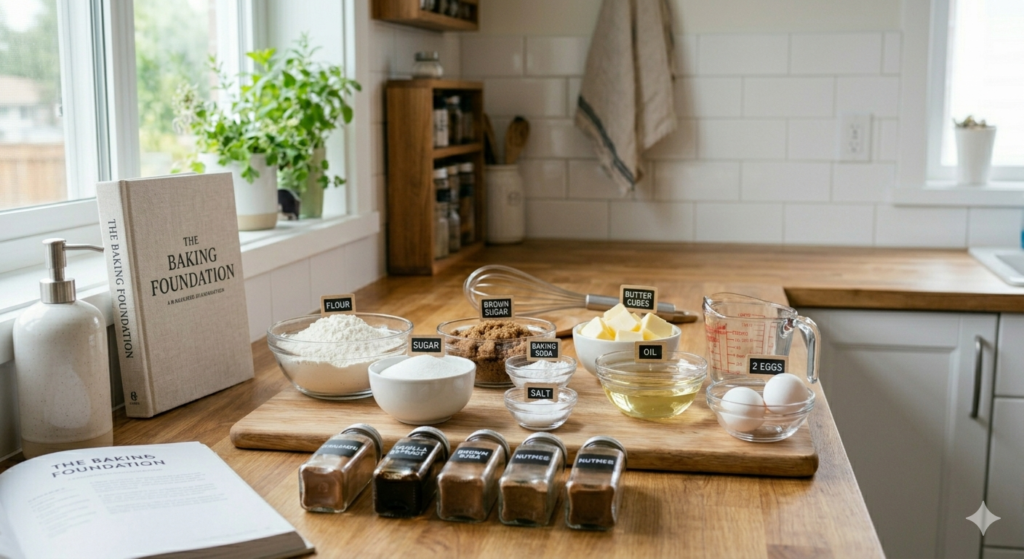
Complete Guide to Measuring Ingredients Accurately
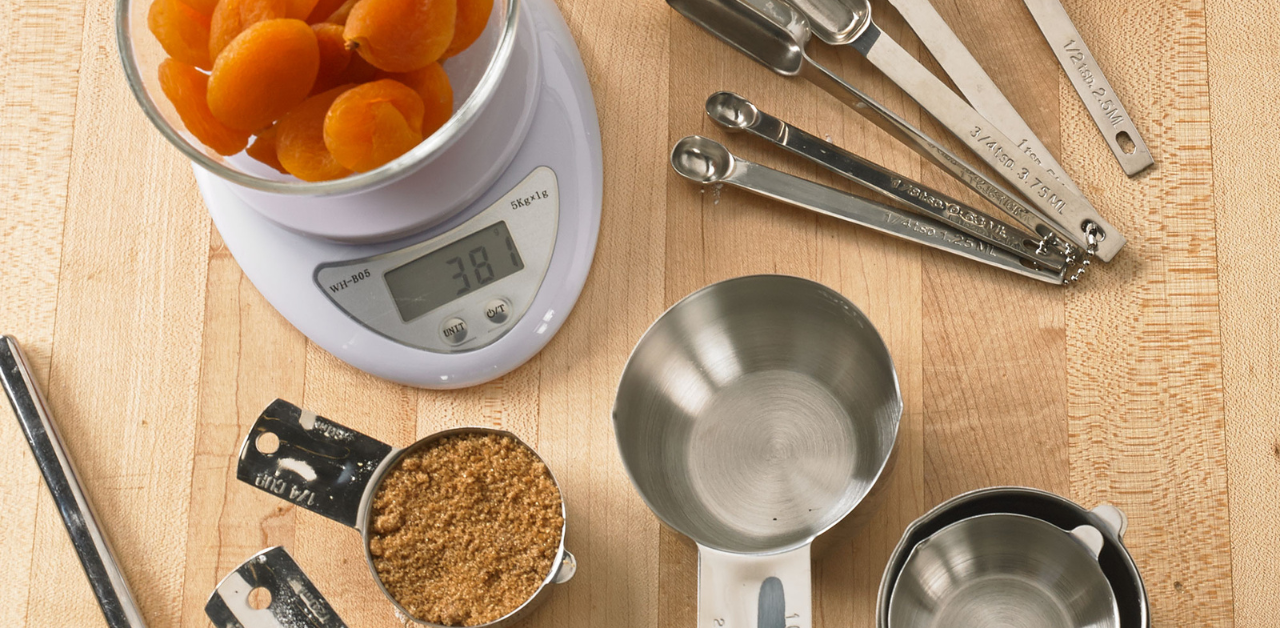
Why Accurate Measurement Matters
Accurate measurement is the foundation of successful cooking and baking. Even small differences in ingredient quantities can significantly affect the texture, flavour, and overall outcome of a dish. While experienced cooks may rely on instinct in some situations, precision is especially important for beginners who are still developing their skills.
In baking, measurement is critical because recipes depend on exact ratios. Too much flour can make a cake dense, while too little liquid can result in dry or crumbly textures. In cooking, precise measurement helps maintain consistency and balance in flavour.
If you’re just starting out, mastering measurement alongside the basics from how to cook properly will help you build strong kitchen skills from the beginning.
Essential Measuring Tools Every Kitchen Needs
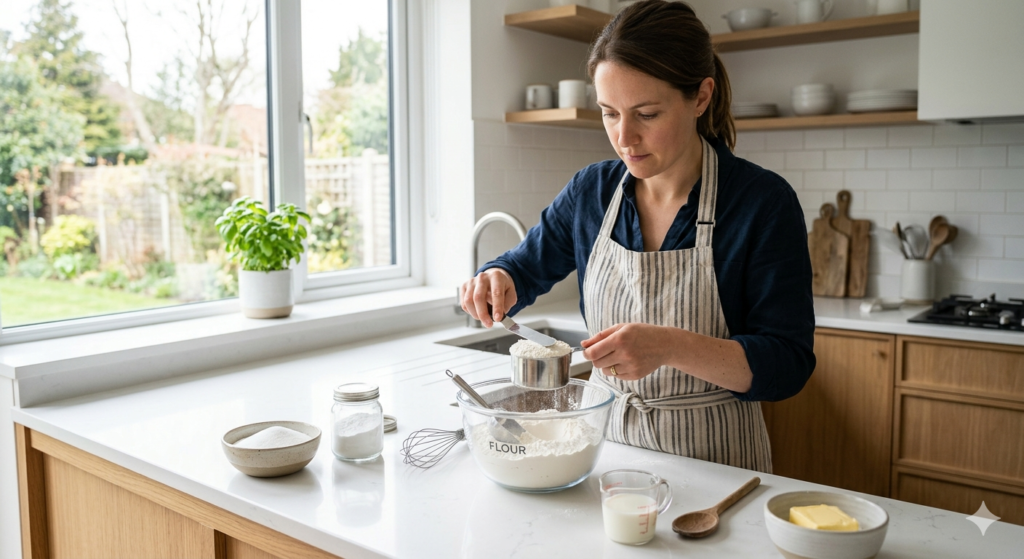
To measure ingredients accurately, you need the right tools. Using proper equipment ensures consistency and reduces errors.
Here are the essential tools every kitchen should have:
- Measuring cups for dry ingredients
- Liquid measuring cups (preferably transparent)
- Measuring spoons
- Digital kitchen scale
- Straight edge or a knife for levelling
Each tool serves a specific purpose, and using them correctly is just as important as having them.
A well-organised setup also improves efficiency. Preparing your tools in advance using mise en place helps streamline the cooking process and reduces mistakes.
How to Measure Dry Ingredients Correctly
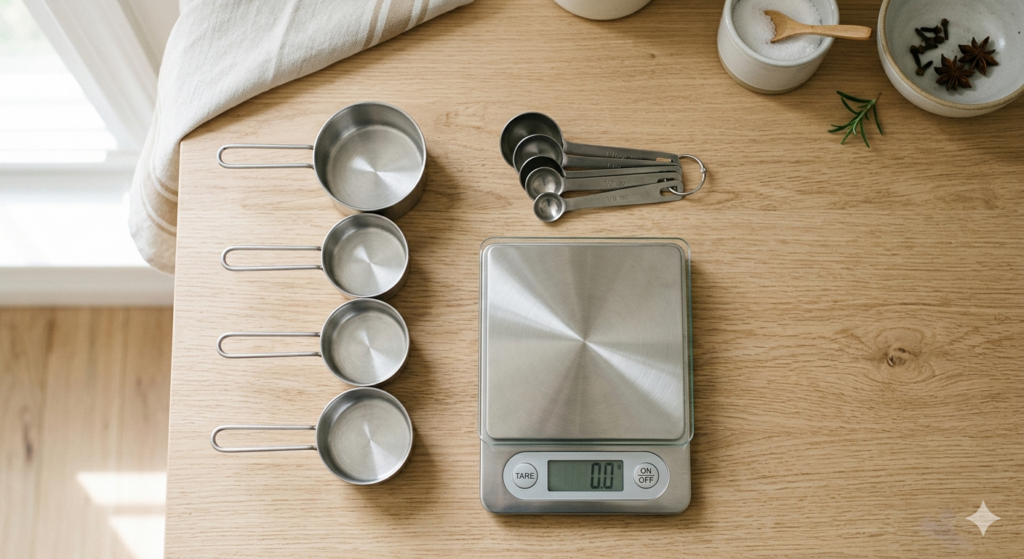
Dry ingredients such as flour, sugar, and cocoa powder require careful handling to ensure accurate measurement.
The correct method is:
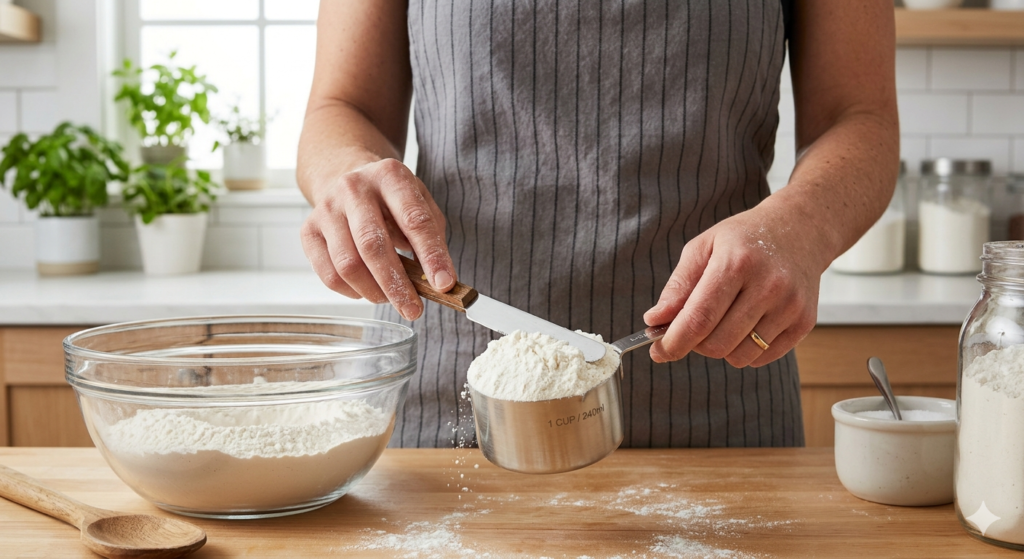
- Use a spoon to fill the measuring cup
- Do not scoop directly from the container
- Level the top with a straight edge
- Avoid shaking or tapping the cup
Scooping directly can pack the ingredient, leading to excess quantity. This is one of the most common mistakes beginners make.
Using a consistent technique ensures that your recipes turn out the same every time. Understanding these small details is part of learning essential cooking techniques that improve overall results.
Key Tips for Measuring Dry Ingredients
To improve accuracy when working with dry ingredients:
- Spoon ingredients gently into the cup
- Always level off the top
- Avoid compressing ingredients
- Use a kitchen scale for better precision
Professional cooks often prefer weighing ingredients instead of using volume measurements. This removes variation and improves consistency, especially in baking.
How to Measure Liquid Ingredients Properly
Measuring liquids requires a different approach than dry ingredients. Accuracy depends on both the tool and your positioning.
Follow these steps:
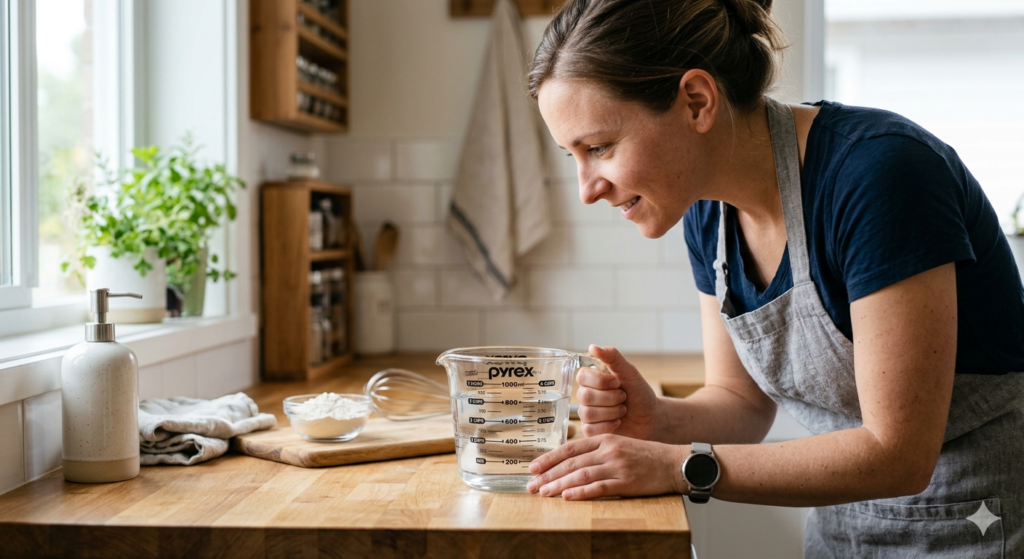
- Use a clear measuring cup with markings
- Place the cup on a flat surface
- Bend down to eye level
- Read the measurement at the lowest point of the liquid
Measuring from above can lead to incorrect readings. Taking a moment to check at eye level ensures better accuracy.
Temperature can also affect liquids, especially in recipes involving sauces. Learning basic sauce-making will help you understand how liquid measurements influence texture and consistency.
Measuring Sticky Ingredients the Right Way
Sticky ingredients like honey, molasses, and syrup can be difficult to measure accurately because they cling to surfaces.
To make this easier:
- Lightly coat the measuring cup with oil
- Use a silicone spatula to scrape out the contents
- Allow ingredients to flow naturally without forcing
This method ensures that you get the full amount without waste. It also keeps your measurements consistent.
Why Precision Matters Most in Baking
Baking is more scientific than cooking. Recipes rely on exact measurements and chemical reactions between ingredients.
For best results:
- Follow measurements exactly
- Avoid substitutions unless necessary
- Use a digital scale whenever possible
- Stick to one measurement method consistently
Even small changes can affect the final product. For example, too much flour can make baked goods dense, while too little sugar can affect browning and flavour.
Temperature also plays a major role in baking success. Understanding kitchen temperatures helps you control baking results more effectively.
Baking Measurement Essentials
To improve your baking results:
- Use weight measurements instead of volume when possible
- Follow the recipe carefully
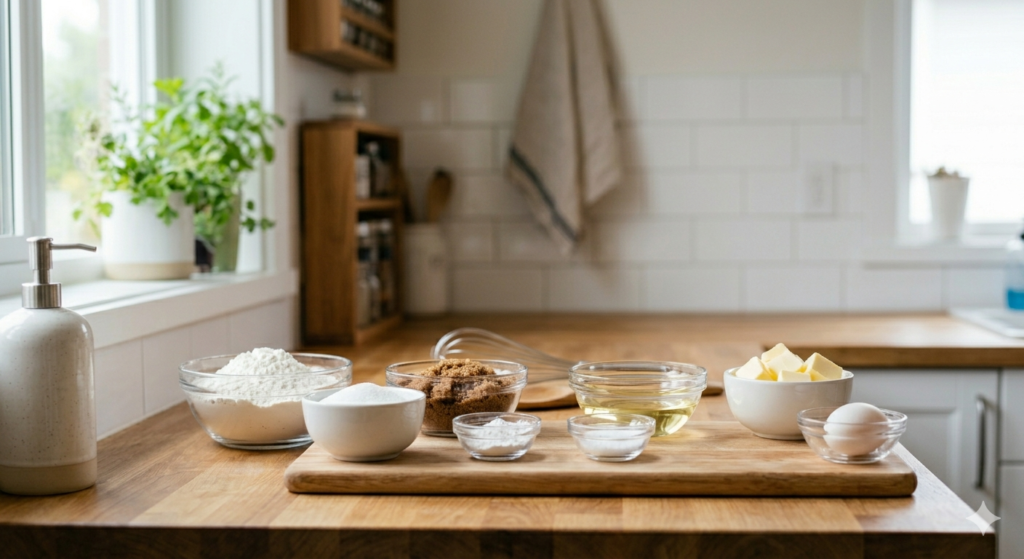
- Measure ingredients before starting
- Keep your tools consistent
Combining proper measurement with good preparation habits, such as mise en place, ensures a smoother workflow and better outcomes.
Common Measurement Conversions
Knowing basic conversions helps when adjusting recipes or working without certain tools.
Here are some essential conversions:
- 3 teaspoons = 1 tablespoon
- 16 tablespoons = 1 cup
- 1 cup = 8 fluid ounces
Understanding these relationships allows you to scale recipes and adapt more easily.
Common Measuring Mistakes to Avoid
Many cooking mistakes come from inaccurate measurements. Avoid these common errors:
Using the wrong measuring tool can lead to incorrect quantities. Always use dry cups for dry ingredients and liquid cups for liquids.
Not levelling ingredients properly can result in excess amounts, especially with flour.
Guessing measurements instead of following the recipe reduces consistency.
Skipping preparation often leads to rushed measuring and mistakes. Organising your ingredients beforehand using mise en place helps prevent this.
Learn More from Trusted Sources
For accurate measurement standards and better consistency in your cooking and baking, refer to the ingredient weight chart by King Arthur Baking. This trusted resource helps you understand precise conversions and improve your results in the kitchen.
View the Ingredient Weight Chart on King Arthur Baking
Conclusion
Accurate measurement is one of the simplest ways to improve your cooking and baking results. By using the right tools and techniques, you can create consistent, high-quality dishes every time.
Small improvements in measurement can lead to noticeable differences in texture, flavour, and presentation. With practice, these techniques will become second nature.
Next Steps
To continue improving your kitchen skills:
- Practice measuring ingredients regularly
- Use a digital scale for better accuracy
- Learn how different ingredients behave
- Combine measurement with temperature control
- Build strong preparation habits
As you gain experience, you’ll notice that precision becomes easier and more natural. Mastering this skill is an important step toward becoming a confident and capable cook.