
20 Easy Fresh Bread Recipes: Homemade & Irresistible
Introduction
There are few experiences in domestic life as deeply satisfying as pulling a loaf of freshly baked bread from the oven. The transformation of flour, water, yeast, and salt into a golden, fragrant, steam-releasing loaf that fills the kitchen with the most welcoming aroma in cooking is one of the great pleasures available to any home baker — a pleasure that requires, at its most fundamental, nothing more than a mixing bowl, an oven, and a little patience.
Bread baking has experienced a remarkable renaissance in recent years. The pandemic-era sourdough revolution brought millions of people to the craft for the first time, discovering not just a rewarding hobby but a meditative, deeply satisfying practice that reconnects the baker to one of the oldest and most fundamental of human food traditions. Bread has been central to human civilization for at least 14,000 years — and yet its essential nature remains unchanged: flour, water, a leavening agent, and heat.
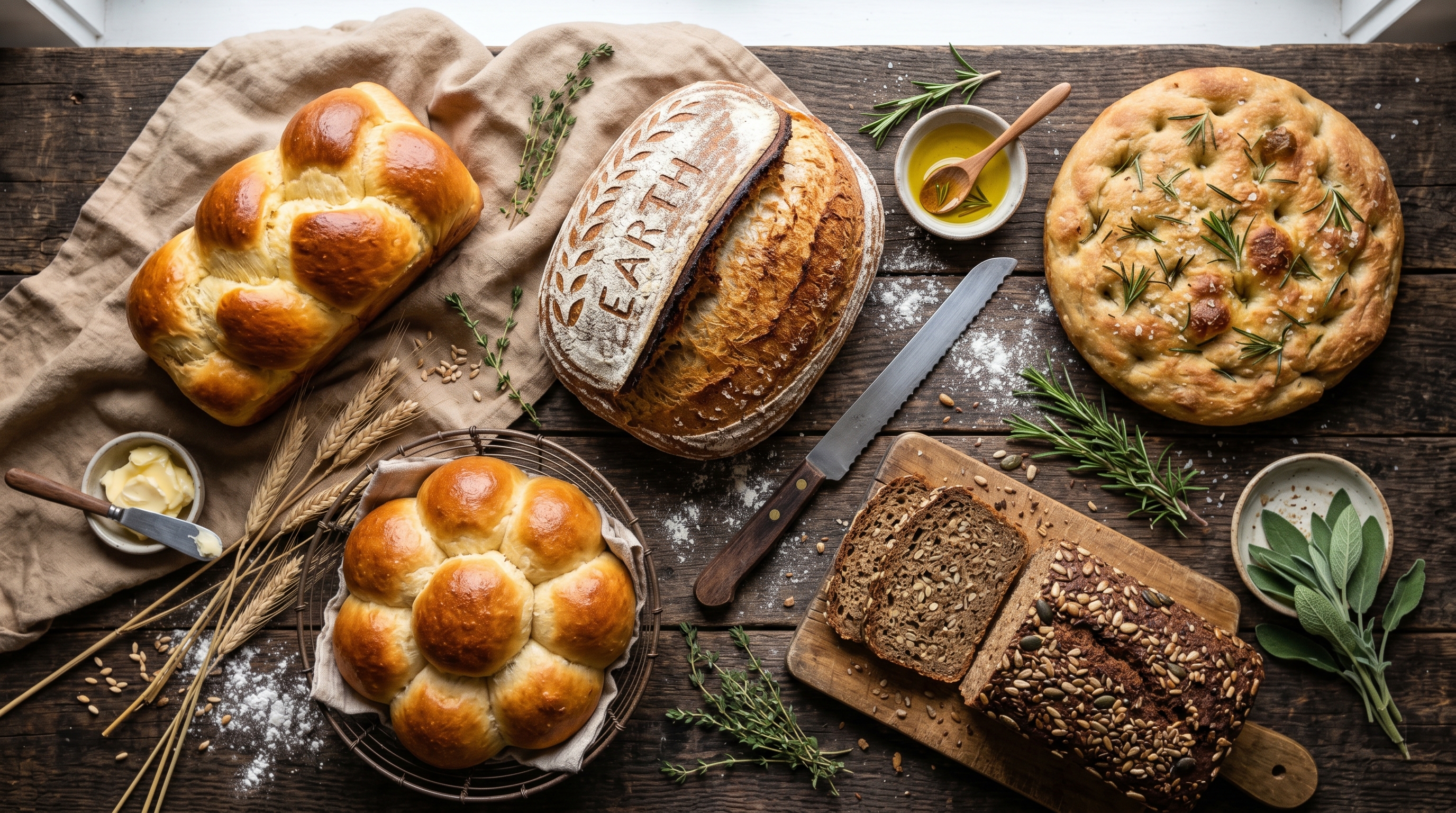
The world of bread is vast and endlessly varied. Crusty, open-crumbed sourdough. Pillowy, buttery brioche. Flat, blistered focaccia fragrant with olive oil and herbs. Quick, tender soda bread with its characteristic tang. Airy, golden dinner rolls. Dense, nutty whole grain loaves. Flat, charred naan from a screaming hot pan. Soft, elastic pita that puffs in the oven. Every bread tradition in the world represents centuries of accumulated wisdom about flour, water, heat, and time — and every one of them is achievable in a home kitchen.
In this guide, we have compiled 20 of the best, most delicious, and most genuinely achievable fresh bread recipes — spanning no-knead and yeasted loaves, flatbreads and rolls, enriched and rustic preparations, quick breads and long-fermented artisan creations. Whether you are baking bread for the first time or adding to an established repertoire, this collection has something genuinely worth making.
Let’s bake.
The Fundamentals of Great Bread
Flour: The Foundation
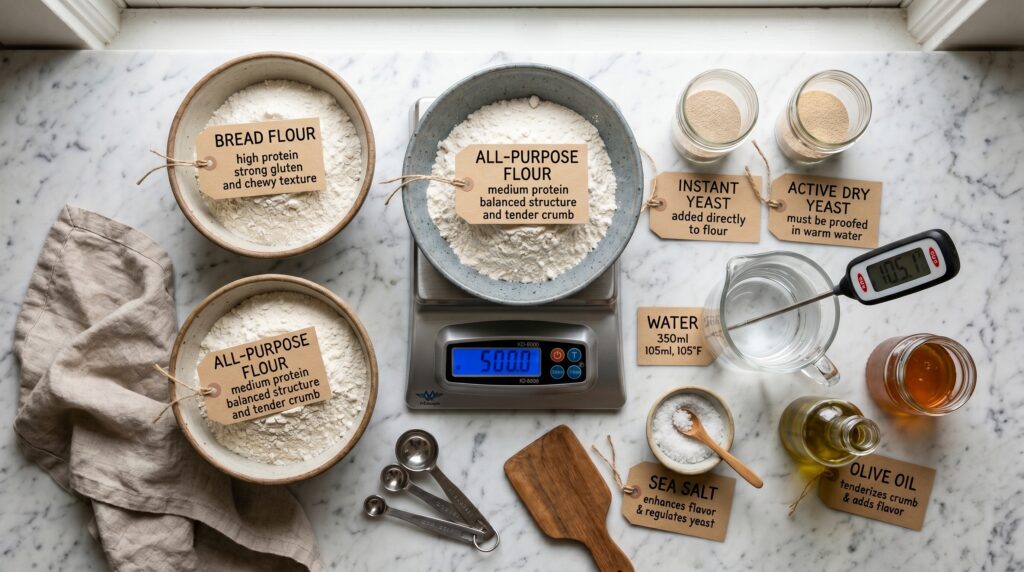
Bread flour (strong flour): Higher protein content (11–13%) than plain flour. The protein develops into gluten when hydrated and worked — the elastic network that traps the CO2 produced by yeast and gives bread its structure. Use for yeasted loaves where chew and structure are desired.
Plain (all-purpose) flour: Lower protein (9–11%). Produces a more tender, less chewy bread. Used in quick breads, flatbreads, and recipes where a lighter, less dense texture is preferred.
Whole wheat flour: Includes the bran and germ of the wheat grain. Produces a denser, nuttier, more nutritious bread. Often combined with white bread flour to balance nutrition with structure.
00 flour: Finely milled Italian flour, softer than bread flour. Used in pizza and some flatbreads for an exceptionally smooth, extensible dough.
Yeast: Understanding Your Leavening
Instant dried yeast: Can be added directly to dry ingredients without pre-activation. The most reliable and convenient choice for home bakers.
Active dry yeast: Requires activation in warm water (38°C/100°F) with a pinch of sugar for 5–10 minutes before using. The bubbling foam indicates the yeast is alive and active.
Fresh yeast: Highly active, produces a more complex flavor than dried. Short shelf life. If unavailable, use half the quantity of instant dried yeast as a substitute.
Natural leavening (sourdough starter): Wild yeast and bacteria cultivated over days or weeks. Produces the characteristic tang, complex flavor, and open crumb of sourdough. Covered in recipe 1.
Water Temperature
Water temperature is critical in yeast bread making — it directly affects how quickly and how actively the yeast ferments. The ideal temperature for activating yeast is 38°C (100°F) — warm but not hot. Water above 49°C (120°F) kills yeast. Water too cold produces sluggish, slow fermentation.
The Windowpane Test
To test whether bread dough has been kneaded sufficiently: stretch a small piece between your fingers. Properly developed dough can be stretched thin enough to see light through without tearing — the “windowpane.” Underdeveloped dough tears immediately. This test works for any yeasted bread dough.
Precise measurement of flour is essential for consistent bread results. Our Complete Guide to Measuring Ingredients Accurately explains the correct measurement approach for bread baking.
20 Easy Fresh Bread Recipes
Classic Yeasted Loaves
1. No-Knead Artisan Bread
Prep time: 10 minutes + 12–18 hours rising | Cook time: 45 minutes | Makes: 1 loaf
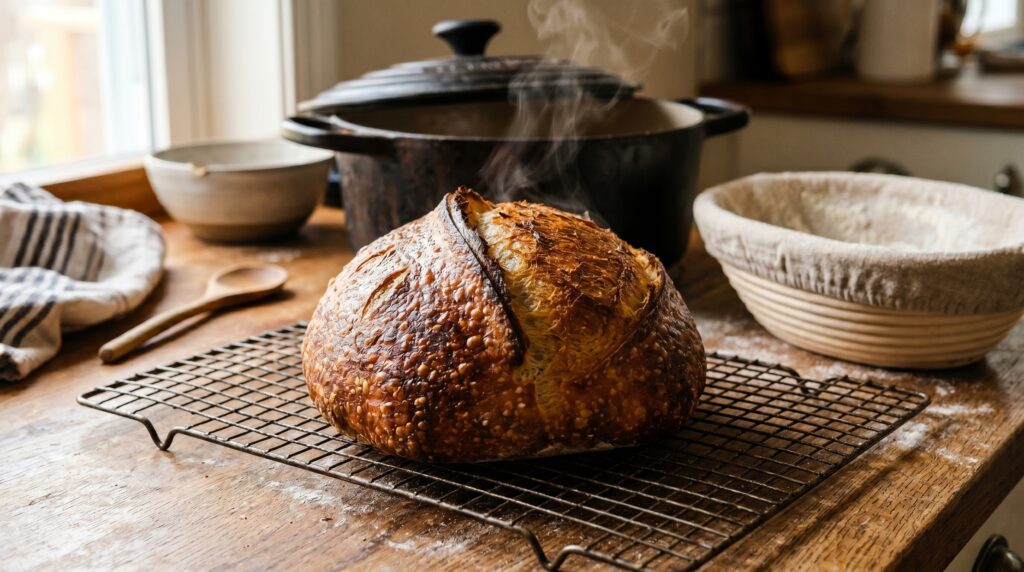
No-knead artisan bread is the recipe that changed home bread baking — Jim Lahey’s revolutionary method uses a long, slow overnight fermentation instead of kneading to develop gluten, producing a bakery-quality loaf with an open, airy crumb and a shattering, blistered crust that genuinely rivals professional sourdough. Minimum effort. Maximum result.
Key ingredients: Bread flour (400g), instant yeast (¼ tsp — a tiny amount for a slow, long fermentation), sea salt (1½ tsp), water (300ml, room temperature)
Method: Combine flour, yeast, and salt. Add water and stir until a shaggy dough forms — do not knead. Cover with plastic wrap and rest at room temperature for 12–18 hours until the surface is bubbly and the dough has roughly doubled.
Shaping and second rise: Turn the risen dough onto a floured surface. Fold it over itself a few times using a dough scraper or floured hands. Shape into a rough ball, place seam-side up in a floured proofing basket or bowl lined with a floured kitchen cloth. Cover and rest for 1–2 hours.
Baking in a Dutch oven: Preheat the oven and a Dutch oven inside to 230°C (450°F) for 30 minutes. Score the dough with a sharp knife or razor blade. Lower carefully into the screaming hot Dutch oven. Cover and bake for 30 minutes — the covered environment traps steam, creating the blistered crust. Remove the lid and bake for 15 more minutes until deeply golden.
What makes it special: The Dutch oven replicates the steam-injected environment of a professional bread oven — it is the single most impactful piece of equipment a home bread baker can own. The steam prevents the crust from setting too early, allowing maximum oven spring before locking into its final shape.
2. Classic White Sandwich Loaf
Prep time: 20 minutes + 2 hours rising | Cook time: 30 minutes | Makes: 1 loaf
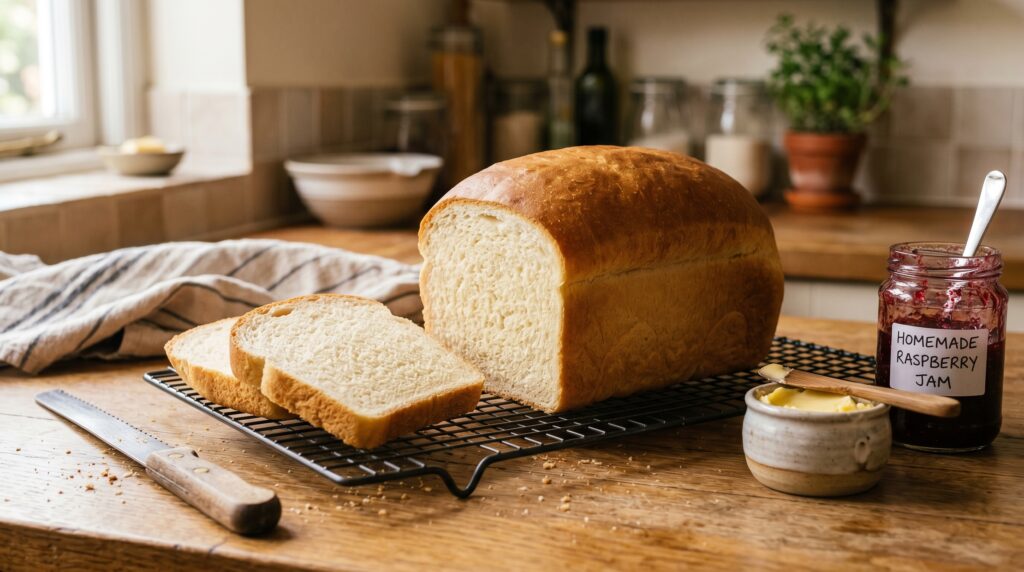
A perfect white sandwich loaf — soft enough for a gentle crust, fine-crumbed enough to slice cleanly, flavorful enough to eat with nothing but a smear of good butter — is one of the most rewarding bread baking achievements and genuinely superior to any commercial equivalent.
Key ingredients: Bread flour (500g), instant yeast (7g), caster sugar (1 tbsp), sea salt (1½ tsp), whole milk (200ml — warmed), water (150ml — warm), unsalted butter (30g — softened), vegetable oil (1 tbsp)
Method: Combine flour, yeast, sugar, and salt. Add milk, water, and softened butter. Mix to a dough and knead for 8–10 minutes until smooth and elastic. Rise in an oiled bowl, covered, for 1 hour until doubled. Knock back, shape to fit a 900g loaf tin, place in the greased tin, cover, and prove for 45 minutes until risen above the rim of the tin. Bake at 200°C (400°F) for 28–30 minutes. Tap the base — a hollow sound indicates the loaf is cooked through.
What makes it special: The milk and butter in this dough — both contributing fat and natural sugars — produce the soft, slightly enriched crumb of a proper sandwich loaf. Water-only doughs produce a crustier, chewier bread perfectly suited to artisan loaves but not to the soft-crusted sandwich format.
3. Sourdough Loaf (Beginner Method)
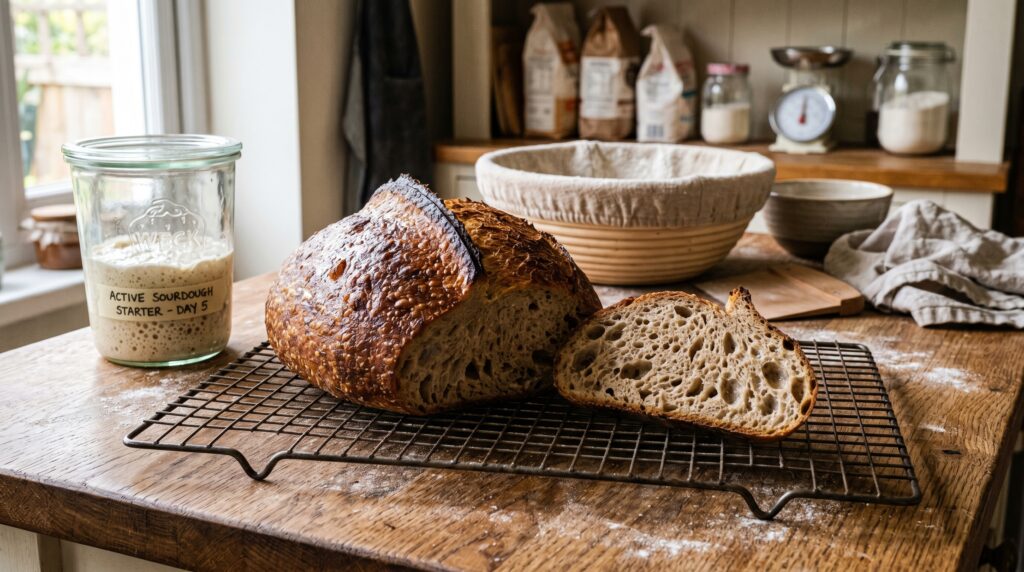
Prep time: 30 minutes + 24 hours total fermentation | Cook time: 45 minutes | Makes: 1 loaf
The beginner sourdough method breaks the process into manageable stages without compromising the result — a genuinely excellent, tangy, open-crumbed sourdough loaf using an active starter and a cold overnight retard that fits around a normal daily schedule.
Key ingredients: Bread flour (400g), active sourdough starter (80g — fed 4–6 hours before using), water (280ml), sea salt (9g)
Timeline: Morning: mix flour and water, autolyse 30 minutes. Add starter, mix, rest 30 minutes. Add salt, mix. Perform 4 sets of stretch-and-fold over 2 hours. Shape, place in proofing basket, refrigerate overnight. Next morning: bake from cold in preheated Dutch oven.
Maintaining a starter: Feed your starter with equal weights of flour and water every 24 hours. A healthy, active starter will double in size within 4–6 hours of feeding and have a pleasant, slightly tangy yeasty smell. This is the foundation of all sourdough baking.
What makes it special: The overnight cold retard — proofing the shaped dough in the refrigerator rather than at room temperature — develops a more complex, deeper flavor through the extended fermentation and produces a dough that is firmer and easier to score when cold.
4. Whole Wheat Honey Loaf
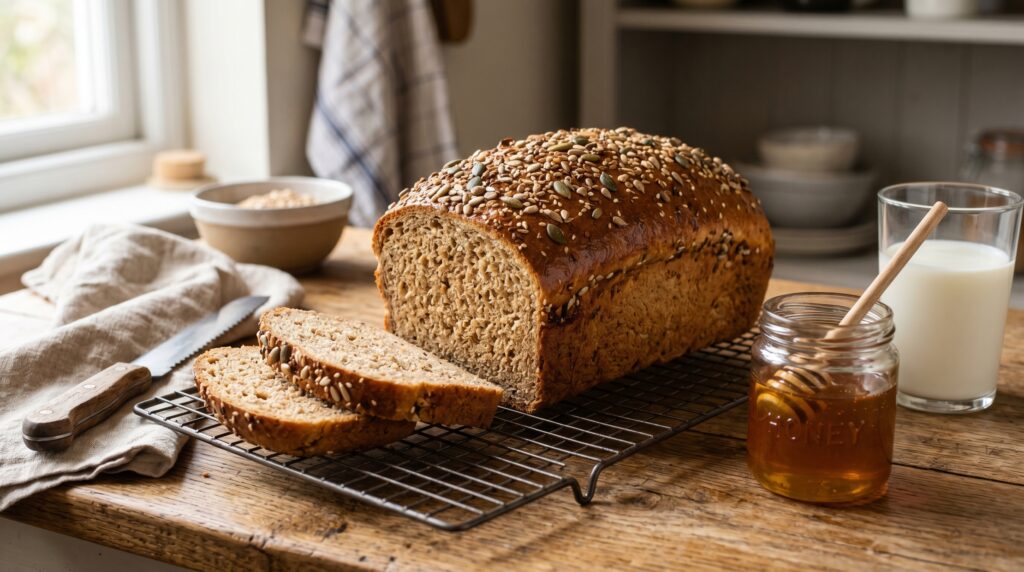
Prep time: 20 minutes + 2 hours rising | Cook time: 35 minutes | Makes: 1 loaf
Whole wheat honey loaf achieves the balance that makes whole grain baking genuinely appealing — the nutty, nutritious character of whole wheat flour combined with the natural sweetness of honey and the tenderness of butter produces a loaf that is both nourishing and genuinely delicious.
Key ingredients: Whole wheat flour (300g), bread flour (200g — combined for structure), instant yeast (7g), honey (2 tbsp), sea salt (1½ tsp), warm water (300ml), unsalted butter (30g — softened), mixed seeds (pumpkin, sunflower, sesame — for the top)
The flour blend: Pure whole wheat flour produces a very dense, heavy loaf. The 60/40 blend of whole wheat to white bread flour balances nutrition with structure — a lighter, more open crumb than pure whole wheat while retaining most of its character.
What makes it special: Honey in bread dough serves multiple functions — natural sweetener, feed for the yeast (producing a more active fermentation), and moisture retainer (the hygroscopic nature of honey keeps the bread moist for longer).
5. Milk Bread (Japanese Style)
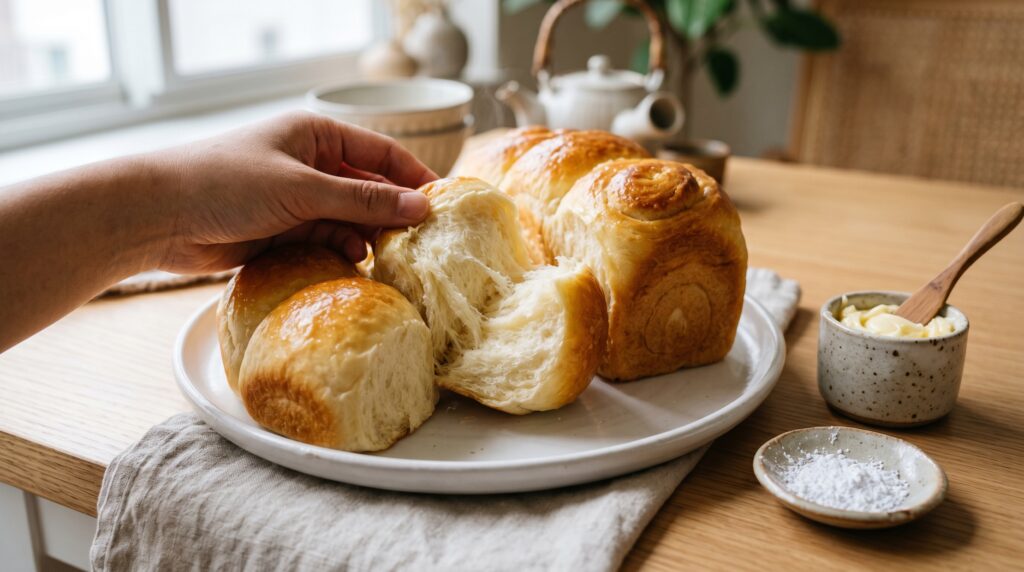
Prep time: 30 minutes + 2 hours rising | Cook time: 25 minutes | Makes: 1 loaf or 12 rolls
Japanese milk bread — using the tangzhong method (a cooked flour-water paste added to the dough) — produces a bread of otherworldly softness and tenderness that stays fresh for days. The texture is somewhere between cloud and bread — feathery, slightly sweet, and completely distinctive.
Key ingredients: Bread flour (350g), instant yeast (7g), caster sugar (40g), sea salt (1 tsp), whole milk (150ml — warm), egg (1), unsalted butter (40g — softened). Tangzhong: bread flour (25g) cooked with water (125ml) over medium heat, stirring constantly, until it thickens to a paste — then cooled before adding to the dough
The tangzhong method: The pre-cooked flour paste gelatinizes the starch, allowing it to absorb significantly more water than raw flour. This extra moisture is locked into the starch gel and releases gradually during and after baking, keeping the bread extraordinarily moist and fresh.
What makes it special: Japanese milk bread does not simply stay soft for a day — it remains genuinely soft and fresh for 3–4 days, an almost unbelievable achievement in bread baking that makes it one of the most practical as well as the most delicious breads in this collection.
Flatbreads and Quick Breads
6. Classic Focaccia
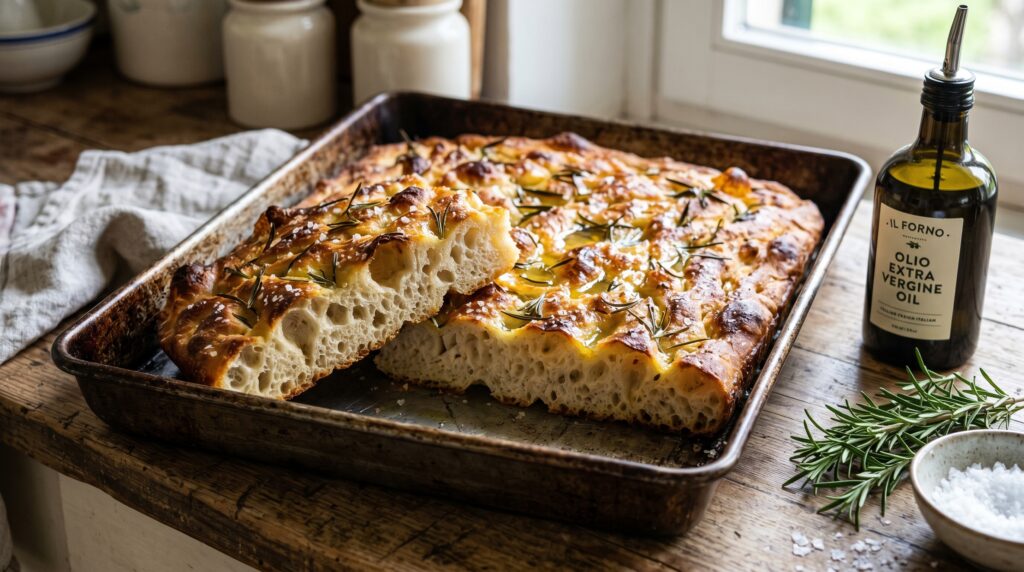
Prep time: 15 minutes + 2–4 hours rising | Cook time: 25 minutes | Makes: 1 tray
Focaccia is the most forgiving, most generous, and most immediately impressive bread a beginning baker can make — its high hydration dough requires no shaping skill whatsoever, its dimpled surface is formed by pressing your fingers into the risen dough, and the generous amount of olive oil that pools in those dimples produces a bread of extraordinary flavor and a crust that is simultaneously crispy and yielding.
Key ingredients: Bread flour (500g), instant yeast (7g), sea salt (2 tsp), warm water (400ml), extra virgin olive oil (generous — approximately 80ml for the dough and pan). Topping: fresh rosemary, flaky sea salt, optional: olives, cherry tomatoes, sliced red onion, roasted garlic
High-hydration method: This is a wet dough — do not add flour to firm it up. The high water content is what produces the open, airy crumb. Mix in the bowl, perform stretch-and-folds every 20 minutes for 1 hour, then transfer to an oil-lined tray and stretch to fill. Prove for 1–2 hours until airy and puffy. Dimple aggressively with oiled fingers. Top generously. Bake at 220°C (425°F) for 20–25 minutes.
What makes it special: The pool of olive oil that collects in the dimples during baking essentially fries the base of the focaccia in the oil-lined pan while the top bakes — producing the characteristic crispy-on-the-outside, airy-within texture that makes focaccia incomparable.
7. Naan Bread
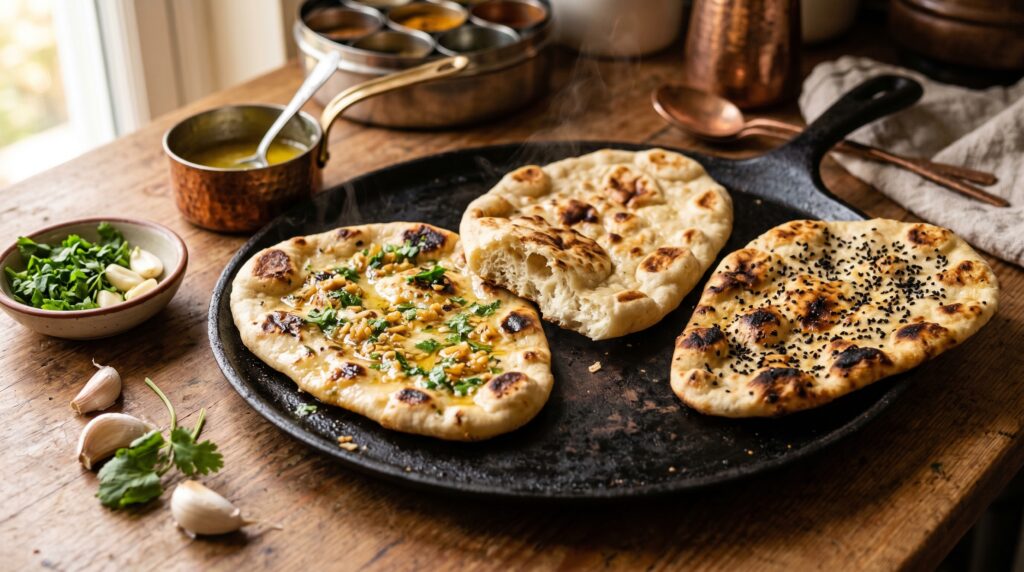
Prep time: 15 minutes + 1 hour rising | Cook time: 15 minutes | Makes: 8 naan
Homemade naan — cooked in a screaming hot cast iron pan or under the grill — produces the charred, blistered, fragrant result of a tandoor-cooked naan with nothing more than a regular kitchen stove. The difference from shop-bought naan is immediate and dramatic.
Key ingredients: Plain flour (300g), instant yeast (½ tsp), caster sugar (1 tsp), sea salt (1 tsp), plain yogurt (150g — the lactic acid produces the characteristic slight tang and tenderness), warm water (80ml), vegetable oil (2 tbsp). Garlic naan: melted butter, garlic (minced), fresh cilantro
Method: Combine all ingredients into a soft, slightly sticky dough. Knead for 5 minutes until smooth. Rise for 1 hour. Divide into 8 balls. Roll each oval unevenly, with some areas thinner than others (these become the characteristic charred bubbles). Cook in a screaming hot dry cast iron pan for 60–90 seconds per side until charred in spots. Brush immediately with garlic butter.
What makes it special: The uneven thickness of hand-rolled naan — thinner in some areas, thicker in others — creates the characteristic variation of char and chew that makes naan so interesting to eat. A uniformly thick, perfectly round naan is a lesser naan.
8. Pita Bread
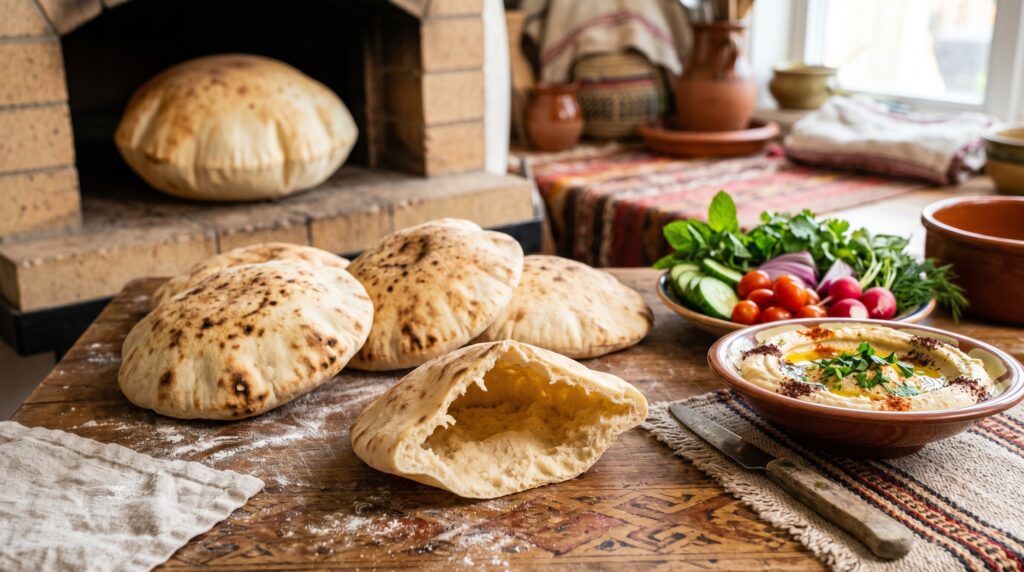
Prep time: 20 minutes + 1 hour rising | Cook time: 15 minutes | Makes: 8 pita
Homemade pita is one of the most satisfying bread-baking revelations — watching the flat dough rounds puff dramatically in the oven to create the characteristic hollow pocket is genuinely thrilling, and the warm, freshly baked pita bears almost no resemblance to its packaged supermarket counterpart.
Key ingredients: Bread flour or plain flour (350g), instant yeast (7g), sea salt (1 tsp), sugar (1 tsp), warm water (220ml), olive oil (1 tbsp)
The puffing secret: The high oven temperature (250°C/480°F — maximum heat) creates rapid steam generation inside the thin dough round, which inflates the bread from the inside to form the pocket before the crust sets. The oven must be as hot as possible, and the pita must be rolled thin enough for the steam to do its work.
Method: Make and knead the dough. Rise for 1 hour. Divide into 8 balls, roll each into a thin round (5mm thick). Place directly on a preheated baking stone or tray in a 250°C oven. Bake for 3–4 minutes — the pita should puff dramatically.
What makes it special: The pocket — created by the rapid steam inflation of a thin dough in a very hot oven — is the functional genius of the pita bread. It requires no special technique beyond proper rolling thickness and maximum oven temperature.
9. Irish Soda Bread
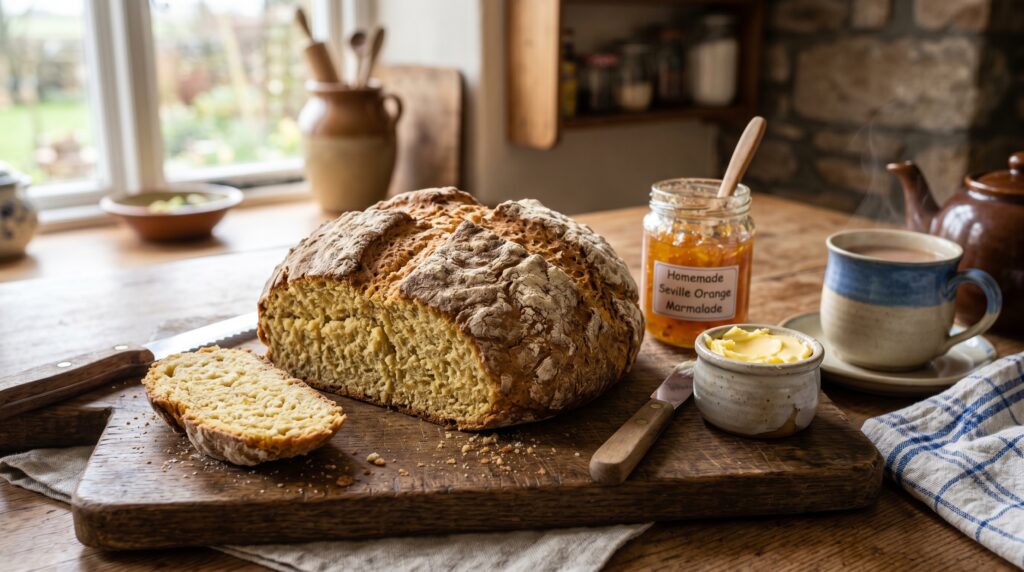
Prep time: 10 minutes | Cook time: 35 minutes | Makes: 1 loaf
Irish soda bread is the fastest yeasted-bread alternative in this collection — no yeast, no kneading, no rising, ready from mixing bowl to cooling rack in under 50 minutes. The leavening comes from the reaction between bicarbonate of soda and buttermilk, producing a distinctly different but genuinely excellent bread.
Key ingredients: Plain flour (450g), bicarbonate of soda (1 tsp), sea salt (1 tsp), buttermilk (350ml — or yogurt thinned with a little milk as a substitute). Variations: add 100g of mixed seeds, oats, dried fruit, or treacle for brown soda bread
Method: Combine dry ingredients. Make a well and add buttermilk. Mix quickly with a fork until a shaggy dough forms — do not overwork. Turn onto a floured surface, shape into a round about 4cm high. Score a deep cross. Bake at 200°C (400°F) for 30–35 minutes.
The cross: The traditional cross scored into soda bread serves a practical purpose — it allows the heat to penetrate the center of the dense dough more effectively, ensuring even cooking throughout.
What makes it special: The characteristic tang and crumb of soda bread — slightly dense, slightly acidic, slightly crumbly — is entirely unlike any yeasted bread. Fresh from the oven with a generous amount of salted butter, it is one of the great simple pleasures in all of bread eating.
10. Flatbread (No-Yeast, 3-Ingredient)
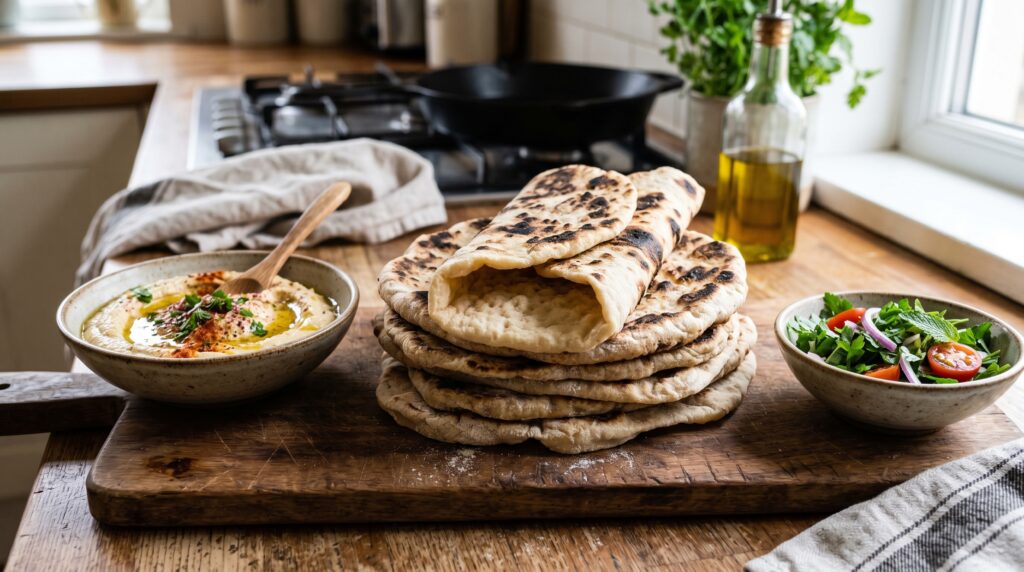
Prep time: 10 minutes | Cook time: 15 minutes | Makes: 8 flatbreads
Three-ingredient no-yeast flatbread is the most accessible, most versatile, and fastest bread in this entire collection — flour, yogurt, and salt, mixed and cooked in a hot pan in under 20 minutes. No rising time, no yeast, no special equipment. Simply the most useful quick bread recipe any home cook can know.
Key ingredients: Self-raising flour or plain flour with baking powder (250g), plain yogurt (150g), sea salt (½ tsp). Optional additions: garlic powder, dried herbs, sesame seeds, nigella seeds
Method: Combine flour, yogurt, and salt until a soft dough forms. Divide into 8 balls. Roll thin. Cook in a hot, dry non-stick pan for 60–90 seconds per side until charred in spots and cooked through.
Variations: Add cumin seeds to the dough for an Indian-inspired flatbread. Add garlic and dried oregano for a Mediterranean version. Use as a pizza base, a wrap, a scoop for dips, or serve alongside any soup or stew.
What makes it special: The yogurt’s natural leavening acids react with the flour to produce a bread with a slight lift and a pleasant tang — better than the thin, flat result that plain water alone produces.
Rolls and Individual Breads
11. Soft Dinner Rolls
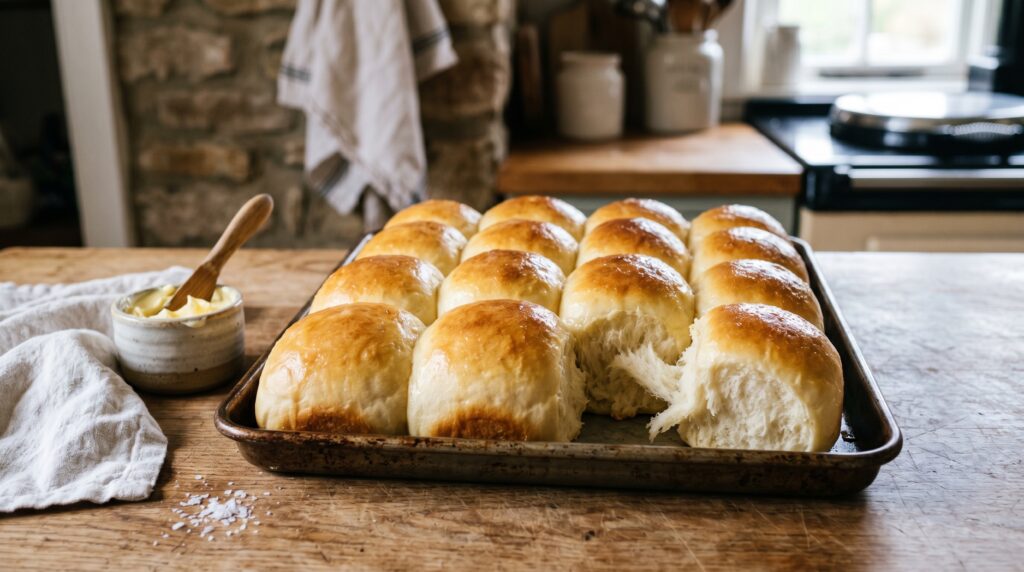
Prep time: 20 minutes + 2 hours rising | Cook time: 15 minutes | Makes: 12 rolls
Soft dinner rolls baked touching in a tray — their sides soft and yielding from rising against each other while their tops turn golden — are one of the most immediately rewarding bread baking achievements. Warm from the oven with butter, they are one of the great simple pleasures of the dinner table.
Key ingredients: Bread flour (500g), instant yeast (7g), caster sugar (2 tbsp), sea salt (1½ tsp), warm milk (250ml), warm water (80ml), egg (1), unsalted butter (60g — softened), extra butter for brushing
The bake-together technique: Placing the shaped rolls touching or just barely touching in a tray before the second prove ensures they rise upward rather than outward, producing the characteristic tall, soft-sided roll with a golden, domed top.
What makes it special: Brushing the freshly baked rolls generously with melted butter immediately after removing from the oven — while the surface is still hot and slightly porous — produces a subtly flavored, slightly glossy exterior that makes these rolls look and taste genuinely special.
12. Cinnamon Rolls
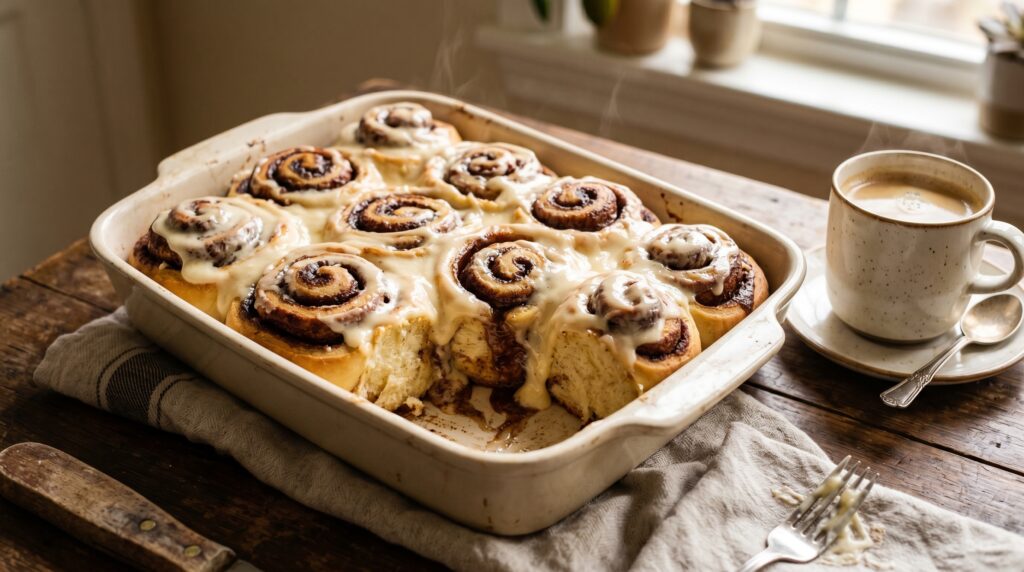
Prep time: 30 minutes + 2 hours rising | Cook time: 20 minutes | Makes: 12 rolls
Homemade cinnamon rolls — soft, pillowy, generously filled with cinnamon butter, and drizzled with cream cheese frosting — are the weekend baking project that produces the most immediate, most universal joy of anything on this list.
Key ingredients: Enriched dough (similar to dinner rolls — milk, butter, egg, sugar). Cinnamon filling: softened butter, light brown sugar, ground cinnamon, and a pinch of nutmeg. Cream cheese frosting: cream cheese, icing sugar, vanilla extract, a splash of milk
Rolling technique: Roll the dough into a rectangle approximately 40x30cm. Spread butter across the surface to the edges. Scatter the cinnamon sugar mixture evenly. Roll tightly from the long edge. Cut into 12 equal slices using unflavored dental floss for a clean cut that does not compress the rolls.
What makes it special: The cream cheese frosting applied while the rolls are still warm — not completely cooled — melts slightly into the warm rolls, creating a glaze that penetrates the top layers of the spiral rather than sitting as a thick, cold layer on top.
13. Garlic Knots
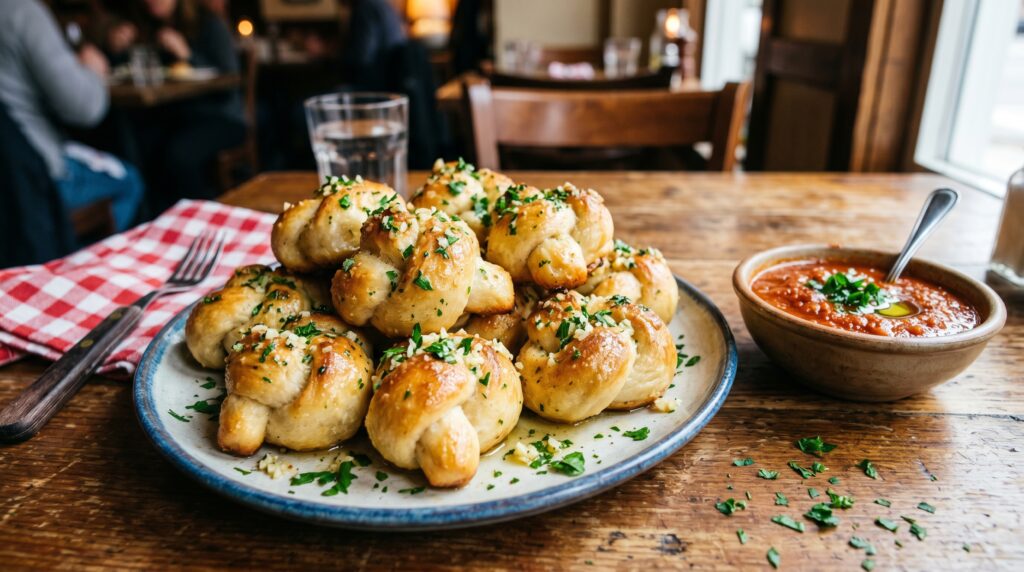
Prep time: 15 minutes + 1 hour rising | Cook time: 12 minutes | Makes: 16 knots
Garlic knots — pizza dough tied into small knots, baked until golden, and tossed immediately in garlic butter and parsley — are the most irresistible bread side dish imaginable and one of the simplest to make from any basic pizza or bread dough.
Key ingredients: Pizza dough or basic bread dough (1 batch), garlic butter (melted butter, garlic minced, fresh flat-leaf parsley, sea salt, Parmesan — mixed together), marinara sauce for dipping
Method: Divide the dough into 16 pieces. Roll each into a rope about 20cm long. Tie a simple overhand knot. Place on a lined baking tray. Prove for 30 minutes. Bake at 200°C (400°F) for 10–12 minutes until golden. Toss immediately in garlic butter while still hot.
What makes it special: Tossing the garlic knots in the butter mixture immediately after baking — while still hot — allows the garlic butter to penetrate the slightly porous, freshly baked surface rather than sitting only on the exterior, infusing every bite with garlic and herb flavor.
14. Challah (Braided Egg Bread)
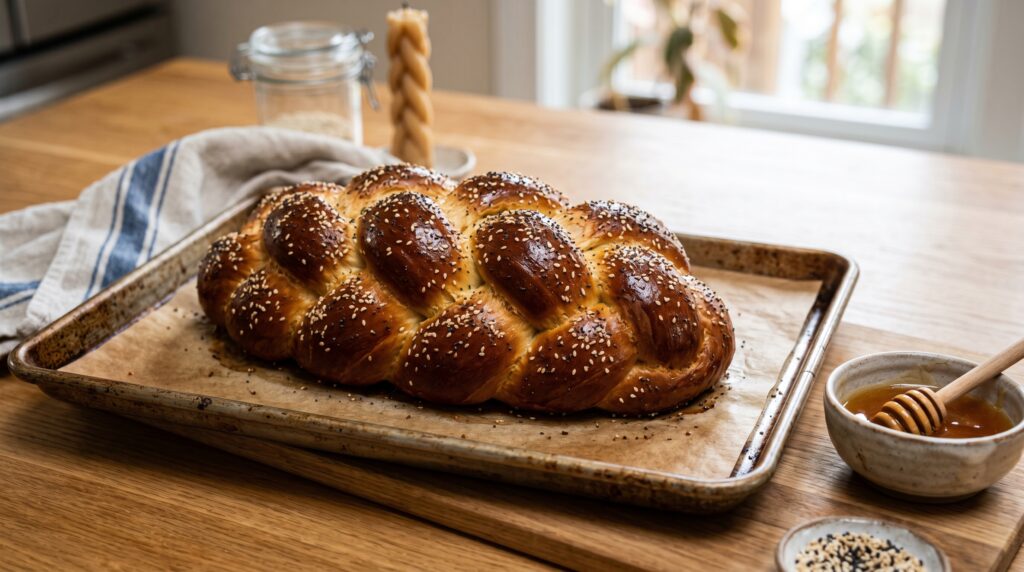
Prep time: 30 minutes + 2 hours rising | Cook time: 30 minutes | Makes: 1 large loaf
Challah — the traditional Jewish braided egg bread — is one of the most beautiful breads in the world. Enriched with eggs and honey, its deep mahogany crust and pillowy, slightly sweet interior make it both a celebration bread and an exceptional everyday loaf for French toast and sandwiches.
Key ingredients: Bread flour (500g), instant yeast (7g), eggs (3 — providing structure and richness), vegetable oil (60ml), honey (3 tbsp), warm water (150ml), sea salt (1½ tsp). Egg wash: egg yolk beaten with water. Topping: sesame or poppy seeds
The six-strand braid: While a simple three-strand braid produces excellent challah, the six-strand braid creates the dramatic, tightly woven pattern that makes challah so visually striking. Numerous video tutorials demonstrate this technique far more clearly than written instructions can convey.
What makes it special: The egg wash applied before baking — a generous coating of beaten egg yolk and water — is what produces challah’s characteristic deep mahogany, mirror-like surface. Apply liberally and allow the egg wash to settle for 5 minutes before the second application for the deepest color.
International and Specialty Breads
15. Focaccia with Tomato and Olive (Focaccia Barese)
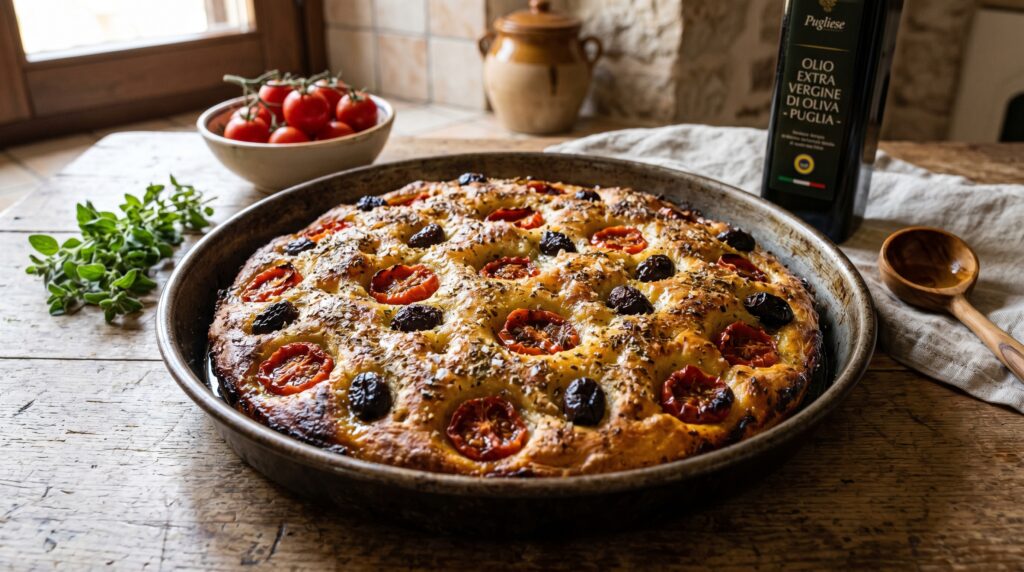
Prep time: 15 minutes + 2 hours rising | Cook time: 25 minutes | Makes: 1 round focaccia
Focaccia Barese — the Pugliese version made with semolina flour and topped with cherry tomatoes, olives, and oregano — is the focaccia style with the most complex, most deeply flavored result. The semolina adds a golden color and slight graininess to the texture.
Key ingredients: Bread flour (300g) and fine semolina (100g — combined), instant yeast (7g), sea salt (1½ tsp), warm water (300ml), extra virgin olive oil (80ml). Toppings: cherry tomatoes (halved, pressed into the dough), Kalamata olives, dried oregano, flaky sea salt
What makes it special: The semolina component creates a focaccia with a slightly more complex flavor — nuttier and more distinctive — than a pure white flour version, and its slightly coarser texture produces a beautiful, slightly crunchy base that contrasts with the open, airy interior.
16. Turkish Pide (Flatbread)
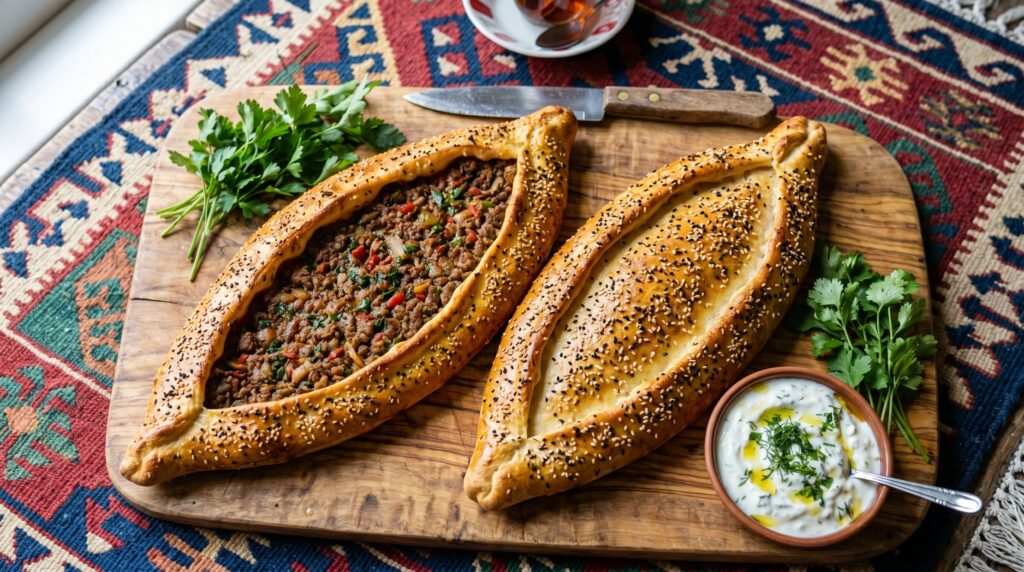
Prep time: 20 minutes + 1 hour rising | Cook time: 12 minutes | Makes: 4 pide
Turkish pide — the oval, boat-shaped flatbread with its characteristic upturned edges — is one of the most beautiful and most versatile breads in the Middle Eastern tradition, equally excellent as a plain bread with yogurt or topped with a spiced lamb or vegetable filling.
Key ingredients: Bread flour (500g), instant yeast (7g), sugar (1 tsp), sea salt (1½ tsp), warm water (320ml), olive oil (3 tbsp). Egg wash: egg yolk beaten with milk. Seeds: sesame and nigella
Pide shaping: Roll the dough oval. Fold the long edges up and pinch the ends to form the characteristic boat shape that gives pide its structure. Brush with egg wash before baking.
What makes it special: The egg wash — creating the deep, mahogany-golden surface of properly baked pide — combined with the sesame and nigella seeds, creates a visual distinction that makes this bread immediately recognizable and genuinely beautiful.
17. Cornbread
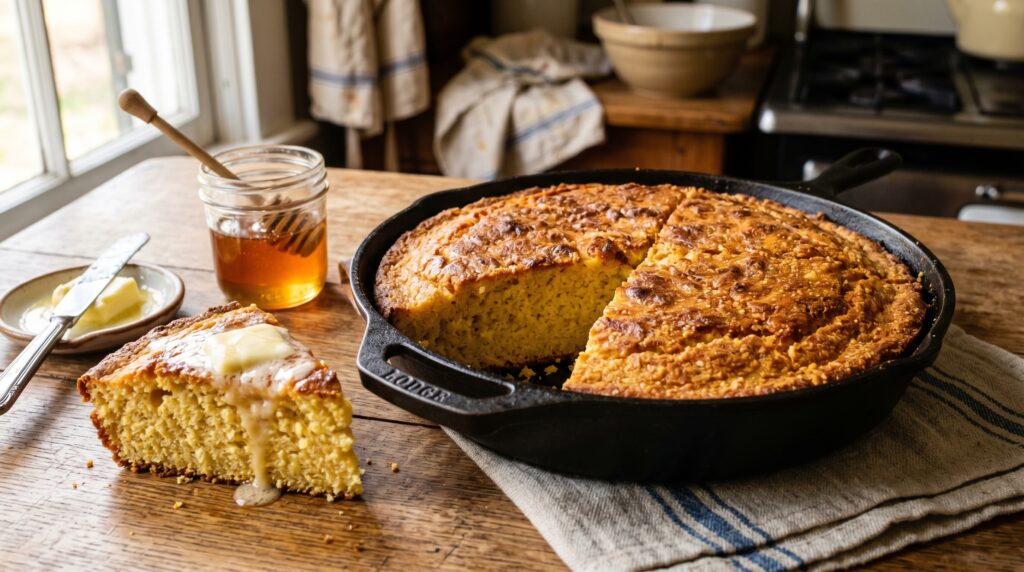
Prep time: 10 minutes | Cook time: 25 minutes | Makes: 8 servings
Cast iron skillet cornbread — golden, slightly crispy on the exterior, moist and tender within, with the characteristic corn sweetness and slight graininess — is the most immediately satisfying quick bread in this collection and the perfect accompaniment to soups, stews, and chili.
Key ingredients: Fine cornmeal (150g), plain flour (120g), baking powder (2 tsp), sea salt (1 tsp), sugar (2 tbsp), eggs (2), whole milk (240ml), melted butter (60g — plus extra for the skillet)
The hot skillet technique: Preheat the cast iron skillet in a hot oven for 5 minutes, then add a generous knob of butter. The butter sizzles and coats the pan, creating the immediately cooked, slightly crispy base crust that distinguishes skillet cornbread from the baking-tin equivalent.
What makes it special: The cornmeal’s slightly coarse texture and natural sweetness create a bread with a genuinely distinctive character — neither quite a bread nor quite a cake, but something uniquely satisfying that occupies its own category entirely.
18. Brioche
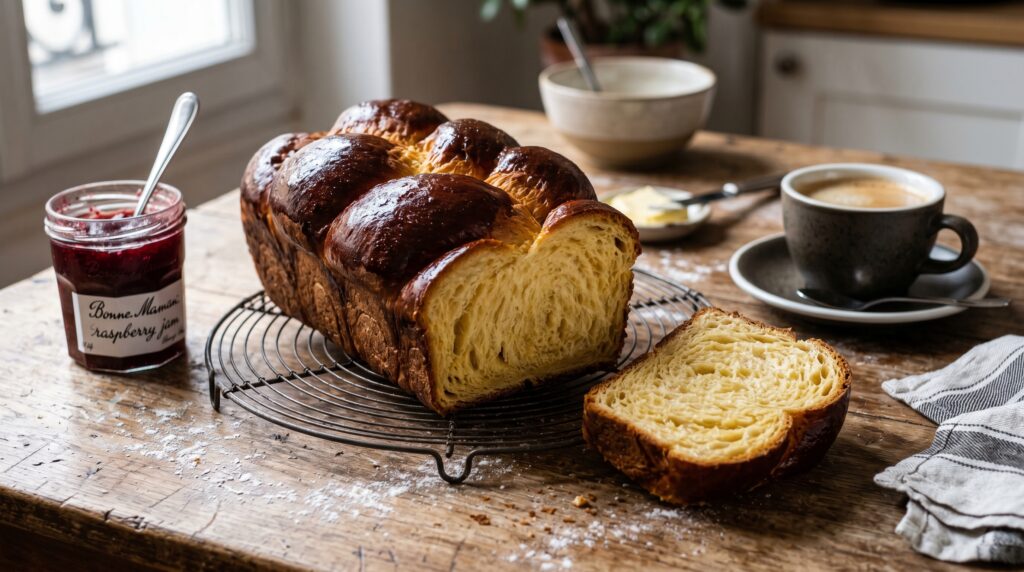
Prep time: 30 minutes + 4 hours rising | Cook time: 30 minutes | Makes: 1 loaf
Brioche is the most luxurious bread in this collection — its extraordinary butter and egg content produces a bread of otherworldly tenderness, a deep golden crumb, and a richness that makes it as much a pastry as a bread. Worth every minute of its longer preparation.
Key ingredients: Bread flour (350g), instant yeast (7g), caster sugar (40g), sea salt (1 tsp), eggs (4 — room temperature), warm milk (60ml), unsalted butter (180g — softened, added gradually after the initial gluten development)
The butter incorporation: The large amount of butter in brioche cannot be added all at once — it must be added in small pieces over 15–20 minutes of kneading, allowing each addition to be fully incorporated before the next. This extended kneading develops the gluten around the fat rather than the fat preventing gluten development.
What makes it special: Brioche is one of the very few breads where the dough actually improves with refrigeration after the initial rise — an overnight cold proof produces a firmer dough that is easier to shape and a more complex, buttery flavor from the slow fermentation.
19. Bagels
Prep time: 30 minutes + 2 hours rising | Cook time: 20 minutes | Makes: 8 bagels
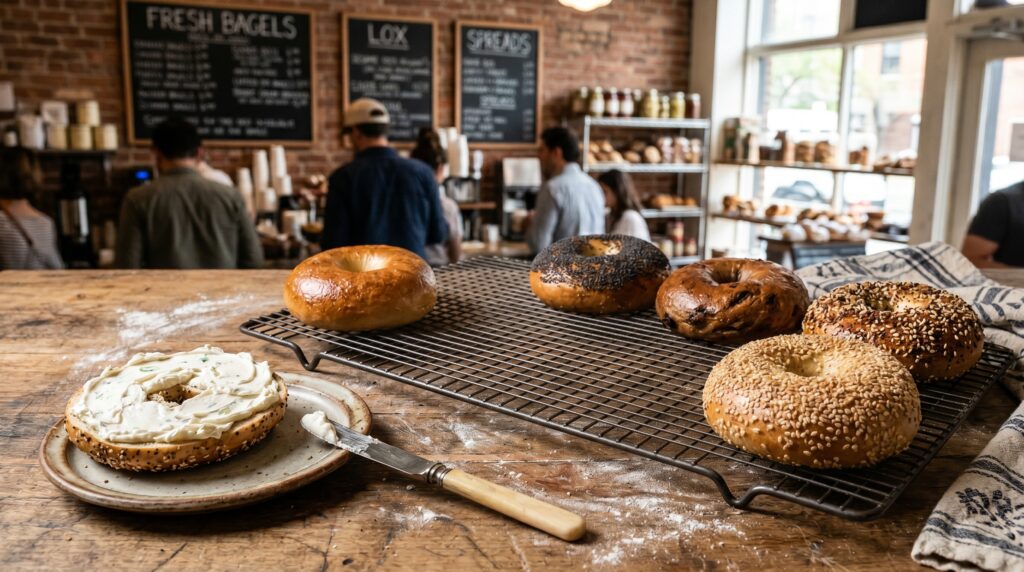
Homemade bagels require one technique that distinguishes them from any other bread: boiling before baking. This brief immersion in alkaline water sets the exterior starch, producing the characteristic dense, chewy crust and tight, dense crumb that defines an authentic bagel.
Key ingredients: Bread flour (500g), instant yeast (7g), caster sugar (1 tbsp), sea salt (1½ tsp), warm water (300ml). Boiling water: 2 litres of water + 2 tbsp bicarbonate of soda (the alkalinity promotes browning and chewiness). Toppings: sesame, poppy seeds, everything bagel seasoning
Method: Make and knead a firm dough (firmer than other bread doughs — less water than usual). Rise for 1 hour. Shape by forming balls, pressing a thumb through the center, and stretching the ring to about 9cm in diameter. Boil the soda water for 60 seconds per side. Bake at 230°C (450°F) for 18–20 minutes until deeply golden.
What makes it special: The boiling step — in bicarbonate of soda water rather than plain water — is the precise technique that produces the shiny, dark exterior and the characteristically dense, chewy chew that no unboiled bagel can replicate.
20. Banana Bread (Classic, Moist)
Prep time: 15 minutes | Cook time: 60 minutes | Makes: 1 loaf
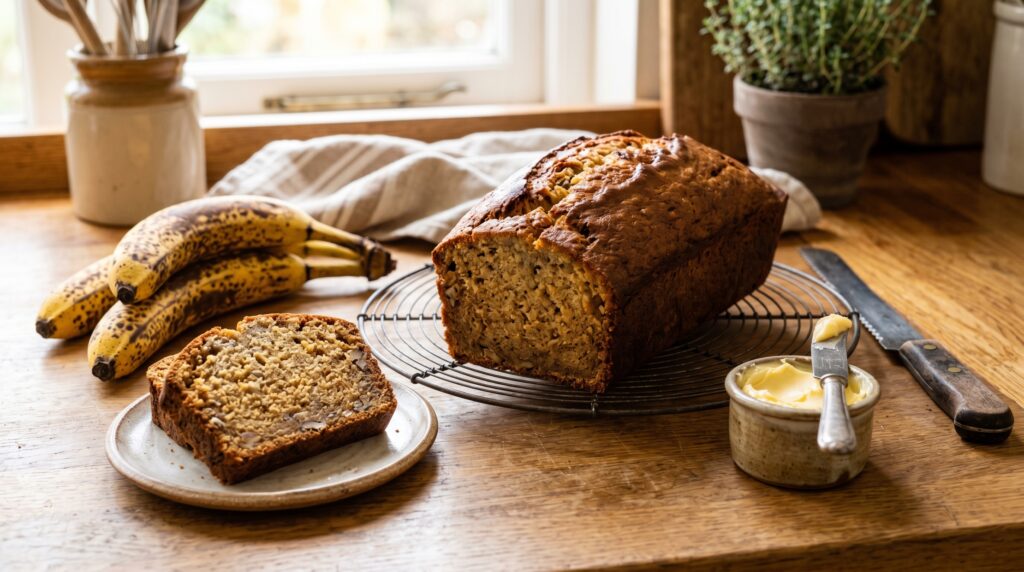
Banana bread belongs in a bread collection because it is, in the truest sense, a bread — a quick bread leavened with baking soda, made in a loaf tin, and sliced and eaten like bread. And the best banana bread — made with deeply overripe bananas, oil for moistness, and a touch of Greek yogurt for tenderness — is one of the most satisfying baked goods in any category.
Key ingredients: Very ripe bananas (3 — the blacker the better), plain flour (200g), baking soda (1 tsp), sea salt (¼ tsp), cinnamon (1 tsp), vegetable oil (80ml), light brown sugar (150g), eggs (2), Greek yogurt (2 tbsp), vanilla extract (1 tsp), optional: walnuts, chocolate chips
What makes it special: The combination of oil (for moistness that lasts for days) and Greek yogurt (for tenderness and slight tang) produces a banana bread that stays genuinely moist for 4–5 days at room temperature — significantly longer than butter-based versions.
For more banana bread variations and techniques, our 20 Moist Banana Bread Recipes covers the full range of this beloved quick bread.
Bread Baking Troubleshooting Guide
| Problem | Likely Cause | Solution |
|---|---|---|
| Use the correct temperature; use Dutch oven for steam | Dead yeast / water too hot / too cold | Test yeast freshness; use thermometer for water temp |
| Dense, heavy crumb | Under-kneaded / under-proved / too much flour | Knead to windowpane; allow full proving time; weigh flour |
| Gummy interior | Under-baked / too moist | Tap base test; use thermometer (internal 93–96°C) |
| Too pale crust | Oven too cool / no steam | Use the correct temperature; use a Dutch oven for steaming |
| Over-browned exterior | Oven too hot / sugar content too high | Cover with foil if browning too fast |
| Crust softens after baking | Too much moisture | Cool on a wire rack in a dry environment |
| Flat loaf, spreading sideways | Too much water / weak flour / over-proved | Reduce hydration; use strong bread flour |
| Crust too thick | Lack of steam / overbaked | Bake in Dutch oven; reduce bake time |
Make-Ahead and Storage Guide
Room temperature: Most bread keeps well at room temperature for 2–3 days, stored in a paper bag or bread box (not plastic, which creates humidity and makes crusts soft). Never store in the refrigerator — it accelerates staling.
Freezing: Slice before freezing for the most practical approach — individual slices can be toasted directly from frozen. Whole loaves freeze for up to 3 months; thaw at room temperature overnight.
Reviving stale bread: Sprinkle the crust lightly with water and bake at 180°C for 10 minutes — the steam refreshes the crust and warms the interior, producing a result remarkably close to fresh-baked.
For comprehensive food safety guidance on storing breads containing dairy, eggs, and other perishable components, our Food Safety 101: Storage, Handling, and Temperature Guide covers all relevant principles.
Conclusion
From the effortless magic of no-knead artisan bread to the luxurious indulgence of brioche, from the instant gratification of three-ingredient flatbread to the meditative craft of sourdough, from the celebratory beauty of challah to the humble perfection of Irish soda bread — these 20 easy fresh bread recipes represent the full, extraordinary range of what home bread baking can achieve.
What makes bread baking so uniquely rewarding is the combination of its ancient roots and its immediate sensory reward — the smell of rising dough, the sound of a crust crackling as it cools, the sight of steam rising from a fresh cut loaf, and the taste of warm bread with good butter. These are pleasures available to anyone with a kitchen and the willingness to begin.
Start with the no-knead artisan bread or the three-ingredient flatbread. Progress to focaccia and dinner rolls. Work toward sourdough and brioche. And discover through practice that bread baking is not a craft that requires special talent — it rewards patience, attention, and the simple joy of making something fundamental and beautiful with your own hands.
For more baking recipes, technique guides, and cooking inspiration across every cuisine and skill level, explore our full collection at skillsinthekitchen.com.