
15 Best Cottage Cheese Recipes: High-Protein Meals & Snacks
Introduction
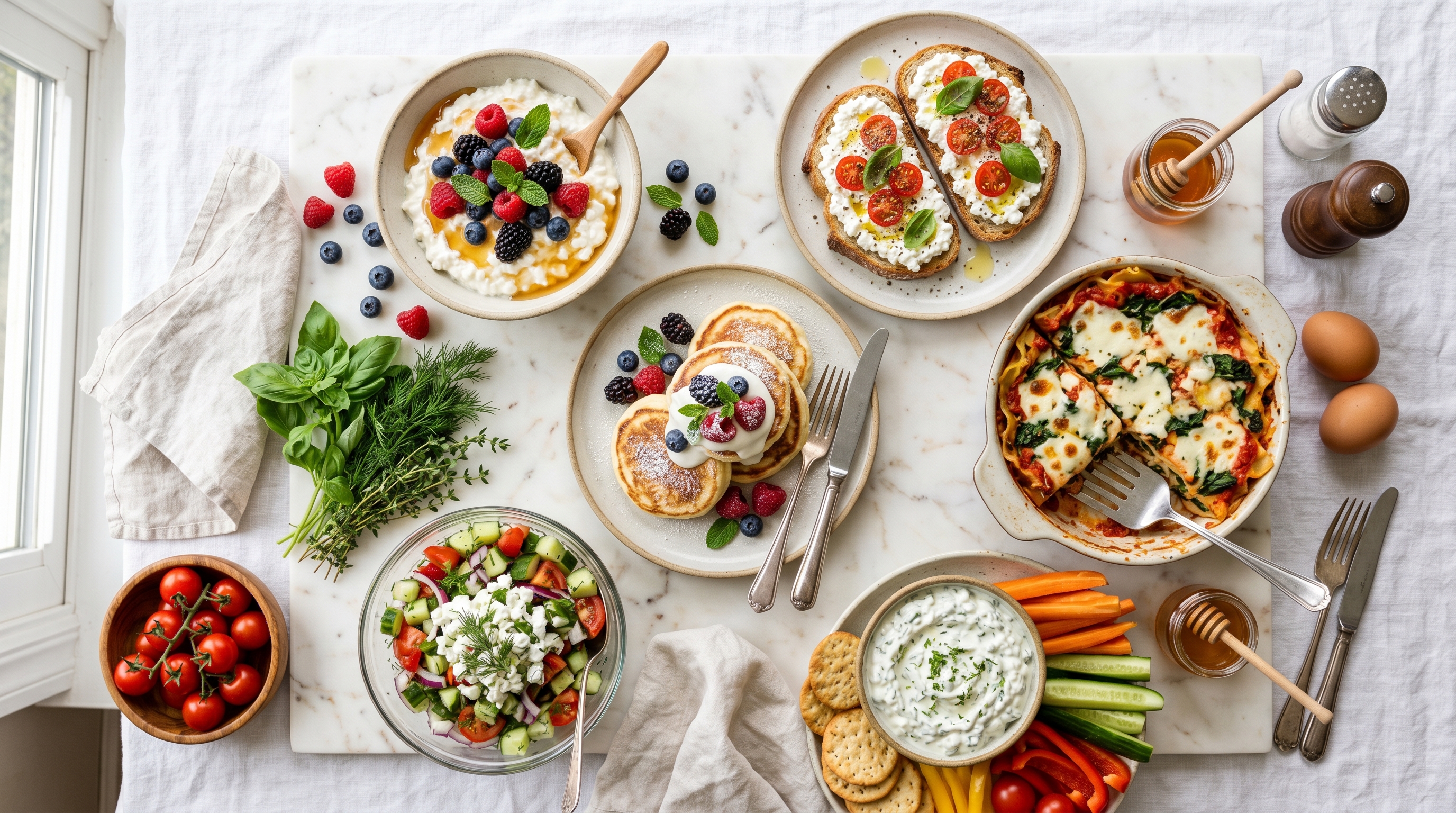
Cottage cheese is experiencing one of the most remarkable culinary rehabilitations of recent years — transforming from a diet-food relic associated with 1970s weight-loss plans into one of the most versatile, most nutritionally exciting, and most genuinely delicious ingredients in the modern kitchen. The rediscovery of cottage cheese as a genuinely great ingredient — rather than a compromise food — is one of the most interesting developments in contemporary nutrition-forward cooking.
The nutritional case for cottage cheese is compelling. Full-fat cottage cheese provides approximately 11g of complete protein per 100g serving — making it one of the most protein-dense dairy products available, comparable to Greek yogurt and significantly higher than most other fresh cheeses. It is also an excellent source of calcium, phosphorus, vitamin B12, riboflavin, and selenium. The protein in cottage cheese is predominantly casein — a slow-digesting protein that provides a more sustained amino acid release than whey, making it particularly effective for satiety and muscle protein synthesis throughout the day.
Beyond its nutritional credentials, cottage cheese’s culinary versatility is extraordinary. Its mild, slightly tangy flavor works equally well in sweet and savory preparations. Its creamy, slightly textured consistency makes it suitable as a direct ingredient, a blended sauce base, a filling, a topping, and a cooking ingredient that adds richness to baked goods, pasta dishes, and grain preparations. It can be served raw, cooked, blended smooth, left textured, sweetened, spiced, or used as the protein-rich foundation of an entire meal.
In this guide, we have compiled 15 of the most delicious, most creative, and most genuinely satisfying cottage cheese recipes — spanning sweet breakfasts and snacks, savory meals and mains, clever cooking applications, and quick preparations that prove cottage cheese is one of the most valuable, most versatile ingredients in any well-stocked kitchen.
Let’s cook.
The Cottage Cheese Guide: Everything You Need to Know
Types of Cottage Cheese
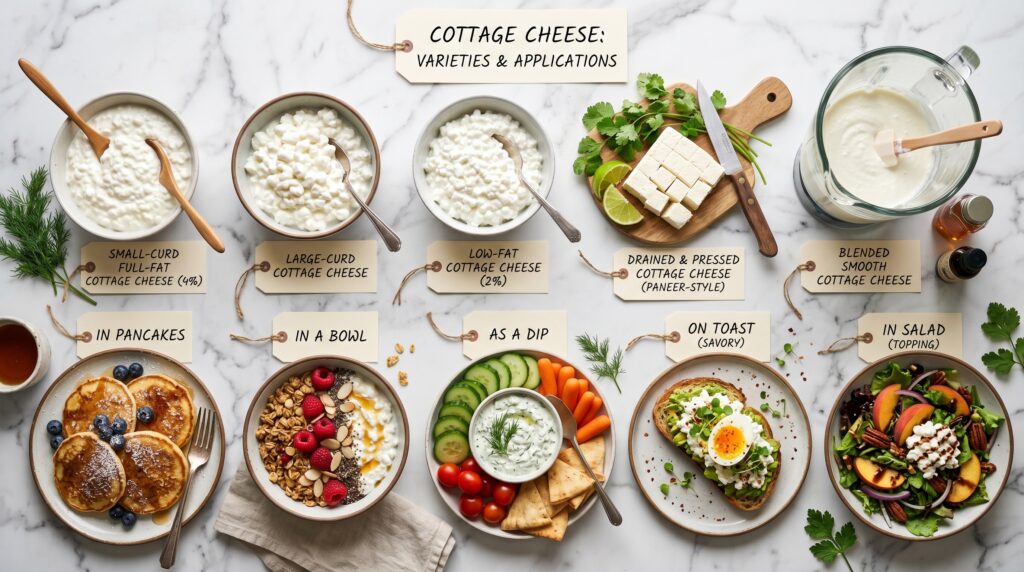
Full-fat (4% fat): The richest, most satisfying, most flavorful variety. The extra fat carries the cottage cheese’s delicate dairy flavors and creates a significantly more satisfying eating experience than lower-fat versions. Use in all preparations where cottage cheese is a primary ingredient.
Low-fat (1–2% fat): Less rich but still good protein content. Works well in blended preparations (sauces, pancake batters) where the fat content is less critical. Avoid in preparations where cottage cheese is the primary flavor.
Small curd: Fine, uniform texture. Better for blending and smooth applications.
Large curd: More substantial, more textural. Better for bowl preparations and toppings where the individual curds’ character is part of the appeal.
The Blended Smooth Technique
Blending cottage cheese in a high-powered blender for 60 seconds completely transforms its texture — the individual curds disappear entirely into a completely smooth, slightly thick cream that resembles ricotta or cream cheese in consistency and is virtually indistinguishable from a dairy cream sauce when incorporated into hot preparations.
This blended smooth cottage cheese is the most versatile form for cooking — it produces pasta sauces, dips, pancake batters, and baked good batters with extraordinary creaminess and significantly more protein than cream-based preparations.
Draining Cottage Cheese
For preparations where excess moisture is undesirable (cheesecakes, stuffed pasta fillings, thick dips), drain cottage cheese through a cheesecloth or a fine sieve lined with kitchen paper for 30 minutes to 2 hours. The drained cottage cheese is significantly thicker, more concentrated, and easier to work with in applications that require a firm texture.
15 Best Cottage Cheese Recipes
Sweet Breakfasts and Snacks
1. Cottage Cheese Bowl with Berries and Honey
Prep time: 5 minutes | No cook | Protein: ~28g | Serves: 1
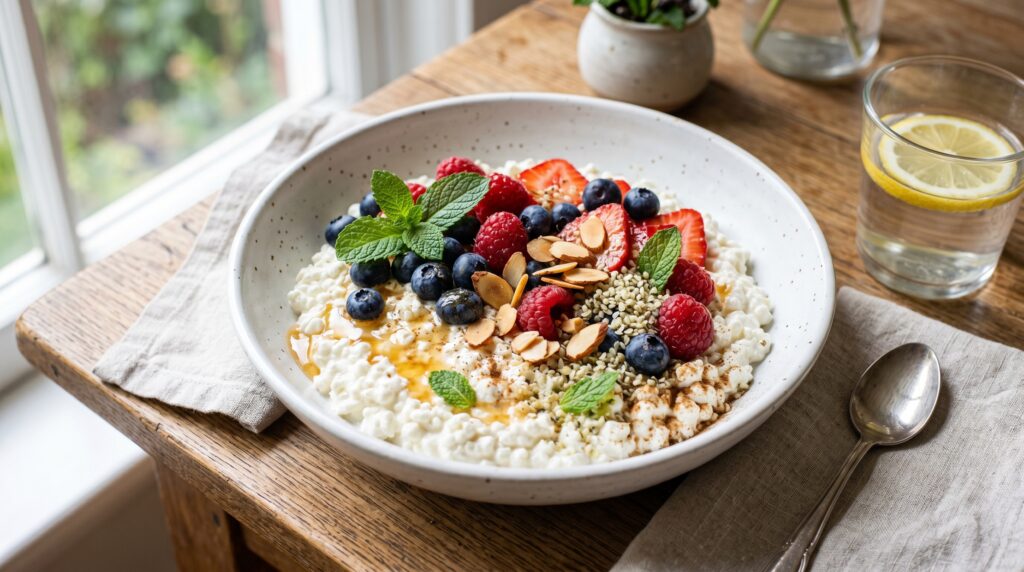
Cottage cheese bowl with berries and honey is the most effortlessly assembled, most nutritionally complete high-protein breakfast in this collection — full-fat cottage cheese provides approximately 28g of protein per 250g serving, and the fresh berries, honey, and toasted nuts create a bowl of genuine pleasure.
Key ingredients: Full-fat cottage cheese (250g), fresh mixed berries (blueberries, raspberries, strawberries — 80g), raw honey (1 tsp), toasted almonds (15g, roughly chopped), hemp seeds (1 tbsp), fresh mint leaves, cinnamon (pinch), optional: vanilla extract (a few drops stirred into the cottage cheese)
The vanilla trick: Stirring a few drops of vanilla extract into the cottage cheese before adding toppings dramatically enhances its flavor — the vanilla’s warmth and sweetness make the cottage cheese taste more complex and less bland, transforming it from a purely neutral base into something with genuine character.
What makes it special: Full-fat cottage cheese’s natural richness and mild tang create the perfect backdrop for the berries’ acidity and the honey’s sweetness — each element enhances the others in a way that makes this bowl significantly more satisfying than any of its individual components alone.
2. Cottage Cheese Pancakes
Prep time: 10 minutes | Cook time: 15 minutes | Protein: ~22g | Serves: 2
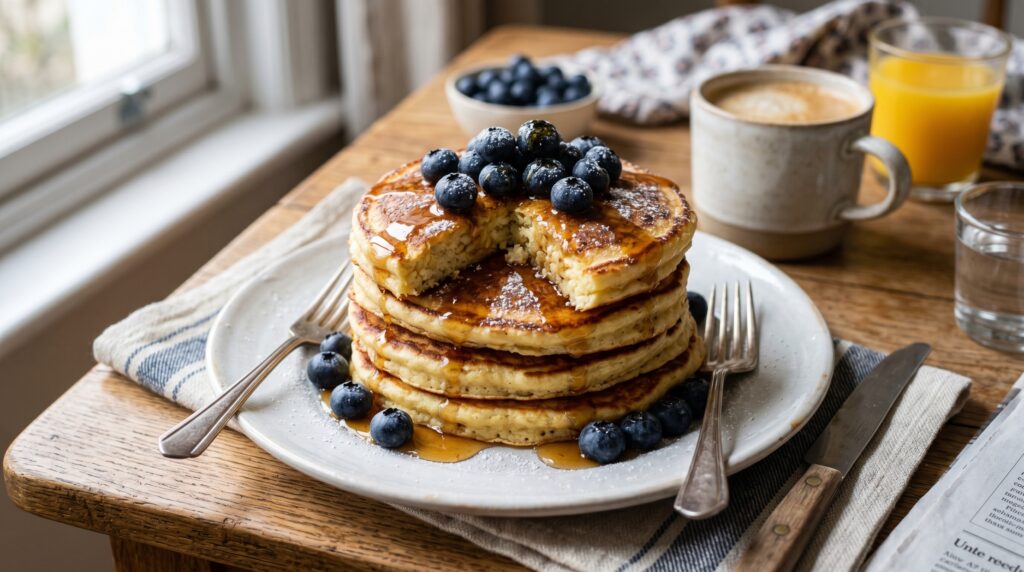
Cottage cheese pancakes are the most protein-dense sweet pancake in this collection — the cottage cheese in the batter provides extraordinary creaminess and significant protein while producing pancakes of genuine quality and satisfying flavor.
Key ingredients: Full-fat cottage cheese (200g), eggs (2 large), plain flour (80g — or oat flour for more fiber), baking powder (1 tsp), vanilla extract (1 tsp), cinnamon (½ tsp), a pinch of salt, optional: a touch of honey. Serve with: fresh berries, maple syrup, butter
Method: Blend all ingredients until just smooth — the cottage cheese curds should be mostly incorporated. For a slightly more textured pancake, stir rather than blend. Cook in a buttered pan over medium heat for 2–3 minutes per side until golden.
What makes it special: The cottage cheese’s slight acidity activates the baking powder slightly more effectively than milk alone, producing a pancake with more lift. The protein content also creates a slightly denser, more custardy texture than conventional pancakes — more satisfying, more filling, and genuinely more interesting to eat.
3. Cottage Cheese Toast (Sweet and Savory)
Prep time: 5 minutes | No cook (except toast) | Protein: ~20g | Serves: 1
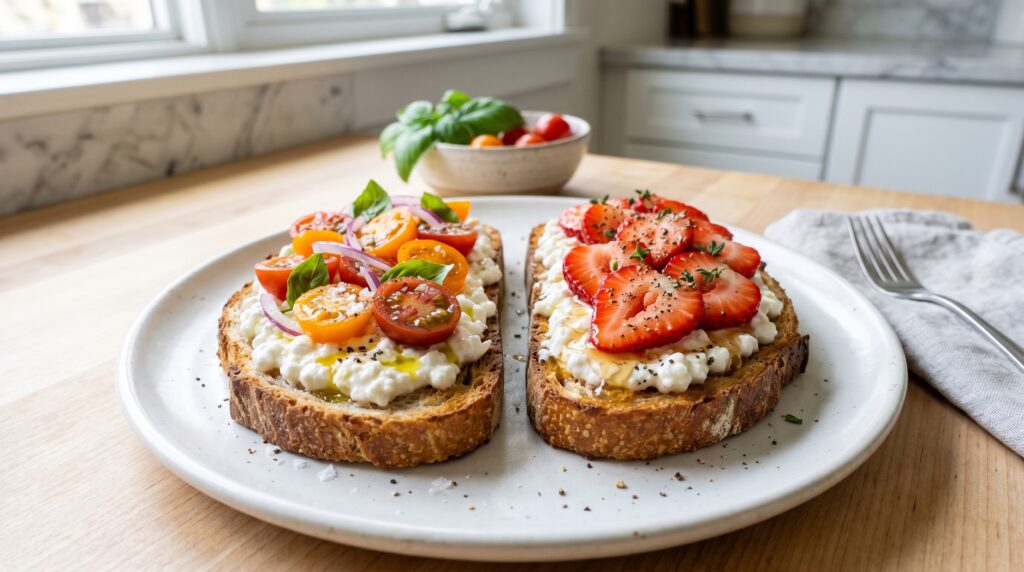
Cottage cheese toast has emerged as one of the most popular high-protein quick meals for good reason — the creamy, protein-rich cottage cheese on thick toasted bread provides a genuinely satisfying meal in under 5 minutes.
Savory version: Toast + cottage cheese + cherry tomatoes (halved) + fresh basil + extra virgin olive oil + flaky sea salt + cracked black pepper
Sweet version: Toast + cottage cheese + sliced strawberries + raw honey + fresh mint + a tiny crack of black pepper (the pepper with strawberries and honey is extraordinary — a one-ingredient surprise that elevates the sweet toast dramatically)
Smashed avocado upgrade: Spread cottage cheese on toast, top with smashed avocado seasoned with lemon, salt, and chili flakes, then add a poached or fried egg on top — creating a three-layer protein-rich breakfast of approximately 35g of protein per serving.
What makes it special: Cottage cheese’s texture — creamy, slightly lumpy, slightly tangy — creates a more interesting base than cream cheese (too smooth and one-dimensional) or plain butter (purely fat), providing both flavor complexity and protein content that transforms toast from a snack into a genuinely nourishing meal.
4. Cottage Cheese Overnight Oats
Prep time: 5 minutes + overnight | No cook | Protein: ~22g | Serves: 1
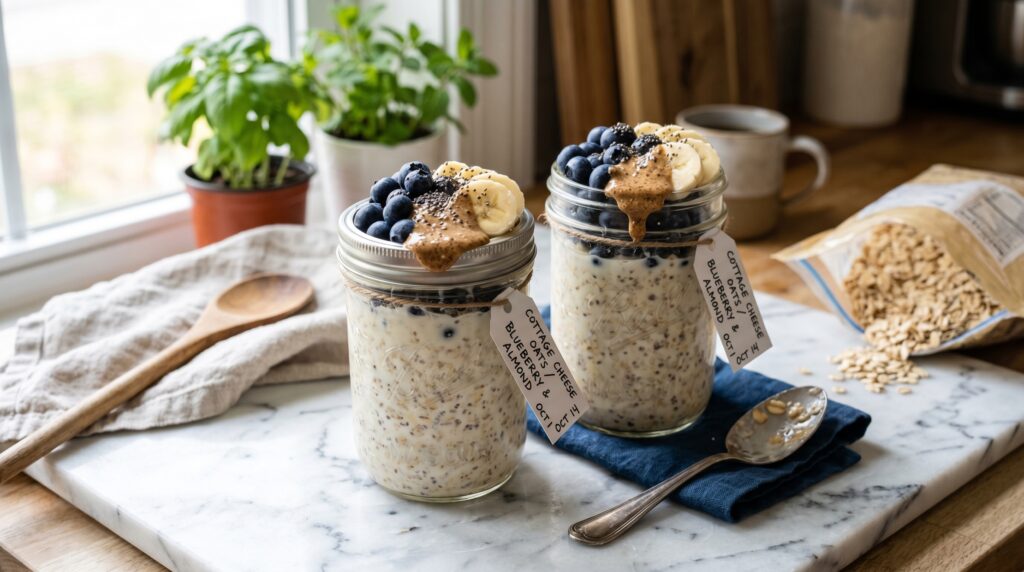
Cottage cheese overnight oats replace a portion of the milk in conventional overnight oats with cottage cheese — creating a preparation that is significantly more creamy, significantly more protein-rich, and significantly more filling than standard overnight oats.
Key ingredients: Rolled oats (80g), full-fat cottage cheese (100g — stirred through for a textured version or blended first for a smooth version), milk (100ml), chia seeds (1 tbsp), vanilla extract (½ tsp), honey or maple syrup (1 tsp), cinnamon (pinch). Toppings: fresh berries, banana, almond butter
What makes it special: The cottage cheese’s slow-digesting casein protein combined with the oats’ complex carbohydrate and fiber creates one of the most nutritionally effective breakfasts for sustained energy and genuine satiety — providing stable blood sugar and reduced hunger for longer than either ingredient alone.
Savory Meals and Mains
5. Cottage Cheese Pasta Sauce
Prep time: 10 minutes | Cook time: 15 minutes | Protein: ~28g | Serves: 4
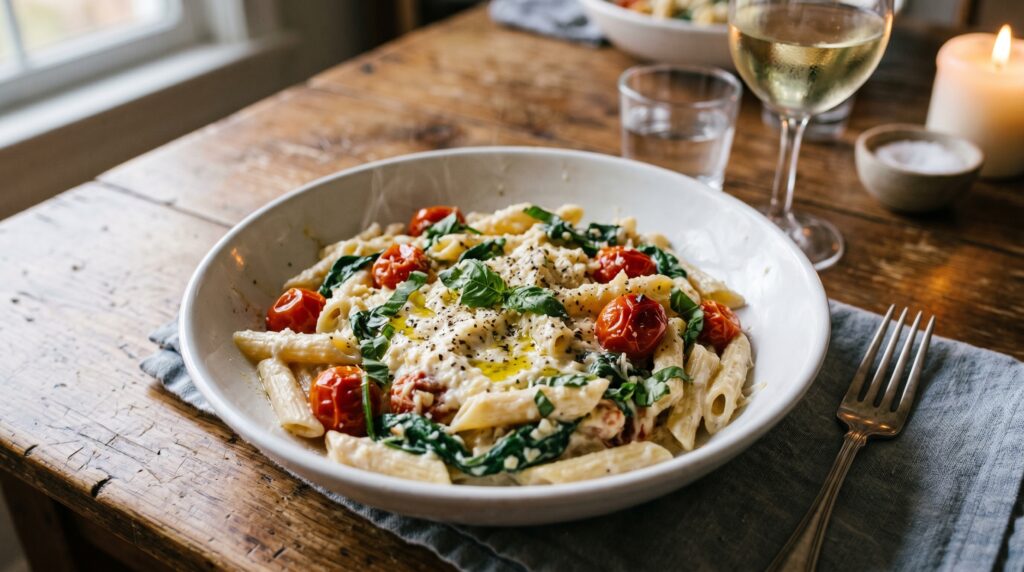
Cottage cheese pasta sauce is the most practical, most protein-enriching pasta preparation in this collection — blended smooth cottage cheese creates a sauce of extraordinary creaminess that is virtually indistinguishable from a cream-based sauce while providing significantly more protein and fewer calories.
Key ingredients: Pasta (400g), full-fat cottage cheese (350g — blended completely smooth with 2 tbsp pasta cooking water), roasted cherry tomatoes (300g), fresh spinach (100g, wilted), garlic (3 cloves, minced), shallots (2, diced), Parmesan (40g, grated), fresh basil, pasta cooking water, olive oil, sea salt, cracked black pepper, optional: red chili flakes
The blend technique: Blend the cottage cheese with a small amount of pasta cooking water before combining with the other ingredients — the starchy pasta water helps the cottage cheese emulsify into a sauce of completely uniform consistency with no visible curds.
What makes it special: Blended cottage cheese in a pasta sauce behaves almost identically to heavy cream — it coats every pasta strand with a creamy, slightly tangy sauce of remarkable texture. The slight tang actually improves the pasta, adding a complexity that plain cream lacks.
6. Cottage Cheese Stuffed Peppers
Prep time: 20 minutes | Cook time: 30 minutes | Protein: ~32g | Serves: 4
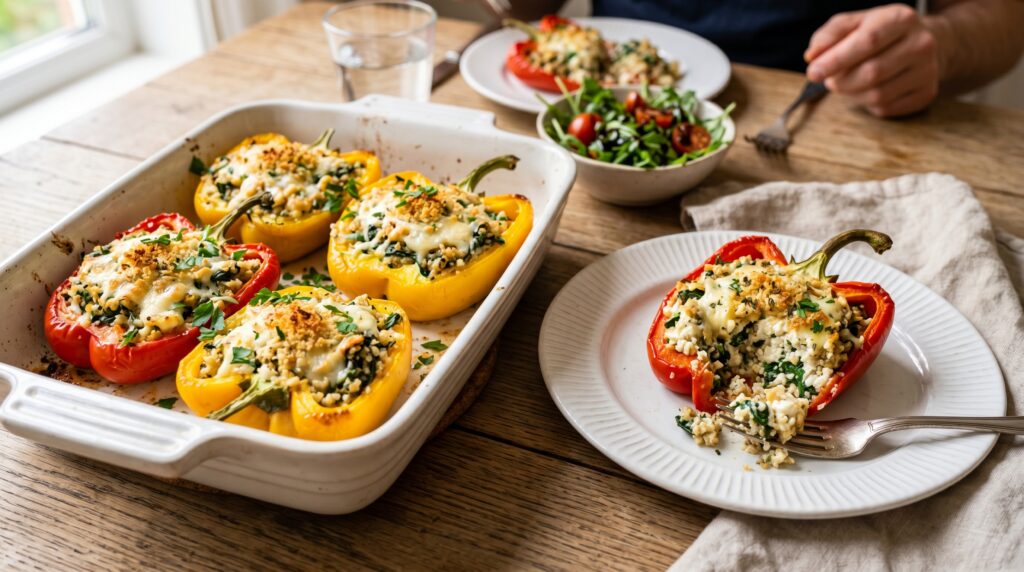
Cottage cheese stuffed peppers are the most nutritionally complete, most protein-rich stuffed pepper preparation — the combination of cottage cheese, quinoa (complete protein), and a range of vegetables creates a filling of extraordinary nutritional density.
Key ingredients: Bell peppers (4 large, halved), full-fat cottage cheese (300g), cooked quinoa (200g), fresh spinach (100g, wilted and squeezed dry), garlic (2 cloves, minced), shallots (2, diced), fresh herbs (parsley, chives), lemon zest, smoked paprika, sea salt, cracked black pepper. Topping: shredded mozzarella, panko breadcrumbs with olive oil
What makes it special: The cottage cheese in the filling — combined with the egg-like binding of the quinoa — creates a filling that sets slightly during baking, producing a cohesive, sliceable filling of more structural integrity than a loose cheese and vegetable mixture.
7. Cottage Cheese Lasagna
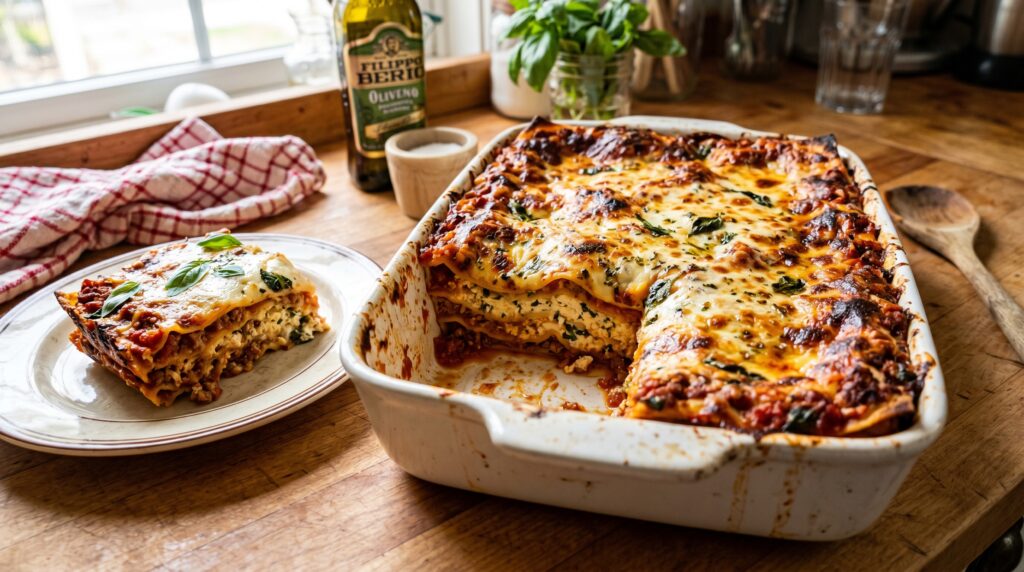
Prep time: 30 minutes | Cook time: 50 minutes | Protein: ~35g per serving | Serves: 8
Cottage cheese lasagna replaces the conventional ricotta layer with cottage cheese — creating a lasagna that is more protein-rich, slightly lighter, and genuinely delicious. Many Italian-American home cooks have used cottage cheese in lasagna for generations with excellent results.
Key ingredients: Lasagna noodles (12), ground beef or turkey Bolognese sauce (as standard), cottage cheese layer: full-fat cottage cheese (700g), egg (1), Parmesan (50g), fresh flat-leaf parsley, nutmeg, sea salt, white pepper — combined, shredded mozzarella (200g), Parmesan (60g)
The cottage cheese layer: Combine cottage cheese, egg, Parmesan, parsley, nutmeg, salt, and white pepper. The egg binds the mixture, and the cottage cheese sets slightly during baking, creating a layer of firmer, more cohesive consistency than ricotta alone.
What makes it special: Cottage cheese’s slightly higher moisture content compared to ricotta creates a lasagna that is more tender and less dry — the moisture distributes through the pasta layers during baking, producing a lasagna with a more consistently moist, silky texture throughout.
8. Cottage Cheese Egg Scramble
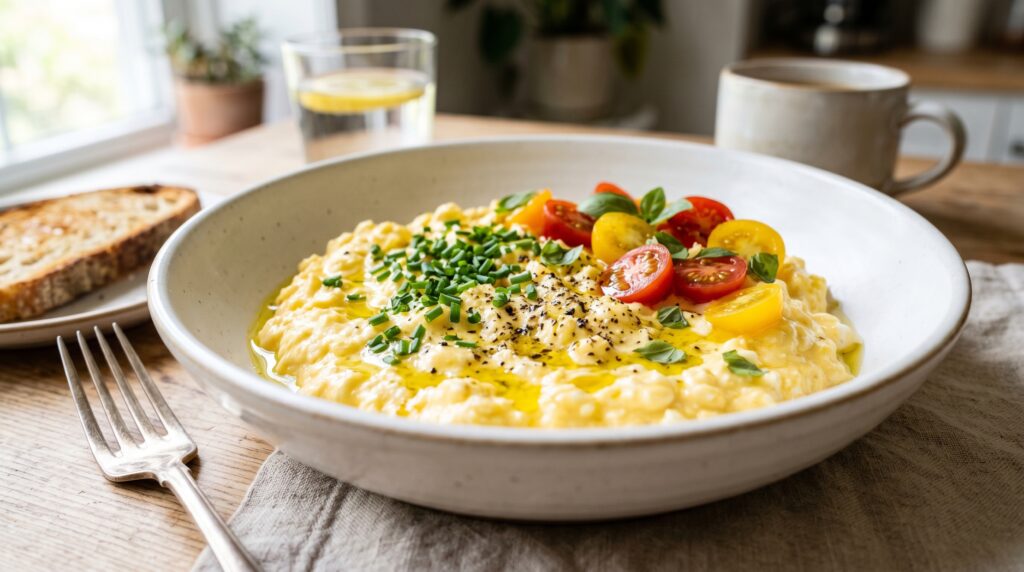
Prep time: 5 minutes | Cook time: 8 minutes | Protein: ~30g | Serves: 1
Cottage cheese egg scramble is the most protein-rich, most genuinely extraordinary egg breakfast in this collection — folding full-fat cottage cheese into scrambled eggs in the final moments of cooking creates pockets of extraordinary creaminess and adds approximately 14g of additional protein to a standard scrambled egg serving.
Key ingredients: Eggs (3 large), full-fat cottage cheese (80g — folded through off the heat), butter (15g), fresh chives, sea salt, cracked black pepper, optional: fresh herbs, chili flakes
The fold-in technique: Scramble the eggs using the low-and-slow French technique until almost set. Remove from heat. Add the cottage cheese and fold through gently — do not stir vigorously, which would break the curds. The residual heat warms the cottage cheese without cooking it further, creating pockets of cool, creamy cheese throughout the warm eggs.
What makes it special: The contrast between the warm, just-set scrambled eggs and the cool, slightly tangy cottage cheese pockets creates a temperature and texture contrast in every bite — making this the most texturally interesting and most genuinely satisfying scrambled egg preparation in this entire collection.
9. Cottage Cheese Flatbread
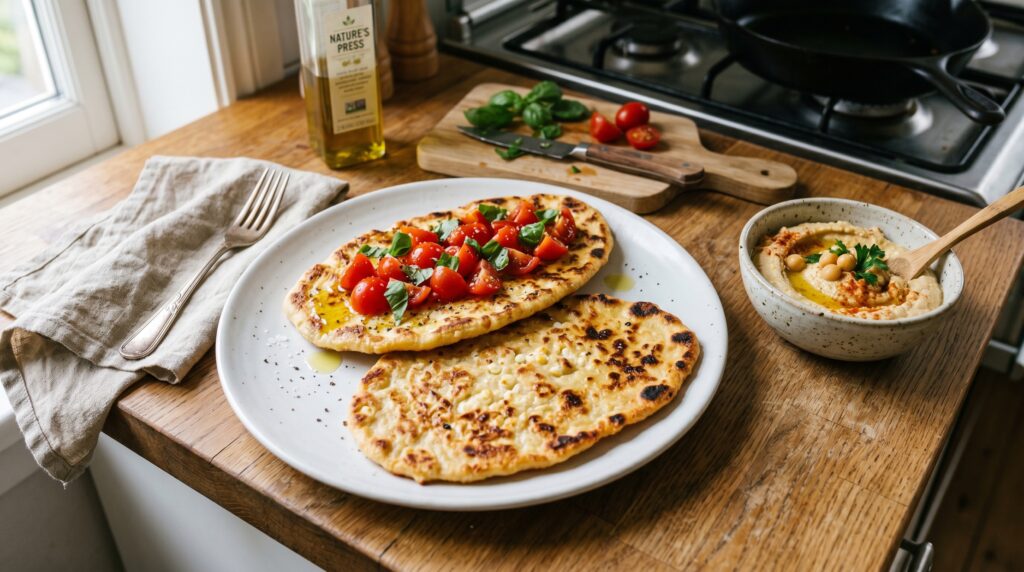
Prep time: 5 minutes | Cook time: 10 minutes | Protein: ~18g | Serves: 2
Cottage cheese flatbread — a two-ingredient preparation of cottage cheese and self-raising flour — creates a soft, slightly tangy flatbread of genuine quality in under 15 minutes with no yeast, no rising time, and approximately 18g of protein per serving.
Key ingredients: Full-fat cottage cheese (200g), self-raising flour (150g — or plain flour + 1 tsp baking powder), sea salt (½ tsp), optional: dried herbs (oregano, rosemary), garlic powder
Method: Combine cottage cheese, flour, and salt until a soft dough forms. Divide into 4 pieces. Roll each piece thin on a floured surface. Cook in a dry non-stick pan over medium heat for 2–3 minutes per side until golden.
What makes it special: The cottage cheese’s lactic acid activates the baking powder slightly more effectively than plain milk, producing a flatbread with more lift and a more complex flavor. The cheese also provides a slight richness that makes these flatbreads genuinely satisfying as a base for toppings.
Dips, Spreads, and Quick Preparations
10. Creamy Cottage Cheese Dip
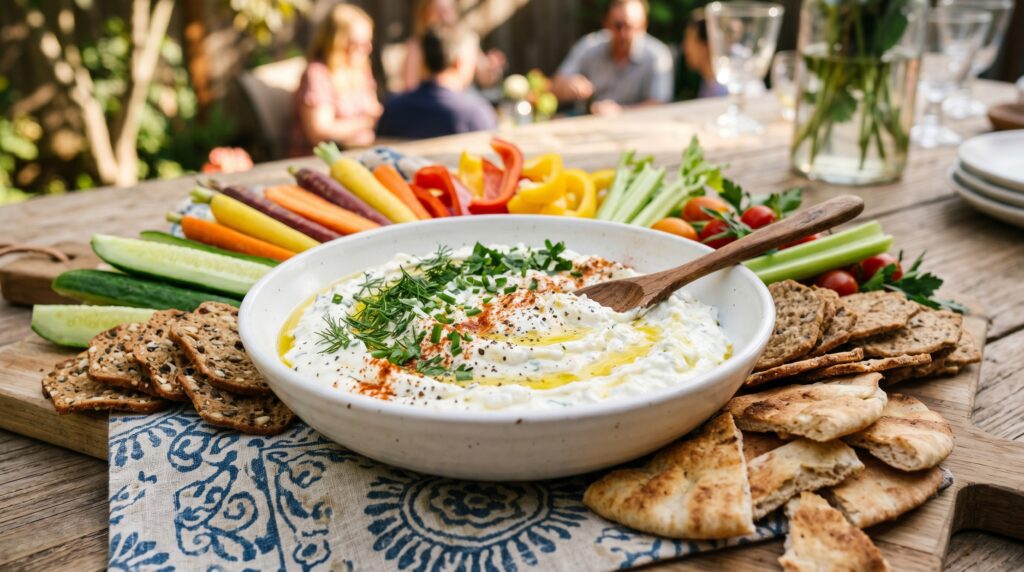
Prep time: 10 minutes | No cook | Protein: ~14g per serving | Serves: 6
Creamy cottage cheese dip is the most practical, most protein-rich alternative to conventional cream cheese or sour cream dips — blended smooth cottage cheese creates a dip of extraordinary creaminess and complexity with significantly more protein than any cream-based equivalent.
Key ingredients: Full-fat cottage cheese (400g — blended completely smooth), fresh chives (2 tbsp, finely chopped), fresh dill (2 tbsp, finely chopped), fresh flat-leaf parsley (2 tbsp, finely chopped), garlic (1 clove, minced), fresh lemon juice (1 tbsp), extra virgin olive oil (2 tbsp), smoked paprika (for garnish), sea salt, cracked black pepper
What makes it special: Blended cottage cheese’s texture — completely smooth, slightly thicker than Greek yogurt, slightly thinner than cream cheese — creates a dip with an ideal consistency for scooping that is simultaneously light and satisfying. The herb additions give it genuine freshness and visual appeal.
11. Cottage Cheese Cucumber Salad
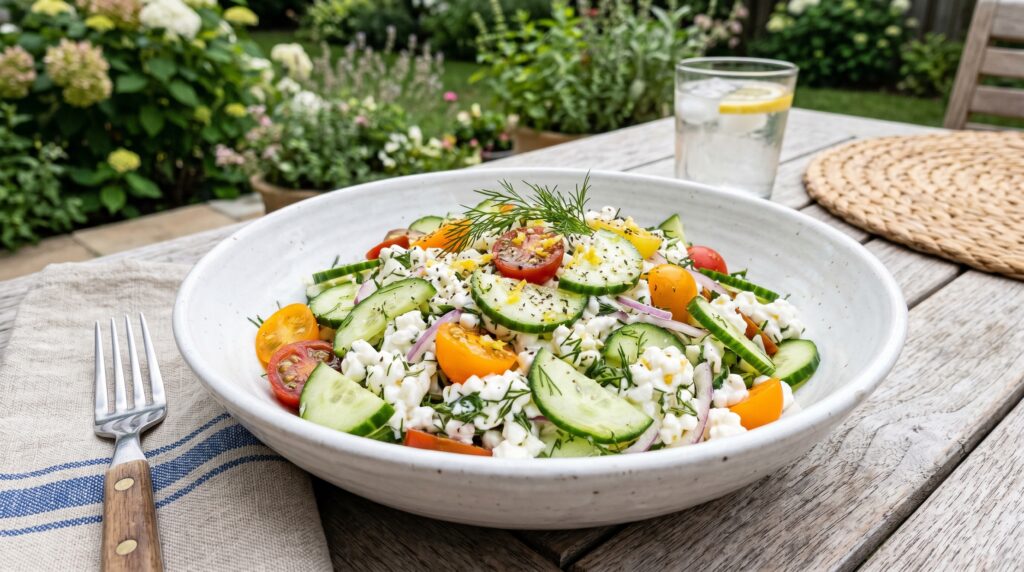
Prep time: 10 minutes | No cook | Protein: ~20g | Serves: 2
Cottage cheese cucumber salad is the most refreshing, most effortlessly assembled savory cottage cheese preparation — the cool, creamy cottage cheese with crisp cucumber, fresh dill, and lemon creates a salad of genuine freshness and surprising elegance.
Key ingredients: Full-fat cottage cheese (250g — whole curd, not blended), English cucumber (1, thinly sliced), red onion (¼, very finely sliced), cherry tomatoes (8, halved), fresh dill (generous amount), fresh lemon juice and zest (1 lemon), extra virgin olive oil (1 tbsp), honey (½ tsp), sea salt, cracked black pepper
What makes it special: The whole-curd cottage cheese — its individual curds intact — creates a salad with textural variety that blended cottage cheese cannot provide. Each curd is slightly different from the others, and the fresh vegetables and herbs create a salad of genuinely interesting, varied textures.
12. Cottage Cheese Pizza
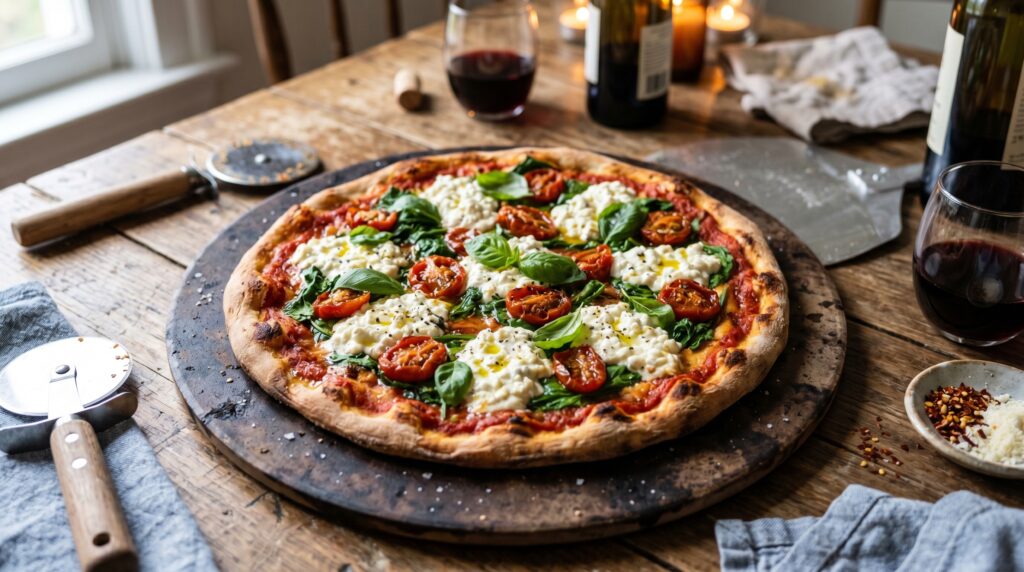
Prep time: 15 minutes | Cook time: 12 minutes | Protein: ~28g | Serves: 2
Cottage cheese pizza uses dollops of full-fat cottage cheese across the pizza surface as a ricotta-style topping — creating a pizza of more protein, more creaminess, and more genuine flavor than mozzarella alone provides.
Key ingredients: Pizza base (store-bought or homemade), tomato sauce, full-fat cottage cheese (200g — dolloped across the surface rather than blended into the sauce), baby spinach, roasted cherry tomatoes, fresh basil (added after baking), garlic oil drizzle, sea salt, red chili flakes
What makes it special: The cottage cheese dollops partially melt and partially retain their structure during baking — creating a pizza with varied texture across the surface, some bites creamier, some more structured, all more protein-rich than a conventional cheese pizza.
13. Cottage Cheese Stuffed Sweet Potato
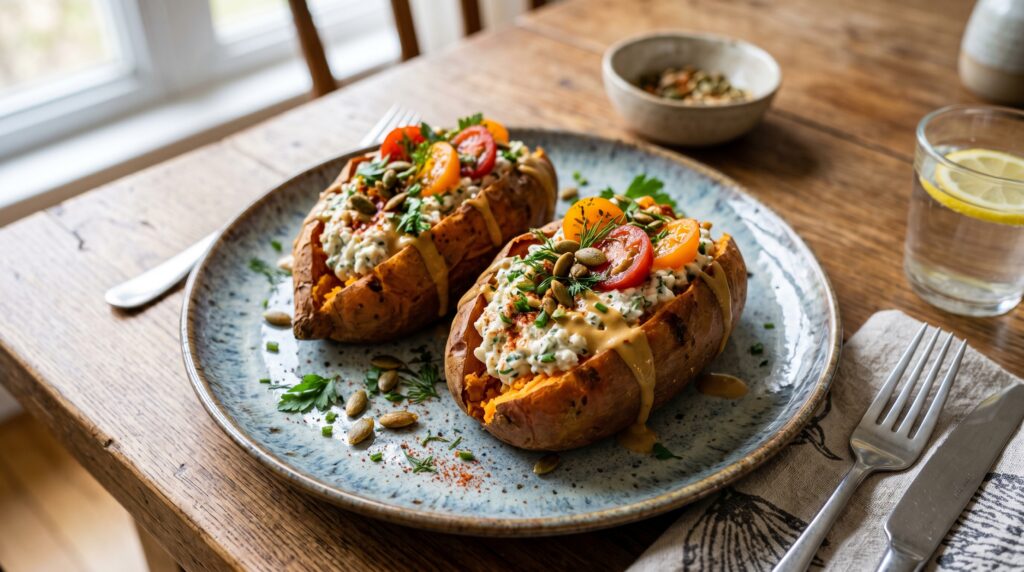
Prep time: 5 minutes | Cook time: 45 minutes | Protein: ~24g | Serves: 2
Cottage cheese stuffed sweet potato is the most nutritionally complete, most effortless high-protein meal in this collection — a baked sweet potato filled with herbed cottage cheese creates a genuinely satisfying, complete meal with minimal active preparation time.
Savory filling: Full-fat cottage cheese (200g), fresh chives, fresh dill, garlic powder (¼ tsp), smoked paprika, lemon zest, sea salt. Top with: sliced cherry tomatoes, tahini drizzle, toasted pumpkin seeds
Sweet filling: Full-fat cottage cheese (200g), cinnamon (½ tsp), vanilla extract (a few drops), honey (1 tsp). Top with: chopped toasted pecans, a drizzle of maple syrup
What makes it special: The sweet potato’s natural sweetness contrasts beautifully with the cottage cheese’s slight tang in the savory version, and complements it perfectly in the sweet version — creating two completely different preparations from the same primary ingredients.
14. Cottage Cheese Quiche
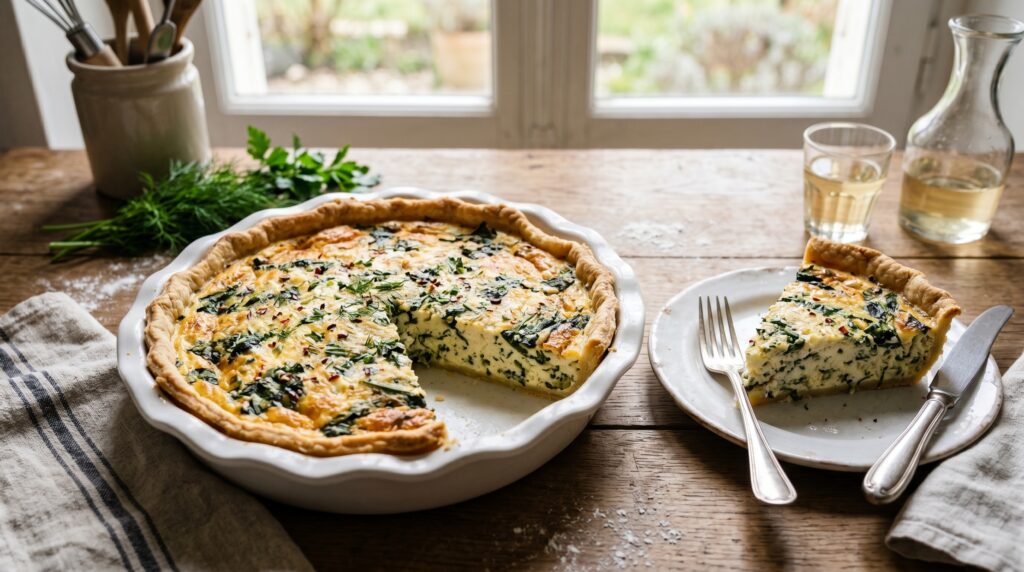
Prep time: 20 minutes + chilling | Cook time: 40 minutes | Protein: ~22g per serving | Serves: 8
Cottage cheese quiche replaces the conventional cream and egg custard with cottage cheese and eggs — creating a quiche of significantly more protein, slightly less fat, and genuinely excellent flavor with a slightly more complex, tangy custard character.
Key ingredients: Shortcrust pastry case (blind baked), cottage cheese quiche filling: full-fat cottage cheese (350g — blended smooth), eggs (4), Parmesan (40g), fresh spinach (100g, wilted and squeezed dry), shallots (2, diced and softened), fresh chives, fresh dill, nutmeg, sea salt, white pepper
Method: Blend cottage cheese completely smooth. Whisk with eggs, Parmesan, and seasonings. Add spinach, shallots, and herbs. Pour into the blind-baked pastry case. Bake at 150°C (300°F) for 35–40 minutes until just set with a slight wobble.
What makes it special: The cottage cheese’s slight acidity creates a quiche custard with a more complex, slightly tangy flavor than a cream-only version — the tanginess amplifies the egg flavor and creates a quiche that tastes genuinely sophisticated rather than simply rich.
15. Cottage Cheese Cheesecake
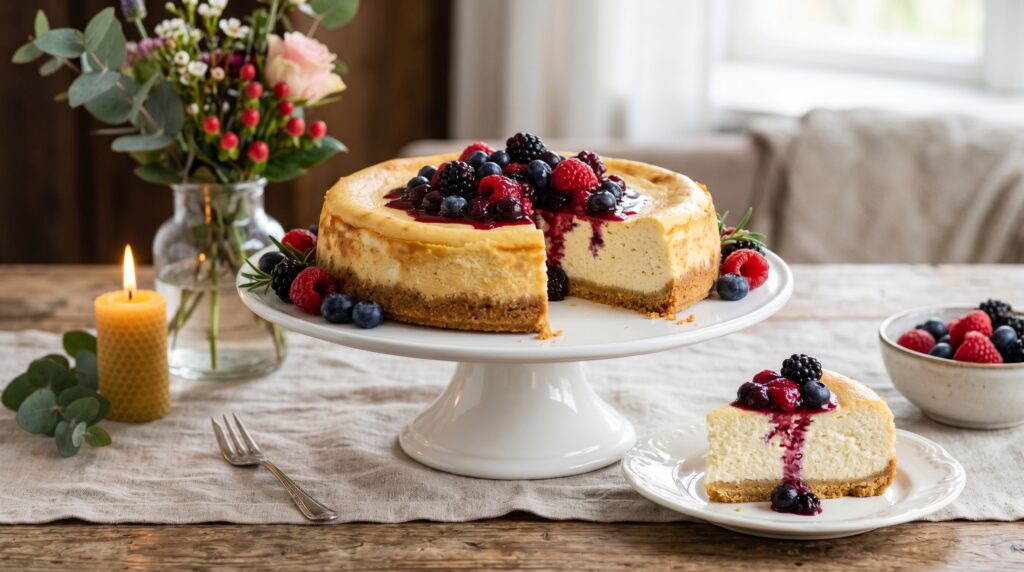
Prep time: 20 minutes + 4 hours chilling | Cook time: 50 minutes | Protein: ~14g per serving | Serves: 10
Cottage cheese cheesecake uses blended full-fat cottage cheese as the primary filling ingredient — creating a cheesecake that is lighter, more protein-rich, and with a more complex, slightly tangy flavor than a cream cheese-based cheesecake.
Key ingredients: Biscuit base: digestive biscuits (200g, crushed), butter (80g, melted), sugar (2 tbsp). Cottage cheese filling: full-fat cottage cheese (600g — blended completely smooth), cream cheese (200g — for stability and richness), eggs (3), caster sugar (150g), vanilla extract (2 tsp), fresh lemon juice and zest (1 lemon), cornstarch (2 tbsp — for setting), sea salt. Topping: fresh berry compote (berries + a little sugar + lemon juice)
The drain step: Drain the cottage cheese through a fine sieve for 1–2 hours before blending — removing excess moisture prevents a wet, poorly set cheesecake. Then blend completely smooth before combining with other ingredients.
What makes it special: The combination of blended cottage cheese and cream cheese creates a filling that is simultaneously lighter than a pure cream cheese cheesecake and more complex in flavor — the cottage cheese’s mild tang adds a subtle complexity that makes this cheesecake more interesting than a conventional version.
Cottage Cheese Nutrition Reference
| Preparation | Protein per Serving | Calories | Key Nutrients |
|---|---|---|---|
| CC Bowl (250g) | 28g | ~300 | Calcium, B12, Selenium |
| CC Pancakes | 22g | ~350 | Complete protein, Calcium |
| CC Toast | 20g | ~280 | Complete protein, Carbs |
| CC Pasta Sauce | 28g | ~450 | Complete protein, Fiber |
| CC Lasagna | 35g | ~520 | Complete protein, Calcium |
| CC Egg Scramble | 30g | ~320 | Complete protein, Choline |
| CC Flatbread | 18g | ~280 | Complete protein, Carbs |
| CC Dip | 14g | ~120 | Calcium, Complete protein |
| CC Quiche | 22g | ~380 | Complete protein, Calcium |
| CC Cheesecake | 14g | ~320 | Calcium, Complete protein |
Make-Ahead and Storage Guide
Unopened cottage cheese: Refrigerate according to the use-by date. Keep at the back of the refrigerator (coldest area).
Opened cottage cheese: Use within 5–7 days. Store with a tight-fitting lid or transfer to an airtight container.
Blended cottage cheese: Refrigerate for up to 5 days. Stir before using — it may separate slightly.
Drained cottage cheese: Refrigerate for up to 5 days.
Cooked preparations (quiche, lasagna, pasta): Refrigerate for 3–4 days. Reheat gently — high heat can cause the cottage cheese to separate.
Freezing: Cottage cheese does not freeze well — the texture becomes grainy and the curds separate on thawing. Use the blended version in cooked preparations that are then frozen (casseroles, pasta sauces) for best results.
For comprehensive food safety guidance, our Food Safety 101: Storage, Handling, and Temperature Guide is essential reading.
Frequently Asked Questions
Can I substitute cottage cheese for ricotta in any recipe?
Yes — full-fat cottage cheese is an excellent ricotta substitute in most applications. For preparations where texture is important (lasagna, stuffed pasta), blend the cottage cheese completely smooth and drain if needed. For preparations where some texture is acceptable (pizza topping, salads), use whole-curd cottage cheese directly.
Why does my cottage cheese sauce become grainy when heated?
The protein in cottage cheese can denature and become grainy if heated too aggressively. To prevent this: blend the cottage cheese completely smooth before adding to hot preparations, add it off the heat or over very low heat, and never allow a cottage cheese sauce to boil. Adding a small amount of pasta cooking water or other starchy liquid before the cottage cheese helps stabilize the sauce.
Is full-fat or low-fat cottage cheese better for cooking?
Full-fat cottage cheese is significantly better for most cooking applications — its higher fat content carries flavor, creates more satisfying satiety, and behaves more stably when heated (less likely to become grainy). Low-fat cottage cheese works well in baked goods and batters where the fat content is less critical. For any preparation where cottage cheese is a primary ingredient, use full-fat.
How do I make cottage cheese less watery?
Drain through a fine sieve or cheesecloth for 30–120 minutes. The drained cottage cheese is significantly thicker, more concentrated, and better suited for applications requiring a firmer texture (cheesecakes, thick dips, stuffed vegetable fillings).
According to Harvard Health Publishing, cottage cheese’s casein protein — which constitutes approximately 80% of its protein content — is a slow-digesting protein that provides a more sustained amino acid release than whey, making it particularly effective for muscle protein synthesis when consumed throughout the day and especially before sleep, when overnight muscle repair requires sustained amino acid availability.
Conclusion
From the effortless pleasure of a cottage cheese bowl with fresh berries to the impressive ambition of a cottage cheese cheesecake, from the quick protein boost of cottage cheese toast to the genuinely excellent pasta sauce of blended cottage cheese, from the crowd-pleasing satisfaction of cottage cheese lasagna to the creative ingenuity of a two-ingredient cottage cheese flatbread — these 15 best cottage cheese recipes demonstrate that this nutritionally extraordinary ingredient is also one of the most genuinely versatile, most practically useful, and most consistently delicious ingredients available in the modern kitchen.
The cottage cheese revival is not merely a nutritional trend but a culinary rediscovery — the recognition that an ingredient dismissed as uninspiring diet food is in fact a genuinely excellent, deeply versatile cooking ingredient of remarkable quality. Blended smooth or left textured, served sweet or savory, used raw or cooked, in quick snacks or celebration preparations — cottage cheese rewards creativity and attention with results that are consistently excellent.
For more high-protein recipes, nutritional guidance, and culinary inspiration across every meal category and skill level, explore our full collection at skillsinthekitchen.com.