
10 Flavorful Sauce Recipes: Transform Any Dish in Minutes
Introduction
A great sauce is the most transformative element in all of cooking. The same piece of grilled chicken, the same bowl of pasta, the same slice of roasted eggplant becomes something entirely different — something genuinely extraordinary — in the presence of the right sauce. The history of haute cuisine is, in many ways, the history of sauce development: the French mother sauces and their derivatives, the intensely spiced pastes of Indian cooking, the fresh, herbaceous sauces of Latin America, the fermented, complex condiments of East Asia. Every great culinary tradition in the world has understood the same fundamental truth — the sauce is where the cook’s skill is most on display and where the eater’s experience is most profoundly shaped.
What separates a great sauce from a merely adequate one is rarely exotic ingredients or complex technique. It is almost always a combination of three things: properly developed flavors (through caramelization, reduction, or correct emulsification), precise seasoning (the right balance of acid, salt, fat, and sweetness), and quality ingredients (because a sauce amplifies the character of every ingredient it contains, for better and for worse).
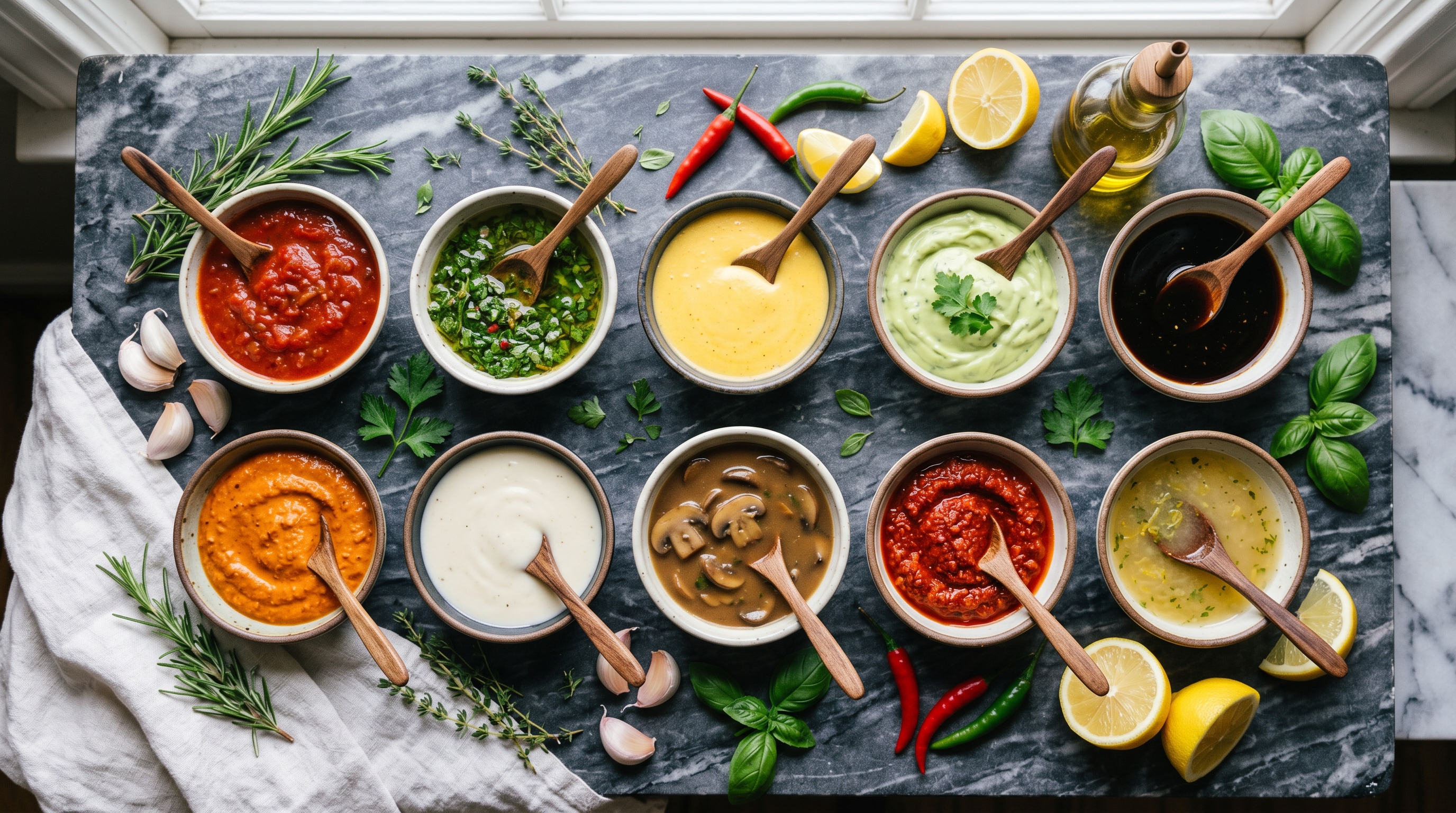
In this guide, we have compiled 10 of the most flavorful, most versatile, and most genuinely impactful sauce recipes — spanning the great French classics, vibrant Latin American preparations, bold Middle Eastern pastes, rich Asian-inspired glazes, and clever everyday sauces that transform simple ingredients into genuinely exciting meals. Every sauce is explained not just as a recipe but as a technique — understanding why each sauce works makes you not just a recipe follower but a sauce maker.
Let’s build something extraordinary.
The Principles of Great Sauce Making
Flavor Development: The Foundation of Every Great Sauce
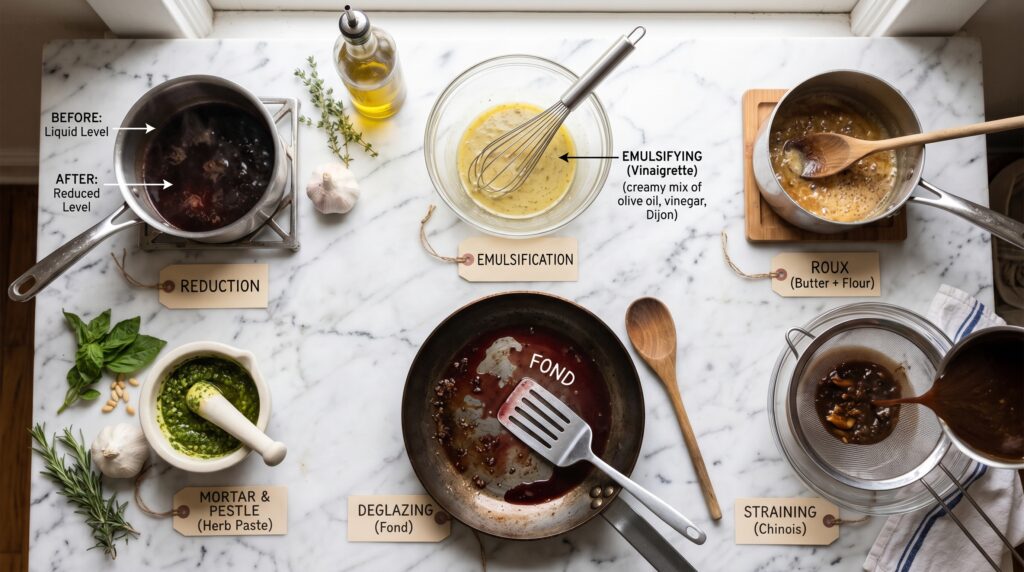
Great sauce flavor comes from the development of complexity through heat — caramelization, the Maillard reaction, reduction, and the blooming of spices. Each of these processes creates new flavor compounds that raw ingredients alone do not contain. A tomato sauce cooked for 5 minutes tastes of raw tomatoes; the same sauce cooked for 30 minutes with properly caramelized aromatics tastes of something altogether richer and more complex.
The Acid-Fat-Salt-Sweet Balance
Every great sauce is a balance of these four elements. Acid (lemon juice, vinegar, wine) provides brightness and cuts through richness. Fat (butter, olive oil, cream) provides body and carries flavor. Salt amplifies all other flavors. Sweetness (a pinch of sugar, honey, caramelized onion) rounds sharp edges. Learning to identify which element is missing — tasting and adjusting — is the most important single skill in sauce making.
Reduction: Concentration of Flavor
Simmering a sauce reduces its volume but concentrates its flavor — the water evaporates while the flavor compounds remain. A properly reduced sauce has a depth and intensity that an unreduced one cannot match. Never rush reduction by increasing the heat excessively — gentle, patient reduction produces a more evenly concentrated, cleaner-tasting result.
The Finishing Touch
Almost every great sauce benefits from a finishing element added off the heat: cold butter swirled into a pan sauce for gloss and richness, fresh herbs added at the last moment for fragrance, a squeeze of lemon for brightness, a drizzle of the finest olive oil for depth. These finishing additions are as important as the cooking that precedes them.
Our Master the Art of Sauce Making: Basic Techniques covers these principles in comprehensive detail.
10 Flavorful Sauce Recipes
1. Classic Marinara Sauce
Prep time: 5 minutes | Cook time: 25 minutes | Makes: approximately 500ml
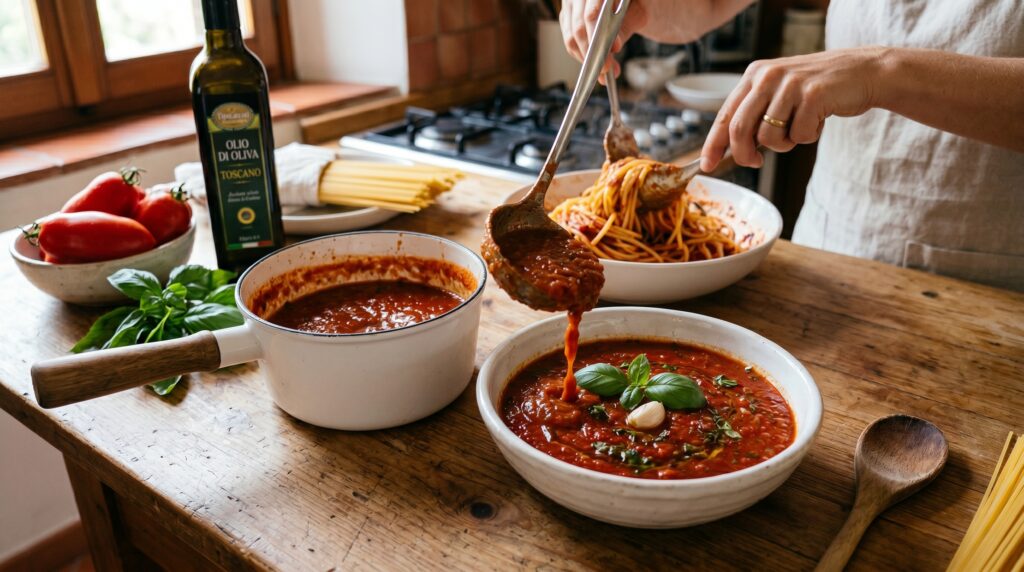
Classic marinara is the most foundational, most versatile Italian sauce in existence — a genuinely great marinara, made with quality San Marzano tomatoes, properly caramelized garlic, and finished generously with fresh basil and excellent olive oil, is one of the most deeply satisfying sauces available. Its simplicity is its genius.
Key ingredients: San Marzano canned whole tomatoes (400g tin — the variety matters enormously, their low acidity and natural sweetness produce a far superior sauce), extra virgin olive oil (3 tbsp — quality counts), garlic (4 cloves, thinly sliced), dried red chili flakes (a generous pinch), fresh basil (a small bunch — added off the heat), sea salt, a pinch of sugar (if needed — balances any residual acidity)
Method: Heat olive oil in a wide saucepan over medium heat. Add the sliced garlic — cook gently until golden, approximately 3 minutes. The garlic must be golden, not browned or burned. Add chili flakes and cook for 30 seconds. Add the tomatoes — crush each one by hand as it goes in (this produces a better texture than crushing in advance or blending). Season with salt. Simmer for 20–25 minutes, stirring occasionally, until slightly thickened and the oil has separated slightly at the edges — this separation indicates the sauce is properly cooked. Taste, adjust salt and sugar. Remove from heat and add fresh basil generously.
The San Marzano difference: San Marzano tomatoes — grown in the volcanic soil of the Sarno valley near Naples — have a significantly lower acidity, higher natural sweetness, and more complex flavor than standard canned tomatoes. The difference in the finished sauce is immediately apparent. Always use them when making marinara.
What makes it special: Adding the fresh basil entirely off the heat — stirring through as the sauce cools slightly — preserves the basil’s extraordinary, slightly clove-like, sweet fragrance that cooking destroys completely. The basil should smell intensely alive in the finished sauce.
Versatility: Use as pasta sauce, pizza base, dipping sauce for bread, base for shakshuka, sauce for meatballs, topping for grilled chicken. This is the sauce that, once mastered, earns its permanent place in every home cook’s repertoire.
2. Argentine Chimichurri
Prep time: 15 minutes | No cook | Makes: approximately 200ml
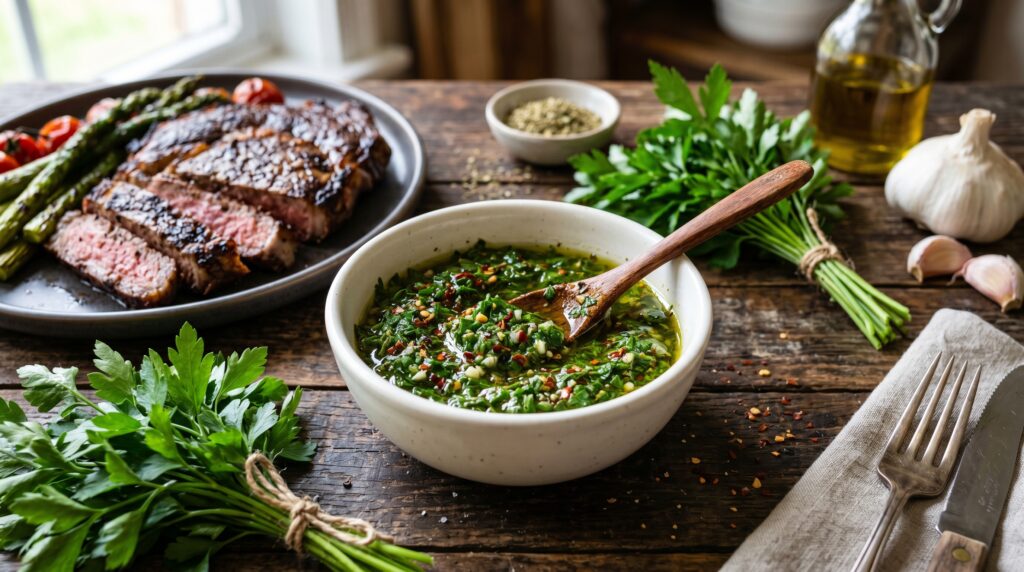
Chimichurri is the Argentine herb sauce that is one of the great condiments of the world — an intensely herbaceous, bright, garlicky, slightly spicy emulsion of flat-leaf parsley, garlic, red wine vinegar, and olive oil that transforms grilled meat, fish, or vegetables with immediate and dramatic effect.
Key ingredients: Fresh flat-leaf parsley (a very large bunch — 60g leaves only, no stems), fresh oregano (2 tbsp — or ½ tsp dried), garlic (4 cloves), red wine vinegar (3 tbsp), extra virgin olive oil (120ml — the quality matters here), dried red chili flakes (1 tsp), sea salt (1 tsp), cracked black pepper
Method (hand-chopped, authentic): Finely chop the parsley and oregano by hand — do not use a food processor, which produces a purée rather than a sauce. Mince the garlic very finely. Combine herbs and garlic in a bowl. Add vinegar, chili flakes, salt, and pepper. Add olive oil gradually, stirring to combine. The sauce should be chunky and textured, not smooth. Rest for 30 minutes before serving — the resting time allows the flavors to meld and the vinegar to slightly tame the raw garlic’s sharpness.
Hand-chopped vs food processor: The difference between hand-chopped and blended chimichurri is significant — hand-chopping produces a sauce with textural interest, distinct herb character, and a slightly more complex flavor. A food processor produces a smooth, undifferentiated paste that loses much of the charm.
What makes it special: The red wine vinegar — providing sharp, slightly fruity acidity — creates the essential brightness that makes chimichurri so effective as a counterpoint to the richness of grilled meat. Without sufficient acid, chimichurri is merely herb oil; with it, it is one of the most compelling sauces in world cooking.
Versatility: Grilled steak, lamb chops, grilled chicken, roasted vegetables, fried eggs, grilled fish, as a marinade base.
3. Classic Béchamel
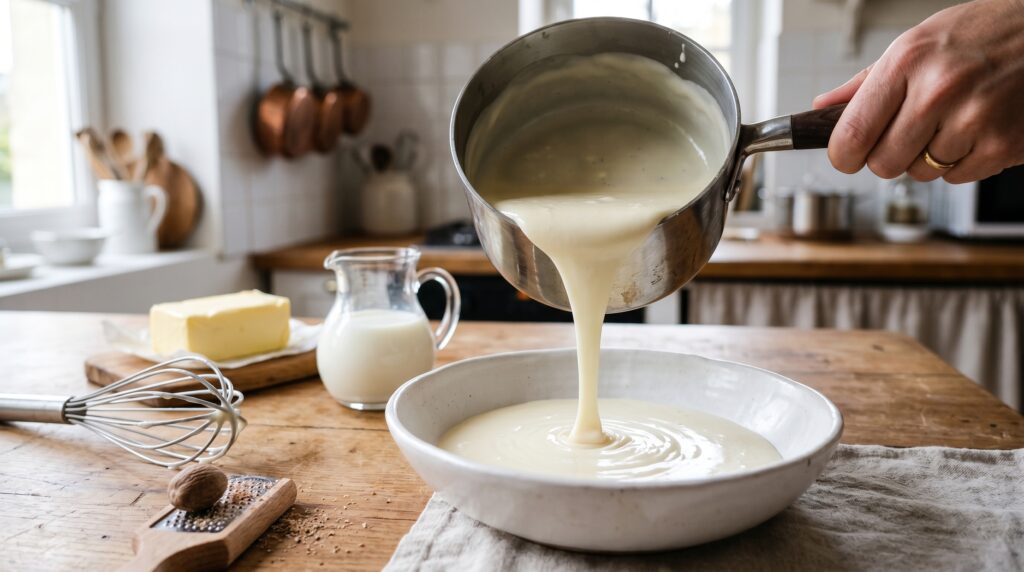
Prep time: 5 minutes | Cook time: 15 minutes | Makes: approximately 500ml
Béchamel is the most foundational of the French mother sauces — a roux-thickened, milk-based sauce that is simultaneously a recipe and a technique foundation for an extraordinary range of derivatives: Mornay (with cheese), Soubise (with onion), velouté variations, and the essential layer in lasagna, moussaka, and pasta bakes. Mastering béchamel is one of the most valuable investments a home cook can make.
Key ingredients: Unsalted butter (40g), plain flour (40g), whole milk (500ml — warmed), nutmeg (freshly grated — the defining seasoning), sea salt, white pepper (not black — which creates visible specks)
Method: Melt butter in a heavy-based saucepan over medium heat. Add flour all at once and cook, stirring constantly with a wooden spoon or whisk, for 2 minutes — this cooks out the raw flour taste. The roux should be pale golden and smell slightly nutty. Begin adding the warm milk gradually — add the first 100ml slowly, whisking constantly until completely smooth before adding more. Once all the milk is incorporated, continue cooking over medium heat, stirring constantly, until the sauce thickens — approximately 5 minutes. Season generously with salt, white pepper, and freshly grated nutmeg.
The roux cook: Two minutes of cooking the butter-flour roux is the minimum required to eliminate the raw flour flavor. Under-cooked roux produces a béchamel with a floury, slightly gluey taste. Over-cooked roux produces a Noisette (brown butter) roux that changes the sauce’s color and character.
The warm milk technique: Adding warm milk to a hot roux produces a smoother sauce than adding cold milk — the temperature difference between cold milk and hot roux can cause lumping as the flour contracts unevenly. If lumps do form, whisk vigorously off the heat or pass through a fine sieve.
What makes it special: Freshly grated nutmeg is the classic seasoning for béchamel — used in modest amounts, it adds a warm, slightly sweet, slightly spicy note of extraordinary subtlety that elevates the sauce from a neutral base to something with genuine character.
Versatility: Lasagna, moussaka, pasta bakes, croque monsieur, gratins, and cauliflower cheese.
4. Hollandaise Sauce

Prep time: 10 minutes | Cook time: 15 minutes | Makes: approximately 250ml (serves 4)
Hollandaise is the most technically demanding sauce in this collection and the one with the most dramatic rewards — a warm emulsion of egg yolks and clarified butter, balanced with lemon juice, it produces a sauce of extraordinary richness, delicacy, and flavor that is unlike anything else in cooking.
Key ingredients: Egg yolks (3 large — room temperature), clarified butter (180g — unsalted butter melted and the milk solids skimmed off, kept warm), fresh lemon juice (2 tbsp), white wine vinegar (1 tbsp), warm water (1–2 tbsp — for adjusting consistency), sea salt, white pepper, cayenne (a pinch)
Method (double boiler): Whisk egg yolks and vinegar in a heatproof bowl over a saucepan of gently simmering water — the bowl must not touch the water. Whisk constantly until the mixture becomes pale, thick, and mousse-like — approximately 5 minutes. The yolks should have tripled in volume and leave a ribbon trail when the whisk is lifted. Remove from the heat. Begin adding the warm clarified butter in a very thin, slow stream, whisking constantly. If the butter is added too quickly, the emulsion breaks. Once all butter is incorporated, add lemon juice, season with salt, white pepper, and cayenne.
The temperature control: Hollandaise requires precise temperature management — the yolks must be warm enough to cook and emulsify but not so hot that they scramble. The water in the double boiler must be at a gentle simmer, never a rolling boil. Remove the bowl from the heat if the mixture feels very hot to the touch on the outside.
Broken hollandaise rescue: If the hollandaise breaks (the butter separates and the sauce becomes grainy or oily), whisk 1 tablespoon of cold water in a clean bowl, then very slowly whisk the broken sauce into the water, rebuilding the emulsion from scratch.
What makes it special: The combination of the emulsified egg yolk richness, the clarified butter’s pure, concentrated dairy character, and the bright lemon acidity creates a sauce of extraordinary, multi-layered flavor that has no equivalent in any other culinary tradition.
Versatility: Eggs Benedict, asparagus, poached salmon, steamed vegetables, grilled artichokes.
5. Romesco Sauce
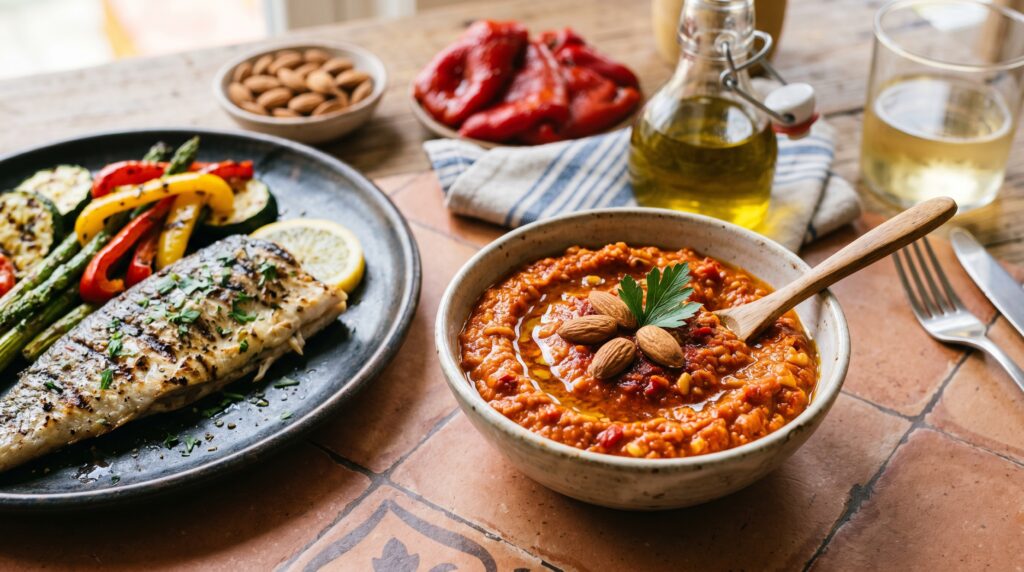
Prep time: 15 minutes | Cook time: 5 minutes (toasting nuts) | Makes: approximately 300ml
Romesco is the great Catalan sauce — a boldly flavored paste of roasted red peppers, toasted almonds, tomatoes, garlic, and smoked paprika that is one of the most versatile, most deeply flavored, and most genuinely extraordinary sauces in the Spanish repertoire.
Key ingredients: Roasted red peppers (3 large — jarred or freshly roasted), toasted blanched almonds (80g), canned crushed tomatoes (100ml — or 2 ripe fresh tomatoes, roasted), garlic (3 cloves), smoked paprika (1½ tsp), sherry vinegar or red wine vinegar (2 tbsp), extra virgin olive oil (80ml), dried chili flakes (¼ tsp), sea salt, cracked black pepper
Method: Toast the almonds in a dry pan until golden — watch carefully, they burn quickly. Combine all ingredients in a food processor. Process to a slightly chunky paste — not completely smooth. The sauce should have some texture from the almonds. Season and adjust acid (more vinegar for brightness), heat (more chili), or consistency (more olive oil for a looser sauce).
The toasted almond: Toasting the almonds until genuinely golden — not just warmed — is the technique that creates the nutty, caramelized depth that defines great romesco. Untoasted almonds produce a pale, flat sauce with no depth.
What makes it special: The combination of the sweet, smoky roasted pepper, the nutty toasted almond, and the smoked paprika creates a sauce of extraordinary complexity that tastes simultaneously rich and bright — a combination that works with virtually everything.
Versatility: Grilled vegetables, grilled fish, chicken, and lamb, as a spread on sourdough, as a dipping sauce for bread, and tossed with pasta.
6. Teriyaki Glaze
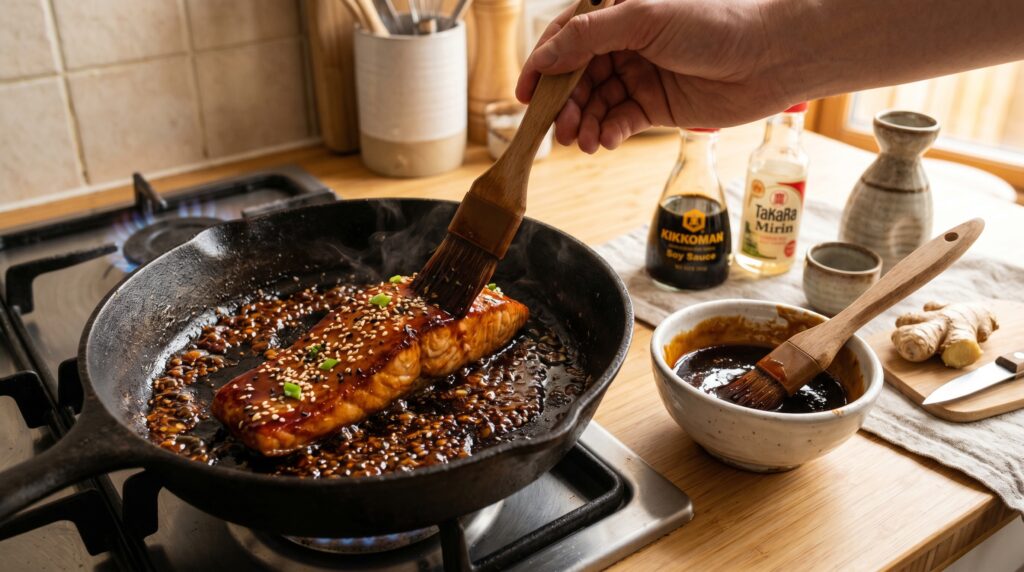
Prep time: 5 minutes | Cook time: 10 minutes | Makes: approximately 150ml
Teriyaki glaze is the most versatile, most immediately impactful Asian sauce in this collection — the combination of soy sauce, mirin, sake (or dry sherry), and honey reduced to a glossy, sticky glaze of concentrated sweetness and depth creates a coating that caramelizes magnificently against proteins and produces some of the most visually beautiful cooking results available.
Key ingredients: Soy sauce (60ml — the saltiness and umami foundation), mirin (60ml — sweet rice wine, the essential teriyaki sweetness), sake or dry sherry (30ml), honey (1 tbsp — additional sweetness and helps the glaze achieve a sticky, caramelized consistency), fresh ginger (1 tsp, grated), garlic (1 small clove, grated), cornstarch (1 tsp dissolved in 1 tbsp water — for thickening)
Method: Combine soy sauce, mirin, sake, honey, ginger, and garlic in a small saucepan. Bring to a gentle simmer over medium heat. Add the cornstarch slurry and stir constantly until the sauce thickens — approximately 2–3 minutes. It should coat the back of a spoon and leave a clean line when a finger is drawn through it.
The caramelization finish: When applied to cooking proteins in the final 2 minutes of cooking, the glaze’s sugars caramelize against the hot surface — producing the characteristic sticky, lacquered finish. Roll the protein continuously in the thickening glaze for maximum even coating and caramelization.
What makes it special: Mirin — sweet Japanese rice wine — is the essential ingredient that separates authentic teriyaki from a simple soy-based sauce. Its combination of sweetness, mild alcohol, and glutamates creates the characteristic flavor that defines Japanese teriyaki. It cannot be substituted with additional sugar.
Versatility: Salmon, chicken, beef, tofu, eggplant, as a noodle sauce, as a dipping sauce, as a marinade.
7. Harissa
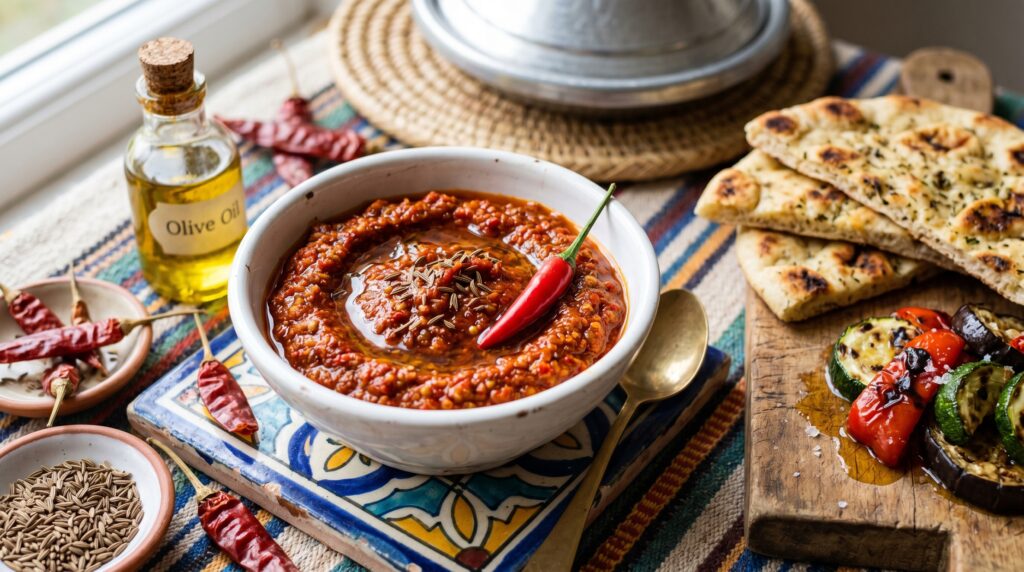
Prep time: 20 minutes | Cook time: 10 minutes | Makes: approximately 200ml
Harissa is the North African chili paste that is one of the most impactful, most versatile, and most genuinely complex condiments in world cooking — a deeply spiced blend of dried and fresh chilies, garlic, cumin, caraway, and olive oil that adds immediate depth and warmth to virtually everything it touches.
Key ingredients: Dried chilies (a mix of mild and hot — guajillo or ancho for depth + cayenne for heat, total 50g, soaked in boiling water for 20 minutes), fresh red chilies (2–3), garlic (4 cloves), cumin seeds (1 tsp, toasted), caraway seeds (½ tsp, toasted), coriander seeds (½ tsp, toasted), smoked paprika (1 tsp), fresh lemon juice (1 tbsp), extra virgin olive oil (60ml), sea salt
Method: Toast the whole spices in a dry pan until fragrant — 2 minutes. Drain the soaked dried chilies. Combine all ingredients in a food processor and process to a smooth paste. Taste — adjust heat (more cayenne), acidity (more lemon), or seasoning (more salt). Transfer to a jar, cover the surface with a thin layer of olive oil.
The spice toasting: Toasting the cumin, caraway, and coriander seeds before grinding releases their essential oils — producing a spice character of far greater depth and fragrance than pre-ground spices. This step takes 2 minutes and makes a significant difference.
What makes it special: The combination of caraway (earthy, slightly anise-like, distinctly North African) with cumin and coriander creates the characteristic flavor profile of harissa that distinguishes it from simple chili paste. The caraway is the ingredient that makes harissa taste unmistakably Tunisian.
Storage: Cover with olive oil and refrigerate for up to 2 weeks.
Versatility: Eggs, roasted vegetables, grilled chicken, lamb, fish, stir into soups and stews, spread on flatbread, mixed into yogurt as a dip.
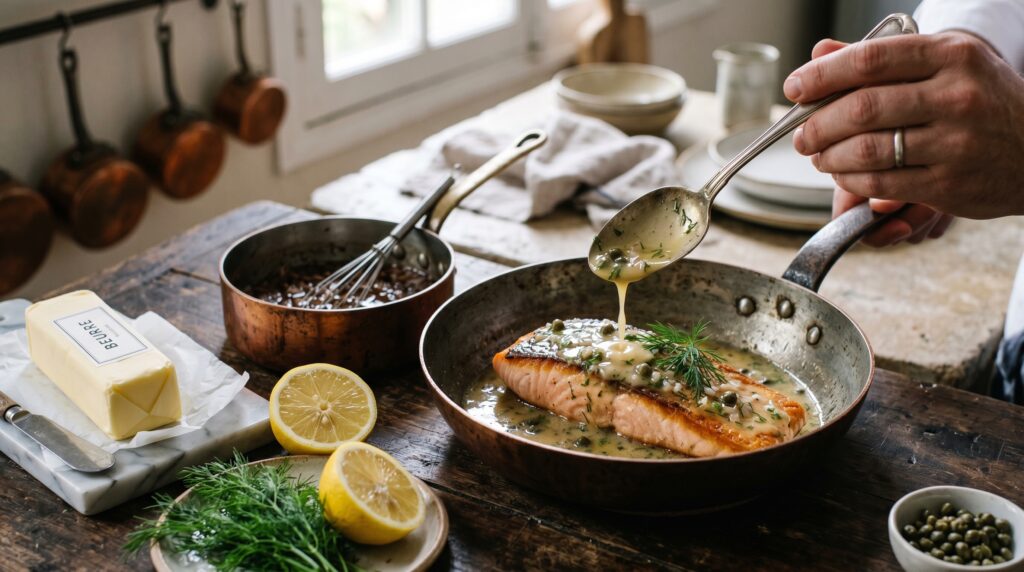
8. Lemon Butter Sauce (Beurre Blanc)
Prep time: 5 minutes | Cook time: 10 minutes | Makes: approximately 150ml (serves 4)
Lemon butter sauce — a simplified beurre blanc — is the elegant, silky emulsion of cold butter whisked into a shallot and lemon reduction that produces the most sophisticated, most restaurant-quality pan sauce available to the home cook. Mastering it unlocks an entirely new level of weeknight cooking.
Key ingredients: Cold unsalted butter (150g, cut into 2cm cubes — must be genuinely cold), shallots (2, finely minced), dry white wine or chicken stock (60ml), fresh lemon juice (2 tbsp), lemon zest (from 1 lemon), fresh dill or parsley (finely chopped), capers (1 tbsp), sea salt, white pepper
Method: Simmer shallots with white wine and lemon juice until reduced to approximately 2 tablespoons — almost but not quite dry. Reduce the heat to the absolute minimum. Begin adding cold butter cubes one at a time, whisking constantly after each addition until completely incorporated before adding the next. The sauce must never boil — boiling breaks the emulsion. Once all butter is incorporated, add lemon zest, fresh herbs, and capers. Season and serve immediately.
The cold butter principle: Cold butter incorporated into a warm (not hot) reduction creates a warm, stable emulsion — the cold butter’s water content provides the liquid phase, and its fat provides the richness. Hot butter simply melts, and the sauce separates. The butter must be cold, and the sauce must never boil.
What makes it special: The combination of the reduced shallot and wine base (concentrated, slightly sweet, acidic) with the cold butter emulsion creates a sauce of extraordinary depth and silkiness — the richness of butter balanced by the brightness of lemon in a way that makes it one of the most elegant preparations in classical French cooking.
Versatility: Pan-seared fish (salmon, halibut, sole), scallops, steamed asparagus, grilled chicken, and poached eggs.
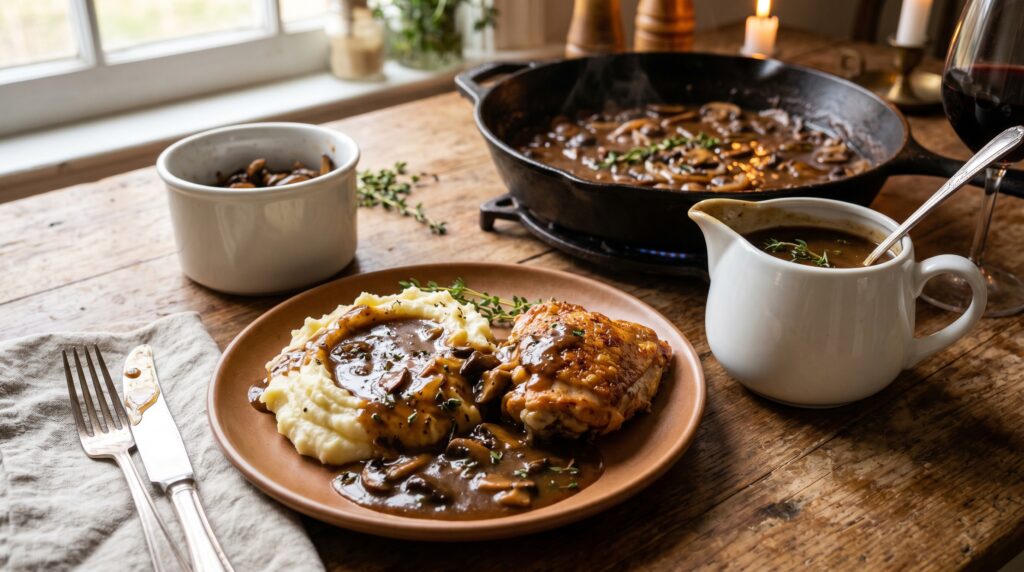
9. Mushroom Gravy
Prep time: 10 minutes | Cook time: 20 minutes | Makes: approximately 400ml
Mushroom gravy is the most deeply satisfying and umami-rich sauce in this collection — deeply sautéed mushrooms, caramelized aromatics, and high-quality stock reduced to a glossy, intensely flavored gravy that transforms any simple protein or grain into something genuinely special.
Key ingredients: Cremini mushrooms (300g, finely sliced), dried porcini mushrooms (10g — soaked in 100ml warm water for 15 minutes, liquid reserved and strained), shallots (2, finely diced), garlic (2 cloves, minced), butter (30g), plain flour (1½ tbsp — for thickening), beef or chicken stock (400ml), fresh thyme (4 sprigs), Worcestershire sauce (1 tbsp), soy sauce (1 tsp — umami amplifier), sea salt, cracked black pepper
Method: Sauté fresh mushrooms in batches in a hot pan with butter until deeply golden, all moisture evaporated. Add shallots and garlic, cook until soft. Add flour and cook for 1 minute. Add stock, the porcini soaking liquid, the reconstituted porcini (chopped), Worcestershire, soy, and thyme. Simmer for 12–15 minutes until slightly thickened and glossy. Season and strain partially if preferred (retaining some mushroom pieces for texture).
Double mushroom depth: The combination of fresh mushrooms (sautéed until deeply golden for texture) and dried porcini with their soaking liquid (for extraordinary umami depth) creates a gravy with genuinely complex, layered mushroom flavor that fresh mushrooms alone cannot achieve.
What makes it special: The porcini soaking liquid — concentrated, earthy, intensely savory — transforms an already good gravy into something with a depth and richness that is genuinely difficult to distinguish from a long-simmered meat-based jus.
Versatility: Roasted chicken, mashed potatoes, grilled steak, turkey, pork chops, polenta, roasted root vegetables.
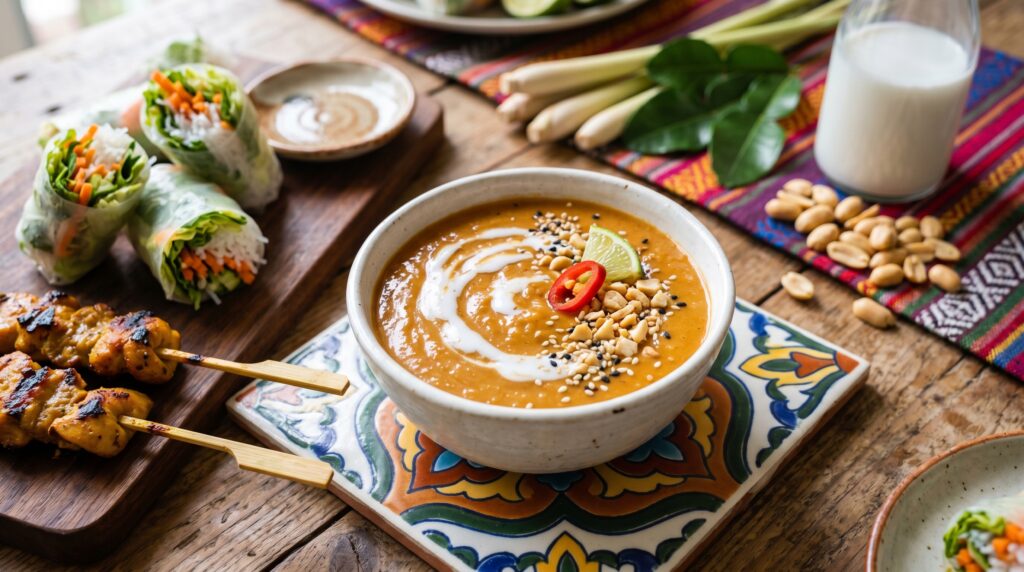
10. Thai Peanut Sauce
Prep time: 10 minutes | No cook | Makes: approximately 200ml
Thai peanut sauce is the most immediately crowd-pleasing, most versatile Asian sauce in this collection — the combination of natural peanut butter, coconut milk, lime juice, fish sauce, and aromatic spices creates a sauce of extraordinary creaminess, gentle heat, and complex, layered flavor that works beautifully as a dipping sauce, noodle sauce, salad dressing, or marinade.
Key ingredients: Natural peanut butter (4 tbsp — no added sugar or oil, just peanuts), full-fat coconut milk (4 tbsp), fresh lime juice (2 tbsp), fish sauce (1 tbsp — or soy sauce for vegetarian), garlic (1 clove, grated), fresh ginger (1 tsp, grated), honey or palm sugar (1 tsp), red curry paste (1 tsp — adds depth and a gentle heat), chili flakes (to taste), warm water (to thin to desired consistency)
Method: Whisk all the ingredients together until they are completely smooth. Add warm water, one tablespoon at a time, until the sauce reaches the desired consistency — thicker for dipping, thinner for dressing or noodle sauce. Taste and balance: add more lime for brightness, more fish sauce for salt and umami, more honey for sweetness, more curry paste for heat.
Natural peanut butter requirement: Commercial peanut butter with added sugar and stabilizers produces a sauce that is cloyingly sweet and lacks depth. Natural peanut butter — pure ground peanuts — produces a sauce with genuine, complex peanut flavor and better emulsification with the coconut milk.
What makes it special: The red curry paste — used in a small quantity — adds a depth and aromatic complexity (lemongrass, galangal, kaffir lime) that no single ingredient could replicate, transforming the sauce from a simple peanut dip into something with the genuine character of Thai cooking.
Versatility: Spring rolls, satay, noodle dishes, salad dressings (thin with extra lime), as a bowl sauce, grilled chicken marinade, and cucumber salad.
Sauce Pairing Guide
| Sauce | Best Proteins | Best Vegetables | Best Grains/Pasta |
|---|---|---|---|
| Marinara | Chicken, meatballs, fish | Eggplant, zucchini, bell pepper | Spaghetti, penne, pizza base |
| Chimichurri | Steak, lamb, chicken | Grilled asparagus, mushrooms | — |
| Béchamel | Chicken, ham | Cauliflower, leeks, broccoli | Lasagna, pasta bakes |
| Hollandaise | Poached eggs, salmon | Asparagus, artichoke, broccoli | — |
| Romesco | Fish, chicken, lamb | Roasted peppers, eggplant | Pasta, sourdough |
| Teriyaki | Salmon, chicken, beef | Eggplant, bok choy, broccoli | Rice, noodles |
| Harissa | Chicken, lamb, eggs | Roasted cauliflower, carrots | Couscous, flatbread |
| Lemon butter | Fish, scallops, chicken | Asparagus, green beans | — |
| Mushroom gravy | Chicken, steak, turkey | Root vegetables | Mashed potato, polenta |
| Thai peanut | Chicken satay, shrimp | Cucumber, carrot, bok choy | Noodles, rice |
Make-Ahead and Storage Guide
Marinara: Refrigerate for 5 days, freeze for 3 months. Improves on the second day.
Chimichurri: Refrigerate for 1 week. Bring to room temperature before serving.
Béchamel: Refrigerate for 3 days. Reheat gently with additional milk, whisking constantly to restore consistency.
Hollandaise: Best made fresh and served immediately. Can be held warm in a double boiler for up to 1 hour.
Romesco: Refrigerate for 1 week. Flavors improve after 24 hours.
Teriyaki glaze: Refrigerate for 2 weeks. Reheat gently and thin with a splash of water if too thick.
Harissa: Refrigerate under olive oil for 2 weeks.
Lemon butter sauce: Best made fresh. Can be refrigerated for 2 days and reheated very gently.
Mushroom gravy: Refrigerate for 4 days, freeze for 2 months.
Thai peanut sauce: Refrigerate for 1 week. Thin with warm water and a squeeze of lime before serving.
For comprehensive food safety guidance on storing all sauce preparations, our Food Safety 101: Storage, Handling, and Temperature Guide is essential reading.
Conclusion
From the foundational simplicity of a great marinara to the technically demanding elegance of hollandaise, from the vibrant freshness of chimichurri to the complex, fermented depth of harissa, from the glossy, caramelized versatility of teriyaki to the rich, umami-laden comfort of mushroom gravy — these 10 flavorful sauce recipes represent the full spectrum of what sauce making can achieve and the extraordinary impact a great sauce has on every meal it accompanies.
The investment in learning great sauces pays dividends across every meal. A roasted chicken becomes a celebration with a proper lemon butter sauce. A bowl of pasta becomes a genuinely great meal with a properly made marinara. A grilled steak becomes a restaurant-quality dinner with a properly made chimichurri. The sauce is where cooking skill is most visible and most rewarding.
For more sauce recipes, technique guides, and culinary inspiration across every category and skill level, explore our full collection at skillsinthekitchen.com.