
20 Chicken Stir Fry Recipes For Busy Weeknights
Introduction
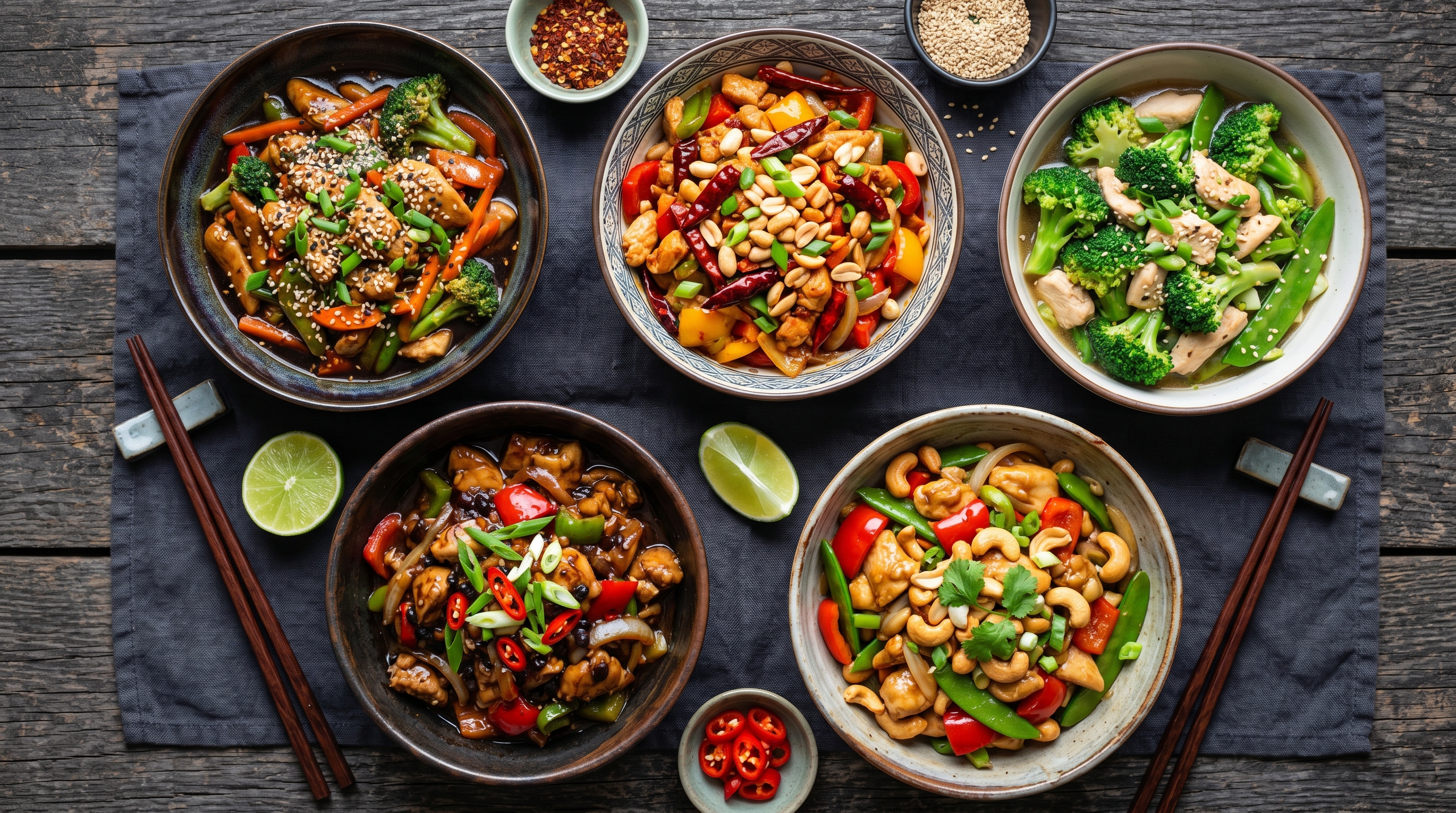
When the weeknight rush hits and the question of what to cook for dinner looms large, few meals answer the call more reliably, more deliciously, or more quickly than a great chicken stir fry. In under 30 minutes — often significantly less — a hot wok, a handful of fresh vegetables, tender strips of chicken, and a well-made sauce can produce a meal that is genuinely exciting, nutritionally complete, and satisfying enough to silence even the hungriest table.
Stir-frying is one of the oldest and most perfectly engineered cooking techniques in the world. Originating in China over two thousand years ago, the technique of cooking ingredients rapidly over intense heat while tossing continuously produces results that no other cooking method can replicate — vegetables that are crisp yet tender, proteins that are juicy and lightly charred, and sauces that reduce and caramelize in seconds to a glossy, intensely flavored coating that clings to every ingredient.
Chicken is the ideal stir-fry protein — it cooks quickly, absorbs marinades beautifully, pairs effortlessly with an extraordinary range of vegetables, sauces, and flavor profiles, and is universally loved by adults and children alike. Whether you prefer the sweet-savory depth of a teriyaki glaze, the fiery complexity of a Sichuan-style sauce, the fragrant aromatics of Thai basil, or the simple, bright freshness of a lemon and herb preparation, there is a chicken stir fry in this collection for every palate and every evening.
In this guide, we have compiled 20 of the best chicken stir fry recipes for busy weeknights — spanning Asian classics, contemporary fusion creations, low-carb options, family-friendly favorites, and bold international flavors. Every recipe includes key ingredients, technique guidance, sauce recipes, serving suggestions, and make-ahead tips so that dinner is never more than 30 minutes away.
Let’s fire up the wok.
The Science and Art of the Perfect Stir Fry
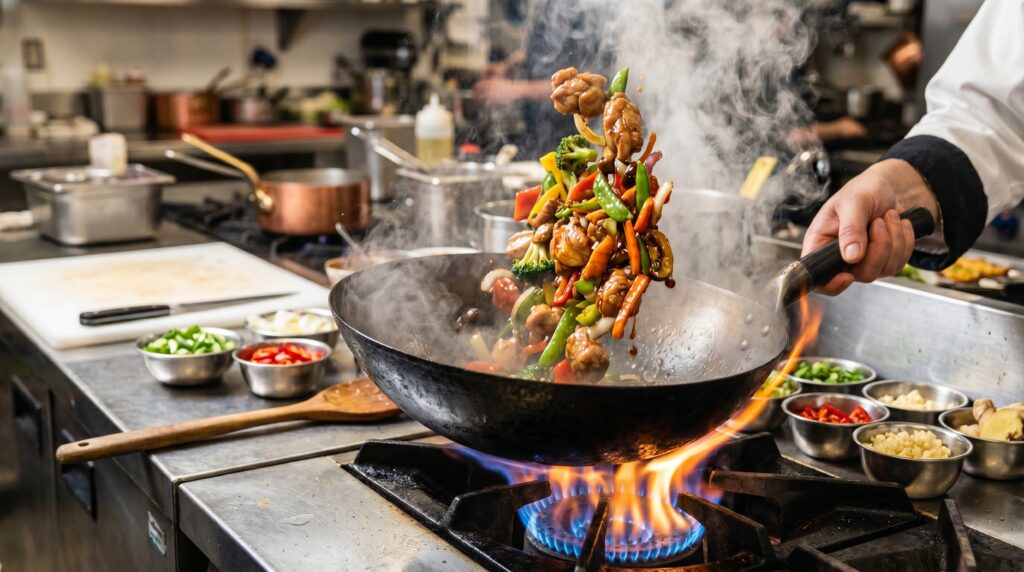
Before diving into the recipes, understanding the fundamental principles of great stir-fry cooking will transform your results immediately and permanently.
The Wok: Your Most Important Tool
A well-seasoned carbon steel wok is the ideal vessel for stir-frying — its thin walls heat rapidly and distribute heat evenly, its curved shape allows ingredients to be tossed without losing them over the sides, and the naturally non-stick surface of a seasoned wok develops over time with use. If you do not have a wok, a large, heavy stainless steel skillet or cast iron pan will work — but ensure it is the largest you own to avoid overcrowding.
High Heat is Non-Negotiable
The single most important principle of stir-frying is heat — fierce, uncompromising, sustained high heat that creates the Maillard reaction on the surface of proteins and vegetables, producing those slightly charred, caramelized edges that make a great stir-fry taste fundamentally different from a vegetable sauté. Never stir-fry over medium heat. The wok should be smoking before any ingredient is added.
The Concept of “Wok Hei”
Wok hei — literally “breath of the wok” — is the slightly smoky, complex, charred quality that distinguishes a restaurant stir fry from a home one. It is produced by the extremely high heat of a commercial burner combined with the volatile compounds in oil, briefly igniting at the wok’s surface. At home, the closest approximation is achieved by using the highest heat setting on your stove, choosing an oil with a high smoke point (peanut, vegetable, or avocado oil), and working in small batches that do not lower the wok’s temperature.
Mise en Place: The Non-Negotiable Preparation Habit
Stir-frying moves at extraordinary speed — there is no time to pause and slice a vegetable or measure a sauce component once cooking has begun. Everything — every vegetable sliced, every sauce ingredient measured and combined, every garlic clove minced — must be completely ready before the wok goes on the heat. Our Mise en Place: How to Organize Your Cooking Like a Pro explains this essential preparation principle that makes the difference between a smooth, confident stir fry and a chaotic, uneven one.
The Velvet Chicken Technique
Velveting is a Chinese restaurant technique that produces extraordinarily tender, silky chicken in stir fries — the kind of texture that home cooks often wonder why they cannot replicate. The method is simple: slice the chicken, combine with a small amount of bicarbonate of soda and water, leave for 15–30 minutes, then rinse thoroughly before cooking. The alkaline environment of the bicarbonate of soda raises the pH of the chicken surface, preventing protein strands from tightening as aggressively during cooking and producing a noticeably more tender result.
Batch Cooking
Never overcrowd the wok. Overcrowding reduces the temperature dramatically — instead of frying, the ingredients steam in their own moisture, producing pale, soft results with none of the caramelization that makes a stir fry great. Cook the chicken first, remove it, cook the vegetables, then combine everything with the sauce at the end.
If you are building your foundational cooking skills and want a thorough understanding of heat management before cooking these recipes, our Kitchen Temperatures: The Complete Guide from Simmer to Boil is essential reading.
Essential Stir Fry Pantry Ingredients
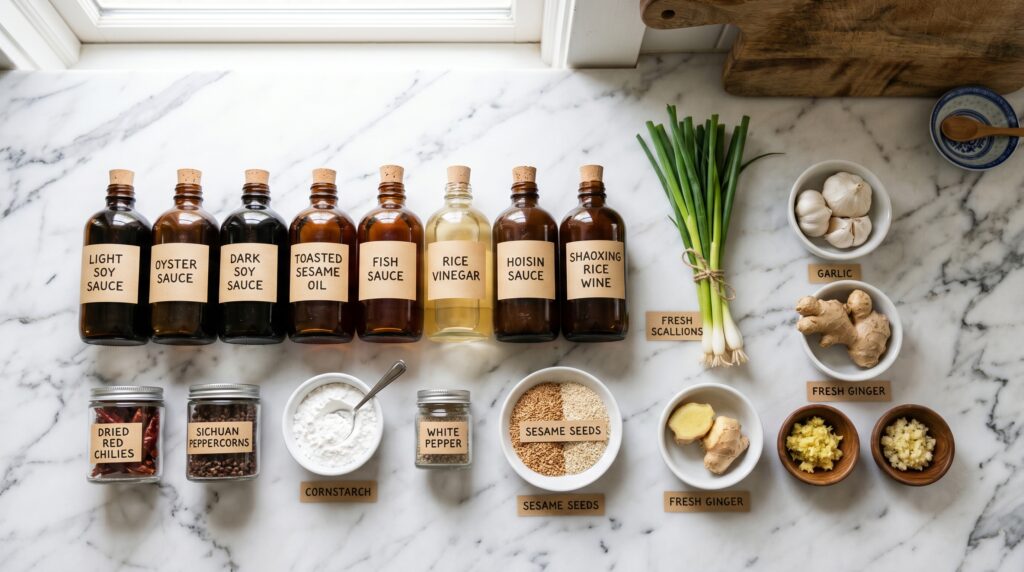
A well-stocked stir-fry pantry means dinner is always 30 minutes away, regardless of what fresh ingredients are available. Here are the most essential items:
Soy sauce — the backbone of most Asian stir-fry sauces. Light soy sauce for seasoning; dark soy sauce for color and depth.
Oyster sauce — thick, rich, slightly sweet. Adds an extraordinary umami depth to any stir-fry sauce. A tablespoon transforms a simple preparation.
Sesame oil — for finishing, never for cooking. Its low smoke point means it burns at high heat; added off the heat at the end, it provides a distinctive nutty fragrance.
Rice vinegar — mild, slightly sweet acidity that brightens and balances rich stir fry sauces.
Cornstarch — for velveting chicken and for thickening sauces to the glossy, clingy consistency of a great stir fry.
Shaoxing rice wine — a Chinese cooking wine with a nutty, complex flavor that adds authentic depth. Dry sherry is the closest substitute.
Fish sauce — for Southeast Asian stir fries. Pungent alone but indispensable in the right amounts for Thai and Vietnamese preparations.
Hoisin sauce — sweet, thick, and aromatic. Essential for Peking-style and many noodle stir fry preparations.
Chili bean paste (doubanjiang) — the soul of Sichuan cooking. Fermented chili and bean paste with a deep, complex heat that no other ingredient can replicate.
20 Chicken Stir Fry Recipes for Busy Weeknights
Asian Classic Stir Fries
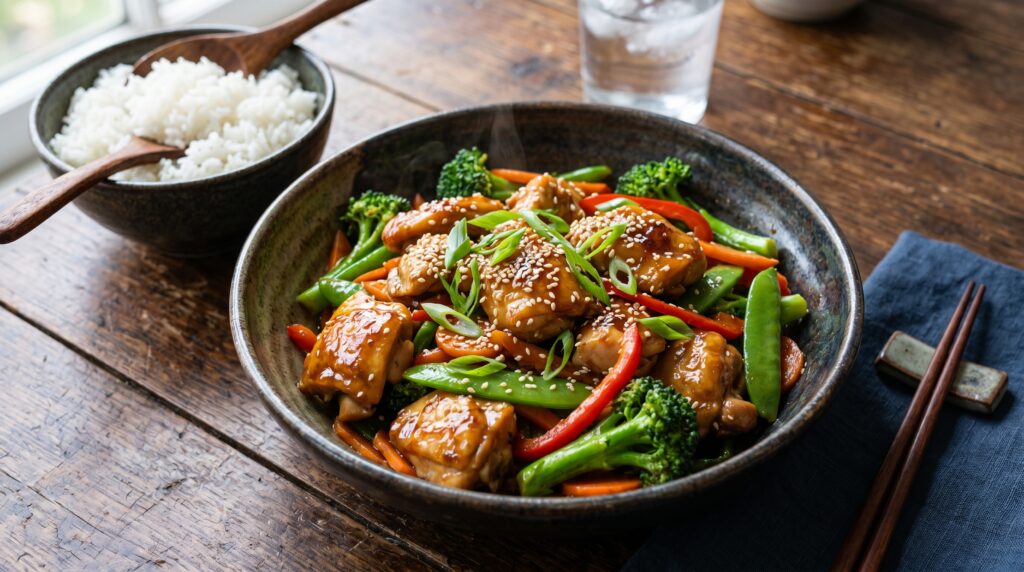
1. Classic Teriyaki Chicken Stir Fry
Prep time: 10 minutes | Cook time: 12 minutes | Serves: 4
Teriyaki is the gateway stir fry sauce — sweet, savory, deeply glossy, and universally loved by adults and children alike. A simple combination of soy sauce, mirin, honey, and garlic reduces to a beautiful, lacquer-like glaze that coats every piece of chicken and vegetable with a shine that immediately makes the dish look restaurant-quality.
Key ingredients: Chicken thighs (boneless, skinless, sliced), broccoli florets, snap peas, red bell pepper, garlic, fresh ginger, sesame oil, toasted sesame seeds, green onion, steamed rice to serve
Teriyaki sauce: Soy sauce, mirin, honey, garlic (grated), fresh ginger (grated), cornstarch (to thicken). Combine and stir until the cornstarch is fully dissolved before adding to the wok.
Method: Heat wok until smoking. Add oil and cook the chicken in a single layer without stirring for 60–90 seconds until golden. Toss and cook through. Remove chicken. Add vegetables and stir fry for 2–3 minutes. Return chicken to the wok, pour over the sauce, and toss everything together over high heat for 60 seconds until the sauce reduces to a glossy coat. Finish with sesame oil off the heat.
What makes it special: Using chicken thighs rather than breast provides more flavor and stays juicier under the intense heat of the wok. The natural fat content of the thigh also helps the teriyaki glaze caramelize more beautifully.
Pro tip: Do not add the sauce until the very end of cooking — adding it too early causes it to burn on the hot wok surface before it has a chance to coat the ingredients properly.
2. Kung Pao Chicken
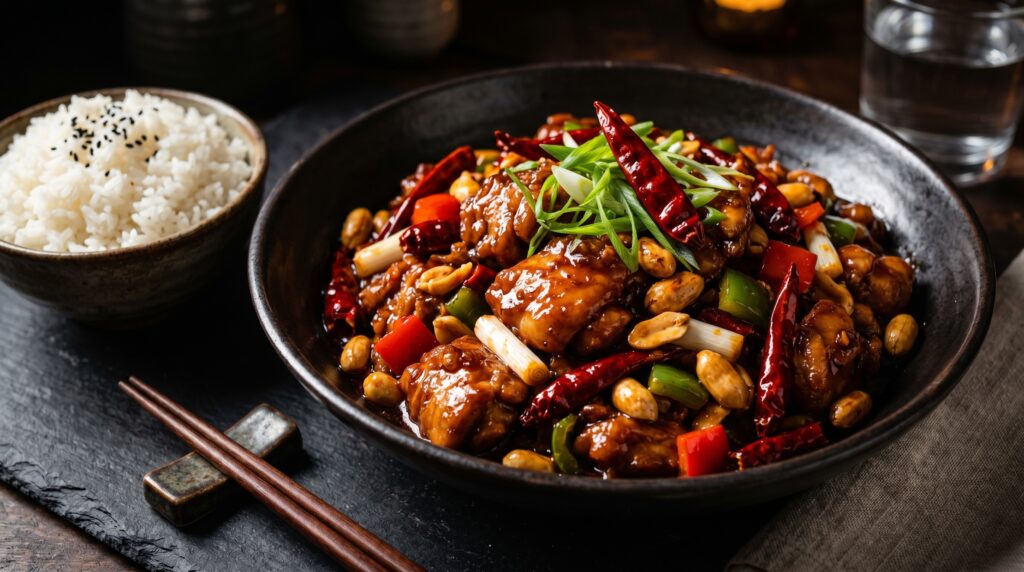
Prep time: 15 minutes | Cook time: 10 minutes | Serves: 4
Kung Pao Chicken is one of the most celebrated dishes in Chinese-American cooking — a Sichuan-inspired combination of tender chicken, roasted peanuts, dried chilies, and a bold, slightly numbing sauce that balances sweet, sour, salty, and spicy in a way that is deeply satisfying and completely addictive.
Key ingredients: Chicken breast or thigh (diced), dried red chilies, roasted peanuts, garlic, fresh ginger, green onion, red bell pepper, Sichuan peppercorns (optional, for authentic numbing heat), vegetable oil
Kung Pao sauce: Dark soy sauce, light soy sauce, rice vinegar, hoisin sauce, sugar, cornstarch, sesame oil, and chicken stock. Combine all in a bowl and mix until smooth.
Method: Velvet the chicken (bicarbonate of soda and water, 20 minutes, rinse). Heat the wok until smoking. Fry the dried chilies and Sichuan peppercorns for 30 seconds until fragrant — this step blooms their flavors into the oil. Add the chicken and cook until golden. Add garlic, ginger, and bell pepper. Pour over the sauce and toss vigorously for 60 seconds. Add the peanuts and green onion last — they should retain their crunch.
What makes it authentic: Frying the dried chilies in the oil first — before any other ingredient — is the Sichuan technique that infuses the entire dish with the chilies’ complex flavor and gently perfumes the oil. Do not skip this step.
Pro tip: The peanuts go in at the very last moment and are not cooked in the sauce — they provide textural contrast and should remain crunchy throughout.
3. Chicken and Broccoli in Oyster Sauce
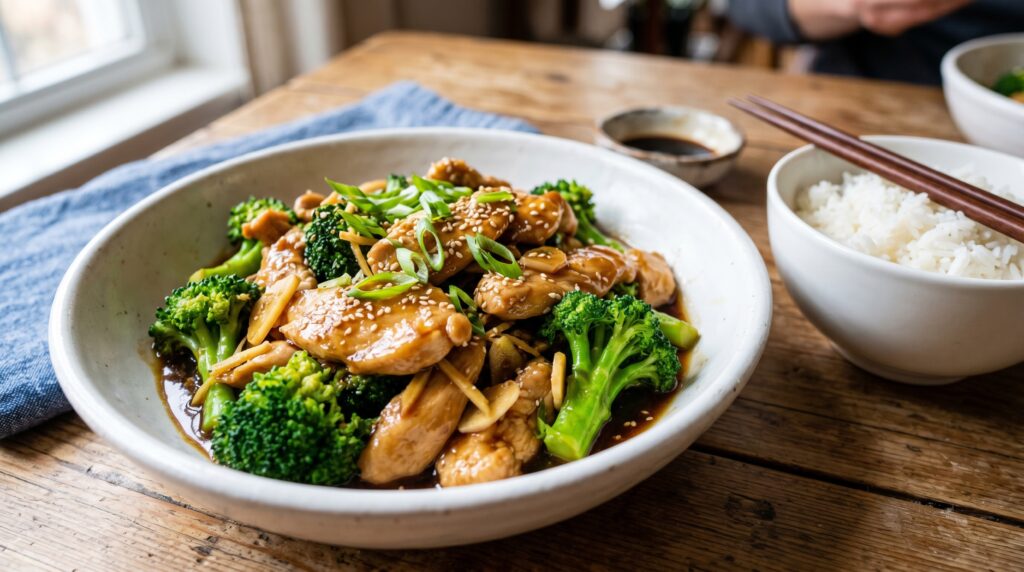
Prep time: 10 minutes | Cook time: 10 minutes | Serves: 4
Chicken and broccoli in oyster sauce is the definitive Chinese-American takeaway classic — and made at home with proper technique and good ingredients, it is genuinely better than any restaurant version. The oyster sauce provides an immediate, deep umami richness that makes this one of the most satisfying stir-fries imaginable.
Key ingredients: Chicken breast (thinly sliced, velveted), broccoli florets (blanched for 1 minute), garlic, fresh ginger, oyster sauce, light soy sauce, sesame oil, cornstarch, chicken stock, vegetable oil
The sauce: Oyster sauce, light soy sauce, chicken stock, cornstarch, sesame oil, and a pinch of sugar. Mix until the cornstarch is fully dissolved.
Method: Blanch the broccoli florets in boiling salted water for exactly 60 seconds — they should be vivid green and just barely tender. Drain immediately and refresh under cold water to stop the cooking and preserve the color. This step ensures the broccoli is perfectly cooked when the stir-fry is complete. Cook velveted chicken in the hot wok until golden. Add garlic and ginger, and fry for 30 seconds. Add the blanched broccoli and toss together. Pour over the sauce and stir fry until glossy and thickened.
Pro tip: The blanching and refreshing of the broccoli before adding to the wok is the technique that ensures vivid green broccoli in the finished dish — broccoli cooked entirely in the wok either undercooks (still raw) or overcooks (yellow and soft) before the other elements are ready.
4. Garlic Ginger Chicken Stir Fry
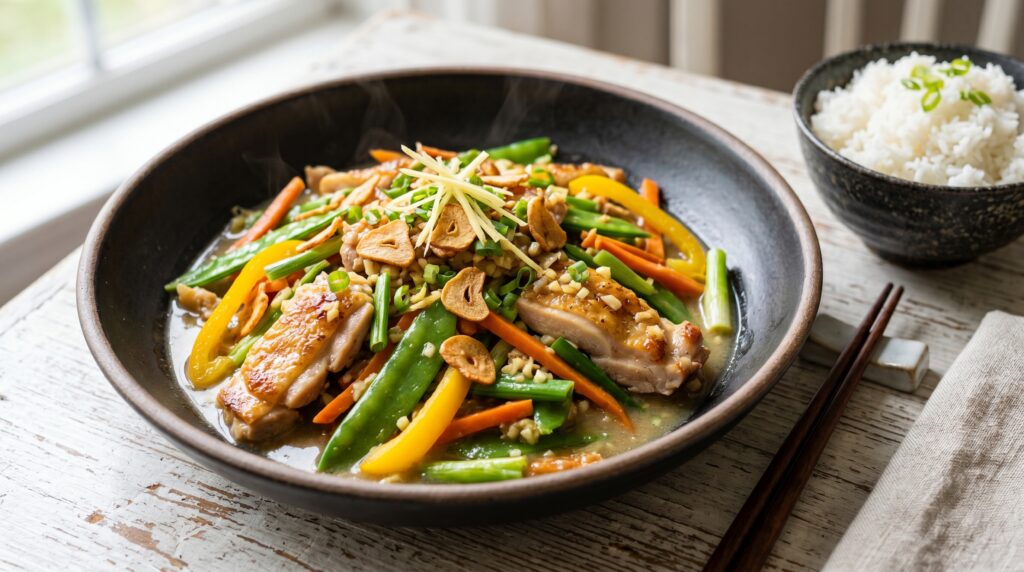
Prep time: 10 minutes | Cook time: 10 minutes | Serves: 4
Sometimes the simplest preparations are the most satisfying — and this garlic and ginger chicken stir fry proves the point beautifully. A generous amount of fresh garlic and ginger, cooked briefly in hot oil until fragrant before the chicken and vegetables are added, creates a sauce of extraordinary aromatic depth from just a few ingredients.
Key ingredients: Chicken breast (thinly sliced), fresh garlic (thinly sliced), fresh ginger (julienned), snow peas, carrot (julienned), yellow bell pepper, light soy sauce, Shaoxing rice wine, sesame oil, cornstarch, chicken stock, vegetable oil
What makes it special: The thinly sliced garlic fried briefly in hot oil until just golden — not burnt — infuses the oil with a sweeter, more complex garlic flavor than raw garlic provides. This garlic-infused oil becomes the flavor base of the entire dish.
Pro tip: Never let the garlic or ginger burn in the wok. They go from golden and fragrant to bitter and unpleasant in seconds. Have the chicken ready to add the moment the garlic turns pale gold — it will continue to cook in the residual heat of the pan.
5. Cashew Chicken
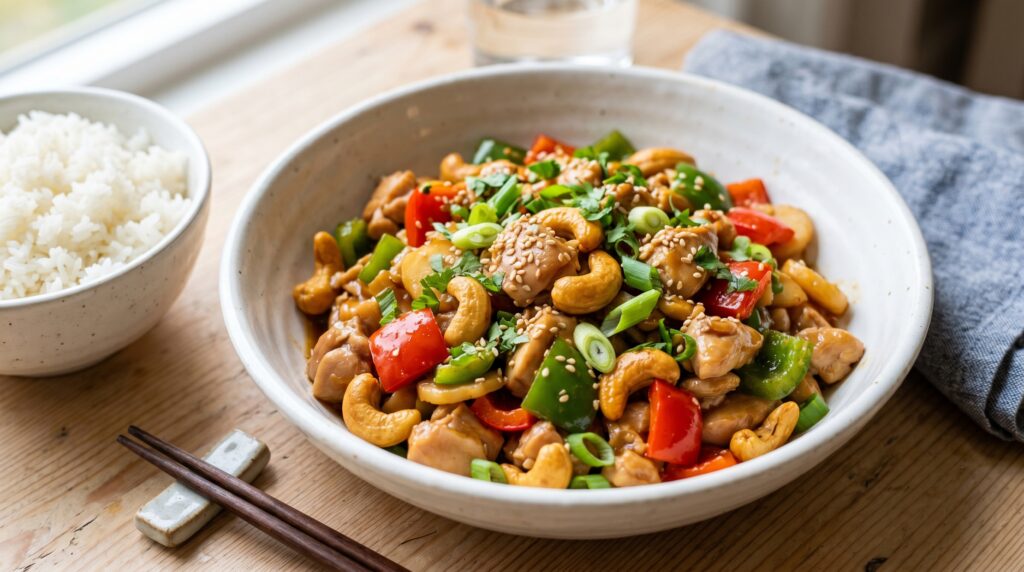
Prep time: 15 minutes | Cook time: 12 minutes | Serves: 4
Cashew chicken is one of the most beloved stir-fry dishes in Thai and Chinese-American cooking — the buttery richness of roasted cashew nuts against tender chicken in a savory, slightly sweet sauce is a combination of remarkable simplicity and deeply satisfying flavor.
Key ingredients: Chicken breast or thigh (diced), roasted cashew nuts (unsalted), red and green bell pepper, water chestnuts, garlic, dried red chilies, green onion, vegetable oil
Cashew chicken sauce: Oyster sauce, soy sauce, fish sauce, sugar, Shaoxing rice wine, sesame oil, cornstarch, chicken stock.
Method: Cook the chicken in the hot wok until golden and cooked through. Remove. Fry the dried chilies briefly in the oil. Add garlic and the bell peppers and stir-fry for 2 minutes. Return the chicken, add the water chestnuts, pour over the sauce, and toss vigorously until glossy. Add the cashew nuts and green onion off the heat — they do not cook in the sauce, preserving their crunch and preventing the cashews from becoming soft.
What makes it special: Water chestnuts — thin, crisp slices of the aquatic vegetable available in tins — add a unique, sweet crunch that stays perfectly crisp throughout cooking. They are one of the most underused stir-fry ingredients and make this dish genuinely distinctive.
6. Sesame Chicken Stir Fry
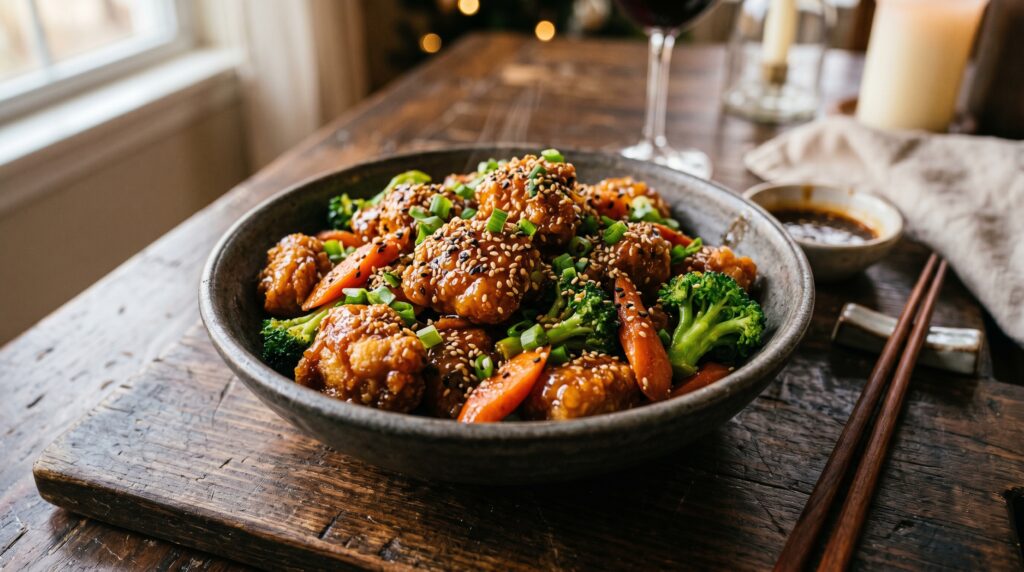
Prep time: 20 minutes | Cook time: 15 minutes | Serves: 4
Sesame chicken is the stir fry that bridges the gap between takeaway indulgence and home-cooked satisfaction — lightly battered chicken pieces fried until crispy, then tossed in a thick, sweet-savory sesame sauce that coats everything in a glossy, nutty glaze. The sesame seeds scattered generously over the top add textural contrast and visual appeal.
Key ingredients: Chicken breast (diced), cornstarch (for coating), vegetable oil (for frying), broccoli, carrot, garlic, sesame seeds (white and black)
Sesame sauce: Soy sauce, honey, rice vinegar, hoisin sauce, garlic, sesame oil, cornstarch, water, a pinch of chili flakes.
Method: Toss diced chicken in cornstarch until lightly coated. Shallow fry in a little oil until golden and crispy on all sides. Remove and drain on kitchen paper. In the wok, cook the vegetables briefly. Add the sauce and bring to a boil — it will thicken quickly. Add the crispy chicken back, toss to coat, and serve immediately, showered with toasted sesame seeds.
Pro tip: Serve sesame chicken immediately after coating in the sauce — the longer it sits, the more the crispy coating softens. For a make-ahead version, keep the fried chicken and sauce separate and combine only just before serving.
7. Black Bean Sauce Chicken
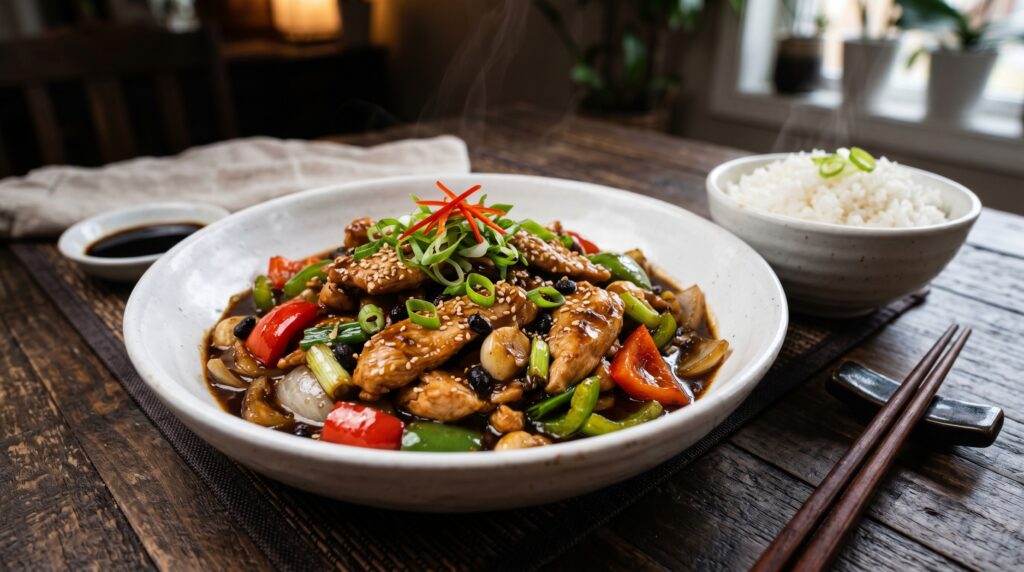
Prep time: 10 minutes | Cook time: 12 minutes | Serves: 4
Black bean sauce — made from fermented salted black beans — is one of the most powerfully flavored, most distinctly Chinese condiments in existence, with a deeply umami, slightly funky, intensely savory character that transforms a simple stir fry into something with extraordinary depth and complexity.
Key ingredients: Chicken thighs (sliced), fermented black beans (rinsed and roughly chopped) or prepared black bean sauce, red and green bell pepper, onion, garlic, fresh ginger, oyster sauce, soy sauce, Shaoxing rice wine, sesame oil, cornstarch
Method: If using whole fermented black beans, rinse them briefly under water to reduce excess salt, then roughly chop. Fry garlic and ginger in the hot wok until fragrant. Add the black beans and fry for 30 seconds — this step blooms the beans’ flavor into the oil. Add the chicken and cook until golden. Add the bell peppers and onion and stir-fry for 2 minutes. Add the sauce components and toss everything together until glossy and combined.
What makes it authentic: Fermented black beans from a Chinese grocery store produce a significantly deeper, more complex result than prepared jarred black bean sauce. The extra step of roughly chopping and briefly frying them in oil is what extracts their fullest flavor.
8. Honey Garlic Chicken Stir Fry
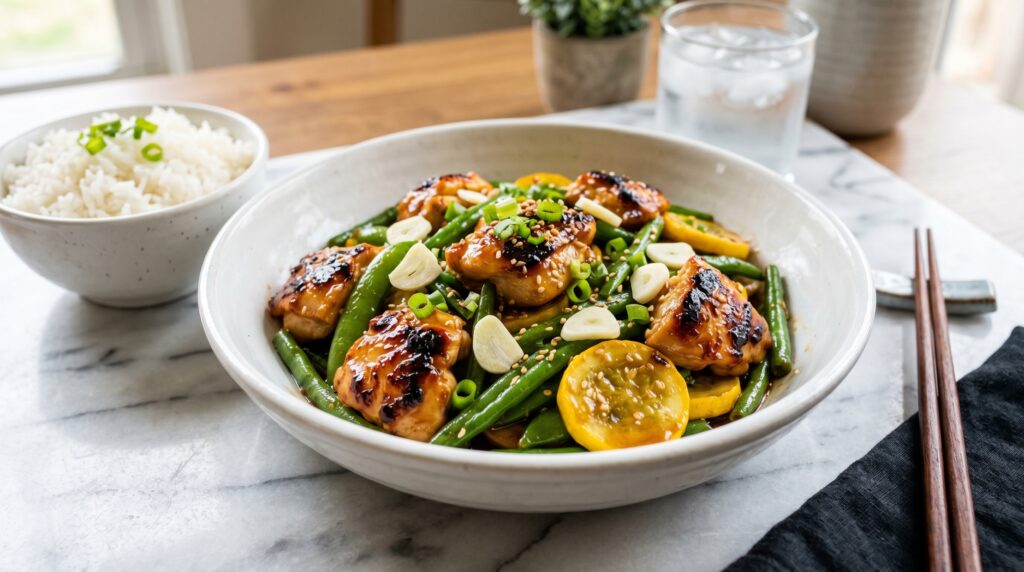
Prep time: 10 minutes | Cook time: 12 minutes | Serves: 4
Honey garlic sauce is one of the most crowd-pleasing sauce combinations in all of stir-fry cooking — the natural sweetness of honey against the pungency of garlic, balanced with soy sauce and a touch of vinegar, creates a glaze that caramelizes beautifully against the hot wok surface and coats every ingredient in a shimmering, deeply flavorful sauce.
Key ingredients: Chicken thighs (boneless, sliced), green beans, snap peas, yellow squash, garlic (generous amount, thinly sliced), fresh ginger, vegetable oil
Honey garlic sauce: Honey, soy sauce, rice vinegar, garlic (additional, grated), water, cornstarch. Stir until smooth.
Method: Cook the chicken in the hot wok until deeply golden — the honey in the sauce means it will caramelize quickly, so do not add the sauce until everything is nearly cooked. Add garlic and ginger and fry briefly. Add vegetables and stir-fry for 2 minutes. Pour over the honey garlic sauce and toss over high heat until the sauce reduces, caramelizes slightly at the edges, and creates a glossy, clingy coating.
Pro tip: Honey sauces have a tendency to burn quickly due to their high sugar content. Keep the heat at maximum, but toss constantly once the sauce is added — do not allow it to sit undisturbed on the hot surface.
Southeast Asian Stir Fries
9. Thai Basil Chicken (Pad Krapow Gai)
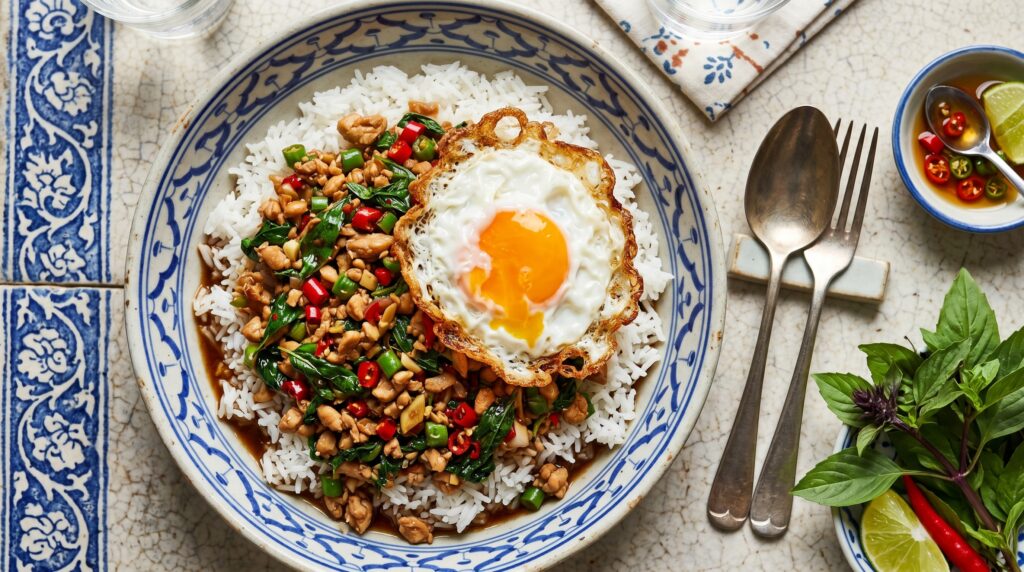
Prep time: 10 minutes | Cook time: 8 minutes | Serves: 2
Pad Krapow Gai — Thai Holy Basil Chicken — is the most beloved everyday street food dish in Thailand, eaten at any time of day and always served over rice with a fried egg on top. The combination of fragrant holy basil, fish sauce, oyster sauce, and fresh chilies creates a dish of intense, bright, deeply savory flavor that comes together in under 10 minutes.
Key ingredients: Ground or minced chicken, fresh Thai holy basil (or Italian basil as a substitute — the flavor is different but still excellent), fresh red and green bird’s eye chilies, garlic, fish sauce, oyster sauce, dark soy sauce, sugar, vegetable oil, eggs (for frying), steamed jasmine rice
Method: Heat the wok until smoking. Fry the garlic and chilies for 30 seconds. Add the minced chicken and press flat — leave undisturbed for 60 seconds to develop a golden crust before breaking up. Season with fish sauce, oyster sauce, dark soy sauce, and sugar. Cook until the liquid has reduced and the chicken is glazed. Remove from heat and fold in the fresh basil leaves — they wilt immediately in the residual heat.
The fried egg: The fried egg is not optional — it is an essential part of the dish. Fry in a generous amount of hot oil until the edges are frilly and crispy while the yolk remains runny. The runny yolk broken over the dish creates a rich sauce that blends with the dark, spiced chicken.
What makes it authentic: The holy basil goes in off the heat — adding it to a hot wok wilts it instantly and destroys its delicate flavor. The residual heat of the finished dish is sufficient to wilt the leaves perfectly.
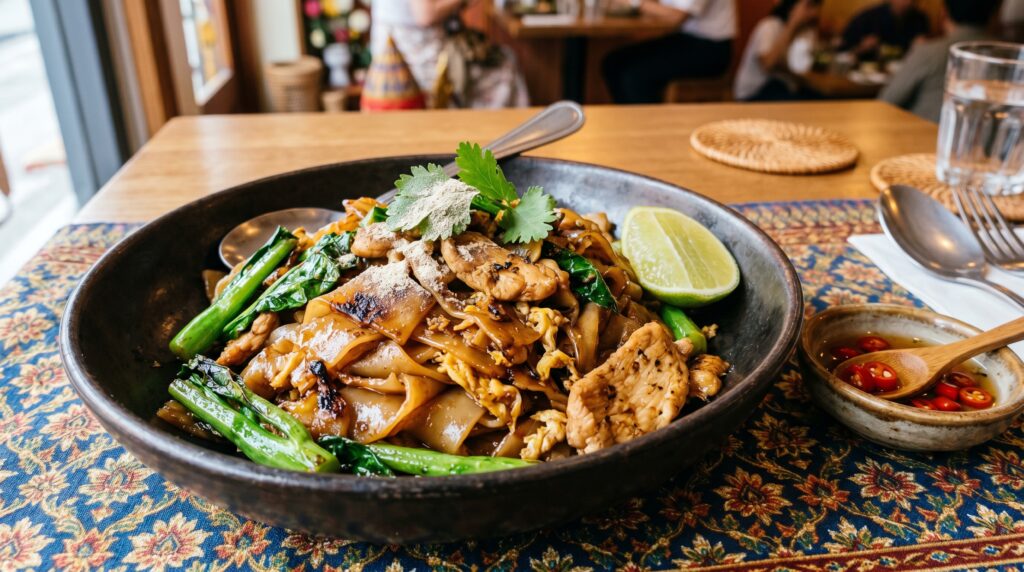
10. Pad See Ew (Thai Flat Noodle Stir Fry)
Prep time: 15 minutes | Cook time: 8 minutes | Serves: 2
Pad See Ew is one of Thailand’s most beloved noodle dishes — wide flat rice noodles stir-fried over extreme heat with chicken, Chinese broccoli, egg, and a dark soy-based sauce until the noodles develop those spectacular caramelized, charred edges that are the hallmark of great wok cooking.
Key ingredients: Wide flat rice noodles (fresh if available, soaked dried otherwise), chicken breast (thinly sliced), Chinese broccoli (gai lan) or regular broccoli, eggs, garlic, dark soy sauce, light soy sauce, oyster sauce, sugar, white pepper, vegetable oil
The charred noodle technique: The caramelized edges — slightly crispy, slightly charred spots on the noodles — are what make Pad See Ew extraordinary, and they require maximum heat and patience. Add the noodles to the smoking-hot wok and press them flat. Leave completely undisturbed for 90 seconds without stirring — this allows direct contact with the hot wok surface to create the char. Only then toss and stir.
Pro tip: Never wash fresh rice noodles before using — the starch on their surface is what allows them to develop the caramelized char. Rinse only if they are sticking together, and use your hands to separate gently before adding to the wok.
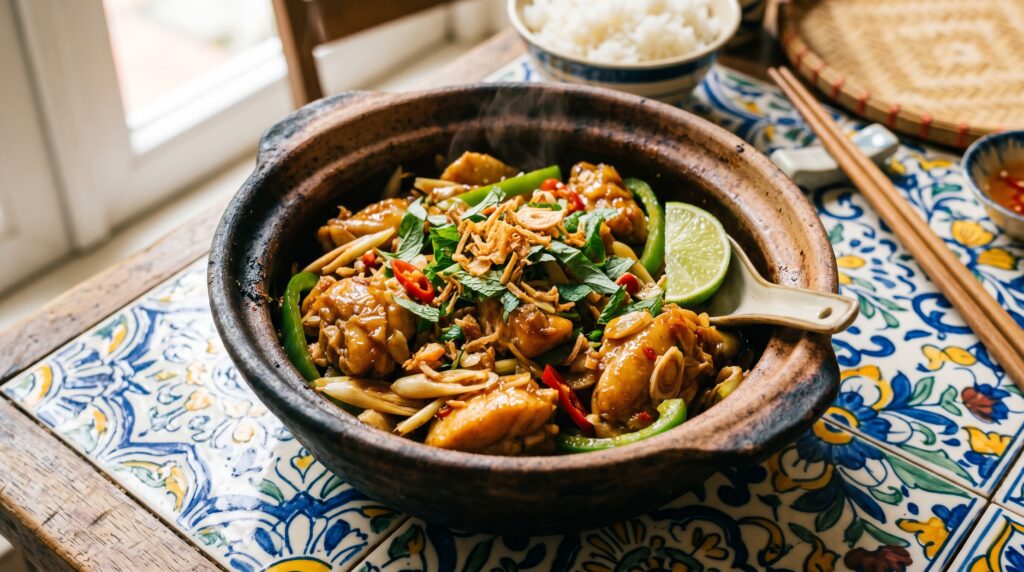
11. Vietnamese Lemongrass Chicken Stir Fry
Prep time: 15 minutes | Cook time: 12 minutes | Serves: 4
Vietnamese lemongrass chicken is a beautifully fragrant stir fry — tender chicken pieces caramelized with fresh lemongrass, garlic, shallots, and fresh chili in a fish sauce and palm sugar glaze that is simultaneously sweet, salty, aromatic, and gently spiced. The lemongrass perfumes the entire dish with its distinctive citrusy, floral fragrance.
Key ingredients: Chicken thighs (boneless, sliced), fresh lemongrass stalks (tender inner parts only, very finely minced), shallots, garlic, fresh red chilies, fish sauce, palm sugar or brown sugar, vegetable oil, fresh coriander, crispy fried shallots to garnish
Preparing the lemongrass: Only the tender inner parts of the lemongrass stalk should be used — peel away the tough outer layers until the pale, soft core is exposed. Mince very finely — large pieces of lemongrass are unpleasant to eat. A food processor makes this task significantly easier.
What makes it special: The caramelization of the fish sauce and palm sugar in the hot wok creates a deeply colored, intensely flavored glaze with a complex sweet-salt character that is unmistakably Vietnamese.
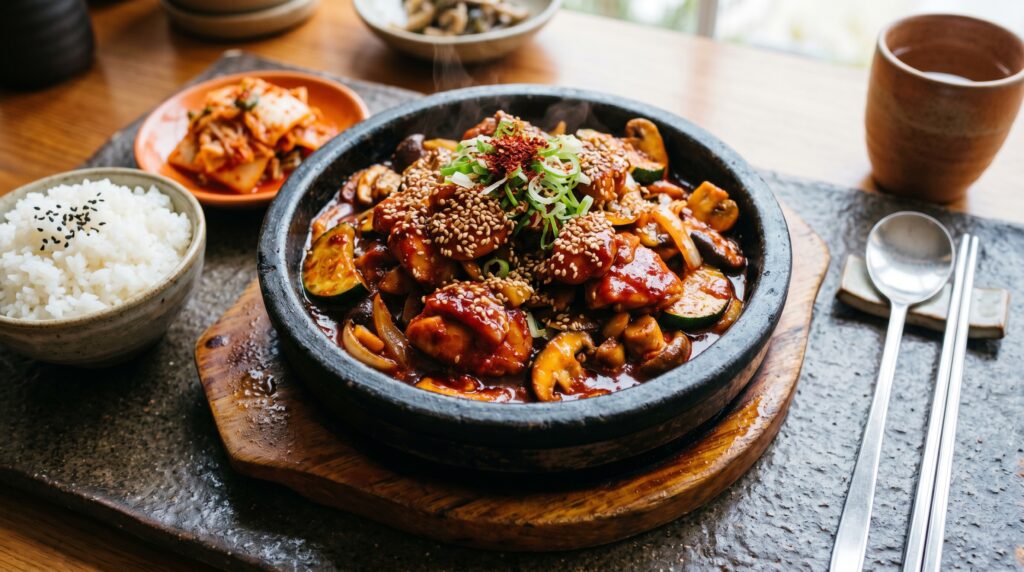
12. Korean Gochujang Chicken Stir Fry
Prep time: 15 minutes | Cook time: 12 minutes | Serves: 4
Gochujang — Korean fermented red chili paste — is one of the most extraordinary condiments in the world, with a deep, complex heat that builds slowly and a slightly fermented sweetness that makes it unlike any other chili preparation. In a stir-fry sauce, it creates a glossy, intensely flavored coating of remarkable depth and heat.
Key ingredients: Chicken thighs (sliced), gochujang paste, zucchini, mushrooms, onion, garlic, fresh ginger, soy sauce, honey, sesame oil, rice vinegar, toasted sesame seeds, green onion
Gochujang sauce: Gochujang, soy sauce, honey, rice vinegar, sesame oil, garlic (grated), ginger (grated), water to loosen. Mix until smooth.
What makes it special: Gochujang’s heat is gradual and complex — it builds over several bites rather than hitting immediately, creating a sustained, warming heat that is deeply satisfying rather than simply aggressive.
Pro tip: Gochujang varies significantly in heat level between brands and styles. Start with a smaller amount than the recipe suggests the first time you use a new brand, taste the sauce, and add more to reach your preferred heat level.
Quick and Family-Friendly Stir Fries
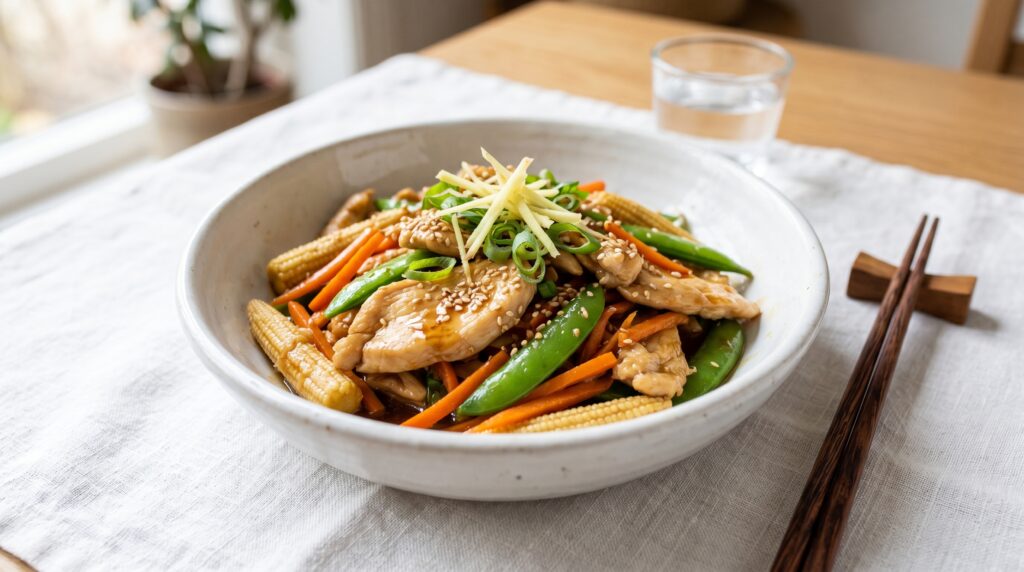
13. Simple Soy and Ginger Chicken Stir Fry
Prep time: 10 minutes | Cook time: 10 minutes | Serves: 4
This is the weeknight stir fry that requires nothing more than pantry staples and whatever fresh vegetables are in the refrigerator — simple, clean, deeply flavorful, and on the table in 20 minutes from start to finish. It is the recipe to have memorized so thoroughly that it becomes second nature.
Key ingredients: Chicken breast (thinly sliced), carrots (julienned), snap peas, baby corn, garlic, fresh ginger (generous amount), soy sauce, Shaoxing rice wine, sesame oil, cornstarch, chicken stock
What makes it special: The generous amount of fresh ginger — far more than you might expect — is what gives this sauce its warmth, its brightness, and its distinctly aromatic quality. Do not be shy with it.
14. Sweet and Sour Chicken Stir Fry
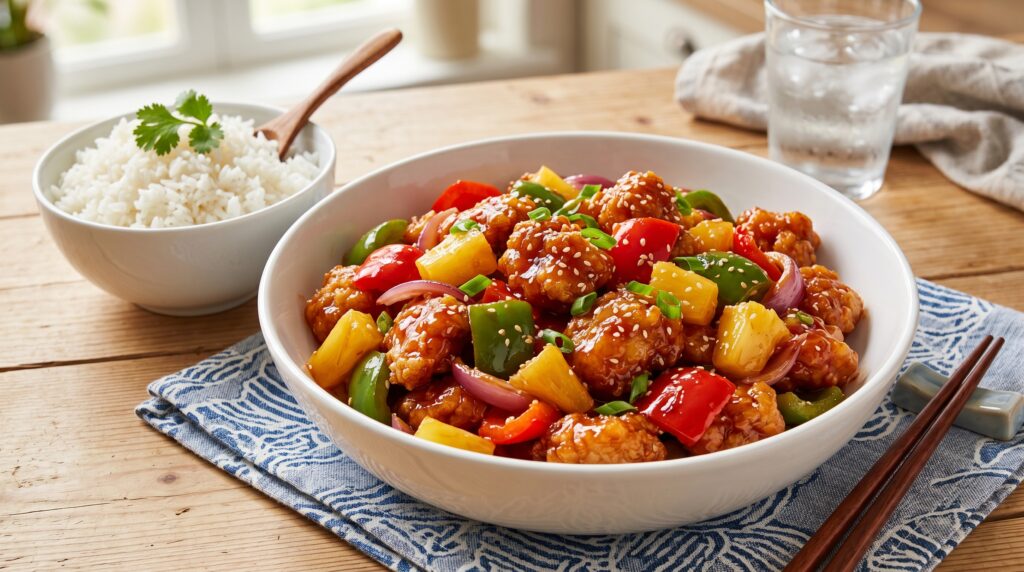
Prep time: 15 minutes | Cook time: 12 minutes | Serves: 4
Sweet and sour chicken is one of the most universally loved Chinese-inspired dishes — and a homemade version with a proper sweet and sour sauce made from real ingredients is dramatically superior to any jarred version or takeaway. The fresh pineapple adds a natural sweetness and acidity that elevates the sauce considerably.
Key ingredients: Chicken breast (diced), red and green bell pepper, fresh pineapple chunks (or canned in juice, drained), onion, garlic, vegetable oil
Sweet and sour sauce: Ketchup, rice vinegar, pineapple juice, soy sauce, brown sugar, cornstarch, water. Combine and mix until the cornstarch is fully dissolved.
What makes it special: Using fresh pineapple chunks rather than canned, and making the sauce from scratch rather than from a bottle, produces a sweet and sour that is bright, clean, and genuinely delicious — with a freshness and balance that no commercial version can achieve.
15. Chicken and Vegetable Stir Fry with Rice Noodles
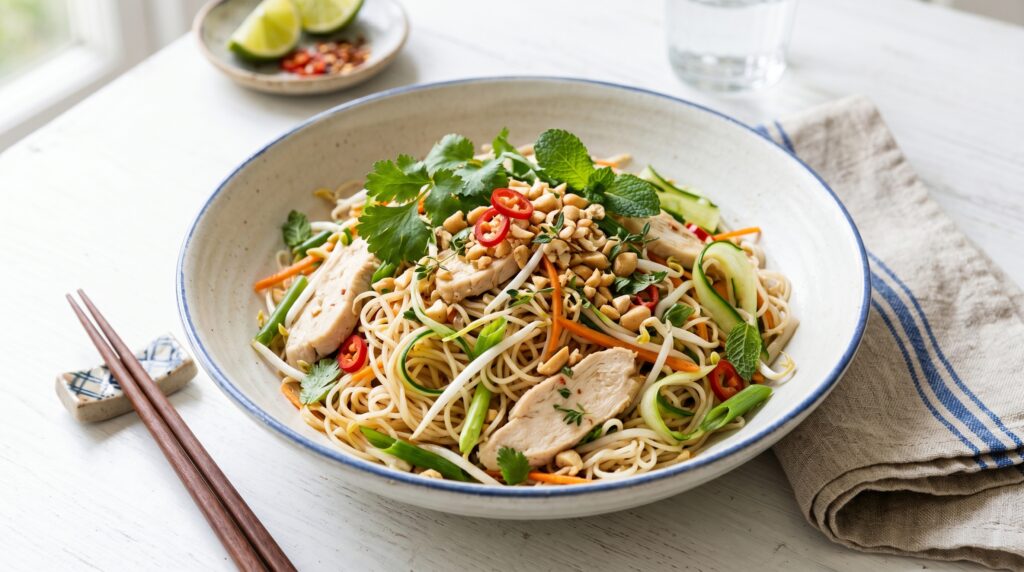
Prep time: 15 minutes | Cook time: 10 minutes | Serves: 4
This light, fresh noodle stir fry sits closer to a Vietnamese-inspired preparation than a classic Chinese one — thin rice noodles, tender chicken, crisp vegetables, and a bright lime and soy dressing with a generous amount of fresh herbs and crushed peanuts create a bowl that is simultaneously light and deeply satisfying.
Key ingredients: Thin rice noodles (soaked in boiling water for 3 minutes, drained), chicken breast (thinly sliced), bean sprouts, shredded carrot, cucumber (julienned), fresh mint, fresh cilantro, crushed roasted peanuts, fresh red chili, lime wedges
Dressing: Fish sauce, lime juice, rice vinegar, sugar, garlic (grated), fresh red chili (finely sliced). Combine and taste — it should be a perfect balance of salty, sour, sweet, and spicy.
Pro tip: Add the fresh herbs and cucumber at the very last moment — only after the wok has come off the heat. These ingredients should remain completely fresh and uncooked for the best flavor and texture.
16. Chicken Fried Rice
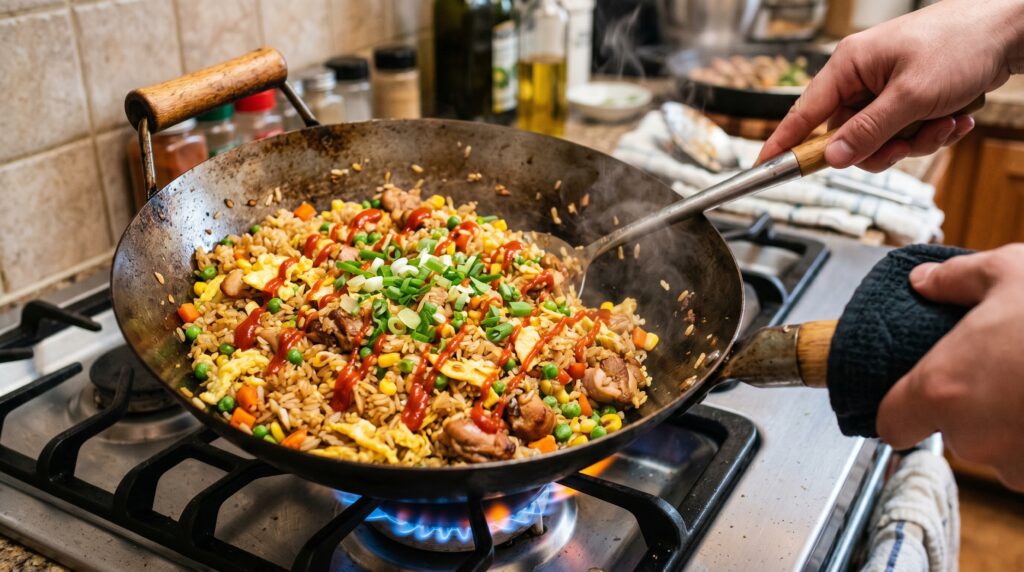
Prep time: 10 minutes | Cook time: 12 minutes | Serves: 4
Chicken fried rice is the ultimate use for leftover cooked rice — and one of the most satisfying, complete, and effortless weeknight meals in existence. Day-old rice, tossed in a screaming hot wok with chicken, eggs, vegetables, soy sauce, and sesame oil, produces a dish that is greater than the sum of its very humble parts.
Key ingredients: Day-old cooked white rice, chicken breast or thigh (diced and cooked), eggs (beaten), frozen peas, sweet corn, carrot (finely diced), garlic, fresh ginger, soy sauce, dark soy sauce, sesame oil, vegetable oil, green onion
The day-old rice rule: This is non-negotiable. Freshly cooked rice is too moist and will steam rather than fry in the wok, producing a clumped, sticky result. Day-old rice that has been refrigerated overnight has lost enough moisture to fry separately, developing those essential golden, toasted patches.
Egg technique: Push all the rice to one side of the wok, add the beaten eggs to the empty side, and scramble until just set — then fold immediately into the rice before the egg is fully cooked. The residual heat of the rice finishes cooking the egg, leaving soft, silky ribbons of egg throughout rather than dry, rubbery chunks.
17. Lemon Chicken Stir Fry
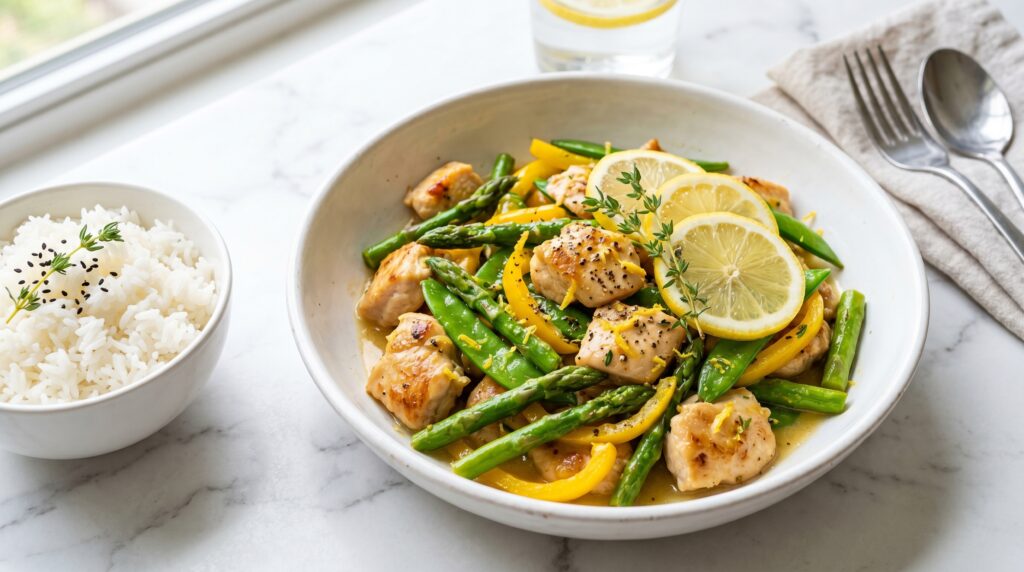
Prep time: 10 minutes | Cook time: 12 minutes | Serves: 4
Lemon chicken stir fry is a lighter, more refreshing alternative to the heavier, sweeter stir fry sauces — the bright acidity of fresh lemon juice and zest combined with a little honey and garlic creates a clean, vibrant sauce that allows the natural flavor of the chicken and vegetables to shine.
Key ingredients: Chicken breast (sliced), asparagus, snow peas, yellow bell pepper, garlic, fresh lemon juice and zest, honey, soy sauce, cornstarch, chicken stock, fresh thyme (optional)
Lemon sauce: Fresh lemon juice, lemon zest, honey, soy sauce, garlic (grated), chicken stock, cornstarch. The cornstarch helps the sauce cling to the chicken without becoming heavy.
What makes it special: Fresh lemon zest — not just juice — is the key ingredient. The zest contains the essential oils of the lemon peel, which provide the intensely fragrant, floral lemon character that juice alone cannot deliver. Always add the zest.
Bold and Contemporary Stir Fries
18. Miso and Sesame Chicken Stir Fry
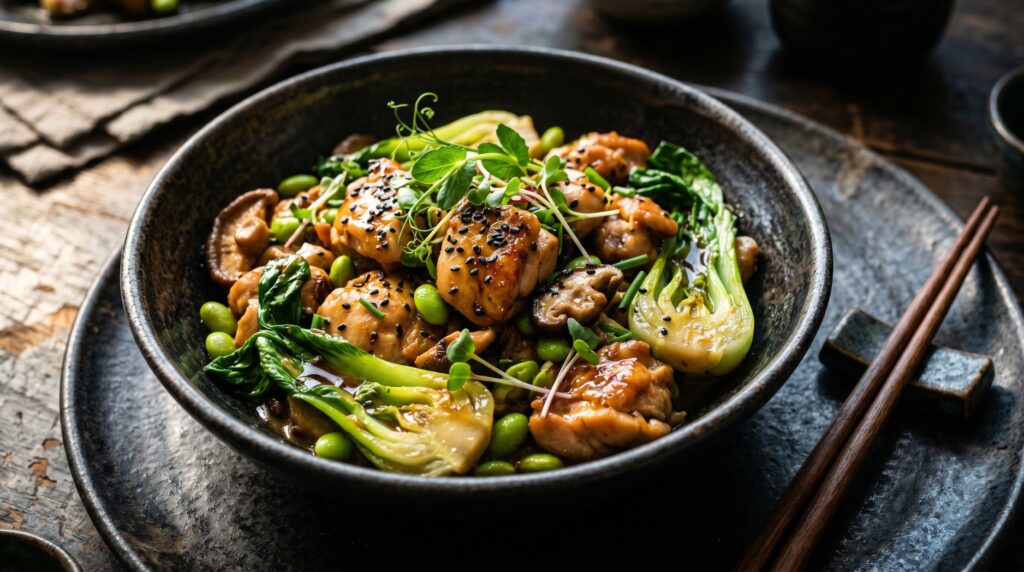
Prep time: 15 minutes | Cook time: 12 minutes | Serves: 4
White miso paste brings an extraordinary depth of umami to stir fry sauces — a fermented, complex, slightly sweet and salty character that pairs beautifully with the nuttiness of sesame and the earthiness of shiitake mushrooms. This is the stir-fry for those who want something more sophisticated than a standard soy sauce preparation.
Key ingredients: Chicken thighs (sliced), shiitake mushrooms, baby bok choy, edamame (shelled), garlic, fresh ginger, white miso paste, soy sauce, mirin, sesame oil, rice vinegar, sesame seeds, vegetable oil
Miso sesame sauce: White miso paste, soy sauce, mirin, rice vinegar, sesame oil, garlic (grated), a little water to loosen. Whisk until the miso is completely smooth and dissolved.
Pro tip: Do not add the miso sauce over the highest heat — miso can become bitter if overcooked. Lower the heat slightly when adding the sauce and toss for 60 seconds only until everything is coated and heated through.
19. Moroccan-Spiced Chicken Stir Fry
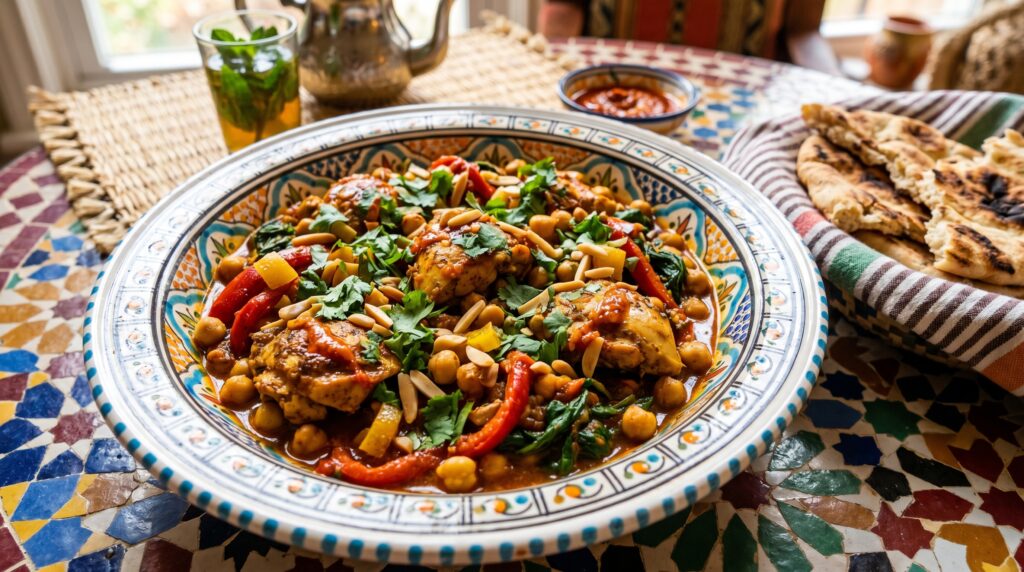
Prep time: 15 minutes | Cook time: 15 minutes | Serves: 4
This East-meets-West stir fry brings the warm, complex spices of Moroccan cooking into the speed and technique of wok cooking — ras el hanout-seasoned chicken with chickpeas, roasted red peppers, preserved lemon, and fresh spinach creates a dish of extraordinary aromatic depth that is unlike any other stir fry on this list.
Key ingredients: Chicken thighs (diced), ras el hanout spice blend, canned chickpeas, roasted red peppers, preserved lemon (rind only, finely chopped), fresh spinach, garlic, onion, canned tomatoes (blended), chicken stock, harissa paste, fresh cilantro, toasted almonds
What makes it special: Preserved lemon — lemon fermented in salt — provides a concentrated, complex lemony flavor that fresh lemon cannot replicate. A small amount of the rind, finely chopped, lifts the entire dish with a burst of intense, salty citrus.
Serving suggestion: Serve over couscous rather than rice for an authentically Moroccan accompaniment, or alongside warm flatbread for scooping.
20. Peanut Butter Chicken Stir Fry
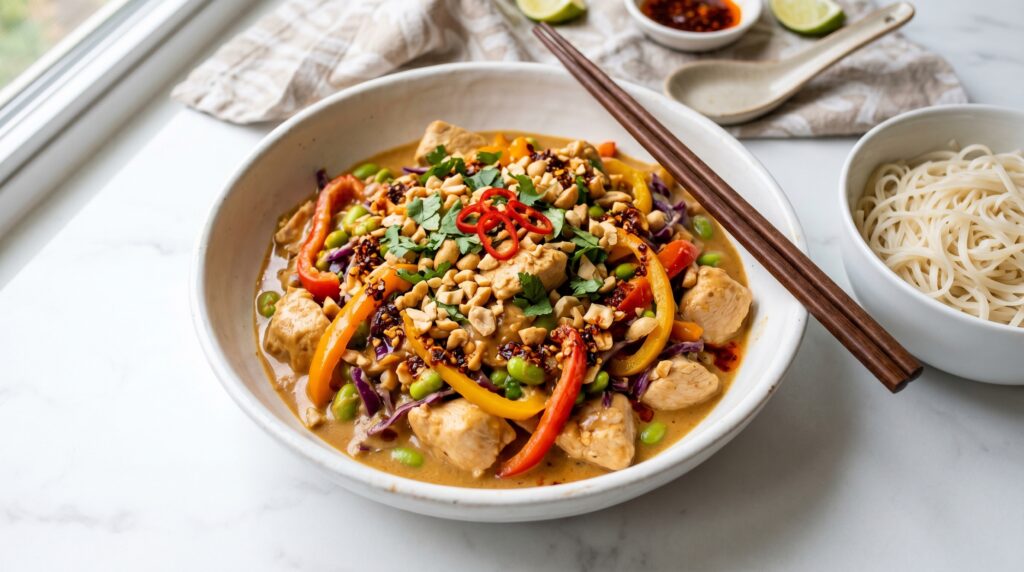
Prep time: 10 minutes | Cook time: 12 minutes | Serves: 4
Peanut sauce stir fry is the dish that converts people who claim not to like Asian food — the combination of natural peanut butter, soy sauce, lime, ginger, and garlic creates a rich, creamy, deeply satisfying sauce that is simultaneously comforting and complex. It coats every ingredient in a thick, golden embrace that makes this one of the most crowd-pleasing recipes on the entire list.
Key ingredients: Chicken breast (sliced), red and yellow bell pepper, shredded red cabbage, edamame, garlic, fresh ginger, fresh red chili, crushed roasted peanuts, fresh cilantro
Peanut sauce: Natural peanut butter (smooth), soy sauce, lime juice, rice vinegar, sesame oil, honey, garlic (grated), fresh ginger (grated), warm water to thin to the right consistency, chili flakes.
Method: Cook the chicken until golden. Add garlic, ginger, and chili and fry briefly. Add the vegetables and stir-fry for 2 minutes. Pour over the peanut sauce — thinned with warm water to a pourable consistency — and toss everything together over medium heat until every piece is generously coated. Add a splash more water if the sauce becomes too thick.
What makes it special: Natural peanut butter — containing nothing but peanuts and salt — makes a sauce of genuine peanut richness. Standard commercial peanut butter (with added sugar and palm oil) produces a sweeter, less complex result.
Pro tip: The peanut sauce will thicken significantly as it heats. Always thin it slightly more than seems necessary before adding to the wok — it will reach the perfect consistency as it heats and reduces briefly in the pan.
Stir Fry Sauce Bible: 10 Essential Sauces
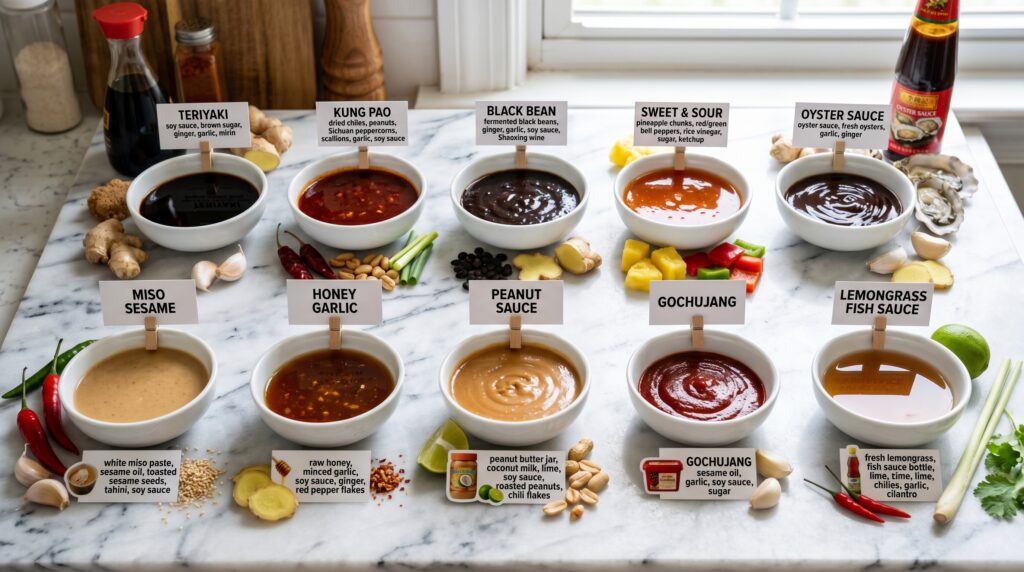
Having these ten essential sauces prepared and ready to use transforms weeknight stir-fry cooking into a genuinely effortless practice. Each sauce keeps well refrigerated for up to one week, meaning dinner preparation is reduced to simply cooking the protein and vegetables:
Teriyaki: Soy sauce, mirin, honey, garlic, ginger, cornstarch.
Oyster sauce base: Oyster sauce, light soy sauce, chicken stock, sesame oil, cornstarch, pinch of sugar.
Kung Pao: Dark soy, light soy, rice vinegar, hoisin, sugar, Sichuan peppercorn oil, cornstarch.
Sweet and Sour: Ketchup, rice vinegar, pineapple juice, soy sauce, brown sugar, cornstarch.
Black Bean: Fermented black beans, garlic, oyster sauce, soy sauce, sesame oil, and cornstarch.
Honey Garlic: Honey, soy sauce, rice vinegar, garlic, cornstarch.
Thai Basil: Fish sauce, oyster sauce, dark soy sauce, sugar.
Gochujang: Gochujang paste, soy sauce, honey, rice vinegar, sesame oil.
Miso Sesame: White miso, soy sauce, mirin, rice vinegar, sesame oil.
Peanut: Natural peanut butter, soy sauce, lime juice, sesame oil, honey, ginger, garlic, chili flakes.
Best Vegetables for Chicken Stir Fry
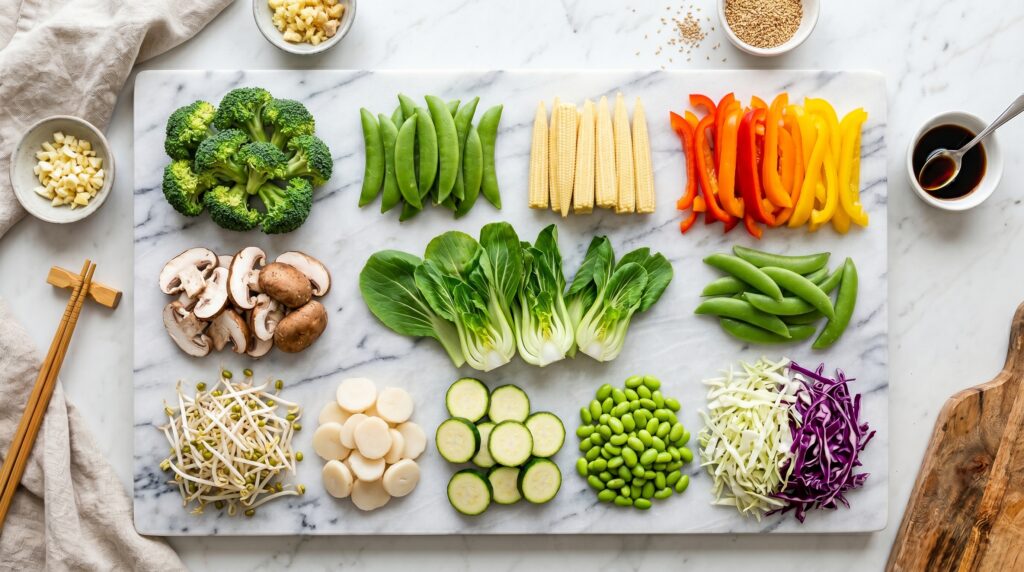
Choosing the right vegetables — and understanding their different cooking times — is essential for a stir fry where every component is cooked to perfection:
Quick cooking (add last, 1–2 minutes): Bean sprouts, baby spinach, spring onion, fresh herbs, edamame
Medium cooking (add in the middle, 2–3 minutes): Snap peas, snow peas, mushrooms, bell peppers, bok choy, zucchini
Longer cooking (add first, 3–4 minutes): Broccoli, carrot, baby corn, onion, asparagus
Pre-blanch before adding (blanch 60 seconds, add last): Broccoli florets, green beans, asparagus spears
Make-Ahead Tips for Weeknight Stir Fries
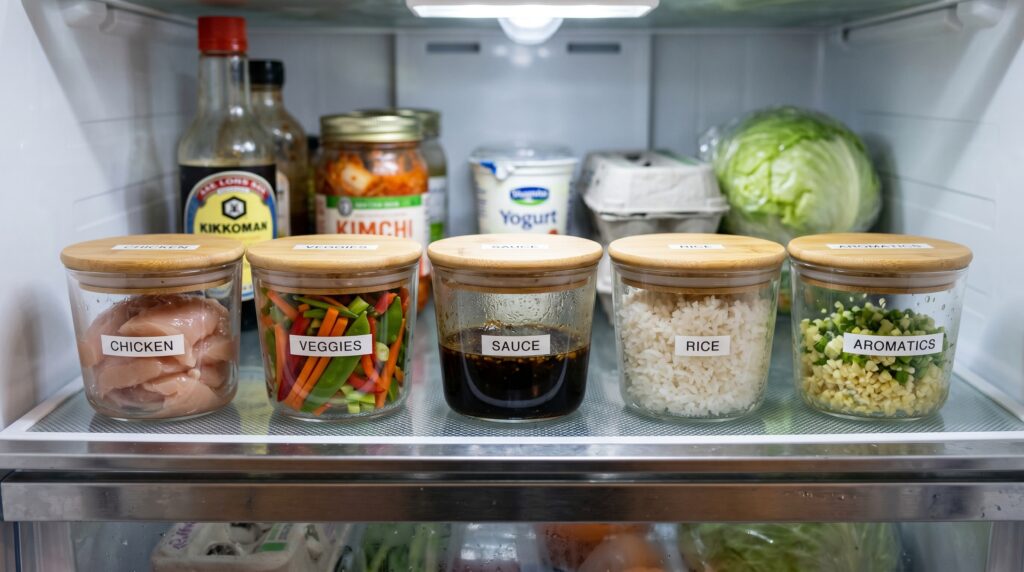
The key to genuinely effortless weeknight stir fry cooking is Sunday preparation:
Prepare the chicken: Slice, velvet, and marinate the chicken in batches. Store in airtight containers in the refrigerator for up to 48 hours or freeze for up to one month.
Prepare the vegetables: Wash, chop, and portion vegetables into separate containers. Most keep well for 3–4 days refrigerated.
Prepare the sauces: Mix all sauce components (except cornstarch, which should be added just before using) and refrigerate in small jars for up to one week.
Cook extra rice: Day-old rice is essential for fried rice and perfectly fine for all other stir-fry preparations. Cook a large batch on Sunday and refrigerate for the week.
For comprehensive guidance on safe food storage temperatures and times for raw chicken and prepared sauces, our Food Safety 101: Storage, Handling, and Temperature Guide is essential reading before implementing a make-ahead stir fry routine.
Serving Suggestions
The right accompaniment completes a stir fry and turns a quick weeknight dish into a fully satisfying meal:
Steamed jasmine rice — the classic pairing for the majority of Chinese and Thai stir-fries. The neutral, slightly fragrant rice balances and absorbs the bold sauces beautifully.
Brown rice — a more nutritious alternative with a nutty flavor that pairs particularly well with miso, gochujang, and lemongrass stir fries.
Rice noodles — for lighter, Southeast Asian-inspired stir fries. Soak dried rice noodles in boiling water for 3–5 minutes rather than boiling to prevent them from becoming mushy.
Egg noodles — for heartier, more substantial noodle stir fries.
Cauliflower rice — for a low-carb alternative that absorbs stir-fry sauces beautifully.
Flatbread — for the Moroccan-spiced and other fusion stir fries, where a more Western accompaniment feels appropriate.
For more inspiration on easy salmon dishes that use similar techniques and flavor profiles to these stir-fries, our 20 Easy Salmon Recipes (Quick & Delicious) is an excellent complementary resource.
According to Harvard T.H. Chan School of Public Health, stir-frying is one of the most nutritionally sound cooking methods for vegetables — the brief cooking time at high heat preserves significantly more heat-sensitive vitamins and phytonutrients than boiling or long braising, making stir-fries one of the most genuinely healthy weeknight dinner options available.
Frequently Asked Questions
What is the best cut of chicken for stir-fry?
Chicken thighs are generally superior to breasts in stir-fry applications — their higher fat content means they stay juicier under the intense heat of the wok and develop better caramelization and flavor. However, chicken breast works well if properly velveted and not overcooked. Slice thinly against the grain for the most tender result.
Can I use frozen vegetables in a stir-fry?
Yes, with one important caveat — thaw frozen vegetables completely and pat thoroughly dry before adding to the wok. Frozen vegetables release significant moisture as they cook, which will steam rather than fry the other ingredients and dramatically reduce the wok temperature. Patting dry and ensuring they are at room temperature before cooking largely eliminates this issue.
Why does my stir-fry taste bland at home compared to restaurants?
Three reasons: insufficient heat (home stoves rarely match commercial burner intensity), overcrowding (too many ingredients in the wok at once lowers the temperature and causes steaming), and under-seasoning (restaurant stir-fries use more soy sauce, oyster sauce, and sesame oil than most home cooks add). Address all three, and your results will improve dramatically.
How do I stop my stir-fry sauce from becoming too thick?
Cornstarch continues to thicken as it cooks and as the sauce cools. Use less cornstarch than you think you need — start with half the amount specified, assess the consistency in the wok, and add more slurry (cornstarch mixed with cold water) if needed. Always mix the cornstarch with cold water before adding to any hot liquid — adding dry cornstarch directly creates lumps.
Can I prepare stir-fry ingredients the day before?
Absolutely — and it is strongly recommended for weeknight efficiency. Sliced raw chicken, cut vegetables, and pre-mixed sauces can all be prepared 24–48 hours in advance and stored separately in airtight containers in the refrigerator. Cooked rice should be prepared at least a few hours in advance (and ideally the day before) for fried rice applications.
Conclusion
From the glossy, sweet-savory comfort of a classic teriyaki to the fragrant, herb-forward intensity of Thai basil chicken, from the creamy richness of peanut sauce to the bold depth of gochujang — these 20 chicken stir fry recipes for busy weeknights prove that the most satisfying weeknight dinners do not require hours in the kitchen, elaborate ingredients, or specialist training.
What they do require is a hot wok, good preparation, and the understanding that a few key techniques — proper heat management, batch cooking, pre-made sauces, and the velveting of chicken — are the difference between a mediocre stir fry and a genuinely outstanding one.
Choose the recipes that excite you most, build your stir fry pantry from the essential ingredients list, and make Sunday sauce preparation a weekly habit. Within a few weeks, producing a restaurant-quality stir fry in under 20 minutes on a Tuesday evening will feel completely natural — and dinner on busy weeknights will be something to genuinely look forward to rather than simply endure.
For more quick, healthy, and delicious recipes across every cuisine and occasion, explore our full collection at skillsinthekitchen.com.