
15 Easy Crepe Recipes: Sweet, Savory, and Absolutely Delicious
Introduction
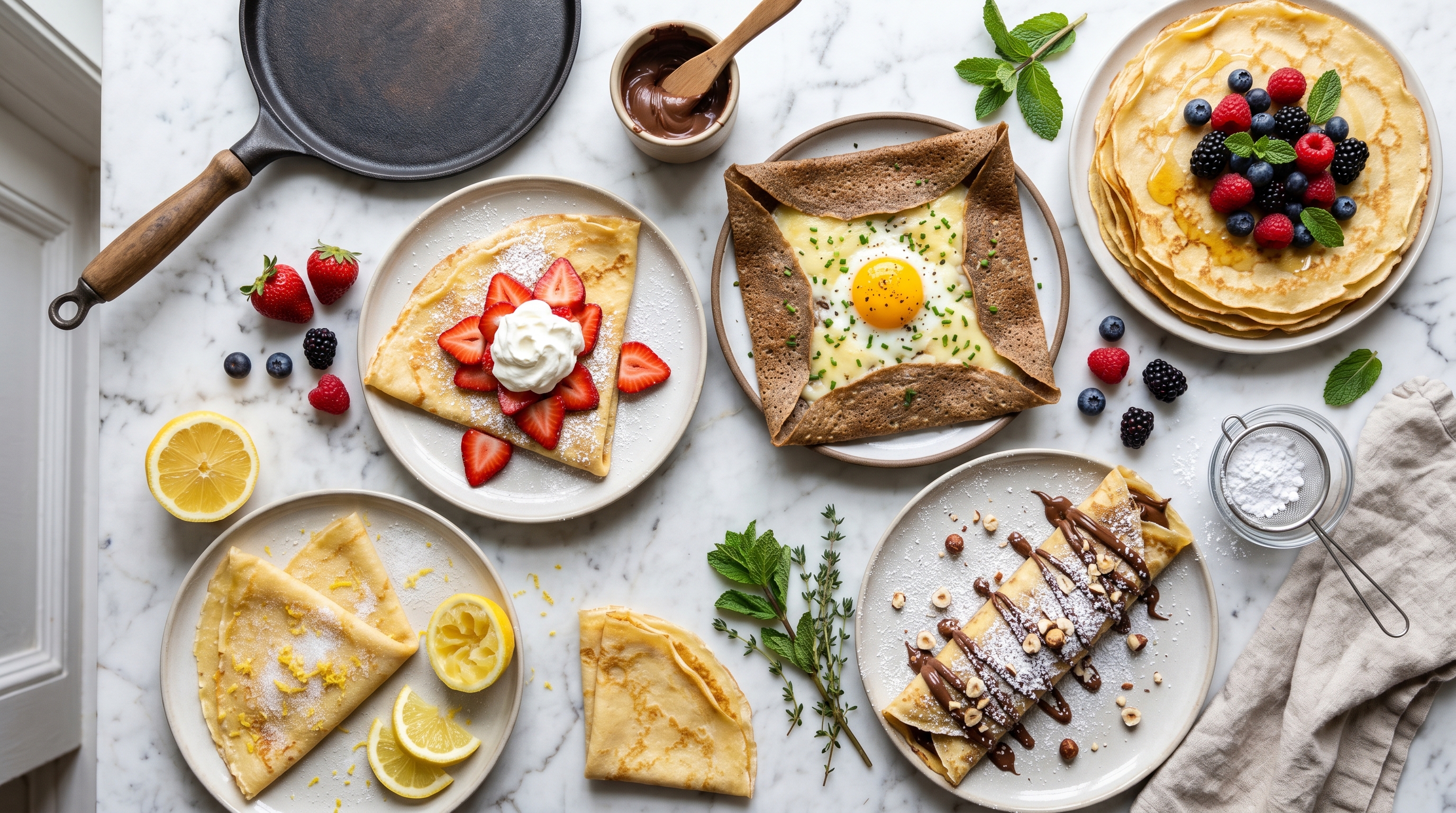
There is something almost magical about a great crepe. Paper-thin, delicately golden, with lace-like edges and a silky, tender texture that is simultaneously light and satisfying — a crepe is one of those preparations that looks impossibly sophisticated but is, in reality, one of the most forgiving and achievable things you can make in a home kitchen once you understand a few fundamental principles.
The crepe has its origins in Brittany, the northwestern region of France, where buckwheat galettes have been made for centuries and where the thin, delicate wheat flour crepe became the refined everyday food of French culinary culture. Today, crepes are eaten at every meal, in every season, across every French region and far beyond — filled with jam for breakfast, with cheese and vegetables for lunch, with caramelized bananas and cream for dessert, or simply with lemon juice and sugar for the purest, most elemental pleasure in French baking.
The beauty of the crepe lies in its extraordinary versatility. The same basic batter — flour, eggs, milk, a little butter, and a pinch of salt — becomes a vehicle for virtually any filling imaginable. Sweet crepes filled with chocolate hazelnut spread, fresh strawberries, caramelized apples, or crème pâtissière belong to the dessert table. Savory crepes filled with cheese, mushrooms, spinach, eggs, or roasted vegetables belong at breakfast, lunch, or a light dinner. International variations — Japanese crepes, American-style crepe cakes, Moroccan msemen — expand the universe further still.
In this guide, we have compiled 15 of the best, most delicious, and genuinely easy crepe recipes — spanning the most beloved classic French preparations, indulgent sweet fillings, satisfying savory combinations, and creative international variations. Every recipe comes with the batter formula, filling preparation, technique guidance, and pro tips for consistent, beautiful results every time.
Let’s make something wonderful.
The Perfect Crepe Batter: Everything You Need to Know
The Classic French Crepe Batter
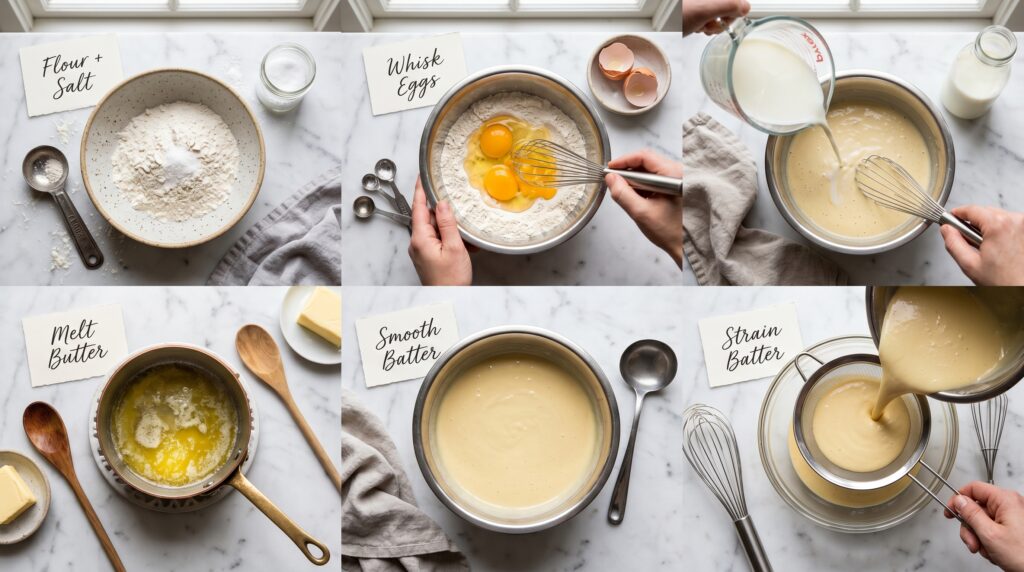
Key ingredients (makes approximately 16–18 crepes): 250g plain flour, 4 large eggs (room temperature), 600ml whole milk, 30g unsalted butter (melted and cooled), 1 tbsp caster sugar (for sweet crepes — omit for savory), 1 tsp vanilla extract (for sweet crepes), ¼ tsp fine sea salt
Method: Sift the flour and salt into a large bowl. Make a well in the center and add the eggs. Whisk the eggs into the flour from the center outward, gradually incorporating the flour. Add the milk in a thin, steady stream while whisking continuously, until the batter is completely smooth. Add the melted, cooled butter and whisk to combine. For sweet crepes, add sugar and vanilla. Strain through a fine sieve to remove any lumps. Rest for at least 30 minutes — 1 hour is ideal.
Why the Resting Period is Essential
The 30-minute resting period is the single most important step that most home cooks skip. During this time, the flour granules fully hydrate, producing a smoother batter that spreads more evenly in the pan. The gluten relaxes, preventing elastic snapping-back that makes fresh batter difficult to spread thinly. Air bubbles incorporated during mixing disperse, reducing holes and tears.
The Correct Consistency
The batter should have the consistency of single cream — thin enough to run freely across the pan when swirled but thick enough to coat the pan surface completely. If too thick, thin with additional milk one tablespoon at a time. If too thin, add a tablespoon of flour and whisk thoroughly.
The Blender Method
For the fastest possible batter preparation: combine all ingredients in a blender and blend for 30 seconds until completely smooth. The blender incorporates everything more efficiently than hand whisking, and the resting period still applies.
Precise ingredient measurement produces consistent batter results every time. Our Complete Guide to Measuring Ingredients Accurately explains exactly how to measure flour and liquids correctly.
Essential Crepe Cooking Technique
The Pan
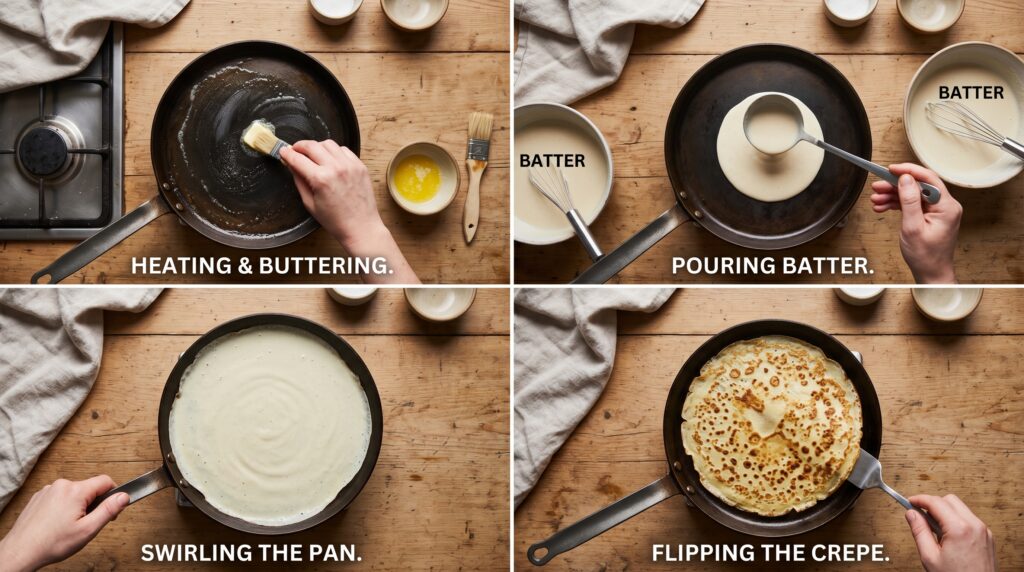
A good crepe pan — flat-bottomed, with low flared sides and a thin base — produces the most even, consistent results. A non-stick skillet with a flat base works equally well for home use. The pan should be 20–24cm (8–10 inches) in diameter for classic-sized crepes.
Heating the Pan Correctly
Heat the pan over medium heat until a drop of water flicked onto the surface evaporates immediately. Too cool and the crepe sticks and tears; too hot and it sets before you have time to swirl it thin.
The Swirl
Pour approximately 60ml of batter into the center of the hot pan and immediately lift the pan from the heat. Swirl quickly and confidently in a circular motion, tilting the pan to spread the batter in a thin, even circle. Return the pan to the heat. The entire swirl should take less than 3 seconds.
The Flip
The crepe is ready to flip when the edges are set and lifting away from the pan, and the surface appears dry. Lift the edge gently with a thin spatula, check the underside color, and flip with a confident, quick motion. Cook the second side for 30–45 seconds.
The First Crepe Rule
The first crepe is almost always imperfect — use it as a test to calibrate the temperature, batter quantity, and swirling technique. This is not a failure; it is how every experienced crepe maker begins.
15 Easy Crepe Recipes
Classic Sweet Crepes
1. Classic Lemon and Sugar Crepes
Prep time: 10 minutes + 30 minutes resting | Cook time: 20 minutes | Makes: 12–16 crepes
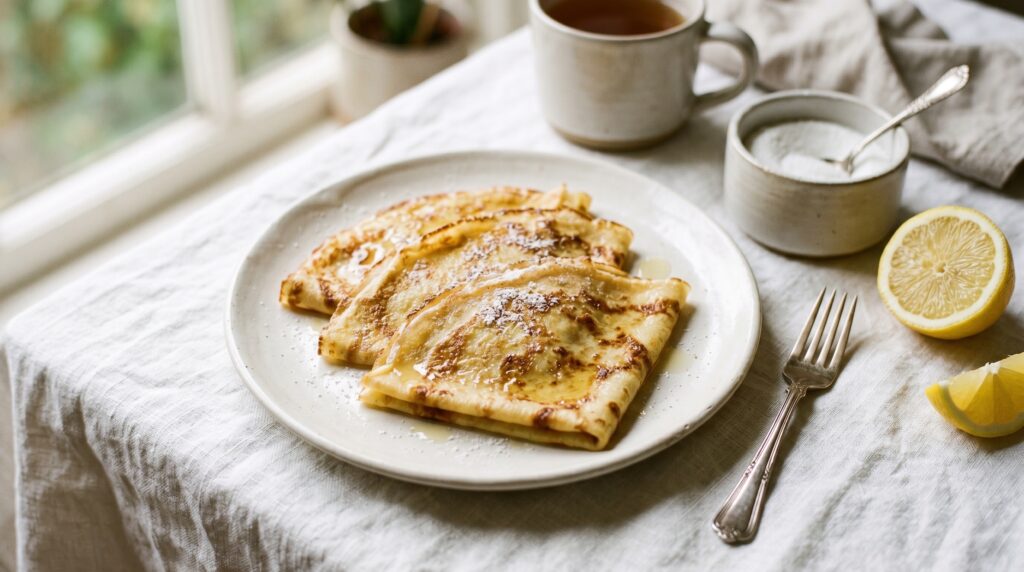
The lemon and sugar crepe is the most elemental, most French, and most perfectly balanced of all crepe preparations — a warm, just-cooked crepe squeezed with fresh lemon juice and dusted with fine caster sugar creates a combination of bright acidity, caramelized sweetness, and delicate buttery creaminess that is one of the great simple pleasures in all of food.
Key ingredients: Classic sweet crepe batter (as above), fresh lemon juice, caster or icing sugar
Method: Cook crepes as per the technique above. Immediately, while still warm, squeeze fresh lemon juice generously across the surface and dust with a fine layer of caster sugar. Fold into quarters (the traditional French presentation) or roll loosely. Serve immediately.
What makes it special: The warmth of the freshly cooked crepe causes the lemon juice and sugar to react together at the surface — the sugar dissolves slightly, and the lemon juice caramelizes infinitesimally around the edges, creating a thin, barely-there glaze that coats the crepe in a way that cold application cannot replicate.
Pro tip: Use the finest caster sugar available — or icing sugar — rather than granulated. Finer sugar dissolves more completely on contact with the warm crepe surface, producing smoother, more integrated sweetness.
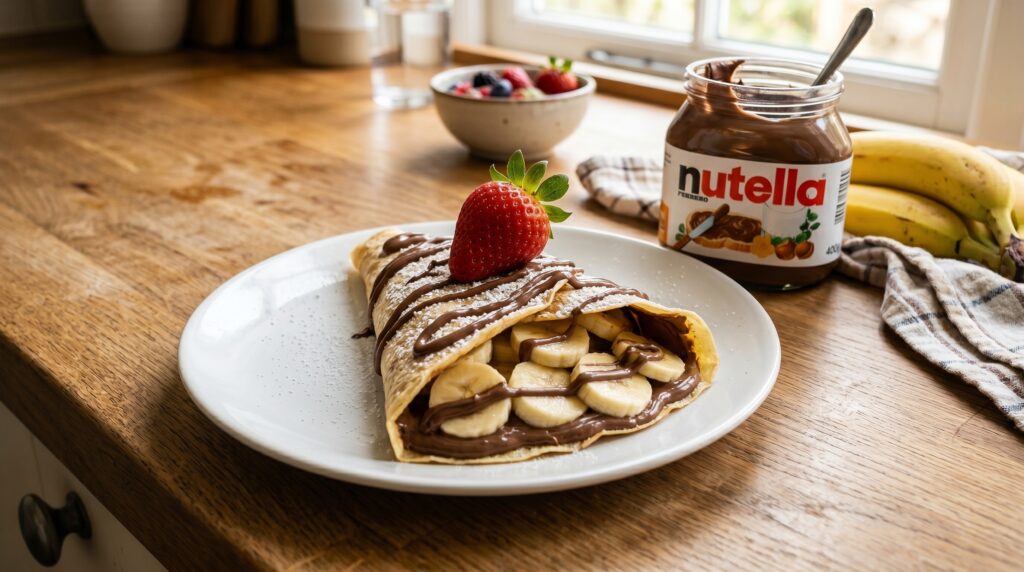
2. Nutella and Banana Crepes
Prep time: 10 minutes + 30 minutes resting | Cook time: 20 minutes | Makes: 12–16 crepes
Nutella and banana crepes are the universally beloved, irresistibly indulgent option that appeals to every age. The warm crepe slightly melts the chocolate hazelnut spread, creating a smooth, flowing filling that pairs magnificently with the sweetness of ripe banana.
Key ingredients: Classic sweet crepe batter, chocolate hazelnut spread (generous amount), ripe banana (thinly sliced), icing sugar, optional: whipped cream, crushed roasted hazelnuts, fresh strawberries
Method: Cook the crepe. Immediately, while still warm, spread a generous spoonful of chocolate hazelnut spread across the surface — the warmth softens it to a perfect, pourable consistency. Arrange banana slices across one half. Fold in half over the filling, then in half again to form a fan shape. Dust with icing sugar.
What makes it special: The temperature contrast between the warm, just-cooked crepe, the slightly melted chocolate spread, and the cool, fresh banana creates an eating experience of immediate, multi-layered pleasure.
Pro tip: Use a ripe but firm banana — an overripe banana is too soft and wet, releasing moisture that makes the crepe soggy.
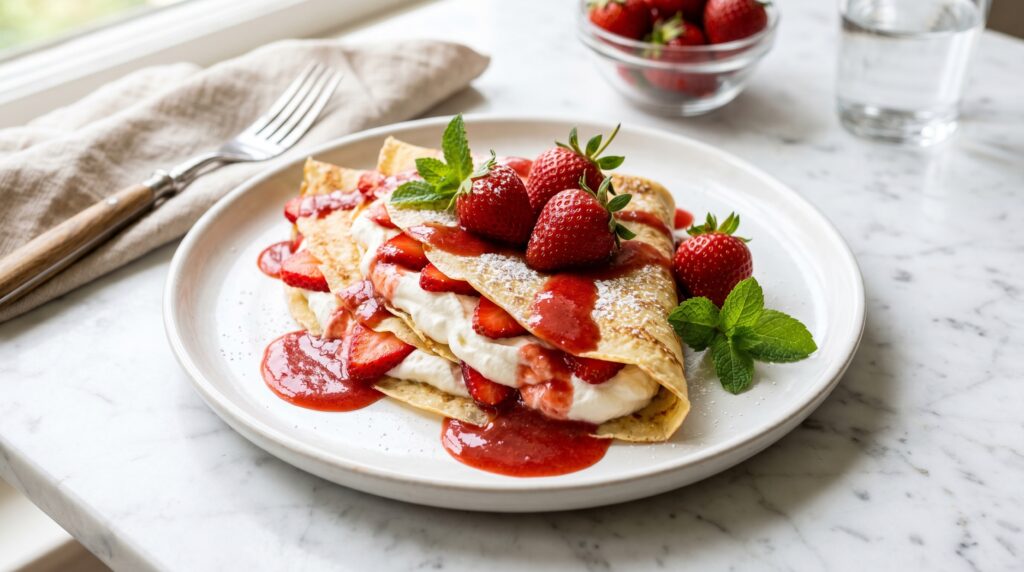
3. Strawberries and Cream Crepes
Prep time: 15 minutes + 30 minutes resting | Cook time: 20 minutes | Makes: 12–16 crepes
Strawberries and cream crepes are the definitive summer dessert crepe — a classic combination of billowy whipped cream and jewel-bright fresh strawberries wrapped in a warm, delicate crepe and finished with a simple strawberry coulis.
Key ingredients: Classic sweet crepe batter, fresh strawberries (hulled and sliced), lightly sweetened whipped cream (double cream, icing sugar, vanilla — whipped to soft peaks), strawberry coulis (fresh strawberries blended with lemon juice and icing sugar, strained)
Method: Whip the cream to soft billowing peaks. Make the strawberry coulis by blending fresh strawberries with lemon juice and a little icing sugar until smooth, then straining through a fine sieve. Fill each warm crepe with a generous spoonful of whipped cream and several sliced strawberries. Fold and drizzle with coulis.
Pro tip: Whip the cream only to soft peaks — a cloud of softly whipped cream has a more luxurious, yielding texture in a crepe than stiffer, over-whipped cream.
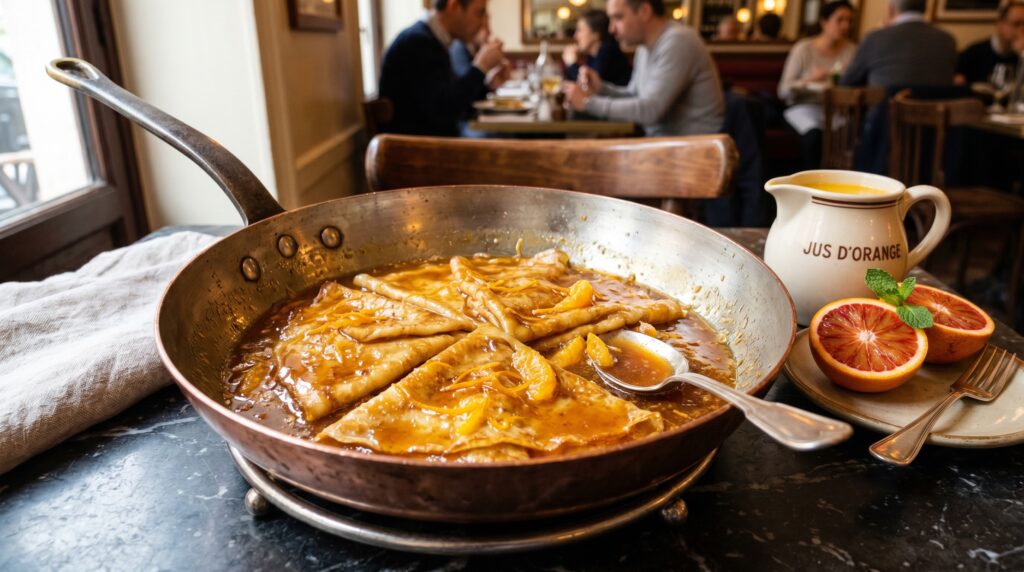
4. Crêpes Suzette
Prep time: 15 minutes + 30 minutes resting | Cook time: 30 minutes | Serves: 8
Crêpes Suzette is the most theatrical of all classic French crepe preparations and one of the most celebrated desserts in the French culinary canon — delicate crepes warmed in a sauce of caramelized orange butter and fresh orange juice. It is a dish of genuine elegance that is far more achievable at home than its reputation suggests.
Key ingredients: Classic sweet crepe batter (pre-made). Suzette sauce: unsalted butter (60g), caster sugar (60g), fresh orange juice (juice of 3 large oranges), fresh orange zest, orange flower water (optional)
Suzette sauce method: In a wide, heavy-based pan, melt butter and sugar together until the sugar caramelizes to a light amber. Add orange juice and zest carefully — it will spit dramatically. Stir until the caramel dissolves into the orange juice, creating a glossy, intensely flavored sauce. Add each pre-made crepe to the pan, spooning sauce over the top, then fold into quarters in the pan. Arrange on a serving plate and drizzle with the remaining sauce.
What makes it special: The caramelized sugar creates a depth and complexity in the orange flavor — slightly bitter from the caramel, intensely citrusy from fresh juice and zest — that transforms a simple orange butter sauce into one of the great classic preparations of French cuisine.
Pro tip: Make the crepes entirely in advance and reheat them in the Suzette sauce at the last moment — this makes entertaining with Crêpes Suzette entirely stress-free.
Our ‘Master the Art of Sauce Making: Basic Techniques‘ covers the sauce technique in full detail.
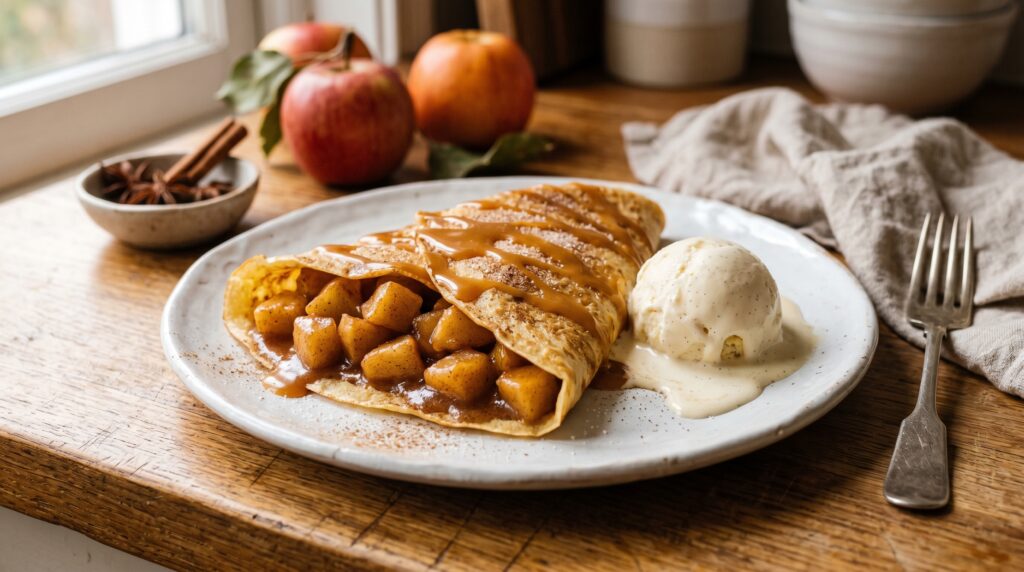
5. Apple and Cinnamon Crepes
Prep time: 20 minutes + 30 minutes resting | Cook time: 25 minutes | Makes: 12–16 crepes
Apple and cinnamon crepes are the most warmly comforting sweet crepe preparation — caramelized apple pieces in a buttery, cinnamon-scented sauce wrapped in a delicate crepe and finished with a drizzle of salted caramel and a scoop of vanilla ice cream.
Key ingredients: Classic sweet crepe batter. Apple filling: Bramley or Granny Smith apples (peeled, cored, diced), unsalted butter, light brown sugar, ground cinnamon, ground nutmeg, vanilla extract, lemon juice. To serve: salted caramel sauce, vanilla ice cream
Apple filling method: Melt butter in a wide skillet over medium-high heat. Add diced apple and cook for 3 minutes without stirring to develop golden edges. Add brown sugar, cinnamon, nutmeg, and vanilla. Toss and cook for 3–4 more minutes until the apples are tender and coated in a glossy, caramelized sauce. Add a squeeze of lemon juice to brighten.
What makes it special: Bramley apples’ natural tartness against the sweet, spiced caramelized sauce creates a filling of excellent flavor balance — the apple never becomes cloying because its natural acidity cuts through the richness of the butter and sugar.
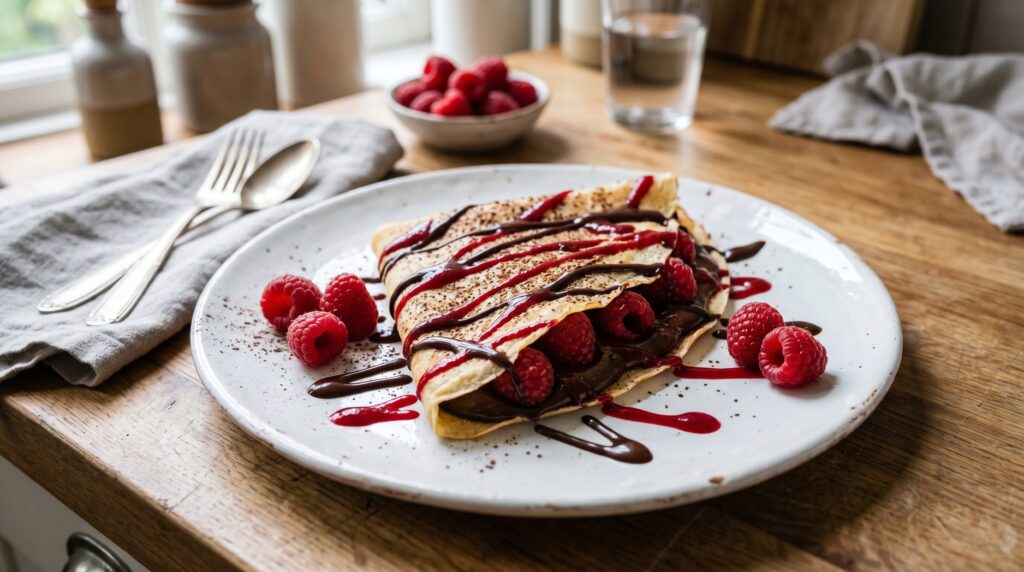
6. Chocolate and Raspberry Crepes
Prep time: 15 minutes + 30 minutes resting | Cook time: 25 minutes | Makes: 12–16 crepes
Dark chocolate and fresh raspberry is one of the great flavor pairings in all of dessert making — the bittersweet intensity of chocolate ganache against the bright, acidic freshness of fresh raspberries, wrapped in a delicate crepe, creates a dessert of genuine sophistication.
Key ingredients: Classic sweet crepe batter (with 2 tbsp cocoa powder added for chocolate crepes — optional). Dark chocolate ganache: dark chocolate (70%+), double cream, butter. Fresh raspberries. Raspberry coulis: fresh raspberries, lemon juice, icing sugar (blended and strained)
Method: Heat cream until just simmering, pour over chopped dark chocolate, add butter, and stir until completely smooth. Allow to cool slightly until spreadable. Spread a thin layer of warm ganache across each crepe, arrange fresh raspberries across one half, fold, and drizzle with both extra ganache and raspberry coulis.
What makes it special: The deep bitterness of the dark chocolate ganache and the bright acidity of fresh raspberries create a dynamic tension that makes this dessert more interesting and less sweet than combinations using milk chocolate.
Creative Sweet Crepes
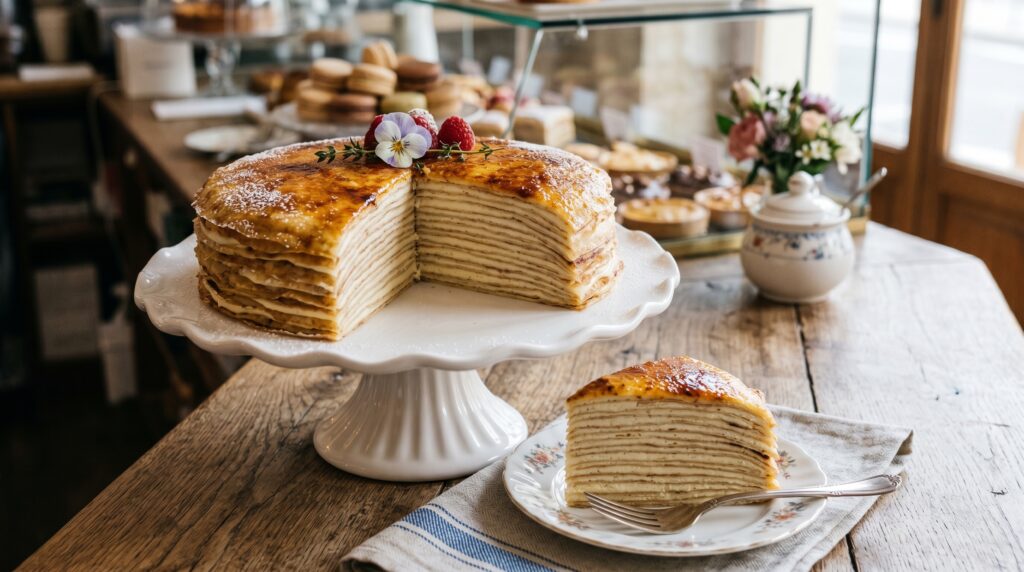
7. Crêpe Cake (Mille Crêpes)
Prep time: 45 minutes + 30 minutes resting + 2 hours chilling | Cook time: 40 minutes | Serves: 10–12
The mille crêpes cake — a tower of thin crepes layered with pastry cream and caramelized on top — is one of the most spectacular and impressive desserts a home cook can produce. It looks impossibly professional, reveals a breathtaking cross-section when sliced, and is genuinely achievable with patience and time.
Key ingredients: Classic sweet crepe batter (double batch — you need 20–24 crepes). Diplomat cream: crème pâtissière (egg yolks, caster sugar, cornstarch, whole milk, vanilla bean paste) combined with an equal volume of lightly whipped double cream. Caster sugar for caramelizing the top
Assembly method: Lay one crepe flat on a cake board. Spread a thin, even layer of diplomat cream across the entire surface using an offset spatula. Place another crepe precisely on top and repeat. Continue building layers until all the crepes and cream are used. Chill the assembled cake for 2 hours until the cream is set firm. Dust the top generously with caster sugar and caramelize with a kitchen torch.
What makes it special: The mille crêpes cake has no structural baking required — it is entirely a test of patience and assembly, making it one of the most accessible, genuinely spectacular desserts available to any home baker.
Pro tip: Use a round template to trim all crepes to exactly the same diameter before assembling — uniformity creates the most professional-looking result.
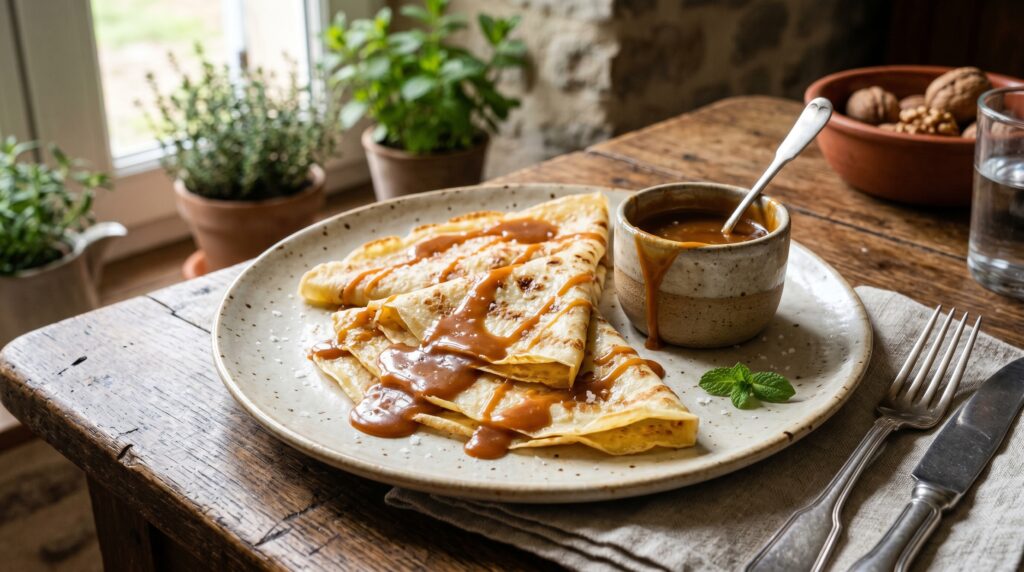
8. Caramel and Salted Butter Crepes (Breton Style)
Prep time: 15 minutes + 30 minutes resting | Cook time: 25 minutes | Makes: 12–16 crepes
Caramelized butter and fleur de sel, together with a warm crepe, is a combination born in Brittany, where the interplay of sweet caramel and salt in desserts has been a tradition for centuries.
Key ingredients: Classic sweet crepe batter. Salted caramel sauce: caster sugar (200g), double cream (120ml — warmed), good quality salted butter (50g), extra fleur de sel or flaky sea salt
Salted caramel method: Heat caster sugar in a heavy-based saucepan over medium heat without stirring until it melts to a deep amber caramel. Remove from the heat and carefully add the warm cream — it will bubble vigorously. Stir in salted butter and a generous pinch of fleur de sel until completely smooth. Cool slightly before using.
What makes it special: The fleur de sel provides large, flaky, mineral-tasting crystals that dissolve unevenly on the tongue, creating moments of intense saltiness against the sweet caramel that make the combination genuinely thrilling.
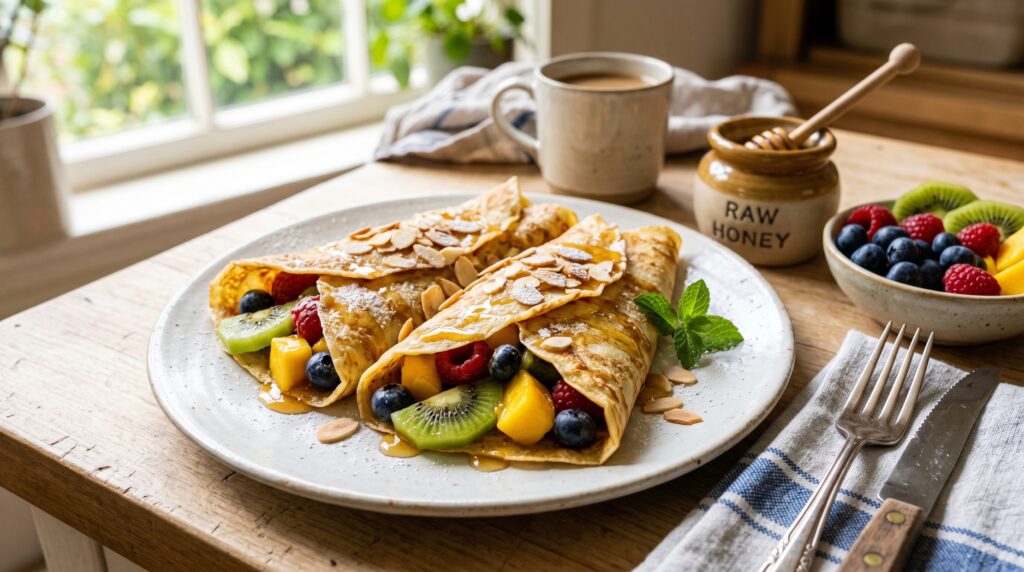
9. Fresh Fruit and Honey Crepes
Prep time: 15 minutes + 30 minutes resting | Cook time: 20 minutes | Makes: 12–16 crepes
Fresh fruit and honey crepes are the lightest, most naturally nourishing option on this list — a simple celebration of the best seasonal fruit drizzled with good raw honey and scattered with toasted almonds. This is the breakfast crepe that feels genuinely wholesome and deeply satisfying simultaneously.
Key ingredients: Classic sweet crepe batter, mixed fresh seasonal fruit (mango, kiwi, blueberries, raspberries, strawberries — whatever is ripest), raw honey (a good quality, floral variety), toasted almond flakes or crushed pistachios, optional: Greek yogurt or mascarpone as a base spread
Method: Spread a thin layer of Greek yogurt or mascarpone across the warm crepe if using. Arrange the fresh fruit generously across one half of the crepe. Fold into quarters or roll loosely. Drizzle generously with raw honey, and scatter toasted almonds across the top.
What makes it special: The raw honey — floral, complex, genuinely aromatic — elevates simple fresh fruit into something of real beauty. Use the best quality honey available for this preparation; its character is entirely on display.
Seasonal variation: This crepe adapts perfectly to every season — stone fruits (peach, apricot, plum) in summer; poached pear and fig in autumn; citrus and pomegranate in winter; strawberry and rhubarb compote in spring.
Savory Crepes
10. Egg and Cheese Buckwheat Galette
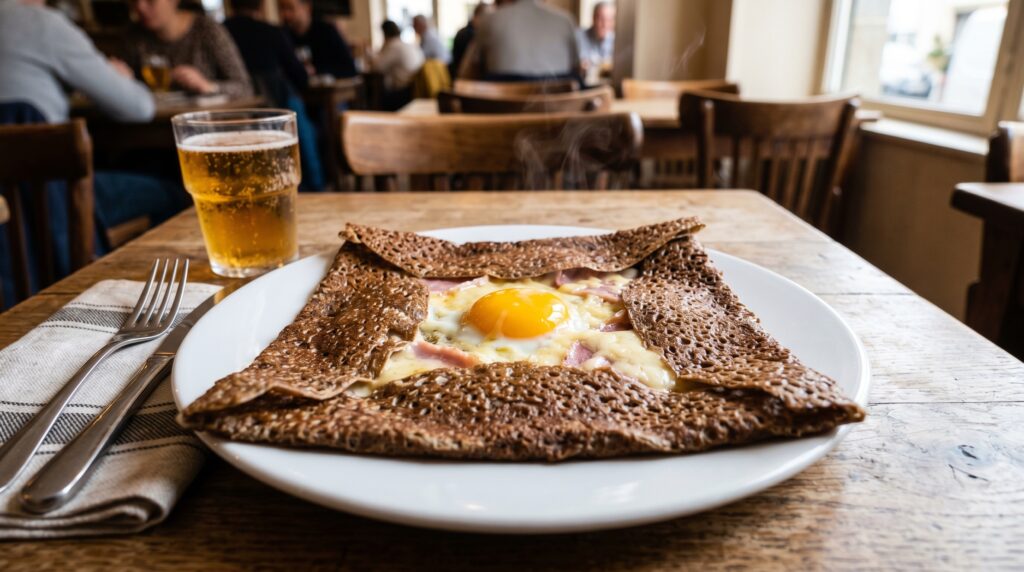
Prep time: 15 minutes + 1 hour resting | Cook time: 25 minutes | Makes: 8–10 galettes
The egg and cheese buckwheat galette is one of the most satisfying, complete single-dish meals in all of French cooking. The combination of the slightly bitter, nutty buckwheat with the melted cheese and runny egg yolk is a flavor combination of genuine perfection — deeply savory, warmly comforting, and effortlessly elegant.
Buckwheat galette batter key ingredients: Buckwheat flour (250g), water (500ml), egg (1), sea salt (1 tsp). Buckwheat galette batter requires a longer resting period (minimum 1 hour, ideally overnight refrigerated) for the batter to fully hydrate and develop its characteristic crispy, lace-like edges.
Filling key ingredients: Comté, Gruyère, or Emmental cheese (grated), eggs (one per galette), sea salt, cracked black pepper
The galette method: Pour the galette batter into the hot, lightly buttered pan and swirl it thinner than a regular crepe. When the surface is mostly set, scatter grated cheese across the surface. Crack an egg directly onto the cheese in the center of the galette. Fold the four edges of the galette inward to form a square, leaving the egg yolk visible in the center. Cook until the egg white is set, but the yolk remains runny.
What makes it special: Buckwheat flour — naturally rich, slightly bitter, and deeply nutty — creates a galette with a flavor complexity that wheat crepe batter cannot match. It is the authentic base for all savory Breton galettes.
11. Mushroom, Spinach, and Gruyère Crepes
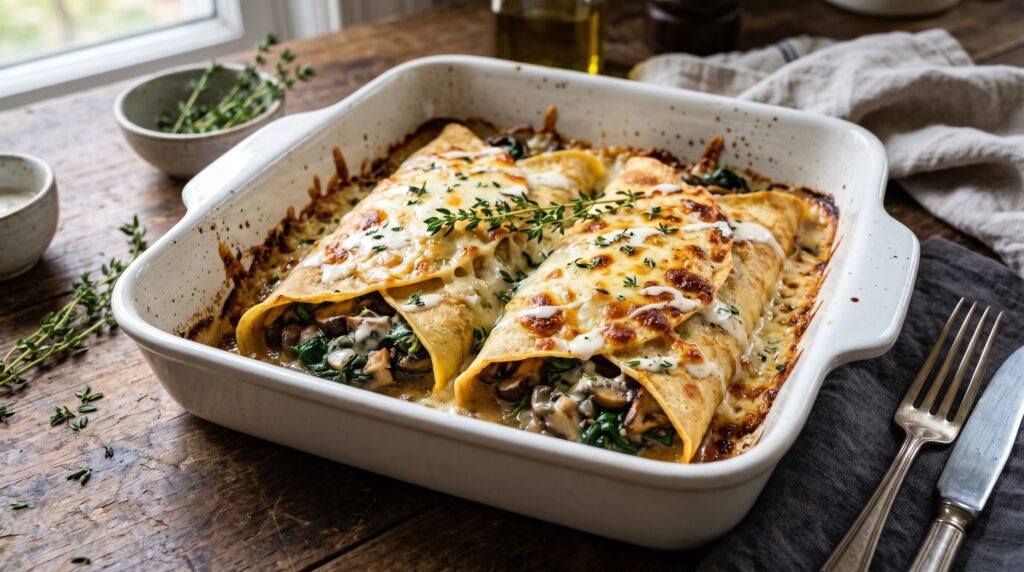
Prep time: 20 minutes + 30 minutes resting | Cook time: 30 minutes | Serves: 4
Mushroom, spinach, and Gruyère-filled crepes baked in a cream sauce and gratinéed under the broiler are one of the most elegant savory crepe preparations — deeply flavored, genuinely warming, and beautiful enough to serve as a dinner party starter or a light main course.
Key ingredients: Savory crepe batter (classic batter without sugar or vanilla). Filling: mixed mushrooms (cremini, shiitake — sautéed in butter with garlic and fresh thyme until golden), fresh spinach (wilted and well-squeezed dry), Gruyère cheese (grated), shallot. Light cream sauce: butter, flour, whole milk, Dijon mustard, Gruyère, sea salt, white pepper, nutmeg
Method: Make the cream sauce. Sauté mushrooms and shallot until golden. Wilt and squeeze the spinach. Combine mushrooms, spinach, and half the Gruyère. Fill each savory crepe with a generous spoonful of the mushroom mixture, fold into quarters or roll, and arrange in a buttered baking dish. Pour the cream sauce over the crepes and scatter remaining Gruyère across the top. Bake at 190°C (375°F) for 15 minutes until bubbling, then broil briefly until the top is golden.
What makes it special: Baking the assembled filled crepes in cream sauce creates a unified, cohesive dish where the sauce infuses the crepes and the gratinéed cheese topping brings everything together into something genuinely greater than a simple filled crepe.
12. Smoked Salmon and Cream Cheese Crepes

Prep time: 15 minutes + 30 minutes resting | Cook time: 20 minutes | Serves: 4
Smoked salmon and cream cheese crepes are the most elegant, dinner-party-worthy savory crepe preparation — the richness of smoked salmon with lemony cream cheese, capers, and dill wrapped in a delicate crepe creates something of genuine sophistication that requires no cooking beyond the crepes themselves.
Key ingredients: Savory crepe batter. Filling: cream cheese (full-fat, softened), smoked salmon (thinly sliced), capers, fresh dill (finely chopped), lemon zest and juice, white pepper
Method: Mix cream cheese with lemon zest, lemon juice, dill, and white pepper until smooth and well seasoned. Spread across the cool crepe. Layer smoked salmon across the cream cheese. Add capers. Roll tightly, cover in plastic wrap, and refrigerate for 30 minutes before slicing — this firms the roll for clean, beautiful cuts.
What makes it special: Chilling the rolled crepe before slicing produces clean, restaurant-quality portions that hold their shape beautifully on the plate.
13. Spinach and Feta Crepes
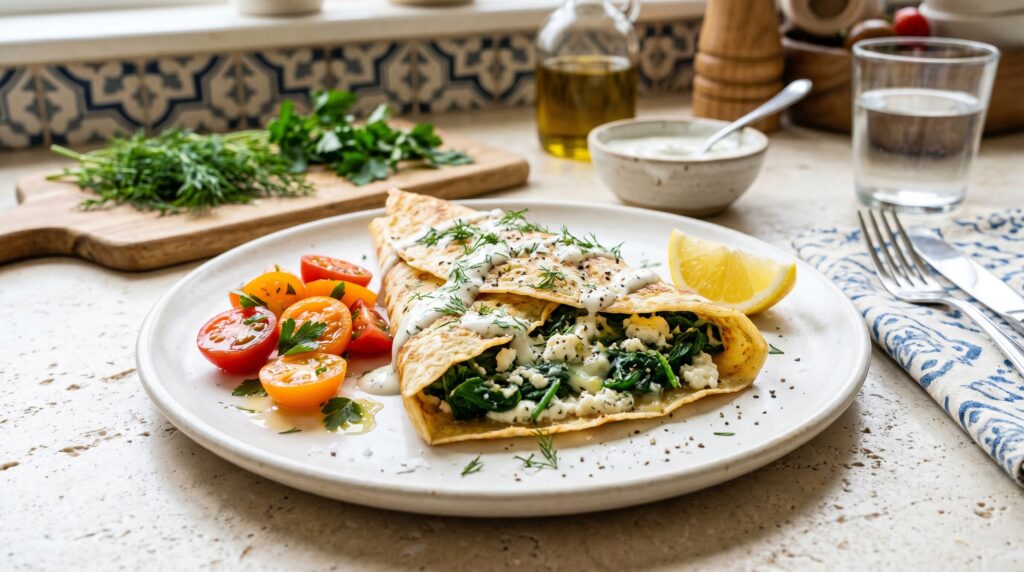
Prep time: 15 minutes + 30 minutes resting | Cook time: 25 minutes | Serves: 4
Spinach and feta crepes bring the classic Greek spanakopita flavor combination into the crepe format — the earthiness of wilted spinach, the salty tang of crumbled feta, and the fragrance of fresh dill create a filling of genuine Mediterranean character that is satisfying without being heavy.
Key ingredients: Savory crepe batter. Filling: fresh spinach (wilted and thoroughly squeezed dry), feta cheese (crumbled), garlic (grated), fresh dill, fresh mint, lemon zest, nutmeg, cracked black pepper. Yogurt sauce: Greek yogurt, lemon juice, garlic, fresh dill, sea salt
Method: Wilt spinach in a hot pan with a little olive oil. Squeeze absolutely dry in a clean kitchen cloth. Combine with crumbled feta, garlic, dill, mint, lemon zest, nutmeg, and pepper. Do not add salt — the feta provides all necessary seasoning. Fill warm crepes generously, fold into quarters, and serve with the yogurt sauce alongside.
What makes it special: Squeezing the spinach completely dry before combining with the feta produces a filling of concentrated, intense flavor and the right consistency — wet spinach produces a watery filling that makes the crepe soggy.
14. Roasted Vegetable and Goat Cheese Crepes
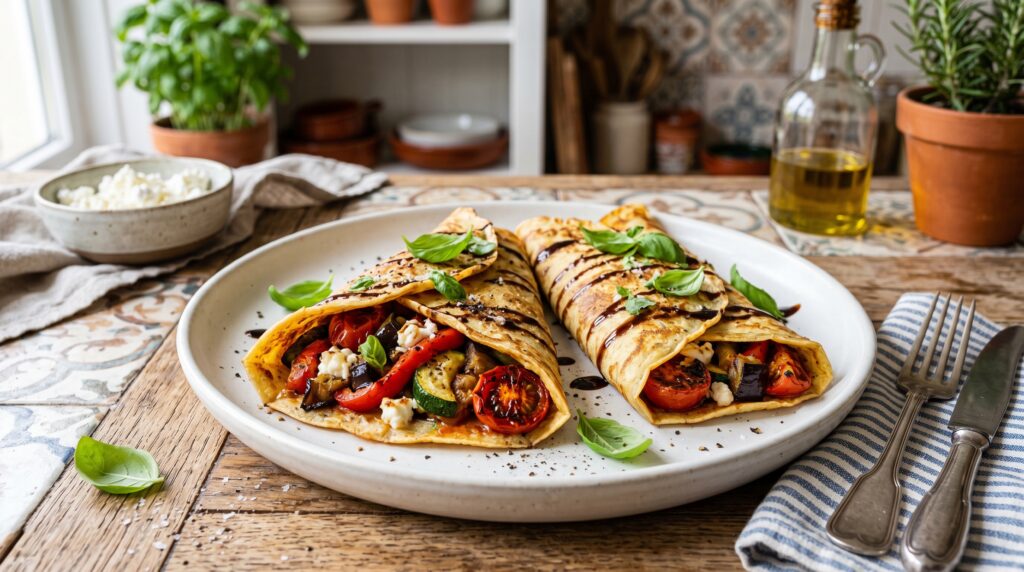
Prep time: 25 minutes + 30 minutes resting | Cook time: 35 minutes | Serves: 4
Roasted vegetable and goat cheese crepes are the most colorful, most visually vibrant savory crepe preparation — the caramelized sweetness of roasted Mediterranean vegetables against the tangy creaminess of goat cheese, finished with a balsamic reduction, creates a crepe of genuinely restaurant-quality flavor and presentation.
Key ingredients: Savory crepe batter. Filling: red bell pepper, zucchini, eggplant, cherry tomatoes, red onion (all diced and roasted at 220°C until caramelized), goat cheese (soft chèvre, crumbled), fresh basil. Balsamic reduction: balsamic vinegar simmered until syrupy
Roasting the vegetables: Spread in a single layer on a large baking tray — never crowded. Toss with olive oil, garlic, dried oregano, salt, and pepper. Roast at 220°C for 25 minutes until the edges are caramelized and golden.
What makes it special: The balsamic reduction drizzled over the finished crepe adds a sweet, vinegary intensity that ties all the Mediterranean flavors together and creates a depth that makes this crepe feel genuinely special.
15. Chicken and Mushroom Crepes with Béchamel
Prep time: 25 minutes + 30 minutes resting | Cook time: 35 minutes | Serves: 4–6
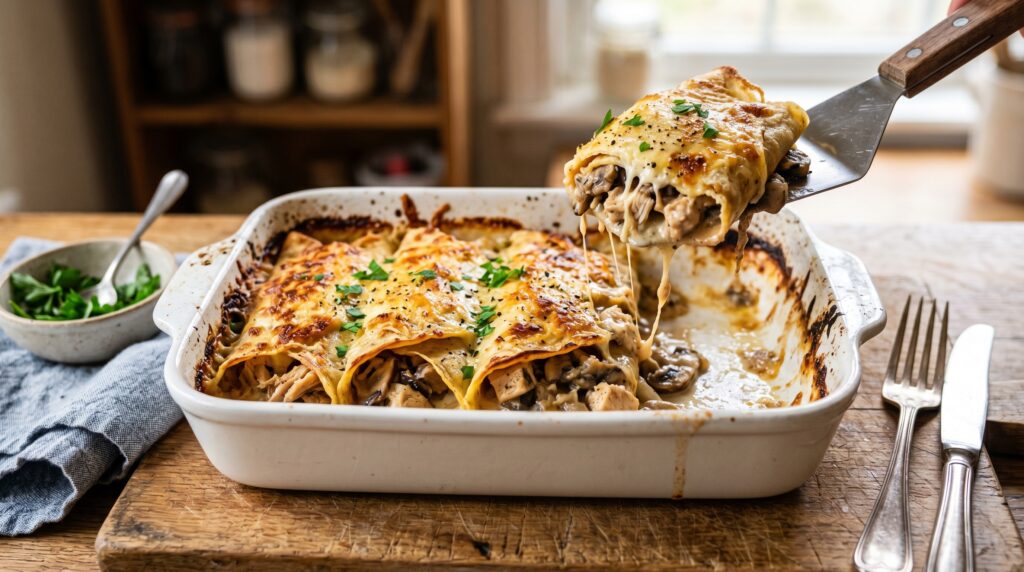
Chicken and mushroom crepes with béchamel sauce — folded into quarters in a baking dish, covered in a rich, golden béchamel, and gratinéed until bubbling and golden — is the most comforting, most complete, and most satisfying savory crepe preparation of all. This is the dish that turns a simple crepe into a genuinely impressive dinner.
Key ingredients: Savory crepe batter. Filling: chicken breast (poached and shredded), mixed mushrooms (sautéed in butter with garlic and fresh thyme until golden), shallots, fresh parsley, sea salt, and cracked black pepper. Béchamel sauce: unsalted butter, plain flour, whole milk, Dijon mustard, Parmesan, nutmeg, sea salt, white pepper. Topping: additional Parmesan, fresh parsley
Béchamel method: Melt butter, add flour, and cook for 2 minutes to form a roux. Gradually whisk in warm milk until smooth and thickened. Season with Dijon, Parmesan, nutmeg, salt, and white pepper.
Assembly: Mix the shredded chicken with the sautéed mushrooms and a few spoonfuls of béchamel to bind the filling. Fill each savory crepe generously, fold into quarters, and arrange in a buttered baking dish. Pour the remaining béchamel over the assembled crepes. Scatter Parmesan across the top. Bake at 190°C (375°F) for 15 minutes until heated through. Finish under the broiler for 3–5 minutes until the top is deeply golden and bubbling.
What makes it special: The béchamel serves dual purposes — binding the chicken and mushroom filling from inside and creating the golden, gratinéed crust from outside. The crepe absorbs the sauce beautifully during baking and becomes something more complex and satisfying than a simply filled crepe.
Pro tip: This dish can be assembled completely, covered, and refrigerated for up to 24 hours before baking — making it ideal for entertaining. Add 10 minutes to the baking time when cooking from cold.
For guidance on making perfect béchamel sauce, our Master the Art of Sauce Making: Basic Techniques covers the technique in full detail.
Crepe Troubleshooting Guide
| Problem | Likely Cause | Solution |
|---|---|---|
| Thick, uneven crepes | Too much batter / not swirled fast enough | Use less batter; swirl faster and more confidently |
| Holes and tears | Pan too hot / batter too thin / not rested | Heat the pan fully before adding batter; butter between crepes |
| Reduce the heat; check the batter consistency; rest the batter | Pan not hot enough / insufficient butter | Ensure the pan is properly heated before starting |
| Pale, undercooked crepe | Pan not hot enough | The first crepe is always bad |
| Rubbery texture | Overmixed batter / too much flour | Mix minimally; check flour measurement |
| Reduce heat; check the batter consistency; rest the batter | Temperature not calibrated yet | This is normal — use the first crepe as a test |
| Filling leaks out | Overfilled / wrong fold | Fill more conservatively |
Make-Ahead and Storage Guide
Crepe batter: Keeps refrigerated, covered, for up to 48 hours. An overnight-rested batter actually produces noticeably smoother, more pliable crepes. Whisk briefly before using.
Cooked crepes: Stack cooled crepes with parchment paper between each one, wrap in plastic wrap, and refrigerate for up to 3 days. Reheat individually in a dry pan for 30 seconds per side.
Freezing crepes: Stack with parchment paper between each crepe, wrap in plastic wrap, seal in a freezer bag, and freeze for up to 3 months. Thaw at room temperature for 30 minutes before reheating.
For comprehensive guidance on safe food storage temperatures, our Food Safety 101: Storage, Handling, and Temperature Guide is essential reading.
Frequently Asked Questions
Why does my crepe batter need to rest?
Resting allows the flour to fully hydrate, the gluten to relax, and air bubbles to disperse — producing smoother, more pliable crepes that spread more evenly in the pan.
Can I make crepes without a crepe pan?
Yes — any flat-bottomed, non-stick skillet works well. The ideal pan is 20–24cm in diameter with low, flared sides.
What is the difference between a crepe and a galette?
A crepe is made from wheat flour — light, neutral-flavored, used for both sweet and savory preparations. A galette (in the Breton tradition) is made from buckwheat flour — darker, nuttier, more robust in flavor.
How thin should a crepe be?
A properly made crepe should be approximately 1–2mm thick — thin enough to see your hand through when held up to the light.
According to Larousse Gastronomique, the crepe is one of the oldest and most fundamental preparations in French culinary history — representing the essential union of technique and simplicity that defines the best of French cooking at every level.
Conclusion
From the elemental simplicity of a lemon and sugar crepe eaten warm and standing up, to the theatrical elegance of Crêpes Suzette, from the earthy satisfaction of a buckwheat galette to the joyful extravagance of a Japanese-style cone, from the sophisticated richness of a chicken and béchamel gratin to the playful indulgence of Nutella and banana — these 15 easy crepe recipes demonstrate the full, extraordinary range of one of the most versatile, most forgiving, and most rewarding preparations in all of cooking.
Master the batter. Understand the resting. Learn the swirl. And discover that with a simple pan, a bowl of batter, and whatever is in the refrigerator, you are always moments away from something genuinely wonderful.
For more recipes, technique guides, and cooking inspiration across every cuisine and skill level, explore our full collection at skillsinthekitchen.com.