
15 Best Cabbage Recipes for Healthy & Delicious Meals
Introduction
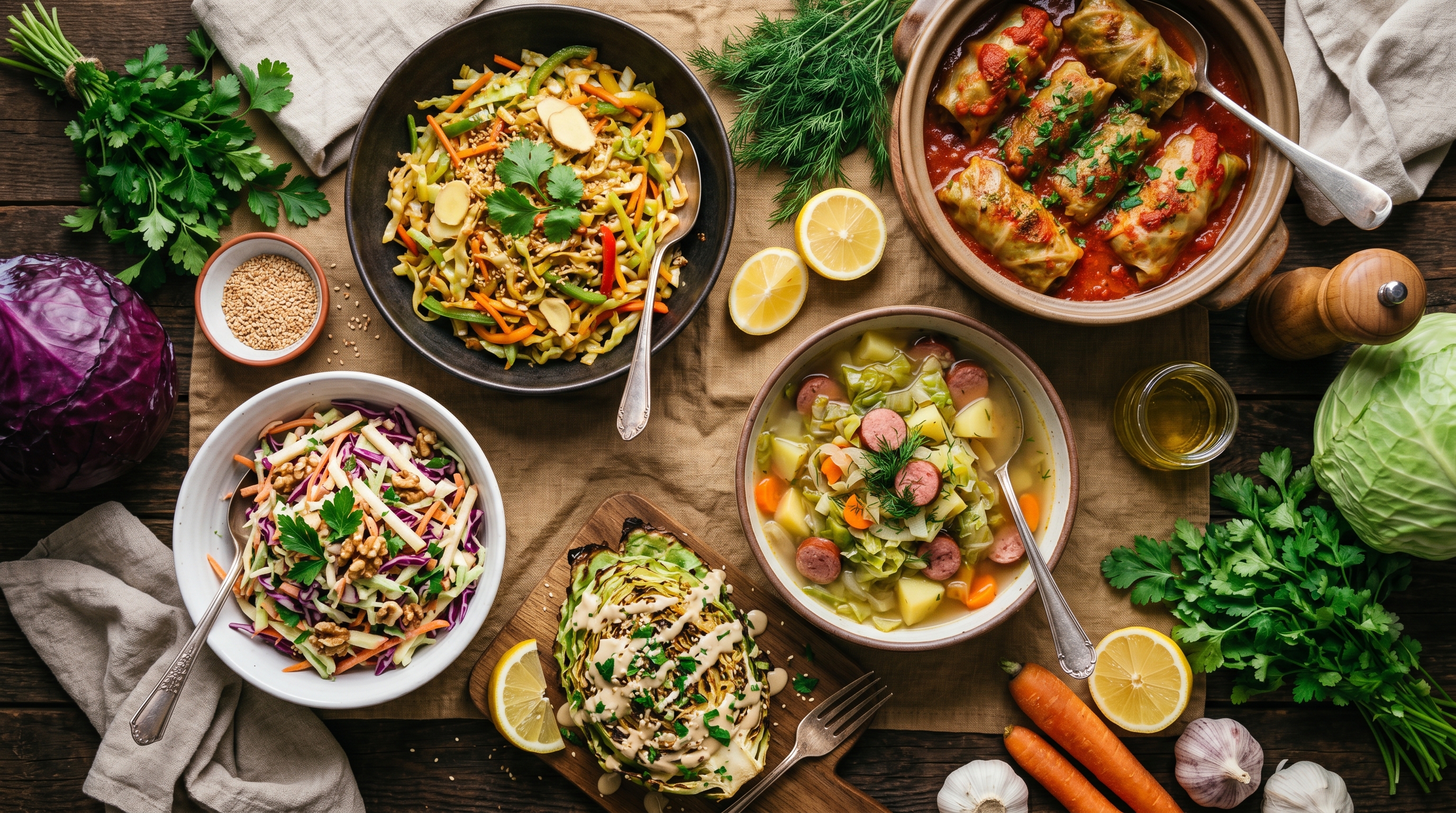
Cabbage is one of the most undervalued, most nutritionally powerful, and most culinarily versatile vegetables available to the home cook. While it rarely commands the same enthusiasm as more glamorous ingredients, the truth is that cabbage — prepared with genuine care and the right technique — produces some of the most satisfying, most deeply flavored, and most genuinely nourishing dishes in the entire vegetable kingdom.
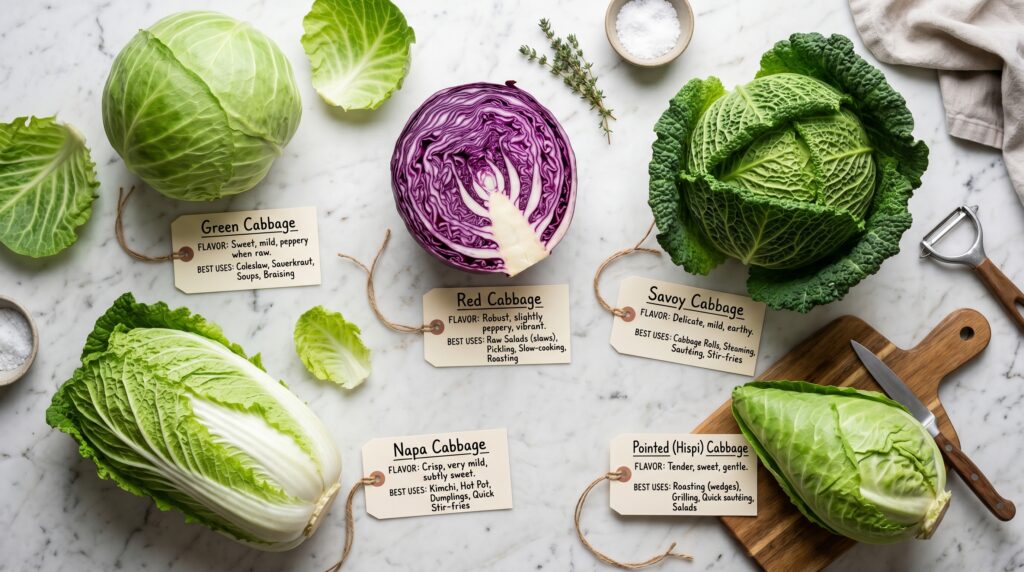
The cabbage family (Brassica oleracea) encompasses an extraordinary range of varieties, each with its own distinct character: the dense, mildly sweet green cabbage that braised slowly becomes silky and complex; the tender, slightly more delicate savoy with its crinkled, ruffly leaves ideal for wrapping and stuffing; the vibrant, slightly peppery red cabbage that transforms into a jewel-toned braise with the addition of apple and vinegar; the crisp, slightly sweet napa (Chinese) cabbage central to Asian cooking traditions; and the torpedo-shaped pointed cabbage whose sweetness emerges beautifully under high heat.
Nutritionally, cabbage is one of the most impressive vegetables available. A 100g serving provides significant amounts of vitamin C (more than an equivalent serving of orange in some varieties), vitamin K, folate, vitamin B6, and meaningful amounts of fiber. It is also an excellent source of glucosinolates — the plant compounds whose breakdown products include sulforaphane and indole-3-carbinol, both extensively studied for their anti-inflammatory and potentially protective properties. And at approximately 25 calories per 100g, cabbage is one of the most nutrient-dense, lowest-calorie vegetables available.
In this guide, we have compiled 15 of the best, most delicious, and most practically achievable cabbage recipes — spanning vibrant slaws and salads, warming soups and stews, satisfying stuffed preparations, international stir fries and braises, and clever preparations that prove cabbage is one of the most genuinely exciting vegetables in any kitchen.
Let’s cook.
The Cabbage Cooking Principles
The Five Cabbage Transformations
Raw: Thinly shredded and dressed with acid and oil, raw cabbage maintains its satisfying crunch while the acid softens the sharp, slightly sulfurous edge into a pleasant, mild character. Essential for coleslaw, slaws, and garnishes.
High-heat roasting or charring: Cut into wedges or thick slices and roasted at maximum temperature, cabbage develops extraordinary caramelization and a slightly smoky, nutty sweetness that makes it genuinely exciting as a main course preparation.
Quick stir fry: Shredded over high heat for 3–4 minutes, cabbage wilts slightly while retaining crunch and developing a slightly sweet, slightly charred character.
Long braising: Slowly cooked with liquid, acid, and aromatics for 45–60 minutes, cabbage becomes completely tender, silky, and deeply sweet — a completely different ingredient from its raw counterpart.
Fermentation: The basis of sauerkraut and kimchi — lacto-fermentation transforms cabbage’s flavor entirely, creating a sharply acidic, complex, probiotic-rich preparation of genuine depth.
The Sulfur Odor Issue
The slight sulfurous smell associated with cooked cabbage comes from the release of glucosinolate breakdown products during cooking. Two techniques minimize this: cooking at high heat (which drives off the volatile sulfur compounds quickly) and adding an acid (lemon juice, vinegar, or wine) to the cooking liquid, which neutralizes the relevant compounds.
15 Best Cabbage Recipes
Raw and Fresh Cabbage Preparations
1. Classic Coleslaw
Prep time: 20 minutes + 30 minutes resting | No cook | Serves: 6
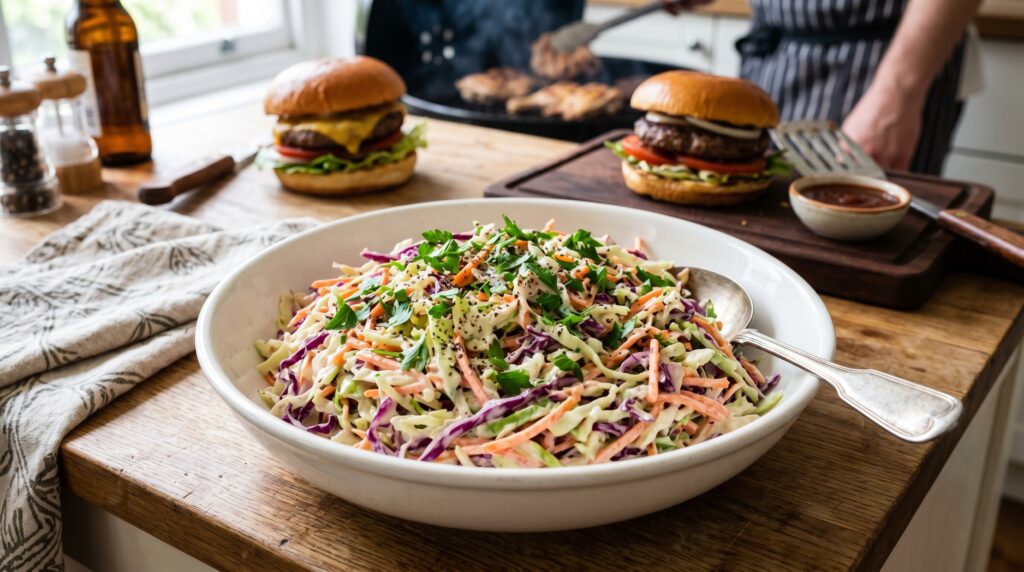
Classic coleslaw — properly made with a well-balanced dressing and a 30-minute rest to allow the cabbage to slightly soften and the flavors to meld — is genuinely one of the most satisfying, most universally loved preparations in the vegetable category.
Key ingredients: Green cabbage (½ head, finely shredded), red cabbage (¼ head, finely shredded), carrot (2, julienned or grated), red onion (¼, very finely sliced). Dressing: full-fat mayonnaise (4 tbsp), apple cider vinegar (2 tbsp), Dijon mustard (1 tsp), caster sugar (1 tsp), celery seeds (½ tsp — the classic coleslaw spice), sea salt, cracked black pepper
The salt-and-rest technique: Toss the shredded cabbage with a generous pinch of salt and allow to rest for 15 minutes before dressing. The salt draws out excess moisture from the cabbage, preventing the dressing from being diluted during storage, and slightly softens the cabbage’s texture.
What makes it special: Celery seeds — added to the dressing in a small amount — create an immediate, authentic coleslaw flavor that is immediately recognizable and completely characteristic of a properly made American-style slaw.
2. Asian Sesame Cabbage Slaw
Prep time: 20 minutes | No cook | Serves: 4
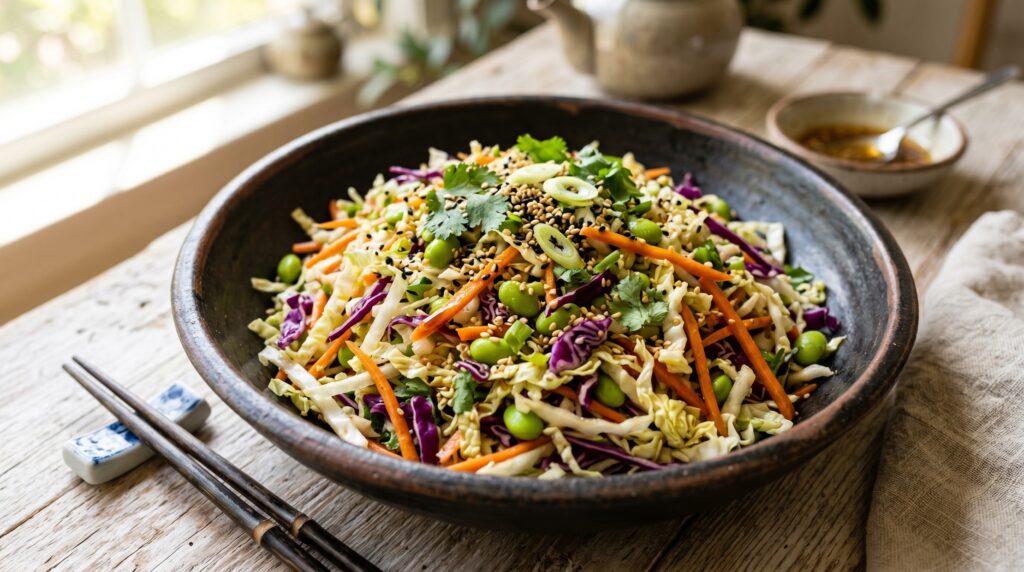
Asian sesame cabbage slaw is the most vibrant, most flavor-forward raw cabbage preparation — the combination of the sesame-ginger dressing, the crunchy vegetables, and the fresh cilantro creates a slaw of extraordinary freshness that works as beautifully alongside a main course as it does as a standalone salad.
Key ingredients: Napa cabbage (½ head, thinly shredded), red cabbage (¼ head, thinly shredded), carrot (2, julienned), edamame (100g, cooked), sliced green onion, fresh cilantro, toasted sesame seeds. Sesame-ginger dressing: sesame oil (2 tbsp), rice vinegar (3 tbsp), tamari or soy sauce (2 tbsp), fresh ginger (1 tsp, grated), garlic (1 clove, minced), honey (1 tsp), a pinch of chili flakes
What makes it special: The sesame oil — used both in the dressing and as a finishing drizzle — creates a nutty, aromatic character that ties all the components of this slaw together into a unified, distinctively Asian flavor profile.
3. Red Cabbage and Apple Salad
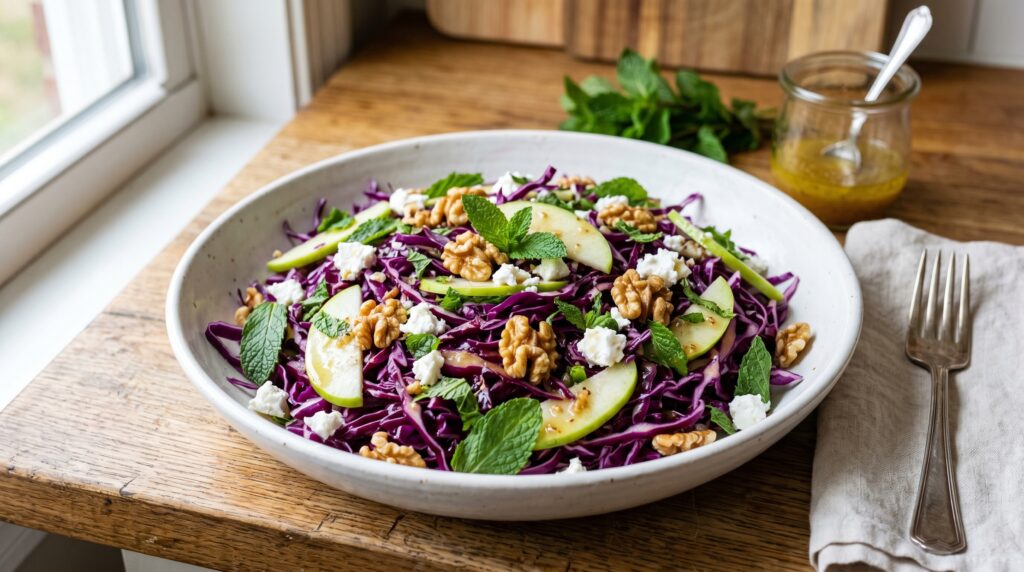
Prep time: 15 minutes | No cook | Serves: 4
Red cabbage and apple salad is the most elegant, most visually striking raw cabbage preparation — the deep purple of the raw red cabbage against the bright green apple slices, the crunchy walnuts, and the tangy goat cheese creates a salad of genuine sophistication and surprising depth.
Key ingredients: Red cabbage (½ head, very thinly sliced), crisp green apple (2 — Granny Smith, thinly sliced and tossed in lemon juice to prevent browning), toasted walnuts (60g), soft goat cheese (60g, crumbled), fresh mint leaves. Honey-lemon dressing: extra virgin olive oil (4 tbsp), fresh lemon juice (2 tbsp), honey (1 tsp), Dijon mustard (½ tsp), sea salt, cracked black pepper
What makes it special: The combination of the slightly peppery raw red cabbage with the apple’s crisp sweetness and the goat cheese’s tangy creaminess creates a salad with a wider flavor range than most — sweet, acidic, slightly bitter, creamy, and nutty all present simultaneously.
Warming Soups and Stews
4. Cabbage and Sausage Soup
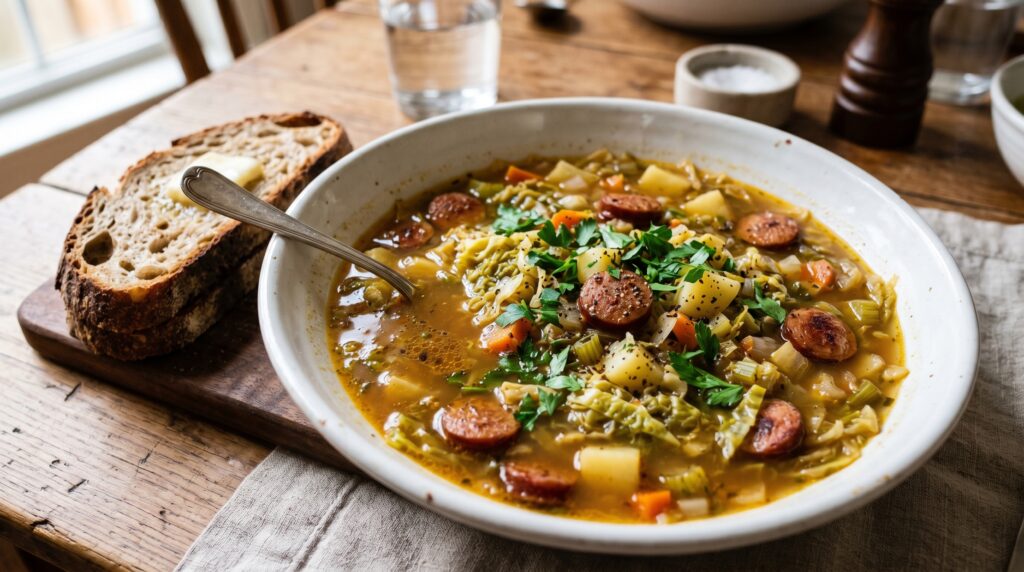
Prep time: 15 minutes | Cook time: 35 minutes | Serves: 6
Cabbage and sausage soup is the most warming, most deeply comforting cabbage preparation — the combination of good sausage, the gentle sweetness of slowly cooked cabbage, and a rich, herb-fragrant broth creates a soup of extraordinary satisfaction that improves overnight.
Key ingredients: Beef or chicken sausages (400g, sliced into coins and pan-fried until golden), green cabbage (½ head, roughly shredded), potato (3 medium, diced), carrot (2, sliced), celery (3 stalks, sliced), onion (1, diced), garlic (4 cloves), chicken stock (1.2 litres), fresh thyme, bay leaf, smoked paprika (½ tsp), sea salt, cracked black pepper
What makes it special: Pan-frying the sausage coins until golden before adding them to the soup creates caramelized edges of concentrated flavor and rendered fat that enriches the entire broth — the sausage fat becomes the cooking medium for the aromatics.
5. Borscht (Beet and Cabbage Soup)
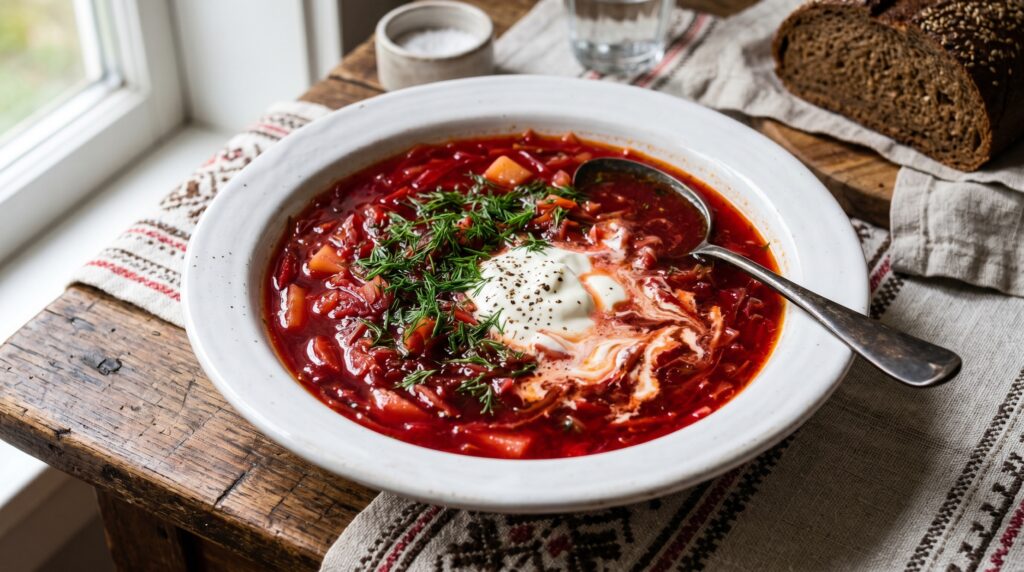
Prep time: 20 minutes | Cook time: 45 minutes | Serves: 6
Borscht — the iconic Eastern European beet and cabbage soup — is one of the most visually spectacular, most deeply flavored soups in all of cooking. The combination of earthy beet, sweet cabbage, and a sour-sweet broth creates a soup of extraordinary color and complex, satisfying flavor.
Key ingredients: Beetroot (3 medium, peeled and grated), green cabbage (¼ head, finely shredded), potato (2, diced), carrot (1, grated), onion (1, diced), garlic (3 cloves), beef or vegetable stock (1.2 litres), tomato paste (2 tbsp), red wine vinegar (2 tbsp — the essential sourness), sugar (1 tsp — to balance the acidity), fresh dill (generous), bay leaf, sea salt, cracked black pepper. Serve with sour cream and additional fresh dill
The sweet-sour balance: The combination of the tomato paste’s acidity, the red wine vinegar’s sharpness, and the sugar’s sweetness creates the characteristic borscht flavor profile — simultaneously sweet, sour, and deeply earthy.
What makes it special: The beet’s extraordinary color — transforming the entire soup to a vibrant, jewel-like ruby red — makes borscht one of the most immediately visually striking soups available, and the combination of grated and diced textures creates a soup with more textural interest than a uniformly blended version.
6. Cabbage and White Bean Stew
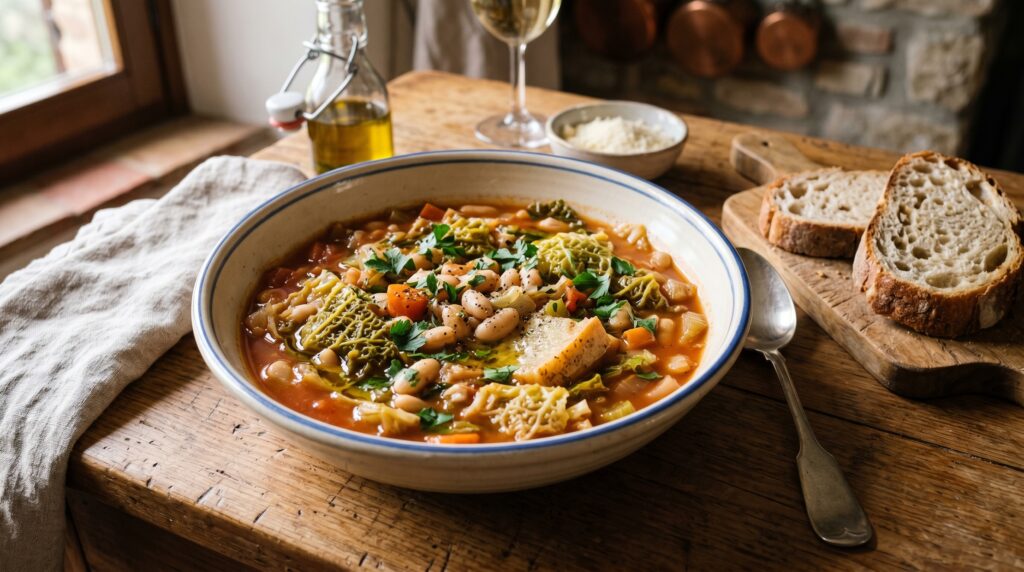
Prep time: 15 minutes | Cook time: 30 minutes | Serves: 4
Cabbage and white bean stew is the most nutritionally complete, most practically nourishing vegetarian cabbage preparation — the combination of the cabbage’s fiber and vitamins with the protein and fiber of cannellini beans in a rich Italian-inspired broth creates a genuinely complete, deeply satisfying meal.
Key ingredients: Savoy or green cabbage (½ head, roughly shredded), canned cannellini beans (2 tins, drained), canned crushed tomatoes (200ml), onion, garlic, vegetable stock, fresh rosemary, fresh thyme, Parmesan rind (if available — adds extraordinary depth), extra virgin olive oil, sea salt, cracked black pepper. Finish: a generous drizzle of excellent olive oil, Parmesan
What makes it special: The Parmesan rind — simmered in the stew throughout the cooking time — releases its concentrated, aged cheese flavor into the broth, creating a depth and umami richness that transforms a simple vegetable stew into something genuinely Italian in character.
Roasted and Sautéed Cabbage
7. Roasted Cabbage Wedges with Tahini
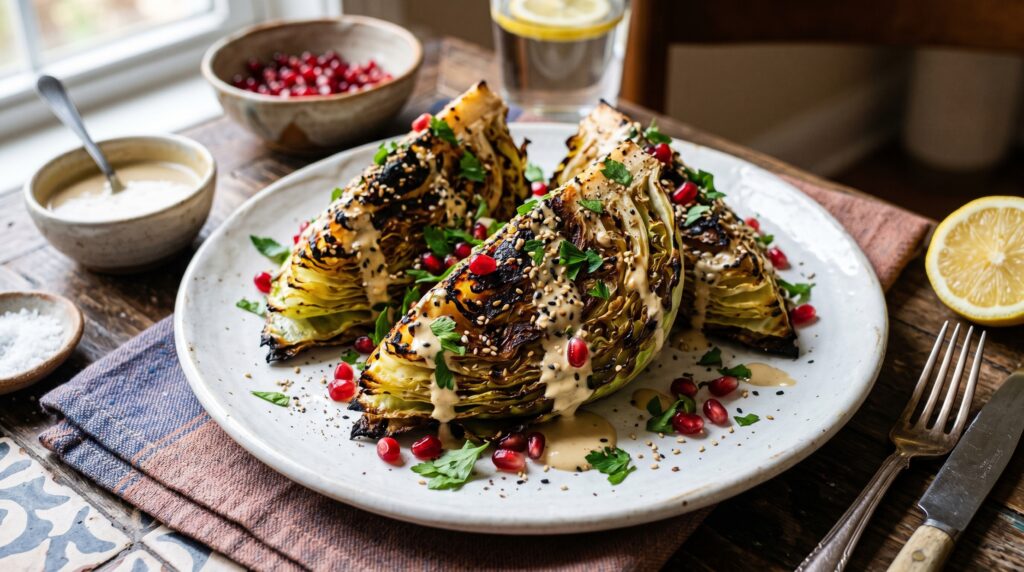
Prep time: 10 minutes | Cook time: 25 minutes | Serves: 4
Roasted cabbage wedges with tahini are the most dramatically transformed, most genuinely impressive cabbage preparation — the combination of the maximum-heat caramelization of thick cabbage wedges and the creamy, nutty tahini creates a preparation of genuine sophistication.
Key ingredients: Green cabbage (1 large head, cut into 8 thick wedges through the core — keeping the core intact holds the wedge together), olive oil (generous), sea salt, cracked black pepper. Tahini sauce: tahini, lemon juice, garlic, warm water, cumin, sea salt. Garnish: toasted sesame seeds, pomegranate seeds, fresh parsley, extra lemon
The maximum heat imperative: The wedges must be roasted at 230°C (450°F) — the highest oven temperature — to achieve the deep caramelization that transforms them. Place flat-side down on a preheated tray for maximum contact caramelization.
What makes it special: The core of the cabbage wedge — maintained by cutting through rather than around it — becomes completely tender and slightly sweet during roasting, providing a structural anchor while the outer leaves char and crisp into extraordinary, slightly smoky bitterness.
8. Stir-Fried Cabbage with Garlic and Ginger
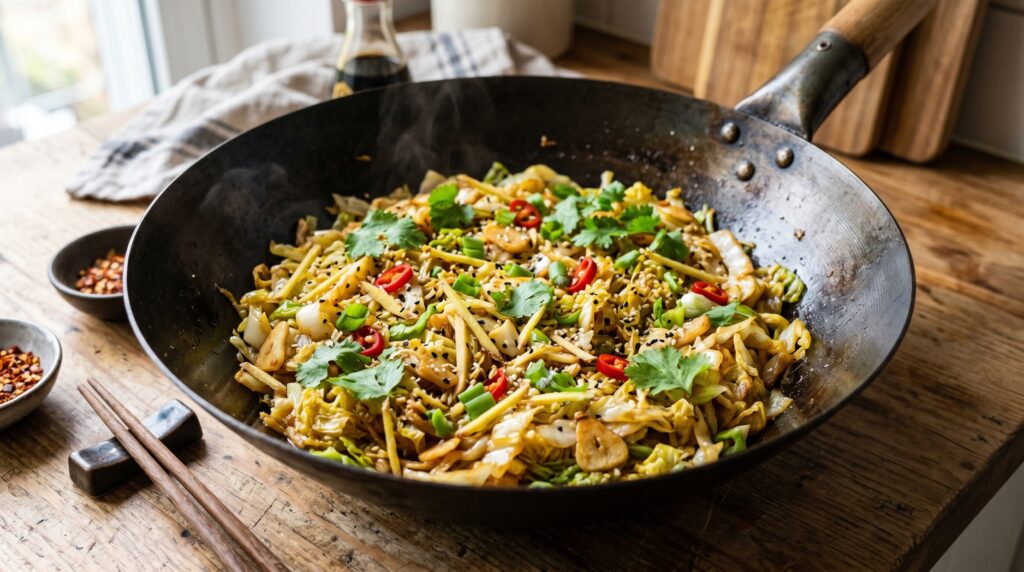
Prep time: 10 minutes | Cook time: 8 minutes | Serves: 4
Stir-fried cabbage with garlic and ginger is the fastest, most effortlessly excellent cabbage side dish in this collection — shredded cabbage in a screaming hot wok with golden garlic and ginger takes under 10 minutes and produces a preparation of genuinely satisfying flavor.
Key ingredients: Green or pointed cabbage (1 small head, finely shredded), garlic (4 cloves, thinly sliced), fresh ginger (2cm, julienned), fresh red chili (1, sliced), soy sauce or tamari (2 tbsp), sesame oil (1 tsp — finishing), rice vinegar (1 tbsp), vegetable oil, green onion, sesame seeds, sea salt
High heat imperative: The wok must be at maximum temperature before the cabbage is added. The intense heat creates slight caramelization and a slight smokiness in the cabbage — entirely absent from a medium-heat sauté — that is the defining character of great wok-cooked cabbage.
What makes it special: The rice vinegar added in the final 30 seconds — with the pan still over maximum heat — creates a brief, intense sizzle that drives the vinegar’s sharp acidity into the cabbage while simultaneously slightly deglazing any caramelized bits from the pan surface.
9. Sautéed Red Cabbage with Apple and Balsamic
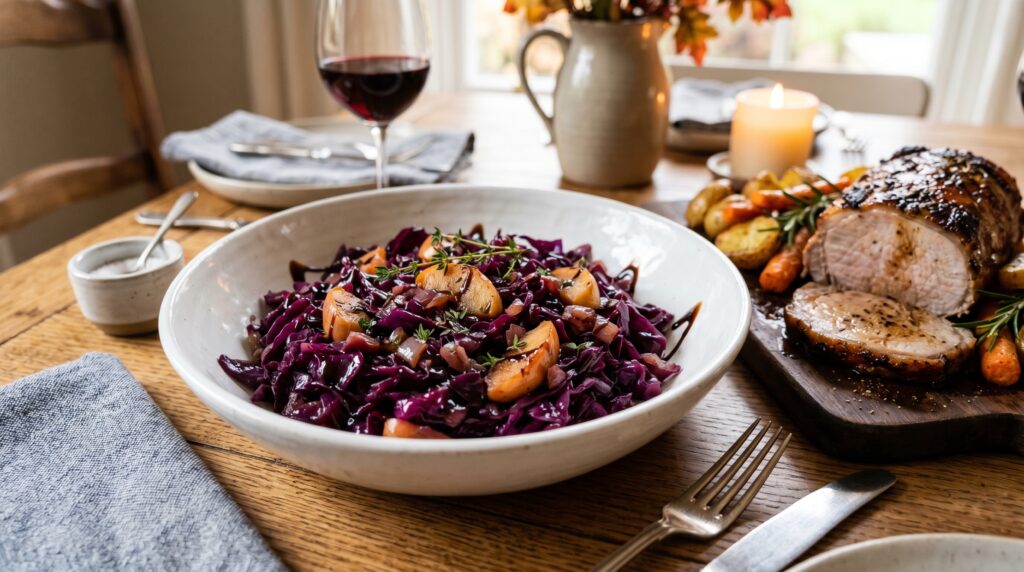
Prep time: 10 minutes | Cook time: 25 minutes | Serves: 6
Sautéed red cabbage with apple and balsamic is the most elegantly flavored, most visually beautiful cabbage side dish — the combination of the red cabbage’s slight pepperiness, the apple’s sweetness, and the balsamic’s complex sweet-sour depth creates a preparation of remarkable interest.
Key ingredients: Red cabbage (1 medium head, finely shredded), cooking apple (2 — Bramley or Granny Smith, peeled and diced), red onion (1, finely sliced), balsamic vinegar (3 tbsp), honey (1 tbsp), butter (20g), fresh thyme (4 sprigs), sea salt, cracked black pepper, optional: a splash of red wine
The acid principle: Red cabbage turns blue when cooked without acid — the addition of vinegar maintains its vibrant purple-red color throughout cooking. Never cook red cabbage without an acid element.
What makes it special: The long, patient sauté — 20–25 minutes over medium-low heat — slowly caramelizes the cabbage and apple together into a preparation of concentrated, complex sweetness that is one of the great accompaniments to roasted meats.
Stuffed and Wrapped Cabbage Dishes
10. Stuffed Cabbage Rolls (Golabki)
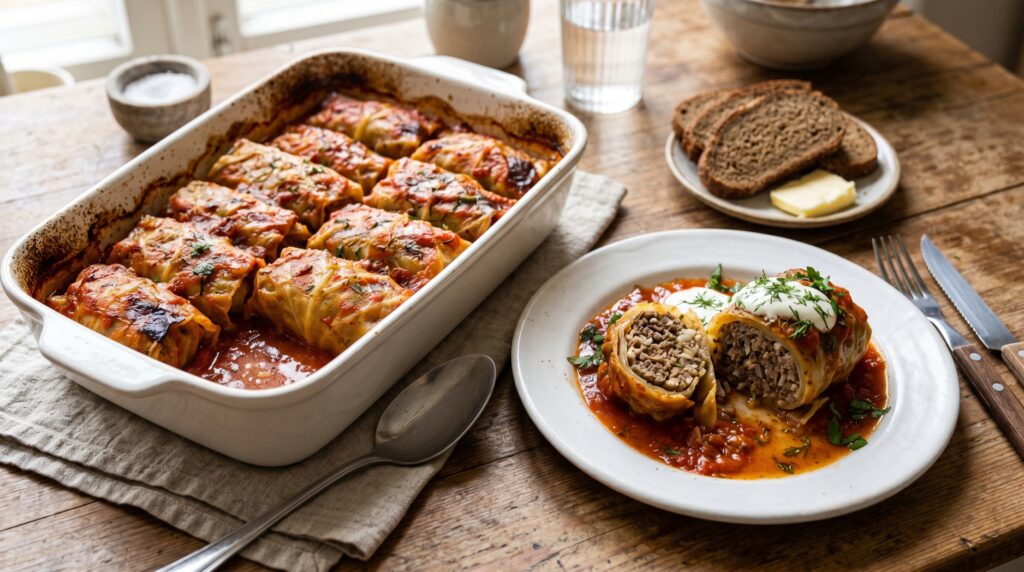
Prep time: 35 minutes | Cook time: 1 hour 15 minutes | Serves: 6
Stuffed cabbage rolls — Polish golabki, Ukrainian holubtsi, Greek lahanodolmades — are one of the most deeply comforting, most universally beloved preparations in Eastern European and Mediterranean cooking. Tender cabbage leaves wrapped around a savory meat and rice filling, slowly braised in a sweet-sour tomato sauce, create a preparation of genuine warmth and satisfaction.
Key ingredients: Green or savoy cabbage (1 large head — leaves separated and blanched for 2 minutes until pliable). Filling: ground beef (500g), cooked rice (150g), onion (1, finely grated), garlic (2 cloves, minced), fresh flat-leaf parsley, egg (1), smoked paprika (1 tsp), sea salt, cracked black pepper. Tomato sauce: canned crushed tomatoes (400ml), beef stock (200ml), tomato paste (2 tbsp), brown sugar (1 tbsp), red wine vinegar (1 tbsp), fresh thyme, bay leaf
The blanching step: Blanching the cabbage leaves for exactly 2 minutes makes them pliable enough to roll without cracking — raw leaves crack, and the rolls fall apart. Do not over-blanch, or the leaves become too soft to hold their shape.
What makes it special: The sweet-sour tomato braising sauce — its combination of tomato paste’s richness, the sugar’s sweetness, and the vinegar’s acidity — creates the characteristic Eastern European flavor that makes cabbage rolls immediately recognizable and deeply comforting.
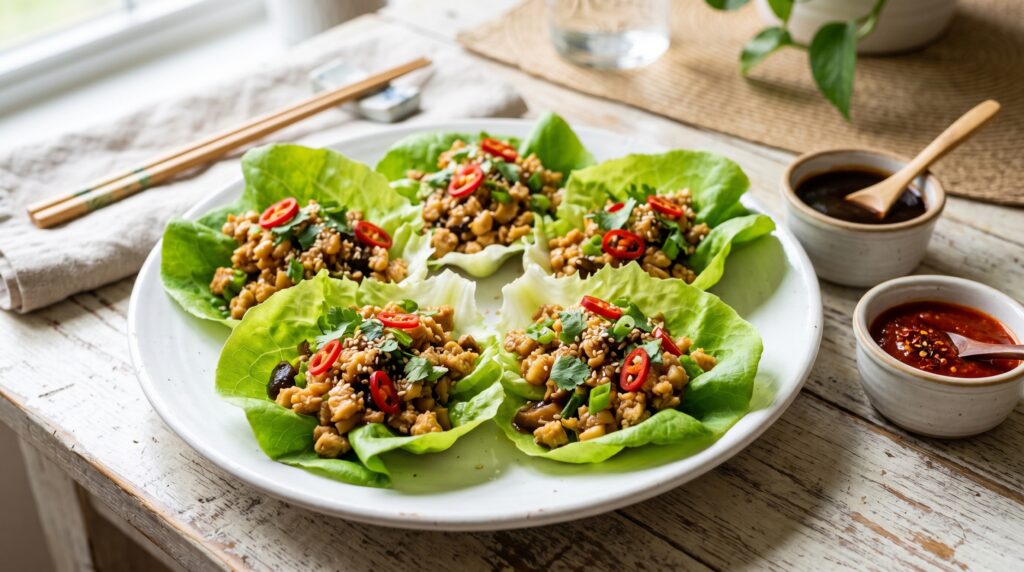
11. Asian Cabbage Wraps with Ground Chicken
Prep time: 15 minutes | Cook time: 10 minutes | Serves: 4
Asian cabbage wraps with ground chicken are the most interactive, most immediately appealing cabbage preparation — crisp cabbage cups filled with boldly seasoned ground chicken create a preparation that is simultaneously a main course and an eating experience.
Key ingredients: Iceberg or butter lettuce (large cup-shaped leaves), ground chicken (400g), water chestnuts (100g, finely diced), cremini mushrooms (100g, finely diced), garlic (3 cloves, minced), fresh ginger (1 tsp), green onion, fresh red chili. Sauce: hoisin sauce (3 tbsp), soy sauce (2 tbsp), sesame oil (1 tsp), rice vinegar (1 tbsp), a pinch of sugar
What makes it special: The water chestnuts — crunchy, mild, and slightly sweet — maintain their crunch throughout cooking, providing the textural contrast that makes the ground chicken filling genuinely interesting to eat rather than uniformly soft.
International Cabbage Classics
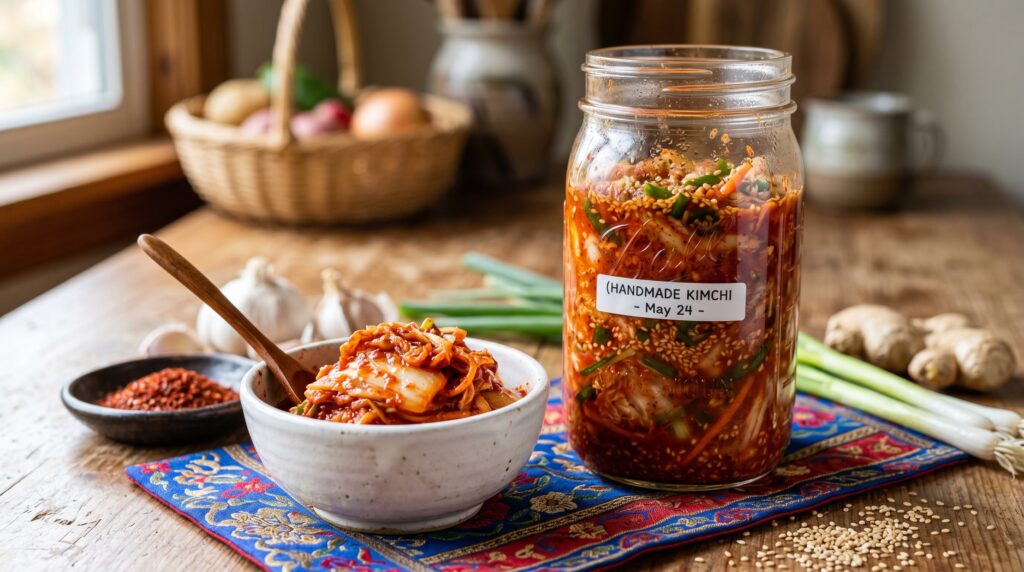
12. Kimchi (Simple Version)
Prep time: 30 minutes + 1–2 days fermenting | No cook | Makes: 1 large jar
Kimchi is the most transformative cabbage preparation — lacto-fermentation turns raw napa cabbage into a probiotic-rich, deeply complex, vibrantly spiced condiment of extraordinary flavor that has become a global culinary phenomenon.
Key ingredients: Napa cabbage (1 large head, quartered and cut into 5cm pieces), sea salt (for initial salting — 2 tbsp), gochugaru (Korean red pepper flakes — 4 tbsp, the essential ingredient), garlic (6 cloves, grated), fresh ginger (2cm, grated), fish sauce or soy sauce (2 tbsp), sugar (1 tsp), carrot (1, julienned), green onion (4, cut into 3cm pieces), sesame seeds
The salting step: Toss cabbage with salt and allow to rest for 1–2 hours until wilted and a significant amount of liquid has been drawn out. Rinse thoroughly, squeeze completely dry — the salt-wilted, rinsed cabbage is the foundation.
Fermentation: Pack the seasoned kimchi tightly into a clean jar. Leave at room temperature for 1–2 days until slightly fizzy and tangy. Refrigerate — it continues to develop flavor slowly in the cold.
What makes it special: The lacto-fermentation process — the naturally occurring bacteria on the cabbage consuming the sugars and producing lactic acid — creates flavors of extraordinary complexity that no amount of seasoning could replicate. Fresh kimchi is good; 2-week-old kimchi is genuinely extraordinary.
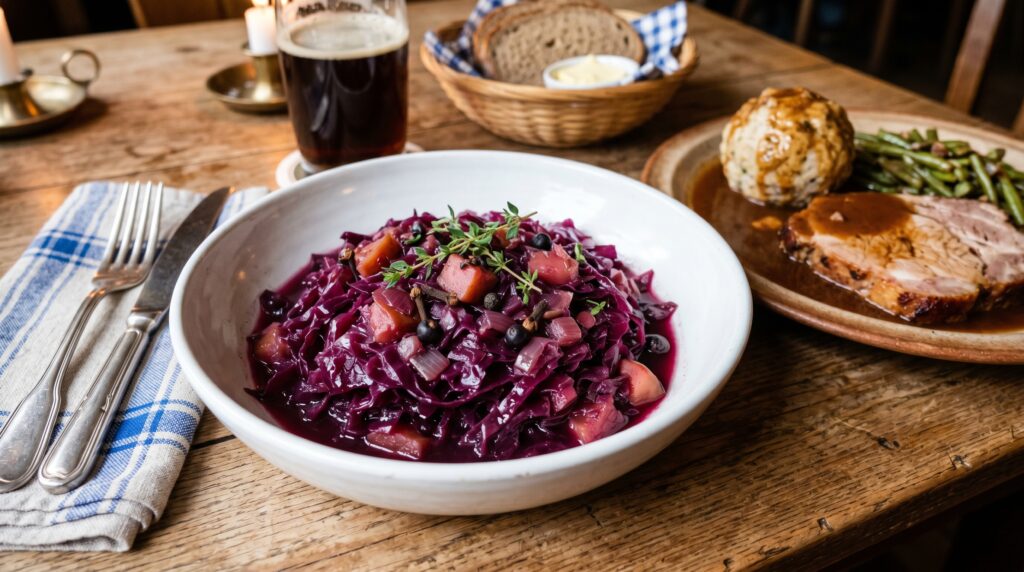
13. German Braised Red Cabbage (Rotkohl)
Prep time: 15 minutes | Cook time: 1 hour | Serves: 6
German rotkohl — red cabbage slowly braised with apple, red wine vinegar, juniper berries, and cloves — is one of the most deeply satisfying, most classically paired side dishes in all of European cooking. The combination of the sweet-sour braising liquid and the completely tender cabbage creates a preparation of extraordinary depth.
Key ingredients: Red cabbage (1 large head, finely shredded), cooking apple (2, peeled and diced), red onion (1, finely sliced), red wine vinegar (3 tbsp), red wine (100ml — or grape juice), brown sugar (2 tbsp), whole cloves (3), juniper berries (4, lightly crushed), cinnamon stick (1), bay leaf, butter (20g), sea salt, cracked black pepper
The long braise: Combine all ingredients in a heavy-based pot. Cover and cook over very low heat for 45–60 minutes until the cabbage is completely tender, slightly glossy, and the liquid has reduced to a concentrated, sweet-sour glaze.
What makes it special: The juniper berries and cloves — providing a slightly resinous, aromatic depth — are the spices that make this German preparation immediately distinctive from other braised red cabbage preparations. They provide a complexity that lifts the entire dish beyond a simple sweet-sour braise.
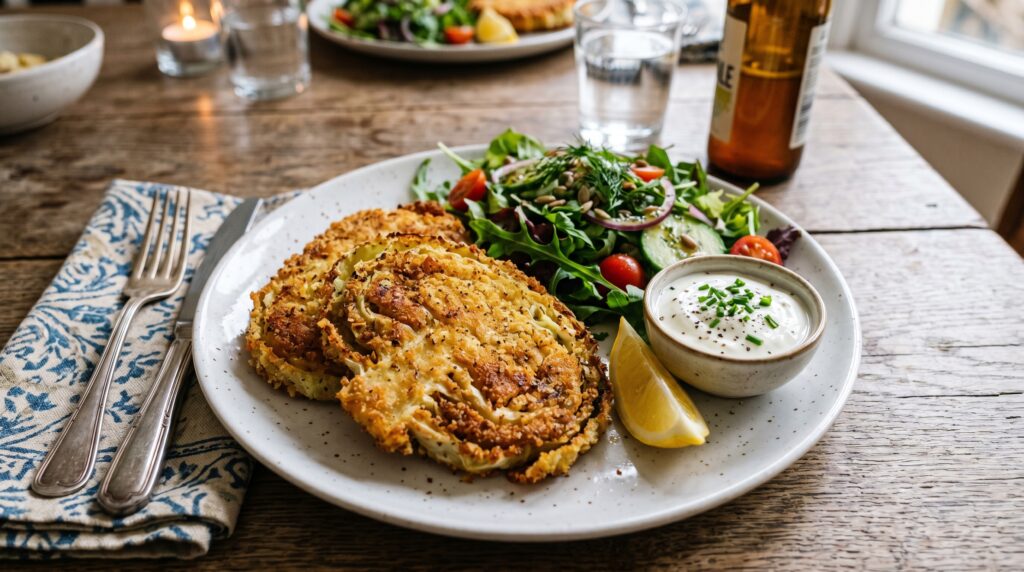
14. Cabbage Schnitzel (Crispy Fried Cabbage)
Prep time: 15 minutes | Cook time: 15 minutes | Serves: 4
Cabbage schnitzel — thick slices of cabbage breaded and pan-fried until golden — is the most unexpectedly excellent, most genuinely satisfying cabbage main course. The crispy, golden exterior and the slightly caramelized, tender cabbage interior create a preparation of remarkable textural pleasure.
Key ingredients: Savoy or green cabbage (1 large head, cut into 2cm thick cross-section slices — kept intact), seasoned plain flour (100g), eggs (2, beaten) or aquafaba (for vegan version), panko breadcrumbs (150g, seasoned with garlic powder, smoked paprika, sea salt), olive oil or vegetable oil, lemon wedges, sour cream for serving
The thick slice: The cabbage must be cut thickly — at least 2cm — to maintain its integrity through the breading and frying process. Thin slices fall apart. Cut through the core so the slice holds together.
What makes it special: The Maillard reaction across the entire surface of the breaded cabbage slice — creating a uniformly golden, crispy crust — produces a preparation with the satisfying crunch of a schnitzel alongside the sweet, slightly caramelized interior of perfectly cooked cabbage.
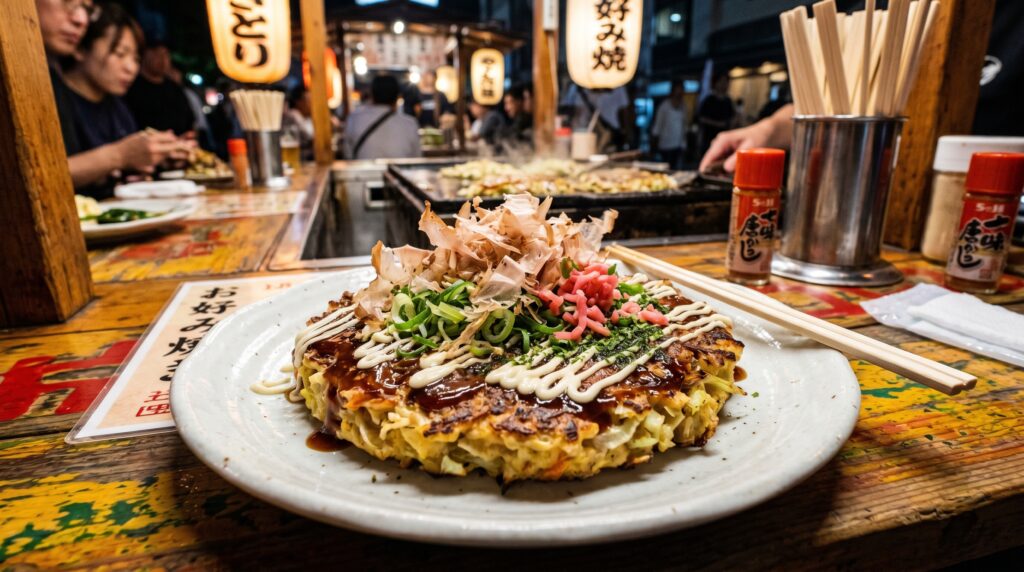
15. Okonomiyaki (Japanese Cabbage Pancake)
Prep time: 15 minutes | Cook time: 15 minutes | Serves: 4
Okonomiyaki — the Japanese “as you like it” savory cabbage pancake — is one of the most satisfying, most flavor-rich cabbage preparations in this entire collection. Shredded cabbage in a savory batter, pan-fried until golden, and topped with traditional Japanese condiments creates a preparation of genuine, complex pleasure.
Key ingredients: Green cabbage (¼ head, finely shredded), plain flour (120g), dashi stock or water (120ml), eggs (2), soy sauce (1 tbsp), sea salt. Optional additions: sliced green onion, cooked shrimp, any additional filling. Toppings: okonomiyaki sauce (Worcestershire sauce, ketchup, soy sauce, honey — combined), Japanese mayonnaise, bonito flakes (katsuobushi), pickled red ginger, sliced green onion, sesame seeds
Method: Combine flour, dashi, eggs, and soy sauce into a thin batter. Add cabbage and any additional fillings — the mixture should be mostly cabbage with just enough batter to bind it. Cook in a generous amount of oil in a medium pan for 5–6 minutes per side over medium heat until deeply golden and cooked through.
What makes it special: The cabbage’s moisture — released during cooking — creates steam inside the pancake that cooks the thick interior while the exterior crisps in the oil, producing a pancake that is simultaneously crispy outside and soft, tender inside — a textural experience of remarkable pleasure.
Cabbage Cooking and Pairing Guide
| Cabbage Variety | Best Cooking Methods | Best Flavor Pairings |
|---|---|---|
| Green cabbage | Braising, soup, stir fry, slaw | Sausage, garlic, vinegar, caraway |
| Red cabbage | Braising, raw slaw, soup | Apple, vinegar, balsamic, juniper |
| Savoy | Wrapping, stuffing, soup | Cream, cheese, nutmeg, butter |
| Napa/Chinese | Kimchi, stir fry, raw slaw | Ginger, sesame, gochugaru, soy |
| Pointed/sweetheart | Roasting, charring, and quick stir-fry | Butter, tahini, lemon, chili |
Make-Ahead and Storage Guide
Raw cabbage (uncut): Keeps refrigerated for 2–3 weeks. One of the most practical storage vegetables available.
Shredded raw cabbage: Refrigerate in an airtight container for 3–4 days.
Coleslaw (dressed): Best consumed within 24 hours. The dressing draws moisture from the cabbage over time.
Braised red cabbage: Improves significantly on the second and third day. Refrigerate for 5 days, freeze for 3 months.
Stuffed cabbage rolls: Refrigerate for 4 days. Freeze assembled and raw for up to 3 months. Bake directly from frozen, adding 20 minutes.
Kimchi: Refrigerate for up to 3 months — the flavor continues to develop with time.
For comprehensive food safety guidance, our Food Safety 101: Storage, Handling, and Temperature Guide is essential reading.
Conclusion
From the satisfying crunch of a properly dressed classic coleslaw to the dramatic caramelization of roasted cabbage wedges with tahini, from the deeply comforting warmth of stuffed cabbage rolls to the vibrant complexity of homemade kimchi, from the autumnal elegance of German braised red cabbage to the playful, flavorful fun of okonomiyaki — these 15 best cabbage recipes demonstrate that this humble, affordable, and nutritionally extraordinary vegetable is one of the most genuinely versatile and most deeply satisfying ingredients in any kitchen.
For more vegetable recipes, technique guides, and culinary inspiration across every ingredient and skill level, explore our full collection at skillsinthekitchen.com.