
15 Flavor Packed Frosting Recipes: Creamy & Irresistible
Introduction
A great frosting is not merely decoration — it is the flavor statement that defines the entire cake, cupcake, or baked good it crowns. The finest cake layer in the world is transformed by a great frosting and diminished by a mediocre one. The relationship between cake and frosting is one of the most fundamental flavor partnerships in all of baking — and getting it right, both technically and in terms of flavor balance, is what separates an outstanding bake from a merely adequate one.
The world of frosting is far more varied, far more technically interesting, and far more creatively exciting than most bakers realize. Beyond the familiar American buttercream (butter, icing sugar, a splash of milk) lies a universe of extraordinary preparations: the satiny, stable Swiss and Italian meringue buttercreams that are the professional baker’s preferred choice; the rich, cloud-soft cream cheese frosting that became the defining characteristic of carrot cake and red velvet; the ganache — equal parts cream and chocolate — that produces a frosting of dense, sophisticated richness; the French diplomat cream that bridges the worlds of frosting and pastry cream; and the whipped cream frosting that is the most delicate, most fresh-tasting of all.
Each frosting style has its own technical requirements, its own ideal flavor pairings, its own application characteristics, and its own particular genius. Understanding these differences — not just following a recipe blindly — is what allows a baker to confidently choose the right frosting for each application, to troubleshoot when something goes wrong, and to improvise confidently with flavors and additions.
In this guide, we have compiled 15 of the most delicious, most technically informative, and most flavor-packed frosting recipes — spanning every major frosting category, international-inspired flavors, elegant specialty preparations, and creative innovations that will transform your baking. Every recipe includes not just the method but the science behind what makes it work.
Let’s make something beautiful.
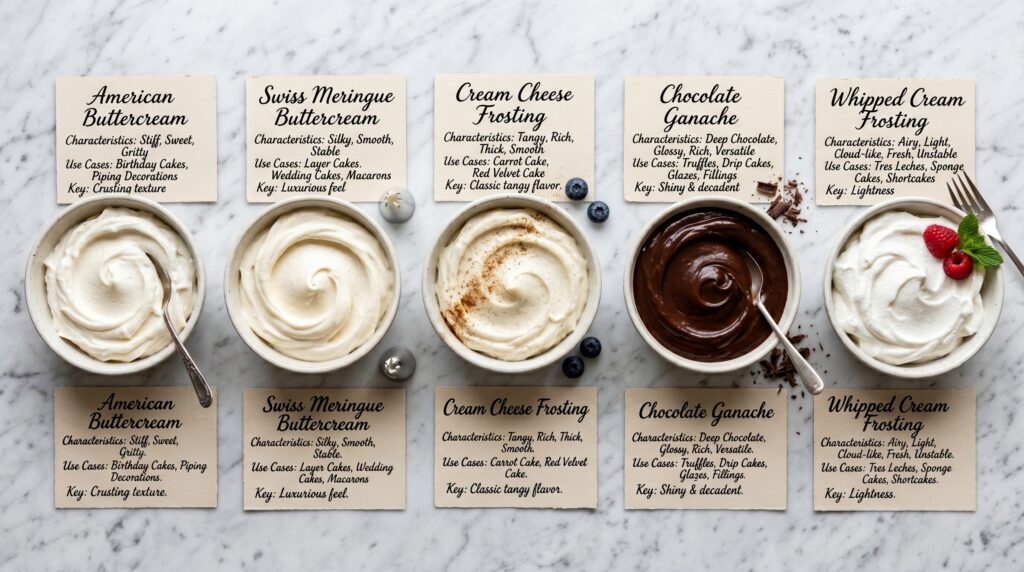
The Frosting Taxonomy: Understanding the Categories
American Buttercream
The most widely made and most technically forgiving of all frostings. Made from butter and icing sugar (confectioners’ sugar), beaten until smooth. Pros: simple, stable at room temperature, holds piped shapes well, extremely sweet. Cons: can feel heavy and overly sweet when not properly balanced, gritty if the icing sugar is not fine enough, and the butter flavor can be one-dimensional. The recipes in this collection address these limitations through careful technique and flavor additions.
Swiss Meringue Buttercream (SMBC)
Made by heating egg whites and sugar over a double boiler until the sugar dissolves, then whipping to a stiff meringue before adding butter gradually. Produces a silky, light, less sweet frosting of extraordinary texture. The professional baker’s choice. More technically demanding than American buttercream but dramatically better in texture and flavor.
Italian Meringue Buttercream (IMBC)
Similar to SMBC but uses a hot sugar syrup poured into whipped egg whites rather than heating them together. Even more stable, slightly denser, with an extraordinarily silky texture. The most technically demanding frosting, but arguably the finest result.
Cream Cheese Frosting
A combination of cream cheese and butter with icing sugar — tangier, richer, and more complex in flavor than pure buttercream. The natural pairing is for carrot cake, red velvet, hummingbird cake, and fruit-based preparations.
Ganache
A combination of cream and chocolate in various ratios — used as a pourable glaze, a thick spread, or (when whipped after chilling) a light, moussey frosting. The richest, most chocolate-forward frosting option.
Whipped Cream Frosting
The most delicate of all frostings — double cream whipped with icing sugar and stabilized for application. Light, fresh, and less sweet than butter-based frostings, but requires refrigeration and is less stable for piping.
Precise measurement of sugar and butter is critical in all frosting recipes. Our Complete Guide to Measuring Ingredients Accurately explains exactly how to weigh and measure baking ingredients correctly.
Essential Frosting Technique Principles
Temperature: The Most Common Source of Problems
Butter temperature: For all buttercream frostings, butter must be at room temperature — genuinely soft, yielding when pressed, approximately 18–20°C. Too cold and the frosting will be lumpy and dense; too warm and it will be greasy and loose. If butter is too warm, refrigerate for 10 minutes and re-beat.
Cream cheese temperature: Like butter, cream cheese for frosting should be fully softened at room temperature. Cold cream cheese produces lumpy frosting that cannot be beaten smooth.
Eggs and cream: For meringue-based frostings, egg whites should be at room temperature — they whip to significantly greater volume than cold whites.
The Curdle Moment in SMBC
Swiss and Italian meringue buttercreams almost always go through a “curdled” or “broken” stage during the butter addition — the mixture looks like a soup of broken, grainy, unappetizing fat. This is entirely normal and not a failure. Continue beating on medium-high speed. Within 3–5 minutes, the emulsification will come together, and the frosting will suddenly become smooth, silky, and beautiful.
Sifting Icing Sugar
Always sift icing sugar before adding it to any frosting — even if the bag says “pre-sifted.” Lumps of undissolved icing sugar produce a gritty texture that cannot be beaten out once incorporated.
Piping Temperature
Any frosting that contains butter should be at the correct consistency for piping — firm enough to hold a shape but soft enough to extrude smoothly through a piping tip. If too stiff, beat in a teaspoon of cream or milk. If too soft, refrigerate for 15 minutes.
15 Flavor-Packed Frosting Recipes
Classic Buttercream Frostings
1. Perfect Vanilla American Buttercream
Prep time: 10 minutes | Makes: enough for 24 cupcakes or a 3-layer 20cm cake
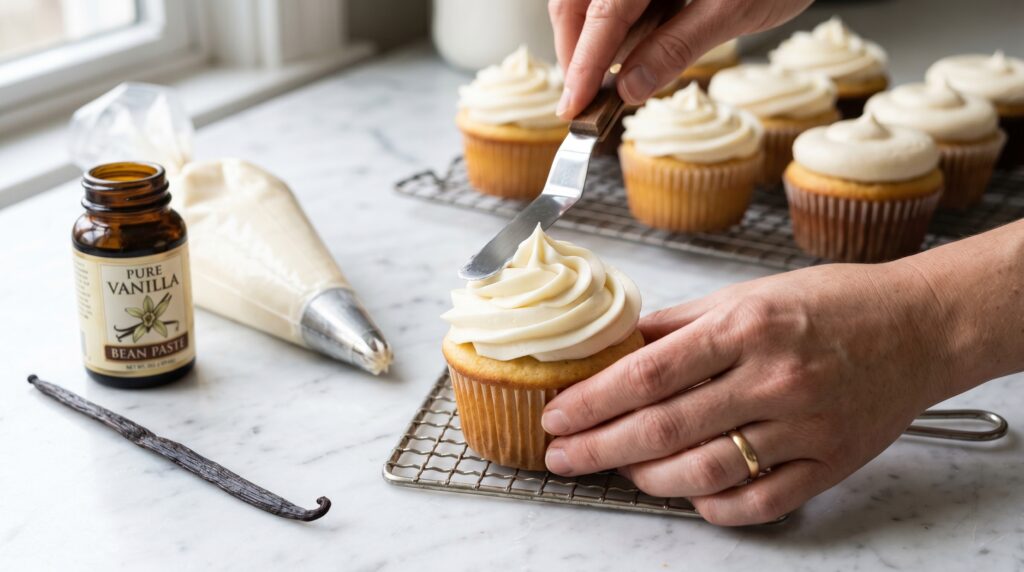
Perfect vanilla American buttercream is the foundation frosting that every baker must master — and the recipe that most commonly disappoints when made without the key techniques that produce a smooth, balanced, genuinely delicious result rather than the grainy, overwhelming sweetness of a poorly made version.
Key ingredients: Unsalted butter (250g — room temperature, genuinely soft), icing sugar (500g — sifted), whole milk or double cream (3–4 tbsp), vanilla bean paste (2 tsp — far superior to vanilla extract for color and flavor depth), sea salt (¼ tsp — essential for balance), optional: 1 tbsp of sour cream or cream cheese for a slight tang that cuts the sweetness
Method: Beat the room-temperature butter with an electric mixer on medium-high speed for 3–4 minutes until pale and fluffy — this aeration step is frequently skipped and produces the most significant improvement in finished texture. Add sifted icing sugar in two additions, beating for 2 minutes after each. Add vanilla bean paste, salt, and milk — starting with less milk and adding more until the desired consistency. Beat for 3 more minutes until completely smooth.
The salt secret: A quarter teaspoon of fine sea salt added to buttercream does not make it taste salty — it makes it taste more balanced, more complex, and less overwhelmingly sweet. Salt suppresses the perception of excessive sweetness while amplifying all other flavors. Never omit it.
The three-minute butter beat: Beating the butter alone for 3–4 minutes before adding any icing sugar aerates it into a pale, fluffy base that produces a significantly lighter, smoother finished frosting. Rushing directly to adding the sugar produces a denser, heavier result.
What makes it special: The vanilla bean paste — speckled with genuine vanilla seeds — adds a visible complexity and a more rounded, floral vanilla character than extract alone. The specks of vanilla seed in the finished frosting are both visually beautiful and an indicator of genuine quality.
Consistency guide: For spreading, slightly softer, more milk. For piping rosettes and ruffles: standard consistency. For stiff decorations: reduce milk, add slightly more icing sugar.
2. Swiss Meringue Buttercream (SMBC)
Prep time: 25 minutes | Makes: enough for a 3-layer 20cm cake
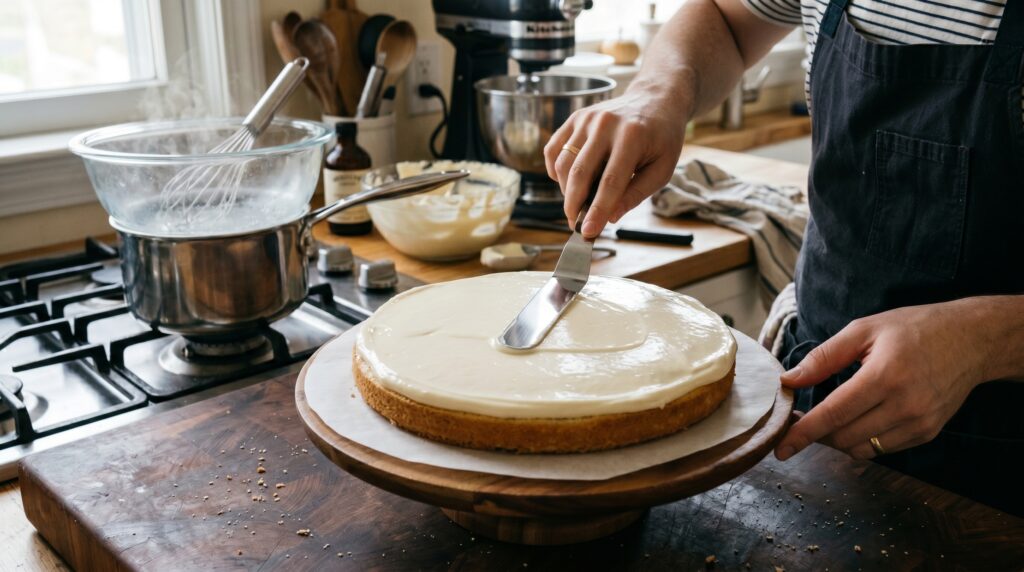
Swiss meringue buttercream is the frosting that professional bakers choose when they want the finest possible result — its silky, mousse-like texture, its less sweet flavor profile, and its extraordinary stability make it the gold standard for celebration cakes and wedding cakes globally.
Key ingredients: Egg whites (5 large — room temperature), caster sugar (300g), unsalted butter (400g — room temperature, cut into 2cm cubes), vanilla bean paste (2 tsp), sea salt (pinch)
Method: Combine egg whites and caster sugar in a heatproof bowl over a pan of gently simmering water (double boiler). Whisk constantly until the sugar has completely dissolved and the mixture reaches 71°C (160°F) — test by rubbing a small amount between your fingers; it should feel completely smooth with no sugar granules. Remove from the heat and transfer to a stand mixer. Whip on high speed until the meringue forms stiff, glossy peaks and the bowl is completely cool to the touch — approximately 10 minutes. Reduce the speed to medium and add the room-temperature butter one cube at a time, waiting for each cube to incorporate before adding the next. The mixture may curdle — continue beating, it will come together. Add vanilla and salt.
The temperature sequence: The heating stage, the cooling stage, and the butter temperature are all critical — if any stage is rushed, the result suffers. The meringue must be fully cool before butter is added; the butter must be at exactly the right room temperature. Cold butter makes the frosting dense; warm butter makes it greasy.
What makes it special: Swiss meringue buttercream is approximately 40% less sweet than American buttercream — its restrained sweetness allows the vanilla (or any flavor addition) to express itself more clearly and makes it significantly more pleasant to eat in larger quantities.
Flavor additions: Add any of the following to the finished base: melted and cooled dark chocolate (100g), lemon curd (3 tbsp), fruit purée (3 tbsp), espresso (2 tsp), caramel sauce (3 tbsp), berry jam (2 tbsp).
3. Brown Butter Frosting
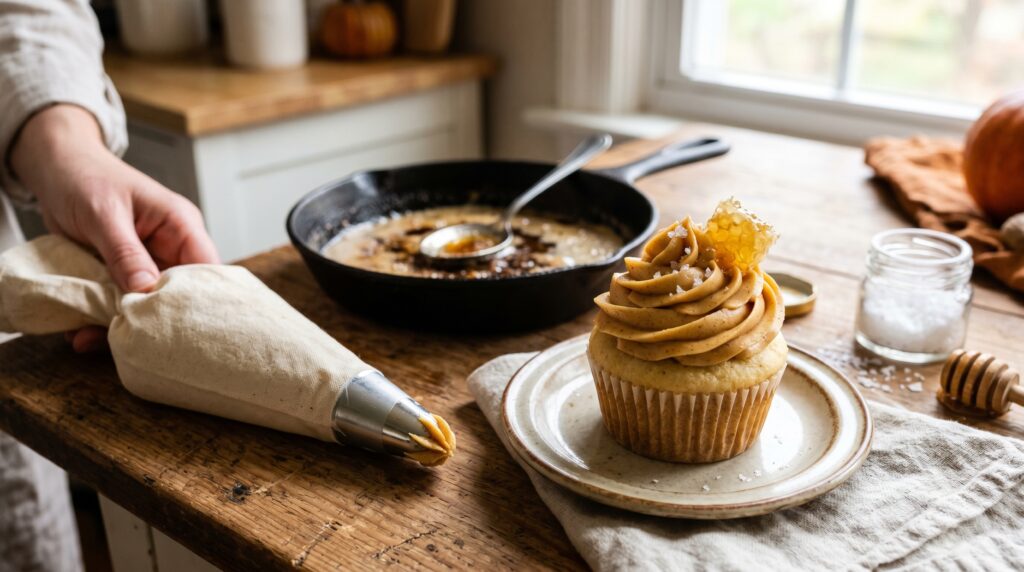
Prep time: 20 minutes (including brown butter cooling) | Makes: enough for 24 cupcakes
Brown butter frosting is the most sophisticated and most deeply flavored American-style buttercream — browning the butter before using it in the frosting creates a complexity of nutty, caramelized, almost toffee-like flavor that regular butter frosting cannot approach.
Key ingredients: Unsalted butter (250g — browned and then cooled until solid again), icing sugar (450g — sifted), double cream (3–4 tbsp), vanilla extract (1 tsp), sea salt (¼ tsp), optional: a small drizzle of caramel sauce for extra depth
Brown butter method: Melt butter in a light-colored saucepan over medium heat. Cook, swirling occasionally, until the milk solids turn golden brown and the butter smells intensely nutty — approximately 5–7 minutes. Pour into a bowl and refrigerate until solid — 1–2 hours — before using as the butter base for the frosting. The re-solidified brown butter is made, beaten, and used exactly like regular softened butter.
What makes it special: The Maillard reaction in the brown butter creates hundreds of complex aromatic compounds — nutty, toffee, caramel, slightly savory — that transform a simple buttercream into a frosting of genuine depth and complexity. The difference from standard vanilla buttercream is immediately and dramatically apparent.
Best paired with: Vanilla pound cake, banana cake, apple spice cake, pumpkin cake, chocolate chip cake.
4. Lemon Buttercream
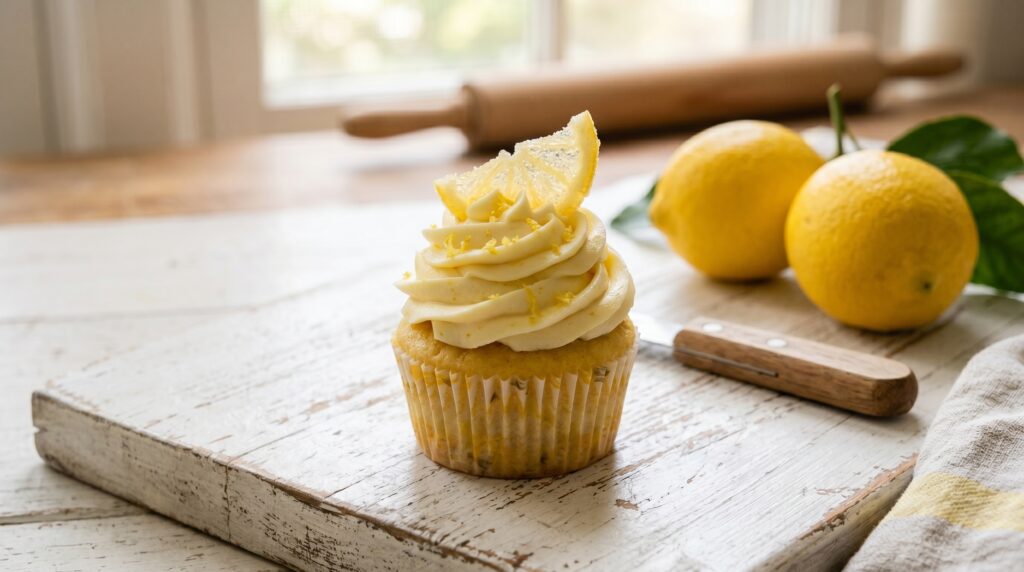
Prep time: 12 minutes | Makes: enough for 24 cupcakes
Lemon buttercream is the brightest, most refreshing of the classic buttercream variations — genuine lemon zest and fresh lemon juice rather than artificial flavoring create a frosting that tastes vibrantly, genuinely of fresh lemon rather than the flat, synthetic version.
Key ingredients: Unsalted butter (250g — room temperature), icing sugar (450g — sifted), fresh lemon juice (3–4 tbsp — fresh only, never bottled), lemon zest (from 2 large lemons — the most important ingredient), sea salt (¼ tsp), double cream (1–2 tbsp if needed for consistency), optional: a few drops of yellow natural food coloring
The zest is everything: The essential oils in lemon zest — found in the colored part of the rind, not the white pith — contain the concentrated lemon flavor compounds that make this frosting taste genuinely of fresh lemon. The juice provides acidity and liquid; the zest provides the aromatic, floral, intensely lemony character. Use both, and use fresh lemons only.
What makes it special: The acidity of the fresh lemon juice serves a dual purpose — it adds brightness to the flavor while slightly softening the sweetness of the icing sugar, producing a frosting that is sweet and tart simultaneously rather than merely sweet with a lemon note.
Best paired with: Lemon cake, vanilla cake, poppy seed cake, elderflower cake, blueberry cake.
5. Raspberry Buttercream
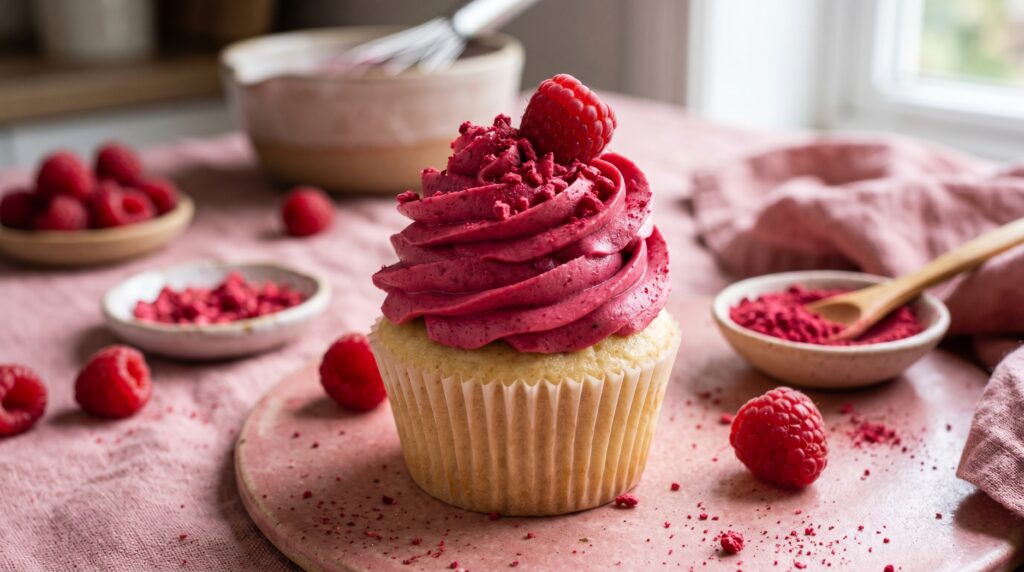
Prep time: 12 minutes | Makes: enough for 24 cupcakes
Raspberry buttercream made with freeze-dried raspberry powder rather than fresh or frozen raspberries achieves what fresh fruit frosting rarely manages — an intensely, genuinely raspberry flavor with the most beautiful natural deep pink color, without the moisture problem that fresh fruit introduces.
Key ingredients: Unsalted butter (250g — room temperature), icing sugar (450g — sifted), freeze-dried raspberry powder (3–4 tbsp — ground freeze-dried raspberries to a fine powder), double cream (2–3 tbsp), fresh lemon juice (1 tsp — brightens the raspberry flavor), sea salt (¼ tsp)
Freeze-dried vs fresh: Fresh or frozen raspberries contain a large amount of water — incorporating them into buttercream dilutes the fat structure and produces a frosting that is loose, unstable, and difficult to pipe. Freeze-dried raspberries have had all moisture removed while retaining the full, intense flavor and the natural pink pigment — they produce a frosting of extraordinary color and flavor concentration without any of the structural problems.
What makes it special: The color produced by freeze-dried raspberry powder — a deep, slightly purple-pink that is entirely natural — is one of the most beautiful frosting colors achievable without artificial food coloring. The flavor is so intensely, genuinely raspberry that no artificial flavoring could replicate it.
Best paired with: Vanilla cake, chocolate cake, lemon cake, almond cake.
Cream Cheese and Tangy Frostings
6. Classic Cream Cheese Frosting
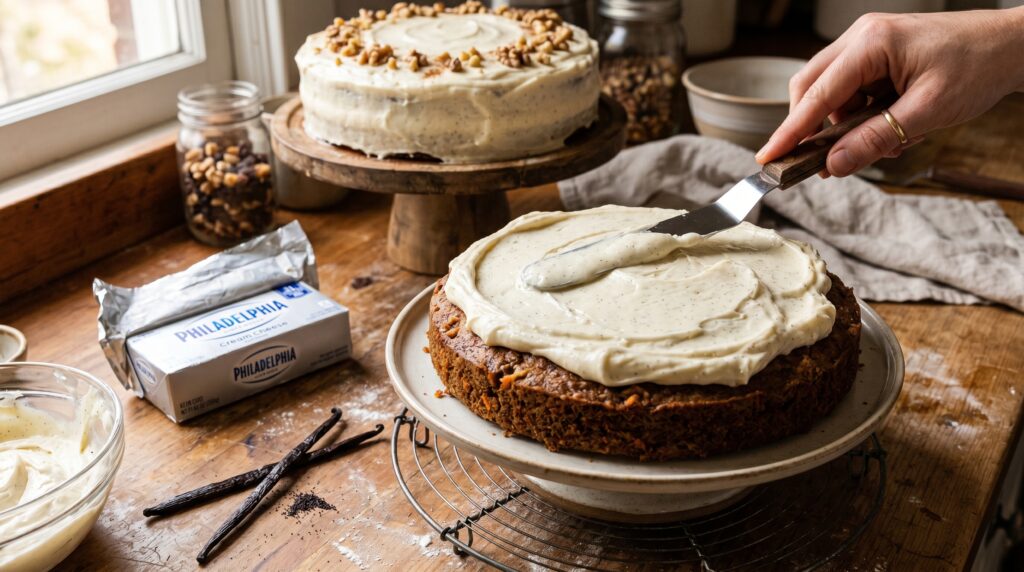
Prep time: 10 minutes | Makes: enough for a 3-layer 20cm cake
Classic cream cheese frosting is the most beloved frosting in American baking — its combination of tangy richness from the cream cheese, buttery sweetness from the icing sugar, and aromatic depth from vanilla creates a frosting of extraordinary appeal that has become inseparable from carrot cake, red velvet, and hummingbird cake.
Key ingredients: Full-fat cream cheese (450g — room temperature, full-fat only), unsalted butter (120g — room temperature), icing sugar (350g — sifted, less than buttercream because the cream cheese adds its own sweetness and body), vanilla bean paste (2 tsp), sea salt (¼ tsp), optional: a squeeze of fresh lemon juice (brightens and amplifies the cream cheese tang)
The full-fat requirement: Low-fat or reduced-fat cream cheese contains a higher water content that produces a looser, more runny frosting that cannot hold piped shapes. Full-fat cream cheese is the only option for a stable, spreadable cream cheese frosting. Do not substitute.
Method: Beat the softened cream cheese until completely smooth — no lumps. Add the softened butter and beat until combined. Add sifted icing sugar in two additions, beating on low speed initially to prevent a cloud of sugar. Add vanilla, salt, and optional lemon juice. Beat until completely smooth and fluffy — do not overbeat, as overbeating cream cheese frosting can make it runny.
The overbeating warning: Cream cheese frosting can become looser with too much beating — the mechanical action breaks down the cream cheese’s structure. Beat only until smooth and combined. If it becomes too loose, refrigerate for 30 minutes before using.
What makes it special: The slight tang of the cream cheese — its lactic acid creating a flavor of gentle sourness against the sweetness of the icing sugar — produces a frosting that is simultaneously sweet and savory, rich and refreshing, in a way that no pure butter frosting can replicate.
7. Lemon Cream Cheese Frosting
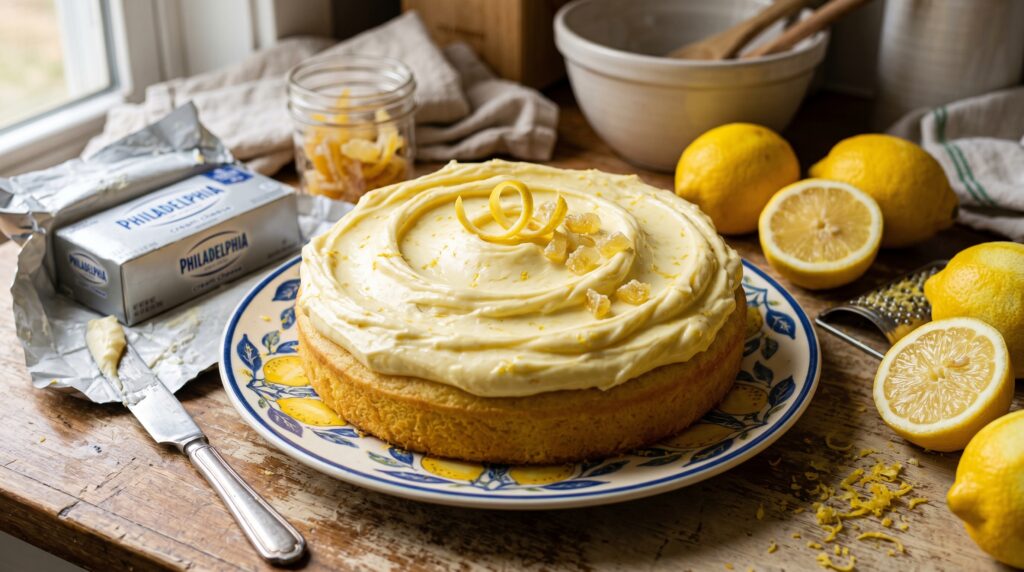
Prep time: 10 minutes | Makes: enough for a 3-layer 20cm cake
Lemon cream cheese frosting is the most refreshing, most versatile of the cream cheese frosting variations — the combination of the cream cheese’s natural tang with the bright acidity of fresh lemon creates a frosting that tastes genuinely complex, genuinely balanced, and deeply satisfying.
Key ingredients: Full-fat cream cheese (400g — room temperature), unsalted butter (100g — room temperature), icing sugar (300g — sifted), fresh lemon juice (3 tbsp), lemon zest (from 2 large lemons), vanilla extract (1 tsp), sea salt (¼ tsp)
What makes it special: The combination of cream cheese tang and lemon acidity creates a flavor dynamic where each amplifies the other — the cream cheese makes the lemon taste more complex and less sharp, and the lemon makes the cream cheese taste more vibrant and less one-dimensional. Together they create a frosting of genuine complexity.
Best paired with: Lemon cake, carrot cake, banana cake, coconut cake, poppy seed cake, lavender cake.
8. Strawberry Cream Cheese Frosting
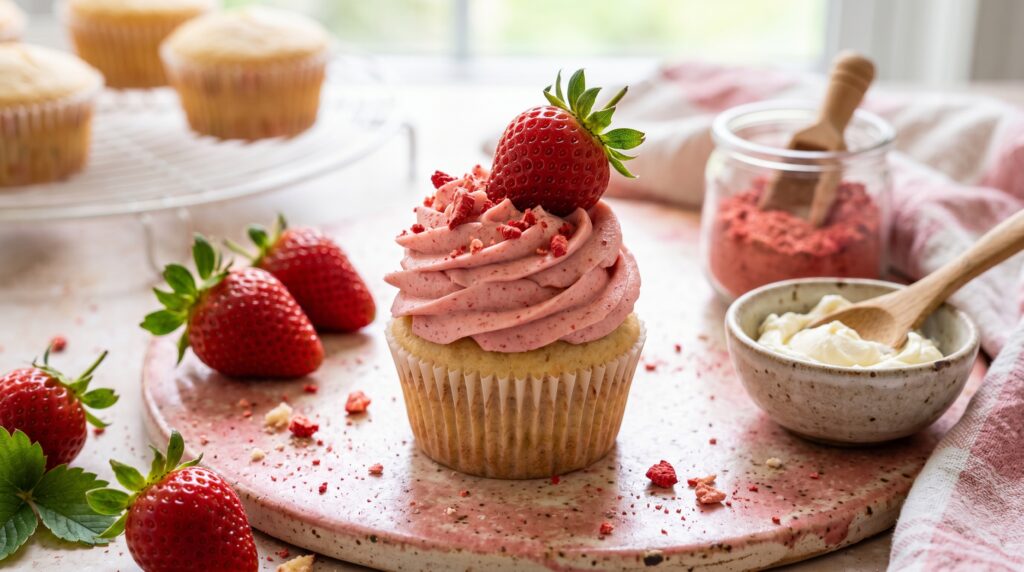
Prep time: 12 minutes | Makes: enough for 24 cupcakes
Strawberry cream cheese frosting combines the tang of cream cheese with the sweet-tart intensity of freeze-dried strawberry powder — producing a naturally pink frosting of genuinely vibrant strawberry flavor that pairs beautifully with vanilla, chocolate, and lemon cakes.
Key ingredients: Full-fat cream cheese (350g — room temperature), unsalted butter (80g — room temperature), icing sugar (300g — sifted), freeze-dried strawberry powder (3 tbsp — made by grinding freeze-dried strawberries to a fine powder), fresh lemon juice (1 tsp), vanilla extract (1 tsp), sea salt (¼ tsp)
What makes it special: The combination of cream cheese’s tanginess with the intense strawberry flavor creates a frosting that simultaneously tastes like a sophisticated cheesecake topping and a vibrantly fresh strawberry preparation — a flavor combination of genuine appeal that makes this one of the most universally loved frostings in the collection.
Chocolate Frostings and Ganache
9. Dark Chocolate Ganache Frosting
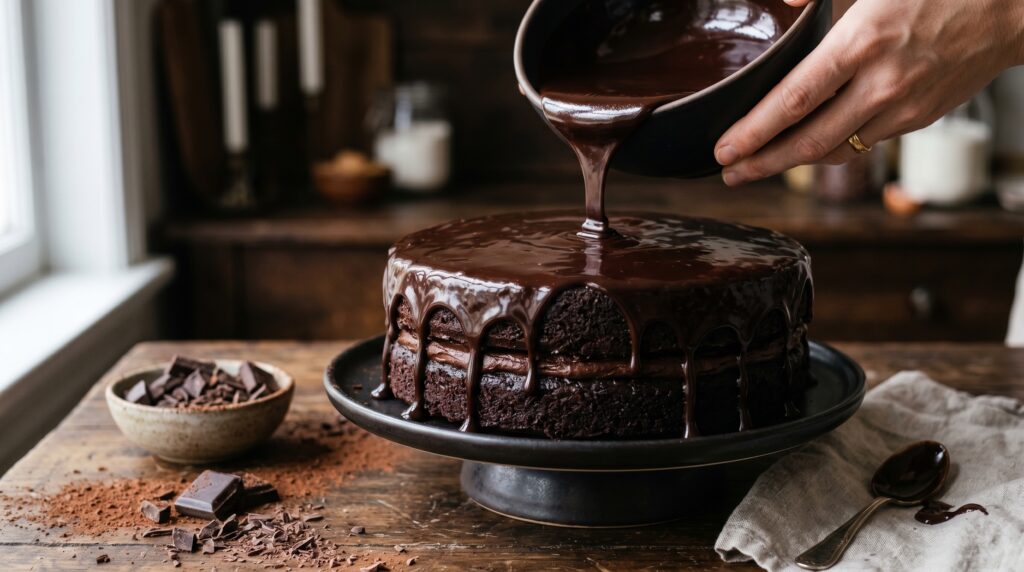
Prep time: 10 minutes + 2–4 hours cooling | Makes: enough to frost a 3-layer 20cm cake
Dark chocolate ganache frosting is the most sophisticated, most richly chocolatey frosting available — equal parts dark chocolate and double cream, it can be used as a pourable glaze (warm), a spreadable frosting (cooled to room temperature), or a whipped frosting of extraordinary lightness (chilled and beaten).
Key ingredients: Dark chocolate (70%+ cocoa — 300g, finely chopped), double cream (300ml), unsalted butter (30g — added for extra gloss and richness), sea salt (¼ tsp), optional: vanilla extract (1 tsp), espresso powder (1 tsp — intensifies the chocolate flavor dramatically)
Method: Heat cream until just below simmering — small bubbles around the edges, not boiling. Pour over the chopped chocolate. Do not stir for 2 minutes — allow the heat to melt the chocolate from the outside in. Then stir gently from the center outward in small circles, gradually expanding, until completely smooth. Add butter, salt, and any optional additions. Stir until the butter is incorporated.
The three ganache consistencies:
- Pourable glaze (40°C): Flows smoothly for drip effects and mirror glazes
- Spreadable frosting (room temperature, 20°C): Thick enough to spread with an offset spatula
- Whipped frosting (chilled then beaten): Refrigerate until almost solid, then beat with an electric mixer until light and fluffy — doubles in volume, significantly lighter in color
The espresso secret: One teaspoon of espresso powder added to chocolate ganache is invisible as a coffee flavor but dramatically amplifies the chocolate’s depth and complexity. This is the professional baker’s secret for the most intensely chocolatey result.
What makes it special: The quality of the chocolate is entirely on display in a ganache — there is nothing to hide behind. Use the best dark chocolate available (70%+ cocoa, genuine chocolate with cocoa butter, not compound chocolate). The difference is immediate and unmistakable.
10. Milk Chocolate Buttercream
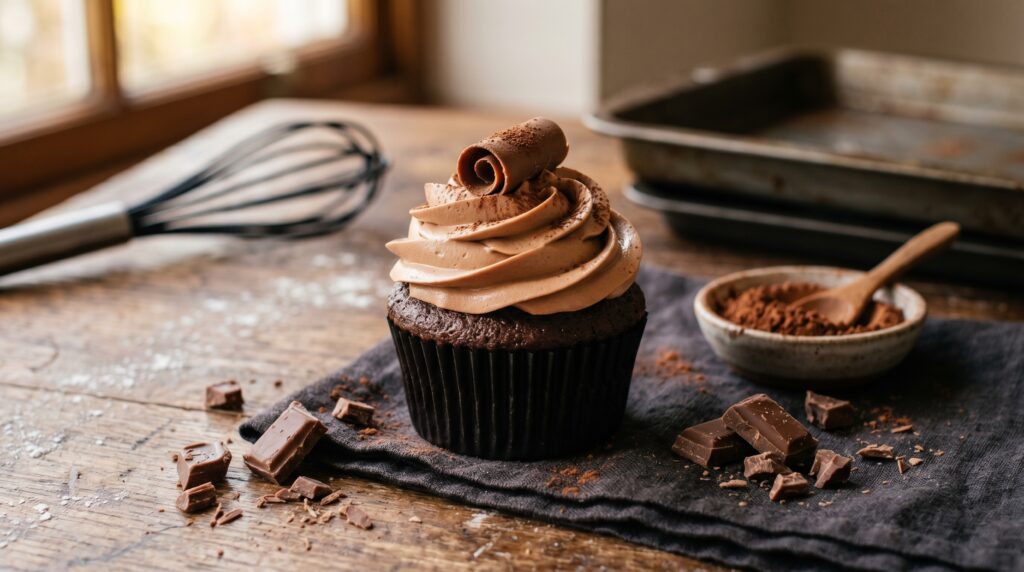
Prep time: 15 minutes | Makes: enough for 24 cupcakes
Milk chocolate buttercream uses melted and cooled milk chocolate as the primary chocolate element rather than cocoa powder — producing a frosting with a smoother, creamier, more rounded chocolate flavor that is particularly loved by children and those who find dark chocolate too intense.
Key ingredients: Unsalted butter (250g — room temperature), icing sugar (300g — sifted, less than standard buttercream as the chocolate adds sweetness), quality milk chocolate (150g — melted and cooled to room temperature), double cream (2–3 tbsp), vanilla extract (1 tsp), sea salt (¼ tsp)
Chocolate temperature: The melted chocolate must be genuinely cooled to room temperature — not warm — before being beaten into the butter. Warm chocolate melts the butter and produces a greasy, loose frosting. Test by touching the chocolate — it should feel the same temperature as your skin.
What makes it special: Using melted chocolate rather than cocoa powder creates a frosting with a smoother, creamier mouthfeel and a rounder chocolate flavor — the cocoa butter in the chocolate gives the frosting a silky texture that cocoa powder alone cannot provide.
11. Chocolate Cream Cheese Frosting
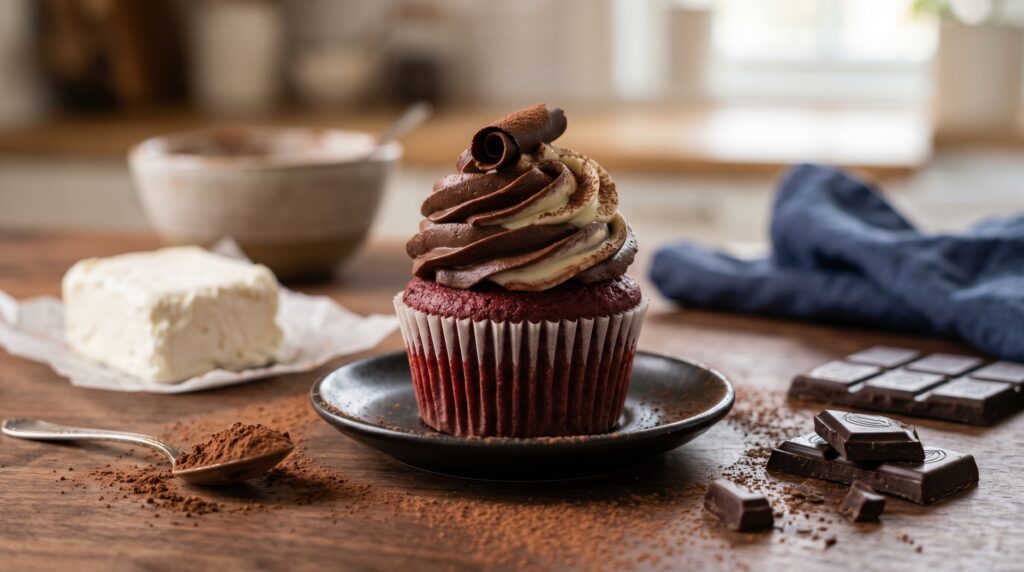
Prep time: 12 minutes | Makes: enough for 24 cupcakes
Chocolate cream cheese frosting is the most complex and genuinely sophisticated chocolate frosting — the combination of the cream cheese’s tang with the depth of cocoa creates a frosting that is simultaneously rich and slightly sour, sweet and deeply chocolatey, in a way that neither chocolate buttercream nor cream cheese frosting alone can achieve.
Key ingredients: Full-fat cream cheese (350g — room temperature), unsalted butter (80g — room temperature), icing sugar (250g — sifted), Dutch-process cocoa powder (50g — sifted), vanilla extract (1 tsp), sea salt (¼ tsp), double cream (1–2 tbsp if needed)
Dutch-process cocoa: The alkalized, darker, less acidic Dutch-process cocoa produces a more intensely dark color and a smoother, less bitter flavor than natural cocoa. It is the correct choice for chocolate cream cheese frosting, where the cream cheese’s natural acidity provides sufficient contrast.
What makes it special: The slight sourness of the cream cheese against the bitter richness of the Dutch-process cocoa creates a flavor dynamic of genuine complexity — more interesting than chocolate buttercream, more luxurious than plain cream cheese frosting, and a natural pairing for red velvet cake.
Specialty and International Frostings
12. Salted Caramel Frosting
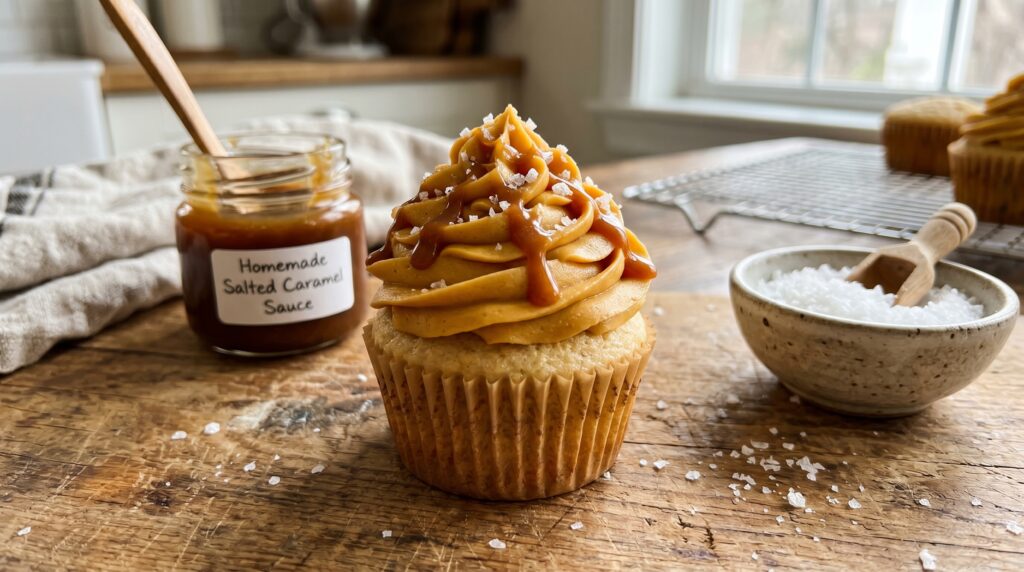
Prep time: 25 minutes (including caramel making) | Makes: enough for 24 cupcakes
Salted caramel frosting — made with a genuine caramel sauce (not caramel extract or caramel flavoring) incorporated into a butter and icing sugar base — is one of the most seductive and deeply flavored frostings in this entire collection. The caramel’s deep, slightly bitter sweetness, combined with the fleur de sel creates a frosting of remarkable complexity.
Key ingredients: Unsalted butter (250g — room temperature), icing sugar (350g — sifted), homemade caramel sauce (4 tbsp — see method), fleur de sel or flaky sea salt (½ tsp — for the frosting + extra for garnish), double cream (1–2 tbsp if needed), vanilla extract (1 tsp)
Homemade caramel sauce: Heat caster sugar (150g) in a heavy-based saucepan without stirring until it melts to a deep amber. Remove from the heat and carefully add warm double cream (80ml) — it will bubble vigorously. Stir until smooth. Add butter (30g) and a generous pinch of fleur de sel. Cool completely before using in the frosting.
What makes it special: Homemade caramel has a depth and complexity — the bittersweet caramelized sugar, the slight savory note from the fleur de sel, the richness from the cream and butter — that commercial caramel flavoring or caramel extract completely fails to replicate. The few minutes required to make a genuine caramel produce a frosting that is in a completely different category.
Best paired with: Vanilla cake, chocolate cake, apple cake, banana cake, pumpkin cake.
13. Espresso Coffee Frosting
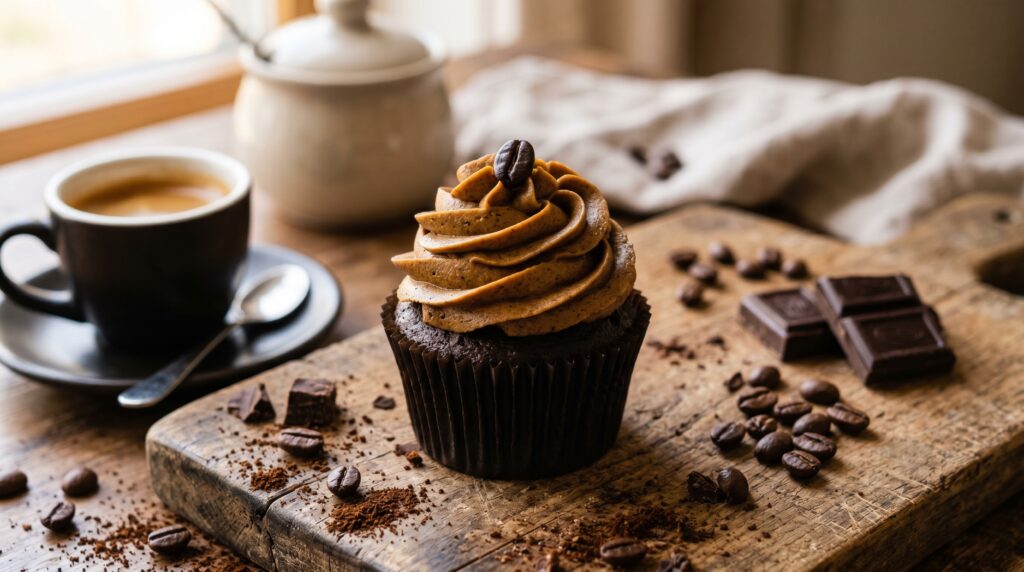
Prep time: 12 minutes | Makes: enough for 24 cupcakes
Espresso coffee frosting is the most sophisticated, most adult-flavored frosting in the classic buttercream category — the bold, slightly bitter depth of genuine espresso powder creates a frosting of remarkable complexity that is genuinely different from a simple coffee-flavored one.
Key ingredients: Unsalted butter (250g — room temperature), icing sugar (450g — sifted), espresso powder or very finely ground instant espresso (2–3 tsp — dissolved in 2 tbsp of hot water then cooled), double cream (2–3 tbsp), vanilla extract (1 tsp), sea salt (¼ tsp)
The dissolved espresso method: Dissolving the espresso powder in hot water before adding it to the frosting distributes the coffee flavor evenly throughout the frosting rather than creating concentrated pockets of intense coffee flavor. Allow the dissolved espresso to cool completely before adding.
What makes it special: The slight bitterness of the espresso against the sweetness of the icing sugar creates a flavor contrast of genuine sophistication — similar to the relationship between espresso and the milk sweetness of a latte. The frosting is sweet but never cloying, with a complexity that standard vanilla buttercream cannot approach.
Best paired with: Chocolate cake, vanilla cake, carrot cake, walnut cake, mocha cake.
14. Coconut Lime Frosting
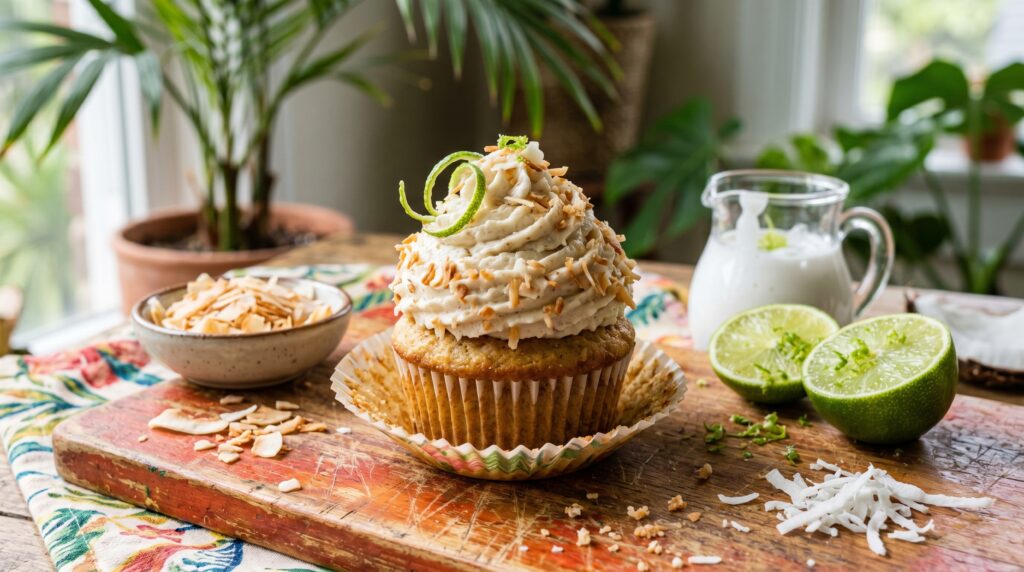
Prep time: 12 minutes | Makes: enough for 24 cupcakes
Coconut lime frosting is the most tropical, most summery frosting in this collection — the rich, slightly sweet coconut cream combined with the bright, sharp freshness of lime zest and juice creates a frosting of vivid, vacation-worthy flavor.
Key ingredients: Unsalted butter (200g — room temperature), coconut cream (60ml — the thick cream from the top of a can of full-fat coconut milk, refrigerated overnight to separate), icing sugar (400g — sifted), fresh lime juice (2 tbsp), lime zest (from 2 limes — the defining ingredient), toasted desiccated coconut (3 tbsp — for folding through and for garnish), sea salt (¼ tsp)
Coconut cream separation: Refrigerate a can of full-fat coconut milk overnight — the cream rises and solidifies at the top, the water sinks below. Scoop the thick cream from the top. This concentrated coconut cream has a far more intense coconut flavor and a much richer, thicker texture than the separated liquid.
What makes it special: The combination of the deep, sweet coconut cream and the sharp, bright lime zest creates the classic tropical flavor pairing that defines so much great warm-weather baking. The toasted coconut folded through adds a slightly crunchy, nutty texture that makes every bite more interesting.
Best paired with: Coconut cake, lime cake, vanilla cake, carrot cake, pineapple cake.
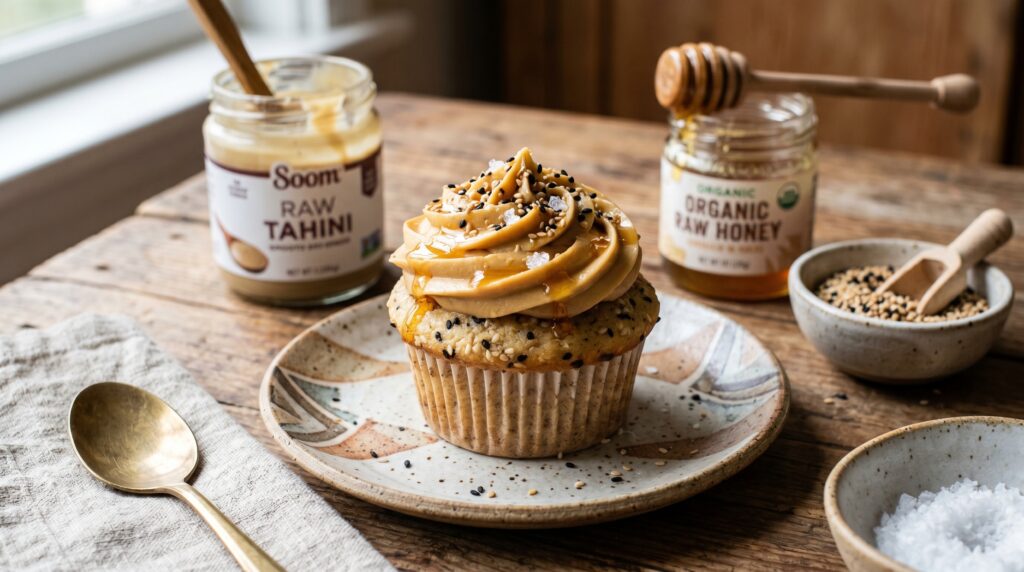
15. Tahini and Honey Frosting
Prep time: 10 minutes | Makes: enough for 24 cupcakes
Tahini and honey frosting is the most unexpected and most genuinely original frosting in this collection — the nutty, slightly bitter richness of tahini (sesame paste) combined with the floral sweetness of raw honey and finished with flaky salt creates a frosting of extraordinary, genuinely unusual flavor that will surprise and delight anyone who encounters it.
Key ingredients: Unsalted butter (200g — room temperature), tahini (well-stirred — 80g), raw honey (3 tbsp — raw honey’s floral complexity is far superior to commercial clear honey in this application), icing sugar (300g — sifted, less than standard as the honey adds sweetness), double cream (2–3 tbsp), flaky sea salt (¼ tsp in the frosting + extra for garnish), optional: toasted sesame seeds, lemon zest
The tahini stir: Natural tahini separates — the oil rising to the surface, the paste sinking below. Always stir the tahini completely from the bottom of the jar until fully combined before measuring. Unstirred tahini produces inconsistent results.
What makes it special: Tahini’s slightly bitter, deeply nutty, sesame-rich character creates a frosting that is simultaneously familiar (it tastes like a sophisticated nut butter) and completely distinctive. The honey’s floral sweetness and the flaky salt’s mineral crunch create a three-note flavor combination — bitter, sweet, salty — that is genuinely addictive.
Best paired with: Chocolate cake, honey cake, banana cake, cardamom cake, sesame seed cake, carrot cake.
Frosting Consistency Guide
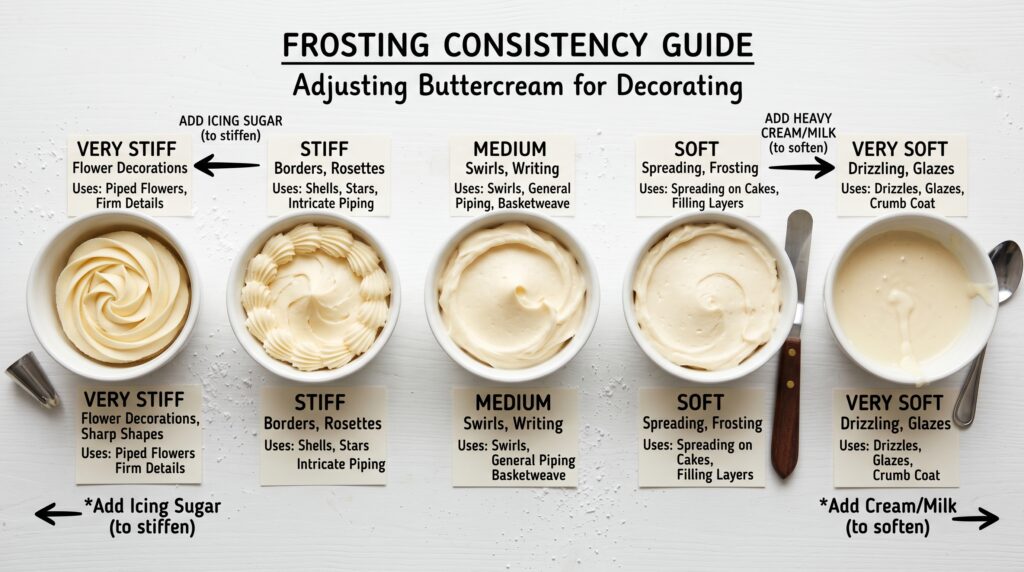
| Consistency | Description | Best Use | How to Adjust |
|---|---|---|---|
| Very stiff | Holds sharp shape, doesn’t droop | Flowers, leaves, figurines | Add more sifted icing sugar |
| Stiff | Holds shape well, slight peak | Borders, rosettes, ruffles | Standard recipe |
| Medium | Slight give, holds shape | Cupcake swirls, cake sides | Add 1 tsp cream at a time |
| Soft/spreading | Smooth, spreadable | Frosting cake layers, crumb coat | Add 2 tsp cream |
| Glaze | Pourable, flows | Drip cakes, glazed cakes | Add more cream or milk |
Frosting and Cake Pairing Guide
| Frosting | Best Cake Pairings | Why |
|---|---|---|
| Vanilla American buttercream | Vanilla, lemon, strawberry | Classic, versatile, crowd-pleasing |
| Swiss meringue buttercream | Any layer cake | Sophisticated, less sweet, elegant |
| Brown butter frosting | Banana, apple, pumpkin | Nutty depth complements warm spices |
| Lemon buttercream | Lemon, vanilla, poppy seed | Bright acidity matches fresh fruit |
| Raspberry buttercream | Vanilla, chocolate, almond | Sweet-tart contrast |
| Classic cream cheese | Carrot, red velvet, hummingbird | Classic pairing, tang balances sweetness |
| Lemon cream cheese | Lemon, carrot, banana | Amplified citrus complexity |
| Dark chocolate ganache | Chocolate, vanilla, raspberry | Rich, intense, sophisticated |
| Milk chocolate buttercream | Chocolate, vanilla | Approachable, creamy |
| Salted caramel | Vanilla, chocolate, apple | Sweet-salty contrast |
| Espresso | Chocolate, vanilla, walnut | Bitter-sweet sophistication |
| Coconut lime | Coconut, lime, vanilla | Tropical freshness |
| Tahini honey | Chocolate, banana, carrot | Unexpected, memorable |
Troubleshooting Guide
| Problem | Likely Cause | Solution |
|---|---|---|
| Grainy buttercream | Unsifted icing sugar / butter too cold | Sift sugar; ensure butter is fully at room temperature |
| Runny frosting | Butter too warm / too much liquid | Refrigerate 15 mins; add more sifted icing sugar |
| Curdled SMBC | Normal during butter addition | Keep beating — it will come together within 5 minutes |
| Air bubbles in buttercream | Over-beaten | Beat on low speed for 2–3 minutes to knock out bubbles |
| Too sweet | Insufficient salt / no acid | Add more salt; add a little cream cheese or lemon juice |
| Cream cheese frosting too runny | Low-fat cream cheese / overbeaten | Use full-fat only; refrigerate before using |
| Ganache too thick | Cooled too much | Gently warm in microwave in 10-second bursts |
| Ganache too thin | Not enough chocolate / too much cream | Add more melted chocolate |
Make-Ahead and Storage Guide
American buttercream: Refrigerate in an airtight container for up to 1 week. Bring to room temperature and re-beat for 3 minutes before using. Freeze for up to 3 months — thaw overnight in the refrigerator, then bring to room temperature and re-beat.
Swiss/Italian meringue buttercream: Refrigerate for up to 5 days. Bring to room temperature and re-beat — it may look curdled initially, but will come together. Freeze for up to 3 months.
Cream cheese frosting: Refrigerate for up to 5 days. Do not freeze — the texture deteriorates significantly.
Chocolate ganache: Refrigerate for up to 2 weeks. Warm gently in a double boiler or microwave to return to pourable consistency, or beat after chilling for whipped ganache.
Frosted cakes: Most frosted cakes can be refrigerated for 3–4 days. Allow to come to room temperature for 1 hour before serving — cold butter frosting loses its softness and much of its flavor at refrigerator temperature.
For comprehensive food safety guidance on storing egg-containing frostings and dairy-based preparations, our Food Safety 101: Storage, Handling, and Temperature Guide is essential reading.
Frequently Asked Questions
Why is my American buttercream too sweet?
American buttercream is inherently sweeter than meringue-based frostings. To reduce sweetness: ensure you are using the correct amount of salt (it suppresses the perception of sweetness); add a tablespoon of cream cheese or sour cream (the acidity balances the sweetness); add a splash of lemon juice; or switch to Swiss meringue buttercream, which is approximately 40% less sweet.
Can I color any of these frostings?
Yes — gel food coloring (not liquid, which adds too much water and affects consistency) can be added to any buttercream or cream cheese frosting. Add a tiny amount at a time — it is significantly more concentrated than liquid coloring. For natural coloring, freeze-dried fruit powders (raspberry, strawberry, mango) provide beautiful, genuinely natural colors alongside their flavor.
How far in advance can I frost a cake?
Most frosted cakes are at their best within 24–48 hours of frosting. Cream cheese frosted cakes should be refrigerated. Ganache-frosted cakes keep well at room temperature for 2 days. All frosted cakes should be stored under a cake dome or in an airtight box to prevent the frosting from drying out.
Why does my frosting develop a crust?
American buttercream is designed to develop a slight crust on the surface as it sits — this is a feature, not a fault. It makes transportation easier and produces a clean cutting surface. Swiss meringue buttercream develops less of a crust due to its different composition.
What is the difference between icing, frosting, and glaze?
Frosting is a general term for any thick, creamy coating applied to a cake or cupcake. Icing typically refers to thinner, firmer coatings — royal icing for decorated sugar cookies, for example. Glaze refers to thin, pourable coatings applied warm (ganache glaze, lemon glaze) that set as they cool.
According to The Culinary Institute of America, the development of stable, professionally textured frostings is one of the fundamental skills of the pastry chef curriculum — the ability to produce a smooth, well-flavored, correctly tempered frosting that holds its shape through decoration and service is considered as technically significant as any other professional baking skill.
Conclusion
From the classic simplicity of a perfect vanilla American buttercream to the professional elegance of Swiss meringue buttercream, from the deep sophistication of dark chocolate ganache to the unexpected brilliance of tahini and honey, from the beloved tang of cream cheese frosting to the vibrant freshness of raspberry buttercream — these 15 flavor-packed frosting recipes demonstrate the extraordinary range, technical interest, and genuine creative possibility available in the world of frosting.
What elevates a frosting from functional to genuinely spectacular is the combination of correct technique, quality ingredients, and thoughtful flavor balance — understanding that a great frosting must be sweet but not cloying, rich but not heavy, flavorful but not overwhelming, and applied at exactly the right consistency for its purpose.
Master the classic American buttercream first — understand the salt, the three-minute butter beat, and the consistency control. Progress to cream cheese frosting and ganache. Work toward Swiss meringue buttercream when you are ready for the professional standard. And explore the creative flavors — brown butter, salted caramel, tahini honey — when you want to produce something genuinely memorable.
For more baking recipes, technique guides, and sweet inspiration across every category and skill level, explore our full collection at skillsinthekitchen.com.