
18 Easy Scone Recipes: Light, Fluffy & Irresistible
Introduction
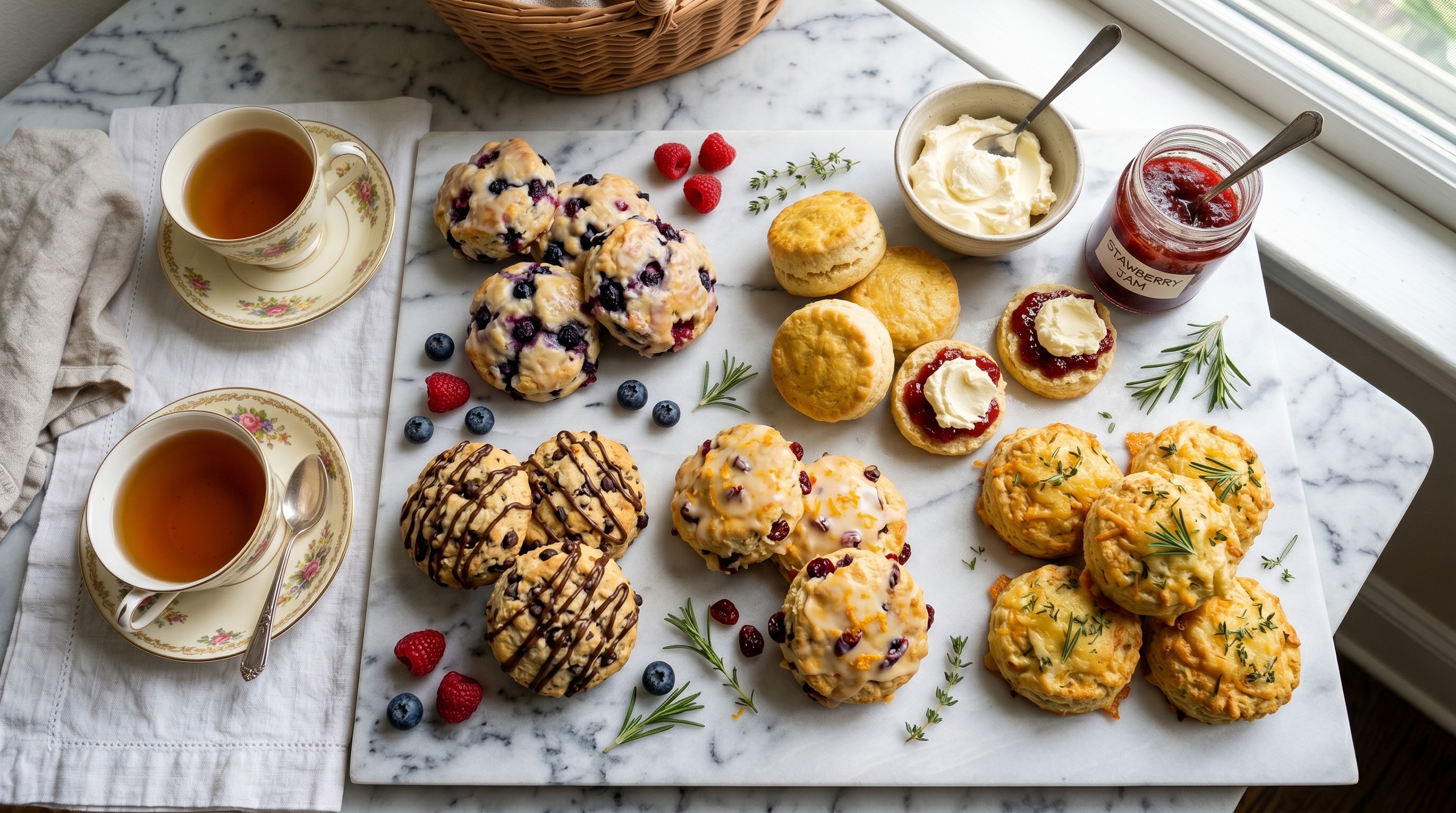
Few things in the entire world of baking are as quietly magnificent as a perfectly made scone. Warm from the oven, split open to reveal a light, tender crumb, spread generously with clotted cream and good jam — or layered with sharp cheese and fresh herbs, or studded with juicy blueberries and bright lemon zest — a great scone is one of the most deeply satisfying things a home baker can produce. And unlike many impressive baked goods, a genuinely excellent scone requires no specialist equipment, no advanced technique, and no more than 30 minutes from first measurement to first bite.
Scones have been a cornerstone of British baking tradition for centuries — appearing at afternoon teas, breakfast tables, celebrations, and quiet Sunday mornings with equal authority and grace. But the scone’s appeal extends far beyond British shores. American-style scones — larger, richer, more like a sweet pastry — have their own devoted following. Savoury scones loaded with cheese, chilli, or herbs are as welcome at a dinner table as they are at a tea party. And international flavours — matcha, cardamom, tahini, mango — have brought new excitement to a form that was already close to perfect.
In this guide, we have compiled 18 of the best easy scone recipes imaginable — spanning the most beloved classic sweet varieties, bold savoury options, international-inspired creations, and practical guidance on technique, troubleshooting, and presentation. Every recipe is designed to be genuinely achievable for bakers of every skill level, with consistent, reliable results you can be proud of every single time.
Let’s bake something wonderful.
The Science of a Perfect Scone
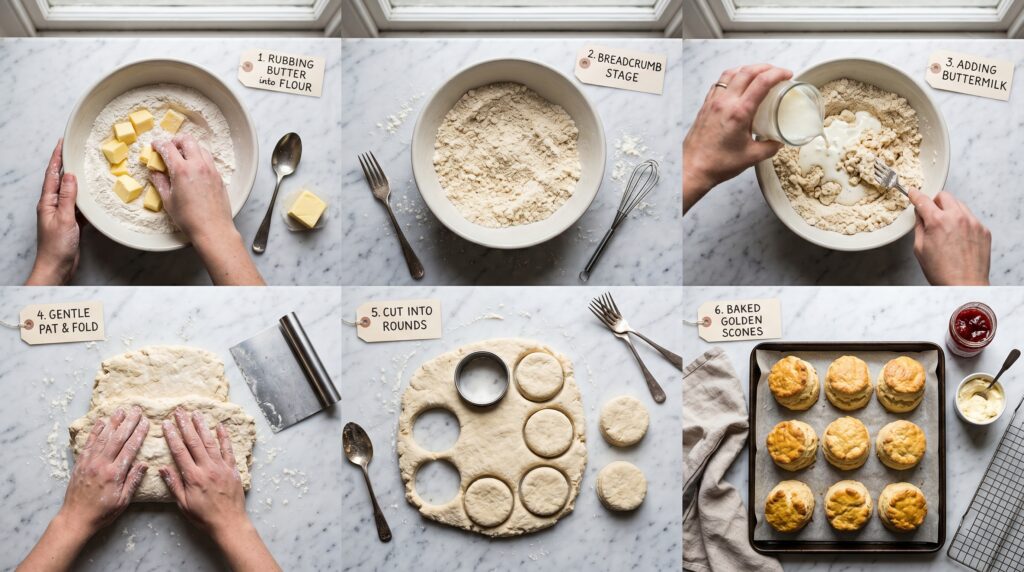
Understanding why scones work the way they do will help you produce consistently excellent results and troubleshoot any issues with confidence.
Cold Butter is Everything
The most important principle in scone making is keeping the butter cold at every stage. Cold butter, rubbed or cut into the flour, creates small pockets of fat throughout the dough. When the scones hit the hot oven, these fat pockets melt rapidly, releasing steam that pushes the layers apart and creates that characteristic light, flaky, layered texture. Warm or melted butter absorbs into the flour completely, eliminating the fat pockets and producing a dense, cake-like result rather than a light, layered scone.
Work quickly and confidently with cold hands, use butter straight from the refrigerator, and if the dough feels warm at any point, refrigerate it for 10–15 minutes before cutting and baking.
Minimal Handling Produces the Best Results
Overworking scone dough develops the gluten in the flour, producing a tough, chewy result rather than a tender, light one. The moment the dough comes together — shaggy, slightly rough, barely cohesive — stop handling it. A rough, imperfect dough going into the oven is vastly superior to a smooth, well-worked one.
The Pat and Fold Technique
Rather than rolling scone dough (which compresses the layers), pat it gently to the required thickness and use a pat-and-fold method — folding the dough over itself two or three times before patting to the final thickness. This creates visible layers in the finished scone and improves the rise significantly.
The Sharp Cutter Rule
When cutting scones, always use a sharp, straight-sided cutter pressed straight down without twisting. Twisting the cutter seals the edges of the dough and prevents the scone from rising evenly, producing a lopsided, uneven result. Press straight down, lift straight up.
The Egg Wash
A light brush of egg wash (beaten egg with a splash of milk) applied to the top of each scone before baking produces a beautiful, glossy, deeply golden top. Never let the egg wash drip down the sides of the scone — this glues the layers together and prevents the sides from rising properly.
Precise ingredient measurement is critical in scone baking — too much flour produces a dry, dense scone; too little and the dough is unworkable. Our Complete Guide to Measuring Ingredients Accurately explains exactly how to measure dry and liquid ingredients correctly for consistently perfect results.
Essential Equipment for Scone Baking
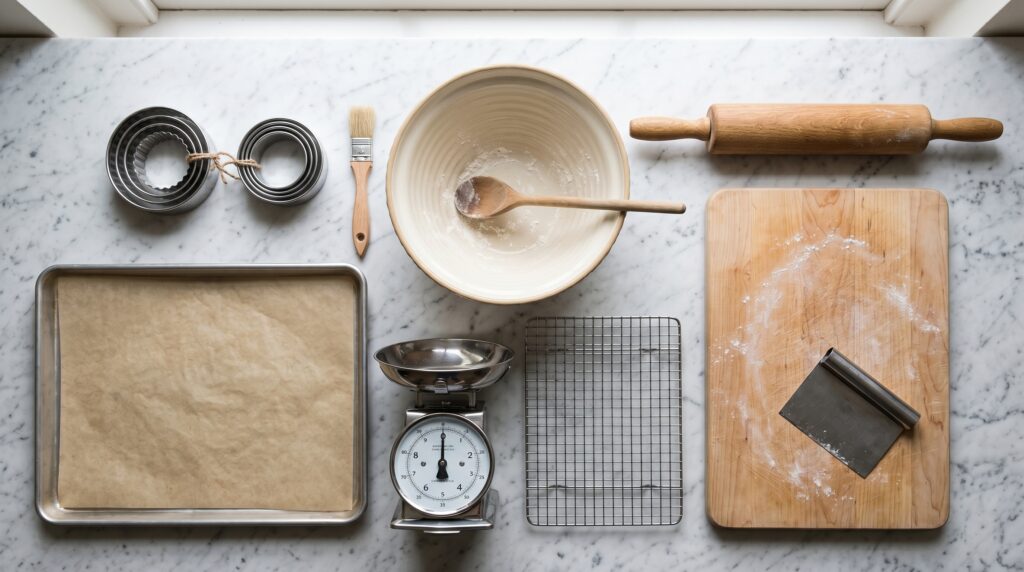
You do not need specialist equipment for great scones, but a few key items make the process significantly easier:
Kitchen scale — essential for accurate measurement of flour and butter. Volume measurements are too variable for reliable scone results.
Large mixing bowl — wide enough to rub the butter into the flour with both hands comfortably.
Round pastry cutter — a 5–6cm (2 inch) cutter for classic-sized scones. Plain (not fluted) cutters are traditional for plain and fruit scones; fluted cutters are used for cheese scones in many British bakeries.
Flat baking tray — lined with parchment paper. A flat tray rather than a deep-sided tin allows even heat circulation around the scones.
Pastry brush — for applying egg wash cleanly and evenly.
Wire cooling rack — scones should be transferred immediately from the baking tray to a wire rack to prevent the bases from becoming soggy from steam.
18 Easy Scone Recipes
Classic British Scones
1. Classic Plain Scones
Prep time: 15 minutes | Cook time: 12 minutes | Makes: 8–10 scones
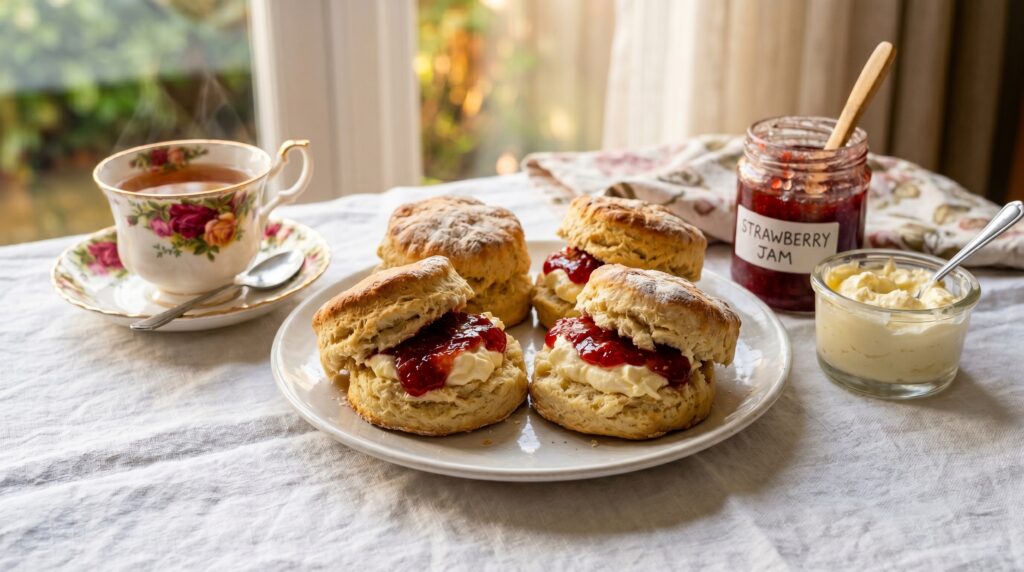
The classic plain scone is the benchmark against which all others are measured — a beautifully simple combination of flour, butter, sugar, buttermilk, and a touch of vanilla that produces a scone of extraordinary lightness, tenderness, and subtle richness. Mastering this recipe is the foundation for every other scone in this collection.
Key ingredients: Self-raising flour, baking powder, sea salt, cold unsalted butter (cubed), caster sugar, buttermilk (or whole milk with a squeeze of lemon juice), egg (for egg wash), vanilla extract (optional)
Method: Sift flour, baking powder, and salt into a large bowl. Add the cold cubed butter and rub into the flour using your fingertips — lifting and crumbling from above rather than pressing together — until the mixture resembles fine, sandy breadcrumbs with a few pea-sized butter pieces remaining. Stir in the sugar. Make a well in the center and add the buttermilk and vanilla. Mix with a flat-bladed knife until just combined into a shaggy dough — do not overmix. Turn onto a lightly floured surface, pat gently to 3cm thickness, fold once, and pat again to 3cm. Cut with a sharp cutter, place on a lined baking tray, brush with egg wash, and bake at 220°C (425°F) for 10–12 minutes until golden.
What makes it special: Buttermilk — the slightly acidic dairy that reacts with the baking powder to produce additional leavening — creates a noticeably lighter, more tender crumb than whole milk alone. It is worth seeking out.
The cream tea debate: In Devon, clotted cream goes on first and jam on top. In Cornwall, jam goes first and cream on top. Both are correct and the debate is entirely delightful. Choose your allegiance.
Pro tip: Scones are best eaten within 2 hours of baking. If making in advance, bake, cool completely, and freeze immediately — thaw at room temperature and warm briefly in a low oven before serving.
2. Fruit Scones with Sultanas
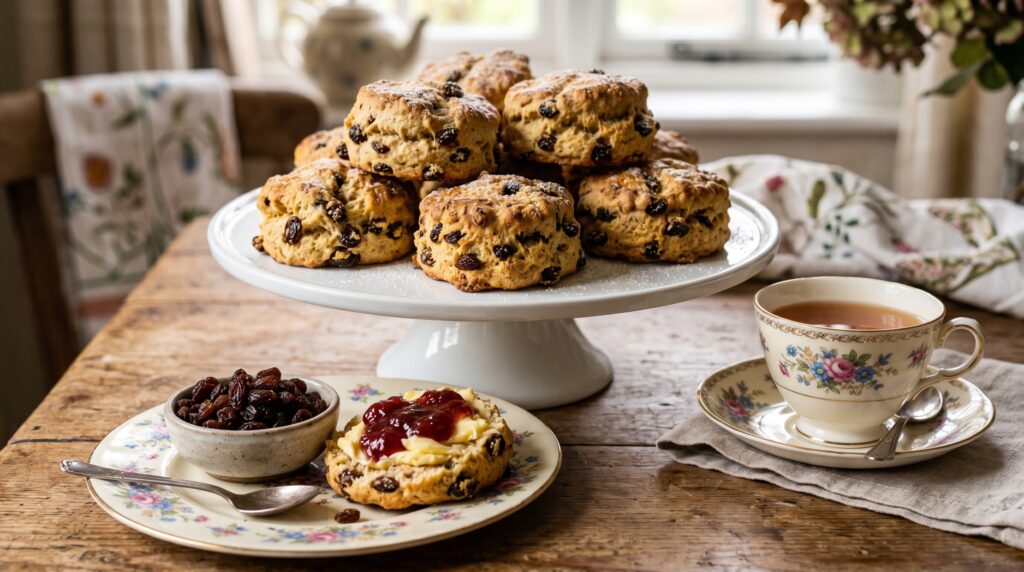
Prep time: 15 minutes | Cook time: 12 minutes | Makes: 8–10 scones
Fruit scones — the sultana-studded version of the classic plain scone — are arguably the most widely loved variety in British baking. The sultanas plump slightly in the oven, adding pockets of gentle sweetness throughout the light, buttery dough that make every bite a little more interesting than the last.
Key ingredients: Self-raising flour, baking powder, sea salt, cold unsalted butter (cubed), caster sugar, buttermilk, egg, sultanas (soaked in warm water for 10 minutes and patted dry), mixed spice (optional)
Soaking the sultanas: Soaking the sultanas briefly in warm water before adding them to the dough has two benefits — it plumps them to a juicier, more tender texture, and prevents them from drawing moisture from the dough during baking, which can cause the scone around them to dry out.
What makes it special: A small pinch of mixed spice — cinnamon, nutmeg, and clove — added to the dry ingredients gives the scone a warmly spiced depth that complements the sultanas beautifully without overpowering the delicate flavor of the dough.
Pro tip: Distribute the sultanas evenly throughout the dough by folding them in gently after adding the buttermilk — adding them to the dry ingredients before the butter can cause them to break up during the rubbing-in stage.
3. Cheese and Herb Scones

Prep time: 15 minutes | Cook time: 14 minutes | Makes: 8 scones
Cheese scones are one of the great savory baked goods — rich with sharp cheddar, fragrant with fresh herbs, and deeply satisfying in a way that sweet scones never quite match for those who prefer savory food. They are equally at home as part of an afternoon tea spread, alongside a bowl of soup, or simply eaten warm with butter as a mid-morning snack.
Key ingredients: Self-raising flour, baking powder, sea salt, cayenne pepper, cold unsalted butter (cubed), sharp mature cheddar (grated, good quality), fresh chives (finely sliced), fresh parsley (finely chopped), whole milk or buttermilk, egg (for egg wash), optional: Dijon mustard (1 tsp stirred into the milk)
Method: Make the basic scone dough, adding the cayenne to the dry ingredients and folding the grated cheese and herbs in at the same time as the milk. Reserve a small amount of grated cheese to scatter over the tops of the scones before baking — this creates the beautiful golden, slightly crispy cheese crust on the exterior.
What makes it special: The Dijon mustard stirred into the milk adds a depth and complexity that sharpens the cheese flavor without being detectable as mustard. It is the invisible ingredient that makes the difference between a good cheese scone and an exceptional one.
Serving suggestion: Split and spread with cream cheese and additional fresh herbs, or serve warm alongside a bowl of soup. These are equally good cold in a lunchbox the following day.
4. Buttermilk Drop Scones (Scottish Pancakes)
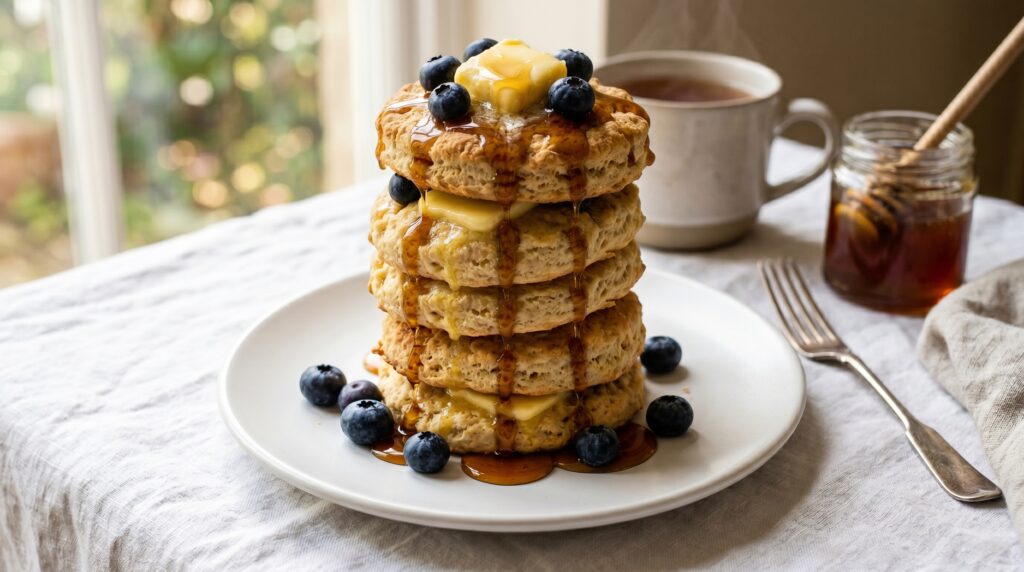
Prep time: 10 minutes | Cook time: 15 minutes | Makes: 16 drop scones
Scottish drop scones — also known as Scottish pancakes — are the griddle-cooked cousins of oven-baked scones. Smaller, fluffier, and cooked on a hot griddle or skillet rather than in the oven, they are one of the quickest and most satisfying breakfasts or teas imaginable, ready in 15 minutes from start to finish.
Key ingredients: Self-raising flour, caster sugar, sea salt, eggs, buttermilk, butter (melted), vanilla extract, butter or vegetable oil for cooking
Method: Whisk together flour, sugar, and salt. In a separate bowl, whisk eggs, buttermilk, and melted butter. Combine wet and dry ingredients until just smooth — a few small lumps are fine. Heat a flat skillet or griddle over medium heat and brush with a little butter. Drop tablespoons of batter onto the hot surface, spacing well apart. Cook until bubbles appear on the surface and the edges look set — about 2 minutes. Flip and cook for a further 60–90 seconds until golden on the second side.
What makes them special: Drop scones are ready faster than any oven-baked scone and require no cutting, no rolling, and no specialist equipment. They are the scones for those who want something wonderful on the table with minimal preparation.
Pro tip: The griddle temperature is critical — too hot and the scones brown before the centre cooks through; too cool and they spread too much and become flat. Test with a small drop of batter — it should set around the edges within 30 seconds without browning immediately.
5. Cream Scones
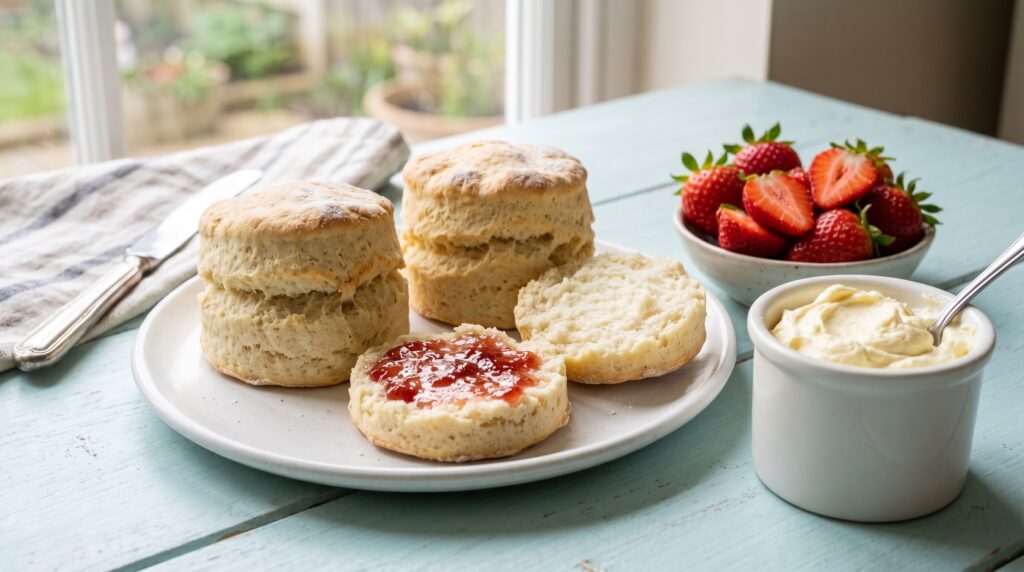
Prep time: 12 minutes | Cook time: 12 minutes | Makes: 8 scones
Cream scones — made with heavy cream rather than buttermilk and with no rubbing-in of butter — are the American approach to scone making and produce a result of extraordinary tenderness and richness. The cream provides both the fat and the liquid simultaneously, creating a dough that comes together in minutes and bakes into a scone with a remarkably light, pillowy interior.
Key ingredients: Plain flour (not self-raising), baking powder, sea salt, caster sugar, cold heavy cream, vanilla extract, egg (for egg wash)
Method: Whisk together flour, baking powder, salt, and sugar. Pour in the cold heavy cream and vanilla and stir with a fork until just combined into a shaggy dough. Turn onto a lightly floured surface, pat gently to 3cm thickness, fold twice, and pat to the final thickness. Cut, brush with egg wash, and bake at 220°C (425°F) for 10–12 minutes.
What makes it special: The absence of a separate rubbing-in stage makes cream scones the fastest scone to prepare — and the cream’s fat content produces a richness of flavour and tenderness of crumb that rivals any butter-based recipe.
Sweet Fruit and Flavored Scones
6. Blueberry and Lemon Scones
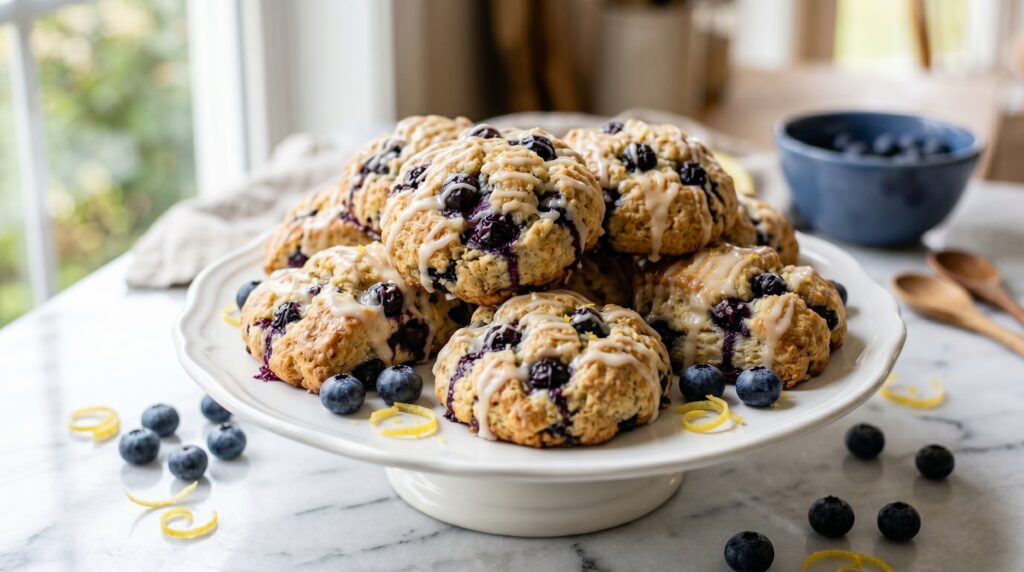
Prep time: 15 minutes | Cook time: 14 minutes | Makes: 8 scones
Blueberry and lemon scones are one of the most beloved sweet scone varieties — the natural sweetness of fresh blueberries combined with the bright acidity of lemon zest creates a flavor combination of genuine freshness and excitement. The simple lemon glaze drizzled over the warm scones adds an additional layer of citrus flavor and a beautiful visual finish.
Key ingredients: Self-raising flour, baking powder, sea salt, cold unsalted butter (cubed), caster sugar, buttermilk, egg, fresh blueberries, lemon zest (generous amount). Lemon glaze: icing sugar, fresh lemon juice
Method: Make the standard scone dough. Fold fresh blueberries in very gently at the last moment — rough handling will burst the berries and turn the entire dough an unappetizing purple. Bake as normal. Make the lemon glaze by mixing sifted icing sugar with fresh lemon juice until pourable. Drizzle over the warm (not hot) scones immediately after removing from the oven.
What makes it special: Fresh blueberries rather than frozen produce a scone with distinct, whole berry pockets rather than smeared, purple-stained patches. If frozen blueberries must be used, fold in from completely frozen to minimise bleeding.
Pro tip: Toss the fresh blueberries in a teaspoon of flour before folding them into the dough — the flour coating helps them distribute more evenly throughout the dough and prevents them from sinking to the bottom.
7. Cranberry and Orange Scones
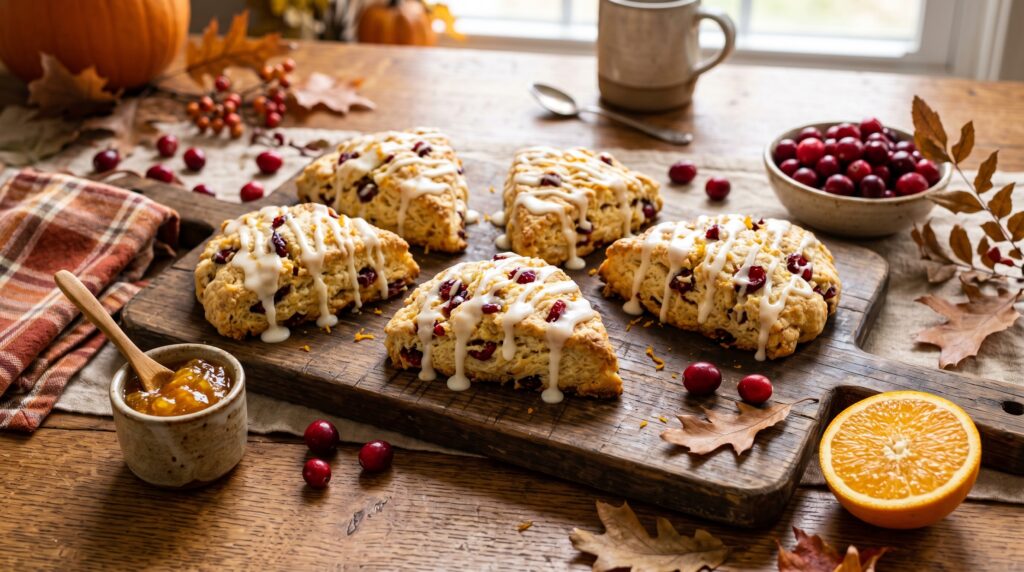
Prep time: 15 minutes | Cook time: 14 minutes | Makes: 8 scones
Cranberry and orange is one of the great flavour pairings in baking — the tartness of dried cranberries against the bright, floral sweetness of fresh orange zest creates a scone with a sophisticated, complex flavour profile that is equally at home at a festive Christmas table or a regular Tuesday morning.
Key ingredients: Self-raising flour, baking powder, sea salt, cold unsalted butter (cubed), caster sugar, buttermilk, egg, dried cranberries, fresh orange zest (generous). Orange glaze: icing sugar, fresh orange juice
What makes it special: Using dried cranberries rather than fresh means they are available year-round and distribute evenly throughout the dough without bleeding colour. Their concentrated tartness makes them more intensely flavoured than fresh cranberries in baked applications.
Festive variation: Add a pinch of cinnamon and a scattering of white chocolate chips alongside the cranberries for a scone that feels genuinely celebratory.
8. Raspberry and White Chocolate Scones
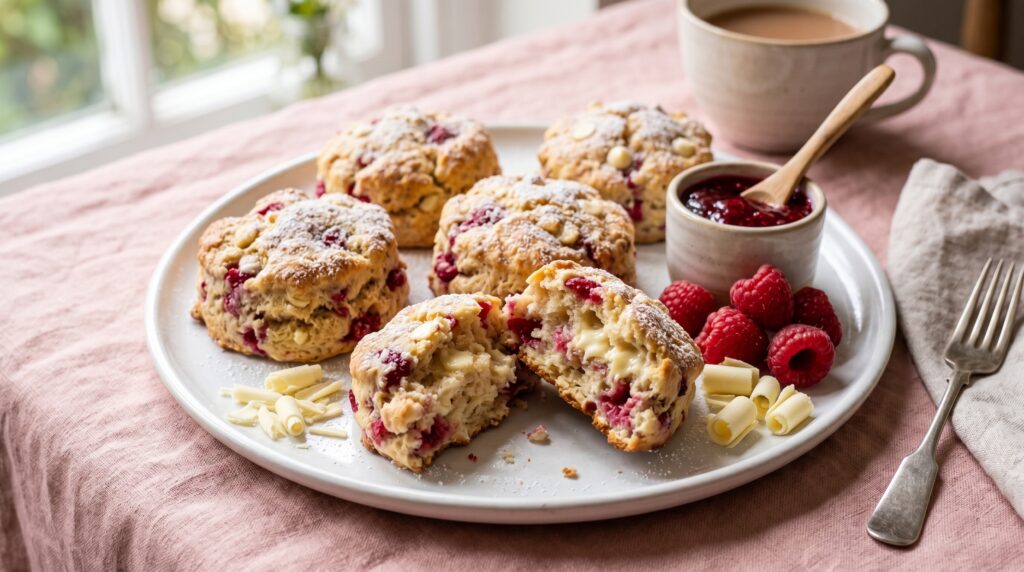
Prep time: 15 minutes | Cook time: 14 minutes | Makes: 8 scones
Raspberry and white chocolate scones are unabashedly indulgent — the slight tartness of fresh raspberries cutting through the creamy sweetness of white chocolate chips in a light, buttery dough creates a scone that is genuinely dessert-like without being overpoweringly sweet.
Key ingredients: Self-raising flour, baking powder, sea salt, cold unsalted butter (cubed), caster sugar, buttermilk, egg, fresh or frozen raspberries, white chocolate chips (halal-certified)
Method: Make the standard scone dough. Fold in white chocolate chips with the buttermilk. Add the raspberries last — if using fresh, fold in very gently to avoid crushing; if using frozen, add from fully frozen and fold quickly to minimise bleeding. Bake at 200°C (400°F) — slightly lower than plain scones to prevent the white chocolate from burning.
Pro tip: If the raspberries begin turning the dough pink during folding, stop immediately — it is better to have slightly uneven distribution than a completely pink dough. The streaks of raspberry colour in the finished scone are beautiful and intentional.
9. Cinnamon and Apple Scones
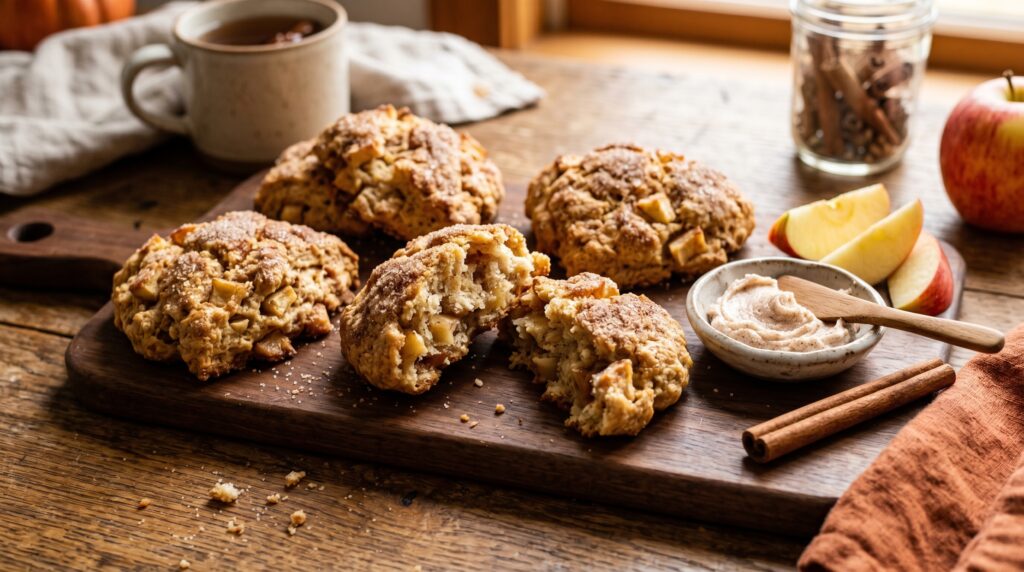
Prep time: 20 minutes | Cook time: 15 minutes | Makes: 8 scones
Cinnamon and apple scones are the definitive autumn bake — warm spice, sweet-tart apple, and a tender, buttery crumb create a scone that captures everything comforting about the season in a single bite. The cinnamon-sugar dusting on top adds a caramelised, slightly crunchy surface that makes these scones genuinely special.
Key ingredients: Self-raising flour, baking powder, cinnamon, mixed spice, sea salt, cold unsalted butter (cubed), caster sugar, buttermilk, egg, apple (peeled, cored, and diced small — Bramley for tartness or Granny Smith for crunch). Topping: cinnamon sugar (caster sugar mixed with cinnamon)
Method: Make the standard scone dough, adding the cinnamon and mixed spice to the dry ingredients. Fold in the diced apple with the buttermilk. Top each scone with a generous pinch of cinnamon sugar before baking.
What makes it special: The small dice of apple — no larger than 1cm — are distributed throughout the dough without creating large wet patches that prevent the scone from rising evenly. Small pieces cook through completely in the oven without releasing excess juice.
10. Chocolate Chip Scones
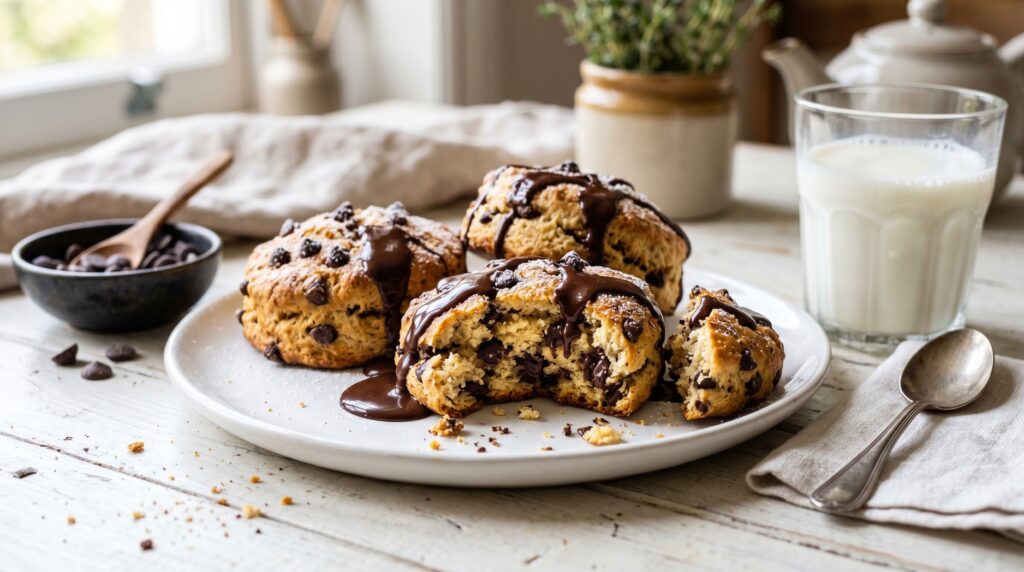
Prep time: 15 minutes | Cook time: 14 minutes | Makes: 8 scones
Chocolate chip scones bridge the gap between a scone and a sweet pastry — deeply chocolatey, generously studded with dark chocolate chips, and finished with a thin chocolate drizzle that makes them feel genuinely indulgent while retaining the light, crumbly texture of a great scone.
Key ingredients: Self-raising flour, baking powder, sea salt, cold unsalted butter (cubed), caster sugar, buttermilk, egg, dark chocolate chips (halal-certified), optional: 2 tablespoons of Dutch-process cocoa powder added to the dry ingredients for a double chocolate version
What makes it special: Using the best quality dark chocolate chips you can find — at least 60% cocoa solids — produces a scone with a grown-up, sophisticated chocolate depth rather than the sweetness of milk chocolate chips.
Pro tip: Refrigerate the assembled, unbaked scones for 15 minutes before baking — this firms up the chocolate chips, which otherwise can melt and spread during the early stages of baking, distorting the shape of the scone.
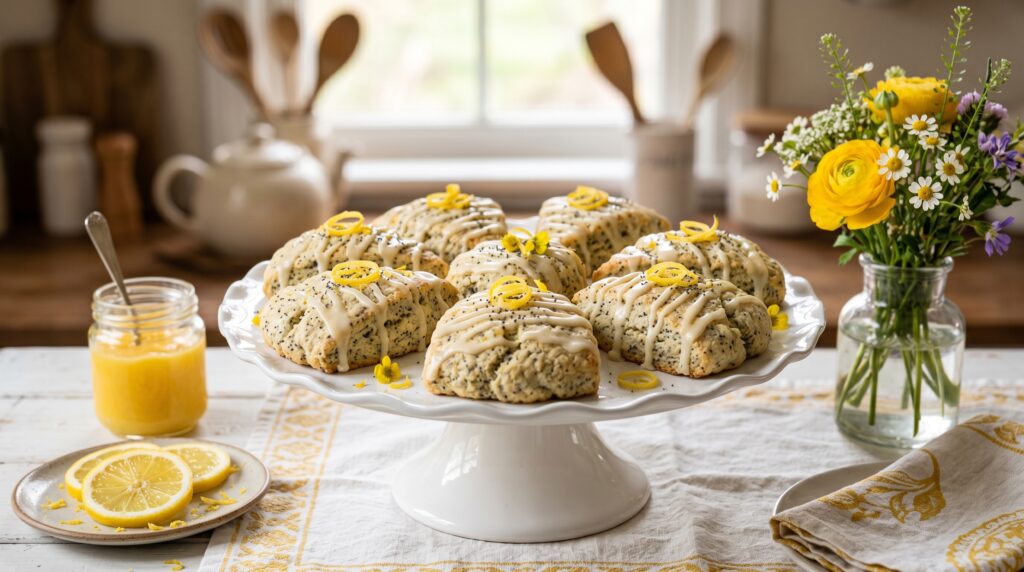
11. Lemon and Poppy Seed Scones
Prep time: 15 minutes | Cook time: 12 minutes | Makes: 8 scones
Lemon and poppy seed is one of the most elegant flavor combinations in all of baking — the floral brightness of lemon zest against the mild, slightly nutty flavor of poppy seeds creates a scone with a sophisticated, bakery-quality character. Finished with lemon glaze and a small pot of lemon curd for spreading, these are a genuinely special treat.
Key ingredients: Self-raising flour, baking powder, sea salt, cold unsalted butter (cubed), caster sugar, buttermilk, egg, fresh lemon zest (from 2 lemons), poppy seeds, vanilla extract. Lemon glaze: icing sugar, fresh lemon juice, lemon zest
What makes it special: The poppy seeds add a subtle textural interest — a barely perceptible crunch that makes the scone more complex without altering its flavor significantly. Combined with the bright, fresh lemon zest, they create a scone that feels more sophisticated than its simple ingredient list suggests.
Savory Scones
12. Cheddar and Jalapeño Scones

Prep time: 15 minutes | Cook time: 14 minutes | Makes: 8 scones
Cheddar and jalapeño scones are the spicy, bold, deeply satisfying alternative for those who prefer their baking with heat — sharp mature cheddar and fresh or pickled jalapeño create a scone of genuine excitement that pairs beautifully with chili, soup, or eggs at brunch.
Key ingredients: Self-raising flour, baking powder, sea salt, cayenne pepper, cold unsalted butter (cubed), sharp mature cheddar (grated), fresh or pickled jalapeños (finely diced, seeds removed for less heat), whole milk or buttermilk, egg
Method: Make the standard savory scone dough, adding the cayenne to the dry ingredients and folding the cheese and jalapeños in with the milk. Reserve cheese and jalapeño slices for the topping — place a slice of jalapeño and a pinch of cheese on each scone before baking for a dramatic, attractive surface.
Heat level adjustment: Remove seeds and white membrane from fresh jalapeños for a mild heat; include seeds for a significant kick. Pickled jalapeños — more widely available and with a more complex, vinegar-sharp flavor — work beautifully and are slightly milder than fresh.
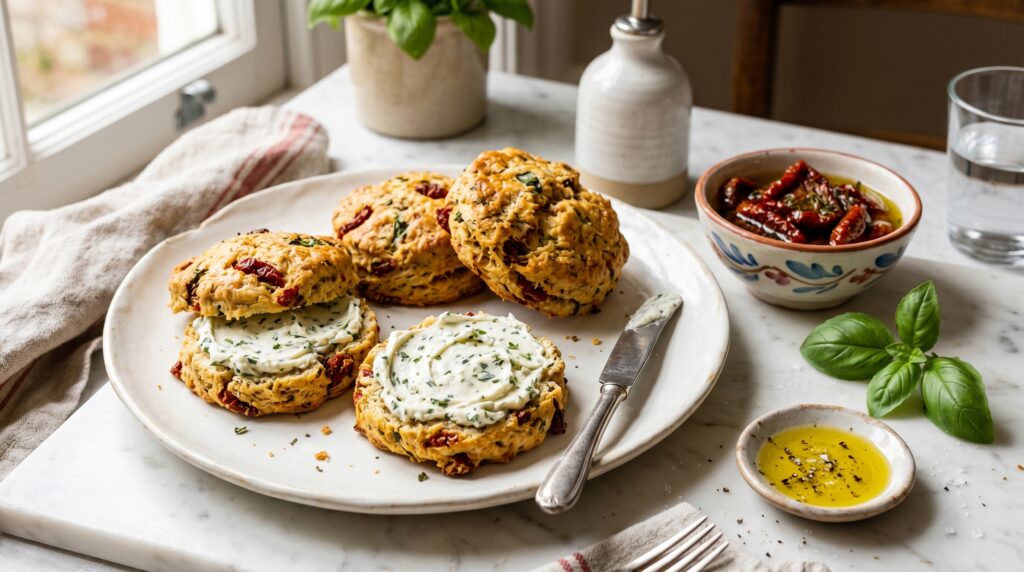
13. Sundried Tomato and Basil Scones
Prep time: 15 minutes | Cook time: 14 minutes | Makes: 8 scones
Sundried tomato and basil scones bring the flavors of the Italian pantry to the British scone tradition — the intensely savory, sweet-tart depth of sundried tomatoes combined with the fragrant freshness of fresh basil creates a savory scone of remarkable sophistication that is equally at home as part of a antipasto spread or alongside a bowl of minestrone.
Key ingredients: Self-raising flour, baking powder, sea salt, cold unsalted butter (cubed), sundried tomatoes in oil (drained and roughly chopped), fresh basil (finely chopped), Parmesan (grated), whole milk or buttermilk, egg, cracked black pepper
What makes it special: The oil from the sundried tomato jar — deeply flavored and slightly smoky — can be used to brush the tops of the scones instead of egg wash, creating a beautifully golden, intensely flavored surface.
Serving suggestion: Split and fill with herbed cream cheese and a few fresh rocket leaves for a genuinely sophisticated savory tea party offering or packed lunch.
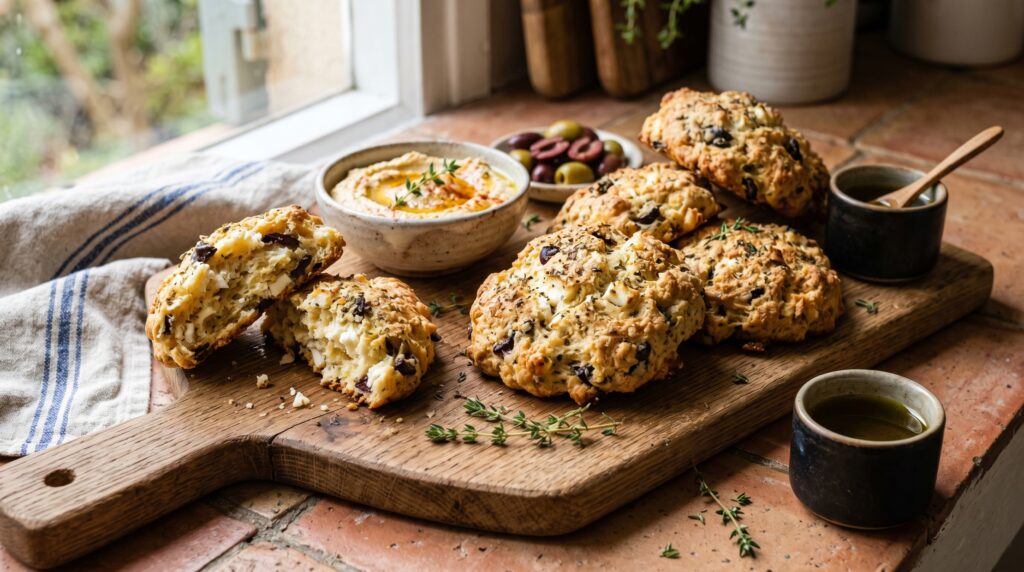
14. Feta and Olive Scones
Prep time: 15 minutes | Cook time: 14 minutes | Makes: 8 scones
Feta and olive scones are a Mediterranean twist on the classic savory scone — the salty, crumbly feta and the briny, earthy olives create a scone of bold, complex flavor that needs absolutely nothing added to it when eaten warm from the oven.
Key ingredients: Self-raising flour, baking powder, sea salt (use sparingly — feta and olives are already salty), cold unsalted butter (cubed), feta cheese (crumbled), Kalamata olives (pitted and roughly chopped, patted dry), fresh thyme leaves, whole milk or buttermilk, egg, cracked black pepper, optional: sun-dried tomatoes
What makes it special: Patting the olives completely dry before adding to the dough is essential — excess moisture from the brine will prevent the scones from rising properly and can make the dough sticky and unworkable.
Pro tip: Use block feta rather than pre-crumbled — block feta has a firmer texture and a cleaner, less wet consistency that distributes more evenly throughout the dough without making it wet.
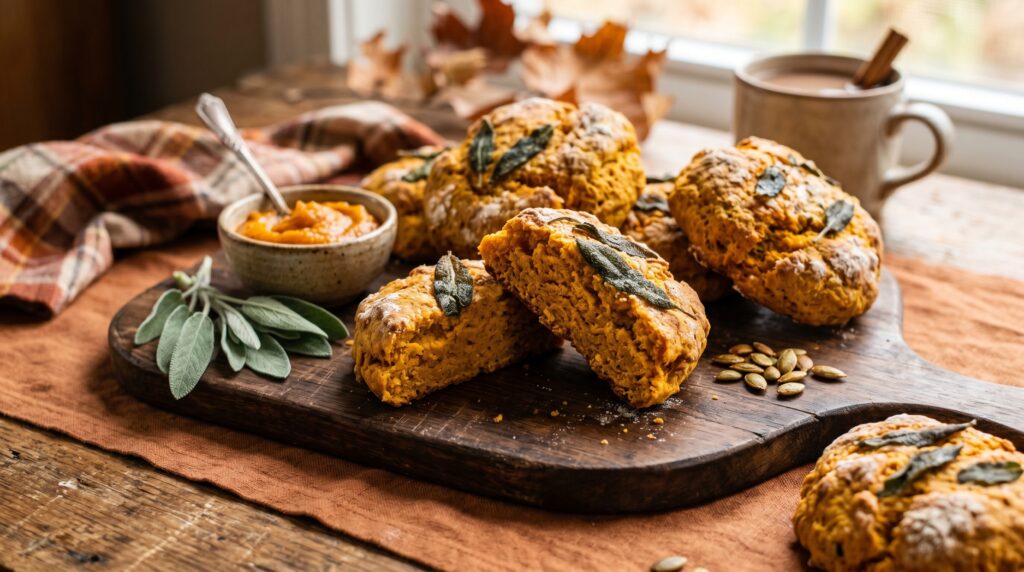
15. Pumpkin and Sage Scones
Prep time: 15 minutes | Cook time: 16 minutes | Makes: 8 scones
Pumpkin and sage scones are the most autumnal savoury scone on this list — the natural sweetness and moisture of pumpkin purée create an extraordinarily tender, slightly dense scone that carries the earthy, aromatic fragrance of fresh sage beautifully.
Key ingredients: Self-raising flour, baking powder, sea salt, cold unsalted butter (cubed), pumpkin purée (canned or homemade), Parmesan (grated), fresh sage (finely chopped), whole milk, egg, nutmeg, cracked black pepper. Topping: crispy fried sage leaves, pumpkin seeds
Method: The pumpkin purée replaces some of the liquid in the standard recipe — reduce the milk accordingly. Fold in the Parmesan and sage with the pumpkin and milk. These scones will be slightly softer and more moisture-rich than standard scones — handle the dough as gently as possible.
Crispy sage garnish: Fry fresh sage leaves in a little olive oil or butter for 30 seconds until crispy. Press one onto the top of each unbaked scone before the egg wash — they create a beautiful, aromatic garnish that toasts further in the oven.
International and Contemporary Scones
16. Matcha and White Chocolate Scones
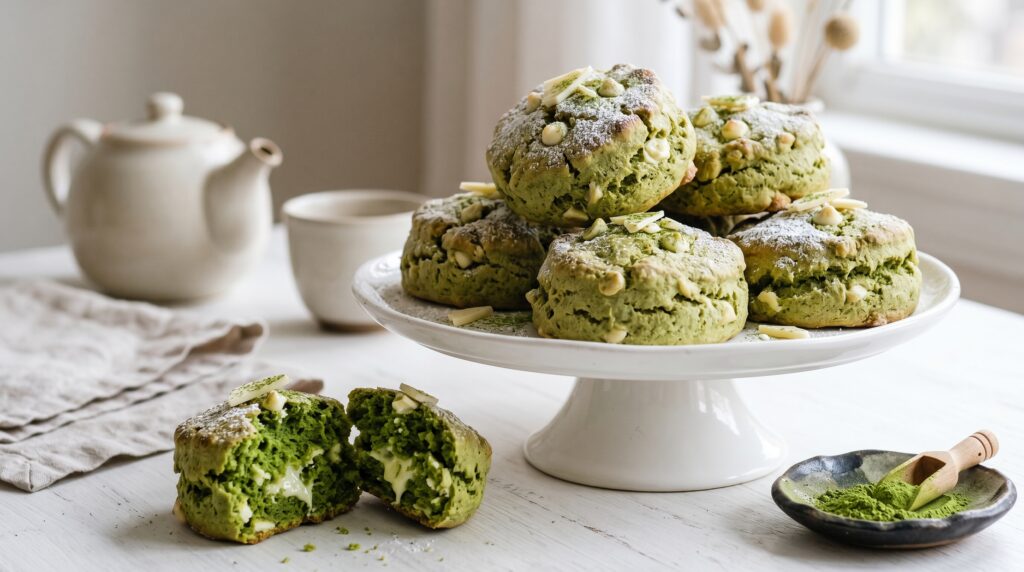
Prep time: 15 minutes | Cook time: 14 minutes | Makes: 8 scones
Matcha and white chocolate scones combine Japanese and Western baking traditions in a scone of striking visual impact and sophisticated flavour — the slightly bitter, grassy depth of high-quality matcha against the creamy sweetness of white chocolate creates a flavour contrast of genuine elegance, and the vibrant green colour makes these one of the most visually distinctive scones on any tea table.
Key ingredients: Self-raising flour, baking powder, sea salt, cold unsalted butter (cubed), caster sugar, buttermilk, egg, matcha powder (good quality ceremonial or culinary grade — the flavour difference between good and poor quality matcha is significant), white chocolate chips (halal-certified)
Method: Sift the matcha powder with the flour and baking powder — sifting prevents green clumps in the finished scone and ensures even color distribution. The amount of matcha to use depends on the quality — stronger, higher quality matcha requires less; cheaper, more muted matcha requires more. Start with 2 tablespoons and adjust to taste.
What makes it special: The vivid jade-green colour of a properly made matcha scone is one of the most striking and conversation-stopping sights on a tea party table. It requires no special decoration — the colour is the decoration.
17. Cardamom and Pistachio Scones
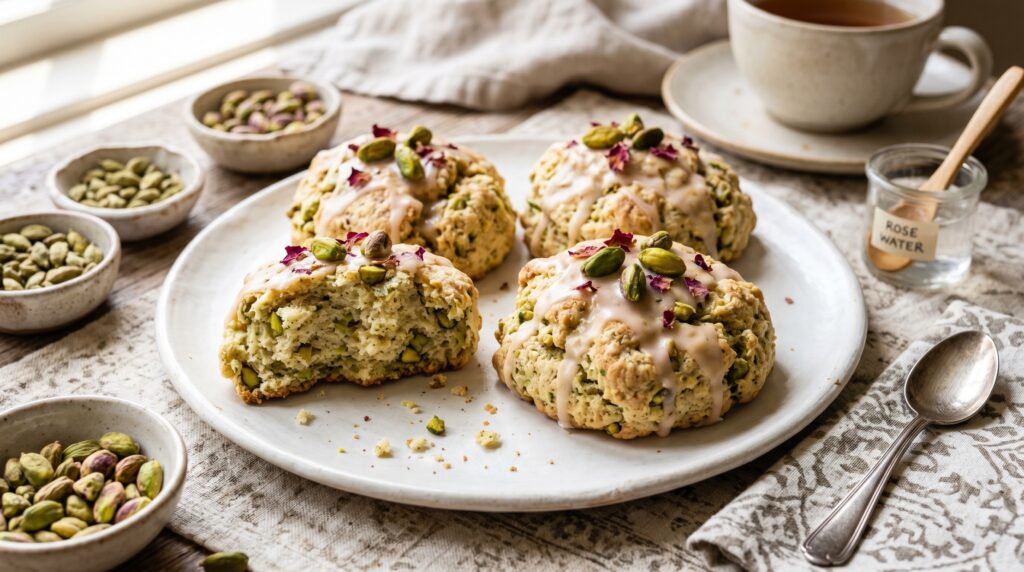
Prep time: 15 minutes | Cook time: 14 minutes | Makes: 8 scones
Cardamom and pistachio scones bring the fragrant warmth of Middle Eastern baking into the scone format — the floral, intensely aromatic cardamom combined with the rich, nutty green of crushed pistachios creates a scone of exotic elegance that is completely unlike anything in the conventional British scone repertoire.
Key ingredients: Self-raising flour, baking powder, sea salt, cold unsalted butter (cubed), caster sugar, buttermilk, egg, ground cardamom (generous amount — cardamom is the star), crushed unsalted pistachios. Rose water glaze: icing sugar, rose water, a few drops of milk
What makes it special: The rose water glaze — a simple mixture of icing sugar and a small amount of food-grade rose water — adds a delicate floral note that complements the cardamom perfectly and makes these scones smell as extraordinary as they taste.
Pro tip: Use freshly ground cardamom from whole pods for the most intense, fragrant result — pre-ground cardamom loses its aromatic oils quickly and produces a muted, flat flavor compared to freshly ground. Simply crush the pods in a mortar and pestle, remove the husks, and grind the seeds.
For more baking inspiration, our 20 Easy Bread Recipes to Make at Home covers a wide range of baked goods that complement these scone recipes beautifully.
18. Tahini and Honey Scones
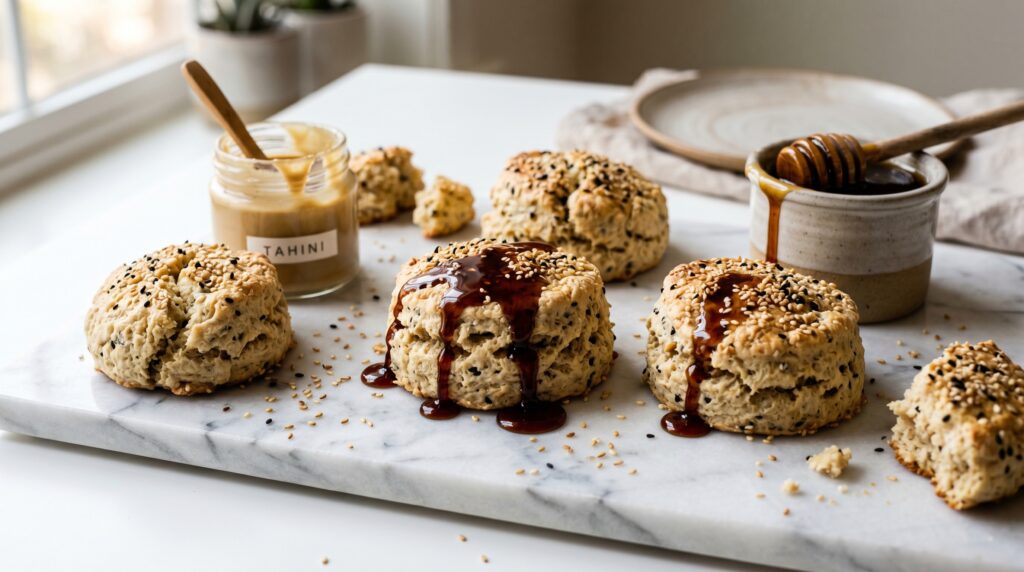
Prep time: 15 minutes | Cook time: 14 minutes | Makes: 8 scones
Tahini and honey scones are one of the most unexpectedly brilliant contemporary scone variations — the rich, slightly bitter nuttiness of sesame tahini combined with the floral sweetness of good honey creates a scone of complex, sophisticated flavour that occupies a beautifully ambiguous space between sweet and savoury.
Key ingredients: Self-raising flour, baking powder, sea salt, cold unsalted butter (cubed), caster sugar, buttermilk, egg, tahini (smooth, well-stirred), honey, sesame seeds (for the top). Honey drizzle: good quality runny honey warmed gently
Method: Add the tahini and honey to the buttermilk before combining with the dry ingredients — whisking them together first ensures they incorporate evenly. The tahini adds fat to the dough alongside the butter, producing an exceptionally tender, rich crumb. Scatter sesame seeds generously over the tops before baking and drizzle with warm honey immediately as they come from the oven.
What makes it special: The tahini produces a scone with a subtle, nutty depth that is impossible to identify precisely but impossible to ignore — it makes these scones more interesting and complex than almost any other variety on this list.
Serving suggestion: These scones are extraordinary, split and spread with more tahini and a drizzle of honey — the combination of warm scone, cool tahini, and dark honey is one of the most satisfying flavour experiences imaginable.
Scone Troubleshooting Guide
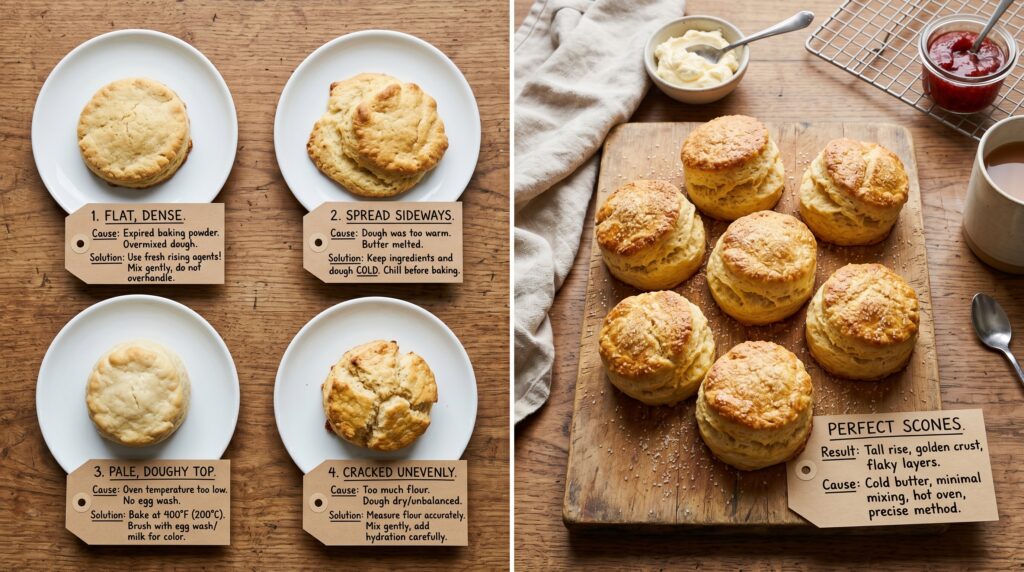
Even experienced bakers encounter scone issues occasionally. Here is how to diagnose and fix the most common problems:
| Problem | Likely Cause | Solution |
|---|---|---|
| Scones are flat and dense | Butter too warm / over-handled dough | Keep butter cold; work quickly; minimal handling |
| Scones spread sideways | Dough too wet / oven too cool | Press the cutter straight down; check the baking powder’s freshness |
| Scones won’t rise | Cutter twisted when cutting / old baking powder | Oven temperature is too low |
| Scones are dry and crumbly | Too much flour / overbaked | Weigh ingredients accurately; reduce bake time by 2 minutes |
| Scones are tough and chewy | Dough overworked | Mix only until just combined; never knead scone dough |
| Scones have pale, doughy tops | The oven temperature is too low | Increase to 220°C; use the upper third of the oven |
| Fruit sinks to the bottom | Fruit too heavy / dough too wet | Toss fruit in flour before adding; reduce liquid slightly |
| Uneven rise | Uneven thickness when cutting | Use a ruler to ensure consistent 3cm dough thickness |
Make-Ahead and Storage Guide
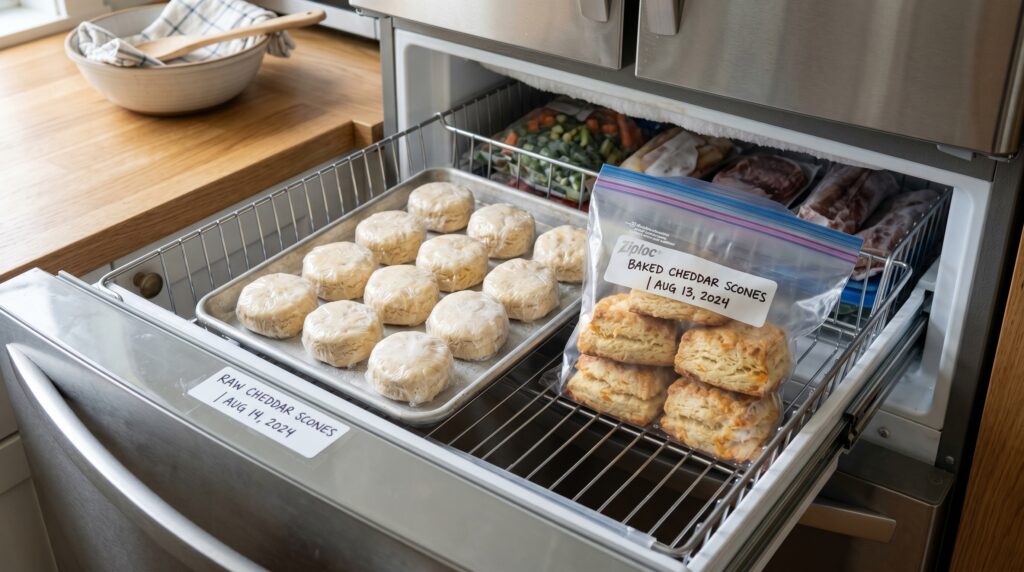
Scones are best eaten within 2 hours of baking — but with the right approach, you can have freshly baked scones available whenever you want them:
Freezing unbaked scones (best method): Prepare the scone dough, cut into rounds, and place on a parchment-lined tray. Freeze until completely solid — about 2 hours. Transfer to a freezer bag and store for up to 3 months. Bake from frozen at 220°C for 14–16 minutes (2–4 minutes longer than fresh).
Freezing baked scones: Cool completely, wrap individually in plastic wrap, and freeze for up to 3 months. Thaw at room temperature for 1 hour and warm in a 160°C oven for 5 minutes before serving.
Refrigerating dough: Prepared scone dough rounds can be refrigerated, covered, for up to 24 hours before baking. Cold dough actually produces a better rise than room temperature dough — refrigerating prepared scones overnight for a morning bake produces excellent results.
For comprehensive guidance on safe food storage temperatures and practices for dairy-containing baked goods, our Food Safety 101: Storage, Handling, and Temperature Guide is essential reading.
The Perfect Afternoon Tea: Serving Scones with Style
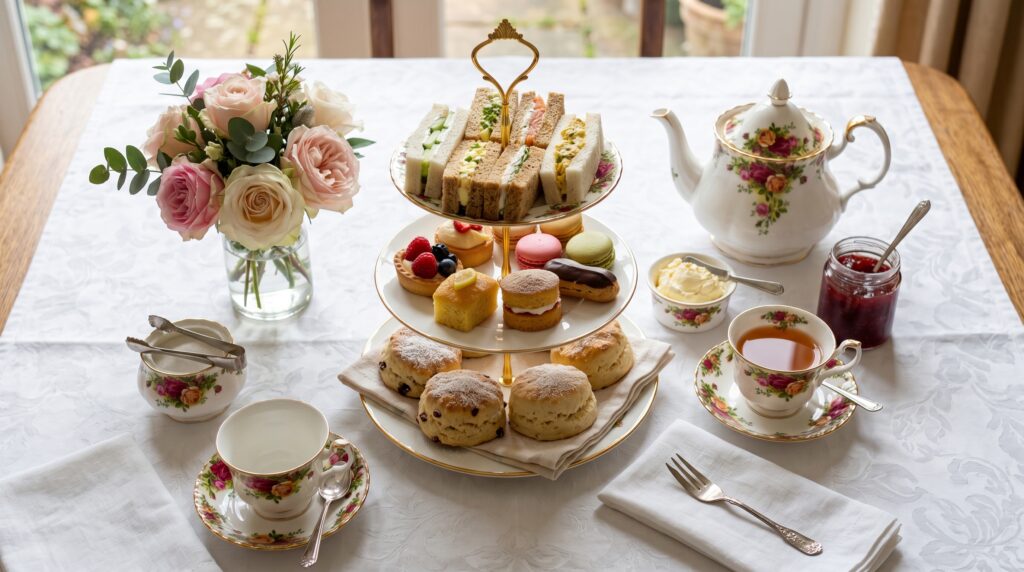
Scones are the centrepiece of the classic British afternoon tea, and presenting them with care elevates the entire experience:
Serve warm, always. Room temperature or cold scones are a significantly inferior experience to freshly warm ones. If baking in advance, warm in a 160°C oven for 5 minutes before serving.
Clotted cream and jam. The classic accompaniments require no explanation but deserve the best quality — real clotted cream (not whipped cream) and a good quality fruit jam or preserve. Strawberry jam is traditional, but raspberry, blackcurrant, or fig jam are all excellent alternatives.
The tiered stand. Traditionally, scones are served on the bottom tier of a three-tiered cake stand, with sandwiches in the middle and cakes on top.
Fresh flowers and linens. The aesthetic of an afternoon tea matters. A small vase of fresh flowers, proper linen napkins, and matching china transform a simple tea into an occasion.
According to The UK Tea and Infusions Association, afternoon tea originated in Britain in the 1840s, with Anna, the 7th Duchess of Bedford, reportedly serving scones, sandwiches, and cake with afternoon tea to stave off hunger between lunch and dinner — a tradition that has endured and spread across the world for nearly two centuries.
For more tea party inspiration and sandwich recipes to complete your afternoon tea spread, our guide to 20 Mini Sandwiches For Tea Party is the perfect companion resource.
Frequently Asked Questions
Why do my scones not rise properly?
The three most common causes are: twisting the cutter when cutting (which seals the sides and prevents even rise), over-handling the dough (which develops gluten and makes it tough), and using old or insufficient baking powder. Always press the cutter straight down and up without twisting, handle the dough as little as possible, and check that your baking powder is within its use-by date.
Can I use plain flour instead of self-raising flour?
Yes — add 2 teaspoons of baking powder per 225g (8oz) of plain flour as a substitute. Some bakers prefer this approach as it allows more precise control over the amount of leavening. Ensure the baking powder is fresh — old baking powder is the most common cause of flat, dense scones.
What is the difference between British and American scones?
British scones are smaller, rounder, less sweet, and less rich — closer to a bread roll in texture, designed to be split and spread with cream and jam. American scones are typically larger, triangular, richer (often using cream rather than milk), and more sweet and flavorful on their own, more like a pastry than a bread. Both are delicious; they serve different purposes.
How do I get a perfectly flat top on my scones?
Pat the dough to an even thickness rather than rolling it. Ensure the cutting board surface is perfectly flat. Use a straight-sided cutter rather than a fluted one for the cleanest, most level cut. Place the scones top-side down on the baking tray — the perfectly flat bottom of the dough becomes the top of the scone, producing a flatter, more even surface.
Can I make scones without buttermilk?
Absolutely. Make a simple buttermilk substitute by adding 1 tablespoon of lemon juice or white wine vinegar to 240ml of whole milk and allowing to sit for 5 minutes until slightly curdled. The slight acidity reacts with the baking powder to produce the same leavening effect as real buttermilk.
Conclusion
From the timeless perfection of a classic plain scone spread with clotted cream and jam to the exotic elegance of cardamom and pistachio, from the bold savory satisfaction of cheddar and jalapeño to the sophisticated complexity of tahini and honey — these 18 easy scone recipes demonstrate the extraordinary range and versatility that this humble baked good is capable of.
What makes scone baking so deeply rewarding is the combination of simplicity and reward — a small number of accessible ingredients, a technique that can be mastered in a single baking session, and a result that consistently delights everyone who receives one. Few baked goods deliver such an immediate, warm, generous sense of care and hospitality as a freshly baked scone offered to someone you want to make feel welcome.
Master the classic plain scone first — understand the principles of cold butter, minimal handling, and high heat — and every other recipe in this collection will follow naturally. Keep unbaked scone rounds in your freezer and you are always 15 minutes away from something wonderful.
Bake generously, share freely, and never underestimate the power of a warm scone to make the world feel a little better.
For more baking recipes, technique guides, and cooking inspiration across every skill level and occasion, explore our full collection at skillsinthekitchen.com.