
18 Easy Vegan Cauliflower Recipes: Bold & Satisfying
Introduction
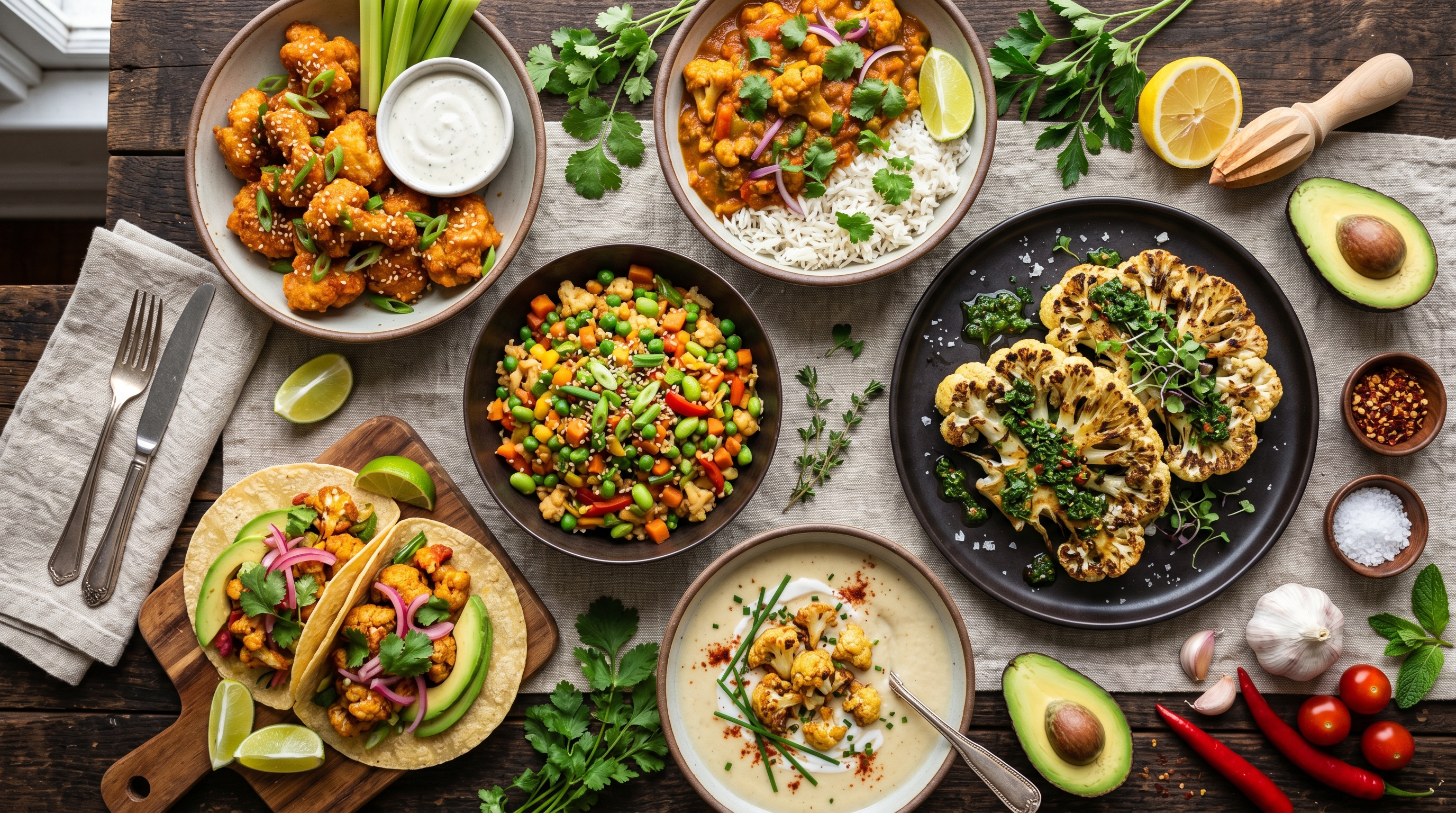
Cauliflower has undergone one of the most remarkable culinary transformations of the past decade. Once dismissed as the bland, uninspiring member of the cruciferous vegetable family — the side dish that arrived pale and limp on plates and was eaten dutifully rather than enthusiastically — cauliflower has emerged as one of the most versatile, most culinarily exciting, and most genuinely satisfying vegetables available to the plant-based cook.
What triggered this transformation was a growing understanding of how profoundly cauliflower’s character changes with different cooking techniques. The pale, slightly sulfurous flavor that gives boiled cauliflower its undeserved reputation disappears completely when cauliflower meets high heat. Roasted at maximum temperature until genuinely caramelized and slightly charred, cauliflower develops a nutty, sweet, slightly smoky depth that bears almost no resemblance to its timid boiled counterpart. Seared in a screaming hot cast-iron pan, a thick cauliflower steak develops a golden, caramelized crust of genuine beauty and bold flavor. Blended into a soup with good stock and aromatics, it becomes extraordinarily silky and rich. Processed into “rice” and stir-fried, it provides the satisfying bulk of grain with a fraction of the carbohydrates.
Beyond its technical versatility, cauliflower possesses a quality of enormous culinary value: its flavor is assertive enough to be interesting but neutral enough to absorb any seasoning, marinade, sauce, or spice blend applied to it. This neutrality-with-character is what makes cauliflower such an extraordinarily versatile base for vegan cooking — it works equally well with the warming spices of Indian cooking, the bold heat of Korean gochujang, the herby freshness of Mediterranean preparations, the smoky depth of barbecue seasoning, and the bright, tangy character of Buffalo sauce.
In this guide, we have compiled 18 of the most delicious, most creative, and most genuinely satisfying vegan cauliflower recipes — spanning crowd-pleasing appetizers, hearty mains, vibrant bowls, warming soups, and clever preparations that prove cauliflower is one of the most exciting primary ingredients in plant-based cooking.
Let’s cook.
Why Cauliflower is the Ultimate Vegan Ingredient
The Nutritional Case for Cauliflower
Cauliflower is one of the most nutritionally impressive vegetables available — a single 100g serving provides approximately 77% of the daily recommended vitamin C, significant amounts of vitamin K, B vitamins (particularly folate and B6), and meaningful amounts of choline (essential for brain and liver function) and fiber. It is also a source of sulforaphane — one of the most studied plant compounds in nutritional science, associated with anti-inflammatory and potential cancer-preventive properties.
At approximately 25 calories per 100g, cauliflower is also one of the most nutrient-dense, lowest-calorie vegetables available — making it particularly valuable as a high-volume, deeply satisfying base for plant-based preparations.
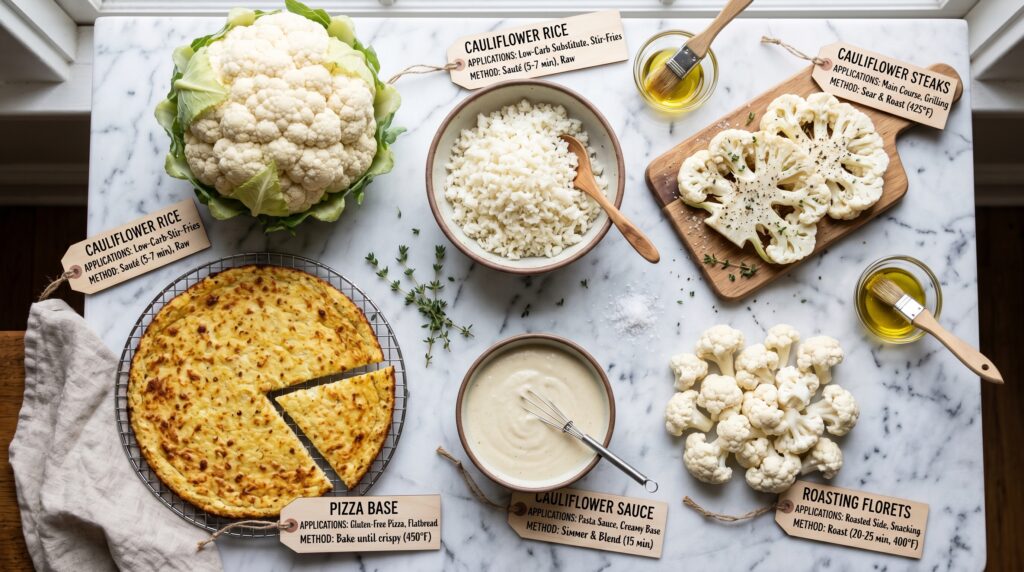
The Five Cauliflower Cooking Transformations
1. High-heat roasting: The single most impactful technique for cauliflower. At 220–230°C (425–450°F), in a single layer with space between florets, cauliflower develops deep caramelization and nutty, slightly sweet complexity. The transformation from pale and flat to golden and complex happens entirely through heat and is the foundation of most great cauliflower cooking.
2. Steaking: Thick cross-sections of the entire head, seared in a hot pan until golden on both sides and finished in the oven. Creates a satisfying, substantial main course preparation.
3. Ricing: Pulsed in a food processor to a coarse, grain-like texture and stir-fried or sautéed. The most versatile cauliflower preparation for bowls, stir fries, and fried rice alternatives.
4. Blending: Cooked until completely soft and blended into soups, sauces, and purées of extraordinary smoothness. Creates preparations of remarkable silkiness that contain no dairy.
5. Marinating and glazing: Raw or lightly cooked cauliflower florets absorb marinades and sauces deeply, creating preparations — Buffalo wings, Korean glazed florets, teriyaki cauliflower — of bold, concentrated flavor.
The Cardinal Rule: Never Crowd the Pan
The most common cauliflower cooking mistake — adding more florets than the pan or tray can accommodate with space between pieces — produces steamed rather than roasted cauliflower. Crowded florets cannot caramelize because the moisture they release during cooking cannot evaporate, causing them to steam in their own liquid and remain pale and flat.
Always roast in batches if necessary, or use the largest tray available.
18 Easy Vegan Cauliflower Recipes
Crowd-Pleasing Appetizers and Snacks
1. Buffalo Cauliflower Wings
Prep time: 15 minutes | Cook time: 30 minutes | Serves: 4
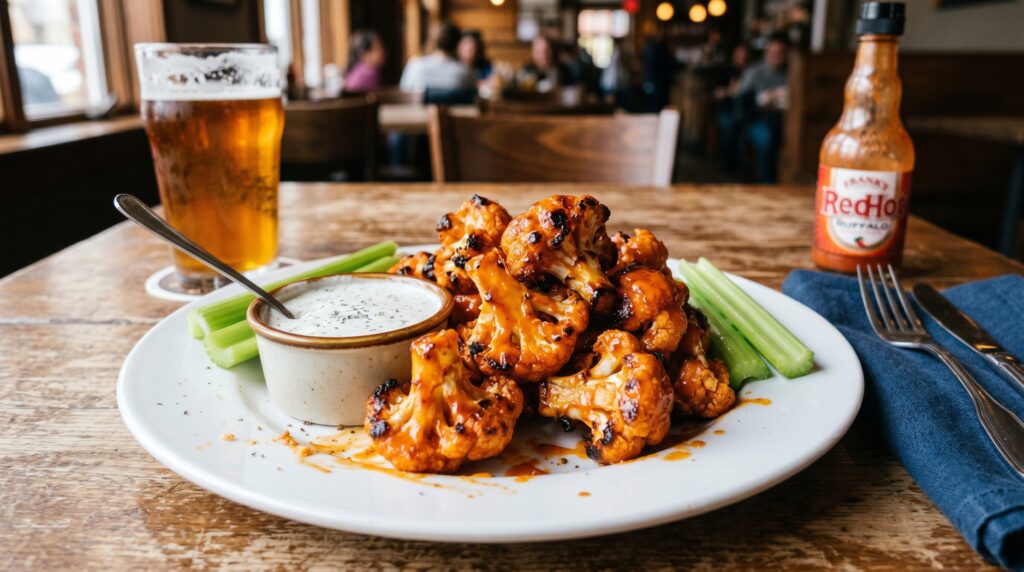
Buffalo cauliflower wings are the vegan appetizer that most consistently impresses both plant-based and non-plant-based diners — the combination of the crispy, battered cauliflower and the bold, tangy, buttery Buffalo sauce creates a preparation of genuine flavor excitement that requires no animal product to achieve.
Key ingredients: Cauliflower (1 large head, broken into large florets). Batter: plain flour (120g — or rice flour for gluten-free), plant-based milk (180ml), garlic powder (1 tsp), smoked paprika (1 tsp), sea salt, cracked black pepper. Buffalo sauce: hot sauce (Frank’s RedHot or similar — 80ml), vegan butter (60g, melted), garlic powder (½ tsp), a pinch of cayenne. Vegan ranch: cashew cream or vegan mayonnaise, fresh dill, garlic, lemon juice, apple cider vinegar, sea salt
Method: Make the batter — whisk flour, plant-based milk, and spices until smooth. Dip each floret in the batter, allowing excess to drip off. Place on a lined baking tray with space between each. Bake at 220°C (425°F) for 20 minutes until golden and slightly crispy. Meanwhile, whisk together the Buffalo sauce ingredients. Remove the cauliflower and toss in the Buffalo sauce — ensuring every piece is fully coated. Return to the oven for 8–10 more minutes until the sauce is slightly caramelized and the edges are beginning to char.
The double-bake technique: The two-stage cooking — first baking the battered florets to set the crust, then baking again with the sauce applied — creates a preparation where the crust remains crispy underneath the sauce rather than becoming soggy. This technique is what separates a genuinely good Buffalo cauliflower from a disappointing one.
What makes it special: The Buffalo sauce’s combination of hot sauce and vegan butter creates a sauce that is simultaneously sharp, slightly creamy, and deeply savory — coating the crispy cauliflower in a glossy, vibrantly colored glaze of genuine flavor impact.
2. Cauliflower Bites with Sweet Chili Sauce
Prep time: 15 minutes | Cook time: 20 minutes | Serves: 4
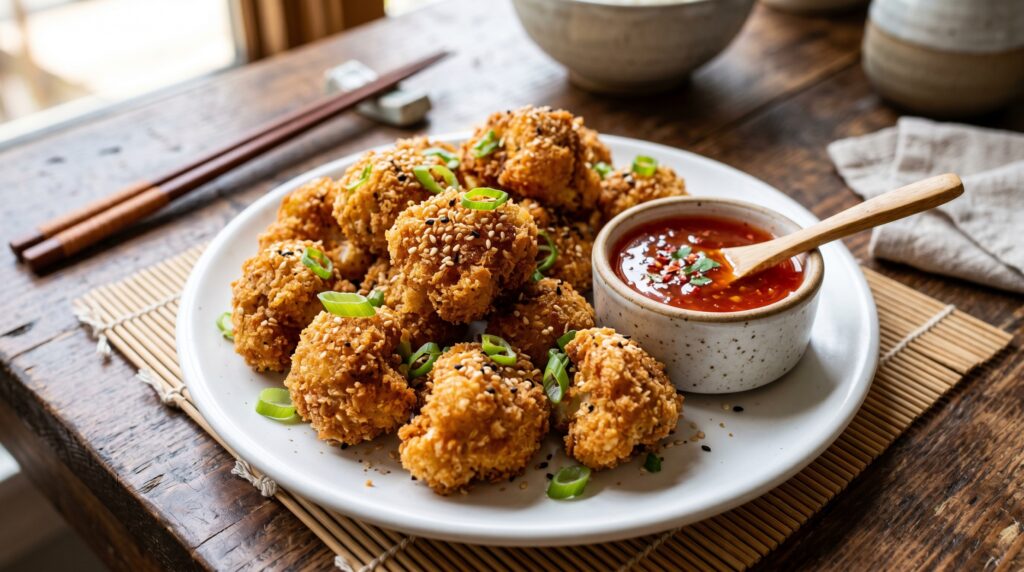
Crispy cauliflower bites with sweet chili sauce are the most universally appealing vegan appetizer — the light, crispy panko coating and the sweet, slightly spicy dipping sauce create a combination of texture and flavor that works beautifully at any gathering.
Key ingredients: Cauliflower (1 medium head, broken into small florets). Light batter: rice flour or plain flour (100g), cornstarch (2 tbsp), baking powder (1 tsp), sparkling water (150ml — the carbonation creates a lighter batter), sea salt. Panko coating: panko breadcrumbs (100g), smoked paprika (1 tsp), garlic powder (½ tsp), sea salt. Sweet chili sauce: store-bought or homemade (fresh chili, rice vinegar, sugar, garlic, cornstarch — simmered until slightly thickened)
Method: Make the batter — whisk flour, cornstarch, baking powder, sparkling water, and salt. Dip each floret in batter, then roll in panko. Place on an oiled baking tray. Bake at 230°C (450°F) for 18–20 minutes, turning once, until deeply golden and crispy.
The sparkling water technique: Using sparkling water rather than still water in the batter creates a lighter, crispier coating — the CO2 bubbles in the batter produce tiny air pockets that expand during baking, creating a coating with more texture and crispness than a still-water batter.
What makes it special: The panko breadcrumb coating applied over the batter creates a two-layer crust — the inner batter provides flavor and anchors the crumbs, while the outer panko layer provides the maximum crispness.
3. Cauliflower Hummus
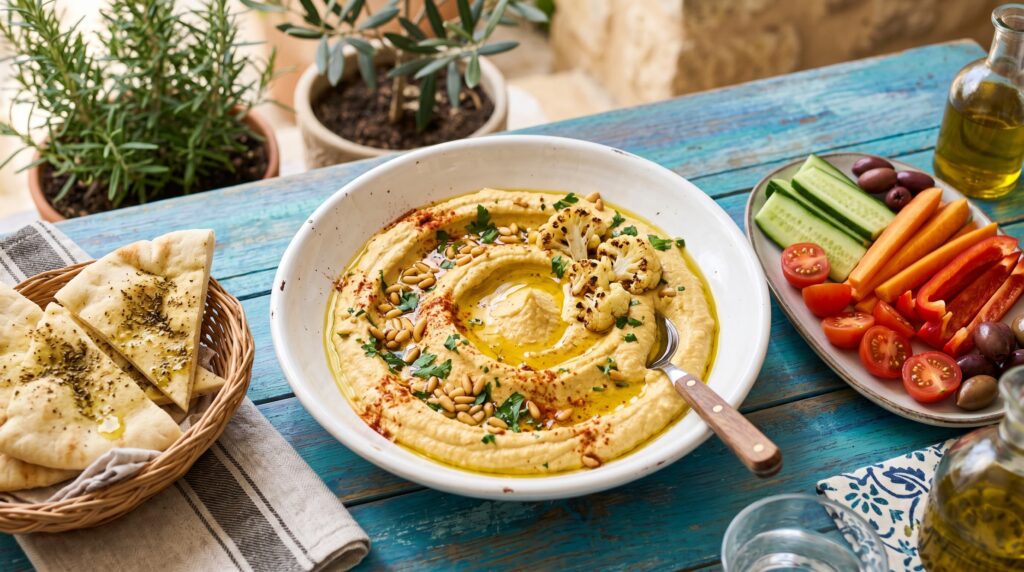
Prep time: 10 minutes | Cook time: 25 minutes | Serves: 6
Roasted cauliflower hummus replaces a portion of the chickpeas in conventional hummus with roasted cauliflower — creating a dip with more complex flavor, a silkier texture, and a slightly nutty, smoky depth from the roasted cauliflower that makes it genuinely more interesting than plain chickpea hummus.
Key ingredients: Cauliflower (½ head — roasted at 220°C until deeply golden and slightly charred), canned chickpeas (1 tin, drained), tahini (3 tbsp), fresh lemon juice (3 tbsp), garlic (2 cloves), ice water (2–3 tbsp — for blending to smoothness), extra virgin olive oil (3 tbsp + extra for serving), cumin (½ tsp), sea salt. Garnish: smoked paprika, roasted pine nuts, fresh parsley, olive oil
The ice water technique: Adding ice water to hummus during blending — not warm water — produces a significantly smoother, lighter, more aerated result. The cold temperature also firms the tahini slightly, creating a more stable emulsion.
What makes it special: The deeply roasted cauliflower adds a smoky, sweet-bitter complexity that transforms the hummus from a simply creamy dip into something with genuine, layered flavor. The charred edges of the cauliflower contribute a slight bitterness that prevents the hummus from being one-dimensionally mild.
Bold and Spiced Mains
4. Cauliflower Tikka Masala
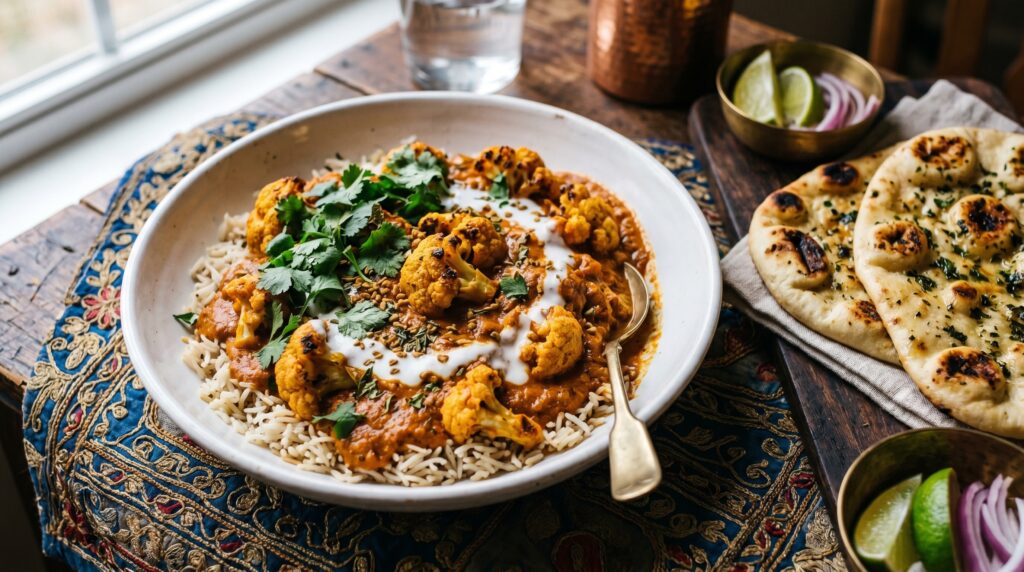
Prep time: 20 minutes | Cook time: 30 minutes | Serves: 4
Vegan cauliflower tikka masala achieves the rich, aromatic depth of the beloved Indian-restaurant classic using cauliflower as the primary protein-like ingredient and coconut cream in place of dairy — creating a preparation that is genuinely, deeply satisfying and completely plant-based.
Key ingredients: Cauliflower (1 large head, broken into large florets — roasted at 220°C for 20 minutes with oil and tikka spices until golden before adding to the sauce). Tikka masala sauce: canned crushed tomatoes (400ml), full-fat coconut cream (200ml), onion, garlic, fresh ginger, cumin, coriander, turmeric, garam masala, smoked paprika, tomato paste (2 tbsp), coconut oil, kasuri methi (dried fenugreek — essential), sea salt, fresh cilantro
The pre-roasting step: Roasting the cauliflower florets with tikka spices and oil before adding them to the sauce creates florets with caramelized edges and concentrated flavor that raw cauliflower added directly to the sauce cannot achieve. These additional 20 minutes produce a dramatically more satisfying result.
What makes it special: The kasuri methi — dried fenugreek leaves, crushed between the palms immediately before adding — is the ingredient that makes this taste unmistakably like tikka masala rather than simply a spiced tomato sauce. It is irreplaceable.
5. Korean Gochujang Cauliflower
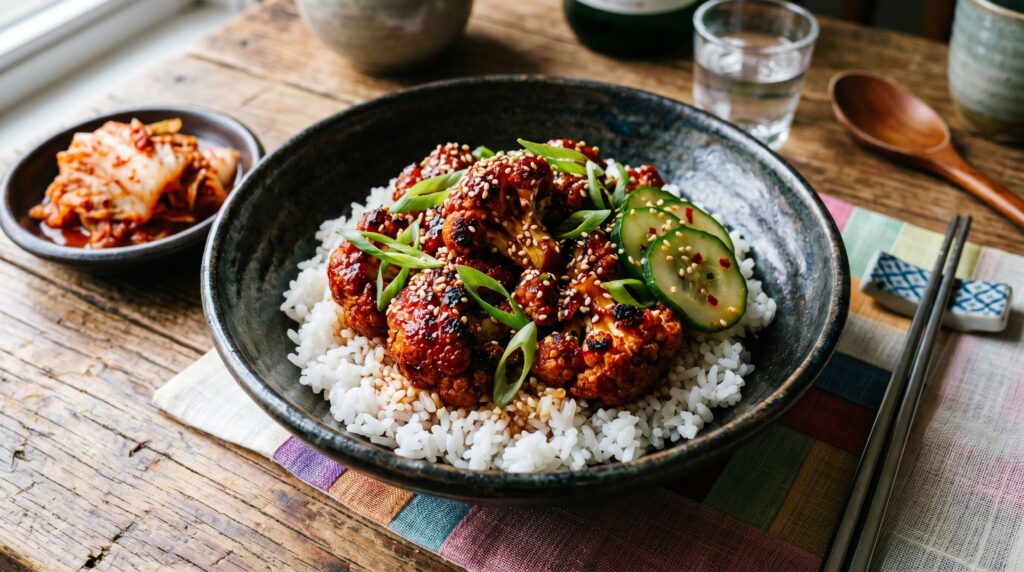
Prep time: 15 minutes | Cook time: 25 minutes | Serves: 4
Korean gochujang cauliflower delivers one of the boldest, most complex flavor profiles in this collection — the fermented, sweet-spicy-smoky gochujang glaze caramelized over roasted cauliflower creates a preparation of extraordinary depth and visual beauty.
Key ingredients: Cauliflower (1 large head, broken into florets). Gochujang glaze: gochujang paste (3 tbsp), soy sauce (2 tbsp), rice vinegar (1 tbsp), sesame oil (1 tbsp), garlic (2 cloves, grated), fresh ginger (1 tsp, grated), coconut sugar or maple syrup (1 tbsp), sesame seeds. Serve over steamed rice with kimchi, pickled cucumber, and sliced green onion
Method: Toss cauliflower florets in a little oil, salt, and a tablespoon of the gochujang glaze. Roast at 220°C for 20 minutes until golden and caramelized. Remove and toss in the remaining glaze. Return to the oven for 5 minutes until the glaze caramelizes and sticks.
What makes it special: Gochujang’s fermented depth — its complex, slightly sweet, smoky, and building heat — creates a sauce with a character that simple chili cannot replicate. Combined with the sesame oil and rice vinegar’s brightness, it produces a glaze of genuine complexity.
6. Cauliflower Shawarma Wraps
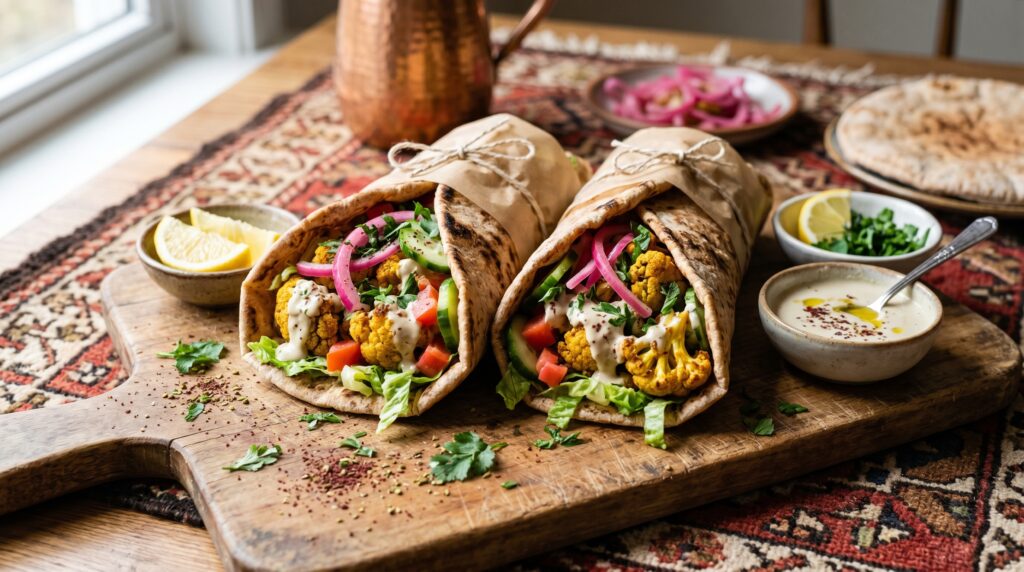
Prep time: 20 minutes | Cook time: 25 minutes | Serves: 4
Cauliflower shawarma wraps are the most satisfying, most complete vegan wrap in this collection — the warmly spiced, caramelized cauliflower with its authentic shawarma seasoning and fresh vegetable accompaniments creates a wrap of genuine substance and bold Middle Eastern flavor.
Key ingredients: Cauliflower (1 large head, broken into florets), shawarma spice blend (cumin 2 tsp, coriander 1 tsp, turmeric 1 tsp, smoked paprika 1 tsp, cinnamon ½ tsp, cardamom ½ tsp, garlic powder 1 tsp, sea salt), olive oil. Wraps: flatbreads (vegan). Fillings: shredded lettuce, diced tomato, pickled red onion, sliced cucumber, fresh parsley and cilantro. Tahini sauce: tahini, lemon juice, garlic, warm water, cumin, sea salt
What makes it special: The shawarma spice blend — particularly the combination of cumin, coriander, cinnamon, and cardamom — creates a warm, aromatic complexity that makes this wrap taste genuinely exotic and deeply satisfying rather than simply “spiced vegetables in a wrap.”
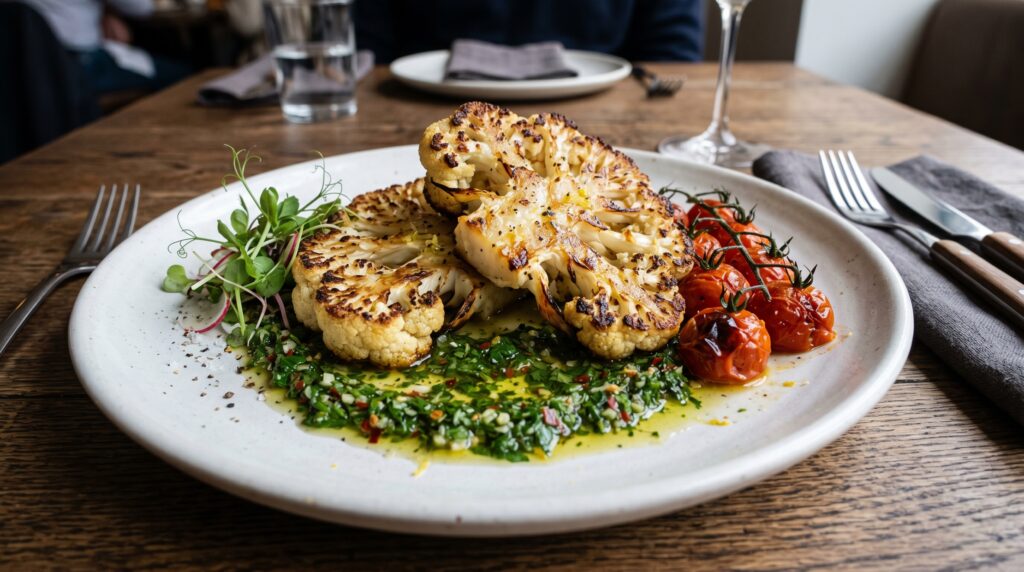
7. Cauliflower Steaks with Chimichurri
Prep time: 10 minutes | Cook time: 20 minutes | Serves: 4
Cauliflower steaks with chimichurri is the most visually impressive, most genuinely restaurant-quality preparation in this collection — thick cross-sections of cauliflower seared until deeply golden and slightly caramelized, then served over vibrant, herbaceous chimichurri, creates a vegan main course of genuine drama and bold flavor.
Key ingredients: Cauliflower (2 large heads — cut into 2cm thick steaks from the center; the outer florets can be roasted for another preparation), olive oil, smoked paprika, garlic powder, sea salt, cracked black pepper. Chimichurri: fresh flat-leaf parsley (generous bunch), fresh oregano, garlic (4 cloves), red wine vinegar (3 tbsp), red chili flakes, extra virgin olive oil (100ml), sea salt
Steak technique: Brush both sides of each steak generously with seasoned olive oil. Sear in a very hot, oven-safe cast-iron pan for 3 minutes per side until deeply golden. Transfer the pan to a 200°C (400°F) oven for 10 minutes until the steak is completely tender when pierced with a knife.
What makes it special: The cast iron sear creates a Maillard-reaction crust of genuine depth and visual beauty on the cauliflower — the golden, caramelized surface bears almost no resemblance to oven-roasted cauliflower and creates a main course that looks and tastes genuinely substantial.
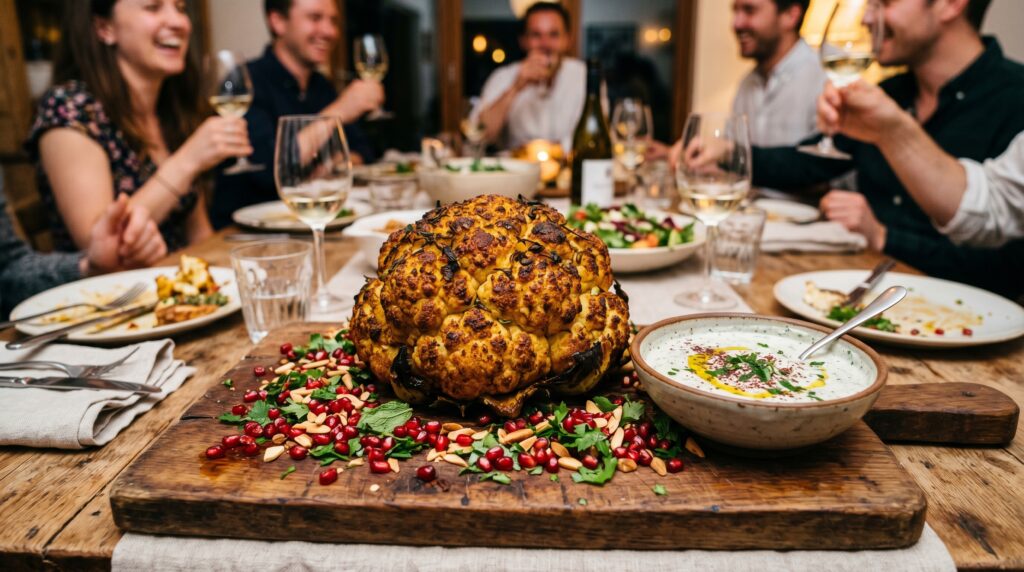
8. Whole Roasted Cauliflower (Showstopper)
Prep time: 15 minutes | Cook time: 1 hour | Serves: 4–6
Whole roasted cauliflower is the most dramatic, most conversation-starting vegan main course available — a whole head roasted until deeply caramelized creates an immediate impression of genuine occasion-worthiness that makes it a genuinely impressive dinner party centerpiece.
Key ingredients: Whole cauliflower (1 very large head, leaves trimmed, base trimmed so it sits flat), olive oil (generous — 4 tbsp), spice rub (smoked paprika, cumin, coriander, garlic powder, turmeric, cinnamon, sea salt), vegetable stock (200ml — poured into the roasting dish base). Vegan tahini sauce: tahini, lemon juice, garlic, maple syrup (small amount), warm water. Garnish: pomegranate seeds, toasted almonds, fresh cilantro, extra olive oil
Method: Rub the entire cauliflower generously with the oil and spice mixture — massaging it into every crevice. Place in a deep roasting dish. Pour stock into the base. Roast at 200°C (400°F) for 50–60 minutes, basting with the pan juices every 20 minutes, until deeply golden, tender throughout, and the outer surface is slightly charred.
What makes it special: The slow, whole roasting — the cauliflower steam-cooking in the stock at its base while caramelizing from the dry oven heat from above — creates both a deeply caramelized exterior and a completely tender, slightly soft interior that makes it possible to carve the cauliflower like a roast.
Warming Soups and Stews
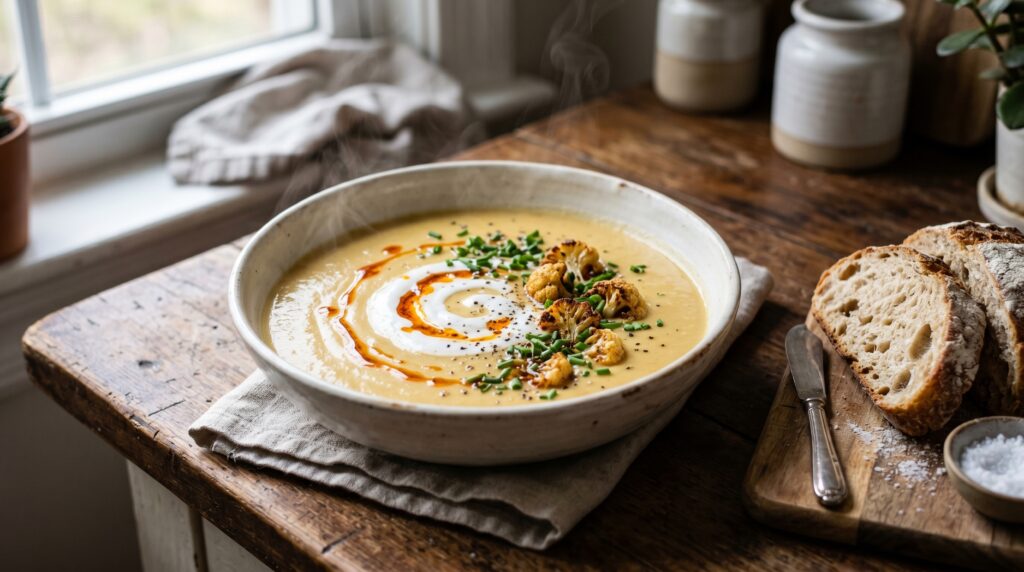
9. Creamy Roasted Cauliflower Soup
Prep time: 15 minutes | Cook time: 35 minutes | Serves: 4
Creamy roasted cauliflower soup is the most deeply flavored, most luxuriously textured vegan soup in this collection — roasting the cauliflower before blending creates a soup of complex, nutty, caramelized depth that plain boiled cauliflower soup cannot approach.
Key ingredients: Cauliflower (1 large head, broken into florets — roasted at 220°C with olive oil until deeply golden and slightly charred), onion, garlic (whole head roasted alongside), vegetable stock (800ml — certified gluten-free if needed), full-fat coconut cream (100ml — for richness without dairy), fresh thyme, sea salt, white pepper. Finish: coconut cream swirl, chili oil, fresh chives, flaky sea salt
The roasted garlic: Roasting a whole head of garlic alongside the cauliflower — sliced top exposed, drizzled with oil — creates sweet, caramelized garlic paste that is added to the soup during blending. The transformation from sharp raw garlic to sweet, complex roasted garlic is one of the most impactful flavor improvements in soup making.
What makes it special: Blending the deeply roasted cauliflower creates a soup with a naturally golden color and a nutty, slightly smoky depth that is completely absent from pale, boiled cauliflower soup. The roasting step is non-negotiable for a genuinely excellent result.
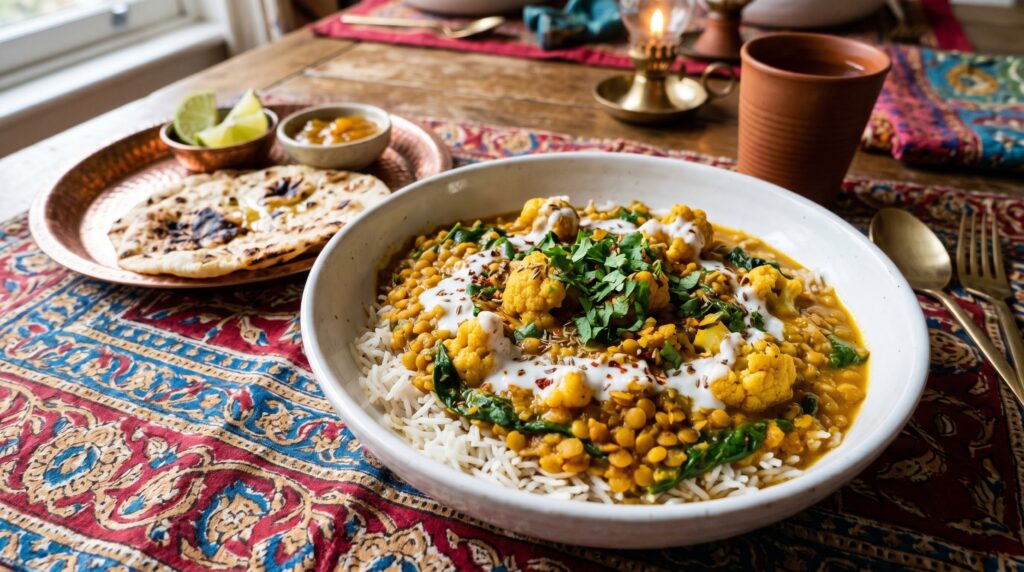
10. Cauliflower and Lentil Curry
Prep time: 15 minutes | Cook time: 30 minutes | Serves: 4
Cauliflower and lentil curry is the most protein-rich, most nutritionally complete vegan cauliflower preparation in this collection — the combination of cauliflower and red lentils (which dissolve partially during cooking to thicken the curry naturally) creates a dish of genuine substance and deeply satisfying flavor.
Key ingredients: Cauliflower (1 head, broken into florets), red lentils (150g), full-fat coconut milk (400ml), canned crushed tomatoes (200ml), onion, garlic, fresh ginger, cumin, coriander, turmeric, garam masala, smoked paprika, mustard seeds (for tempering), baby spinach (added last 2 minutes), lemon juice, fresh cilantro, coconut oil, sea salt
What makes it special: The red lentils — dissolving partially into the curry sauce during simmering — create a natural thickening of extraordinary silkiness that makes this curry feel deeply rich and satisfying without any cream or additional fat.
11. Cauliflower and Chickpea Stew
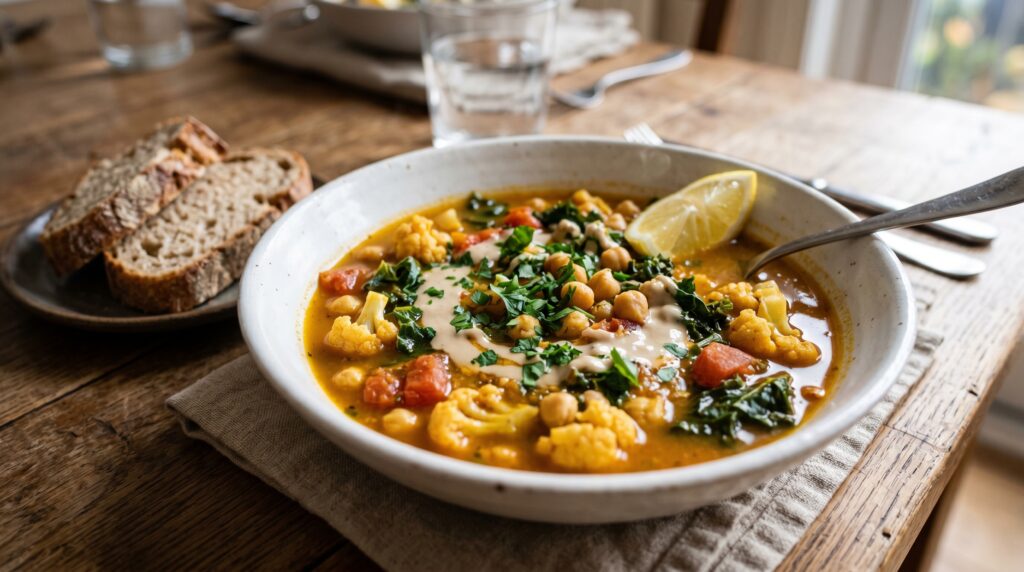
Prep time: 15 minutes | Cook time: 25 minutes | Serves: 4
Cauliflower and chickpea stew is the most practically nourishing, most economical vegan cauliflower preparation — the protein-rich chickpeas combined with the substantial cauliflower and a warmly spiced tomato broth create a genuinely filling, complete meal.
Key ingredients: Cauliflower (1 head, florets), canned chickpeas (2 tins, drained), canned crushed tomatoes (400ml), vegetable stock (300ml), onion, garlic, cumin (2 tsp), smoked paprika (1 tsp), coriander (1 tsp), turmeric (½ tsp), kale (100g, roughly chopped), fresh lemon juice, fresh parsley, tahini (2 tbsp — swirled in at the end for richness), olive oil, sea salt
What makes it special: The tahini swirled into the stew in the final moment — off the heat — adds a nutty, slightly bitter richness of remarkable depth that transforms a good vegetable stew into something genuinely complex and satisfying.
Cauliflower Rice and Bowl Preparations
12. Cauliflower Fried Rice
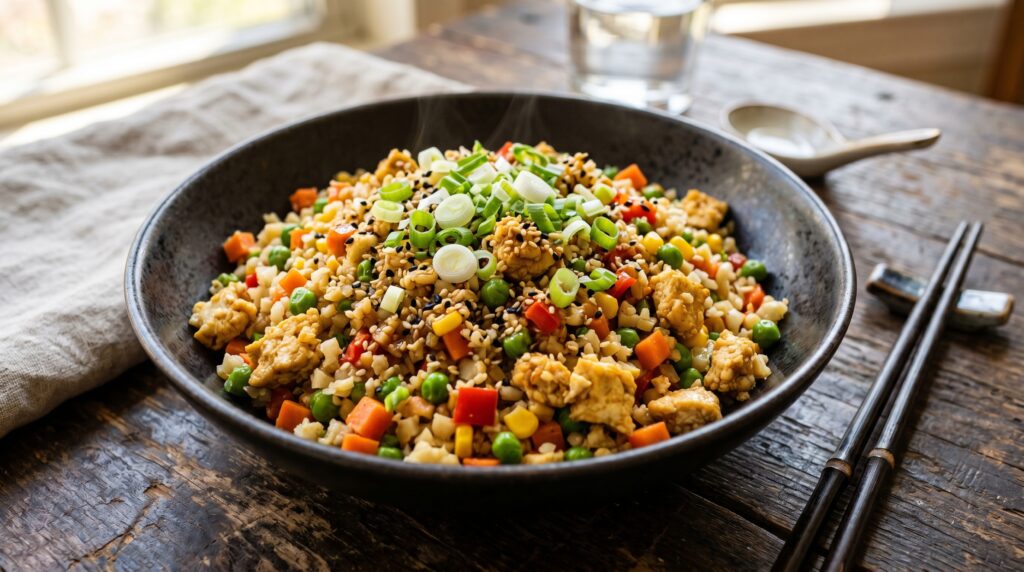
Prep time: 15 minutes | Cook time: 10 minutes | Serves: 4
Vegan cauliflower fried rice is the most versatile, most practical cauliflower rice preparation — the cauliflower’s neutral starchy character absorbs the tamari and sesame seasoning beautifully, creating a preparation that is simultaneously lighter than conventional fried rice and genuinely satisfying in flavor and texture.
Key ingredients: Cauliflower rice (1 large head, processed into rice-sized pieces — approximately 800g), scrambled tofu (firm tofu crumbled and cooked with turmeric and tamari for color and flavor, as an egg substitute), frozen peas and corn, carrot (finely diced), bell pepper (diced), garlic, fresh ginger, green onion. Sauce: tamari (3 tbsp), sesame oil (1 tsp — finishing only), rice vinegar (1 tbsp), a touch of maple syrup
Making cauliflower rice: Pulse cauliflower florets in a food processor 8–10 times until they reach the texture of coarse rice grains. Do not over-process — cauliflower mush is the result of too much processing.
The high-heat imperative: Cauliflower rice must be cooked over the highest possible heat in an uncrowded pan or wok. Any crowding causes the cauliflower to steam and release moisture, creating wet, clumping cauliflower rather than separated, slightly caramelized grains.
What makes it special: Cooking the scrambled tofu separately — with turmeric for golden color and tamari for flavor — and folding it through at the end creates the visual impression of scrambled egg fried rice while providing meaningful protein and a satisfying texture.
13. Mediterranean Cauliflower Bowl
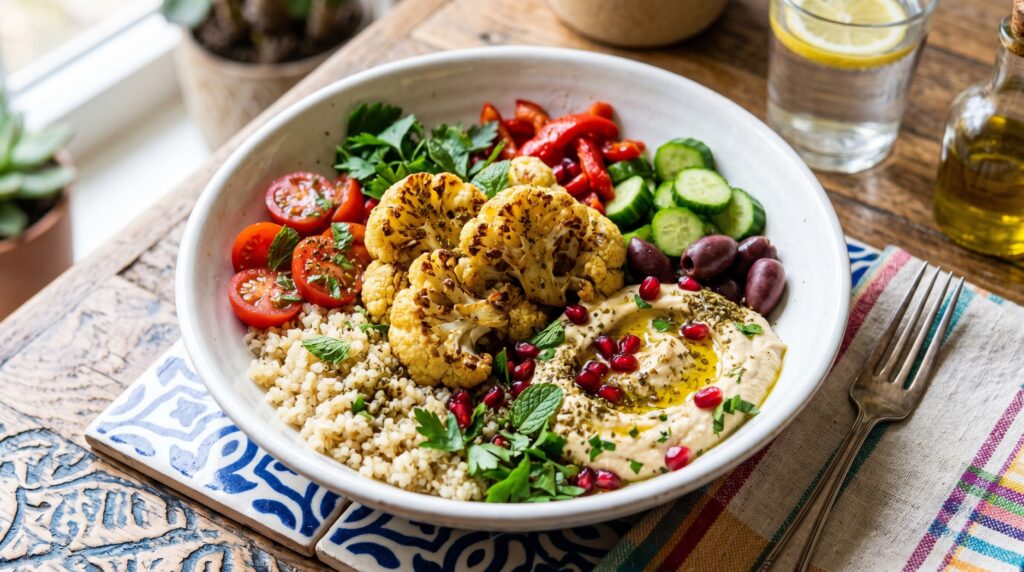
Prep time: 20 minutes | Cook time: 25 minutes | Serves: 4
Mediterranean cauliflower bowl is the most colorful, most vibrant, and most nutritionally complete bowl in this collection — roasted spiced cauliflower over quinoa with a generous spread of fresh Mediterranean ingredients and a bright lemon-herb dressing creates a preparation of extraordinary freshness and genuine satisfaction.
Key ingredients: Cauliflower (1 head, roasted with za’atar and olive oil), cooked quinoa (200g), Kalamata olives, roasted red pepper (from jar), cherry tomatoes, sliced cucumber, fresh parsley, fresh mint, hummus (vegan), pomegranate seeds. Lemon-herb dressing: olive oil, lemon juice, garlic, Dijon (vegan), fresh herbs, sea salt
What makes it special: The combination of the warm, za’atar-roasted cauliflower with the cool, fresh vegetables and the creamy hummus creates a bowl with multiple temperature contrasts and textures in every forkful — the combination that makes a bowl genuinely exciting rather than monotonous.
14. Cauliflower Taco Bowl with Mango Salsa
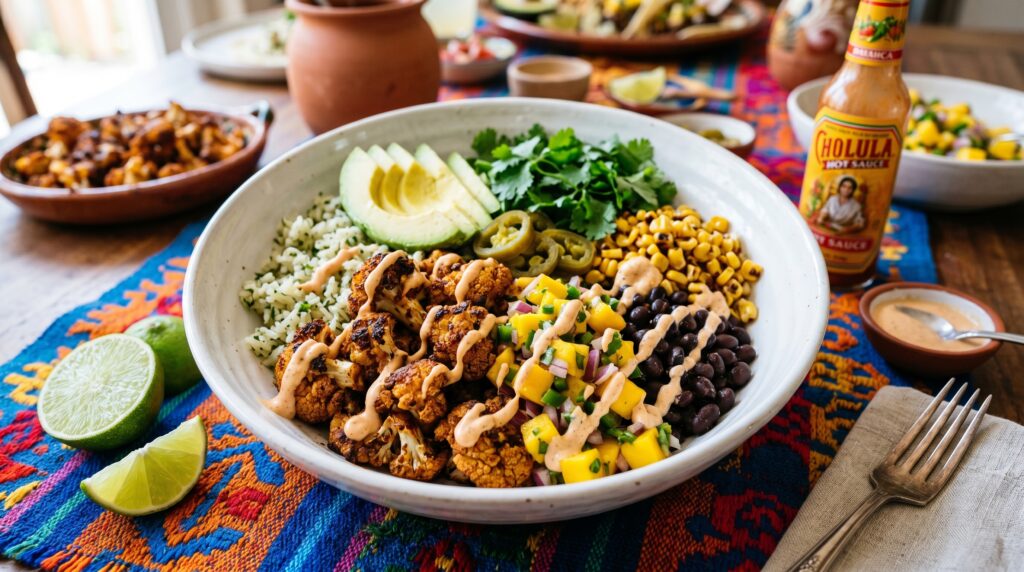
Prep time: 20 minutes | Cook time: 25 minutes | Serves: 4
Cauliflower taco bowl with mango salsa is the most vibrant, most tropical, and most immediately appealing vegan cauliflower bowl — the combination of the chili-lime roasted cauliflower, the sweet mango salsa, and the chipotle cashew cream creates a bowl of extraordinary color and bold, exciting flavor.
Key ingredients: Cauliflower (1 head, roasted with chili powder, cumin, lime juice, and olive oil), cilantro-lime rice, canned black beans (warmed with cumin and smoked paprika), roasted corn. Mango salsa: ripe mango, red onion, fresh jalapeño, cilantro, lime juice, sea salt. Chipotle cashew cream: soaked cashews, chipotle in adobo, lime juice, garlic, water — blended smooth
What makes it special: The Chipotle cashew cream — blended from soaked raw cashews — creates a completely dairy-free, genuinely creamy sauce with a smoky, slightly spicy character. Soaked cashews blended smooth produce one of the most convincingly creamy vegan sauces available.
Creative and International Cauliflower Dishes
15. Cauliflower Tacos
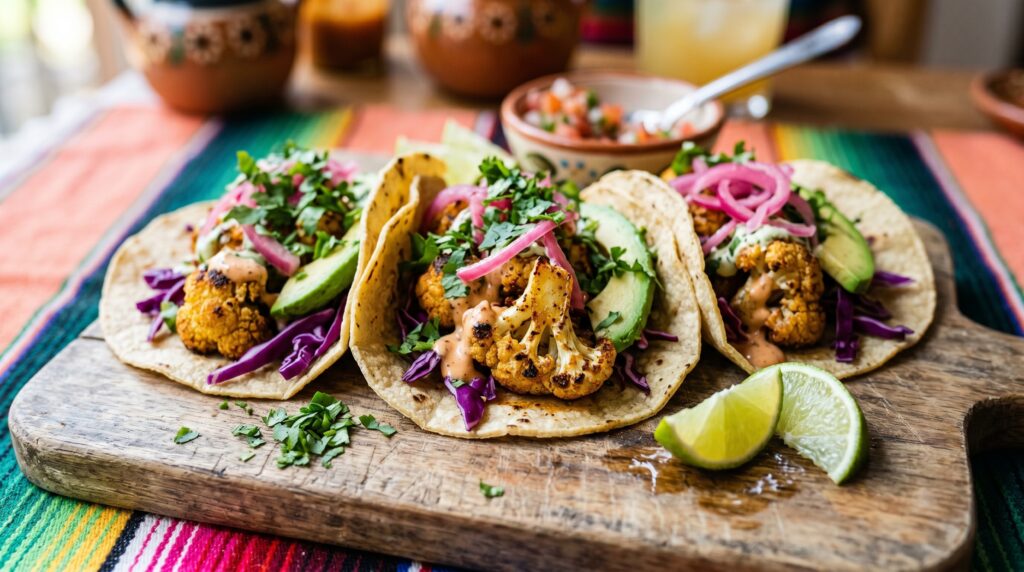
Prep time: 15 minutes | Cook time: 25 minutes | Serves: 4
Cauliflower tacos are the most interactive, most immediately crowd-pleasing vegan cauliflower preparation — the crispy, smoky cauliflower in corn tortillas with crunchy cabbage, creamy avocado, and bright pickled onion creates tacos of genuine flavor and satisfying texture.
Key ingredients: Cauliflower (1 head, broken into small florets — roasted with chipotle powder, cumin, smoked paprika, olive oil, sea salt), corn tortillas (warmed), shredded red cabbage, ripe avocado (sliced), pickled red onion, fresh cilantro, lime. Chipotle sauce: chipotle in adobo (2 tbsp), vegan mayonnaise (4 tbsp), lime juice, garlic, sea salt — blended smooth
What makes it special: The chipotle sauce — smoky, slightly spicy, creamy — provides the essential richness and bold flavor that makes these tacos feel genuinely satisfying. Roasting the cauliflower with chipotle powder creates florets with a slightly charred, smoky exterior that makes every taco filling immediately compelling.
16. Cauliflower Tikka Skewers
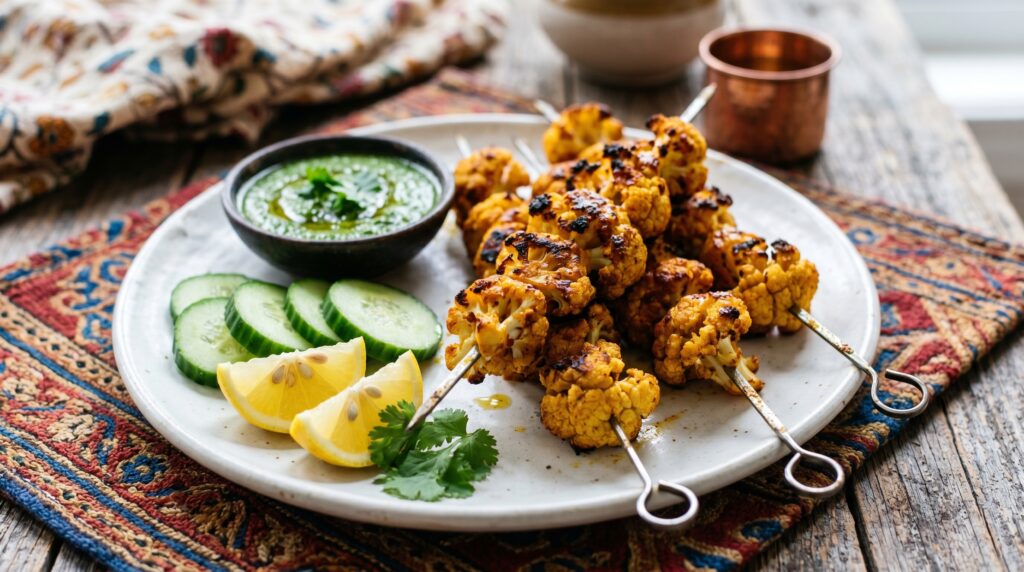
Prep time: 20 minutes + 1 hour marinating | Cook time: 15 minutes | Serves: 4
Cauliflower tikka skewers are the most elegant, most suitable-for-entertaining vegan cauliflower preparation — marinated in a classic tikka spice and yogurt-style mixture, skewered, and grilled or oven-baked until charred and fragrant, they create a genuinely impressive appetizer or light main course.
Key ingredients: Cauliflower (1 large head, broken into large florets). Tikka marinade: coconut yogurt or plain vegan yogurt (200ml), tikka spice blend (cumin, coriander, turmeric, garam masala, smoked paprika, cayenne), garlic (minced), fresh ginger (grated), lemon juice, sea salt — combined and used to marinate the florets for 1 hour minimum. Mint chutney: fresh mint, fresh cilantro, green chili, garlic, lime juice, a little water — blended
The charring: Whether grilling or oven-roasting, the tikka skewers must be taken to a high temperature to develop the characteristic char of tikka cooking. The slightly blackened edges are not over-cooking — they are the flavor.
What makes it special: The vegan yogurt marinade — particularly with its acidity from the lemon juice — tenderizes the cauliflower surface during the marinating time and helps the spice crust caramelize beautifully during cooking.
17. Aloo Gobi (Spiced Cauliflower and Potato)
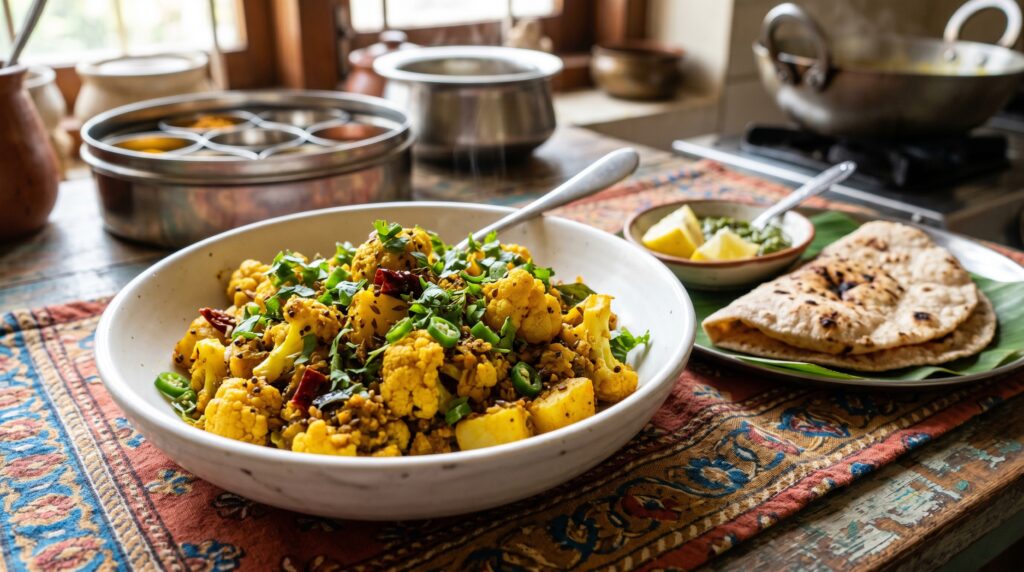
Prep time: 15 minutes | Cook time: 25 minutes | Serves: 4
Aloo gobi — the classic Indian preparation of spiced cauliflower and potato — is one of the most genuinely excellent, most naturally vegan Indian dishes. The combination of the earthy potato and the nutty cauliflower with fragrant whole spices creates a dry curry of extraordinary aroma and satisfying, warming character.
Key ingredients: Cauliflower (1 head, broken into florets), waxy potatoes (400g, cubed), mustard seeds (1 tsp), cumin seeds (1 tsp), garlic (3 cloves, minced), fresh ginger (2cm, grated), turmeric (1 tsp), coriander powder (1 tsp), garam masala (1 tsp), fresh tomato (2, diced), fresh green chili (to heat preference), fresh cilantro, coconut oil, sea salt
Dry curry technique: Aloo gobi is a “dry” curry — the vegetables are cooked without adding liquid, relying on the moisture released from the tomatoes and the fat to create a preparation where the vegetables are distinct rather than sauced. The cauliflower and potato must develop slight caramelization in the pan.
What makes it special: The mustard and cumin seed tempering — frying the whole seeds in hot oil until they pop — creates the flavor foundation of this dish. The popped seeds release their essential oils into the fat and distribute their warmth and complexity throughout every element of the preparation.
18. Cauliflower Pizza Base
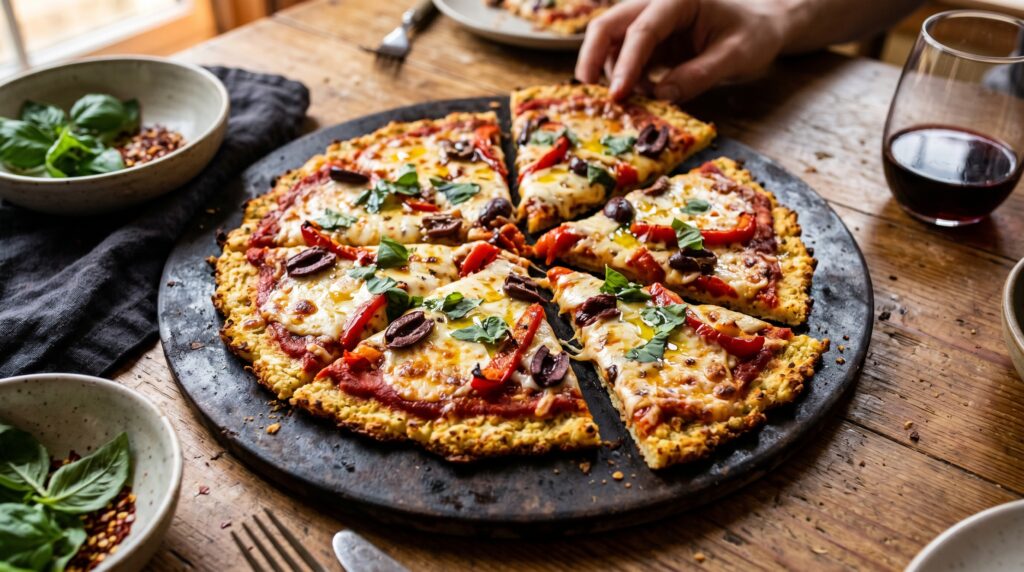
Prep time: 30 minutes | Cook time: 30 minutes | Serves: 2–4
Cauliflower pizza base is the most creative, most genuinely clever cauliflower preparation in this collection — a crispy, golden pizza base made entirely from cauliflower, aquafaba (chickpea brine), and almond flour provides a vegan, gluten-free pizza of surprising quality and real satisfaction.
Key ingredients: Cauliflower (1 large head, riced and then microwaved for 5 minutes to drive out moisture — then squeezed completely dry through a kitchen cloth), aquafaba (3 tbsp — the brine from a can of chickpeas, acts as an egg substitute for binding), almond flour (50g), nutritional yeast (2 tbsp — for savory, cheesy depth), garlic powder (½ tsp), dried oregano (½ tsp), sea salt. Toppings: vegan tomato sauce, vegan mozzarella-style cheese, roasted vegetables, olives, fresh basil
The moisture removal: The single most important step in cauliflower pizza base making — removing as much moisture as possible from the riced and pre-cooked cauliflower. Any remaining moisture prevents the base from crisping and causes it to be soft and difficult to handle. The kitchen cloth must be squeezed thoroughly — squeeze until the cloth runs nearly dry.
What makes it special: Aquafaba — the liquid from canned chickpeas — behaves remarkably similarly to egg white when used as a binder, providing the cohesion that holds the cauliflower base together during baking. This completely vegan ingredient substitution produces a base of genuine quality.
Cauliflower Cooking Method Guide
| Method | Temperature | Time | Best For | Key Technique |
|---|---|---|---|---|
| High-heat roasting | 220–230°C | 20–25 mins | Wings, tikka, bowls, steaks | Single layer, don’t crowd |
| Whole roasting | 200°C | 50–60 mins | Whole roasted centerpiece | Baste every 20 minutes |
| Searing (steak) | High heat stovetop + oven | 3 mins each side + 10 mins oven | Cauliflower steaks | Cast iron pan |
| Blending (soup) | Simmering | 20–25 mins | Creamy soups, sauces | Roast first for depth |
| Ricing + stir fry | High heat | 8–10 mins | Fried rice, bowls | Dry cauliflower, hot pan |
| Baking (pizza) | 220°C | 25–30 mins | Pizza base | Remove all moisture first |
| Simmering (curry) | Medium heat | 15–20 mins | Curries, stews | Add pre-roasted for best results |
Make-Ahead and Meal Prep Guide
Cauliflower rice: Process and refrigerate raw for up to 3 days. Cook fresh — it takes only 8 minutes.
Roasted cauliflower florets: Roast a large batch on Sunday. Use throughout the week in bowls, wraps, soups, and tacos — reheat in a 200°C oven for 5 minutes to restore crispness.
Cauliflower steaks: Sear and refrigerate for up to 3 days. Reheat in a hot pan or oven.
Sauces and dressings: Chimichurri (1 week), tahini sauce (1 week), gochujang glaze (2 weeks), tikka marinade (5 days), chipotle cashew cream (5 days) — all keep refrigerated.
Buffalo and gochujang cauliflower: Best made fresh and served immediately — the crust softens during storage.
For comprehensive food safety guidance on storing all vegan cauliflower preparations, our Food Safety 101: Storage, Handling, and Temperature Guide is essential reading.
Frequently Asked Questions
How do I get cauliflower genuinely crispy?
Three essential conditions: maximum oven temperature (220–230°C minimum), completely dry cauliflower (pat dry with kitchen paper before seasoning), and adequate space between florets (never crowded). If any of these three conditions is not met, the cauliflower will steam rather than roast and will never achieve genuine crispness.
Is cauliflower rice genuinely satisfying as a rice substitute?
Cauliflower rice is most satisfying when it is not trying to be exactly like rice — it has a different texture (slightly more tender, less chewy) and a subtle cauliflower flavor that is present rather than invisible. Treated as its own ingredient rather than a direct substitute, and cooked over high heat with bold seasonings, it is genuinely excellent. For those who want grain, mixing half cauliflower rice and half regular rice creates a preparation that reduces carbohydrates while maintaining a familiar texture.
Can I freeze cauliflower for these recipes?
Frozen cauliflower florets work well in cooked preparations — soups, curries, and stews where texture is less critical. For roasting, fresh cauliflower produces significantly better caramelization than frozen (which releases too much moisture). Cauliflower rice made from fresh cauliflower and then frozen works well.
What is nutritional yeast, and can I omit it?
Nutritional yeast is a deactivated yeast sold as flakes or powder with a savory, slightly cheesy, umami flavor. It is widely available in health food stores and supermarkets. In recipes like the cauliflower pizza base, it adds savory depth — it can be omitted, but the flavor will be slightly less complex. It is completely different from baking yeast and cannot be substituted with it.
According to Healthline, cauliflower belongs to the cruciferous vegetable family alongside broccoli, Brussels sprouts, and kale — vegetables consistently associated in nutritional research with reduced inflammation, improved gut health, and a reduced risk of several chronic diseases. The sulforaphane compound found in cauliflower is one of the most extensively studied plant compounds in nutritional science, with emerging research suggesting significant anti-inflammatory and potentially anti-cancer properties.
Conclusion
From the bold, crowd-pleasing excitement of Buffalo cauliflower wings to the elegant drama of a whole roasted cauliflower centerpiece, from the warming depth of a tikka masala to the vibrant freshness of a Mediterranean bowl, from the Korean complexity of a gochujang glaze to the ancient, nourishing simplicity of aloo gobi, from the clever practicality of cauliflower fried rice to the creative ingenuity of a cauliflower pizza base — these 18 easy vegan cauliflower recipes demonstrate the extraordinary range, versatility, and genuine culinary potential of this single, remarkable vegetable.
What unites every recipe in this collection is the central insight that makes great cauliflower cooking possible: cauliflower’s greatness is unlocked not by treating it gently but by applying heat confidently, seasoning boldly, and allowing its natural capacity for caramelization, absorption, and transformation to express itself fully. The pale, limp cauliflower of uninspired cooking and the deeply golden, nutty, intensely flavored cauliflower of these recipes are the same vegetable treated with different levels of conviction and technique.
Cook cauliflower hot, season it generously, give it space to caramelize, and discover that one of the most abundant and affordable vegetables in any supermarket is also one of the most genuinely exciting ingredients in the entire plant-based kitchen.
For more vegan recipes, cooking technique guides, and plant-based culinary inspiration across every cuisine and skill level, explore our full collection at skillsinthekitchen.com.