
15 Mouthwatering Crab Recipes: Fresh & Irresistible
Introduction
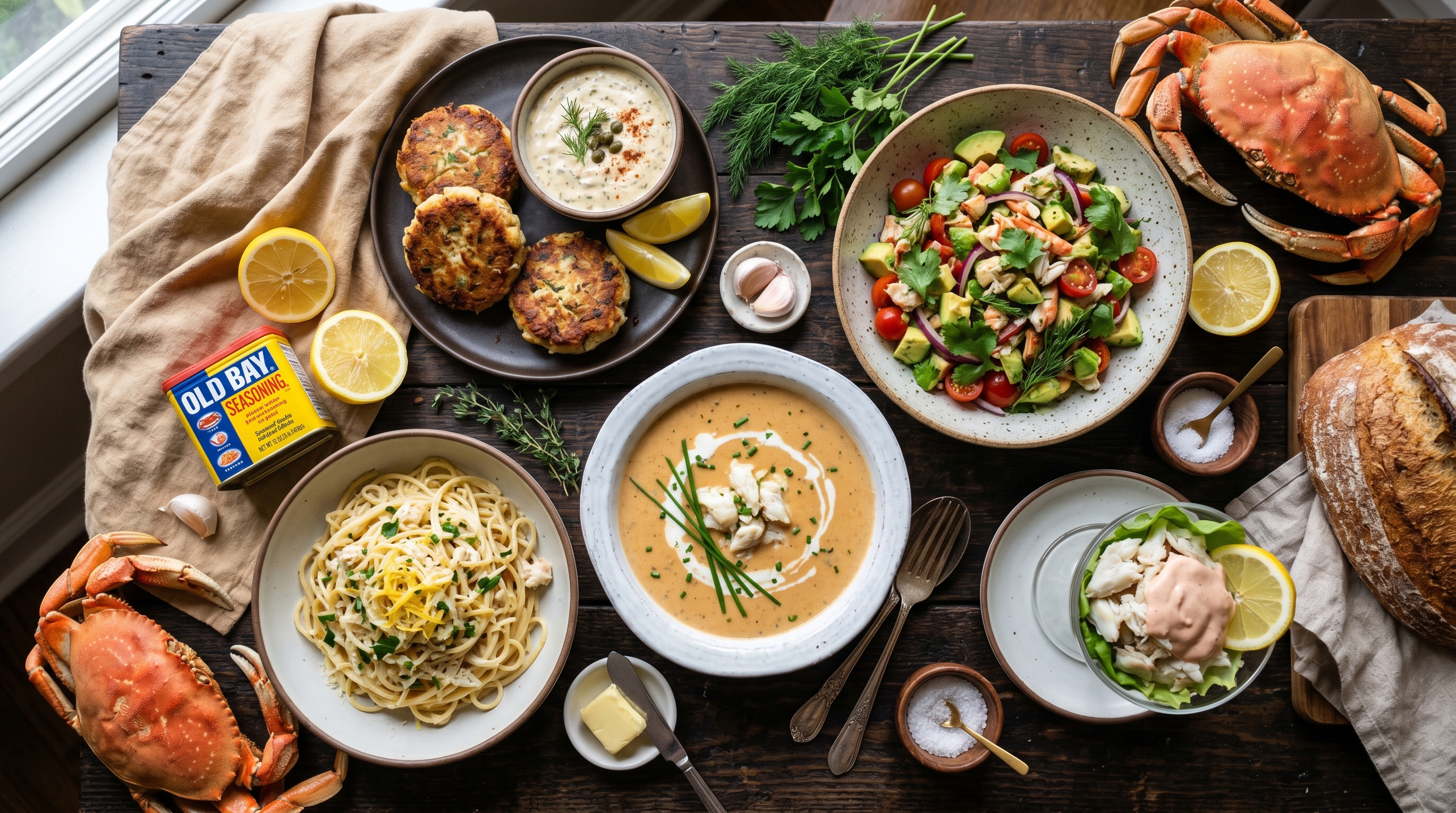
Of all the gifts the ocean offers to the kitchen, few are as magnificently flavored, as texturally extraordinary, or as genuinely versatile as crab. The sweet, delicate, deeply oceanic flavor of fresh crab meat — whether from the majestic Dungeness of the Pacific coast, the blue crab of the Chesapeake Bay, the snow crab of the North Atlantic, the brown crab of European waters, or the king crab of Alaskan waters — is one of the most immediately appealing, most universally loved flavors in all of seafood cooking.
What makes crab so uniquely compelling as a cooking ingredient is the combination of its extraordinary natural flavor and its remarkable versatility. The same crab meat that creates the most elegant, most refined appetizer — a delicate crab and avocado tartare, a chilled crab cocktail, a carefully seasoned crab salad — also produces the most comforting, most indulgent preparations: a rich crab bisque that warms from the inside, a creamy crab pasta that satisfies deeply, a golden crab cake that crackles satisfyingly against the bite.
The key to great crab cooking is understanding and respecting the ingredient’s extraordinary natural flavor. Crab does not need to be improved, covered, or transformed — it needs to be supported. The best crab preparations use the crab’s own character as the primary flavor statement, with every other ingredient chosen to amplify and complement rather than dominate. This means quality ingredients in supporting roles: the finest butter for a crab butter sauce, the freshest lemon for balance, the most fragrant fresh herbs for brightness, and a judicious amount of seasoning that enhances rather than overwhelms.
In this guide, we have compiled 15 of the most mouthwatering, most genuinely delicious crab recipes — spanning elegant appetizers and starters, hearty main courses, comforting soups and bisques, vibrant salads, and indulgent pasta and rice dishes. Every recipe is designed to honor the crab’s natural excellence and produce results of genuine, memorable quality.
Let’s cook something extraordinary.
The Essential Crab Knowledge Guide
Crab Varieties: Choosing the Right Crab
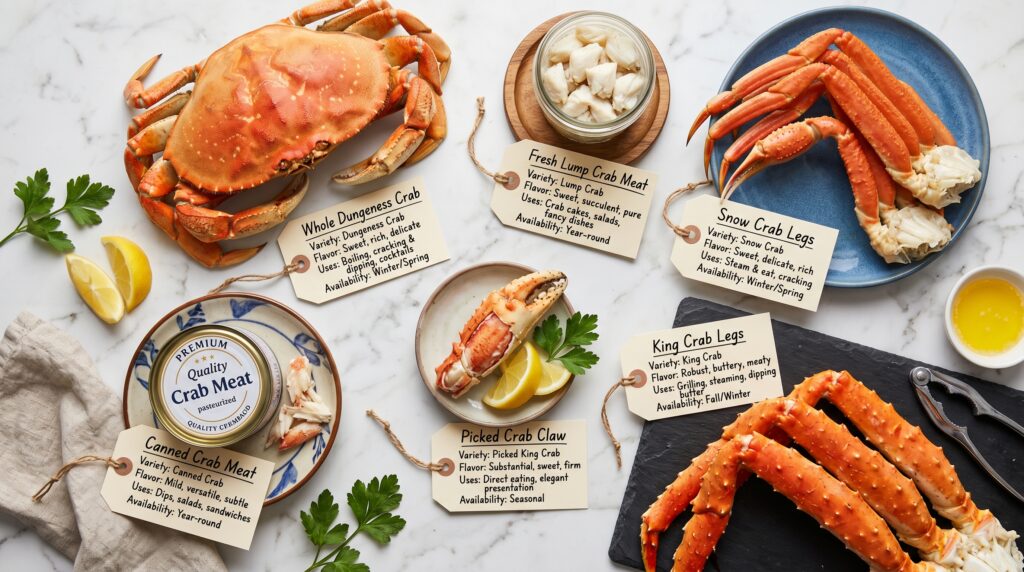
Dungeness crab: The sweet, rich crab of the Pacific coast. Considered by many to be the finest-flavored crab available. Meaty and substantial. Best for: whole crab preparations, crab cakes, and pasta.
Blue crab: The iconic crab of the Chesapeake Bay and Gulf Coast. Delicate, sweet, slightly briny. Best for: crab cakes, crab bisque, crab dip.
Snow crab: Cold-water Atlantic and Pacific crab with long, slender legs and sweet, delicate meat. Best for: whole crab legs, simple preparations that showcase the meat.
King crab: The largest and most impressive crab, with thick, meaty legs and a rich, slightly sweet flavor. Best for: grilled legs with butter, simple roasted preparations.
Brown crab: The everyday crab of European waters, with a distinctive flavor profile — sweet white claw meat and rich, stronger-flavored brown meat (the dark body meat). Best for: crab on toast, bisque, crab pasta.
Soft-shell crab: Blue crabs caught immediately after shedding their shell, when the entire crab shell and all is edible. Best for: pan-frying whole, sandwiches.
Fresh vs Canned vs Frozen Crab
Fresh cooked crab meat: The finest quality, most immediate flavor. Use within 2 days of purchase. Found refrigerated at fishmongers and fish counters.
Quality canned crab meat: A genuinely acceptable alternative for cooked preparations (bisque, dip, pasta, crab cakes). Choose lump or jumbo lump varieties from reputable brands. Drain thoroughly and pick through for shell fragments.
Frozen crab legs: Snow crab and king crab legs are almost always sold pre-cooked and frozen. Thaw overnight in the refrigerator. Reheat gently — they are already cooked and need only warming.
Picking Crab: The Essential Skill
When working with whole cooked crabs, efficient picking produces more meat and wastes less:
1. Remove the claws and legs first. 2. Open the main body by removing the apron (the triangular flap on the underside) and pulling the top shell off. 3. Remove and discard the grey, feathery gills (the “dead man’s fingers”). 4. Break the body in half and use a pick or small fork to extract the meat from each chamber. 5. Crack the claws with a nutcracker or the back of a heavy knife and extract the claw meat.
15 Mouthwatering Crab Recipes
Classic Crab Starters and Appetizers
1. Classic Crab Cakes
Prep time: 20 minutes + 30 minutes chilling | Cook time: 8 minutes | Serves: 4
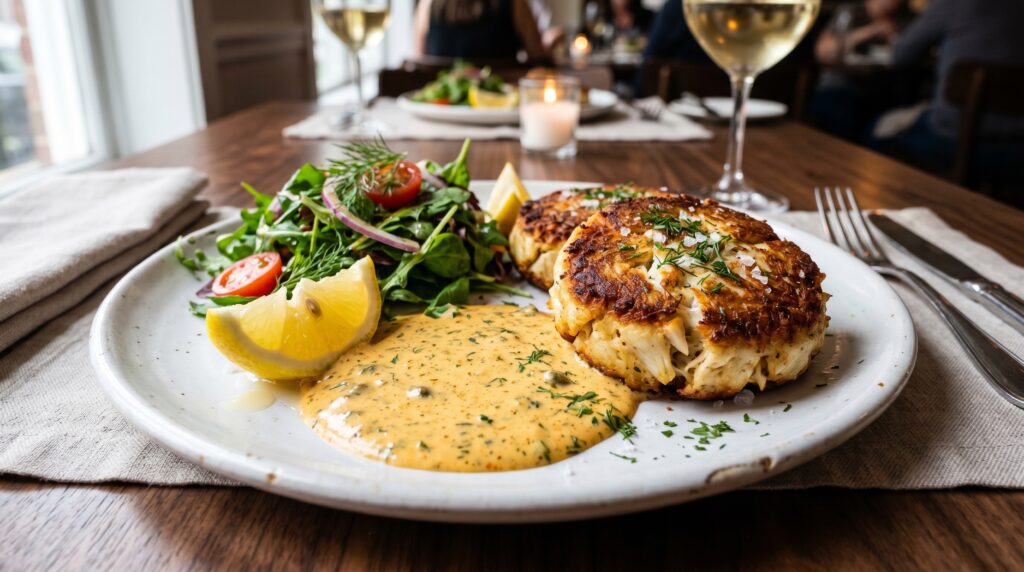
Classic crab cakes are the benchmark crab preparation — the combination of sweet, fresh crab meat with minimal filler, gentle seasoning, and a golden pan-fried crust creates a preparation of pure crab flavor intensity that no elaborate sauce or preparation can improve upon. The best crab cakes are at least 80% crab.
Key ingredients: Fresh or quality canned lump crab meat (450g — picked through for shell fragments), mayonnaise (3 tbsp), Dijon mustard (1 tsp), Old Bay seasoning (1 tsp), Worcestershire sauce (1 tsp), fresh lemon juice (1 tbsp), fresh flat-leaf parsley (2 tbsp, finely chopped), egg (1 large), panko breadcrumbs (30g — the minimum required for binding, no more), sea salt, white pepper. Remoulade: mayonnaise, Dijon, capers, fresh dill, lemon juice, smoked paprika, hot sauce
Method: Gently combine all ingredients — fold rather than mix vigorously to preserve the large crab lumps. The mixture should be just moist enough to hold its shape when pressed. Form into 8 patties approximately 2cm thick. Refrigerate for 30 minutes — the chilling firms the patties and makes them significantly easier to handle during cooking. Pan-fry in a generous amount of butter and olive oil over medium-high heat for 3–4 minutes per side until deeply golden and heated through.
The minimum filler principle: The most common crab cake failure is too much breadcrumb filler — which pads out the crab meat and produces a preparation that tastes primarily of breadcrumbs rather than crab. 30g of panko for 450g of crab is the maximum. The cakes should feel delicate and require careful handling — if they hold together with complete confidence, there is probably too much binder.
What makes it special: The chilling step — 30 minutes in the refrigerator after forming — is the technique that makes the difference between crab cakes that fall apart in the pan and ones that cook confidently to a beautiful golden crust. The cold firms the fat in the mayonnaise, creating a more cohesive patty.
Pro tip: Use a wide, flat spatula and handle the crab cakes as minimally as possible during cooking. Place them in the pan and do not move them for the full 3–4 minutes — the crust must develop fully before the cakes will release cleanly from the pan.
2. Crab and Avocado Salad
Prep time: 15 minutes | No cook | Serves: 4
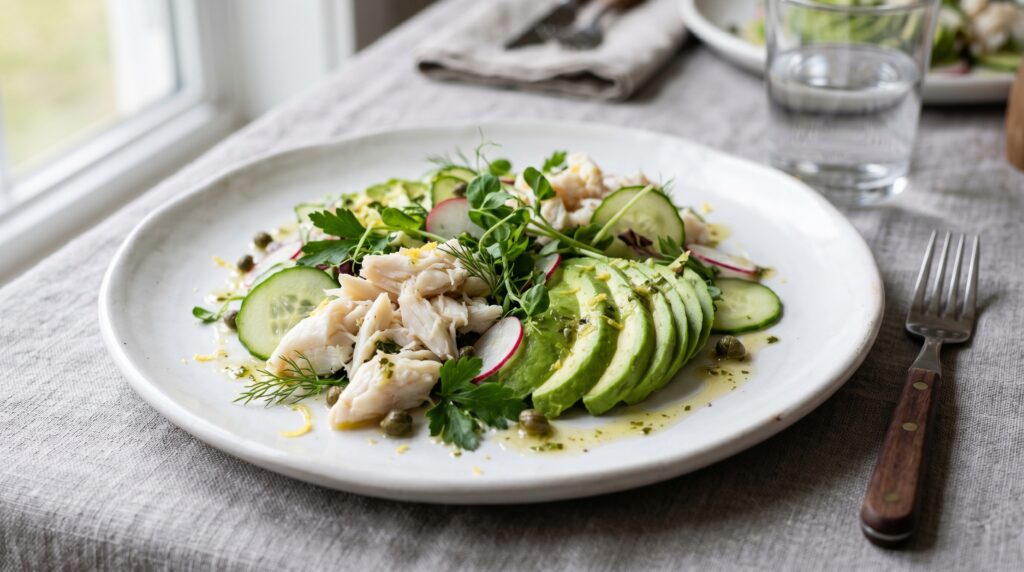
Crab and avocado salad is the most elegant, most effortlessly refined crab preparation in this collection — the natural affinity between sweet crab and creamy avocado, dressed with nothing more than lemon juice, the finest olive oil, and fresh herbs, creates a starter of genuine restaurant quality that takes under 15 minutes.
Key ingredients: Fresh white crab meat (300g — lump or dressed white meat), ripe avocado (2, sliced or diced), fresh lemon juice (2 tbsp), extra virgin olive oil (2 tbsp — the finest available), fresh tarragon (1 tbsp, finely chopped), fresh chives (1 tbsp, snipped), fresh dill (1 tbsp), cucumber (thinly sliced), radish (thinly sliced), capers (1 tbsp), lemon zest, micro herbs for garnish, sea salt, white pepper
Dressing the crab: Season the crab meat gently with lemon juice, olive oil, a small amount of fresh tarragon, salt, and white pepper. The dressing should enhance the crab’s flavor rather than mask it — taste and adjust until the crab’s sweetness is amplified, not overwhelmed.
What makes it special: The tarragon — its slightly anise-like, slightly sweet, distinctly French herbal character — is one of the most natural flavor companions for crab in the classical French tradition. Its affinity with seafood is immediate and unmistakable.
Why it works: The avocado’s buttery, neutral richness provides the perfect canvas for the crab’s delicate, sweet flavor — the fat of the avocado carries the crab’s flavor compounds and amplifies their impact while providing the textural contrast that makes each bite genuinely satisfying.
3. Crab Cocktail
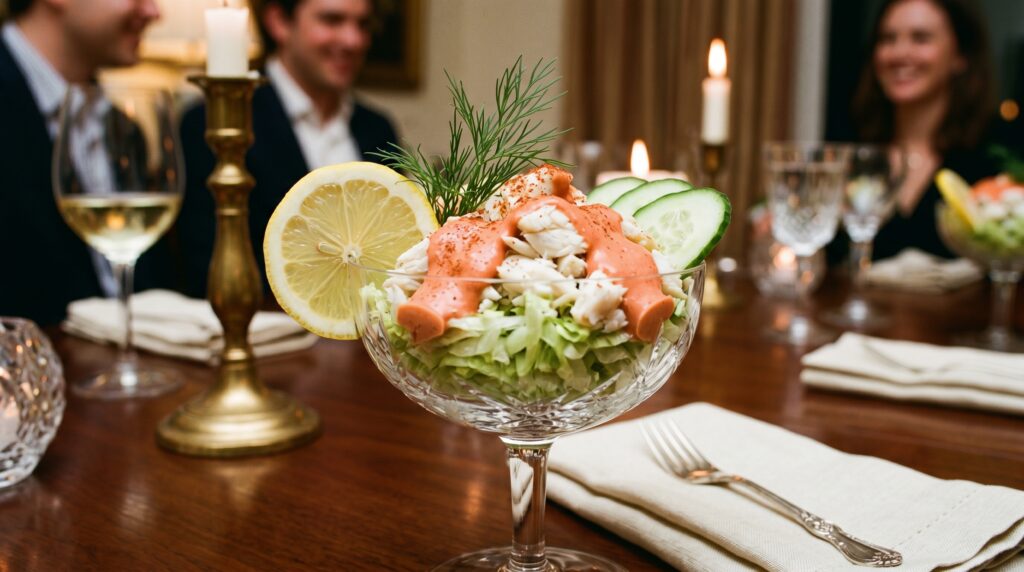
Prep time: 15 minutes | No cook | Serves: 4
Crab cocktail is the most classically elegant, most immediately impressive crab starter — sweet, fresh crab piled into a glass over crisp lettuce with a properly made Marie Rose sauce creates a preparation of enduring elegance that has graced great tables for generations.
Key ingredients: Fresh white crab meat (350g), shredded iceberg lettuce (for the base), lemon wedges, fresh dill or flat-leaf parsley. Marie Rose sauce: good quality mayonnaise (4 tbsp), tomato ketchup (1 tbsp), fresh lemon juice (1 tbsp), Worcestershire sauce (½ tsp), Tabasco or hot sauce (a few drops), brandy (1 tsp — optional but traditional), sea salt, white pepper, smoked paprika (for dusting)
The Marie Rose quality: The quality of Marie Rose sauce depends almost entirely on the quality of the mayonnaise. Use a genuine full-fat mayonnaise of excellent quality — the sauce is simple enough that the character of the mayonnaise is entirely apparent in the finished result.
What makes it special: A properly made Marie Rose sauce — tangy from the lemon, slightly spiced from the Tabasco and Worcestershire, with a subtle complexity from the brandy — is a genuinely excellent sauce that amplifies the crab’s sweetness and provides the contrast the rich meat requires.
Presentation: Serve the crab slightly chilled — not cold from the refrigerator, but not room temperature either. The crab’s sweetness is most apparent slightly below room temperature.
4. Crab Stuffed Mushrooms
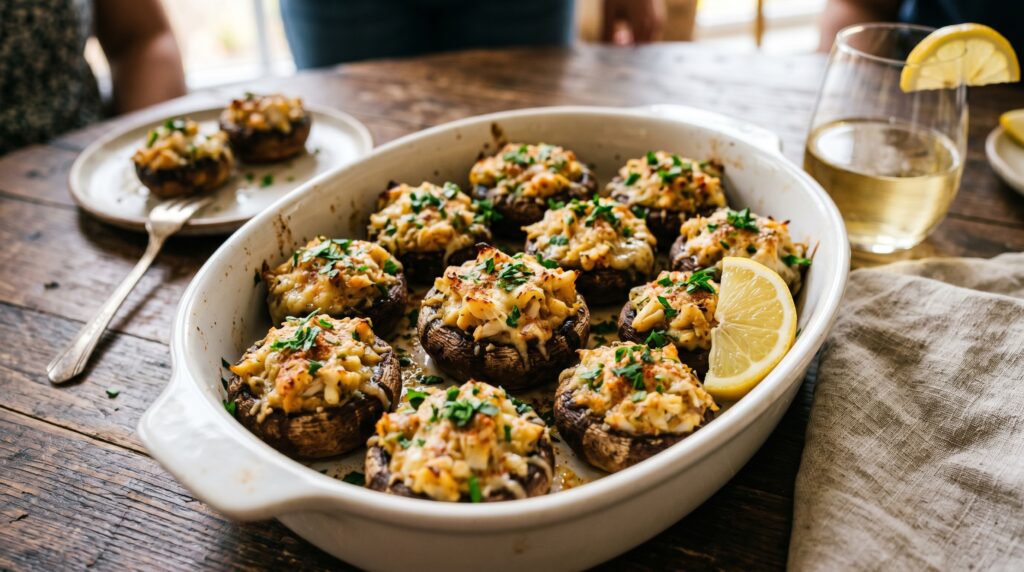
Prep time: 20 minutes | Cook time: 20 minutes | Serves: 6 (as appetizer)
Crab-stuffed mushrooms are the most make-ahead-friendly, most dinner-party-practical crab starter — assembled hours in advance and baked just before serving, they deliver generous crab flavor in an approachable, universally appealing format.
Key ingredients: Large cremini or portobello mushrooms (16 large — stems removed and reserved), fresh or canned crab meat (300g, picked through), cream cheese (120g, softened), shredded Gruyère or cheddar (60g), shallots (2, finely diced and softened), garlic (2 cloves, minced), fresh flat-leaf parsley, lemon zest, Dijon mustard (1 tsp), Worcestershire sauce (½ tsp), Old Bay seasoning (½ tsp), sea salt, cracked black pepper. Topping: panko breadcrumbs (30g) tossed with melted butter, Parmesan (20g)
Method: Sauté the finely diced mushroom stems with shallots and garlic until the moisture evaporates and the mixture is golden. Cool. Combine with crab, cream cheese, Gruyère, parsley, lemon zest, Dijon, Worcestershire, and seasoning. Fill each mushroom cap generously. Top with the buttered panko and Parmesan. Bake at 200°C (400°F) for 18–20 minutes until golden and bubbling.
What makes it special: The sautéed mushroom stems — cooked until all moisture evaporates and they are deeply golden — add an earthy mushroom depth to the filling that deepens the crab’s oceanic sweetness in a beautifully complementary way.
5. Crab Toast (Crab on Sourdough)
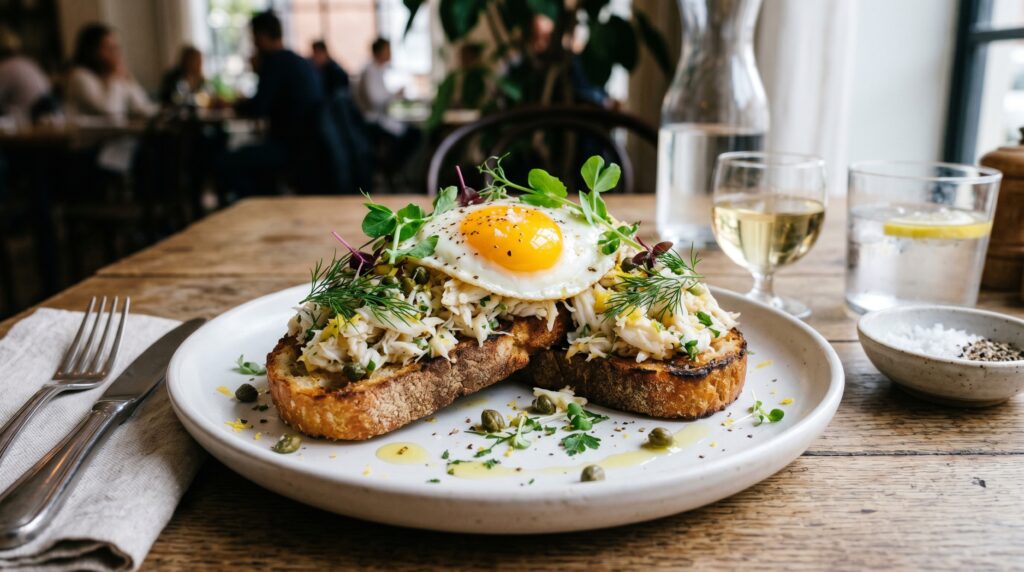
Prep time: 15 minutes | Cook time: 5 minutes | Serves: 2
Crab on sourdough toast is the most immediately luxurious, most effortlessly impressive crab preparation — the contrast between the slightly crispy, slightly chewy sourdough toast and the sweet, fresh crab dressed in lemon and herbs creates a preparation of genuine sophistication that requires minimal technique.
Key ingredients: Thick sourdough bread (2 slices, toasted), fresh white crab meat (200g), fresh lemon juice (1 tbsp), extra virgin olive oil (1 tbsp), fresh tarragon (1 tsp), fresh chives (1 tsp), capers (1 tsp), lemon zest, fresh dill, micro herbs, fried egg (1 per toast — optional but excellent), sea salt, white pepper
Method: Season the crab gently with lemon juice, olive oil, herbs, capers, lemon zest, salt, and white pepper. Toast the sourdough until golden and slightly crispy. Pile the dressed crab generously on each slice. Top with a fried egg if using. Garnish with micro herbs and extra lemon zest.
What makes it special: The fried egg — with its runny yolk that breaks over the crab as you cut into it — creates a natural richness that ties the crab and toast together beautifully, creating a preparation that is simultaneously an elegant starter and a genuinely satisfying complete meal.
Warm Crab Main Courses
6. Creamy Crab Pasta
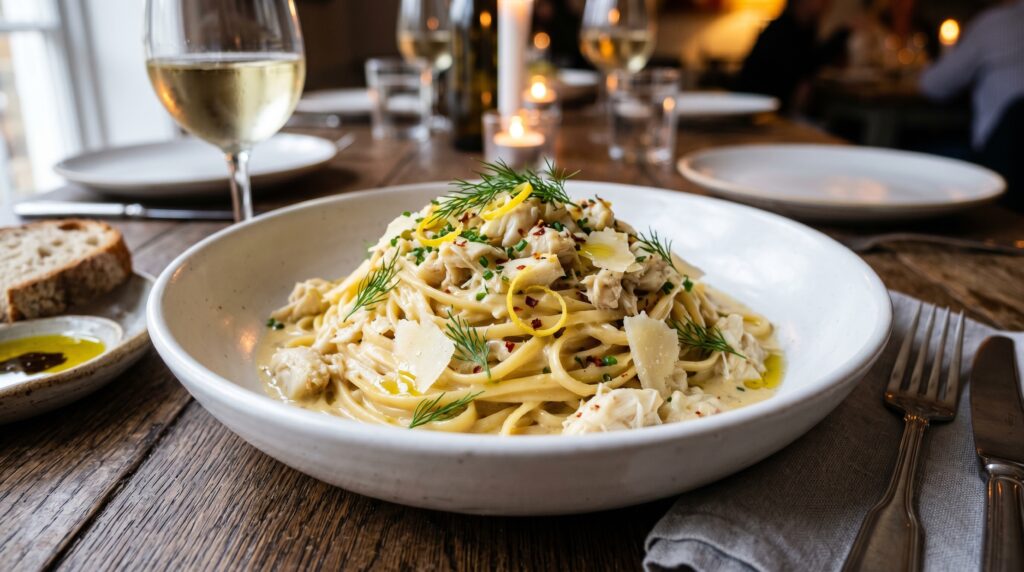
Prep time: 10 minutes | Cook time: 15 minutes | Serves: 4
Creamy crab pasta is the most indulgent, most deeply satisfying hot crab preparation — sweet crab meat in a silky, lemon-brightened cream sauce over perfectly cooked pasta creates a dinner of genuine luxury that takes under 25 minutes from start to finish.
Key ingredients: Linguine or spaghetti (400g), fresh or quality canned crab meat (350g — a generous amount is essential), double cream (150ml), unsalted butter (30g), garlic (2 cloves, minced), shallots (2, finely diced), dry white wine (80ml), fresh lemon juice and zest (from 1 large lemon), fresh dill (generous), fresh chives, red chili flakes (a generous pinch — the heat amplifies the crab’s sweetness), Parmesan (30g, grated), pasta cooking water, sea salt, white pepper
Method: Cook pasta. While pasta cooks, sauté shallots and garlic in butter until soft. Add white wine and reduce by half. Add cream and simmer until slightly reduced. Add lemon juice and zest. Add cooked pasta and a generous splash of pasta water — toss to coat in the sauce. Off the heat, fold in the crab meat gently (so it warms through without breaking up completely), add chili flakes, herbs, and Parmesan.
The crab-last technique: Adding the crab at the very end — off the heat — and folding through gently preserves the large lump pieces of crab meat and ensures they are warmed through rather than overcooked. Overcooked crab becomes rubbery and loses its sweet, delicate flavor.
What makes it special: The red chili flakes — a small but important addition — create a gentle, building heat that amplifies the crab’s natural sweetness in the same way that salt amplifies sweetness generally. The heat and the sweetness create a contrast that makes the crab flavor more prominent and more interesting.
7. Crab Risotto
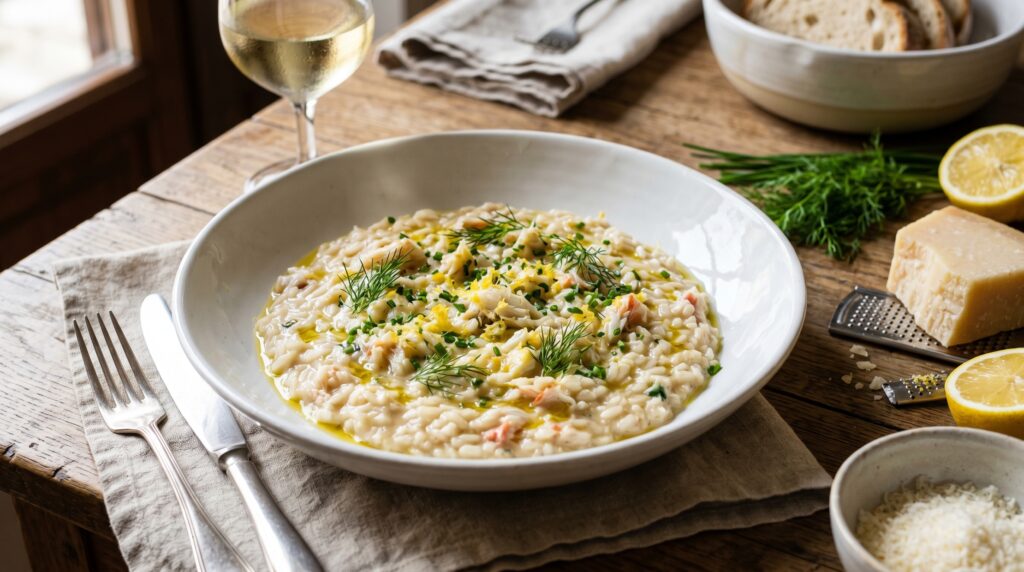
Prep time: 15 minutes | Cook time: 30 minutes | Serves: 4
Crab risotto is the most sophisticated, most genuinely occasion-worthy crab preparation in this collection — the slow-stirred, gradually developed risotto creates a preparation of extraordinary creaminess into which the sweet crab is folded at the last moment, its flavor infusing the entire dish.
Key ingredients: Arborio or Carnaroli rice (320g), fresh crab meat (350g — ideally a combination of white and brown meat if using brown crab), warm seafood or fish stock (approximately 1.2 litres), dry white wine (120ml), shallots (3, finely diced), garlic (2 cloves), cold butter (40g — for mantecatura), Parmesan (50g, finely grated), fresh lemon juice and zest, fresh dill (generous), fresh chives, extra virgin olive oil (for finishing), sea salt, white pepper
The brown meat addition: If using whole dressed brown crab, stir the brown meat (stronger flavored) into the base of the risotto during cooking — it dissolves into the stock and enriches every grain. Add the delicate white meat only at the very end for textural contrast.
The mantecatura: Remove the risotto from the heat completely. Add cold butter cubes and grated Parmesan. Beat vigorously for 60–90 seconds until the risotto flows like lava and the surface is glossy. Rest for 2 minutes before serving.
What makes it special: The combination of brown meat enriching the risotto base and white meat added at the very end creates a preparation with two complementary expressions of crab flavor — the deeper, more complex character of the brown meat in the background and the sweet, delicate white meat in the foreground.
8. Crab Cakes Benedict
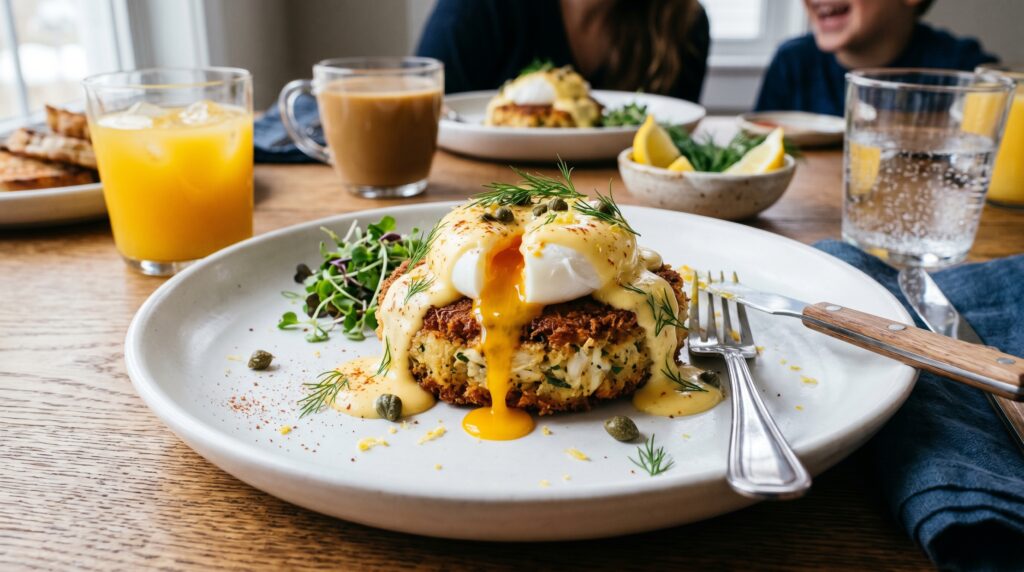
Prep time: 30 minutes | Cook time: 15 minutes | Serves: 4
Crab cakes Benedict — using a golden crab cake as the base instead of an English muffin — is the most inspired, most genuinely spectacular brunch preparation in this collection. A perfectly poached egg with runny yolk breaking over a crispy crab cake with hollandaise is one of the most luxurious breakfasts imaginable.
Key ingredients: Crab cakes (as recipe 1 — made smaller and flatter for Benedict format), poached eggs (2 per person — see poaching technique in the keto eggs Benedict recipe), hollandaise sauce (as per the sauce recipes guide — egg yolks, clarified butter, lemon juice), fresh dill, capers, smoked paprika, lemon
What makes it special: The crab cake creates a base of significantly more flavor and textural interest than any bread preparation — the golden, slightly crispy crust of the crab cake against the silky hollandaise and the runny egg yolk creates a combination of textures and flavors that makes this genuinely one of the most memorable brunch preparations available.
9. Garlic Butter Crab Legs
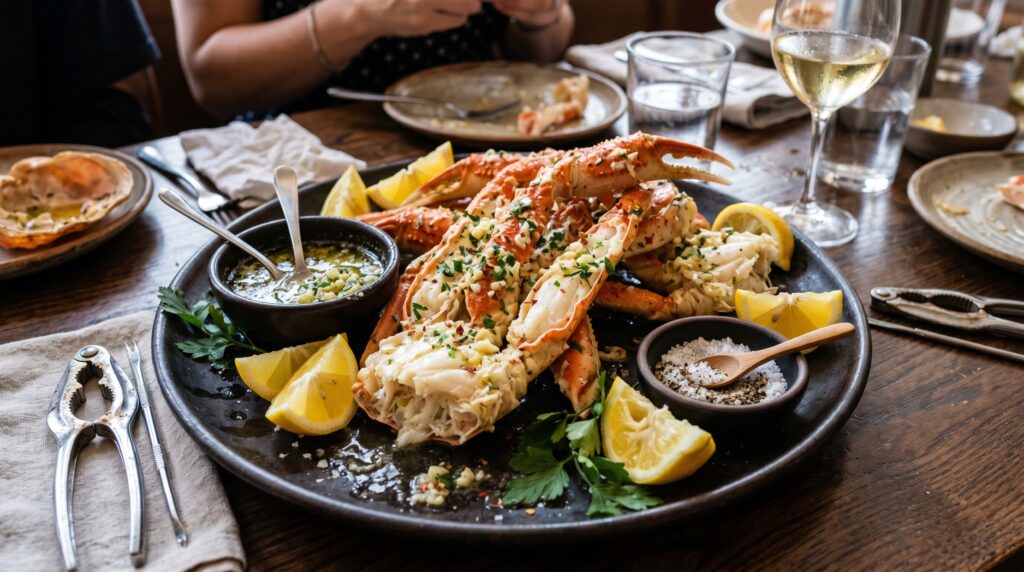
Prep time: 10 minutes | Cook time: 10 minutes | Serves: 4
Garlic butter crab legs are the most celebratory, most hands-on, most theatrically impressive crab preparation — the already-cooked king or snow crab legs need only to be warmed and glazed with fragrant garlic herb butter to create a feast of genuinely spectacular richness and sweet, oceanic flavor.
Key ingredients: Snow crab or king crab legs (1.5kg — already cooked, thawed if frozen), unsalted butter (120g), garlic (5 cloves, minced), fresh flat-leaf parsley (3 tbsp, finely chopped), fresh lemon juice (2 tbsp), lemon zest, white wine (60ml), sea salt, cracked black pepper
Method: If the legs are whole, split them with kitchen scissors along one side to allow the butter to penetrate and make eating easier. Make the garlic butter: melt butter, add garlic, cook gently until fragrant (60 seconds — not browned), add wine, and simmer briefly. Add parsley and lemon. Brush or pour over the crab legs. Heat in a 200°C (400°F) oven for 8–10 minutes or under the broiler for 3–4 minutes until heated through and slightly caramelized.
What makes it special: Splitting the crab legs before heating — running scissors along the underside — allows the garlic butter to flow into the leg during heating, infusing the sweet crab meat with its aromatic richness rather than simply coating the exterior shell.
10. Chili Crab (Singapore Style)

Prep time: 20 minutes | Cook time: 20 minutes | Serves: 4
Singapore chili crab is one of the most internationally celebrated crab preparations — whole crab pieces cooked in a gloriously messy, deeply flavored chili, tomato, and egg-enriched sauce that is as famous as the crab itself. This is the preparation that proves crab can be bold.
Key ingredients: Whole cooked crab (1.5kg, cleaned and chopped into pieces — or use 600g fresh crab meat for a simpler version), fresh red chilies (4–6, blended to a paste), garlic (5 cloves, minced), fresh ginger (3cm, grated), tomato ketchup (3 tbsp), tomato paste (1 tbsp), sweet chili sauce (2 tbsp), soy sauce (2 tbsp), eggs (2, beaten — stirred in at the end to create strands in the sauce), fresh cilantro, green onion, sesame oil, vegetable oil
The egg finish: Stirring beaten eggs into the simmering sauce in the final 60 seconds creates the characteristic golden egg strands throughout the sauce — a technique borrowed from Chinese hot and sour soup that adds both richness and visual beauty.
What makes it special: The sauce — simultaneously spicy, sweet, salty, and rich — is one of the great Asian seafood sauces, and its reputation in Singapore is so significant that the dish has been considered one of the country’s national dishes. Serving it with crusty bread for mopping the extraordinary sauce is non-negotiable.
Soups and Bisques
11. Classic Crab Bisque
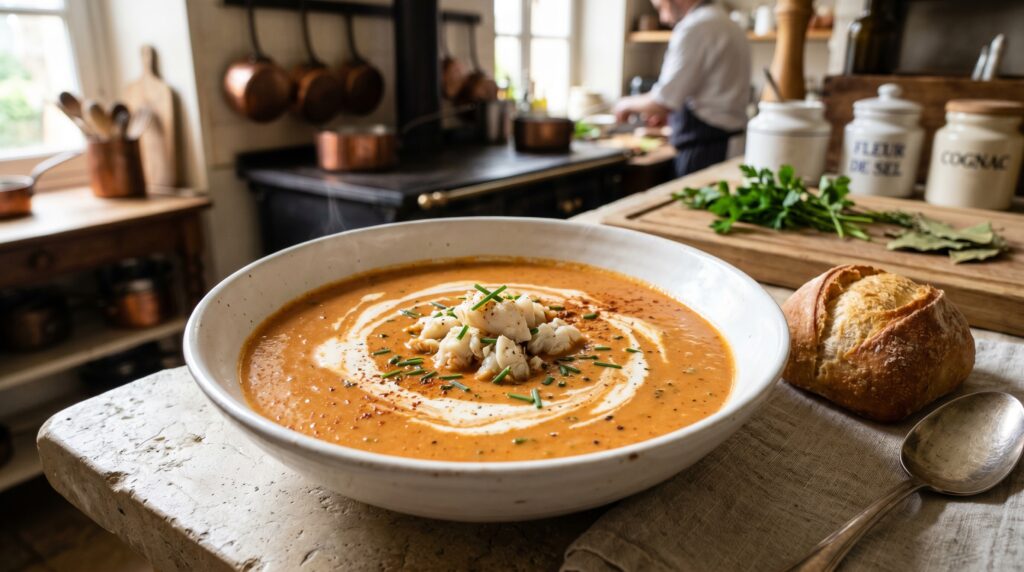
Prep time: 25 minutes | Cook time: 45 minutes | Serves: 6
Classic crab bisque is the most deeply flavored, most technically accomplished preparation in this collection — a proper bisque uses the entire crab, including the shells and tomalley, to create a broth of extraordinary, concentrated oceanic depth that no other preparation achieves. It is one of the great soups.
Key ingredients: Crab meat (350g, reserved for the bisque finish). Bisque base from shells: crab shells and bodies (roasted in the oven until golden), onion, carrot, celery, garlic, tomato paste, brandy or cognac (flambéed in the pan), dry white wine, fish or shellfish stock (1 litre), fresh tarragon, bay leaf, fresh thyme. Finishing: double cream (200ml), butter (30g), fresh lemon juice, fresh chives, smoked paprika, sea salt, white pepper
Shell-roasting technique: Roast the crab shells at 200°C for 10 minutes until golden and fragrant before making the bisque base. This roasting step caramelizes the shell’s protein and fat compounds, developing a significantly richer, more complex flavor foundation than raw shell.
Flambéing the cognac: Adding cognac to the hot pan and allowing it to flame briefly burns off the harsh alcohol while leaving behind the brandy’s complex, fruity compounds. This step adds a depth of character that simply deglazing with cold cognac without flaming cannot replicate.
What makes it special: A proper bisque made from roasted shells produces a broth so deeply, intensely flavored with concentrated crab essence that every spoonful delivers an extraordinary oceanic richness. It is the preparation that most dramatically demonstrates crab’s flavor potential.
12. Crab and Sweet Corn Soup
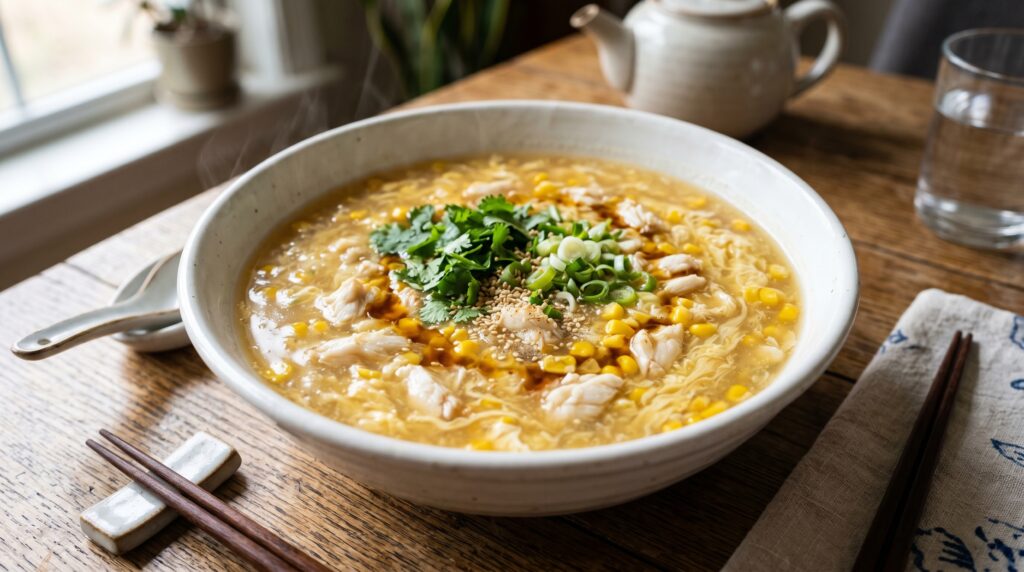
Prep time: 15 minutes | Cook time: 20 minutes | Serves: 4
Crab and sweet corn soup is the most universally loved, most comforting Chinese-inspired crab preparation — the natural sweetness of the corn creates a perfect flavor harmony with the crab’s sweetness, and the silky egg flower broth creates a soup of extraordinary gentle comfort.
Key ingredients: Fresh or canned crab meat (300g), sweet corn kernels (300g — fresh cut from the cob for best flavor, or quality canned), chicken stock (800ml), fresh ginger (2cm, grated), eggs (2, beaten — for the egg flower strands), cornstarch (2 tbsp dissolved in 3 tbsp cold water — for thickening), soy sauce (1 tbsp), sesame oil (1 tsp), fresh cilantro, sliced green onion, sea salt, white pepper
The egg flower technique: Once the soup is at a gentle simmer and slightly thickened from the cornstarch, pour the beaten eggs in a thin, steady stream while stirring the soup slowly in one direction. The eggs cook instantly in the hot broth, creating the characteristic delicate strands (egg flowers) distributed throughout the soup.
What makes it special: The combination of the corn’s natural sweetness and starchiness with the crab’s oceanic sweetness creates a flavor harmony of remarkable appeal — each intensifies the other in a way that makes this soup significantly more satisfying than either ingredient alone.
Fresh Crab Salads and Light Dishes
13. Crab and Mango Salad
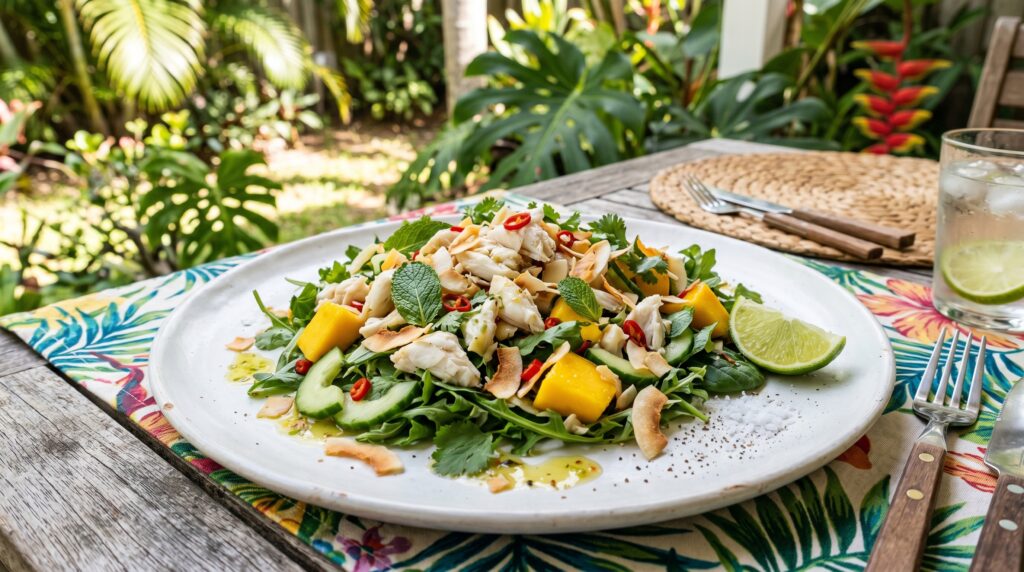
Prep time: 15 minutes | No cook | Serves: 4
Crab and mango salad is the most vibrantly fresh, most tropically inspired crab preparation — the sweet, delicate crab meat and the equally sweet, slightly acidic mango create a combination of extraordinary natural harmony, dressed with lime, chili, and fresh herbs.
Key ingredients: Fresh white crab meat (300g), ripe mango (1 large, diced), mixed greens (baby spinach, rocket), cucumber (thinly sliced), fresh mint (generous amount), fresh cilantro, sliced red chili, toasted coconut flakes (2 tbsp). Lime-chili dressing: fresh lime juice (3 tbsp), fish sauce (1 tbsp), a tiny amount of honey, garlic (½ clove, minced), fresh chili (to heat preference)
What makes it special: The lime-chili-fish sauce dressing — the three-flavor balance of Southeast Asian cooking at its most essential — amplifies the crab’s sweetness through the lime’s acidity and the fish sauce’s umami depth, creating a dressing of remarkable complexity that makes every element of the salad taste more vibrant.
Why it works: The mango’s tropical sweetness echoes and amplifies the crab’s natural sweetness while providing the acidity (from its slight tartness) that balances the entire dish.
14. Crab Louie Salad
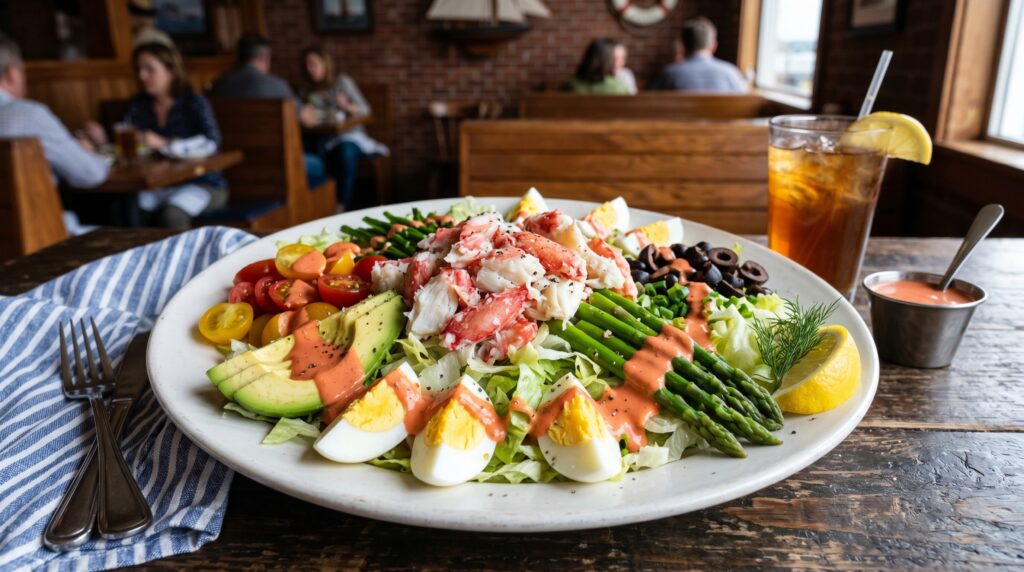
Prep time: 20 minutes | No cook (except eggs and asparagus) | Serves: 4
Crab Louie is the classic American composed salad that originated in San Francisco’s grand hotels — sweet crab meat arranged with hard-boiled eggs, avocado, tomatoes, and asparagus, dressed with the tangy, slightly spiced Louie dressing, creates a salad of genuine occasion-worthy elegance.
Key ingredients: Fresh lump crab meat (400g), shredded iceberg lettuce, hard-boiled eggs (4, quartered), ripe avocado (2, sliced), cherry tomatoes (halved), asparagus (blanched 2 minutes), black olives. Louie dressing: mayonnaise, tomato ketchup, lemon juice, Worcestershire sauce, Tabasco, finely diced shallot, capers, fresh flat-leaf parsley, smoked paprika, sea salt, white pepper — combined and refrigerated for 30 minutes for the flavors to meld
The composed technique: A Louie is arranged — each component in its own distinct section on the plate — rather than tossed together. The dressing is served drizzled across everything or on the side, allowing each diner to dress to preference.
What makes it special: The Louie dressing — a properly made Marie Rose style with the addition of capers, Worcestershire, and Tabasco for complexity — is one of the great American seafood dressings, and its combination of tangy, slightly spiced creaminess is specifically calibrated to complement the crab’s sweetness.
15. Crab Quesadillas
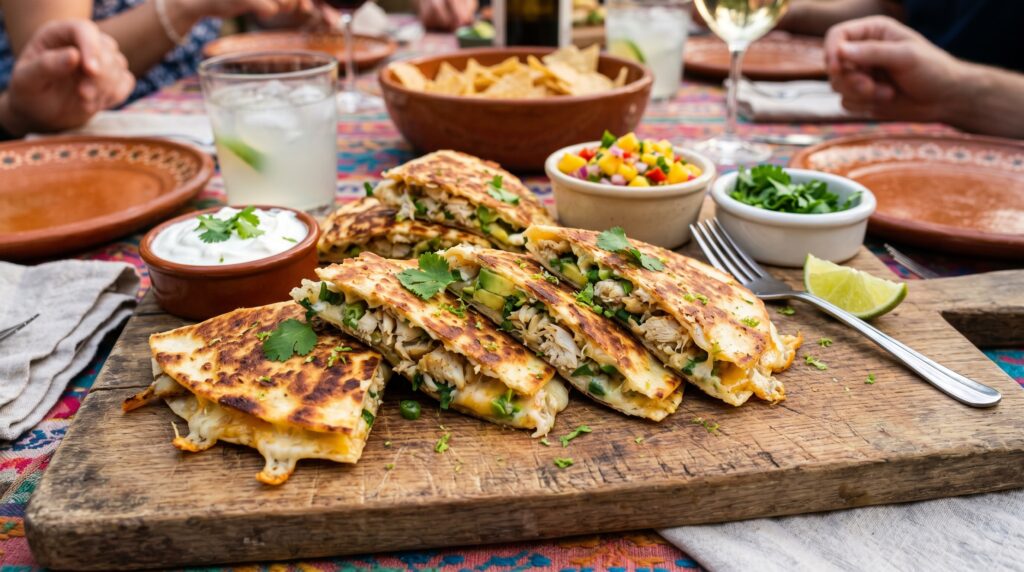
Prep time: 15 minutes | Cook time: 10 minutes | Serves: 4
Crab quesadillas are the most accessible, most fun, and most unexpectedly excellent crab preparation in this collection — sweet crab meat with melted Monterey Jack cheese, avocado, and a gentle seasoning in a crispy golden tortilla creates a preparation that is simultaneously casual and genuinely special.
Key ingredients: Flour tortillas (8 — large), fresh or quality canned crab meat (350g), shredded Monterey Jack or mild cheddar cheese (150g), ripe avocado (1, thinly sliced), cream cheese (3 tbsp — for binding and richness), fresh cilantro (2 tbsp, chopped), fresh lime juice (1 tbsp), garlic powder (¼ tsp), sea salt, white pepper. Serve with: sour cream, mango salsa (as recipe 13), fresh cilantro, lime
Method: Combine crab, cream cheese, cilantro, lime juice, garlic powder, salt, and pepper gently. Spread over one half of each tortilla. Add avocado slices and shredded cheese. Fold and cook in a dry non-stick pan over medium heat for 2–3 minutes per side until golden, and the cheese is melted.
The cream cheese binding: The cream cheese mixed through the crab filling provides both a binding agent that keeps the filling together during cooking and a mild richness that complements the crab without overwhelming its sweetness.
What makes it special: The combination of the sweet crab, the melting cheese, and the creamy avocado inside a crispy, golden tortilla creates a preparation of genuinely satisfying variety — the crunch of the tortilla, the creaminess of the filling, and the sweetness of the crab in every bite.
Crab Flavor Pairing Guide
| Flavor | Why It Works With Crab | Best Applications |
|---|---|---|
| Lemon | Acidity brightens sweetness, cuts richness | All crab preparations |
| Fresh dill | Classic herbal affinity, fresh and slightly anise | Crab salad, pasta, bisque |
| Tarragon | French herbal partner to seafood | Crab salad, crab toast, risotto |
| Butter/ghee | Rich carrier of crab’s fat-soluble flavors | Garlic butter legs, pasta |
| Chili/pepper | Heat amplifies sweetness | Chili crab, pasta, quesadillas |
| Avocado | Neutral richness amplifies crab flavor | Crab salad, quesadillas, toast |
| Mango | Sweet-tart tropical harmony | Crab salad, mango salsa |
| Cognac/brandy | Caramel complexity, traditional French pairing | Bisque, sauce |
| Corn | Natural sweetness echo | Crab and corn soup |
| Capers | Brine and acidity contrast | Crab toast, crab cocktail, pasta |
| White wine | Acidity, subtle fruit | Bisque, pasta, risotto |
| Parmesan | Umami depth without overpowering | Risotto, stuffed mushrooms |
Crab Buying and Storage Guide
Fresh crab meat: Buy from reputable fishmongers with high turnover. Fresh crab meat should smell clean and oceanic — never fishy or ammonia-like. Use within 1–2 days of purchase. Keep refrigerated at 0–4°C.
Whole live crabs: Best cooked immediately. If storing briefly, keep in the coldest part of the refrigerator covered with damp newspaper for no more than 24 hours.
Whole cooked crabs: Refrigerate and use within 2 days. Freeze for up to 3 months — thaw overnight in the refrigerator.
Canned crab meat: Once opened, transfer to a sealed container, refrigerate, and use within 2 days. Always pick through canned crab for shell fragments before using.
Frozen crab legs: Thaw overnight in the refrigerator. Never refreeze once thawed. Use within 2 days of thawing.
For comprehensive food safety guidance on storing all crab and seafood preparations, our Food Safety 101: Storage, Handling, and Temperature Guide is essential reading.
Frequently Asked Questions
What is the best crab for crab cakes?
Blue crab — particularly from the Chesapeake Bay — is the traditional choice for crab cakes and produces the most classic result. Dungeness crab and snow crab also produce excellent crab cakes. The most important factor is using the largest available lump pieces of the freshest possible crab, regardless of variety. Claw meat, while more affordable, produces slightly darker, slightly stronger-flavored crab cakes.
Can I use canned crab meat instead of fresh?
Yes — quality canned lump crab meat is a completely acceptable substitute in cooked preparations (crab cakes, bisque, pasta, stuffed mushrooms, quesadillas). For raw or lightly dressed preparations (crab salad, crab cocktail, crab toast), fresh crab is strongly preferred — the delicate sweetness and texture of fresh crab meat is its defining quality, and canned crab, however good, does not replicate it completely.
How do I avoid overcooked crab?
Crab meat is already cooked in almost all commercial forms (fresh picked crab, canned, and frozen crab legs are all pre-cooked). In all cooked preparations, the crab needs only to be warmed through, not cooked further. Overheating crab makes it rubbery and diminishes its sweet, delicate flavor significantly. Add crab at the very end of cooking and remove from heat immediately.
How much crab meat per person?
As a main course: 150–200g of crab meat per person. As a starter or appetizer: 80–100g per person. For whole crabs as a main, plan for approximately 500g of whole crab per person (whole crab yields approximately 25–30% of its total weight as edible meat).
What is the difference between white and brown crab meat?
In brown crabs (European), white meat comes from the claws and body chambers — it is delicate, sweet, and pale in color. Brown meat comes from the main body cavity — it has a richer, more complex, slightly stronger flavor and a different texture. The two are used differently: white meat for salads, cakes, and elegant presentations; brown meat for bisques, sauces, and preparations where its intensity adds depth.
According to the Marine Stewardship Council, choosing sustainably certified crab from MSC-certified fisheries ensures that the extraordinary oceanic resource of crab is available for future generations. Look for the blue MSC label when purchasing crab products from certified sustainable fisheries.
Conclusion
From the benchmark perfection of a properly made crab cake to the theatrical celebration of garlic butter crab legs, from the elegant simplicity of a crab and avocado salad to the deeply comforting richness of a classic crab bisque, from the gentle harmony of a crab and sweet corn soup to the bold, sauce-spectacular drama of Singapore chili crab, from the Mediterranean sophistication of a crab risotto to the fun, accessible pleasure of crab quesadillas — these 15 mouthwatering crab recipes demonstrate the full, extraordinary range of what this remarkable ingredient can achieve.
The unifying principle across every preparation in this collection is the same: crab’s natural sweetness, its oceanic depth, and its remarkable flavor are the stars of every dish, and every other ingredient is chosen to support, amplify, and complement rather than compete with or overwhelm it. When this principle is followed, crab produces some of the most genuinely memorable, most immediately satisfying eating experiences available — a truth that every culture with access to the sea has understood and celebrated in its own distinctive way.
For more seafood recipes, cooking technique guides, and culinary inspiration across every ingredient, cuisine, and occasion, explore our full collection at skillsinthekitchen.com.