
15 Side Dishes With Salmon: Perfect Pairings Every Time
Introduction
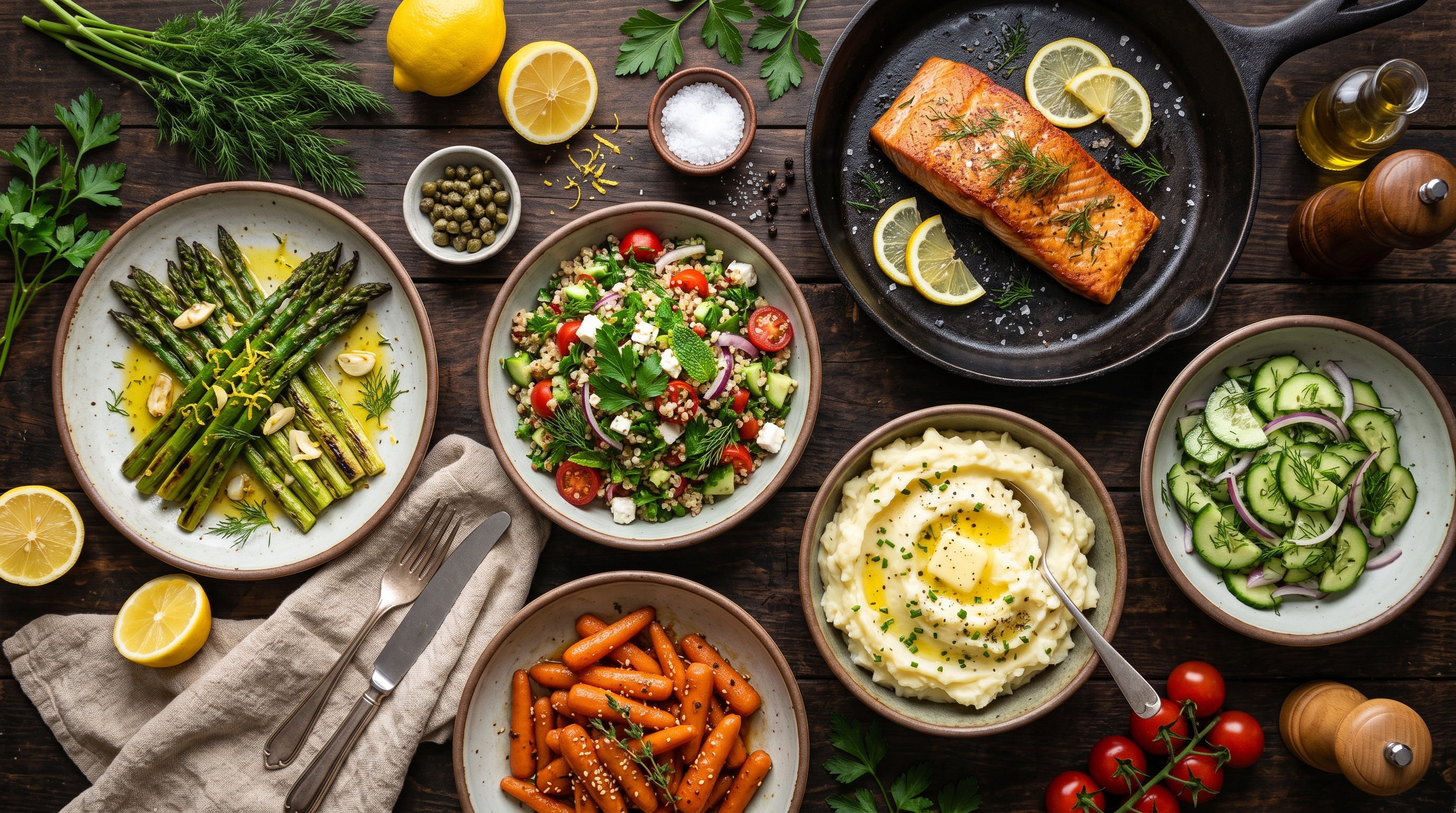
Salmon is one of the most magnificently versatile dinner proteins — rich, deeply flavored, naturally oily, and capable of absorbing an extraordinary range of seasonings and preparations while contributing its own distinctive character to every plate it graces. But as any thoughtful home cook understands, a great salmon fillet is only half of a great salmon dinner. The side dishes chosen to accompany it determine whether the meal feels complete and harmonious or merely adequate — whether each element on the plate amplifies the others or simply coexists with them.
The art of pairing side dishes with salmon lies in understanding the fish’s fundamental character. Salmon is rich — significantly more so than most white fish — and this richness calls for accompaniments that either complement it with their own depth or cut through it with brightness, acidity, or freshness. The classic lemon-dill combination that has accompanied salmon for centuries exists precisely because lemon’s acidity and dill’s fresh, slightly anise-like character provide exactly the contrast that salmon’s richness requires.
Beyond this classic pairing, however, lies a remarkable range of side dish possibilities that can transform salmon from a simple weeknight protein into the centerpiece of an elegant dinner party, an energizing weeknight meal, or a deeply satisfying weekend lunch. From the earthy comfort of garlic mashed potatoes to the bright vitality of a cucumber and herb salad, from the sophisticated elegance of a lemon risotto to the practical nutrition of a roasted vegetable medley, the right side dish elevates every salmon dinner from merely good to genuinely memorable.
In this guide, we have compiled 15 of the best, most delicious, and most practically achievable side dishes for salmon — spanning vegetables, grains, salads, potatoes, and rice preparations, across every occasion from quick weeknight to elegant entertaining. Every side dish is chosen for its genuine compatibility with salmon’s flavor profile and its ability to create a complete, satisfying meal.
Let’s pair beautifully.
The Principles of Pairing Side Dishes with Salmon
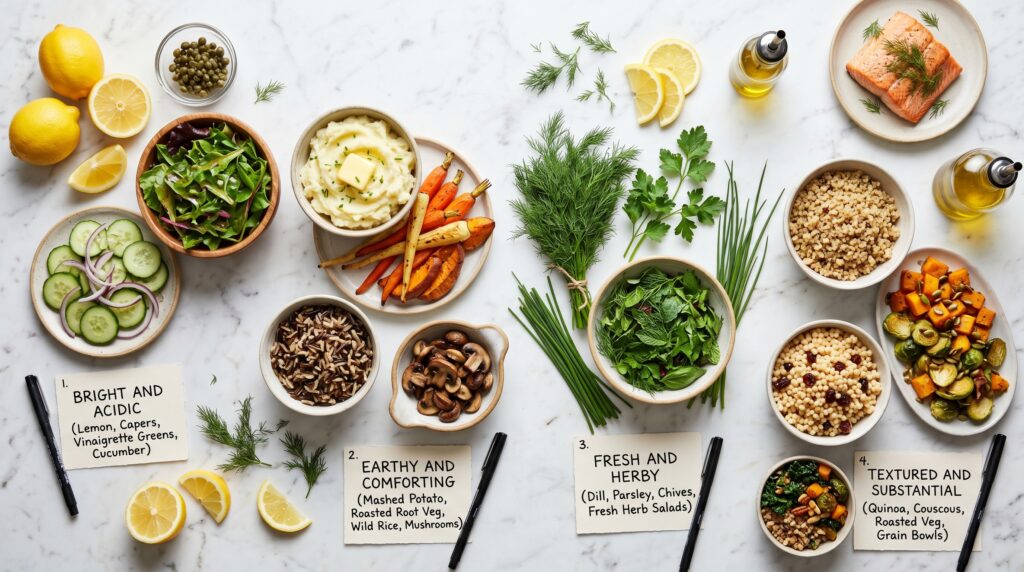
Principle 1: Balance Richness with Brightness
Salmon’s natural oil content and rich, slightly sweet flesh pair most naturally with preparations that contain a degree of acidity or freshness. A lemon-dressed asparagus, a vinaigrette-tossed green salad, or a cucumber salad with rice vinegar all provide the brightness that makes the entire plate feel lighter and more balanced than the salmon’s richness alone would suggest.
Principle 2: Consider the Salmon’s Preparation
The preparation of the salmon significantly impacts which side dishes work best. A boldly spiced Cajun blackened salmon calls for cooling, fresh accompaniments. A delicate poached salmon benefits from similarly gentle sides. A glazed teriyaki salmon pairs with Asian-inspired grains and vegetables. A simply pan-seared salmon with lemon butter works beautifully with almost anything.
Principle 3: Provide Textural Contrast
A great salmon plate has textural variety — the tender, flaky, slightly yielding flesh of the salmon benefits from accompaniments that offer different textures: the crunch of roasted vegetables, the creaminess of mashed potato, the slight chew of quinoa or wild rice, the crispness of a fresh green salad.
Principle 4: Color and Visual Appeal
Salmon’s vibrant pink-coral color is one of the most visually striking on any plate — the side dishes chosen to accompany it should enhance this visual impact. Vivid green vegetables (asparagus, broccoli, green beans), bright orange roasted carrots, the jewel tones of a roasted beet salad, or the clean white of a creamy mash all create beautiful visual contrast with the salmon.
15 Side Dishes With Salmon
Vegetable Side Dishes
1. Roasted Asparagus with Lemon and Parmesan
Prep time: 5 minutes | Cook time: 12 minutes | Serves: 4
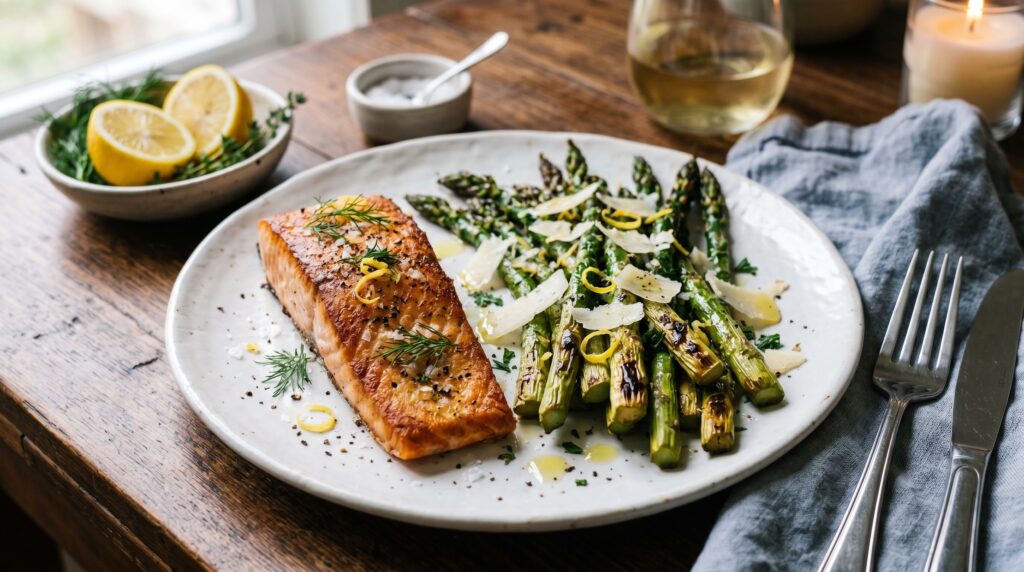
Roasted asparagus with lemon and Parmesan is the most classically perfect salmon side dish — the asparagus’s grassy, slightly earthy character, the bright lemon, and the salty Parmesan provide everything the salmon’s richness needs as a counterpoint, creating a pairing of elegant simplicity.
Key ingredients: Asparagus (500g, woody ends snapped off), extra virgin olive oil (2 tbsp), lemon zest (from 1 lemon), Parmesan (30g, shaved), flaky sea salt, cracked black pepper
Method: Toss asparagus with olive oil, salt, and pepper. Spread in a single layer on a baking tray. Roast at 220°C (425°F) for 10–12 minutes until the spears are just tender and the tips are slightly golden and beginning to caramelize. Remove and immediately scatter with lemon zest and Parmesan.
What makes it special: The Parmesan shaved over the hot asparagus immediately after roasting — where the residual heat softens but does not fully melt it — creates a silky, slightly salty coating that transforms the asparagus from a simple vegetable into something genuinely special.
Why it works with salmon: The asparagus’s green, slightly vegetal character provides a fresh counterpoint to salmon’s richness. The lemon brightens both elements simultaneously. The Parmesan adds the savory, umami note that rounds the entire plate.
Pro tip: Never overcook asparagus — it should retain a slight bite. A spear that bends without snapping when picked up at one end has been cooked to the perfect point. Overcooked asparagus loses its bright color and grassy freshness, becoming soft, dull, and slightly sulfurous.
2. Garlic Butter Green Beans
Prep time: 5 minutes | Cook time: 8 minutes | Serves: 4
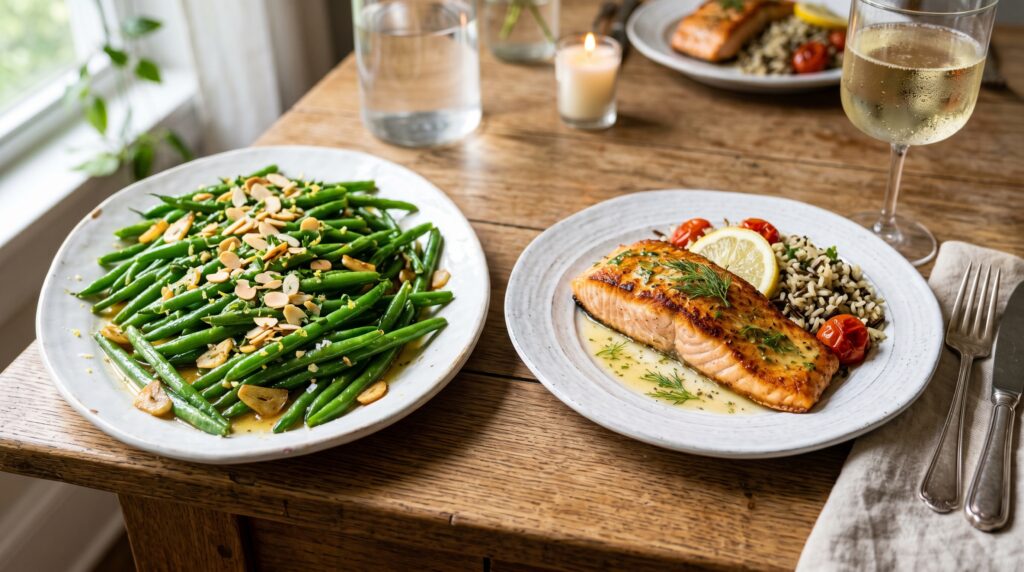
Garlic butter green beans are the fastest, most universally appealing vegetable side dish for salmon — the bright green color, the tender-crisp texture, and the golden garlic butter create a preparation that is simultaneously simple and genuinely delicious.
Key ingredients: French green beans (haricots verts — 400g, ends trimmed), unsalted butter (30g), garlic (3 cloves, thinly sliced), fresh lemon juice (1 tbsp), toasted almond slivers (2 tbsp — optional), sea salt, cracked black pepper
Method: Blanch beans in salted boiling water for 2–3 minutes until just tender-crisp and vivid green. Drain and plunge immediately into ice water to stop cooking and preserve color. Heat butter in a wide pan until foaming. Add garlic — cook until golden, 60–90 seconds. Add drained beans, toss in the garlic butter for 60 seconds. Add lemon juice. Serve immediately.
What makes it special: The ice bath after blanching — stopping the cooking instantly and preserving the beans’ vivid green color — is the technique that distinguishes perfectly cooked green beans from olive-colored, slightly mushy ones.
Why it works with salmon: The bright acidity of the lemon juice and the clean freshness of the beans cut through the salmon’s richness, while the garlic butter provides the richness that ties both elements together.
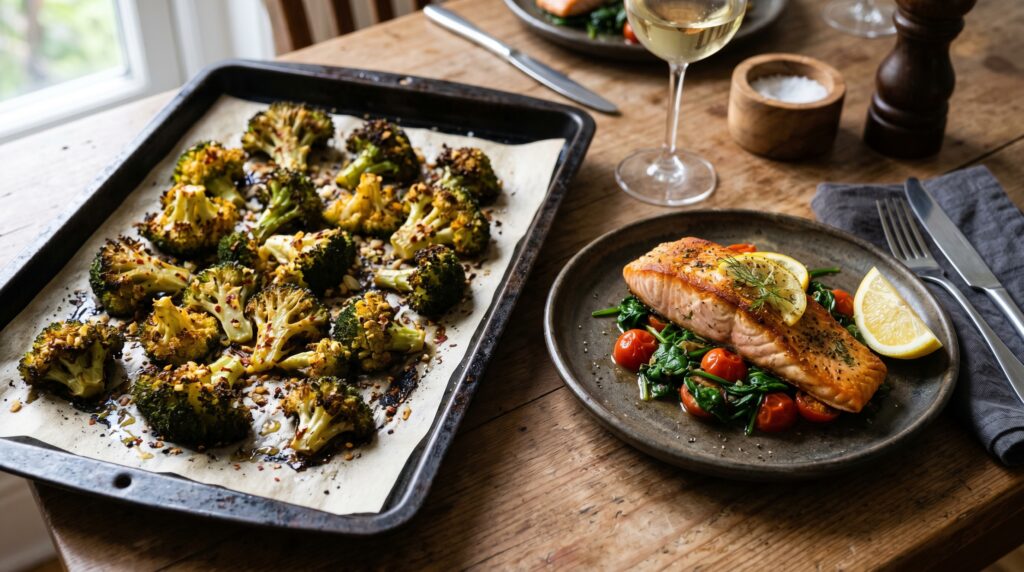
3. Roasted Broccoli with Garlic and Chili
Prep time: 8 minutes | Cook time: 20 minutes | Serves: 4
Roasted broccoli with garlic and chili is the most dramatically transformed vegetable side in this collection — broccoli roasted at high temperature becomes nutty, slightly sweet, and deeply caramelized at the edges, bearing almost no resemblance to the pale, sulfurous boiled broccoli that creates so many vegetable aversions.
Key ingredients: Broccoli (1 large head, broken into florets), extra virgin olive oil (3 tbsp), garlic (3 cloves, thinly sliced), dried red chili flakes (¼ tsp), lemon juice (1 tbsp), sea salt, cracked black pepper
The high-heat principle: Roast at 230°C (450°F) — the maximum temperature — in a single layer with space between florets. The maximum heat creates the caramelization and slight char that makes this broccoli genuinely exceptional. Lower temperatures produce pale, steamed-in-the-oven broccoli.
What makes it special: The slightly charred, caramelized edges of the roasted broccoli create a bitter-sweet, nutty depth that is the polar opposite of the flat, slightly sulfurous flavor of conventionally cooked broccoli. This preparation converts broccoli skeptics reliably.
Why it works with salmon: The slight char and nutty depth of the roasted broccoli complements the salmon’s richness without competing with it, while the chili adds a gentle heat that makes the entire plate feel more dynamic.
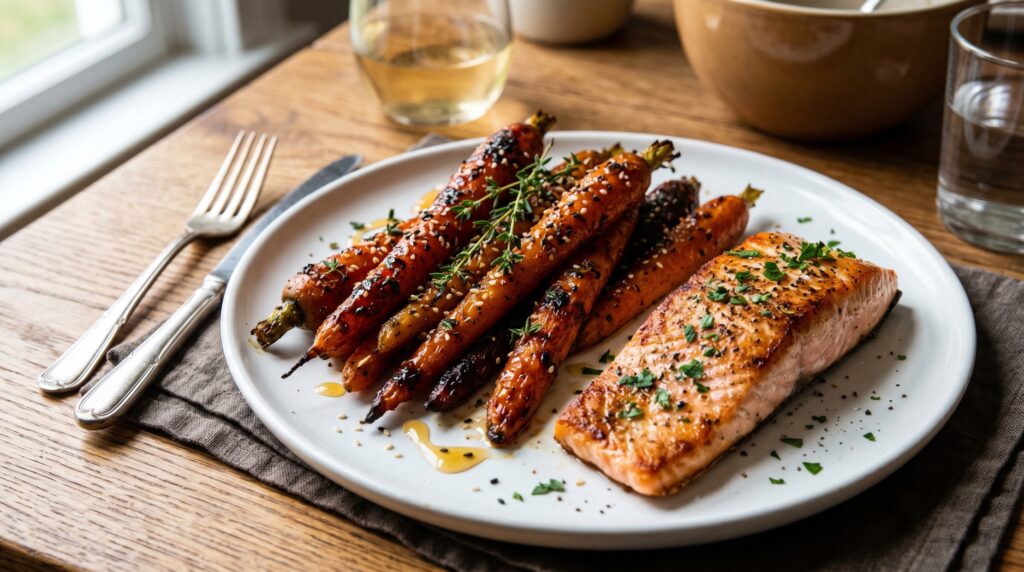
4. Honey-Glazed Roasted Carrots
Prep time: 8 minutes | Cook time: 25 minutes | Serves: 4
Honey-glazed roasted carrots are the most visually beautiful, most unexpectedly well-paired vegetable side for salmon — the carrots’ natural sweetness is amplified by honey, and the caramelization of the oven creates a vegetable preparation of genuine depth and visual appeal.
Key ingredients: Carrots (600g — whole baby carrots or large carrots halved lengthways), honey (2 tbsp), unsalted butter (20g, melted), fresh thyme (4 sprigs), sea salt, cracked black pepper, sesame seeds (for finishing)
Method: Toss carrots in melted butter, honey, thyme, salt, and pepper. Spread on a lined baking tray. Roast at 200°C (400°F) for 20–25 minutes, turning once, until tender and deeply caramelized with golden, sticky edges.
What makes it special: The honey caramelizes around each carrot during roasting, creating a deep amber, slightly sticky glaze of concentrated sweetness that makes these carrots genuinely beautiful to look at and genuinely delicious to eat.
Why it works with salmon: The sweet, caramelized carrot provides a complementary sweetness that echoes salmon’s natural slight sweetness while offering visual contrast — the deep amber orange against the salmon’s coral-pink creates one of the most visually striking plate combinations available.
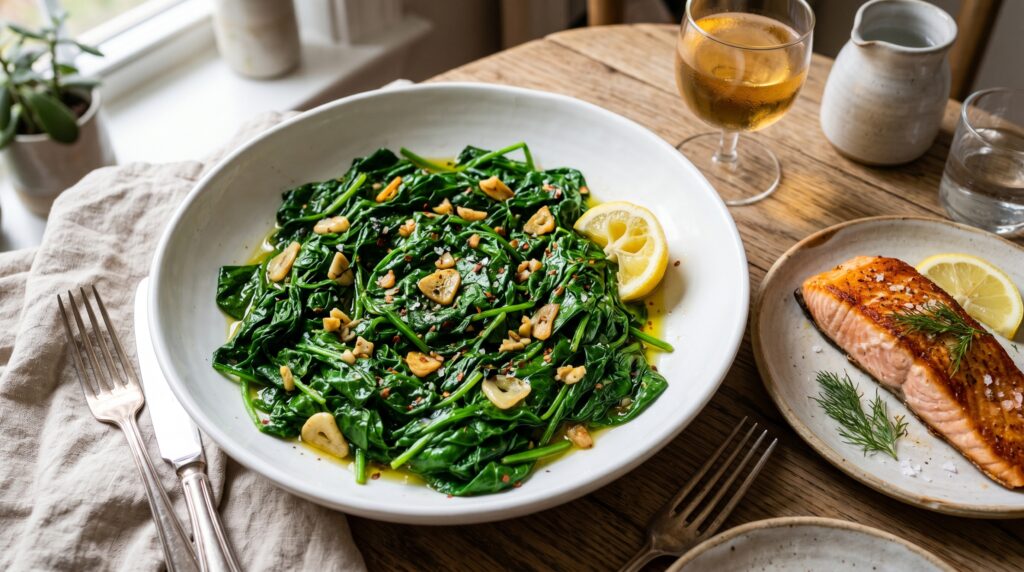
5. Sautéed Spinach with Garlic and Lemon
Prep time: 5 minutes | Cook time: 5 minutes | Serves: 4
Sautéed spinach with garlic and lemon is the fastest, most nutritionally complete vegetable side for salmon — fresh spinach wilted in golden garlic butter and finished with lemon juice and olive oil takes under 8 minutes and creates a preparation of genuine elegance.
Key ingredients: Fresh baby spinach (500g — it reduces dramatically during cooking), unsalted butter (20g), olive oil (1 tbsp), garlic (3 cloves, thinly sliced), fresh lemon juice (1 tbsp), extra virgin olive oil (for finishing), sea salt, cracked black pepper, optional: pinch of nutmeg
Method: Heat butter and olive oil in a very wide pan over high heat. Add garlic — cook 30 seconds until golden. Add spinach in batches — it wilts dramatically, each batch taking only 30–60 seconds. Season generously. Finish with lemon juice and a drizzle of finishing olive oil.
What makes it special: Adding the spinach in batches rather than all at once ensures each addition wilts properly before the next is added, preventing the pan from becoming too crowded and causing steaming rather than the quick, high-heat wilt that preserves the spinach’s bright color and fresh flavor.
Why it works with salmon: Spinach and salmon are one of the great natural flavor partnerships — the spinach’s slight bitterness and the salmon’s richness complement each other with immediate harmony, particularly when the lemon brightens both.
Potato and Grain Side Dishes
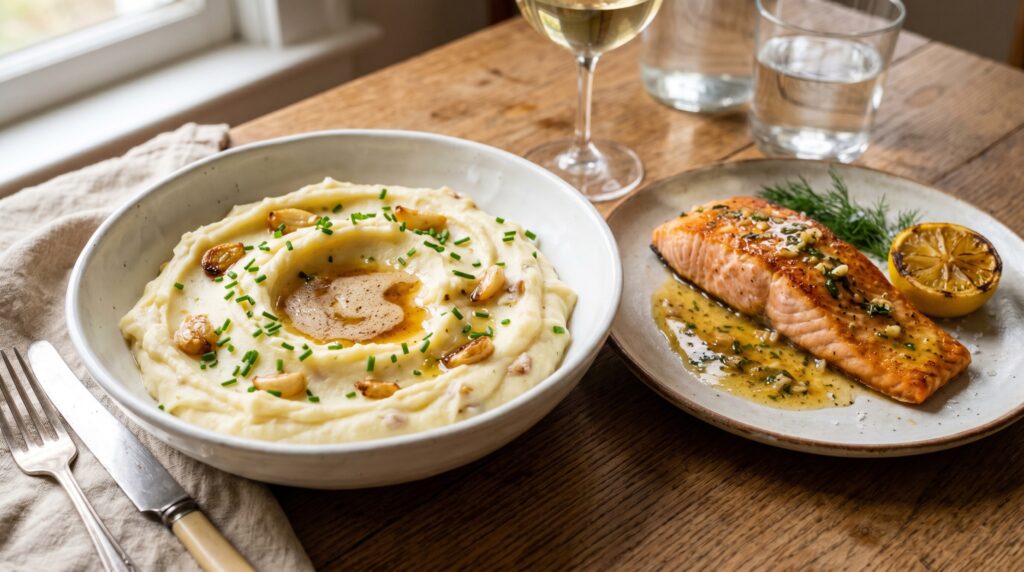
6. Creamy Garlic Mashed Potatoes
Prep time: 10 minutes | Cook time: 25 minutes | Serves: 4
Creamy garlic mashed potatoes are the most comforting, most universally beloved potato side dish for salmon — the combination of the silky, buttery mash and the deeply caramelized roasted garlic creates a preparation of extraordinary richness that complements salmon beautifully.
Key ingredients: Floury potatoes (1kg — Maris Piper or Russet), roasted garlic (1 whole head, roasted at 200°C for 35 minutes until completely soft and caramelized — squeezed from the skins), unsalted butter (80g, cold), warm whole milk (100ml), sea salt, white pepper, fresh chives
Roasted garlic technique: Slice the top off a whole garlic head to expose the cloves. Drizzle with olive oil, wrap in foil, and roast at 200°C for 35–40 minutes until the cloves are completely soft, golden, and caramelized. Squeeze the soft garlic paste from each clove and beat it into the mash.
What makes it special: Roasted garlic — its sharp, pungent raw character transformed by caramelization into a sweet, mild, deeply complex depth — creates a mash that is infinitely more interesting than either plain mash or raw-garlic mash. The sweetness of the roasted garlic actually complements salmon’s richness beautifully.
Why it works with salmon: The earthy, comforting richness of garlic mash provides the substantial base that allows salmon to be the star of the plate, while the garlic’s sweetness echoes and amplifies the salmon’s natural sweetness.
Our Master the Art of Sauce Making: Basic Techniques covers the potato preparation techniques relevant to perfecting mash.
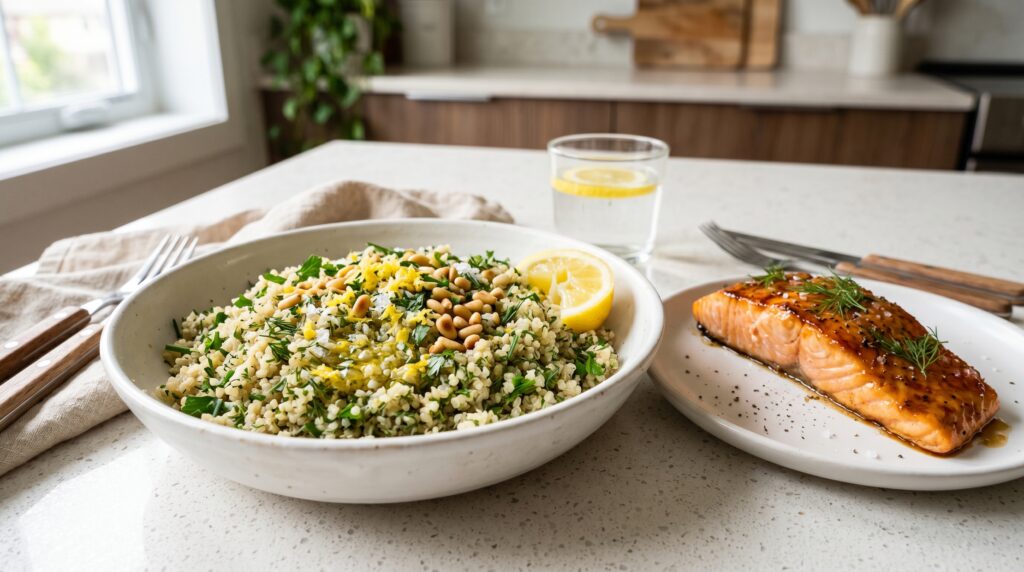
7. Lemon Herb Quinoa
Prep time: 5 minutes | Cook time: 20 minutes | Serves: 4
Lemon herb quinoa is the most nutritionally complete grain side dish for salmon — combining complete protein from the quinoa with the salmon’s protein creates a meal of extraordinary nutritional density, while the lemon and fresh herbs create the bright, fresh flavor contrast that salmon’s richness requires.
Key ingredients: Quinoa (200g, rinsed), chicken or vegetable stock (400ml — used instead of water for significantly better flavor), fresh flat-leaf parsley (3 tbsp, finely chopped), fresh dill (2 tbsp, finely chopped), fresh chives (2 tbsp, finely chopped), lemon zest (from 2 lemons), fresh lemon juice (2 tbsp), extra virgin olive oil (2 tbsp), toasted pine nuts (2 tbsp), sea salt, cracked black pepper
Cooking quinoa in stock: Using chicken or vegetable stock rather than water adds a depth of flavor to the quinoa that plain water cannot provide. The stock’s salt and aromatics infuse every grain during cooking.
What makes it special: The generous quantity of fresh herbs — added after the quinoa is cooked and has cooled slightly — creates a preparation that is vibrantly aromatic, genuinely fresh-tasting, and visually beautiful with its scattered green herb flecks against the pale grain.
Why it works with salmon: Quinoa’s slightly nutty, earthy flavor provides a neutral but interesting base that allows the salmon to remain the flavor focus, while the lemon and dill in the quinoa echo the classic salmon flavoring, creating a cohesive plate where every element speaks the same flavor language.
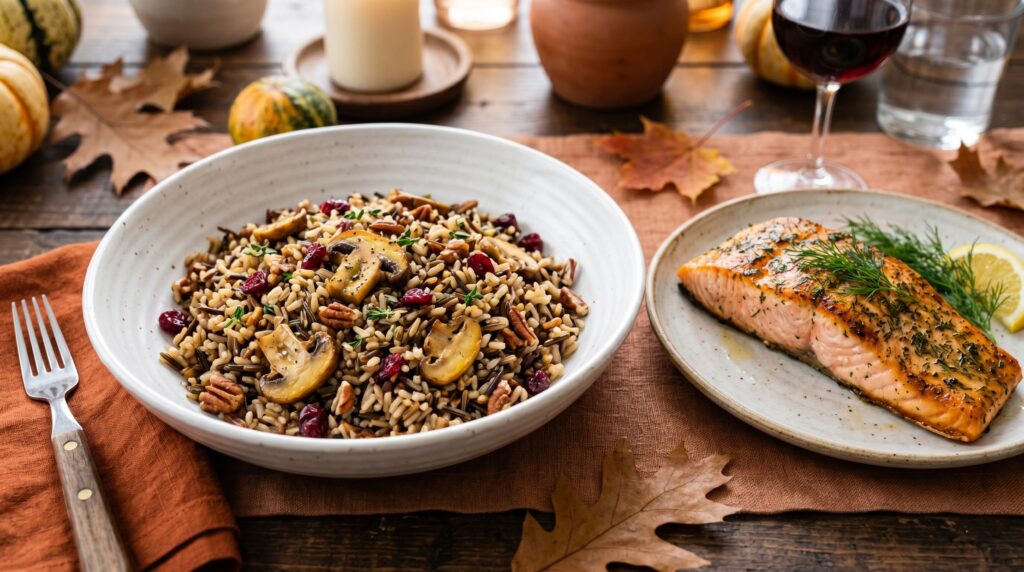
8. Wild Rice Pilaf with Mushrooms
Prep time: 10 minutes | Cook time: 45 minutes | Serves: 4
Wild rice pilaf with mushrooms is the most substantial, most sophisticated grain side for salmon — the earthy, slightly chewy wild rice combined with golden sautéed mushrooms, toasted pecans, and aromatic herbs creates a preparation worthy of a dinner party centerpiece.
Key ingredients: Wild rice blend (wild rice + brown rice combined, 300g), chicken or vegetable stock (600ml), cremini mushrooms (200g, sliced and sautéed until golden), shallots (2, diced), garlic (2 cloves), fresh thyme, toasted pecans (30g, roughly chopped), dried cranberries (2 tbsp — small amount for sweet-tart counterpoint), fresh flat-leaf parsley, butter, sea salt, cracked black pepper
Method: Cook the wild rice blend in stock according to package instructions — approximately 40–45 minutes. While the rice cooks, sauté mushrooms, shallots, and garlic in butter until golden. Combine with the cooked rice. Add pecans, cranberries, parsley, and thyme.
What makes it special: The textural variety in this pilaf — the slightly chewy wild rice, the tender brown rice, the golden mushrooms, the crunchy pecans, and the occasional sweet-tart burst of cranberry — creates a side dish of extraordinary interest that genuinely elevates any salmon preparation.
Why it works with salmon: The earthy, umami depth of the mushrooms complements salmon’s richness without competing with it, while the pecans’ crunch and the cranberries’ acidity provide textural and flavor counterpoints that make the entire plate more dynamic.
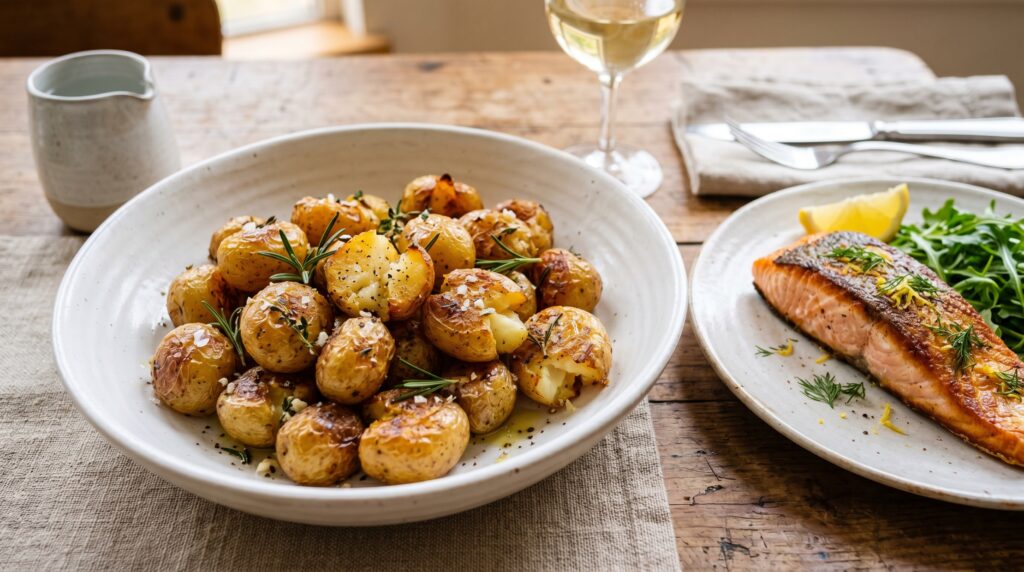
9. Roasted New Potatoes with Herbs
Prep time: 5 minutes | Cook time: 30 minutes | Serves: 4
Roasted new potatoes with herbs are the most reliably satisfying, most crowd-pleasing potato side for salmon — the combination of crispy exterior, fluffy interior, and fragrant fresh herbs creates a preparation of genuine pleasure that is universally loved.
Key ingredients: New potatoes (600g, halved if large), olive oil (3 tbsp), fresh rosemary (2 sprigs), fresh thyme (4 sprigs), garlic (4 cloves, unpeeled — roasted whole), flaky sea salt, cracked black pepper
Method: Toss potatoes with olive oil, rosemary, thyme, garlic, salt, and pepper. Spread cut-side down on a preheated baking tray. Roast at 220°C (425°F) for 25–30 minutes until the cut surfaces are deeply golden and crispy and the skins are beginning to split.
The preheated tray technique: Preheating the baking tray in the oven before adding the oiled potatoes creates immediate high-heat contact with the potato’s cut surface — producing a significantly crispier base than a cold tray start.
What makes it special: Roasting the potatoes cut-side down throughout the entire cooking time — never turning them — allows the maximum caramelization to develop on the flat cut surface, creating a golden, slightly crispy base that contrasts beautifully with the fluffy interior.
Why it works with salmon: The earthy, comforting character of the herb-roasted potatoes provides a satisfying, grounding base for the salmon, while the rosemary and thyme echo the herby seasonings most commonly used with salmon itself.
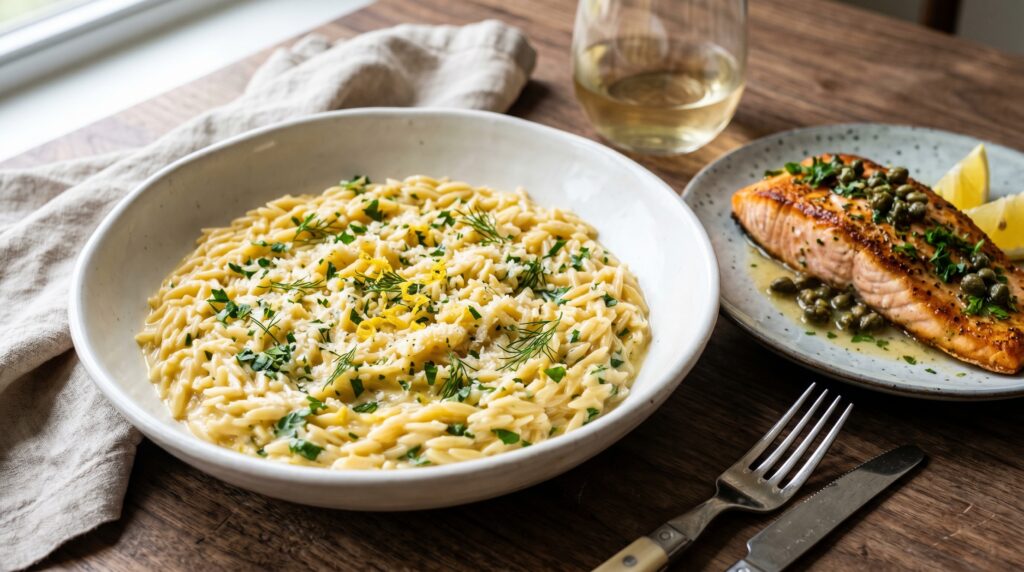
10. Lemon Butter Orzo
Prep time: 5 minutes | Cook time: 15 minutes | Serves: 4
Lemon butter orzo is the most elegant, most quickly achieved pasta-based side dish for salmon — the small, rice-shaped orzo in a glossy lemon butter sauce with fresh herbs creates a preparation that feels genuinely sophisticated with minimal effort.
Key ingredients: Orzo (250g), unsalted butter (40g), fresh lemon juice (3 tbsp) and zest (from 1 lemon), Parmesan (40g, finely grated), fresh dill (2 tbsp) and fresh flat-leaf parsley (2 tbsp), orzo cooking water (reserved), sea salt, cracked black pepper
Method: Cook orzo in generously salted boiling water until al dente. Reserve ½ cup of cooking water. Drain. In the same pot, melt butter with lemon juice. Add orzo and toss, adding cooking water gradually to create a glossy, coating sauce. Add Parmesan, herbs, and lemon zest off the heat.
What makes it special: The orzo’s starchy cooking water — combined with the butter and lemon — creates a naturally emulsified sauce of beautiful consistency that clings to each piece of orzo. This technique produces a pasta side dish that feels genuinely sauced rather than simply buttered.
Why it works with salmon: Lemon butter and dill are the flavors most classically associated with salmon — orzo in this dressing creates a side dish that is in constant, harmonious conversation with the salmon it accompanies.
Salad Side Dishes
11. Cucumber, Dill, and Red Onion Salad
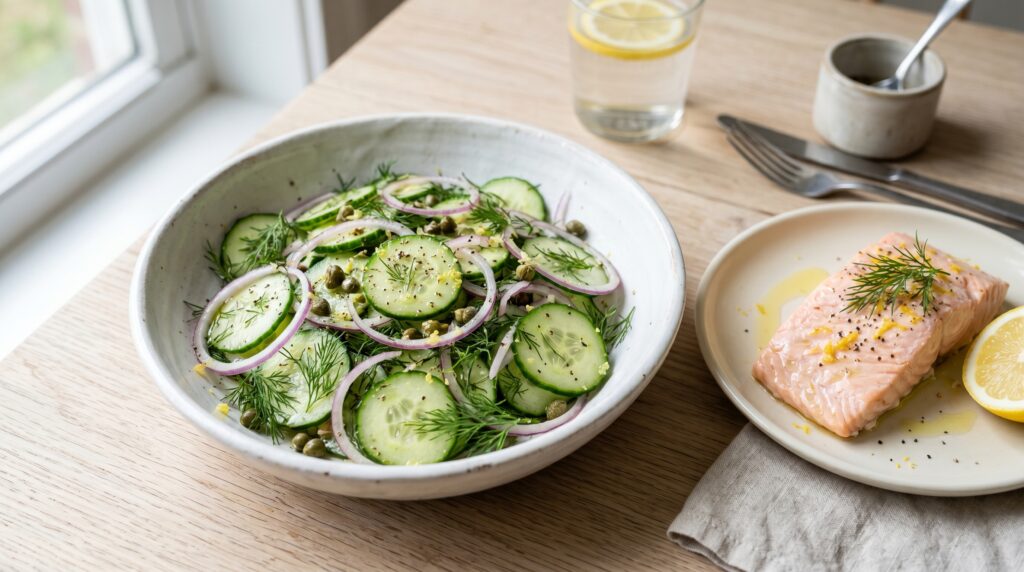
Prep time: 15 minutes + 30 minutes resting | No cook | Serves: 4
Cucumber, dill, and red onion salad is the most classically Scandinavian, most directly appropriate salmon side dish — the combination of cool, crisp cucumber, fragrant fresh dill, and the sharp bite of red onion in a light vinegar dressing is the flavoring most deeply associated with salmon across Nordic culinary tradition.
Key ingredients: English cucumber (1 large, very thinly sliced — on a mandoline if possible), red onion (½, very thinly sliced), fresh dill (generous bunch, roughly chopped), capers (1 tbsp), rice wine vinegar or white wine vinegar (3 tbsp), extra virgin olive oil (2 tbsp), a pinch of sugar, sea salt, cracked white pepper
Method: Combine cucumber, red onion, and capers in a bowl. Whisk together vinegar, olive oil, sugar, and salt. Pour over the vegetables. Add fresh dill generously. Toss to combine. Allow to rest for 30 minutes — the vinegar slightly softens the cucumber and onion, and the flavors meld.
What makes it special: The resting time — 30 minutes minimum — is the technique that distinguishes this salad from an immediately dressed version. The vinegar’s acidity slightly pickles the cucumber and softens the red onion’s sharpness, creating a more integrated, more complex flavor than a just-dressed salad.
Why it works with salmon: This salad is the essential salmon pairing of Nordic cuisine — the cucumber’s coolness, the dill’s fragrance, and the vinegar’s acidity are the precise flavor notes that counterbalance salmon’s richness most effectively.
12. Roasted Beet and Feta Salad
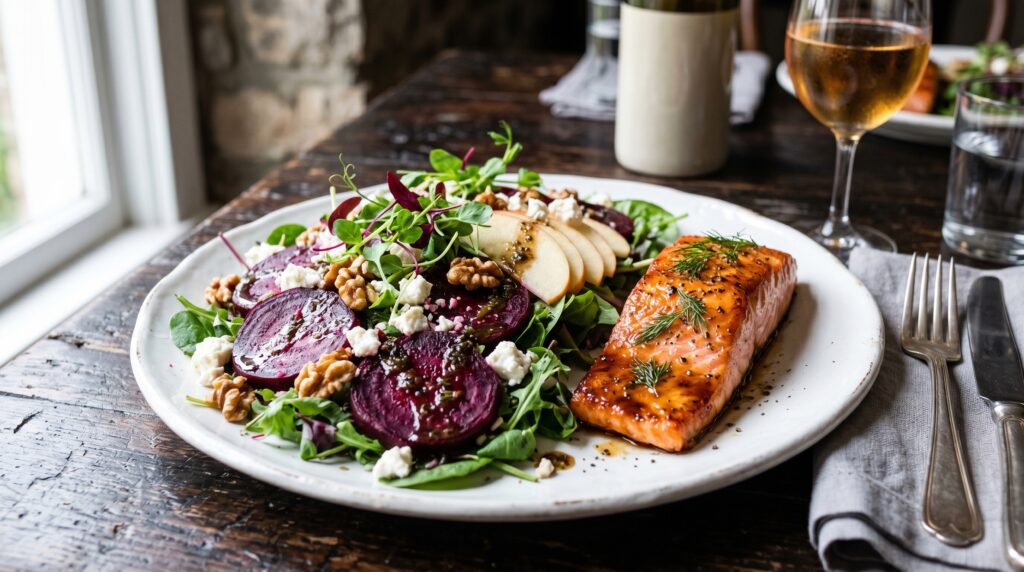
Prep time: 15 minutes | Cook time: 45 minutes (beet roasting) | Serves: 4
Roasted beet and feta salad is the most visually dramatic salmon side dish — the deep magenta of roasted beet alongside the coral-pink of salmon creates one of the most striking color combinations on any dinner plate, and the flavor contrast of earthy beet, tangy feta, and bright balsamic dressing makes this a pairing of genuine sophistication.
Key ingredients: Beetroot (3 medium, roasted at 200°C for 45 minutes until tender, then peeled and sliced), soft feta cheese (80g, crumbled), mixed baby leaves or watercress, toasted walnuts (40g), thin apple slices, microgreens. Balsamic-honey dressing: balsamic vinegar, honey, Dijon mustard, extra virgin olive oil, sea salt
Beetroot shortcut: Use vacuum-packed pre-cooked beetroot for a completely no-cook, immediately assembled salad of comparable quality.
What makes it special: The roasted beet’s earthy sweetness combined with the tangy feta, the bitter walnuts, and the bright acidic apple creates a salad with a wider flavor range than almost any other — every element brings something different to the bite.
Why it works with salmon: The earthy sweetness of roasted beet creates a complementary partnership with salmon’s natural sweetness, while the feta’s acidity provides the essential bright counterpoint to the fish’s richness.
13. Avocado and Mango Salsa
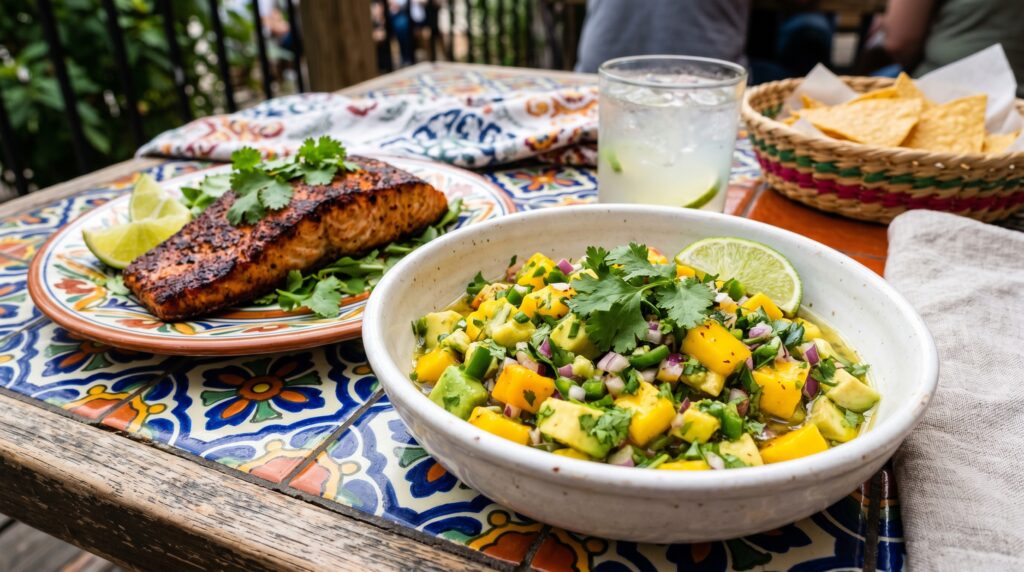
Prep time: 15 minutes | No cook | Serves: 4
Avocado and mango salsa is the most vibrant, most tropical salmon side — the combination of sweet mango, creamy avocado, fresh cilantro, and lime creates a fresh “salsa” that is simultaneously a side dish and a sauce for the salmon, functioning as both brilliantly.
Key ingredients: Ripe mango (1 large, diced), ripe avocado (1, diced), red onion (¼, very finely diced), fresh jalapeño (1 small, seeds removed and very finely diced), fresh cilantro (generous handful, roughly chopped), fresh lime juice (2 tbsp), extra virgin olive oil (1 tbsp), sea salt, cracked black pepper
Method: Combine all ingredients gently — fold rather than stir to preserve the avocado’s shape. Season generously. Taste and adjust lime and salt. Serve immediately or within 1 hour — the avocado begins to discolor after this time.
What makes it special: The mango salsa functions simultaneously as a vegetable side and as a sauce — its juices, released as the salsa rests, create a natural dressing that drapes over the salmon as it is spooned alongside, creating the most naturally integrated plate presentation in this collection.
Why it works with salmon: This salsa is specifically paired with boldly spiced salmon preparations — Cajun blackened salmon, jerk-style preparations, or heavily seasoned baked salmon. The tropical sweetness of the mango and the coolness of the avocado provide the perfect relief from the heat of a strongly seasoned fish.
14. Fennel and Orange Salad
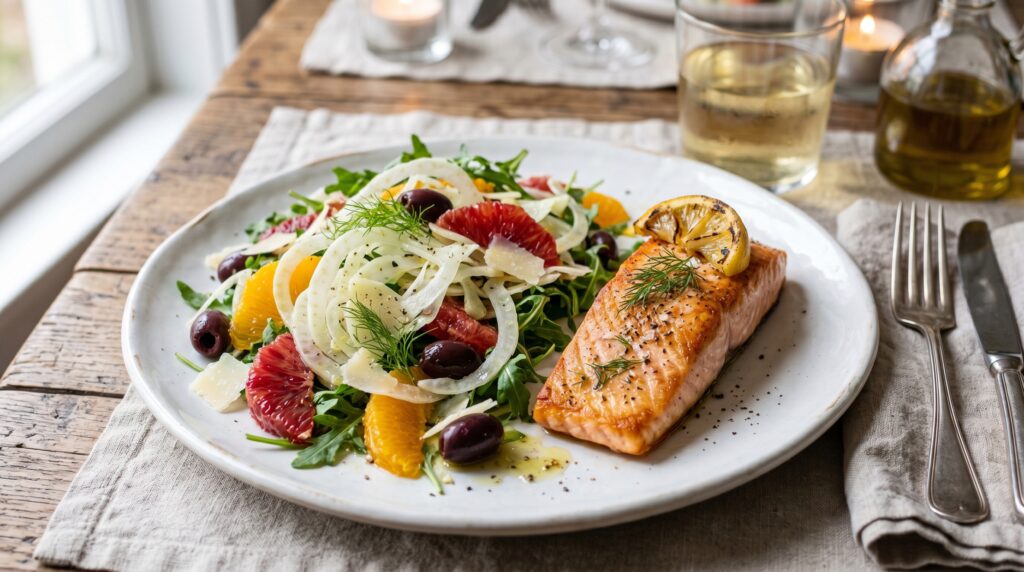
Prep time: 20 minutes | No cook | Serves: 4
Fennel and orange salad is the most sophisticated, most elegant salmon side dish in this collection — the anise-like freshness of raw fennel and the sweet, floral orange supremes create a salad of extraordinary refinement that elevates any salmon to dinner party quality.
Key ingredients: Fennel bulbs (2, shaved paper-thin on a mandoline — the thickness is critical), blood orange or navel orange (2, segmented into supremes), Kalamata olives (60g), arugula (a small amount, for pepper and color), shaved Parmesan, fresh fennel fronds. Dressing: fresh orange juice, extra virgin olive oil, white wine vinegar, sea salt, cracked black pepper
The mandoline is essential: Fennel cut thicker than 2mm is tough and unpleasant raw. A mandoline produces the paper-thin, almost translucent slices that soften in the dressing within minutes and become delicate and sweet.
What makes it special: The natural flavor affinity between fennel (anise-like, slightly sweet) and orange (floral, bright, acidic) is one of the great natural flavor partnerships in Italian cooking — together they create a salad that tastes significantly more complex than its ingredient count suggests.
Why it works with salmon: Fennel has a deep, historical affinity with fish — its anise character is one of the most classically appropriate flavor companions for salmon, providing a freshness and complexity that herb-based sides cannot quite replicate.
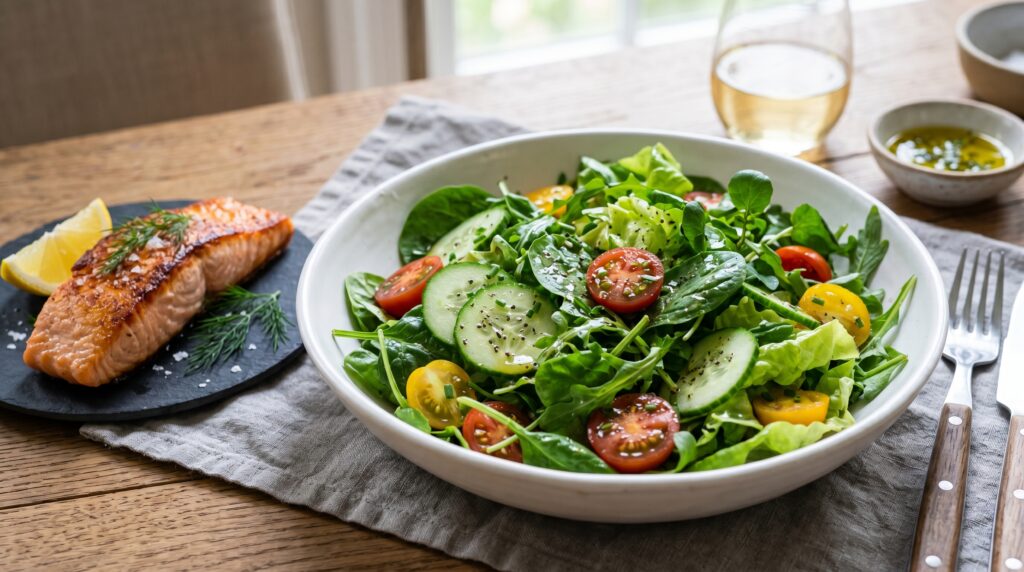
15. Simple Green Salad with Lemon Vinaigrette
Prep time: 10 minutes | No cook | Serves: 4
Simple green salad with lemon vinaigrette is the most versatile, most universally appropriate salmon side in this collection — a properly dressed salad of fresh, varied green leaves with a bright, well-emulsified lemon vinaigrette works beautifully alongside every salmon preparation from the most casual weeknight to the most elegant dinner party.
Key ingredients: Mixed salad leaves (baby spinach, watercress, arugula, butter lettuce — approximately 150g total), cucumber (thinly sliced), cherry tomatoes (halved), fresh chives (snipped), optional: shaved radish, thinly sliced fennel, toasted seeds. Lemon vinaigrette: fresh lemon juice (2 tbsp), Dijon mustard (½ tsp — emulsifier), extra virgin olive oil (5 tbsp), shallot (1 small, very finely minced), sea salt, cracked black pepper
The emulsification technique: Combine lemon juice, Dijon, shallot, salt, and pepper in a jar. Add olive oil. Seal and shake vigorously for 30 seconds — the Dijon acts as an emulsifier, creating a stable, slightly creamy vinaigrette that coats every leaf evenly rather than sitting as separate layers.
What makes it special: A properly emulsified, properly seasoned vinaigrette — the acid balanced by the oil, the salt measured, not guessed — transforms a simple green salad into a genuinely excellent preparation. The most common failure of green salads is under-seasoning and inadequate emulsification.
Why it works with salmon: A fresh green salad is the most cleansing, most palate-refreshing accompaniment to any rich, oily protein. The lemon vinaigrette’s acidity cuts through the salmon’s richness and makes each bite feel lighter and fresher than the fish alone. It is the most universally appropriate salmon side dish available.
Salmon and Side Dish Pairing Matrix
| Salmon Preparation | Best Side Dishes | Why |
|---|---|---|
| Pan-seared with lemon butter | Roasted asparagus, creamy mash, green salad | Classic flavor echoes, textural contrast |
| Teriyaki glazed | Lemon herb quinoa, roasted broccoli | Neutral grain absorbs glaze; char complements sweet |
| Cajun blackened | Avocado mango salsa, creamy mash | Cool, fresh relief from spice; comforting base |
| Miso glazed | Wild rice pilaf, sautéed spinach | Earthy grain; gentle greens complement umami |
| Herb-crusted baked | Roasted new potatoes, green salad | Herby echo; classic clean pairing |
| Poached/delicate | Cucumber dill salad, lemon orzo | Delicate sides for delicate preparation |
| Honey garlic | Elegant sides for a celebration format | Sweet echo; char contrast |
| Whole baked side | Fennel orange salad, roasted new potatoes | Elegant sides for celebration format |
Make-Ahead Guide
Can be prepared fully in advance: Cucumber and dill salad (up to 4 hours ahead), roasted beet salad (beets up to 2 days ahead, assembled last minute), lemon vinaigrette (keeps 1 week refrigerated), wild rice pilaf (2 days refrigerated), lemon herb quinoa (2 days refrigerated)
Best prepared fresh: Avocado mango salsa (within 1 hour), garlic butter green beans (best immediately served), sautéed spinach (best immediately served), simple green salad (dress immediately before serving)
30-minute weekend prep that saves the whole week: Roast a full head of garlic for mash, cook a batch of quinoa, make a jar of lemon vinaigrette — these three preparations provide the foundations for multiple salmon dinners throughout the week with minimal additional effort.
For comprehensive food safety guidance on storing all prepared side dishes, our Food Safety 101: Storage, Handling, and Temperature Guide is essential reading.
Frequently Asked Questions
What is the most classic side dish for salmon?
The most classically appropriate side dishes for salmon are roasted asparagus, cucumber and dill salad, and creamy mashed potato — each has a centuries-long history of pairing with salmon across European culinary tradition. The cucumber-dill combination is specifically associated with Scandinavian salmon preparation, while asparagus and mashed potato are the classic French and British accompaniments.
What vegetables go best with salmon?
The vegetables that pair most naturally with salmon are asparagus, green beans, spinach, broccoli, fennel, cucumber, and roasted carrots. All share one or more of the key pairing qualities: brightness (asparagus, green beans), freshness (cucumber, spinach), earthiness (broccoli, carrots), or flavor affinity (fennel). Avoid strongly sulfurous vegetables (Brussels sprouts, cabbage), which can clash with salmon’s flavor.
What grains work best alongside salmon?
Quinoa, wild rice, orzo, and couscous are the best grain accompaniments for salmon. Quinoa’s nutty, slightly earthy flavor complements salmon without competing. Wild rice adds texture and visual interest. Orzo in lemon butter is a classic Italian pairing. Plain white rice is also excellent — its neutrality allows salmon preparations with bold seasonings (teriyaki, miso) to remain the flavor focus.
Should I serve starchy sides or lighter sides with salmon?
The salmon preparation should guide this decision. A simply prepared salmon with delicate seasonings benefits from a more substantial side (mashed potato, risotto, grain pilaf) that provides the meal’s necessary substance. A richly glazed or boldly seasoned salmon (teriyaki, Cajun) is better served by lighter, fresher accompaniments (quinoa salad, green salad, cucumber salad) that counterbalance rather than add to the overall richness of the plate.
According to Harvard T.H. Chan School of Public Health, salmon is one of the most nutritionally beneficial proteins available, providing high-quality complete protein, essential omega-3 fatty acids (EPA and DHA), vitamin D, vitamin B12, and selenium in meaningful quantities per serving. Pairing it with vegetable-rich side dishes — as the majority of recipes in this guide suggest — creates meals of comprehensive nutritional value that represent some of the most healthful dinners available.
Conclusion
From the timeless elegance of roasted asparagus with lemon and Parmesan to the vibrant freshness of avocado and mango salsa, from the comforting depth of creamy garlic mashed potatoes to the sophisticated refinement of fennel and orange salad, from the quick practicality of garlic butter green beans to the substantial occasion-worthiness of wild rice pilaf with mushrooms — these 15 side dishes for salmon represent the full range of what a great salmon dinner can achieve.
The best salmon dinner is never simply a well-cooked piece of fish — it is the complete plate, where every element has been chosen to complement, contrast, and harmonize with the others, creating something genuinely greater than the sum of its components. The right side dish amplifies the salmon’s flavor, provides textural variety, creates visual beauty, and completes the nutritional picture of the meal.
Master a handful of these side dishes, understand the pairing principles, and discover that a great salmon dinner is always less than 30 minutes away — with the right accompaniments already in your repertoire.
For more salmon recipes, side dish ideas, and culinary inspiration across every occasion and skill level, explore our full collection at skillsinthekitchen.com.