
18 Hearty Fried Rice Recipes: Bold, Flavorful & Easy

Introduction
Fried rice is one of the most universally beloved, most practically perfect dishes in the entire culinary world. It is fast — ready in under 15 minutes once the prep is done. It is economical — built from leftover cooked rice and whatever protein and vegetables are available. It is endlessly versatile — capable of carrying the flavors of Chinese, Thai, Japanese, Korean, Indonesian, Indian, and countless other culinary traditions with equal authenticity. And it is, when properly made, one of the most deeply satisfying, genuinely exciting meals in the home cook’s repertoire.
The secret to genuinely great fried rice — the kind that tastes like a restaurant rather than a home kitchen — lies in understanding a handful of fundamental principles that most recipes mention but few fully explain. Day-old rice. Screaming hot wok. Cooking in batches. Not stirring. The elusive, smoky character of wok hei. These are the techniques that transform acceptable fried rice into something extraordinary.
In this guide, we have compiled 18 of the most delicious, most creative, and most satisfying fried rice recipes — spanning the classic preparations that have become global standards, regional specialties from across Asia, bold international-fusion interpretations, and practical weeknight variations that prove fried rice is always the right answer to the question of what to cook tonight.
Let’s fire up the wok.
The Fundamentals of Perfect Fried Rice

The Day-Old Rice Rule (Non-Negotiable)
This is the single most important principle of great fried rice and the one most frequently ignored. Freshly cooked rice is too moist — it steams rather than fries in the wok, producing a clumped, sticky, pale result with no caramelization. Day-old rice that has been refrigerated overnight has lost enough moisture for its starch structure to firm up, allowing each grain to fry separately and develop the golden, slightly toasted character that defines great fried rice.
If you need fried rice today and only have fresh rice, spread the hot cooked rice in a thin layer on a baking tray and place it in the refrigerator for 1 hour. This accelerated drying produces rice that behaves similarly to day-old.
Maximum Heat at All Times
Fried rice requires the highest heat your stove can produce. The wok or pan should be smoking before any ingredient is added. Ingredients added to an insufficiently hot wok steam in their own moisture rather than fry — producing the characteristic pale, soggy fried rice of an underpowered kitchen.
Cook in Batches — Never Crowd
Adding too many ingredients to the wok at once drops the temperature dramatically. Cook the protein first in a single layer, remove it, cook the vegetables, remove them, then combine everything together at the very end with the rice and sauce. This batching preserves the high temperature throughout cooking and ensures every component develops maximum flavor.
The Undisturbed Press
After adding rice to the hot wok, press it flat against the surface with the back of a spatula and leave it completely undisturbed for 90 seconds to 2 minutes. This contact with the screaming hot wok surface creates the caramelized, golden, slightly crispy patches that are the hallmark of great fried rice. Only then toss and stir.
Season Confidently
Fried rice is a deeply savory preparation that requires confident seasoning — soy sauce, sesame oil, oyster sauce, and fish sauce are not additions to taste cautiously but flavor foundations to apply with conviction. Under-seasoned fried rice is the most common failure mode in home cooking.
Our Mise en Place: How to Organize Your Cooking Like a Pro explains the preparation approach that makes wok cooking genuinely effortless — having everything cut, measured, and ready before the wok goes on the heat is essential.
Essential Fried Rice Pantry
Soy sauce (light and dark): Light soy sauce for seasoning; dark soy sauce for color and depth.
Oyster sauce: Thick, rich, slightly sweet — adds umami depth instantly.
Sesame oil: For finishing, never for cooking. Applied off the heat, its fragrance defines many fried rice preparations.
Fish sauce: For Southeast Asian preparations. Pungent alone but indispensable in the right amounts.
Shaoxing rice wine: A Chinese cooking wine that adds nutty depth. Dry sherry substitutes adequately.
White pepper: The spice of choice for most Chinese fried rice — its heat is different from black pepper, slightly sharper and more fragrant.
18 Hearty Fried Rice Recipes
Classic Fried Rice Recipes
1. Classic Egg Fried Rice

Prep time: 5 minutes | Cook time: 8 minutes | Serves: 2
Classic egg fried rice is the foundation of the entire fried rice universe — the preparation that teaches every fundamental technique, the dish that every great fried rice cook masters before moving on, and arguably the most satisfying of all fried rice preparations in its pure, unadorned form.
Key ingredients: Day-old cooked jasmine or long-grain rice (2 cups, cold), eggs (3, beaten), light soy sauce, dark soy sauce (a few drops for color), sesame oil, green onion (sliced), white pepper, vegetable oil, garlic (minced)
Method: Heat the wok until smoking. Add vegetable oil. Add beaten eggs — scramble vigorously in the hot oil until just set in large, soft ribbons. Remove and set aside. Return the wok to maximum heat. Add more oil, then garlic — stir for 30 seconds. Add cold rice and press flat — leave undisturbed for 90 seconds. Toss. Season with soy sauce and white pepper. Return eggs and fold through gently — breaking into smaller pieces as you go. Add sesame oil to the heat. Scatter green onions.
What makes it special: The eggs added back to the rice at the end — rather than scrambled in the rice — maintain their distinct, slightly golden ribbons of texture. The contrast between the soft, golden egg and the slightly crispy, caramelized rice creates the textural interplay that defines great egg fried rice.
2. Chicken Fried Rice

Prep time: 10 minutes | Cook time: 12 minutes | Serves: 4
Chicken fried rice is the most universally ordered version at Chinese restaurants around the world — tender, well-seasoned chicken with egg, vegetables, and perfectly fried rice in a savory, slightly sweet soy-oyster sauce.
Key ingredients: Day-old jasmine rice, chicken breast (diced, marinated briefly in soy sauce, cornstarch, and white pepper), eggs (beaten), frozen peas, carrot (finely diced), onion (diced), garlic, green onion. Sauce: light soy sauce, oyster sauce, dark soy sauce, sesame oil, white pepper
Velveting the chicken: Toss the chicken dice in a mixture of soy sauce, cornstarch, and a splash of water for 15 minutes before cooking. This thin coating produces chicken of extraordinary juiciness in the wok — a key technique of Chinese restaurant cooking applied at home.
What makes it special: The oyster sauce in the seasoning adds a depth and richness that soy sauce alone cannot provide — it is the ingredient that makes restaurant chicken fried rice taste more complex and satisfying than most home versions.
3. Shrimp Fried Rice

Prep time: 10 minutes | Cook time: 10 minutes | Serves: 4
Shrimp fried rice is the most popular seafood variation — the natural sweetness of properly cooked shrimp pairs beautifully with the savory, slightly salty character of soy-seasoned fried rice, creating a combination of immediate, crowd-pleasing appeal.
Key ingredients: Day-old jasmine rice, large shrimp (peeled and deveined), eggs (beaten), frozen peas, corn (frozen or canned), carrot (finely diced), garlic, fresh ginger, green onion. Sauce: light soy sauce, oyster sauce, sesame oil, white pepper, rice vinegar (a splash for brightness)
Shrimp timing: Shrimp cook in 90 seconds in a screaming hot wok — they go from perfectly cooked to rubbery in a matter of moments. Cook them separately first (90 seconds per side until just pink), remove immediately, and return them to the finished fried rice at the very last moment to warm through.
What makes it special: The brief sear on the shrimp — developing golden, caramelized edges — adds a dimension of flavor to the finished dish that plain, pale shrimp added to rice cannot match. The caramelization creates a slightly sweet, nutty character that amplifies the shrimp’s natural sweetness.
4. Beef Fried Rice

Prep time: 15 minutes | Cook time: 12 minutes | Serves: 4
Beef fried rice is the most robustly flavored of the classic protein variations — the rich, slightly smoky character of well-seared beef combined with mushrooms and a deep, oyster sauce-based seasoning creates a fried rice of genuinely bold, satisfying flavor.
Key ingredients: Day-old jasmine rice, beef sirloin or flank steak (thinly sliced against the grain, marinated in soy sauce, cornstarch, and sesame oil), mixed mushrooms (shiitake, cremini — sliced), eggs (beaten), bean sprouts, green onion, garlic, and fresh ginger. Sauce: oyster sauce, dark soy sauce, light soy sauce, sesame oil, white pepper
Beef slicing technique: Slice the beef paper-thin against the grain for the most tender result in a fast stir fry application. Partially freezing the beef (30 minutes in the freezer) makes thin slicing significantly easier.
What makes it special: The combination of beef with shiitake mushrooms creates a double layer of deep, savory umami — both ingredients contain high concentrations of glutamate, and together they create an intensely savory flavor synergy that makes this the richest-tasting of all the fried rice variations.
5. Vegetable Fried Rice

Prep time: 15 minutes | Cook time: 10 minutes | Serves: 4
Vegetable fried rice is the most colorful, most nutritionally diverse, and most versatile of all fried rice preparations — the variety of vegetables creates a dish of extraordinary visual appeal and a nutritional breadth that protein-centric versions cannot match.
Key ingredients: Day-old jasmine rice, eggs (beaten), broccoli (cut into small florets, blanched), carrot (finely diced), red bell pepper (diced), corn (frozen), edamame (shelled), garlic, fresh ginger, green onion. Sauce: light soy sauce, oyster sauce, sesame oil, white pepper, rice vinegar
Vegetable preparation: All vegetables should be cut into small and uniform pieces roughly the same size as a rice grain, cook evenly, and distribute throughout the rice more naturally. Pre-blanch denser vegetables (broccoli, carrots) briefly before adding to the wok.
What makes it special: The variety of vegetables — each with its own texture, color, and flavor — creates a fried rice that is as visually exciting as it is nutritious. The combination of colors (green, orange, red, yellow) makes this the most visually impressive variation in the collection.
Asian Regional Fried Rice Specialties
6. Thai Basil Fried Rice (Khao Pad Krapow)

Prep time: 10 minutes | Cook time: 10 minutes | Serves: 2
Thai basil fried rice — Khao Pad Krapow — is the most popular street food fried rice in Thailand, sold at lunch counters and food stalls throughout the country. It is defined by the unmistakable fragrance of holy basil, the heat of fresh chilies, and the deeply savory combination of oyster sauce and fish sauce, topped with a crispy-edged fried egg.
Key ingredients: Day-old jasmine rice, ground chicken or beef, fresh Thai holy basil leaves (Italian basil substitutes adequately), fresh red and green chilies (sliced), garlic, eggs. Sauce: oyster sauce, fish sauce, dark soy sauce, sugar
The fried egg: The crispy-edged fried egg on top of Khao Pad Krapow is not a garnish — it is an integral component. Fry in a generous amount of hot oil until the edges are frilly and golden while the yolk remains runny. The broken yolk mixed through the rice as you eat creates a natural richness that ties the entire dish together.
What makes it special: Thai holy basil wilted into the hot rice off the heat releases a fragrance of extraordinary intensity — more peppery and less sweet than Italian basil, with a clove-like warmth that is completely distinctive. It is the ingredient that defines this dish.
7. Pineapple Fried Rice (Thai Style)

Prep time: 20 minutes | Cook time: 12 minutes | Serves: 4
Thai pineapple fried rice — Khao Pad Sapparot — served in a carved pineapple shell is one of the most visually spectacular fried rice presentations and one of the most genuinely interesting flavor combinations — the sweet, acidic pineapple pieces against the savory, spiced rice create a sweet-savory balance that is uniquely Thai.
Key ingredients: Day-old jasmine rice, fresh pineapple (cubed — fresh is significantly better than canned), shrimp (peeled), eggs (beaten), cashews (toasted), golden raisins (optional), onion, garlic, green onion, and fresh red chili. Sauce: fish sauce, oyster sauce, curry powder (a teaspoon — gives the characteristic golden color), soy sauce, sugar
The pineapple shell presentation: Halve a whole pineapple lengthwise, hollow out the flesh, and use the shells as serving vessels. Dice the pineapple flesh for use in the recipe. The shell retains heat briefly and creates the most visually impressive presentation.
What makes it special: The combination of the toasted cashews (crunch, nuttiness) and the golden raisins (sweetness, chew) alongside the acidic pineapple and savory seafood creates a fried rice with five distinct flavor and texture notes simultaneously — a complexity that makes it genuinely exceptional.
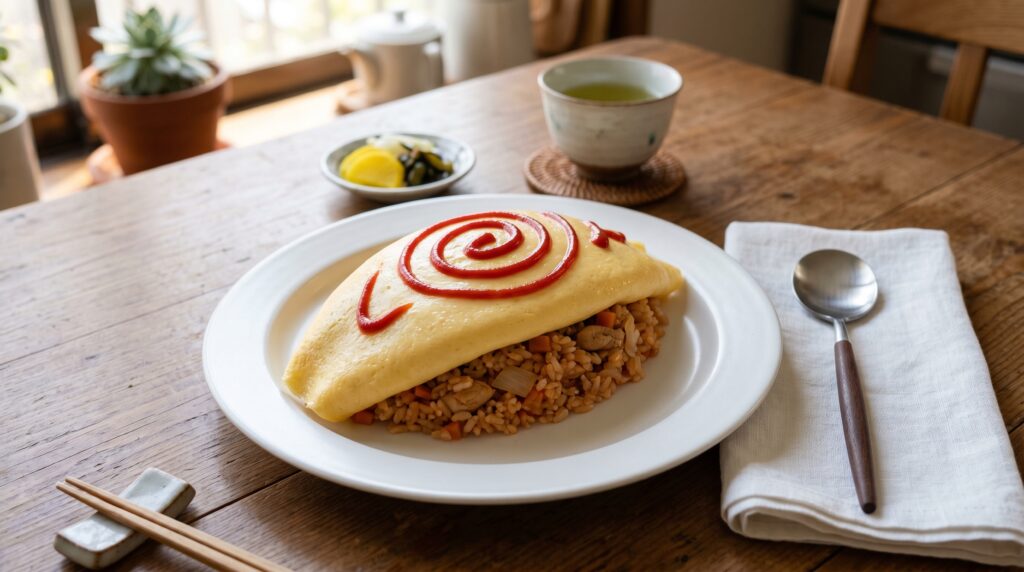
8. Japanese Omurice (Omelette Fried Rice)
Prep time: 15 minutes | Cook time: 15 minutes | Serves: 2
Omurice — Japanese omelette rice — is one of the most beloved Japanese comfort foods, a westernized Japanese dish that has been part of the country’s yoshoku (western-style Japanese cooking) tradition for over a century. Ketchup-seasoned chicken fried rice wrapped in a smooth, barely-set egg omelette, finished with a ketchup drizzle.
Key ingredients: Day-old short-grain or jasmine rice, chicken breast (finely diced), onion (finely diced), frozen peas, and garlic. Ketchup seasoning: ketchup, soy sauce, Worcestershire sauce (a few drops), salt, white pepper. Egg omelette: eggs (3 per serving, beaten with a splash of cream), butter, salt
The omelette technique: The omurice omelette must be smooth, barely set, and extremely tender — cooked in butter over medium heat, swirled constantly until just set, then draped over the rice mound while still slightly creamy in the center. This is the technique that distinguishes an authentic omurice from a dry, rubbery imitation.
What makes it special: The ketchup — used unashamedly as the primary seasoning for the rice — creates a sweet, tangy, nostalgic flavor that is completely distinctive to Japanese yoshoku cooking and completely delicious despite its unexpected simplicity.
9. Korean Kimchi Fried Rice (Kimchi Bokkeumbap)

Prep time: 10 minutes | Cook time: 10 minutes | Serves: 2
Korean kimchi fried rice is one of the most deeply flavored fried rice preparations in the entire collection — the fermented, complex heat of kimchi imparts a depth and character to the rice that transforms a simple preparation into something of genuine culinary excitement.
Key ingredients: Day-old short-grain or jasmine rice, kimchi (aged kimchi produces the best flavor — it is more tangy and complex than fresh), kimchi brine (from the kimchi jar — do not discard this), silken tofu (cubed) or thinly sliced beef, onion, garlic, green onion. Sauce: gochujang, soy sauce, sesame oil, sugar
The kimchi brine: The brine from the kimchi jar is one of the most flavorful ingredients available — a concentrated, fermented, spicy liquid that seasons the rice beautifully when added alongside the fresh kimchi. Use it generously.
What makes it special: The fermented, complex flavor of aged kimchi — which has undergone weeks or months of lacto-fermentation — creates an umami depth in the fried rice that no fresh ingredient can replicate. This is one of the few fried rice preparations where the primary flavoring ingredient is more important than the cooking technique.
10. Indonesian Nasi Goreng

Prep time: 15 minutes | Cook time: 12 minutes | Serves: 2
Nasi Goreng — Indonesia’s national dish — is one of the most distinctive and deeply flavored fried rice preparations in the world. Its characteristic dark color and complex, slightly sweet-savory depth come from kecap manis — Indonesian sweet soy sauce — combined with shrimp paste (terasi) and a proprietary spice blend that makes Indonesian fried rice immediately identifiable.
Key ingredients: Day-old long-grain or jasmine rice, shrimp (peeled), eggs (beaten), bean sprouts, green onion, garlic, shallots, fresh red chili. Nasi goreng seasoning: kecap manis (sweet soy sauce — the defining ingredient), shrimp paste (terasi — use a very small amount, it is powerful), regular soy sauce, fish sauce
Kecap manis: Indonesian sweet soy sauce — thick, dark, and richly flavored with palm sugar — is the ingredient that makes nasi goreng irreplaceable. It cannot be substituted with regular soy sauce. It is available in Asian grocery stores and online.
What makes it special: The combination of kecap manis and shrimp paste creates a flavor of extraordinary depth and complexity — sweet, salty, savory, and slightly funky simultaneously — that makes nasi goreng the most distinctive-tasting fried rice in this entire collection.
Fusion and International Fried Rice
11. Mexican-Inspired Chorizo Fried Rice

Prep time: 10 minutes | Cook time: 12 minutes | Serves: 4
Mexican-inspired fried rice using beef chorizo brings the bold, spiced, paprika-rich flavors of Mexican cooking into the fried rice format — the chorizo’s seasoned fat colors and flavors the entire dish as it renders, creating a rice of extraordinary richness and depth.
Key ingredients: Day-old long-grain rice, beef chorizo (removed from casing and crumbled), eggs (beaten), corn, black beans (canned, drained), jalapeño (finely diced), garlic, onion, green onion. Seasoning: cumin, smoked paprika, lime juice. Toppings: diced avocado, fresh cilantro, crumbled feta or cotija, lime wedges
Method: Cook the crumbled chorizo in the hot wok — the fat renders out, turning red-orange from the paprika. Use this flavored fat to fry everything else. The seasoned fat is the flavor foundation of the entire dish.
What makes it special: The chorizo’s seasoned fat — deeply smoky, paprika-rich, and intensely savory — infuses every grain of rice as it fries, creating a flavor in the base that is established before any sauce is added.
12. Indian Masala Fried Rice

Prep time: 15 minutes | Cook time: 12 minutes | Serves: 4
Indian masala fried rice brings the fragrant, warming spices of South Indian cooking into the fried rice format — mustard seeds, curry leaves, cumin, turmeric, and garam masala create a rice of extraordinary aromatic depth that is completely unlike any other fried rice on this list.
Key ingredients: Day-old basmati rice, eggs (beaten), mixed vegetables (peas, carrot, corn), onion, garlic, fresh ginger, cashews, vegetable oil. Spices: cumin seeds, mustard seeds (for tempering), turmeric, garam masala, dried red chili, curry leaves
Tempering technique: The first step of this recipe is tempering — frying whole spices (mustard seeds, cumin seeds, curry leaves) in hot oil until they pop and crackle, releasing their essential oils into the oil. This tempered oil becomes the flavor foundation of the entire dish.
What makes it special: The mustard seeds popping in hot oil — their sharp, slightly bitter heat blooming into the cooking oil — creates a flavor foundation that is distinctly and unmistakably South Indian, making this fried rice immediately identifiable and deeply satisfying.
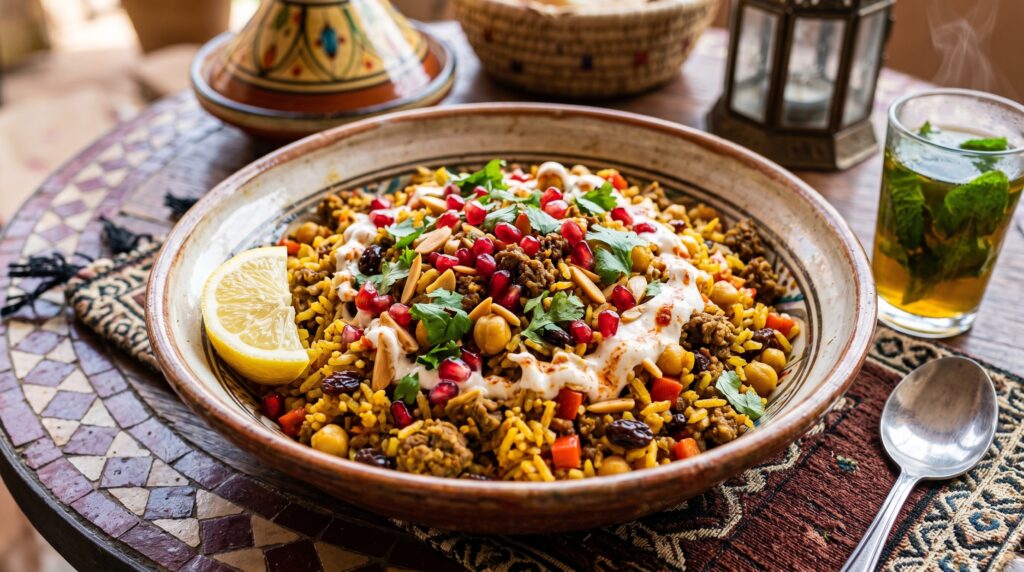
13. Moroccan Spiced Lamb Fried Rice
Prep time: 15 minutes | Cook time: 15 minutes | Serves: 4
Moroccan-spiced lamb fried rice brings the warmly aromatic flavors of North African cooking — ras el hanout, cinnamon, cumin, preserved lemon — into the fried rice format, creating a dish that bridges culinary traditions in a genuinely exciting way.
Key ingredients: Day-old long-grain or basmati rice, ground lamb (browned with ras el hanout, cinnamon, cumin, and garlic), canned chickpeas, golden raisins, toasted almond slivers, red bell pepper, and onion. Seasoning: ras el hanout, cumin, cinnamon, preserved lemon (finely chopped), lemon juice. Topping: pomegranate seeds, fresh cilantro, harissa yogurt
What makes it special: The combination of savory lamb, sweet raisins, crunchy almonds, and tart preserved lemon in a warmly spiced rice creates a dish with a complex, layered flavor profile — sweet, savory, sour, and warmly spiced simultaneously — that is entirely distinctive and deeply satisfying.
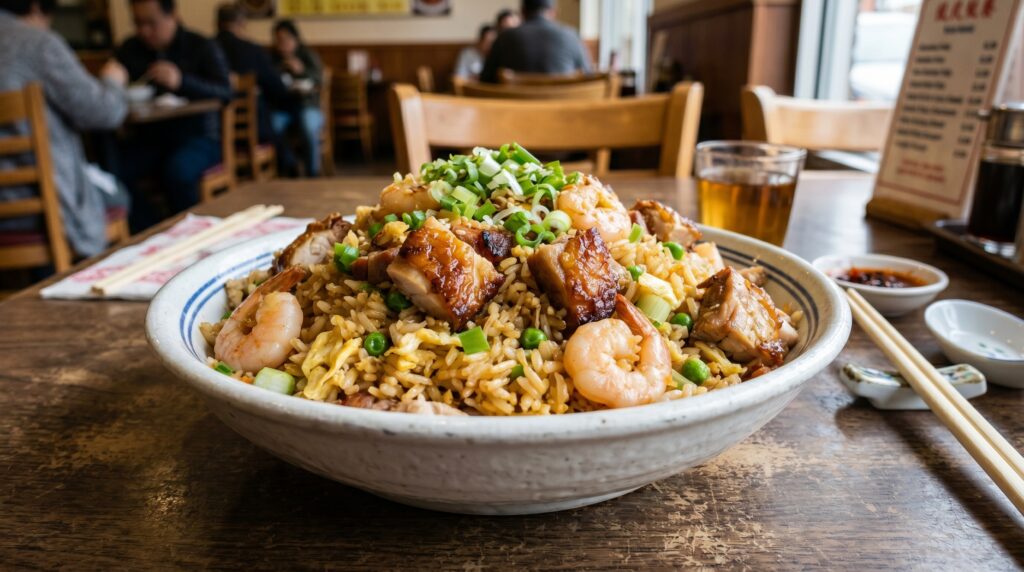
14. Chinese Yang Chow Fried Rice
Prep time: 15 minutes | Cook time: 12 minutes | Serves: 4
Yang Chow fried rice — originating from Yangzhou in Jiangsu province and now one of the most ordered fried rice dishes in Chinese restaurants globally — is the definitive Chinese combination fried rice. Its generous combination of shrimp, roasted chicken, and egg in a clean, well-seasoned rice creates the perfect balance of flavors and textures.
Key ingredients: Day-old long-grain or jasmine rice, large shrimp (peeled), cooked chicken (diced — rotisserie or leftover roasted chicken works perfectly), eggs (beaten), frozen peas, green onion. Sauce: light soy sauce, oyster sauce, sesame oil, white pepper, a splash of Shaoxing rice wine
What makes it special: The combination of shrimp and chicken — two proteins with complementary textural and flavor qualities — creates a fried rice of extraordinary substance and variety. Yang Chow is the “everything” fried rice — every forkful contains multiple proteins, vegetables, and rice in a perfectly seasoned balance.
Vegetarian and Special Fried Rice
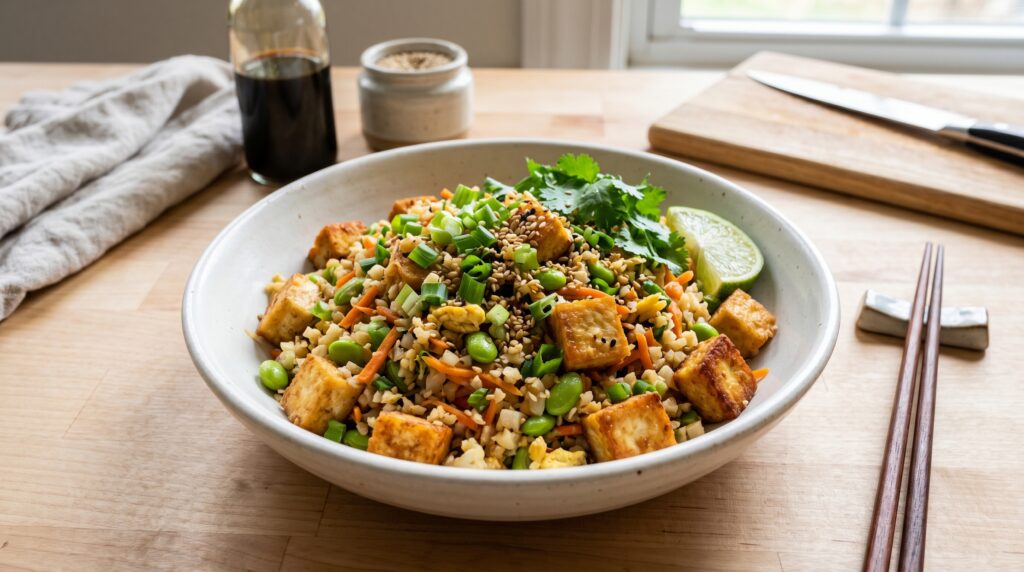
15. Cauliflower and Tofu Fried Rice
Prep time: 15 minutes | Cook time: 15 minutes | Serves: 4
Cauliflower and tofu fried rice is the low-carb, high-protein alternative — cauliflower processed into rice-sized pieces substitutes for grain rice, creating a dish with the same satisfying flavors and textures of conventional fried rice at a fraction of the carbohydrate content.
Key ingredients: Cauliflower (pulsed in a food processor to rice-sized pieces), firm tofu (pressed, cubed, and pan-fried until golden and crispy), edamame, carrot (shredded), eggs (beaten), garlic, fresh ginger, green onion. Sauce: soy sauce, sesame oil, rice vinegar, oyster sauce, white pepper
Pressing the tofu: Press firm tofu between paper towels under a heavy object for 30 minutes to remove as much moisture as possible. This produces tofu that fries to a genuinely crispy, golden exterior rather than steaming and remaining soft.
What makes it special: Properly prepared crispy tofu — golden and slightly crunchy on the outside, tender within — provides a genuinely satisfying textural element that makes this cauliflower rice as enjoyable as a conventional preparation.
16. Mushroom and Edamame Fried Rice

Prep time: 15 minutes | Cook time: 12 minutes | Serves: 4
Mushroom and edamame fried rice is the most deeply umami-rich vegetarian fried rice — the combination of mixed mushrooms (cremini, shiitake, oyster), each with their own distinct earthy character, creates a flavor depth that rivals any meat-based preparation.
Key ingredients: Day-old jasmine rice, mixed mushrooms (cremini, shiitake, oyster — sliced and sautéed until deeply golden), edamame (shelled), eggs (beaten), garlic, fresh ginger, green onion, crispy fried shallots. Sauce: oyster sauce, soy sauce, dark soy sauce, sesame oil, white pepper
Mushroom caramelization: Sauté the mushrooms separately in a hot pan until they are deeply golden and all their moisture has evaporated — this is the most important step in making mushroom fried rice genuinely outstanding. Wet, underdeveloped mushrooms add nothing to a fried rice; properly caramelized mushrooms add everything.
17. Pea and Egg Fried Rice

Prep time: 5 minutes | Cook time: 8 minutes | Serves: 2
Pea and egg fried rice is the most minimal, most elegant, and most quickly prepared recipe in this collection — nothing more than rice, eggs, frozen peas, soy sauce, and sesame oil — yet it produces a deeply satisfying, beautifully balanced dish that demonstrates how much great flavor can come from how few ingredients when the technique is right.
Key ingredients: Day-old jasmine rice, eggs (3, beaten), frozen peas, garlic, green onion, light soy sauce, sesame oil, white pepper, vegetable oil
What makes it special: The peas — bright, slightly sweet, tender — provide the one textural and flavor element that distinguishes this simple fried rice from plain egg fried rice. Their color against the golden rice and egg is visually beautiful, and their gentle sweetness balances the soy’s saltiness perfectly.
18. Fried Rice with Crispy Garlic and Herbs

Prep time: 15 minutes | Cook time: 15 minutes | Serves: 2
Fried rice with crispy garlic and fresh herbs is the simplest, most technique-focused recipe in the collection — plain egg fried rice elevated to extraordinary heights by a generous topping of shatteringly crispy fried garlic, an abundance of fresh herbs, and a drizzle of chili oil. The garlic is the star.
Key ingredients: Day-old jasmine rice, eggs (beaten), garlic (thinly sliced — generous amount), neutral oil (for frying the garlic), fresh cilantro, fresh Thai basil, green onion, chili oil (for finishing), lime wedges. Seasoning: fish sauce, soy sauce, white pepper
Crispy garlic technique: Fry thinly sliced garlic in cool oil, bringing the temperature up slowly — this gentle, even frying produces evenly golden, crispy garlic chips without any bitter burning. Watch carefully and remove from the oil just before they reach the desired golden color — they continue to darken slightly after removal from the heat.
What makes it special: The crispy garlic chips — golden, slightly nutty, intensely aromatic, and with a delicate crunch — transform a simple fried rice into something genuinely extraordinary. Their texture and flavor are completely different from any other garlic preparation and are worth making specifically for this dish.
Fried Rice Flavor Profile Guide
| Recipe | Primary Flavor | Heat Level | Cuisine | Best Protein |
|---|---|---|---|---|
| Classic Egg | Savory, clean | Mild | Chinese | Egg only |
| Chicken | Savory, slightly sweet | Mild | Chinese-American | Chicken |
| Shrimp | Savory, slightly sweet | Mild | Chinese | Shrimp |
| Beef | Rich, deeply savory | Mild | Chinese | Beef |
| Vegetable | Fresh, balanced | Mild | Chinese | Egg/Tofu |
| Thai Basil | Savory, herby, spicy | Medium-Hot | Thai | Chicken/Beef |
| Pineapple | Sweet-savory, fruity | Mild-Medium | Thai | Shrimp |
| Omurice | Sweet, tangy, nostalgic | Mild | Japanese | Chicken |
| Kimchi | Complex, fermented, spicy | Medium-Hot | Korean | Beef/Tofu |
| Nasi Goreng | Deep, sweet-savory | Medium | Indonesian | Shrimp |
| Mexican Chorizo | Smoky, spiced, bold | Medium | Fusion | Beef |
| Indian Masala | Aromatic, warm-spiced | Medium | Indian | Egg/Chicken |
| Moroccan Lamb | Warm, sweet-savory | Mild | Fusion | Lamb |
| Yang Chow | Clean, balanced, abundant | Mild | Chinese | Shrimp + Chicken |
| Cauliflower Tofu | Savory, clean | Mild | Health-focused | Tofu |
| Mushroom Edamame | Earthy, umami-rich | Mild | Vegetarian | Mushroom |
| Pea and Egg | Simple, balanced | Mild | Japanese-Chinese | Egg |
| Crispy Garlic Herb | Aromatic, fresh | Mild-Medium | Contemporary | Egg |
Make-Ahead and Meal Prep Guide
Cooking rice for fried rice: Cook rice 1–2 days in advance, spread on a tray to cool, then refrigerate uncovered for at least a few hours. This produces perfectly dry, separated grains ready for the wok.
Prepping proteins: Marinated chicken, sliced beef, and peeled shrimp can be refrigerated for up to 24 hours before cooking. This preparation means the wok cooking itself takes only 10–12 minutes.
Vegetable prep: Diced vegetables keep refrigerated for 2–3 days in airtight containers — perfect for batch-prepping at the start of the week.
Sauce premixing: All sauce components can be mixed in a small bowl or jar at the start of the week and refrigerated. Having the sauce premixed means the entire fried rice comes together in under 10 minutes from prep to plate.
For comprehensive food safety guidance on storing raw and cooked proteins and prepared ingredients for rapid weeknight cooking, our Food Safety 101: Storage, Handling, and Temperature Guide is essential reading.
Frequently Asked Questions
Why does my fried rice always come out mushy?
Two reasons: using freshly cooked rice (too moist) and overcrowding the wok (reduces temperature, causing steaming rather than frying). Use day-old refrigerated rice and cook in batches, never adding more ingredients than your wok can handle at maximum heat.
Can I use brown rice for fried rice?
Yes — day-old brown rice works well in fried rice and produces a slightly nuttier, chewier result. The day-old refrigeration rule applies equally to brown rice.
What is the best wok to use at home?
A well-seasoned carbon steel wok is the ideal choice — it heats rapidly, conducts heat evenly, and develops a naturally non-stick surface over time. A cast-iron wok is heavier but retains heat excellently. For electric or induction hobs, a flat-bottomed wok or large stainless steel skillet produces better contact with the heat source than a round-bottomed wok.
How do I get wok hei at home?
True wok hei requires commercial burner intensity that home stoves cannot fully replicate. The closest approximation: use a carbon steel wok or cast iron pan, heat until smoking, cook in small batches, and work quickly over the highest possible heat setting. Some chefs briefly tilt the wok to allow the food to contact the direct flame — this produces a moment of wok hei that is genuinely noticeable in the finished dish.
Can I freeze fried rice?
Yes — fried rice freezes well for up to 1 month. Freeze in individual portions in airtight containers. Reheat directly from frozen in a hot wok or microwave with a splash of water to restore moisture. The texture is slightly less perfect than freshly made, but entirely acceptable.
According to The Culinary Institute of America, wok cooking is one of the most technically demanding kitchen skills precisely because of the speed at which all the critical decisions must be made — heat management, timing, seasoning, and batch control all happening simultaneously in the span of 10 minutes. The practice that produces genuinely great fried rice is the same practice that develops a more confident and capable cook overall.
Conclusion
From the elemental purity of a classic egg fried rice to the theatrical complexity of Indonesian nasi goreng, from the fragrant herbal intensity of Thai basil fried rice to the warm, exotic aromatics of Moroccan-spiced lamb, from the nostalgic comfort of Japanese omurice to the bold, fermented depth of Korean kimchi — these 18 hearty fried rice recipes demonstrate the extraordinary range, cultural richness, and genuine culinary excitement that this single humble preparation is capable of delivering.
What makes fried rice so enduringly great is its combination of simplicity and reward — a handful of core techniques mastered, a well-stocked pantry, day-old rice in the refrigerator, and whatever protein and vegetables are available, and the most satisfying 15-minute dinner in the culinary world is always within reach.
Master the fundamentals: day-old rice, screaming-hot wok, batch cooking, and the undisturbed press. Then explore the flavor universe this collection opens — from the familiar classics to the bold international variations — and discover that fried rice is not merely a way to use leftover rice but one of the great culinary preparations in its own right.
Fire up the wok. The best fried rice of your life is 15 minutes away.
For more recipes, wok cooking techniques, and culinary inspiration across every cuisine and skill level, explore our full collection at skillsinthekitchen.com.