
7 Brew Drinks You Should Try: Bold and Flavorful
Introduction
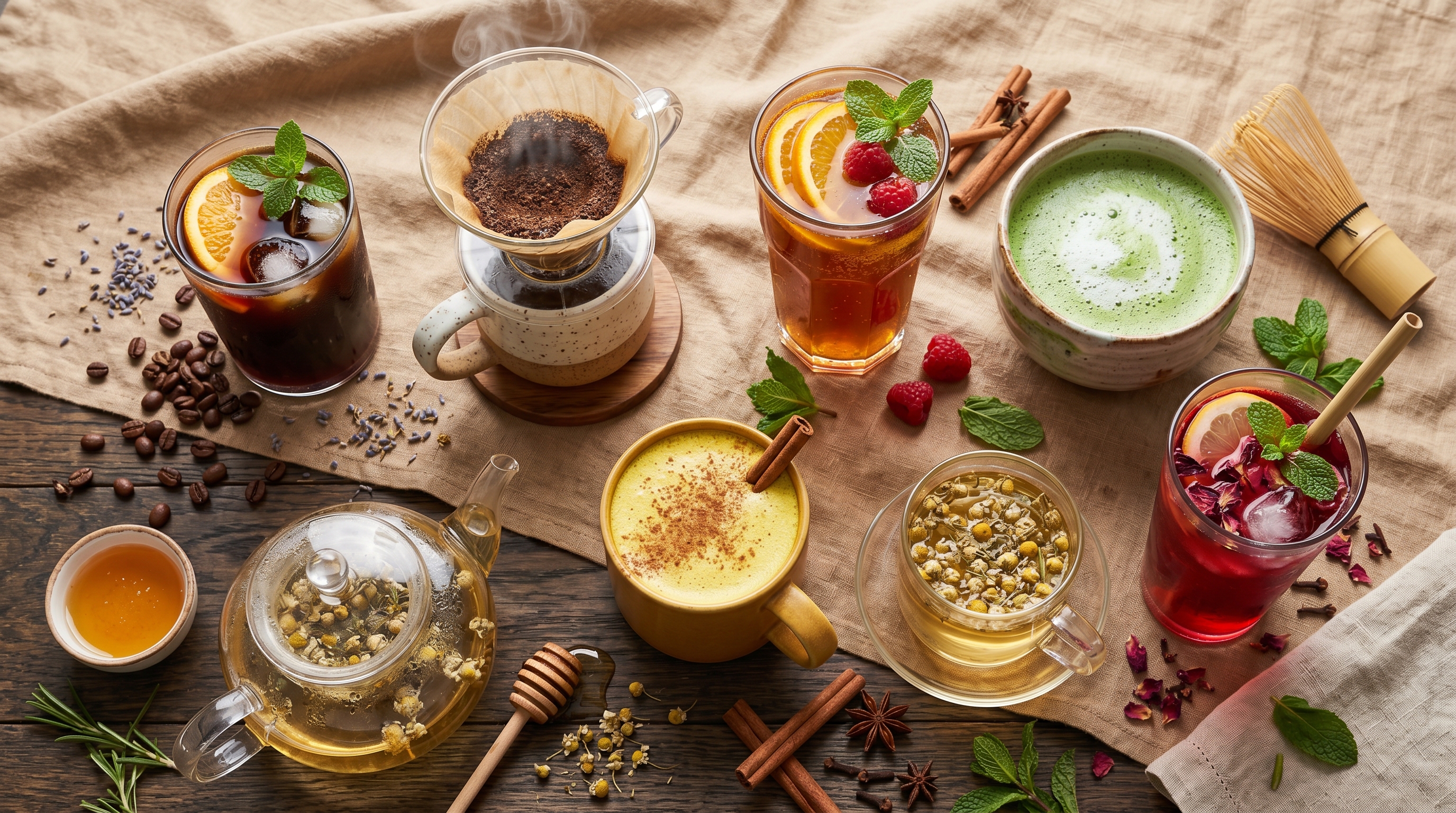
The world of brew drinks is vast, deeply satisfying, and far more exciting than most people realize. Far beyond the morning cup of coffee or the standard afternoon tea, the category of brewed beverages encompasses an extraordinary range of preparations — each with its own technique, its own flavor profile, its own cultural heritage, and its own unique relationship with the drinker.
To brew something is to extract — to coax the essence, flavor, and character from an ingredient using water, time, and temperature. It is one of the oldest food preparation techniques in human history, practiced across every culture and civilization since the discovery that steeping certain plants, seeds, and roots in hot water produced something nourishing, stimulating, or deeply pleasurable.
Today, the art and science of brewing has never been more celebrated or more accessible. The global specialty coffee movement has elevated brewing technique to a craft. The kombucha renaissance has brought ancient fermented tea traditions into modern health-conscious kitchens. The resurgence of herbal and botanical brews has reconnected people with plant-based traditions that predate commercial beverages by thousands of years. And the growing appreciation for Asian tea culture — from Japanese matcha to Taiwanese bubble tea — has expanded the Western understanding of what a brewed drink can be.
In this guide, we have selected 7 of the most interesting, most delicious, and most rewarding brew drinks you should try — each one representing a different tradition, technique, and flavor experience. Whether you are a devoted coffee enthusiast looking to expand your horizons, a tea lover curious about fermented preparations, or simply someone who wants to bring more interesting, genuinely nourishing beverages into daily life, this collection has something extraordinary waiting for you.
Let’s brew.
What Makes a Great Brew Drink?
Understanding what separates a truly great brew drink from an ordinary one helps you approach every preparation with the right intention and technique.
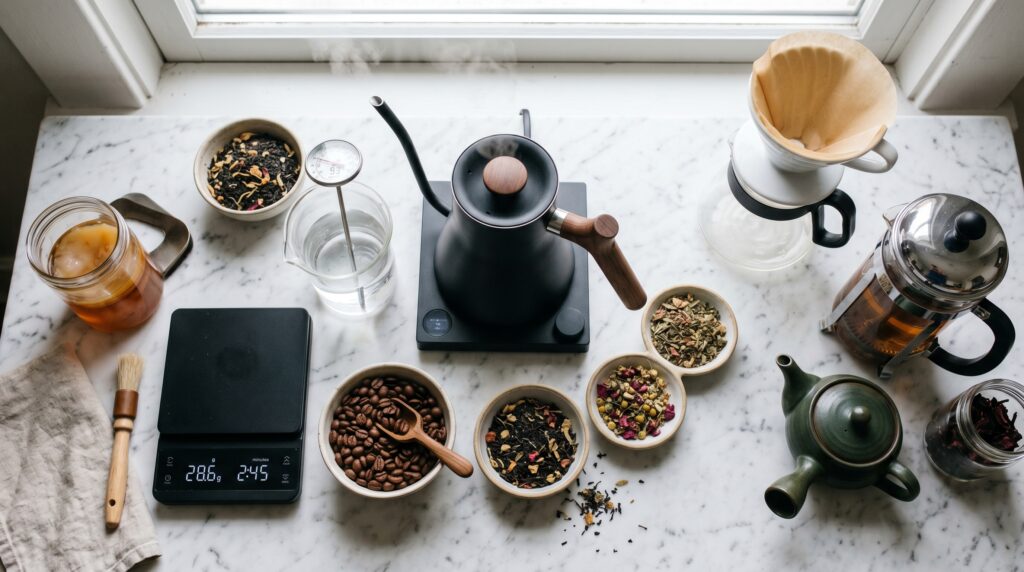
Quality of ingredients. No technique can rescue poor-quality ingredients. The flavor of a brew drink is entirely determined by what you put into it — fresh, high-quality coffee beans, good loose-leaf tea, organic dried herbs, and clean, filtered water are the foundations of everything.
Water temperature. Temperature is perhaps the single most important technical variable in brewing. Too hot and delicate tea leaves become bitter and astringent. Too cool and coffee under-extracts, producing a flat, sour result. Each brew drink has an ideal temperature range, and brewing within it produces better results dramatically.
Time. Brewing time determines extraction — how much flavor, caffeine, and character is drawn from the ingredient into the water. Under-extraction produces thin, weak, underdeveloped flavor; over-extraction produces bitterness and astringency. Finding the sweet spot for each preparation is the core of great brewing technique.
Ratio. The ratio of ingredient to water defines the concentration and intensity of the finished drink. Small variations in the ratio produce meaningfully different results in both flavor and strength.
The vessel. The cup, glass, or bowl in which a brew drink is served affects the experience significantly — a wide, shallow cup cools the drink faster than a tall, narrow one; a prewarmed vessel maintains temperature longer; a clear glass allows the visual appreciation of color and clarity that adds to the sensory experience.
Understanding temperature management across different brewing applications is covered in depth in our Kitchen Temperatures: The Complete Guide from Simmer to Boil.
7 Brew Drinks You Should Try
1. Cold Brew Coffee
Brewing method: Cold extraction | Brew time: 12–24 hours | Caffeine: High | Best time: Morning or afternoon
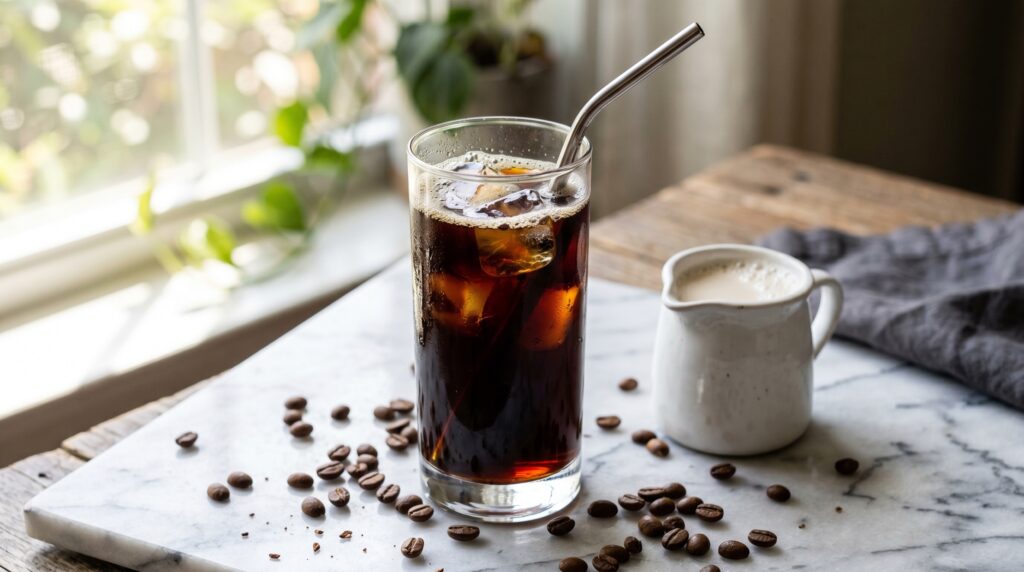
Cold brew coffee is one of the most significant developments in modern coffee culture — a method so fundamentally different from every other coffee preparation that it produces a drink that is more accurately described as a different beverage category than a different version of the same thing.
Where hot brewing extracts coffee’s flavor compounds rapidly through the application of heat, cold brew coaxes them slowly over 12–24 hours through the power of time alone. The result is a coffee of extraordinary character — dramatically lower in acidity and bitterness than any hot-brewed preparation, naturally sweeter despite containing no sugar, with a smooth, rounded, almost chocolatey depth that makes it one of the most approachable coffee preparations for those who find regular coffee too sharp or too bitter.
How to make it at home:
Ingredients: Coarsely ground coffee (100g), cold filtered water (1 litre)
Method: Combine coarsely ground coffee with cold, filtered water in a large jar or pitcher. Stir to ensure all the coffee is saturated. Cover loosely with a lid or plastic wrap and refrigerate for 12–24 hours — 18 hours typically produces the most balanced result. Strain through a fine mesh sieve lined with a paper filter or cheesecloth until completely clear. The resulting concentrate can be stored refrigerated for up to 2 weeks and diluted with water or milk before drinking in a 1:1 or 1:2 ratio (concentrate to liquid).
The coffee selection: Use a medium to light roast coffee for cold brew — darker roasts can become bitter and ashy in the concentrate. Single-origin coffees with naturally fruity or chocolatey notes perform particularly beautifully.
The grind: The coarse grind is essential — fine ground coffee produces a bitter, over-extracted result and is almost impossible to strain cleanly. Aim for a grind roughly the consistency of raw sugar.
What makes it special: Cold brew’s low acidity makes it genuinely easier on the digestive system than hot coffee — a meaningful consideration for the millions of people who love coffee but find its acidity uncomfortable. Its naturally sweet, smooth character also makes it an excellent base for flavored preparations: add a splash of vanilla extract, a drizzle of honey, or a pour of oat milk for a cold coffee drink of genuine complexity and pleasure.
Serving suggestion: Serve over large, clear ice cubes — large cubes melt more slowly than standard ice, preventing the concentrate from being diluted too quickly. Add oat milk or any milk of your choice for a cold brew latte that is one of the most satisfying summer beverages imaginable.
2. Japanese Matcha Latte
Brewing method: Whisked powder suspension | Brew time: 5 minutes | Caffeine: Moderate | Best time: Morning or mid-morning
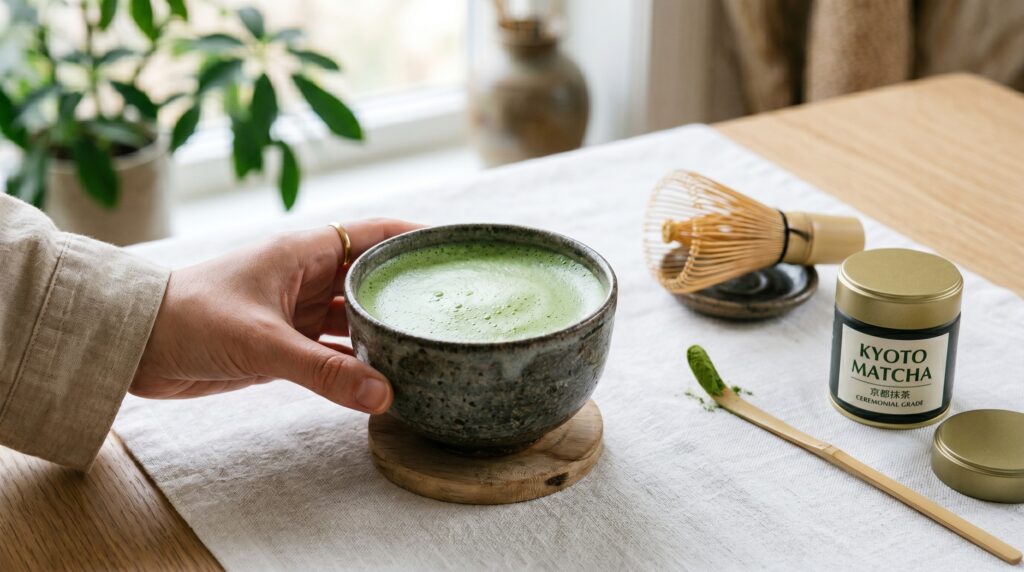
Matcha is not simply green tea — it is, in both its preparation and its character, something fundamentally different from any other tea or coffee preparation. Where all other teas and coffees are infusions or extractions — flavor drawn from the ingredient into water, with the ingredient itself discarded — matcha is a suspension. You consume the entire tea leaf, ground to an impossibly fine powder. This distinction makes matcha not just a different flavor experience but a different nutritional experience as well.
The cultivation of matcha is itself extraordinary. The tea plants are shade-grown for 20–30 days before harvest, covered to block sunlight and force the plant to produce higher concentrations of chlorophyll (responsible for the vivid green color), L-theanine (the amino acid responsible for matcha’s distinctive calm focus effect), and amino acids that produce its characteristic sweet, umami richness.
How to make it at home:
Ingredients (serves 1): 2g ceremonial or culinary grade matcha powder, 30ml water (80°C — never boiling), 200ml whole milk or oat milk (steamed or warmed), optional: 1 tsp honey or maple syrup
Method: Sift the matcha powder into a wide, prewarmed bowl or cup — sifting prevents clumps. Add the hot water (80°C, not boiling — boiling water makes matcha bitter) and whisk vigorously in a W or M motion using a bamboo matcha whisk (chasen) until a uniform, frothy, smooth suspension forms with no lumps. Steam or warm the milk and pour gently into the matcha. Sweeten to taste.
Ceremonial vs culinary grade: Ceremonial grade matcha — produced from the youngest, most carefully harvested leaves — has a sweeter, more complex, less bitter flavor and a more vibrant jade-green color. It is the correct choice for matcha lattes and drinking preparations. Culinary-grade matcha is better suited to baking and cooking, where other flavors are present.
What makes it special: The L-theanine in matcha — an amino acid that modulates the effect of caffeine on the nervous system — produces a state of alert, focused calm that is genuinely different from the sharp, sometimes anxious energy of coffee. Many people describe the matcha experience as “calm energy” — a more sustainable, more pleasant state of alertness without the spike and crash associated with caffeine from other sources.
Pro tip: The bamboo whisk (chasen) is the correct tool for matcha preparation — its fine tines create the frothy suspension that a regular whisk or spoon cannot achieve. They are inexpensive and widely available online. Alternatively, a milk frother works as a practical substitute.
3. Kombucha (Home Brewed)
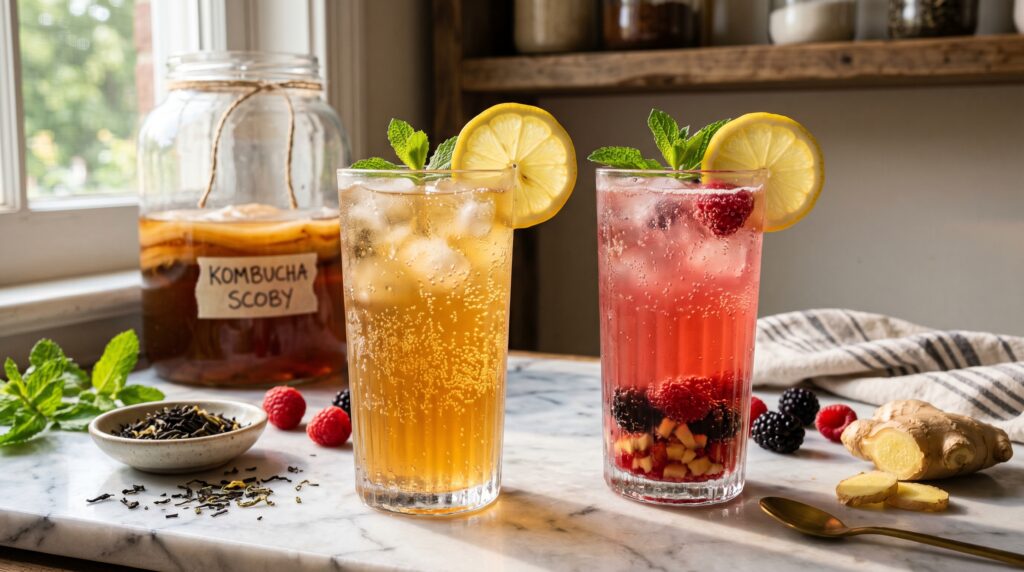
Brewing method: Fermentation | Brew time: 7–14 days | Caffeine: Trace | Best time: Afternoon or with meals
Kombucha is one of the most fascinating brew drinks in existence — a living, fermented beverage produced by a symbiotic culture of bacteria and yeast (SCOBY) that transforms sweet tea into a lightly effervescent, pleasantly tart, deeply complex drink over 7–14 days of fermentation. It is simultaneously one of the oldest brewed beverages (originating in Northeast China around 220 BCE) and one of the most contemporary food trends.
The flavor of kombucha is unlike any other brewed drink — a combination of mild vinegary tartness, residual tea character, natural effervescence, and a complex, slightly funky depth that comes entirely from the fermentation process. It is an acquired taste for some but a deeply loved one for those who develop an appreciation for it.
How to make it at home:
Ingredients: 1 SCOBY with starter liquid (available from brewing suppliers or an experienced home brewer), 8 black or green tea bags, 200g caster sugar, 2 litres filtered water
Method: Brew the tea in 1 litre of hot water for 5 minutes. Add sugar and stir until completely dissolved. Add the remaining 1 litre of cold water. Allow to cool completely to room temperature — a SCOBY added to hot liquid will be killed. Add the SCOBY and starter liquid to the cooled sweet tea in a clean, wide-mouthed glass jar. Cover with a clean cloth secured with a rubber band (the kombucha needs airflow but not contaminants). Ferment at room temperature (18–24°C) for 7–14 days — taste daily from day 7 until it reaches your preferred balance of sweetness and tartness.
Second fermentation (for fizz): Bottle the finished kombucha in airtight flip-top glass bottles with your choice of flavorings (fresh ginger, berries, citrus zest, or herbs). Seal and leave at room temperature for 2–3 more days — the residual yeast continues fermenting in the sealed bottle, producing CO2 and natural carbonation. Refrigerate before drinking.
What makes it special: Home-brewed kombucha has a depth and complexity that commercial versions cannot replicate — each batch is slightly different, shaped by temperature, the age of the SCOBY, the tea used, and the length of fermentation. It is one of the most genuinely creative and personal of all brew projects.
Safety note: Always use clean equipment and follow established food safety guidelines for fermented beverages. Our Food Safety 101: Storage, Handling, and Temperature Guide covers food safety principles relevant to fermented preparations.
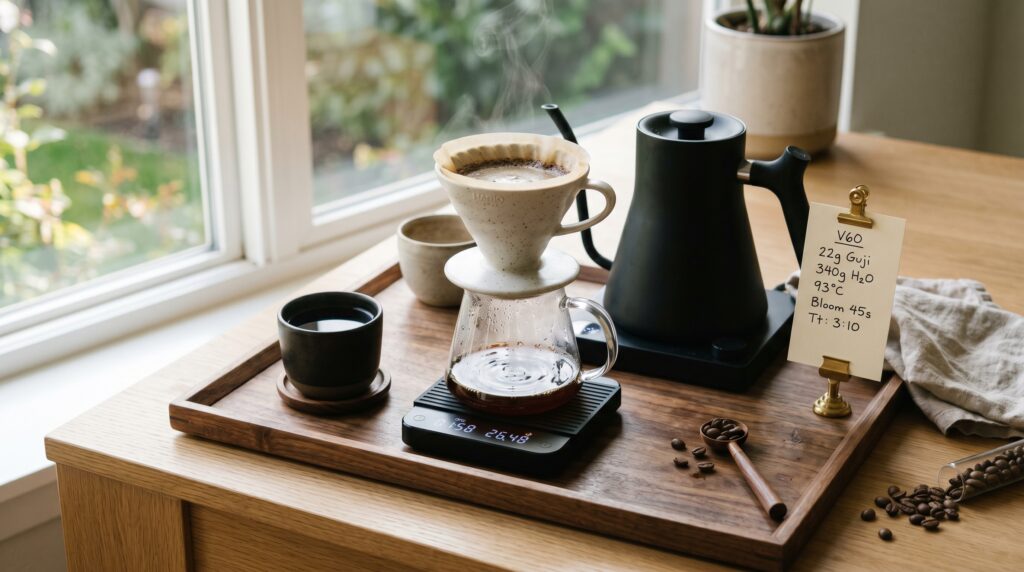
4. Pour-Over Coffee
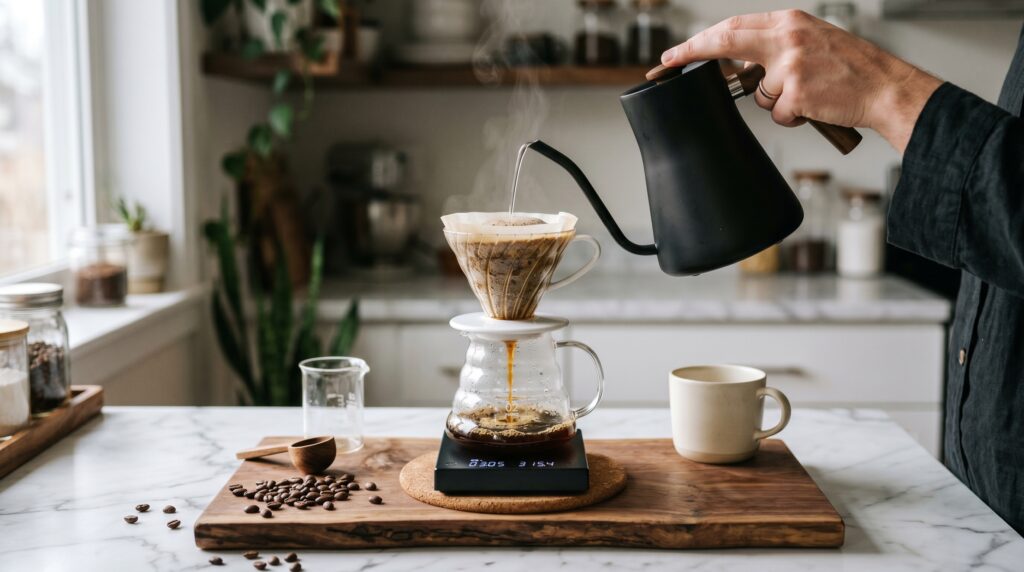
Brewing method: Manual filter extraction | Brew time: 3–4 minutes | Caffeine: High | Best time: Morning
Pour-over coffee is the brewing method that has come to define the specialty coffee movement — a manual, meditative, highly controlled extraction that produces a cup of extraordinary clarity, complexity, and nuance that automated machines cannot replicate. It requires attention, precision, and a few minutes of mindful preparation — qualities that many coffee drinkers find as rewarding as the drink itself.
The pour-over method’s advantage over other brewing techniques lies in its precision and control. The brewer controls every variable — water temperature, pour rate, bloom time, total brew time — creating the conditions for a consistently excellent extraction that highlights the specific character of each coffee.
How to make it at home:
Ingredients (serves 2): 30g freshly ground coffee (medium-fine grind), 500ml water (93–96°C — just off the boil)
Equipment: V60, Chemex, or similar pour-over dripper; paper filter; gooseneck kettle; kitchen scale; timer
Method: Place the paper filter in the dripper and rinse with hot water — this removes paper taste and preheats the vessel. Discard the rinse water. Add the ground coffee and place it on a scale. Zero the scale. Start the timer. Begin the bloom: pour 60ml of water (twice the coffee weight) slowly and evenly over all the grounds. Wait 30–45 seconds — the coffee will bubble and expand as CO2 is released. This degassing (blooming) is essential for even extraction.
Continue pouring in slow, circular motions from the center outward in stages — pour, pause, pour — maintaining a water level that is never too deep (which creates uneven extraction) and never running dry (which exposes the grounds to air). Total brew time should be 3–4 minutes. The finished coffee should be clear, complex, and fragrant.
What makes it special: Pour-over coffee reveals the specific character of each coffee — its origin, variety, and processing method — with a clarity and precision that no other brew method matches. A great Ethiopian coffee prepared as a pour-over reveals jasmine and bergamot. A Colombian coffee reveals caramel and red fruit. The method is the lens through which the coffee’s true character becomes visible.
The bloom: The 30-second bloom is not merely ritual — it is the technical step that ensures even extraction. Coffee that has not bloomed retains CO2 in the grounds, which repels water during brewing and produces an uneven, under-extracted result.
5. Turmeric Golden Latte (Golden Milk)
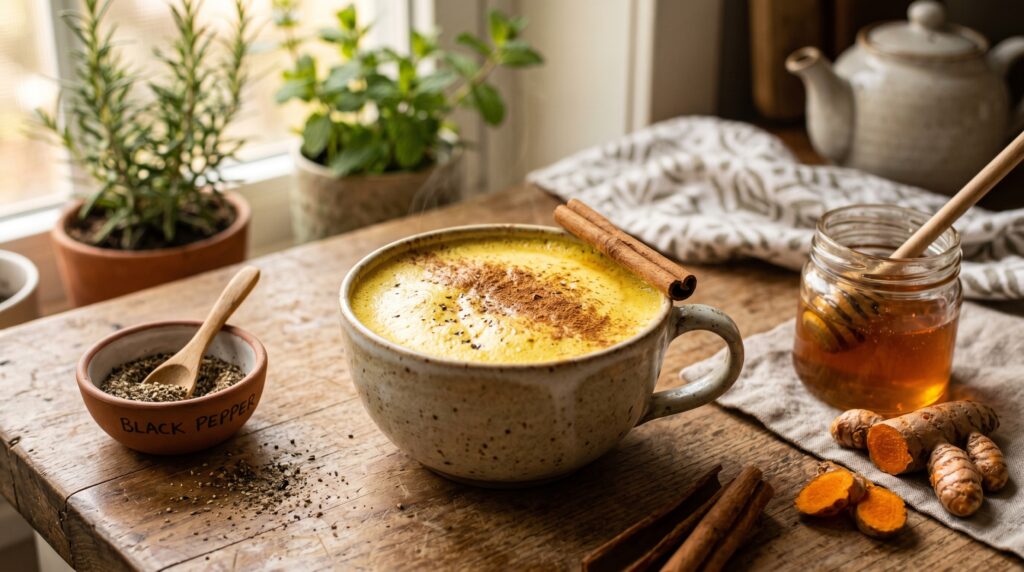
Brewing method: Spice infusion | Brew time: 10 minutes | Caffeine: None | Best time: Morning or evening
The turmeric golden latte — known in its traditional Indian form as haldi doodh (turmeric milk) — is one of the oldest and most nourishing brew drinks in the world, rooted in the Ayurvedic tradition of using turmeric as a healing, anti-inflammatory spice. Its contemporary resurgence as a “golden latte” represents one of the most genuinely evidence-based wellness trends in modern food culture.
Turmeric’s active compound — curcumin — has been the subject of thousands of scientific studies examining its anti-inflammatory, antioxidant, and neuroprotective properties. What the ancient Ayurvedic tradition understood intuitively, modern science has largely confirmed: turmeric consumed with black pepper (which contains piperine, a compound that increases curcumin absorption by up to 2000%) and a fat source (such as whole milk or coconut milk) delivers far more bioavailable curcumin than turmeric consumed without these co-factors.
The golden latte is therefore not simply a warming, beautiful, flavorful drink — it is a genuinely intelligent preparation that has been optimized over centuries for maximum nutritional benefit.
How to make it at home:
Ingredients (serves 1): 250ml whole milk, oat milk, or coconut milk, 1 tsp ground turmeric, ½ tsp ground cinnamon, ¼ tsp ground ginger, a generous pinch of freshly ground black pepper (essential — do not omit), ½ tsp raw honey or maple syrup (optional), a small knob of coconut oil or butter (optional — increases curcumin absorption)
Method: Combine all ingredients in a small saucepan over medium heat. Whisk continuously as the milk heats — whisking incorporates the spices and creates a light froth. Heat until steaming and just below simmering — do not boil, as boiling diminishes some of the delicate aromatic compounds. Pour into a prewarmed mug and serve immediately.
Spice quality matters: Fresh ground spices from whole sources produce a significantly more aromatic, more flavorful golden latte than pre-ground spices that have sat in a jar for months. If possible, grind your own cinnamon from sticks and grate fresh turmeric root rather than using dried powder.
What makes it special: The golden latte is caffeine-free, deeply warming, genuinely nourishing, and one of the most comforting bedtime drinks imaginable — it has the warming richness of a latte without any stimulating effect. Many people find it produces a noticeably better quality of sleep when consumed in the evening.
Evening variation: Add a pinch of cardamom and a little vanilla extract to the evening version — the cardamom adds a floral, slightly sweet note that makes the golden latte particularly soothing and fragrant before bed.
6. Hibiscus and Ginger Iced Tea
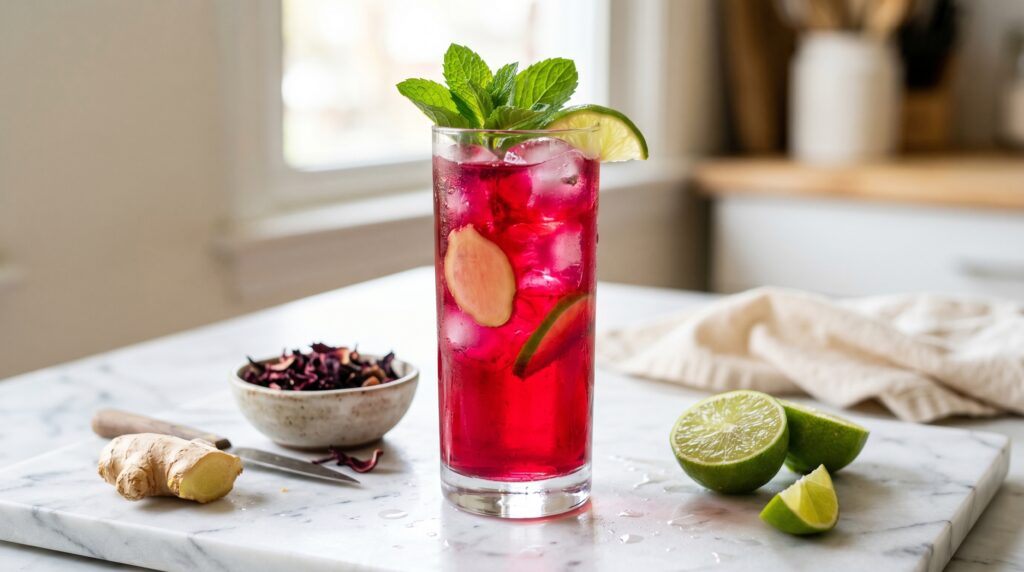
Brewing method: Hot steep and chill | Brew time: 10 minutes steeping + chilling time | Caffeine: None | Best time: Any time of day
Hibiscus tea is one of the most visually spectacular and genuinely refreshing brewed beverages in the world — the dried calyces of the Hibiscus sabdariffa plant steep into a brew of such vivid, deep crimson-magenta that it seems impossible the color could come from a simple flower. Beyond its extraordinary visual impact, hibiscus tea has a bright, tart, cranberry-like flavor of real complexity — simultaneously fruity, floral, and slightly tangy — that makes it one of the most thirst-quenching iced drinks available.
The combination with fresh ginger creates a brew that balances hibiscus’s floral tartness with ginger’s warming, slightly spicy depth — producing a layered, complex iced tea that is simultaneously refreshing and stimulating.
How to make it at home:
Ingredients (serves 4): 30g dried hibiscus flowers, 1 litre boiling water, 4cm piece of fresh ginger (peeled and thinly sliced), 2–3 tbsp raw honey, maple syrup, or sugar (adjust to taste), juice of 1 lime, fresh mint for garnish, ice
Method: Combine dried hibiscus flowers and fresh ginger slices in a heatproof jug or teapot. Pour over the boiling water and steep for 8–10 minutes — the longer the steep, the more intense the color and flavor. Strain through a fine sieve, discarding the flowers and ginger. Stir in sweetener while the tea is still warm — it dissolves more easily. Allow to cool to room temperature, then refrigerate until cold. Serve over plenty of ice with fresh lime juice, a slice of fresh ginger, and fresh mint.
What makes it special: Hibiscus tea is extraordinarily rich in anthocyanins — the pigments responsible for its vivid color and one of the most potent natural antioxidants studied in nutritional science. According to research published by the Harvard T.H. Chan School of Public Health, regular hibiscus tea consumption has been associated with meaningful reductions in blood pressure in several clinical studies.
Flavor variations:
- Add fresh mint to the steeping for a hibiscus mint tea of extraordinary fragrance
- Steep with cinnamon sticks and orange zest for a warming, spiced hibiscus
- Add a splash of pomegranate juice for extra depth and color intensity
- Sweeten with tamarind for a Middle Eastern-inspired preparation
Pro tip: The hibiscus infusion can be frozen into ice cubes — as they melt in the iced tea, they maintain the color and flavor intensity rather than diluting the drink with plain water.
7. Chai (Masala Chai)
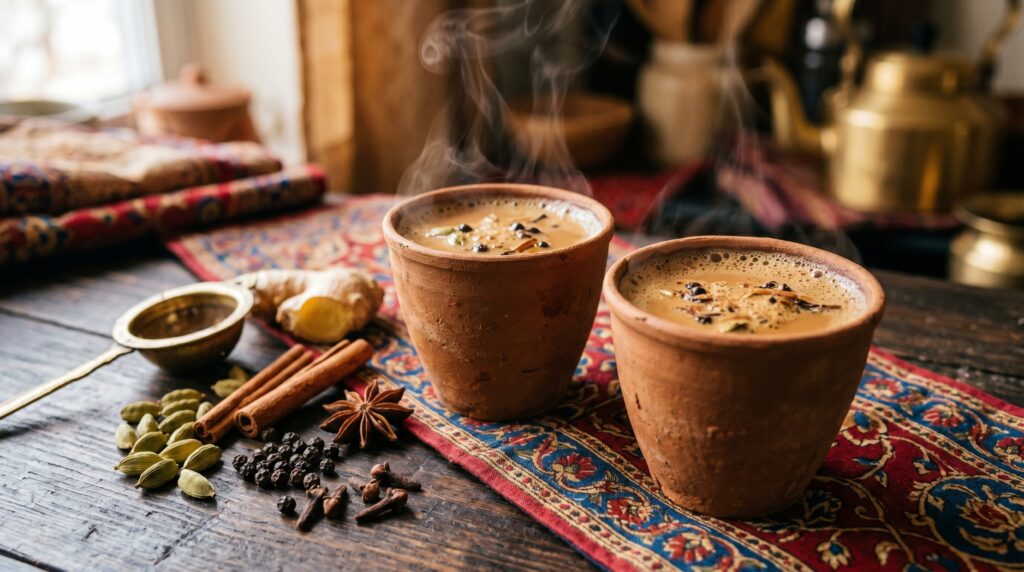
Brewing method: Spiced milk tea decoction | Brew time: 10–15 minutes | Caffeine: Moderate | Best time: Morning or mid-afternoon
Masala chai is one of the world’s great brew drinks — a preparation that has been central to Indian culture for centuries, and that has, in various adaptations, become one of the most beloved beverages globally. The word “chai” simply means “tea” in Hindi — “masala chai” means “spiced tea” — and the specific blend of spices, the ratio of milk to water, the strength of the tea, and the sweetness level vary enormously across India’s regions, households, and chai wallahs (tea sellers).
What all great masala chai shares is its fundamental character: the assertive, slightly astringent backbone of strong black tea balanced by the warming complexity of whole spices — cardamom, cinnamon, ginger, cloves, black pepper, and star anise — enriched by whole milk, and sweetened to varying degrees. It is a drink of immediate, enveloping warmth that nourishes and comforts in equal measure.
How to make it at home:
Ingredients (serves 2): 400ml whole milk, 100ml water, 2 tsp loose leaf Assam or Darjeeling black tea (or 2 tea bags), 4 green cardamom pods (lightly crushed), 1 cinnamon stick, 3 whole cloves, 3 black peppercorns (lightly crushed), 1cm fresh ginger (peeled and grated or thinly sliced), optional: 1 star anise, sugar or honey to taste
Method: Combine water, ginger, and all whole spices in a small saucepan over medium heat. Bring to a simmer and cook for 3–4 minutes — this is the decoction stage that extracts the spice character into the water before the tea or milk is added, producing a more deeply spiced result. Add the milk and bring back to a simmer. Add the tea leaves or bags and simmer for 2–3 minutes — watch carefully, as the milk can boil over suddenly. Strain through a fine sieve, pressing the tea and spices gently to extract maximum flavor. Sweeten to taste and serve immediately, ideally in small clay kulhad cups or in prewarmed small glasses.
The decoction stage: The most important technique in masala chai preparation that most recipes skip — simmering the spices in water before adding milk extracts their essential oils more completely and produces a deeper, more aromatic spice character in the finished chai.
What makes it special: The combination of cardamom’s floral, citrusy warmth, ginger’s sharp, clean heat, cinnamon’s sweet woodiness, and black pepper’s quiet depth creates a spice blend of extraordinary harmony — each note present but none dominant, all unified by the richness of whole milk and the backbone of good black tea.
Regional variations:
- Kashmiri Noon Chai (Pink Chai): Made with special Kashmiri green tea, milk, baking soda, and salt — produces a dramatic pink color and a creamy, lightly nutty, mildly salty flavor entirely unlike the spiced masala version
- Cutting Chai (Mumbai style): A half-sized serving of intensely strong, sweet chai served in small glasses — the definitive Mumbai street food chai
- Ginger Chai: An intensely ginger-forward preparation where ginger is used in much greater quantity, producing a sharp, warming drink popular as a remedy for colds and fatigue
Serving suggestion: Traditional masala chai is served very sweet in India — the sweetness balances the tannins of the strong black tea and the heat of the spices. Adjust the sweetness to your personal preference, but do not omit it entirely — a little sweetness is essential for balance. For those who enjoy cold yogurt-based drinks alongside their chai, our Cold Yogurt Drink: The Complete Guide to Lassi, Ayran, and More explores complementary South Asian beverage traditions beautifully.
Brew Drink Comparison Guide
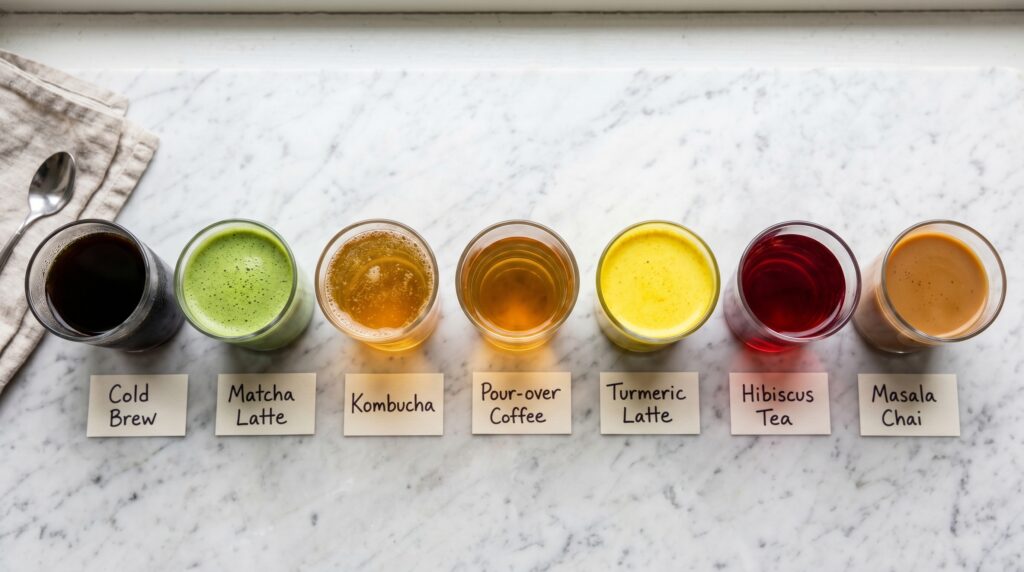
| Brew Drink | Caffeine | Temperature | Brew Time | Best For | Difficulty |
|---|---|---|---|---|---|
| Cold Brew Coffee | High | Cold | 12–24 hours | Smooth, low-acid coffee lovers | Easy |
| Matcha Latte | Moderate | Hot | 5 minutes | Calm, focused energy | Easy |
| Kombucha | Trace | Room temp/cold | 7–14 days | Adventurous, fermentation enthusiasts | Intermediate |
| Pour-Over Coffee | High | Hot | 3–4 minutes | Coffee connoisseurs, nuanced flavor | Intermediate |
| Turmeric Golden Latte | None | Hot | 10 minutes | Wellness, caffeine-free warmth | Easy |
| Hibiscus Ginger Iced Tea | None | Cold | 10 min + chilling | Refreshing, antioxidant-rich | Easy |
| Masala Chai | Moderate | Hot | 10–15 minutes | Warming, spiced comfort | Easy |
The Art of the Perfect Brew: Universal Principles
Across all seven brew drinks in this guide, several universal principles apply:
Start with good water. Water constitutes 95–99% of any brew drink. Heavily chlorinated tap water produces noticeably inferior results to filtered water. Invest in a simple water filter — the improvement in flavor across every brew drink is immediate and significant.
Use fresh, quality ingredients. Coffee beans begin losing flavor within weeks of roasting. Tea leaves oxidize and lose their character over months. Dried herbs and spices lose their essential oils after 6–12 months. Buy in small quantities from reputable sources and use promptly.
Control your temperature. A kitchen thermometer is an inexpensive but enormously impactful tool for brewing. Boiling water is appropriate for black tea and decoctions; 93–96°C for pour-over coffee; 80°C for matcha and green tea. These are not arbitrary numbers — they are the temperatures at which each ingredient reveals its best character.
Preheat your vessel. A cold cup cools the drink immediately on contact — particularly significant for hot brews where temperature affects the perception of flavor. Rinse cups and mugs with hot water before filling. The difference in drinking temperature and flavor perception is immediate.
Be present. The brew drinks on this list share a quality beyond flavor — the act of making them, when approached with attention and care, is itself genuinely pleasurable. The bloom of a pour-over, the whisking of matcha, the simmering of chai spices — these are small rituals of intention that deserve to be experienced rather than rushed.
Frequently Asked Questions
Which brew drink has the most caffeine?
Cold brew coffee concentrate has the highest caffeine content of any drink on this list — depending on concentration, a single serving can contain 200–300mg of caffeine. Pour-over coffee follows at approximately 150–200mg per 250ml cup. Masala chai contains approximately 50–70mg per cup. Matcha contains approximately 70mg per serving, but with a different physiological effect due to L-theanine. Kombucha contains trace amounts of the tea used in fermentation. The golden latte and hibiscus tea contain no caffeine.
Which brew drink is best for the evening?
The turmeric golden latte is the ideal evening brew — it contains no caffeine, is warming and comforting, and the curcumin it delivers has genuine anti-inflammatory properties that many people find supportive of recovery and sleep quality. Hibiscus tea served warm (rather than iced) is another excellent caffeine-free evening option. Herbal chamomile or lavender teas are similarly appropriate but outside this specific guide.
How do I store brewing ingredients?
Coffee beans: store in an airtight container at room temperature, away from light. Do not refrigerate. Whole bean coffee keeps well for 2–4 weeks from roasting. Matcha: Store in an airtight container in the refrigerator to preserve color and freshness. Tea leaves and dried herbs: store in airtight tins away from light and moisture. Dried hibiscus, spices, and chai ingredients: store in sealed glass jars in a cool, dark cupboard for up to 12 months.
Which brew drink is the most beginner-friendly?
The turmeric golden latte and hibiscus iced tea are the most accessible — both require no special equipment, no particular technique, and no prior experience, yet produce genuinely impressive, delicious results. Cold brew coffee is similarly forgiving — the long brewing time makes up for any imprecision in measurement or grind. Pour-over coffee and matcha require more attention to technique and are most rewarding after a brief period of practice.
Can I make all of these at home without specialist equipment?
Yes — all seven brew drinks can be made at home with basic equipment. A fine mesh sieve, a good kitchen scale, a thermometer, and quality ingredients cover the majority of requirements. The bamboo matcha whisk is the only genuinely specialist piece of equipment, and a milk frother substitutes adequately. A gooseneck kettle significantly improves pour-over results, but is not strictly necessary.
Conclusion
From the remarkable smoothness of cold brew to the meditative ceremony of matcha, from the ancient fermentation tradition of kombucha to the precision craft of pour-over, from the Ayurvedic wisdom of golden milk to the jewel-bright refreshment of hibiscus tea and the enveloping warmth of masala chai — these 7 brew drinks you should try represent seven genuinely different ways of engaging with one of humanity’s oldest and most deeply satisfying practices.
What unites all seven is the principle that the best brew drinks reward attention to ingredient quality, to temperature, to time, and to the small rituals of preparation that transform a simple act into something genuinely meaningful. The morning cup of coffee prepared with care tastes different from the same coffee prepared carelessly. The matcha whisked with intention tastes different from one merely stirred. The chai simmered slowly with whole spices is a fundamentally different experience from a teabag dunked in hot milk.
Try each one at least once with the full attention it deserves. Discover which preparation speaks most clearly to your palate, your lifestyle, and your morning rhythm. And then make it — carefully, deliberately, and with genuine pleasure.
For more recipes, technique guides, and cooking inspiration across every cuisine and skill level, explore our full collection at skillsinthekitchen.com.