
Homemade Spice Blends: DIY Seasoning Mixes Better Than Store-Bought
Introduction
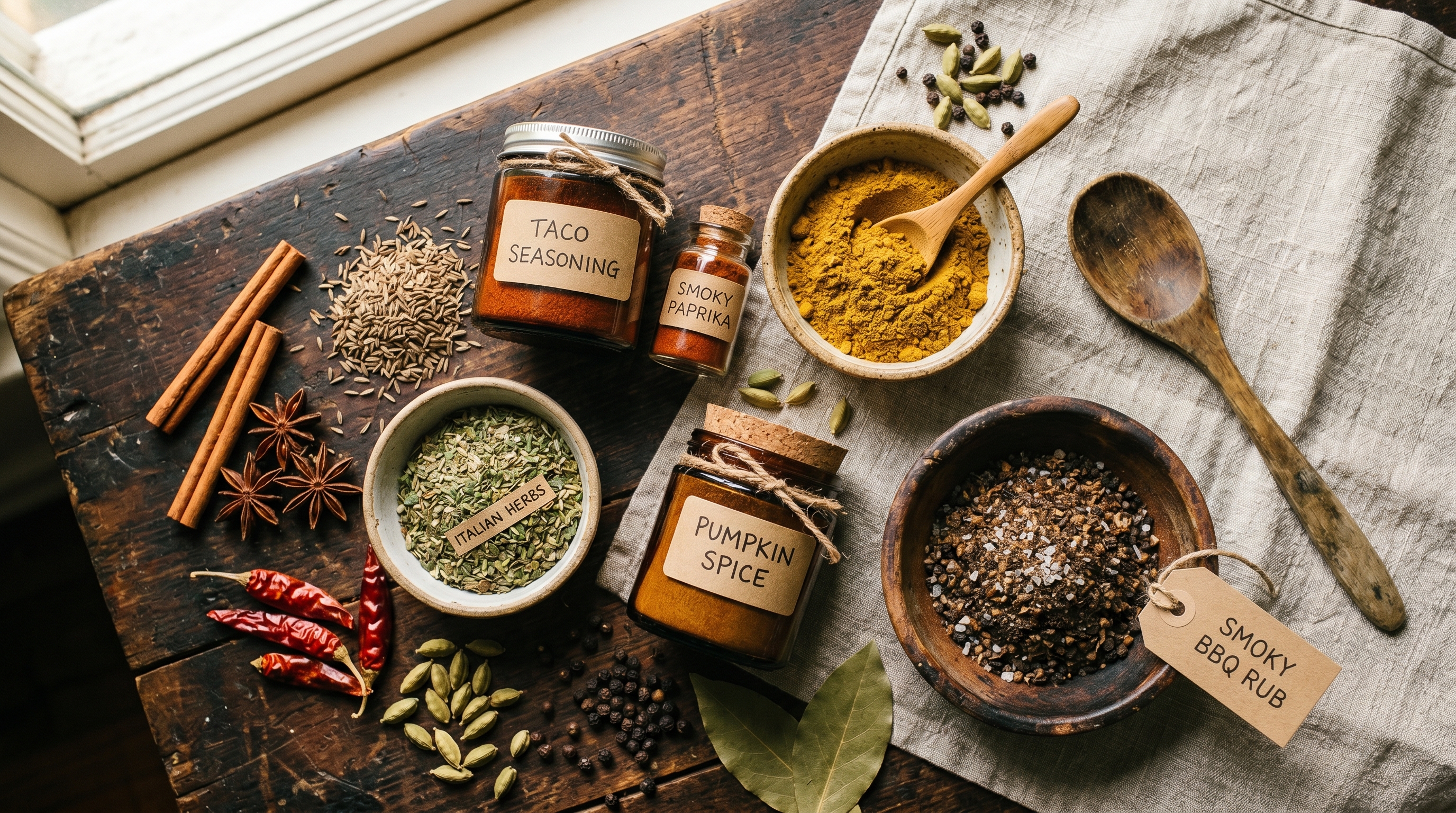
There is a quiet revolution available to any home cook willing to spend fifteen minutes with a collection of whole and ground spices, a small bowl, and a clean jar — the discovery that homemade spice blends are so dramatically superior to their store-bought equivalents that once you make the switch, returning to commercial seasoning packets feels like an unnecessary compromise.
The commercial spice blend market is built on convenience, shelf stability, and cost efficiency — none of which prioritize flavor quality above everything else. Most store-bought seasoning mixes contain fillers (maltodextrin, silicon dioxide, anti-caking agents), excessive sodium in ratios designed for an imagined average palate rather than your specific taste, and ground spices that were fresh when the blend was assembled months or years before you purchase it, stored in conditions that accelerate flavor degradation. The result is seasoning that functions — that adds color, some heat, some salt — but rarely delivers the vibrant, complex, genuinely exciting flavor that transforms a meal from adequate to memorable.
Homemade spice blends, by contrast, use exactly the spices you choose, in exactly the ratios that suit your palate, made fresh so that their essential oils are at peak potency, without fillers or unnecessary sodium, and customizable to any heat level, sweetness, or aromatic emphasis you prefer. The cost per batch is typically a fraction of commercial equivalents. The quality difference is immediate and dramatic.
Beyond the flavor and cost arguments, making your own spice blends is one of the most genuinely satisfying, most creatively engaging kitchen projects available. Learning the architecture of a great curry powder — understanding which spices provide heat, which provide earthiness, which provide sweetness, and how they balance — is an education in flavor that transforms not just your spice blends but your entire approach to seasoning food.
In this comprehensive guide, we cover everything you need to know about making your own spice blends — the essential equipment and techniques, the principles of spice blend construction, and 20 of the most useful, most delicious homemade spice blend recipes spanning every cuisine and cooking application.
Let’s blend.
The Homemade Spice Blend Fundamentals
Why Homemade Beats Store-Bought Every Time
According to Serious Eats, ground spices lose a significant portion of their volatile aromatic compounds within 6–12 months of grinding, with some of the most delicate flavor compounds degrading within weeks of exposure to air, heat, and light. Commercial spice blends, which may sit in distribution warehouses and on retail shelves for months before purchase, are often made with pre-ground spices that are already well into their flavor decline before they are combined into a blend.
Homemade spice blends made with freshly ground or recently purchased ground spices — used within 3–6 months and stored properly — deliver flavor intensity that commercial blends simply cannot match.
The Four Spice Blend Construction Principles
Principle 1 — The flavor architecture: Every great spice blend has a recognizable flavor architecture — a foundation note (the dominant, defining flavor), a middle note (the supporting complexity), and a top note (the bright, aromatic element that makes the blend vibrant rather than flat). Understanding which spices play which role in a blend transforms blend-making from guesswork into intentional flavor design.
Principle 2 — Salt is separate: The best approach to homemade spice blends is to make them salt-free and add salt separately when cooking. This gives complete control over sodium levels, allows the blend to be used in salt-sensitive applications, and prevents over-salting when generous amounts of the blend are used. Each recipe in this guide includes an optional salt addition — add it if you prefer convenience, omit it if you prefer control.
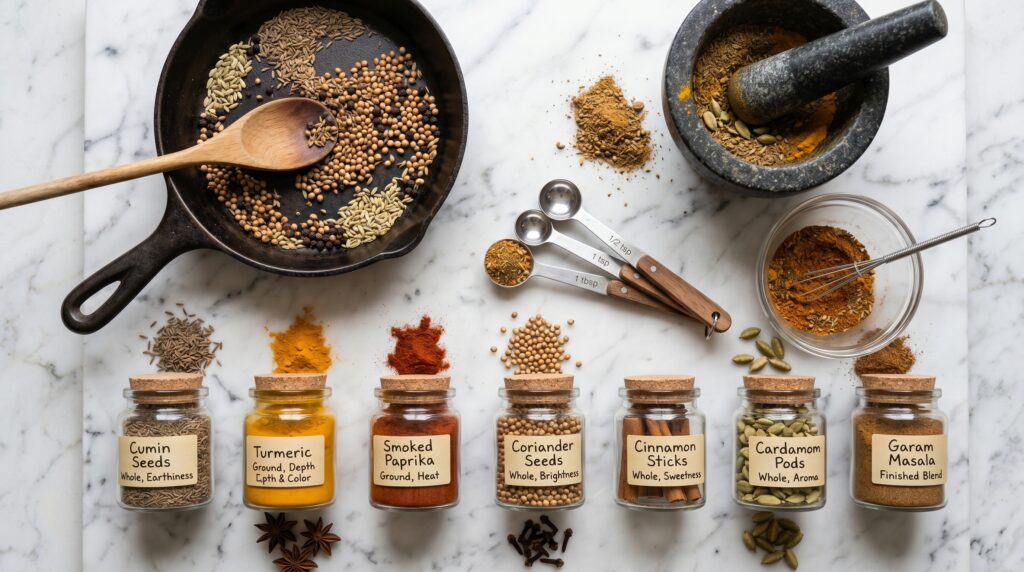
Principle 3 — Toast whole spices before grinding: Dry-toasting whole spices in a skillet before grinding releases and intensifies their essential oils, creating spice blends of dramatically superior aroma and depth. Even 90 seconds of toasting produces a measurable improvement in flavor quality. For blends using pre-ground spices, toasting the finished blend very briefly in a dry pan produces a similar (if less dramatic) improvement.
Principle 4 — Fat blooms spices: Spice blends’ aromatic compounds are fat-soluble, not water-soluble. Cooking spice blends in oil or fat — even briefly — before adding liquids or other ingredients releases their essential oils into the fat, distributing them throughout the entire dish. This is why sautéing the spice blend in oil for 30–60 seconds before adding other ingredients is one of the most impactful cooking techniques for spice-heavy preparations.
Essential Equipment
Spice grinder or coffee grinder (dedicated to spices): The most impactful piece of equipment for serious spice blend making. Freshly ground spices are categorically more flavorful than pre-ground. A dedicated coffee grinder costs under £20 and transforms spice quality dramatically.
Mortar and pestle: The traditional grinding tool, producing slightly coarser, slightly more textured spice blends. Particularly good for smaller quantities and for blends where some textural variation is desirable.
Digital kitchen scale: More accurate than volume measurements for spice blends, particularly when scaling recipes.
Airtight glass jars: Dark glass or opaque jars stored away from heat and light preserve spice blend quality significantly longer than clear jars in open cabinet locations.
Fine mesh sieve: For sifting out any large unground pieces from freshly ground blends.
Storage and Shelf Life
Homemade spice blends stored in airtight glass jars away from heat, light, and moisture retain peak quality for 3–6 months. They remain usable for up to 12 months, but with progressively reduced potency. Label every jar with the blend name and date made — this is genuinely useful information and takes 10 seconds.
For comprehensive guidance on kitchen organization and food storage, our Mise en Place: How to Organize Your Cooking Like a Pro covers the principles of keeping a well-organized, efficiently run kitchen.
20 Homemade Spice Blend Recipes
American and BBQ Spice Blends
1. All-Purpose House Seasoning
Makes: approximately 80g | Prep time: 5 minutes
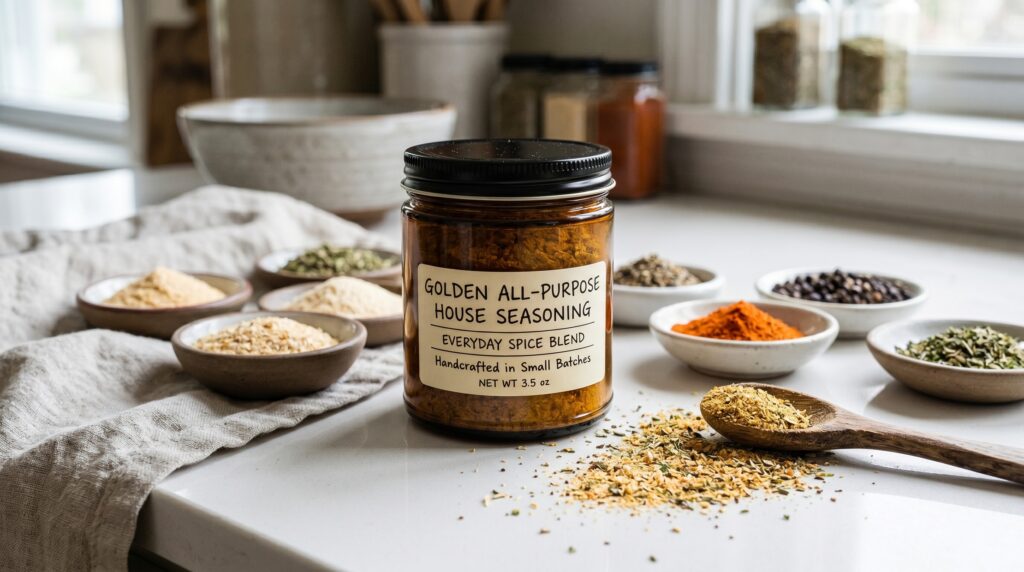
Every kitchen needs an all-purpose house seasoning — a balanced, versatile blend that works on virtually any protein or vegetable and provides a reliable, deeply savory baseline flavor that improves everything it touches. This is the blend that goes on chicken before every roast, on vegetables before every sheet pan dinner, and into any preparation where you want confident, complex seasoning from a single addition.
Ingredients:
- Garlic powder: 3 tbsp
- Onion powder: 2 tbsp
- Smoked paprika: 2 tbsp
- Sea salt: 1 tbsp (optional — omit for salt-free version)
- Cracked black pepper: 1½ tsp
- Dried thyme: 1 tsp
- Dried oregano: 1 tsp
- Cayenne pepper: ½ tsp (adjust to heat preference)
Method: Combine all ingredients in a small bowl. Whisk thoroughly to distribute evenly. Transfer to an airtight jar. Label with name and date.
Uses: Rub on chicken, beef, pork, or fish before roasting, grilling, or pan-frying. Sprinkle over vegetables before roasting. Add to ground beef for burgers, meatballs, or bolognese. Stir into mayonnaise for a seasoned aioli.
What makes it special: The combination of both garlic and onion powder creates an aromatic, savory foundation that single-allium blends cannot match. The smoked paprika adds depth and slight smokiness without requiring a smoker or grill.
2. Classic BBQ Dry Rub
Makes: approximately 120g | Prep time: 5 minutes
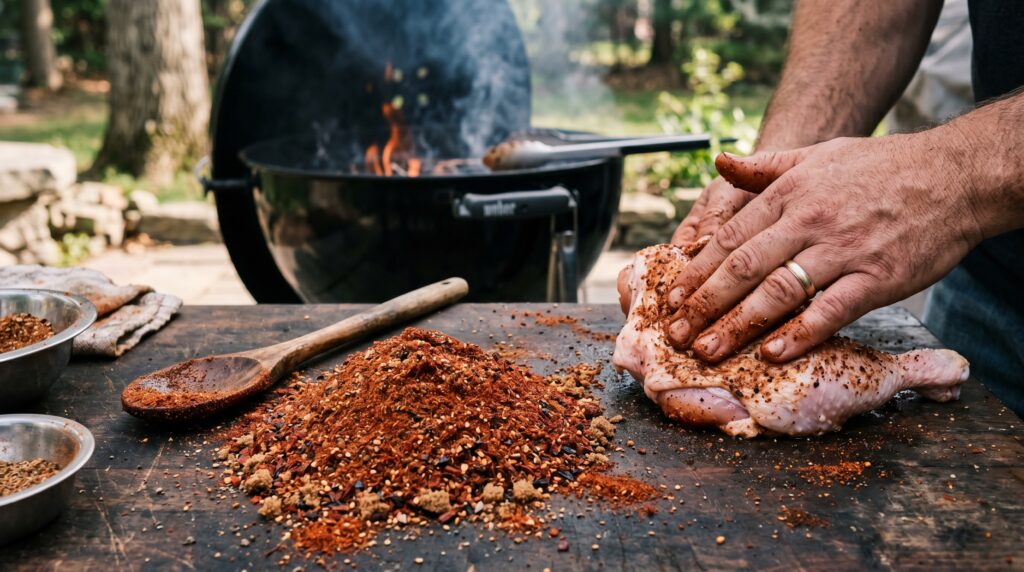
A great BBQ dry rub is the foundation of genuinely excellent grilled and slow-cooked meat — the combination of sweet, smoky, savory, and spicy elements creates a crust of extraordinary complexity when applied generously to protein and cooked over high heat or low and slow.
Ingredients:
- Brown sugar: 3 tbsp (creates caramelized crust)
- Smoked paprika: 3 tbsp (the dominant smoky foundation)
- Chili powder: 1½ tbsp
- Garlic powder: 1½ tbsp
- Onion powder: 1 tbsp
- Cumin: 1 tsp (earthy depth)
- Black pepper: 1 tsp
- Cayenne: ½ tsp
- Dried mustard powder: 1 tsp (bright, sharp counterpoint)
- Sea salt: 1 tbsp (optional)
- Dried oregano: ½ tsp
Method: Combine all ingredients and mix thoroughly. The brown sugar can clump — break up any lumps with the back of a spoon or your fingers before storing.
Uses: Rub generously onto chicken, ribs, pork shoulder, or brisket before grilling, smoking, or oven-roasting. Apply at least 30 minutes before cooking — overnight for larger cuts — to allow the rub to penetrate the meat’s surface. The brown sugar caramelizes during cooking to create the characteristic bark of great BBQ.
Pro tip: For an even more complex BBQ rub, add 1 teaspoon of espresso powder — the coffee’s bitter, roasted character deepens the savory notes and amplifies the smokiness without adding a detectable coffee flavor.
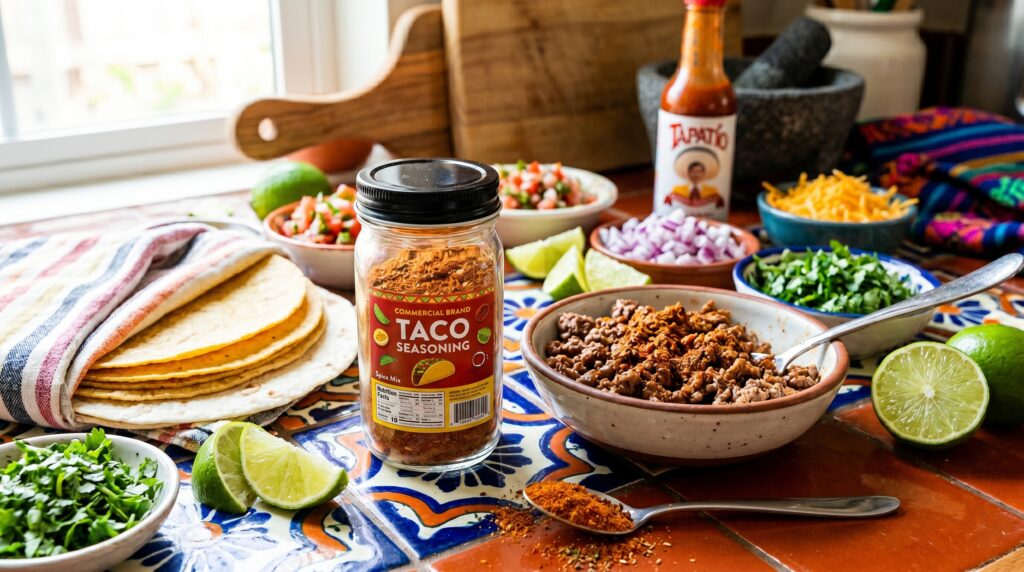
3. Taco and Fajita Seasoning
Makes: approximately 70g | Prep time: 5 minutes
Homemade taco seasoning is the commercial blend replacement that most immediately and dramatically demonstrates the quality difference between homemade and store-bought — without the maltodextrin, excessive sodium, and anti-caking agents of commercial packets, the flavors of the individual spices are immediate, vibrant, and genuinely exciting.
Ingredients:
- Cumin: 2 tbsp (the defining taco flavor note)
- Smoked paprika: 1½ tbsp
- Chili powder: 1 tbsp
- Garlic powder: 1 tsp
- Onion powder: 1 tsp
- Dried oregano: 1 tsp (Mexican oregano is more authentic and citrusy if available)
- Black pepper: ½ tsp
- Cayenne: ¼–½ tsp (adjust to heat preference)
- Coriander: ½ tsp
- Sea salt: 1 tsp (optional)
Method: Combine and mix thoroughly. Store in an airtight jar.
Uses: 2 tablespoons per 500g of ground beef, chicken, or turkey for tacos. Season shrimp, fish, or vegetables for fajitas (1½ tablespoons per 400g). Add to refried beans, rice, or soups for Tex-Mex flavor.
What makes it special: The cumin quantity in this blend — double what most commercial taco seasonings provide — creates the deeply earthy, warm, authentic Mexican character that makes tacos genuinely exciting rather than merely seasoned.
For the complete taco application, our 20 Awesome Burritos showcases how great taco seasoning transforms the entire burrito experience.
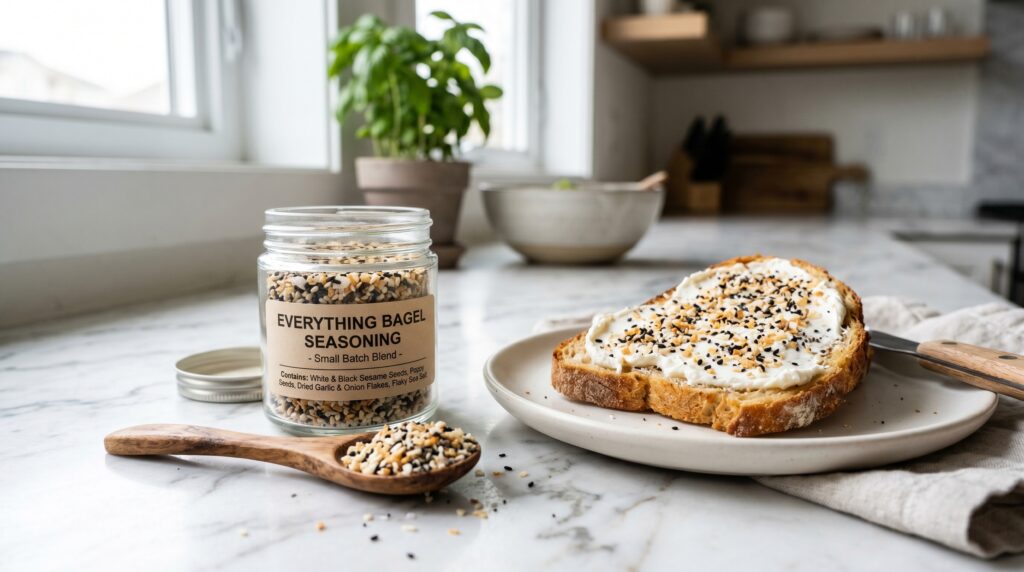
4. Everything Bagel Seasoning
Makes: approximately 100g | Prep time: 3 minutes
Everything bagel seasoning has become one of the most versatile, most broadly applicable spice blends in contemporary American cooking — its combination of toasted sesame, poppy seeds, garlic, onion, and salt works as beautifully on avocado toast as it does on roasted vegetables, fried eggs, or a cheese board.
Ingredients:
- White sesame seeds: 3 tbsp (toasted briefly in a dry pan)
- Black sesame seeds: 1 tbsp
- Poppy seeds: 2 tbsp
- Dried garlic flakes: 2 tbsp
- Dried onion flakes: 2 tbsp
- Flaky sea salt: 1½ tbsp
Method: Toast the white sesame seeds in a dry skillet over medium heat for 2 minutes until golden and fragrant. Cool. Combine all ingredients. This blend does not benefit from grinding — it should remain coarse and textured.
Uses: Sprinkle over avocado toast, cream cheese toast, scrambled eggs, cottage cheese bowls, roasted vegetables (add in the last 5 minutes), homemade crackers, or flatbreads before baking. Stir into cream cheese for an instant flavored spread. Add to bread dough before baking.
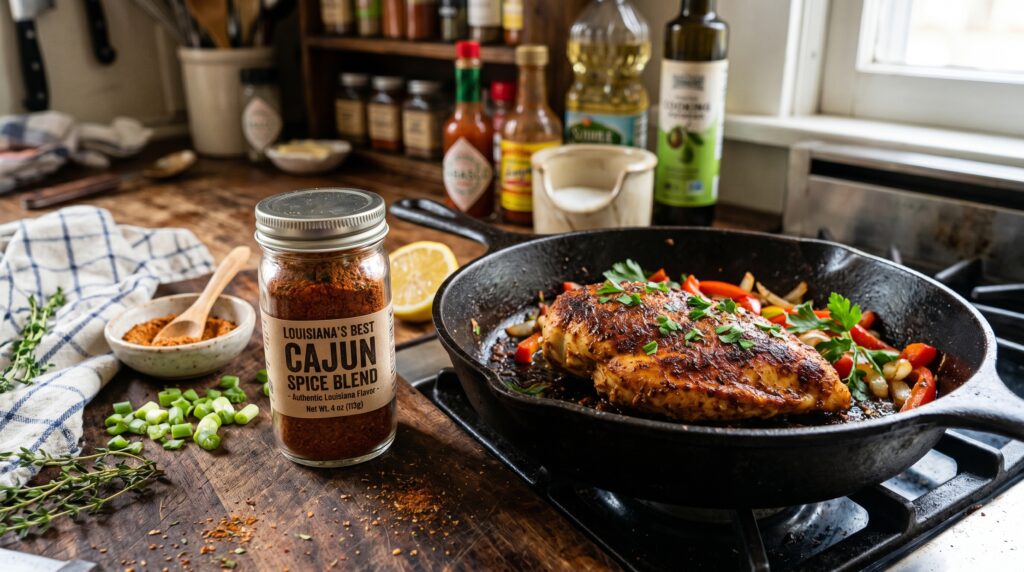
5. Cajun Seasoning
Makes: approximately 80g | Prep time: 5 minutes
Cajun seasoning is the essential Louisiana-inspired blend that transforms chicken, shrimp, fish, and pasta with its characteristic combination of heat, earthiness, and the distinctive dried herb profile of New Orleans cooking. Homemade Cajun seasoning achieves a freshness and heat balance that commercial versions consistently underdeliver.
Ingredients:
- Smoked paprika: 2½ tbsp
- Garlic powder: 1½ tbsp
- Onion powder: 1 tbsp
- Dried oregano: 1 tsp
- Dried thyme: 1 tsp
- Cayenne pepper: 1–2 tsp (Cajun seasoning should have genuine heat — adjust to tolerance)
- Black pepper: 1 tsp
- White pepper: ½ tsp (adds a different heat dimension from cayenne and black pepper)
- Sea salt: 1 tsp (optional)
Method: Combine all ingredients. This blend benefits from a brief toast in a dry pan — 30 seconds over medium heat, stirring constantly — to bloom the dried herbs and deepen the paprika’s character.
Uses: Classic blackened chicken or fish (coat generously and sear in a very hot cast-iron skillet). Cajun shrimp pasta (our 15 Flavorful Cajun Chicken Pasta Recipes covers the complete preparation). Season roasted potatoes, corn, or vegetables.
Global and International Spice Blends
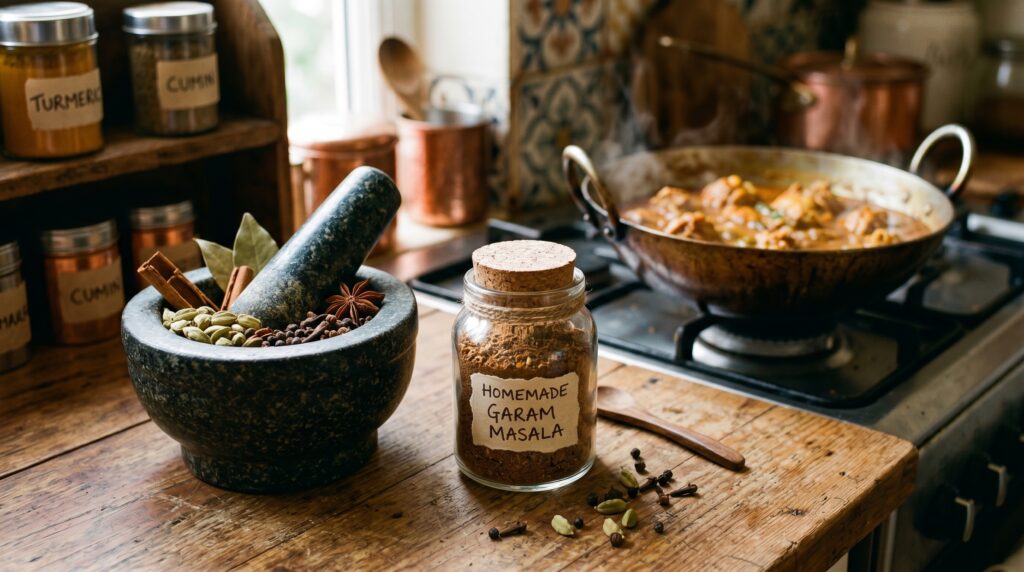
6. Garam Masala
Makes: approximately 60g | Prep time: 10 minutes (with toasting and grinding)
Freshly made garam masala is one of the most transformative demonstrations of the homemade spice blend’s superiority over store-bought — the essential oils in freshly ground cardamom, cloves, and cinnamon are so volatile and so potent that the difference between freshly ground and commercially ground garam masala is immediately, dramatically apparent.
Ingredients (whole spices — toast and grind):
- Cardamom pods, green: 2 tbsp (seeds only — discard husks)
- Cinnamon stick: 1 large (approximately 8cm)
- Cloves, whole: 1 tsp
- Black peppercorns: 1 tbsp
- Cumin seeds: 1 tbsp
- Coriander seeds: 2 tbsp
- Star anise: 2 whole
- Nutmeg: ¼ tsp freshly grated (added after grinding)
- Bay leaves: 2 dried (crumbled)
Method: Toast all whole spices (except nutmeg) in a dry skillet over medium heat for 2–3 minutes, stirring constantly, until fragrant and slightly darkened — do not burn. Cool completely. Grind in a spice grinder until fine. Stir in freshly grated nutmeg. Sieve if desired for a finer texture.
Uses: Add 1–2 teaspoons to any Indian curry or dal in the final minutes of cooking (garam masala is a finishing spice — added late to preserve its aromatics). Stir into yogurt marinades for chicken. Season roasted vegetables.
What makes it special: The cardamom in freshly made garam masala — its floral, slightly eucalyptus-like aroma at full potency — is one of the most extraordinary fragrance notes in all of spice cookery. Commercial garam masala’s pre-ground cardamom, having lost most of its volatile compounds, provides only a shadow of this character.
7. Curry Powder
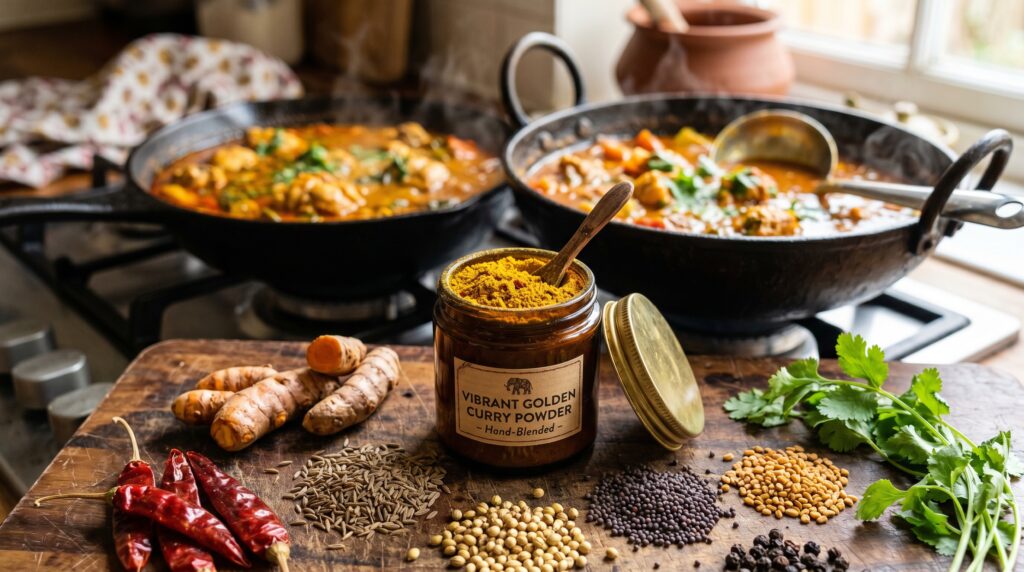
Makes: approximately 100g | Prep time: 10 minutes
Homemade curry powder — the foundational Indian-influenced spice blend — allows complete control over the turmeric-to-chili ratio, the coriander-cumin balance, and the overall heat level that commercial curry powders fix at a single manufacturer’s preference. Every cook’s ideal curry powder is slightly different, and the recipe below is a starting point for personal adjustment.
Ingredients:
- Coriander seeds (toasted and ground): 3 tbsp
- Cumin seeds (toasted and ground): 2 tbsp
- Turmeric, ground: 2 tbsp
- Chili powder: 1–2 tsp (adjust to heat preference)
- Black pepper: ½ tsp
- Mustard seeds (toasted and ground): 1 tsp
- Fenugreek seeds (toasted and ground): ½ tsp
- Cinnamon: ½ tsp
- Cardamom, ground: ½ tsp
- Cloves, ground: ¼ tsp
- Ginger, ground: 1 tsp
Method: Toast the whole seeds separately (coriander, cumin, mustard, fenugreek) — each has a different toasting time. Cool. Grind together. Combine with the pre-ground spices. Store immediately.
Uses: The foundation of any Indian-inspired curry, dal, or rice preparation.
8. Moroccan Ras el Hanout
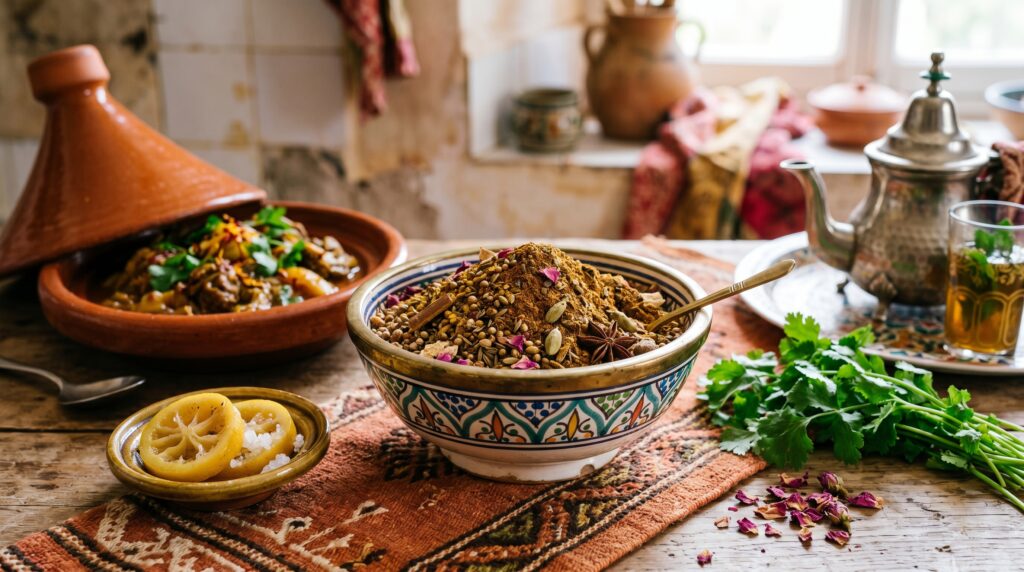
Makes: approximately 80g | Prep time: 10 minutes
Ras el hanout — “top of the shop” in Arabic, referring to a spice merchant’s finest blend — is the most complex, most aromatic spice blend in this collection. Its combination of warm spices, dried flowers, and earthy depth creates a seasoning of extraordinary sophistication that transforms any preparation it enters.
Ingredients:
- Cumin: 2 tsp
- Coriander: 2 tsp
- Ginger, ground: 2 tsp
- Cinnamon: 1½ tsp
- Smoked paprika: 1 tsp
- Turmeric: 1 tsp
- Black pepper: 1 tsp
- Cardamom: ½ tsp
- Allspice: ½ tsp
- Cloves: ¼ tsp
- Nutmeg: ¼ tsp
- Cayenne: ¼ tsp
- Dried rose petals (optional but traditional): 1 tsp, crumbled
Method: Combine all ground spices. If using rose petals, crumble them finely before adding. Stir thoroughly to distribute evenly.
Uses: Rub onto chicken, lamb, or beef before roasting. Season couscous by stirring 1–2 teaspoons into the cooking liquid. Add to Moroccan-inspired stews and tagines. Season roasted carrots or butternut squash. Our protein bowl collection features Moroccan preparations that showcase this blend’s extraordinary versatility.
9. Za’atar
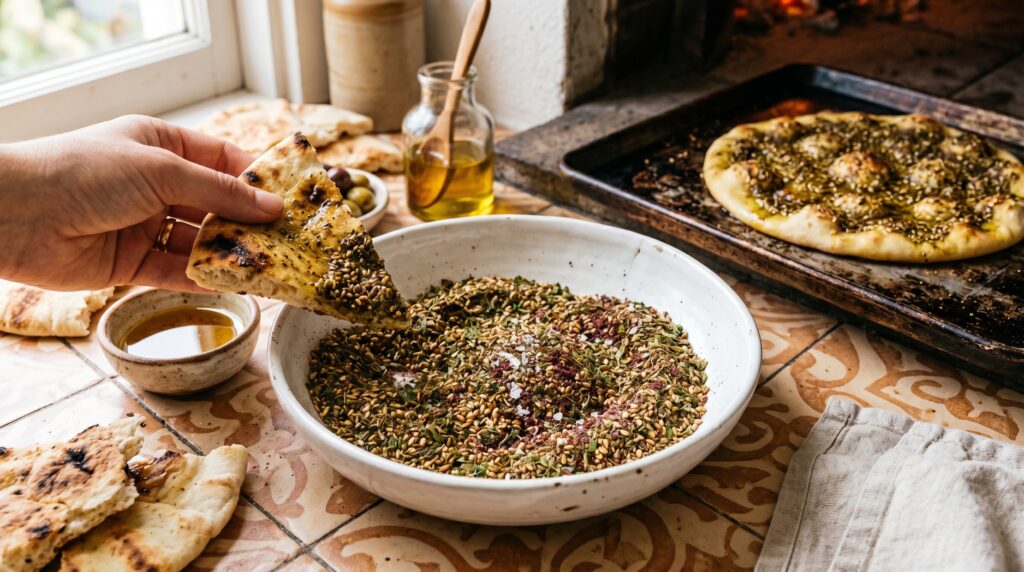
Makes: approximately 80g | Prep time: 5 minutes
Za’atar is the most beloved, most versatile Middle Eastern spice blend — a fragrant combination of dried herbs, sesame seeds, and the distinctive tart, slightly fruity sumac that creates a blend of immediate aromatic impact and remarkable versatility.
Ingredients:
- Dried thyme: 2 tbsp (the dominant herb note)
- Dried oregano: 1 tbsp
- Dried marjoram: 1 tbsp
- Sesame seeds (white — toasted): 3 tbsp
- Sumac: 2 tbsp (the distinctive tart element — do not substitute)
- Sea salt: ½ tsp
Method: Toast sesame seeds until golden. Cool. Combine with the remaining ingredients. This blend should not be ground — the textural variety is part of its character.
Uses: The classic application is mixing za’atar with good olive oil and using it as a dip for warm bread or flatbread. Sprinkle over hummus, labneh, or avocado toast. Rub onto chicken before roasting. Season roasted vegetables (particularly cauliflower and eggplant). Stir into yogurt for a dipping sauce.
For more Middle Eastern-inspired preparations using za’atar, our 15 Mouthwatering Slider Recipes includes za’atar-seasoned options that showcase the blend’s versatility.
10. Chinese Five Spice
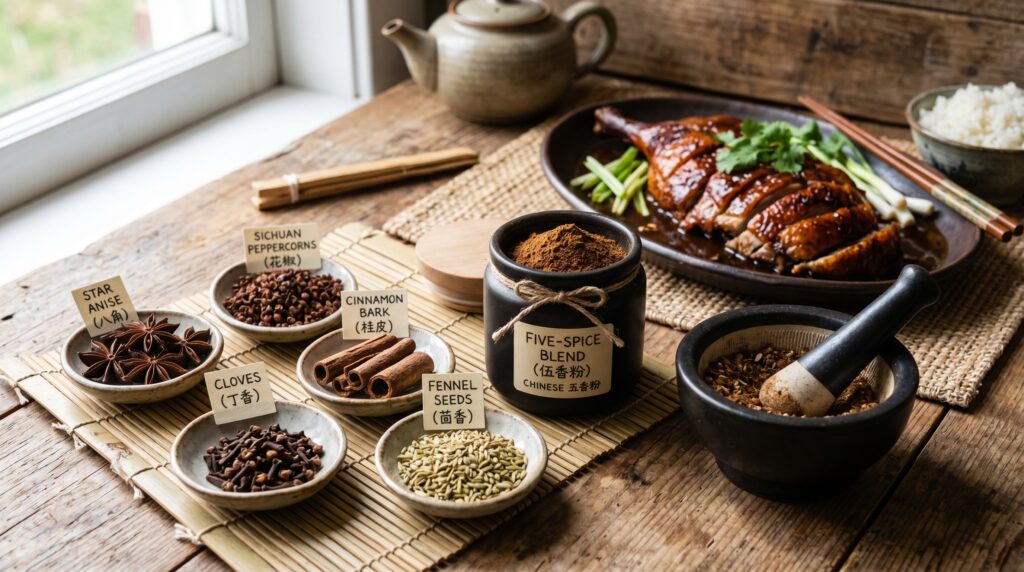
Makes: approximately 50g | Prep time: 8 minutes
Chinese five spice is one of the most remarkable spice blends in the world — the combination of the five flavors (sweet from cinnamon, anise from star anise and fennel, numbing tingle from Sichuan peppercorn, pungent from cloves) creates a blend of extraordinary complexity that is greater than the sum of its parts.
Ingredients (all toasted and freshly ground for best results):
- Star anise: 3 whole
- Sichuan peppercorns: 1 tbsp (do not substitute black pepper — the citrusy, numbing character is essential)
- Cinnamon stick: 1 medium (approximately 5cm)
- Cloves, whole: 1 tsp
- Fennel seeds: 2 tsp
Method: Toast all spices individually (each has a different toasting time) until fragrant. Cool completely. Grind to a fine powder. Sieve for the finest texture.
Uses: Rub onto duck, pork belly, or chicken before roasting. Add ½ teaspoon to stir-fry sauces for an authentic aromatic depth. Season ground pork for dumplings or wontons. Stir into marinades for Chinese-inspired barbecue.
11. Italian Herb Blend
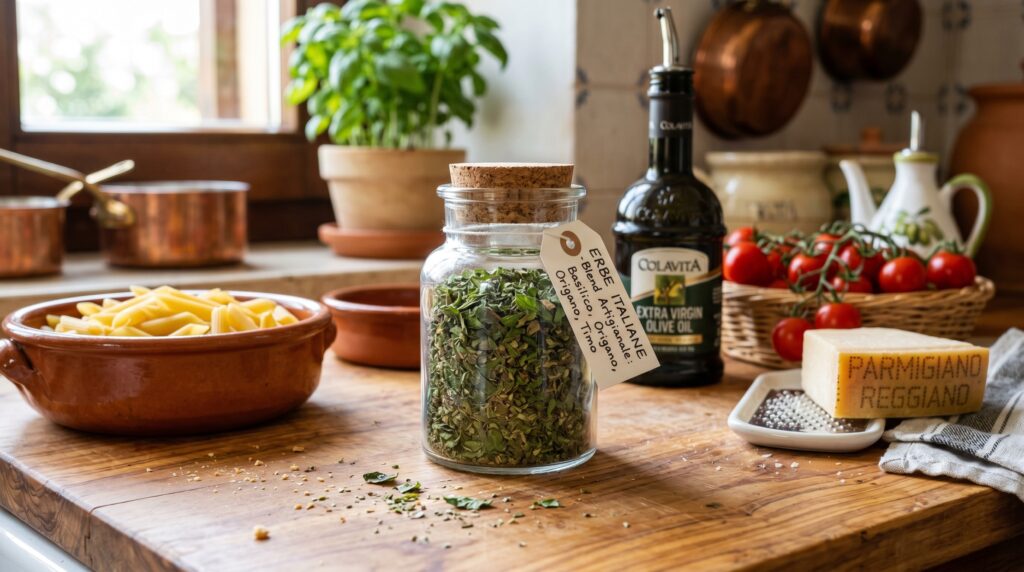
Makes: approximately 60g | Prep time: 3 minutes
Italian herb blend — the foundational seasoning of Italian cooking — delivers the fresh, herby, aromatic character of Italian cuisine in a single blend that works on pasta sauces, pizza, roasted chicken, and vegetables with equal effectiveness.
Ingredients:
- Dried basil: 2 tbsp (the dominant Italian herb note)
- Dried oregano: 2 tbsp
- Dried thyme: 1 tbsp
- Dried rosemary: 1 tbsp (crumbled finely)
- Dried marjoram: 1 tbsp
- Garlic powder: 1 tsp
- Dried parsley: 1 tbsp
- Fennel seeds (lightly crushed): ½ tsp (optional — adds an authentic Italian anise note)
- Red pepper flakes: ¼ tsp
Method: Combine all ingredients. If the rosemary is in large pieces, pulse briefly in a spice grinder or crumble finely by hand before adding — large rosemary pieces can be unpleasant if not adequately integrated into the blend.
Uses: Add to pasta sauces (stir in at the beginning to bloom in the olive oil), pizza dough, focaccia, and bread. Season chicken and fish. Rub onto roasted vegetables. Stir into olive oil for a dipping oil.
12. Greek and Mediterranean Seasoning
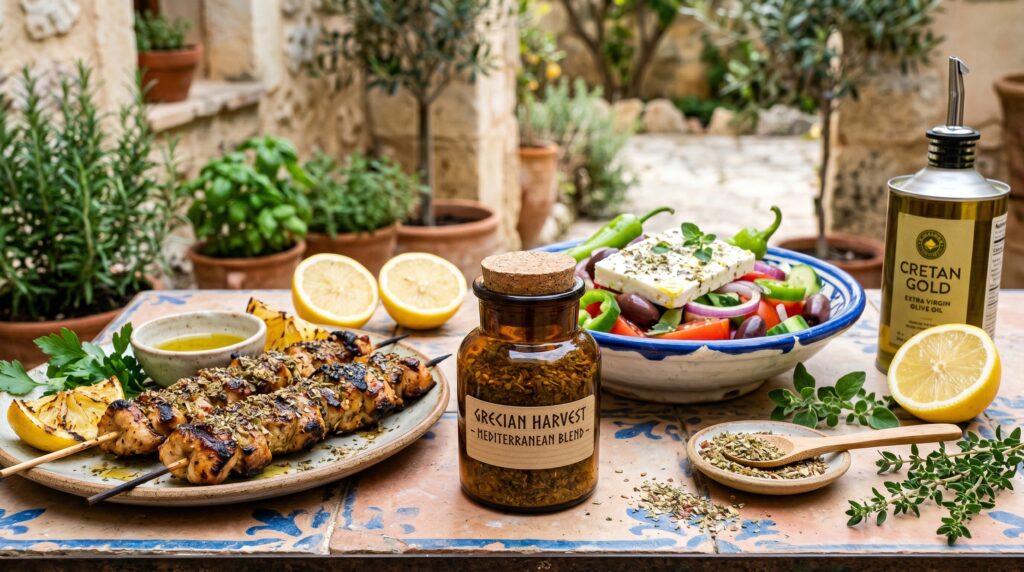
Makes: approximately 70g | Prep time: 5 minutes
Greek Mediterranean seasoning captures the aromatic herbs of Greek cooking — oregano, thyme, rosemary — alongside the bright lemon and garlic character that defines Mediterranean cuisine, in a blend that works beautifully on chicken, lamb, fish, and vegetables.
Ingredients:
- Dried oregano: 3 tbsp (Greek oregano — more pungent and complex than Italian oregano)
- Dried thyme: 1½ tbsp
- Dried rosemary: 1 tbsp (finely crumbled)
- Garlic powder: 2 tsp
- Onion powder: 1 tsp
- Dried lemon zest: 1 tsp (or 2 tsp fresh zest added at time of use)
- Black pepper: 1 tsp
- Dried parsley: 1 tbsp
- Sea salt: 1 tsp (optional)
- Dried dill: 1 tsp
Method: Combine all ingredients. If using dried lemon zest, ensure it is completely dry before adding to prevent moisture introduction that shortens shelf life.
Uses: Marinate chicken in olive oil, lemon juice, and this blend (2 tablespoons per 600g) before grilling or roasting. Season lamb chops. Toss with roasted potatoes, zucchini, or eggplant. Add to Greek-style rice.
Warm, Sweet, and Dessert Spice Blends
13. Pumpkin Spice
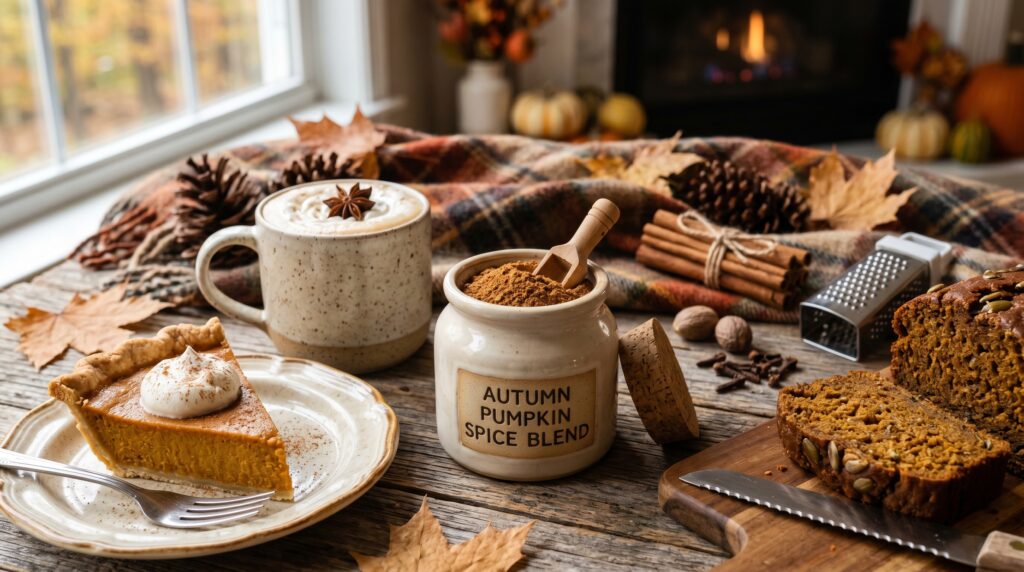
Makes: approximately 50g | Prep time: 3 minutes
Homemade pumpkin spice uses freshly grated nutmeg and whole-spice-derived cinnamon that commercial versions cannot match — the result is a warmer, more complex, more genuinely aromatic blend that makes every pumpkin spice application significantly better.
Ingredients:
- Cinnamon: 3 tbsp (Ceylon cinnamon is sweeter and more delicate than Cassia — use whichever you prefer)
- Ginger, ground: 2 tsp
- Nutmeg: 1 tsp (freshly grated for maximum aroma)
- Allspice: ½ tsp
- Cloves: ¼ tsp
- Cardamom: ¼ tsp (optional — adds floral complexity)
Method: Combine all ingredients. Grate nutmeg fresh and add immediately.
Uses: Add to pumpkin pie filling, pumpkin bread, and pumpkin pancakes. Stir into coffee or hot chocolate. Season roasted butternut squash and sweet potato. Add to granola and overnight oats. Our 15 Best Dump Cake Recipes includes pumpkin spice preparations that showcase this blend.
14. Apple Pie Spice
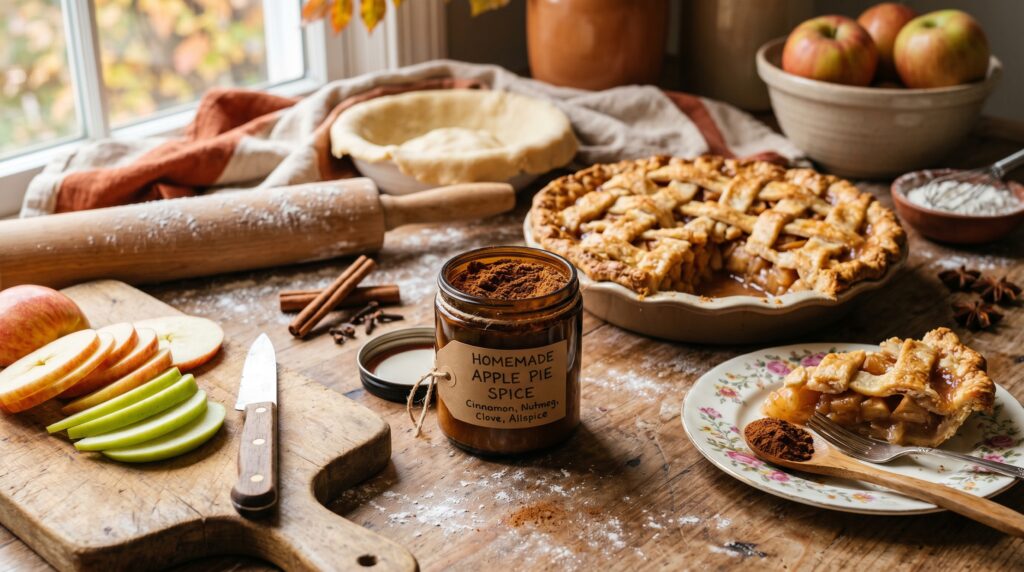
Makes: approximately 45g | Prep time: 3 minutes
Apple pie spice — closely related to but distinct from pumpkin spice — emphasizes the cinnamon-forward, warmer, slightly spicier profile that suits apple preparations, where the fruit’s own tartness needs a more assertive spice counterpart.
Ingredients:
- Cinnamon: 3 tbsp
- Nutmeg: 1½ tsp (slightly more than pumpkin spice — apple pairs well with nutmeg)
- Allspice: 1 tsp
- Cardamom: ½ tsp
- Ginger, ground: ½ tsp
- Cloves: ¼ tsp
Method: Combine all ingredients. Store in an airtight jar.
Uses: Season apple pie and tart fillings (2 teaspoons per 900g of apples). Add to apple muffins, scones, and crumbles. Stir into oatmeal with diced apple: season baked pears or poached fruit.
15. Chai Spice Blend
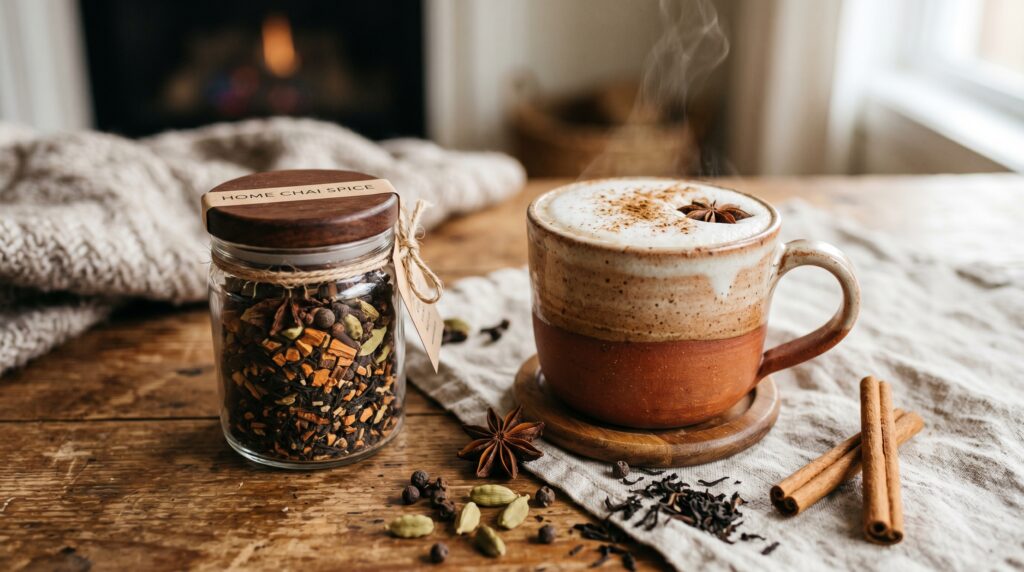
Makes: approximately 60g | Prep time: 8 minutes (with grinding)
Homemade chai spice blend brings the aromatic, warmly spiced character of a great masala chai into a versatile powder form that can be used in drinks, baking, and cooking applications beyond chai tea itself.
Ingredients (freshly ground for best results):
- Green cardamom: 2 tbsp (seeds, toasted and ground — the dominant chai note)
- Cinnamon: 2 tbsp
- Ginger, ground: 1 tbsp
- Black pepper: 1 tsp (essential in chai — provides a gentle heat)
- Cloves: ½ tsp
- Star anise: 2 whole (ground)
- Fennel seeds: ½ tsp (toasted and ground — optional)
- Nutmeg: ¼ tsp
Method: Toast cardamom and fennel separately. Cool. Grind with star anise. Combine with the remaining ground spices.
Uses: Stir 1–2 teaspoons into warm milk with black tea for masala chai. Add to pancake batter, banana bread, granola, or overnight oats—seasoned roasted sweet potato. Stir into whipped cream or yogurt.
Rubs and Specialty Blends
16. Jerk Seasoning
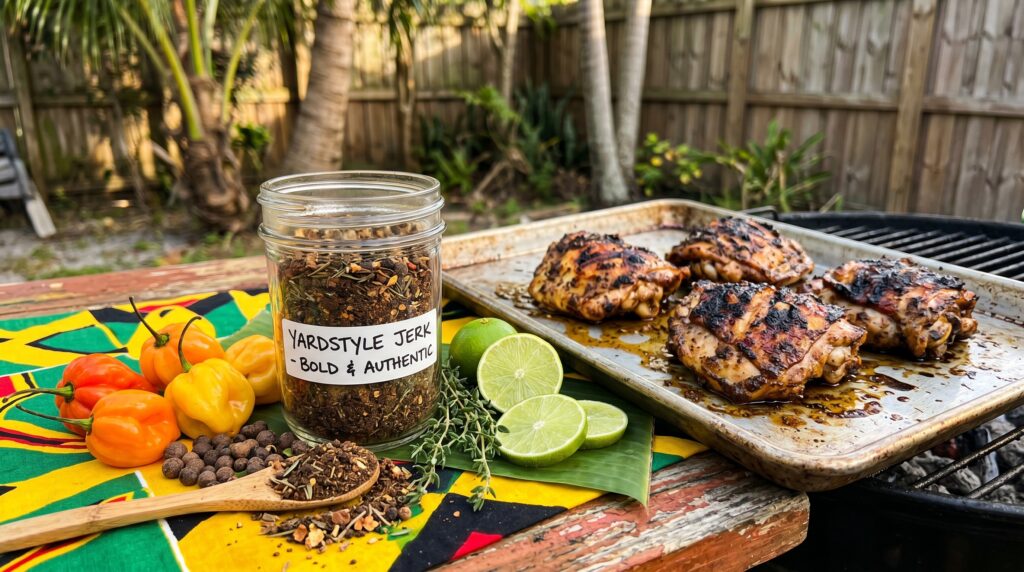
Makes: approximately 80g (dry blend) | Prep time: 8 minutes
Jerk seasoning’s complex combination of allspice, scotch bonnet heat, and aromatic thyme creates a dry rub version of the classic Jamaican wet marinade — with the convenience of a shelf-stable blend that can be applied quickly before cooking.
Ingredients:
- Allspice, ground: 2 tbsp (the cornerstone of jerk — not optional)
- Dried thyme: 2 tbsp
- Garlic powder: 1½ tbsp
- Onion powder: 1 tbsp
- Cayenne pepper: 1–2 tsp (scotch bonnet flakes if available for authenticity)
- Black pepper: 1 tsp
- Smoked paprika: 1 tsp
- Cinnamon: ½ tsp
- Nutmeg: ½ tsp
- Brown sugar: 1 tbsp
- Sea salt: 1 tsp (optional)
- Dried chili flakes: ½ tsp
Method: Combine all ingredients. The brown sugar may clump slightly — break up before storing.
Uses: Rub generously onto chicken pieces and marinate overnight before grilling or baking at high heat. Use on pork, shrimp, or fish. The dry blend can be combined with olive oil, lime juice, and soy sauce for a more traditional wet jerk marinade.
17. Ethiopian Berbere
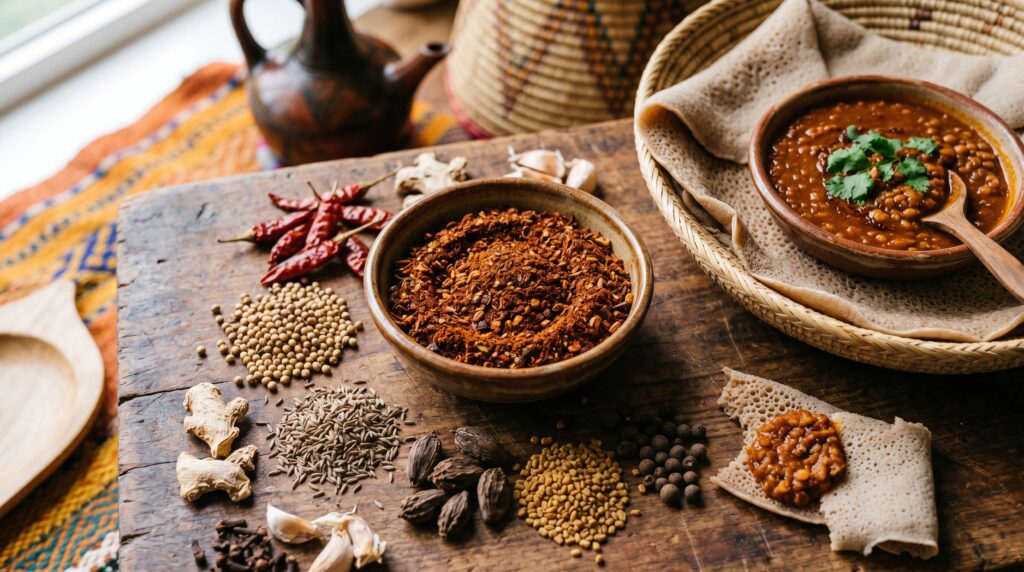
Makes: approximately 100g | Prep time: 12 minutes
Berbere is one of the most complex, most deeply flavored spice blends in the world — the foundational seasoning of Ethiopian cooking, used in the spiced clarified butter (niter kibbeh) and the slowly simmered stews (wat) that define Ethiopian cuisine.
Ingredients:
- Dried chilies (Ethiopian dried chilies or similar): 6–8 (toasted and ground)
- Coriander seeds: 2 tbsp (toasted and ground)
- Fenugreek seeds: 1 tsp (toasted and ground)
- Cardamom seeds: 1 tsp (toasted and ground)
- Black peppercorns: 1 tsp
- Cloves: ¼ tsp
- Allspice: ¼ tsp
- Cinnamon: 1 tsp
- Ginger, ground: 1 tsp
- Smoked paprika: 2 tbsp (for the characteristic color)
- Ajwain (carom seeds): ¼ tsp (optional but authentic)
- Nutmeg: ¼ tsp
- Sea salt: 1 tsp (optional)
Method: Toast all whole spices separately until fragrant. Cool. Grind together. Combine with pre-ground spices. This blend benefits from resting for 24 hours before use — the flavors meld and deepen significantly.
Uses: Season lentil and chickpea stews. Rub onto chicken or lamb before slow roasting. Add to clarified butter for niter kibbeh. Stir into tomato sauces for depth.
18. Dukkah
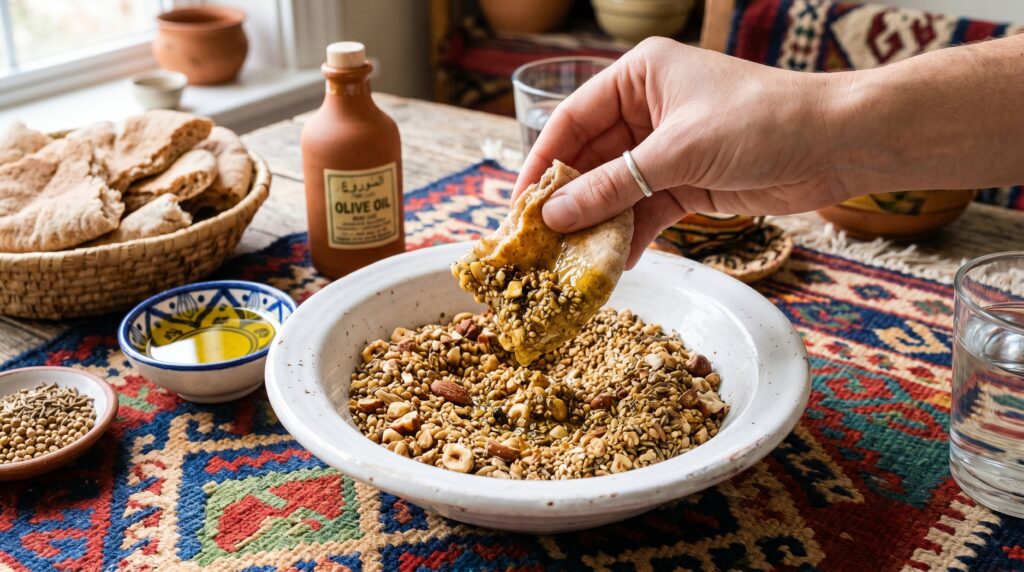
Makes: approximately 150g | Prep time: 10 minutes
Dukkah — the Egyptian nut, seed, and spice blend — is uniquely different from every other blend in this collection because its coarse, chunky texture is as important as its flavor. Used as a dip (with olive oil and bread), a crust, or a topping, dukkah provides extraordinary textural and flavor complexity.
Ingredients:
- Hazelnuts or almonds: 80g (toasted until golden and fragrant)
- Sesame seeds (white): 3 tbsp (toasted)
- Coriander seeds: 2 tbsp (toasted)
- Cumin seeds: 1 tbsp (toasted)
- Black pepper: ½ tsp
- Sea salt: ½ tsp
- Dried thyme or oregano: ½ tsp
- Dried chili flakes: ¼ tsp (optional)
Method: Toast all components separately. Cool completely. Pulse in a food processor until roughly chopped — not ground to a powder. The texture should be chunky and varied. Dukkah loses its defining character if over-processed.
Uses: The classic application is warm bread dipped in excellent olive oil, then in dukkah. Sprinkle over eggs, hummus, salads, and roasted vegetables. Use as a crust for fish or chicken (press firmly onto the protein before baking). Add to cheese boards as a textured element.
19. Shawarma Spice
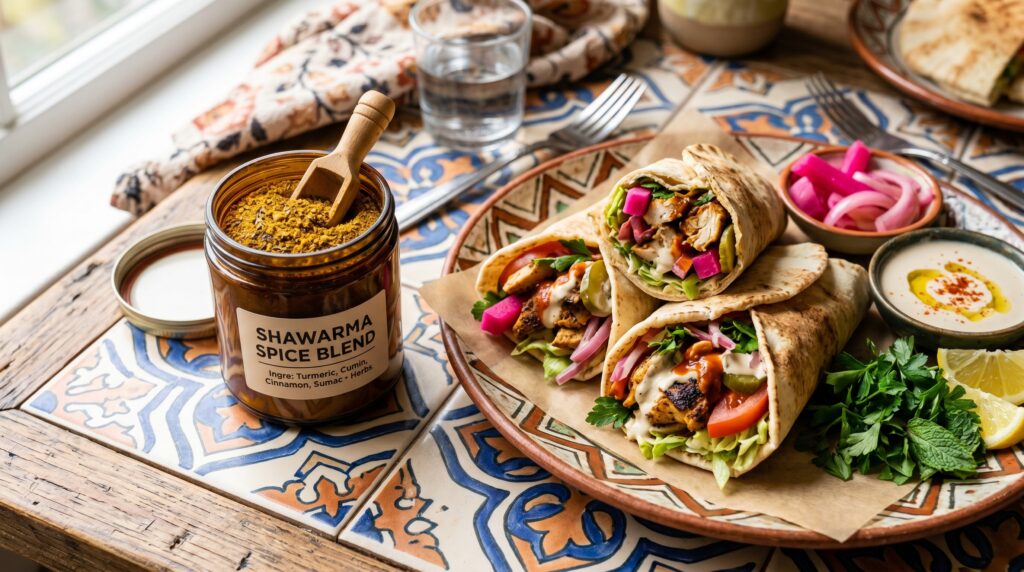
Makes: approximately 70g | Prep time: 5 minutes
Shawarma spice is the Middle Eastern street food seasoning that creates the warmly aromatic, slightly sweet, deeply complex flavor of classic shawarma — used on chicken, lamb, or beef for one of the most immediately compelling spice combinations in the world.
Ingredients:
- Cumin: 2 tbsp
- Coriander: 1 tbsp
- Smoked paprika: 1½ tsp
- Turmeric: 1 tsp
- Cinnamon: 1 tsp
- Garlic powder: 1 tsp
- Cardamom: ½ tsp
- Allspice: ½ tsp
- Cloves: ¼ tsp
- Cayenne: ¼ tsp
- Black pepper: ½ tsp
- Ginger, ground: ½ tsp
Method: Combine all ingredients. This blend benefits particularly from fat-blooming — always cook it briefly in olive oil before adding other ingredients.
Uses: Marinate chicken, lamb, or beef in olive oil, lemon juice, yogurt, and 2 tablespoons of this blend for 2–24 hours before grilling or roasting. Season cauliflower or chickpeas for a plant-based shawarma. Add to rice pilafs. Our 22 Flavorful Vegetarian Recipes includes shawarma-spiced preparations that showcase this blend’s plant-based versatility.
20. Herbes de Provence
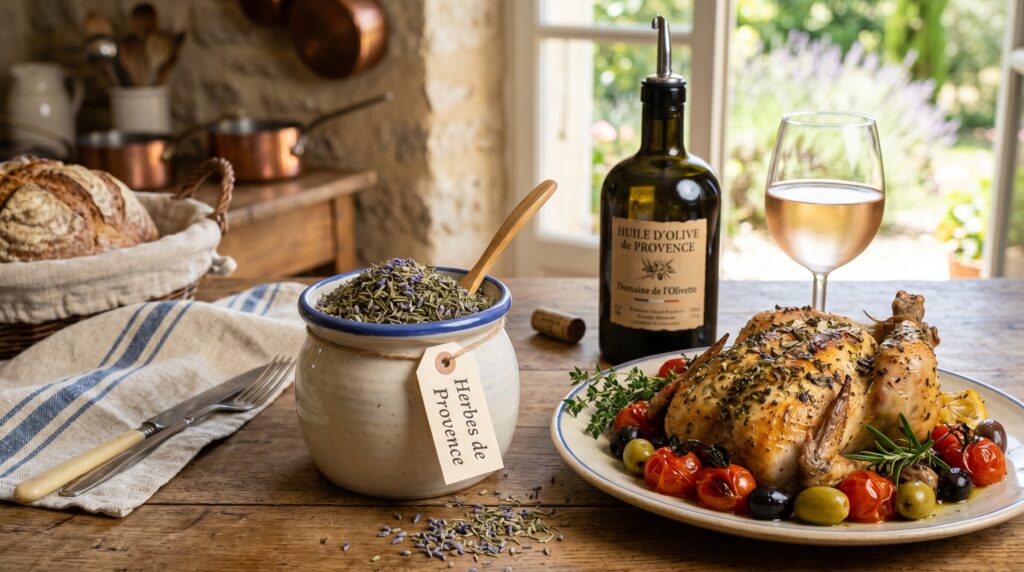
Makes: approximately 60g | Prep time: 3 minutes
Herbes de Provence is the quintessential French Provençal herb blend — the combination of dried Provençal herbs with the distinctive addition of dried lavender creates a seasoning of immediate, unmistakable French character and extraordinary fragrance.
Ingredients:
- Dried thyme: 2 tbsp (the dominant note)
- Dried oregano: 1½ tbsp
- Dried rosemary: 1 tbsp (finely crumbled)
- Dried savory: 1 tbsp (the defining Provençal herb — substitute marjoram if unavailable)
- Dried marjoram: 1 tbsp
- Dried lavender flowers: 1 tsp (culinary grade — the defining characteristic; use sparingly as it is powerful)
- Dried fennel seeds: ½ tsp (lightly crushed)
- Dried basil: 1 tbsp
Method: Combine all ingredients. The lavender should be culinary grade and used in exactly the specified quantity — too much lavender makes a blend taste like soap rather than Provence.
Uses: Season chicken or fish before roasting or grilling. Rub onto the lamb with olive oil and garlic. Season roasted vegetables, particularly tomatoes, eggplant, and zucchini. Add to the focaccia dough. Stir into olive oil for a dipping oil.
Spice Blend Gifting and Labeling Guide
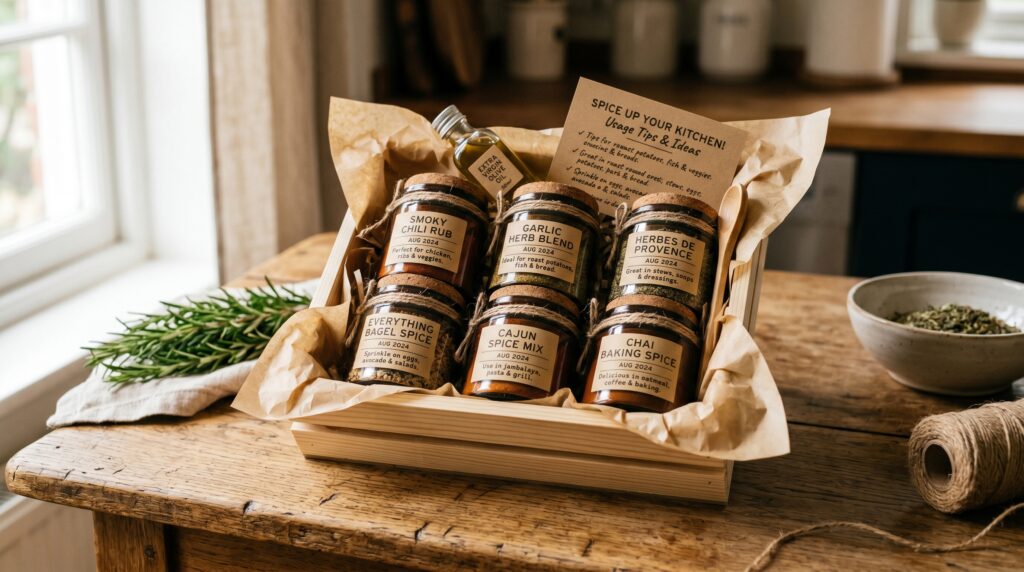
Homemade spice blends make exceptional gifts — genuinely useful, genuinely impressive, and completely personal. A set of four or five blends representing different cuisines or applications is a food gift of real quality and thought.
Labeling essentials for gifting: Blend name, date made, primary uses (in 10 words or fewer), and any significant allergen information (sesame seeds in everything bagel, nuts in dukkah).
Gifting combinations:
- The Italian Kitchen: Italian herb blend, za’atar, dukkah, and Mediterranean seasoning
- The Grill Master: BBQ dry rub, Cajun seasoning, jerk seasoning, and taco seasoning
- The Global Pantry: Garam masala, ras el hanout, shawarma spice, and five spice
- The Baker’s Collection: Pumpkin spice, apple pie spice, chai spice, and cinnamon sugar
Frequently Asked Questions About Homemade Spice Blends
How long do homemade spice blends last?
Stored in airtight glass jars away from heat, light, and moisture, most homemade spice blends retain peak quality for 3–6 months and remain usable for up to 12 months. Blends containing whole toasted and freshly ground spices (like garam masala) have a shorter peak quality window (2–3 months) because their volatile compounds are more active and dissipate more quickly.
Should I make spice blends salt-free?
Yes, for most applications. Making blends salt-free gives complete control over sodium levels, allows the blend to be used generously without risk of over-salting, and makes the blend versatile across a wider range of preparations. Add salt separately when cooking. The recipes above include optional salt additions for those who prefer the convenience of a pre-salted blend.
What spices should every home cook have?
According to BBC Good Food, the ten most essential spices for a well-stocked home kitchen are: cumin, coriander, smoked paprika, turmeric, cayenne, cinnamon, cardamom, black pepper, garlic powder, and onion powder. These ten spices, combined in different ratios with different supporting spices, form the foundation of virtually every spice blend in this guide and most spice blends in the world.
Does toasting spices really make a difference?
Yes — dramatically. Dry-toasting whole spices in a skillet releases their essential oils through heat, intensifying and transforming their flavor compounds in ways that make the finished blend noticeably more aromatic and complex. For blends where you can taste the spices directly (like dukkah or za’atar), the toasting difference is immediately apparent. For blends cooked into dishes, the difference is more subtle but real.
How do I know when to add spice blends during cooking?
The timing of spice addition fundamentally affects the flavor result. Adding spice blends to hot fat at the beginning of cooking (fat-blooming) creates deep, integrated, mellow spice flavor. Adding them mid-cook creates a medium integration. Adding them at the end preserves their more volatile, brighter aromatics. Many preparations benefit from a combination — some spice at the beginning for depth, more added toward the end for brightness.
Can I substitute fresh spices for dried in these blends?
No — these blends are designed for dried and ground spices. Fresh spices have a dramatically higher moisture content that would cause the blends to clump, mold, and deteriorate rapidly. For preparations requiring fresh spice character, use the dried blend for the base seasoning and add a small amount of fresh equivalent at the end of cooking for brightness.
Conclusion
From the everyday utility of an all-purpose house seasoning to the extraordinary complexity of freshly made garam masala, from the bold American character of a great BBQ rub to the ancient, layered sophistication of Ethiopian berbere, from the Mediterranean fragrance of za’atar to the Provençal elegance of herbes de Provence — these 20 homemade spice blend recipes represent a complete curriculum in the architecture of flavor and a practical toolkit for genuinely transforming home cooking.
The investment required is modest: a spice grinder, a collection of whole and ground spices, a set of small glass jars, and an afternoon of blending and labeling. The return on that investment is immediate, ongoing, and genuinely remarkable — the discovery that the most powerful upgrade available to any home cook is not a new pan, a new technique, or a new ingredient, but the freshness, quality, and personal calibration of the seasoning that goes into every dish.
Make the blends. Label the jars. Season boldly. And experience the difference that fresh, homemade, personally crafted spice blends make to every single meal.
For more cooking techniques, ingredient guides, and culinary inspiration across every cuisine and skill level, explore our full collection at skillsinthekitchen.com.