
10 Homemade Casserole Recipes: Comforting & Delicious
Introduction
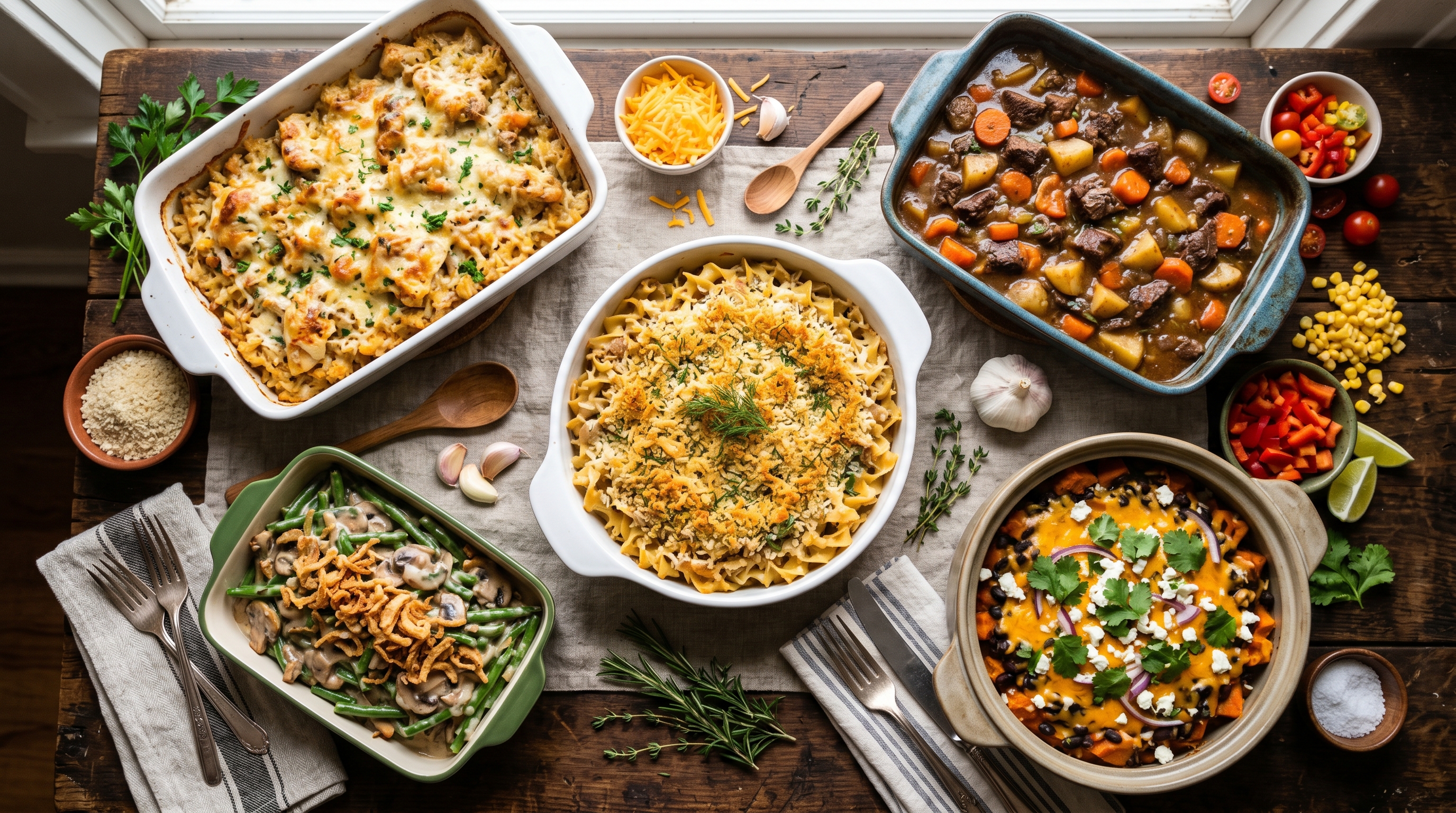
The casserole is one of the most enduring, most universally beloved, and most genuinely satisfying formats in all of home cooking. Named after the deep, oven-safe dish in which it is prepared, the casserole represents a fundamental culinary philosophy — the idea that combining ingredients in a single vessel, sealing them together under a lid or a crispy topping, and allowing heat and time to meld their flavors into something unified and deeply satisfying is one of the most reliable paths to genuinely nourishing, genuinely delicious food.
What makes casserole cooking so enduringly popular across every food culture and every era is the combination of qualities that no other cooking format quite replicates: the effortless make-ahead convenience, the minimal active cooking time, the extraordinary depth of flavor that develops when ingredients cook together slowly in their own juices, the generous feeding capacity that makes casseroles ideal for family dinners and entertaining, and the versatility that allows the format to accommodate every protein, every vegetable, every spice tradition, and every dietary requirement with equal grace.
The world’s great casserole traditions span every continent and every culinary culture — the French gratin, the American tuna noodle casserole, the Greek moussaka, the Moroccan pastilla, the British hotpot, the Middle Eastern kofta bake. Each represents a distinct culinary tradition that has arrived at the same fundamental insight: that slow, enclosed oven cooking transforms simple ingredients into something greater than the sum of their parts.
In this guide, we have compiled 10 of the most delicious, most comforting, and most genuinely homemade casserole recipes — spanning timeless classics, hearty family favorites, vegetarian preparations, and creative international-inspired preparations. Every recipe is designed to feed a crowd, to be prepared in advance, and to deliver the kind of deeply satisfying, warming comfort that defines the very best of home cooking.
Let’s bake.
The Art and Science of Great Casserole Cooking
The Dish: Your Most Important Equipment Choice
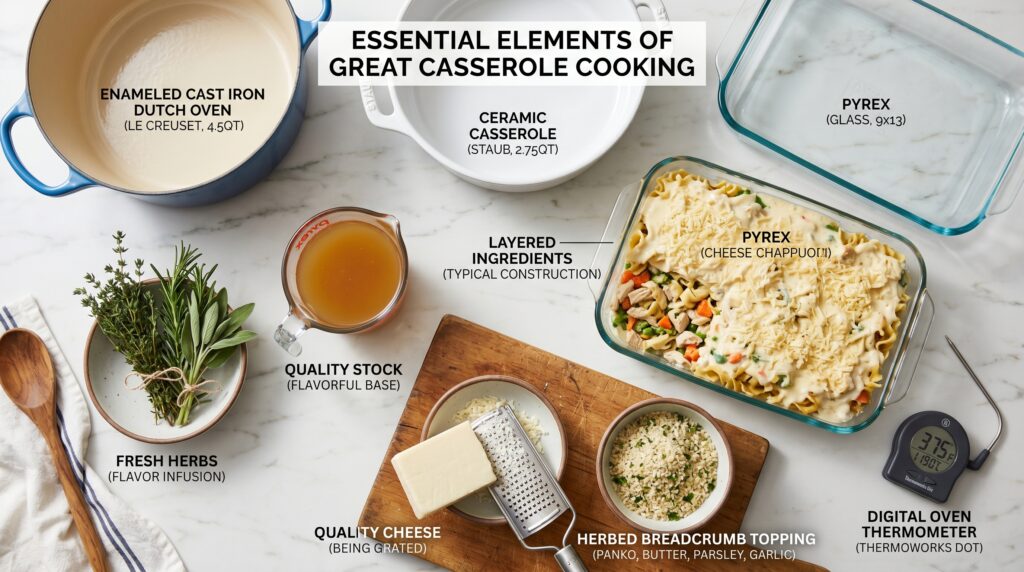
The casserole dish is not merely a vessel — it actively shapes the cooking. Different materials produce different results:
Ceramic and porcelain: The most widely used material. Heats slowly and evenly, retains heat well, and goes directly from oven to table beautifully. Ideal for most casserole recipes. Prone to thermal shock — never place a cold ceramic dish directly into a screaming hot oven.
Cast iron: The professional choice for casseroles that begin on the stovetop (browning, sautéing) before transferring to the oven. Heats unevenly but retains extraordinary heat. Produces the best bottom-crust browning of any material.
Glass (Pyrex): Allows you to see the entire cooking process from all sides — particularly useful for layered casseroles where you want to monitor the bottom browning. Heats more quickly than ceramic.
Enameled cast iron (Dutch oven): Combines the stovetop-to-oven versatility of cast iron with the non-reactive surface of enamel. The most versatile casserole vessel available.
The Liquid Balance: The Most Critical Technical Variable
Too much liquid produces a watery casserole where the components float rather than meld. Too little produces a dry, tightened preparation where the ingredients stick and burn rather than braise.
The correct liquid level for most casseroles is enough to come approximately halfway up the solid ingredients. The remaining cooking liquid is provided by the moisture released from the proteins and vegetables as they cook. Always err on the side of less liquid initially — you can add more during cooking, but you cannot remove it.
The Topping: Texture, Color, and Flavor
The casserole topping — whether a breadcrumb crust, a mashed potato layer, a cheese blanket, or a pastry lid — serves three purposes simultaneously: it provides a textural contrast to the yielding interior (crispy vs soft), it creates visual appeal through browning and color, and it contributes its own flavor to the finished dish. The topping deserves as much care as the filling.
Breadcrumb topping: Combine panko breadcrumbs with melted butter, grated Parmesan, garlic powder, and dried herbs. The butter ensures even browning and prevents the breadcrumbs from drying out before they color.
Cheese topping: Shredded cheese applied in the last 15–20 minutes of baking rather than at the beginning prevents over-browning and ensures the cheese is fully melted and just beginning to bubble and turn golden at the edges.
Mashed potato topping: The classic shepherd’s pie approach — the potato should be seasoned generously and slightly firmer than serving mash, so it holds its shape as a distinct layer during baking.
The Foil Stage: Understanding When to Cover and Uncover
Most casseroles benefit from a covered initial baking phase — the foil traps steam and ensures the interior cooks through evenly without the topping or edges over-browning. The uncovered final phase allows the surface to brown and crisp. As a general principle:
Cover: For the first two-thirds of the baking time. Uncover: For the final one-third to develop color and texture
Understanding oven temperatures and their effects on different casserole preparations is covered in depth in our Kitchen Temperatures: The Complete Guide from Simmer to Boil.
10 Homemade Casserole Recipes
1. Classic Chicken and Rice Casserole
Prep time: 15 minutes | Cook time: 50 minutes | Serves: 6–8
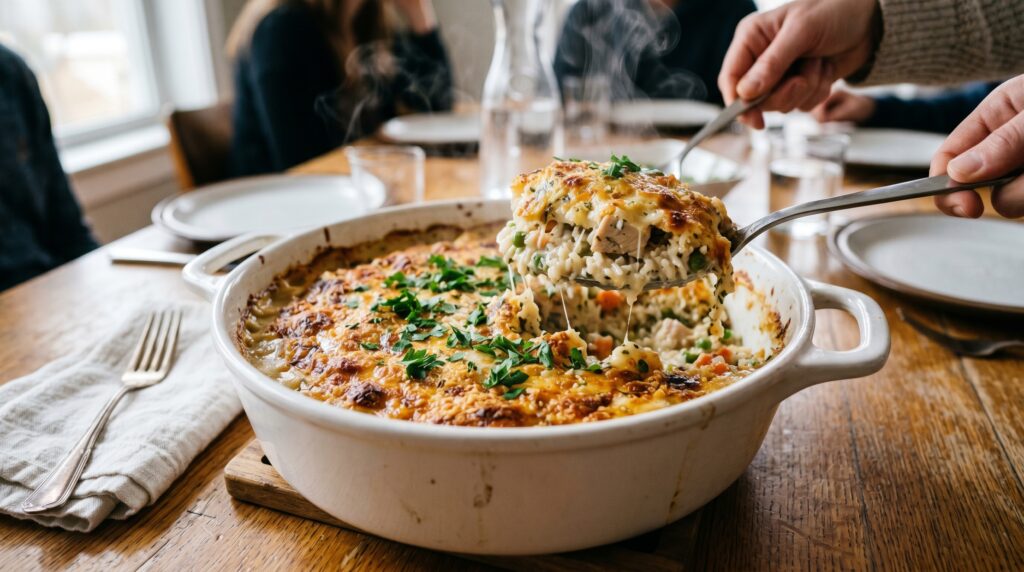
Chicken and rice casserole is the quintessential comfort food centerpiece — chicken thighs and uncooked rice baked together in a seasoned cream sauce until the rice has absorbed every drop of flavor and the chicken is tender enough to fall apart at the touch of a fork. It is the casserole that defines the format’s central promise: effortless preparation, extraordinary result.
Key ingredients: Bone-in chicken thighs (6–8), long-grain white rice (300g — uncooked, it absorbs the liquid and flavor during baking), chicken stock (600ml), double cream (120ml), onion (finely diced), garlic (3 cloves, minced), dried thyme, dried oregano, smoked paprika, sea salt, cracked black pepper, shredded cheddar or mozzarella (for topping), fresh parsley
Method: Preheat oven to 190°C (375°F). Sear chicken thighs skin-side down in an oven-safe pan until deeply golden — approximately 5 minutes. Remove. In the same pan (or a greased baking dish), combine uncooked rice with sautéed onion and garlic, stock, cream, herbs, and seasoning. Stir to distribute evenly. Nestle the seared chicken thighs on top of the rice mixture, skin-side up. Scatter shredded cheese around the chicken. Cover tightly with foil. Bake covered for 30 minutes. Remove foil and bake for 20 more minutes until the chicken is cooked through, the rice has absorbed the liquid, and the cheese is golden and bubbling.
The pre-sear step: Searing the chicken thighs before adding them to the casserole dish creates a golden, caramelized skin that remains attractive through the baking process and contributes a significant additional layer of roasted, savory flavor to the surrounding rice. This step takes 5 minutes and makes a substantial difference to the finished result.
What makes it special: The uncooked rice absorbs the stock and cream as it bakes — becoming infused with the chicken juices, the herbs, and the garlic as it cooks through. This direct absorption produces a rice of extraordinary flavor that cannot be replicated by combining separately cooked rice with a sauce.
Pro tip: Check the rice at the 45-minute mark — if the liquid has been absorbed but the rice is not yet fully cooked, add a small splash of warm stock and return to the oven for 10 more minutes. The precise liquid absorption varies with different rice varieties and oven temperatures.
Make-ahead: Assemble completely, cover, and refrigerate for up to 24 hours before baking. Add 15 minutes to the baking time when cooking from cold. The result is actually more flavorful than an immediately baked version — the rice absorbs the seasoning more completely during the overnight rest.
2. Beef and Vegetable Casserole
Prep time: 25 minutes | Cook time: 1 hour 30 minutes | Serves: 6
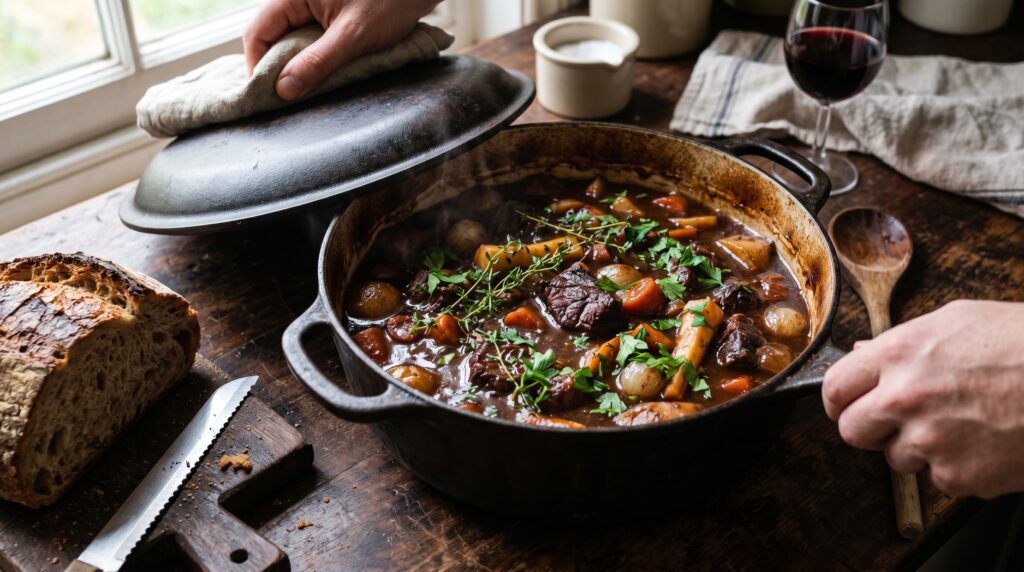
Beef and vegetable casserole is the slow-baked preparation that delivers the depth and richness of a long-simmered stew with the concentrated, slightly more intense flavors that oven-braising produces — tender chunks of beef in a deeply reduced, glossy gravy with sweet root vegetables.
Key ingredients: Beef chuck (1kg, cut into 4cm chunks), carrot (3 large, chunked), parsnip (2, chunked), waxy potato (4, quartered), pearl onions or regular onion (cut into wedges), garlic (4 cloves, whole), beef stock (500ml), tomato paste (2 tbsp), Worcestershire sauce (2 tbsp), fresh thyme, fresh rosemary, bay leaves, plain flour (2 tbsp — for coating the beef before browning), sea salt, cracked black pepper, olive oil or beef dripping
Method: Season flour with salt and pepper. Toss beef chunks in the seasoned flour. Brown in batches in a cast-iron casserole over high heat until deeply caramelized on all sides — do not rush this step or crowd the pan. Remove browned beef. In the same pan, sauté the onion and garlic until soft. Add tomato paste and cook for 2 minutes. Add stock, Worcestershire sauce, and herbs. Return beef and add all vegetables. The liquid should come approximately halfway up the ingredients. Bring to a simmer. Cover and bake at 160°C (325°F) for 1 hour and 30 minutes until the beef is completely tender and the gravy has thickened.
The flour coating: Tossing the beef in seasoned flour before browning serves two purposes — it creates a more deeply caramelized exterior on the beef during browning (the starch caramelizes faster than bare meat), and the flour that falls into the pan during cooking thickens the gravy naturally during the long bake.
What makes it special: Oven-braising, rather than stovetop simmering, produces a subtly different result — the heat circulates evenly from all sides, rather than from the bottom only, creating more uniformly cooked beef and a slightly more concentrated, richer gravy than the same preparation on the stovetop.
Pro tip: Always brown the beef in batches in a dry, screaming-hot pan — never add cold, wet beef directly to a casserole filled with liquid. The browning creates the Maillard reaction that produces the deep, complex flavors that distinguish a great casserole from a mere boiled-beef preparation.
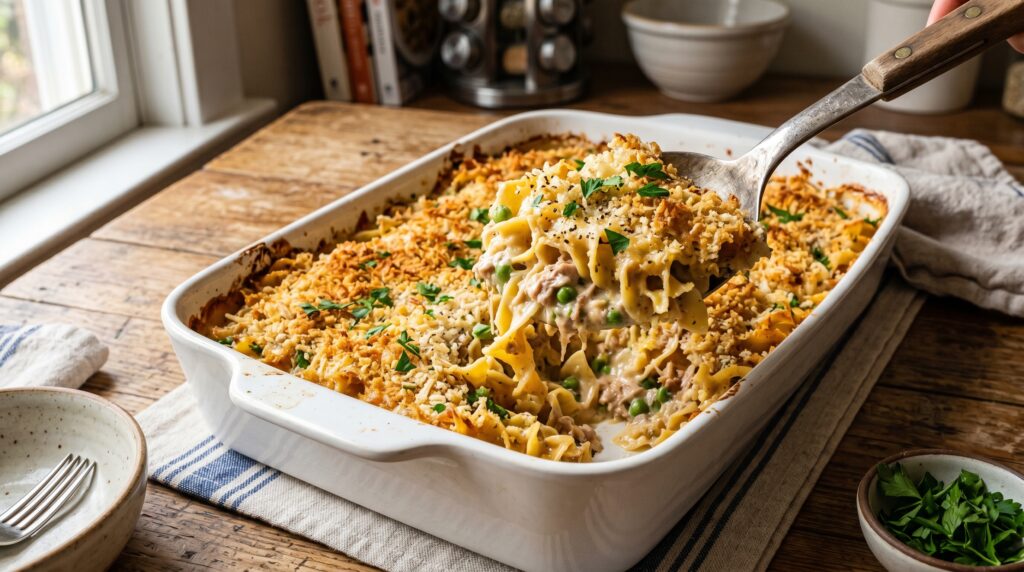
3. Tuna Noodle Casserole
Prep time: 20 minutes | Cook time: 30 minutes | Serves: 6–8
Tuna noodle casserole is the American comfort food classic — egg noodles in a creamy cheese and mushroom sauce with good canned tuna, topped with a golden buttered breadcrumb crust. Made properly from scratch rather than from canned condensed soup, it is one of the most genuinely satisfying and deeply comforting casseroles in existence.
Key ingredients: Egg noodles (350g, cooked to just under al dente), canned tuna in olive oil (2 tins × 160g, drained and flaked), cremini mushrooms (250g, sliced and sautéed until golden), frozen peas (150g), shredded cheddar (150g), fresh parsley. From-scratch cream sauce: butter, plain flour, whole milk (600ml), Dijon mustard (1 tsp), Parmesan (30g, grated), garlic powder, sea salt, white pepper. Topping: panko breadcrumbs (80g), melted butter (30g), Parmesan (20g), dried parsley, garlic powder
From-scratch cream sauce: Melt the butter, add the flour, and cook for 2 minutes. Gradually whisk in warm milk until smooth and thick. Add Dijon, garlic powder, Parmesan, salt, and white pepper. This sauce is dramatically better than canned condensed soup — it has a cleaner, more complex, more balanced flavor that makes the finished casserole genuinely satisfying rather than merely filling.
Assembly: Combine cooked noodles, sautéed mushrooms, peas, flaked tuna, shredded cheddar, and parsley with the cream sauce. Transfer to a greased baking dish. Top with the buttered breadcrumb mixture. Bake at 190°C (375°F) for 25–30 minutes until the topping is golden and the casserole is bubbling at the edges.
What makes it special: The buttered panko topping — panko breadcrumbs tossed with melted butter, Parmesan, and herbs — creates a crust of extraordinary crispness and golden color that provides the textural contrast that makes tuna noodle casserole so satisfying. Regular breadcrumbs produce a paler, less crispy result. Panko is worth the slight extra cost.
The tuna choice: Always use tuna packed in olive oil rather than spring water — oil-packed tuna has significantly more flavor, a more appealing texture, and the retained oil adds richness to the finished casserole.
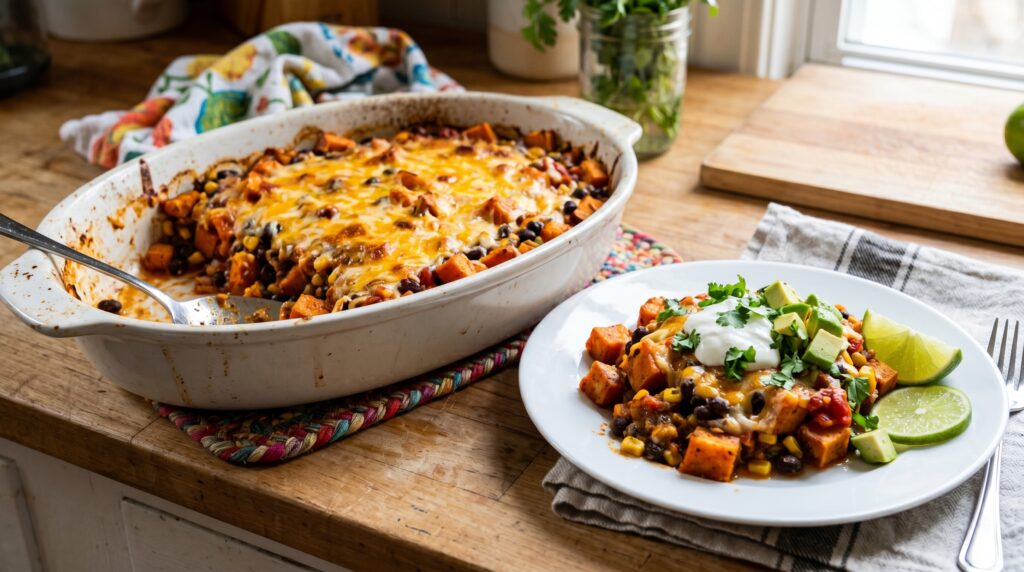
4. Sweet Potato and Black Bean Casserole
Prep time: 20 minutes | Cook time: 40 minutes | Serves: 6
Sweet potato and black bean casserole is the most vibrant, most nutritionally complete, and most genuinely satisfying vegetarian casserole in this collection — the natural sweetness of roasted sweet potato against the earthy, spiced black beans, with a melted cheese topping and fresh avocado and cilantro garnish, creates a casserole of bold, genuinely exciting flavor.
Key ingredients: Sweet potatoes (3 large, peeled and cubed), canned black beans (2 tins, drained and rinsed), corn (150g, frozen or canned), red onion (finely diced), garlic, red bell pepper (diced), cumin (2 tsp), smoked paprika (1 tsp), chili powder (1 tsp), canned crushed tomatoes (200ml), vegetable stock (100ml), shredded Monterey Jack or cheddar (200g), sea salt. Garnish: fresh cilantro, sour cream, diced avocado, lime wedges
Method: Toss sweet potato cubes in olive oil, cumin, smoked paprika, and salt. Roast at 220°C (425°F) for 20 minutes until slightly caramelized. Meanwhile, sauté the onion, garlic, and bell pepper. Add remaining cumin, paprika, and chili powder. Add black beans, corn, and crushed tomatoes with stock. Combine the roasted sweet potato with the bean mixture in a casserole dish. Top with shredded cheese. Bake at 190°C (375°F) for 20 minutes until the cheese is melted and golden.
Pre-roasting the sweet potato: Roasting the sweet potato separately before combining it with the other ingredients is the technique that makes this casserole exceptional — the caramelized edges of the roasted sweet potato contribute a concentrated sweetness and slightly crispy texture that simply diced raw sweet potato cooked in the casserole cannot produce.
What makes it special: The contrast between the natural sweetness of roasted sweet potato and the earthy, smoky, spiced black beans creates a flavor balance of remarkable interest — each element keeps the other from being one-dimensional, and the whole is significantly greater than the sum of its parts.
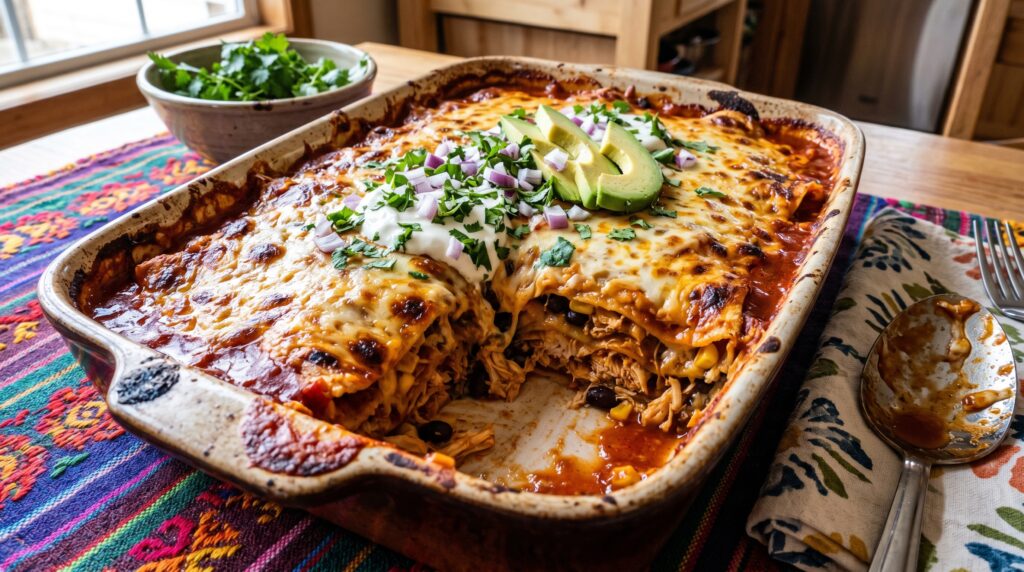
5. Chicken Enchilada Casserole
Prep time: 20 minutes | Cook time: 30 minutes | Serves: 8
Chicken enchilada casserole delivers all the bold, spiced, deeply satisfying flavors of individual enchiladas in a dramatically more practical format — layers of tortilla, spiced shredded chicken, black beans, and enchilada sauce under a blanket of melted cheese create a casserole of extraordinary crowd-pleasing appeal.
Key ingredients: Shredded cooked chicken (600g — rotisserie or poached), corn tortillas (12 — torn into rough pieces rather than rolled for easier assembly), red enchilada sauce (400ml), canned black beans (1 tin, drained), corn (150g), cream cheese (2 tbsp — mixed into the chicken for creaminess), shredded Monterey Jack and cheddar (250g combined), cumin, smoked paprika, garlic powder. Garnish: sour cream, fresh cilantro, diced red onion, sliced avocado, lime
Layering method: Spread a thin layer of enchilada sauce on the base of the dish. Layer torn tortilla pieces (overlapping). Add half the chicken mixture. Add half the beans and corn. Drizzle with enchilada sauce. Scatter cheese. Repeat layers. Finish with a generous sauce and cheese topping. Bake at 190°C (375°F) for 25–30 minutes until bubbling and golden.
What makes it special: Tearing the tortillas rather than rolling them makes assembly dramatically faster while producing the same great flavor. The torn tortilla pieces absorb the enchilada sauce as the casserole bakes, creating layers that are simultaneously saucy, slightly softened, and deeply flavorful — more integrated and satisfying than rolled enchiladas.
The cream cheese addition: Just two tablespoons of cream cheese mixed into the shredded chicken creates a slight creaminess and binding that keeps the filling moist and cohesive throughout the baking process — invisible in the finished dish but making the texture significantly better.
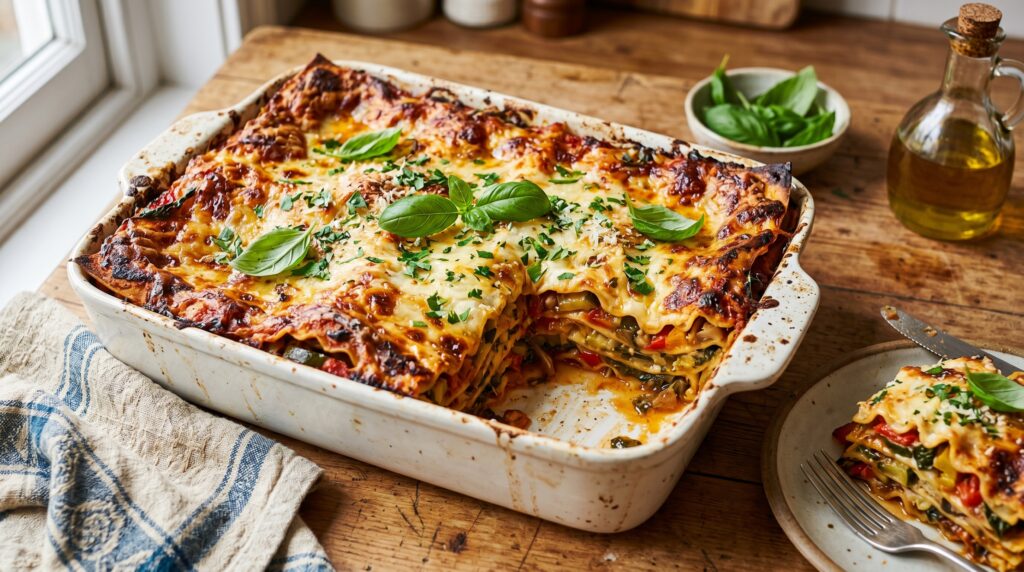
6. Vegetable Lasagna
Prep time: 35 minutes | Cook time: 50 minutes | Serves: 8–10
Vegetable lasagna is the most architecturally impressive, most genuinely substantial, and most crowd-pleasing vegetarian casserole in this collection — layers of pasta, roasted vegetables in a rich tomato sauce, creamy béchamel, and molten cheese create a casserole of authentic Italian-American elegance.
Key ingredients: Lasagna noodles (12 — cooked to just under al dente), roasted vegetables (zucchini, eggplant, red bell pepper, mushrooms — roasted at 220°C until caramelized), ricotta (350g, seasoned with egg, Parmesan, and nutmeg), shredded mozzarella (300g), grated Parmesan (60g), fresh basil. Tomato sauce: canned San Marzano tomatoes, onion, garlic, dried oregano, olive oil. Béchamel: butter, flour, whole milk, nutmeg, Parmesan
The roasted vegetable principle: Pre-roasting all vegetables at high heat before incorporating them into the lasagna is the step that produces the most significant improvement in flavor — caramelized, slightly charred vegetables have a concentrated sweetness and depth that raw or lightly sautéed ones cannot approach. The vegetables also lose moisture during roasting, preventing the lasagna from becoming watery during baking.
Assembly order: Tomato sauce on the base, pasta, ricotta mixture, roasted vegetables, tomato sauce, pasta, béchamel, pasta, tomato sauce, mozzarella and Parmesan. The béchamel layer provides a creamy counterpoint to the bold tomato sauce and a luxurious texture that makes this lasagna feel genuinely restaurant-quality.
What makes it special: The double sauce construction — both tomato and béchamel — is the authentic Italian lasagna approach that most American versions simplify to a single tomato sauce. The interplay of the rich, creamy béchamel and the bright, acidic tomato sauce creates a complexity and balance that single-sauce versions cannot achieve.
For more lasagna variation inspiration, our 20 Easy Lasagna Roll Ups covers the full range of lasagna-format preparations.
7. Green Bean Casserole (From Scratch)
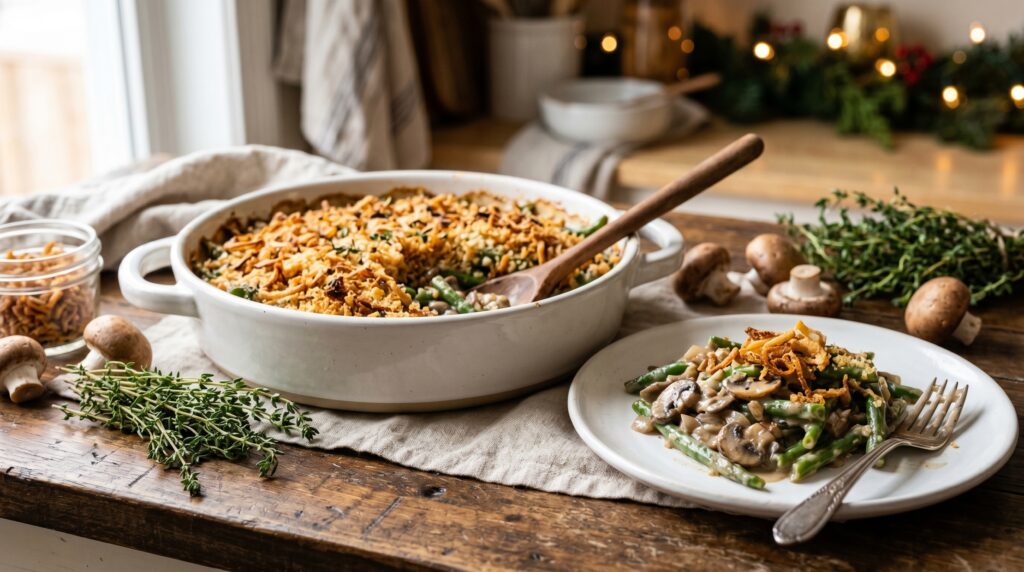
Prep time: 25 minutes | Cook time: 35 minutes | Serves: 8
Green bean casserole made entirely from scratch — with a genuine from-scratch mushroom cream sauce rather than canned condensed soup, and crispy caramelized shallots rather than canned fried onions — is one of the most dramatic improvements available in all of casserole cooking. The difference between scratch and canned versions is immediately and unmistakably apparent.
Key ingredients: French green beans (900g, blanched 3 minutes until bright green and just tender), cremini mushrooms (400g, sliced and sautéed until deeply golden), shallots (4 large, thinly sliced — half for the sauce, half for the crispy topping). From-scratch mushroom cream sauce: butter, flour, chicken or vegetable stock (300ml), whole milk (200ml), double cream (100ml), garlic, dried thyme, Worcestershire sauce, Parmesan (30g), sea salt, white pepper. Crispy shallot topping: remaining shallots thinly sliced and pan-fried until golden and crispy + panko breadcrumbs tossed with butter
From-scratch mushroom sauce: After sautéing the mushrooms until deeply golden, make a roux in the same pan (butter + flour), add stock, milk, and cream gradually while whisking until smooth and thick. Add garlic, thyme, Worcestershire, Parmesan, salt, and pepper. This sauce has a depth, a mushroom intensity, and a balanced creaminess that no canned version approaches.
The crispy shallot topping: Pan-fry thinly sliced shallots in a generous amount of oil over medium heat until deeply golden and crispy — approximately 12 minutes. They continue to crisp as they cool on kitchen paper. Combined with buttered panko breadcrumbs, they create a topping of extraordinary crunch and savory depth.
What makes it special: The deep, golden, caramelized mushroom sauce — made by sautéing the mushrooms until all their moisture has evaporated and they are richly browned — creates an umami depth that canned condensed mushroom soup simply cannot replicate. This is the casserole that converts skeptics.
8. Shepherd’s Pie Casserole
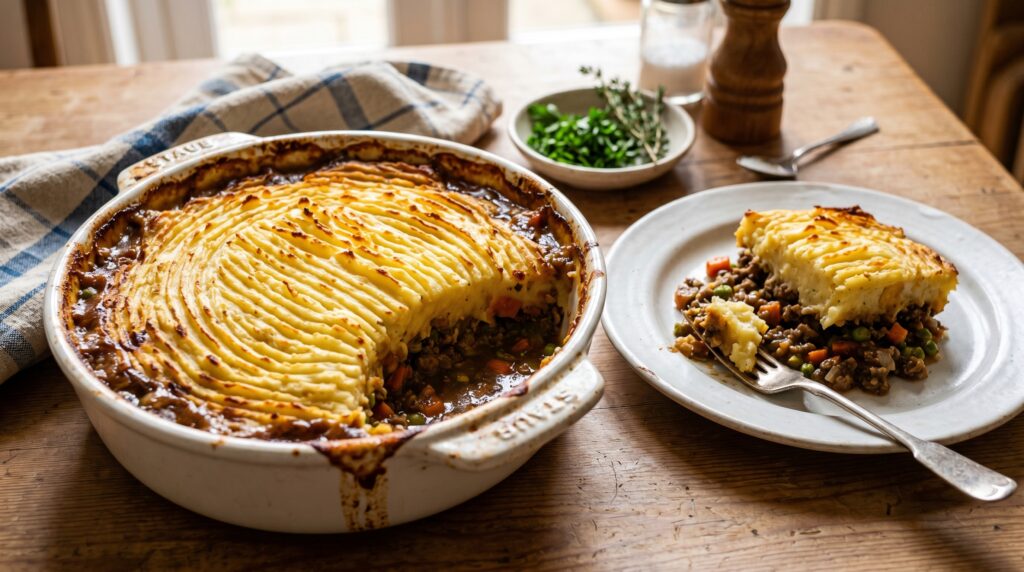
Prep time: 25 minutes | Cook time: 35 minutes | Serves: 6–8
Shepherd’s pie is the great British casserole — a deeply flavored ground lamb and vegetable filling beneath a golden, fork-ridged mashed potato crust that caramelizes in the oven to create the most satisfying textural contrast in all of casserole baking. When made with quality ingredients and proper technique, it is genuinely one of the finest comfort foods in existence.
Key ingredients: Ground lamb (750g), carrot (2, finely diced), celery (3 stalks, finely diced), onion (1 large, finely diced), garlic (3 cloves, minced), frozen peas (150g), tomato paste (2 tbsp), Worcestershire sauce (2 tbsp), beef or lamb stock (200ml), fresh rosemary, fresh thyme, bay leaf, sea salt, cracked black pepper. Mashed potato topping: floury potatoes (1kg, boiled and mashed), butter (60g), whole milk (80ml), mature cheddar (50g — stirred through the mash), sea salt
The lamb Bolognese technique: Brown the ground lamb in the hottest possible pan, in batches if necessary, until genuinely caramelized rather than simply gray. This caramelization is the most impactful flavor step in the entire preparation. Add the soffritto (onion, carrot, celery), tomato paste, and herbs. The tomato paste cooked in the lamb fat for 2 minutes before the liquid is added creates an umami depth of extraordinary character.
The mashed potato topping: Adding shredded mature cheddar directly to the mashed potato creates a topping that caramelizes more deeply and develops more complex flavor during baking than plain mash. The fork ridges on the surface — created before baking — produce dramatically more caramelized surface area than a smooth mash.
What makes it special: The combination of the slightly sweet, caramelized potato crust and the rich, deeply savory lamb filling below creates one of the great textural and flavor contrasts in all of casserole cooking. The two components cook at different rates — the lamb’s juices bubble up through the edges of the potato as the casserole bakes, creating a natural basting effect that keeps the filling moist.
For more shepherd’s pie inspiration in a quick weeknight format, our 22 Easy Comfort Food Ideas For Busy Weeknights covers the fastest version.
9. Cheesy Potato and Ground Beef Casserole
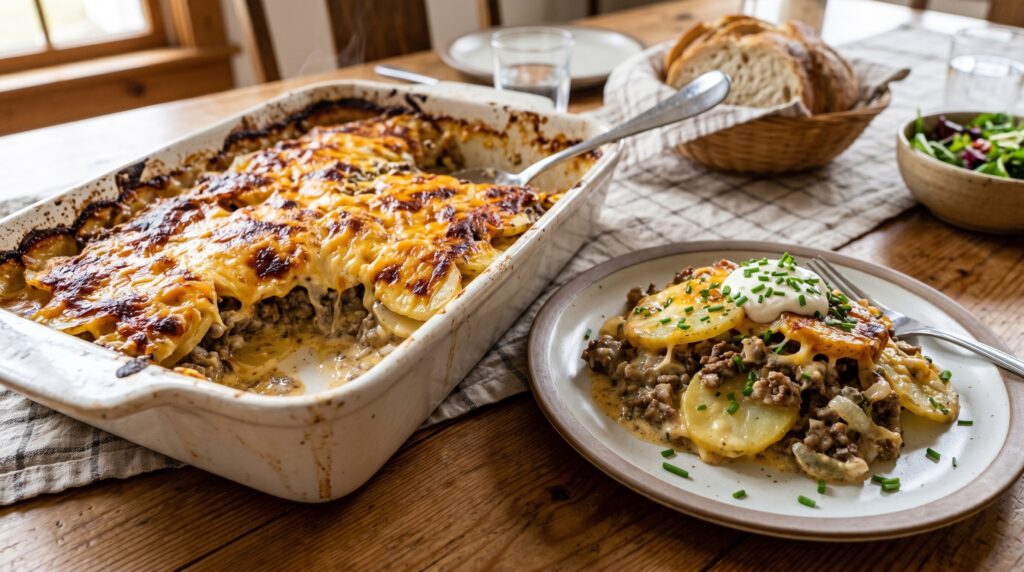
Prep time: 20 minutes | Cook time: 55 minutes | Serves: 6–8
Cheesy potato and ground beef casserole is the most hearty, most family-pleasing, and most unashamedly indulgent casserole in this collection — layers of thinly sliced potato, seasoned ground beef, and creamy cheese sauce topped with additional melted cheese create a casserole of deeply satisfying, crowd-pleasing richness.
Key ingredients: Waxy potatoes (1kg, very thinly sliced — 3mm, ideally on a mandoline), ground beef (600g), onion (1 large, finely diced), garlic (3 cloves, minced), smoked paprika (1 tsp), cumin (½ tsp), sea salt, cracked black pepper. Cheese sauce: butter (30g), plain flour (25g), whole milk (500ml), mature cheddar (150g, grated), Dijon mustard (1 tsp), garlic powder, sea salt, white pepper. Topping: additional shredded cheddar and mozzarella (100g combined), sliced green onion
Method: Brown and season the ground beef with onion, garlic, and spices. Make the cheese sauce — classic béchamel base enriched with cheddar and Dijon. Layer the casserole: thin potato slices (overlapping), ground beef mixture, and cheese sauce. Repeat layers twice. Top with the remaining cheese. Cover with foil. Bake at 190°C (375°F) for 45 minutes. Remove foil, bake 10 more minutes until the cheese is golden and the potatoes are completely tender.
The thin potato slice: Thinly sliced potatoes — approximately 3mm — cook through in the baking time and absorb the cheese sauce beautifully. Thicker slices remain firm and undercooked in the center. A mandoline slicer produces the most consistent results; a sharp knife and patience produce acceptable ones.
What makes it special: The cheese sauce — a proper béchamel enriched with good cheddar rather than simply scattered cheese over the layers — creates a cohesive, creamy binder that holds all the layers together and ensures every bite has the right proportion of potato, beef, and sauce. It is the element that distinguishes this from a merely assembled layered preparation.
10. Moroccan Lamb and Chickpea Casserole
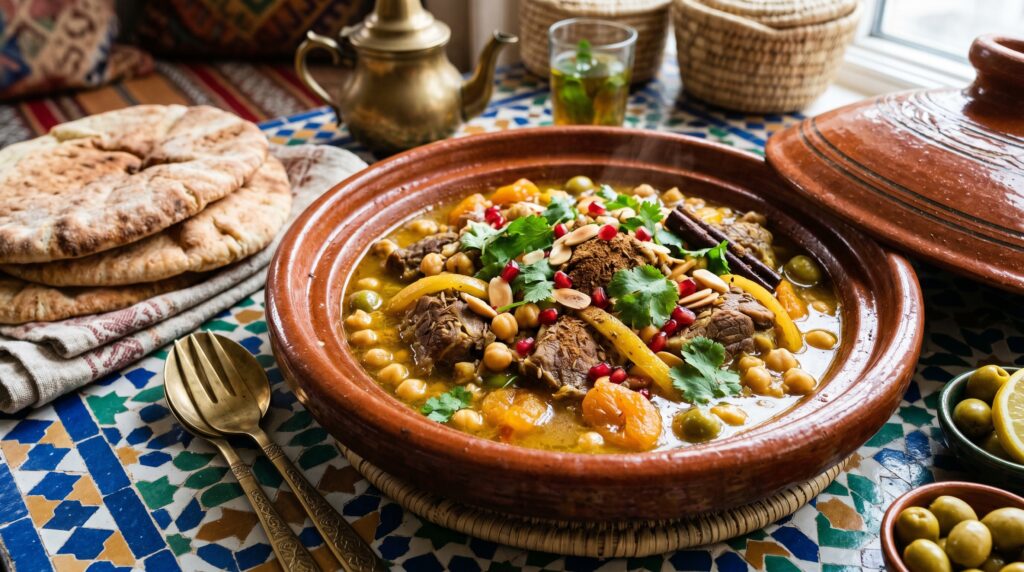
Prep time: 20 minutes | Cook time: 1 hour 30 minutes | Serves: 6
Moroccan lamb and chickpea casserole is the most internationally inspired, most aromatic, and most genuinely sophisticated preparation in this collection — slow-braised lamb shoulder with ras el hanout, preserved lemon, and chickpeas creates a casserole of extraordinary warmth, complexity, and deeply satisfying depth.
Key ingredients: Lamb shoulder (1kg, cut into large chunks), canned chickpeas (2 tins, drained), dried apricots (80g, roughly chopped), preserved lemon rind (from 1 large lemon, rinsed and finely chopped), green olives (100g, pitted), onion, garlic, fresh ginger, ras el hanout (2 tsp), cinnamon (1 tsp), cumin (1 tsp), coriander (1 tsp), turmeric (½ tsp), canned crushed tomatoes (400ml), chicken or lamb stock (300ml), saffron threads (a pinch, bloomed in 2 tbsp warm water), fresh cilantro, toasted almond slivers, pomegranate seeds
Method: Brown the lamb shoulder chunks until deeply caramelized — this step cannot be rushed. Remove. Sauté onion, garlic, and ginger until soft. Add ras el hanout and other spices — cook for 60 seconds. Add tomatoes, stock, saffron water, preserved lemon, dried apricots, and olives. Return lamb. Bring to a simmer. Transfer to the oven covered at 160°C (325°F) for 1 hour 30 minutes until completely tender. Add chickpeas in the last 20 minutes of cooking.
The preserved lemon: Preserved lemon rind — fermented lemon with an intensely concentrated, slightly funky citrus character — is the ingredient that makes this casserole taste unmistakably Moroccan. Its complex, fermented citrus depth cannot be replicated by fresh lemon juice. It is available in Middle Eastern grocery stores and online, and keeps for months in the refrigerator once opened.
What makes it special: The combination of the sweet dried apricots, the briny olives, the sour preserved lemon, and the warm, complex ras el hanout creates a flavor profile of extraordinary range — simultaneously sweet, sour, salty, and spiced — that makes this casserole one of the most memorably delicious preparations in this entire collection.
Serving suggestion: Serve over couscous (fluffed with butter and fresh herbs) or alongside warm flatbread. The extraordinary braising liquid — deeply spiced, slightly sweet, richly flavored — deserves to be mopped up completely.
Casserole Make-Ahead and Freezing Guide
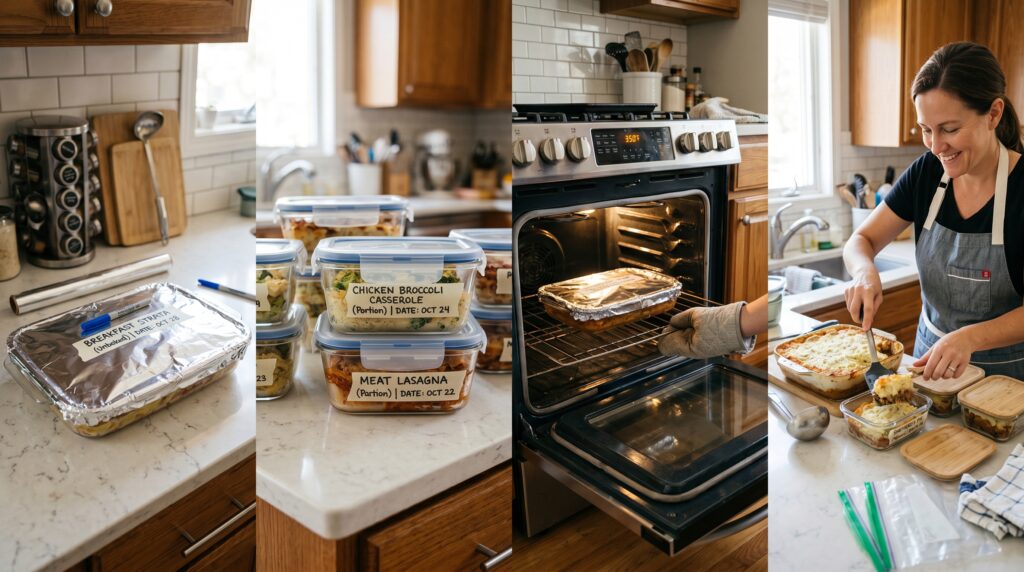
Refrigerator (Assembled, Unbaked)
All ten casseroles in this collection can be assembled completely, covered tightly with plastic wrap or foil, and refrigerated for up to 24 hours before baking. Add 15 minutes to the baking time when cooking from cold — the casserole needs additional time to come up to temperature before the actual cooking begins.
Best candidates for overnight assembly: Chicken and rice casserole, vegetable lasagna, cheesy potato and beef casserole, chicken enchilada casserole.
Refrigerator (Baked)
Baked casseroles keep refrigerated in an airtight container for 3–4 days. Reheat covered with foil in a 175°C (350°F) oven for 20 minutes, or in individual portions in the microwave for 2–3 minutes.
Flavor improvement overnight: Most braised casseroles — beef and vegetable, Moroccan lamb, shepherd’s pie filling — are significantly better on the second day as the flavors continue to meld during refrigeration. Making these casseroles the day before serving is genuinely recommended when time allows.
Freezing
Best for freezing: Beef and vegetable casserole, Moroccan lamb, shepherd’s pie (freeze filling and mash separately for best texture), chicken enchilada casserole, beef chili-based preparations. Freeze in individual portions or whole casseroles for up to 3 months.
Freeze with caution: Casseroles containing potatoes (they become grainy on thawing), pasta (becomes very soft), or cream-based sauces (can separate — add fresh cream when reheating).
Freezing method: Cool completely. Wrap tightly in plastic wrap, then foil. Label with name and date. Thaw overnight in the refrigerator. Reheat covered in a 175°C oven for 30–40 minutes from cold (add 10 minutes from partially thawed).
For comprehensive food safety guidance on storing and reheating all casserole preparations safely, our Food Safety 101: Storage, Handling, and Temperature Guide is essential reading.
Casserole Troubleshooting Guide
| Problem | Likely Cause | Solution |
|---|---|---|
| Watery casserole | Too much liquid / vegetables released moisture | Reduce initial liquid; pre-roast vegetables; bake uncovered longer |
| Dry casserole | Too little liquid / overbaked | Add warm stock, cover with foil, continue baking |
| Rice not cooking through | Insufficient liquid / lid not sealed | Add warm stock; seal foil tightly |
| Topping not browning | Oven too cool / foil left on too long | Remove foil for last 20 minutes; increase temperature to 200°C |
| Cheese topping burning | Added too early | Add cheese only in last 15–20 minutes of baking |
| Potato topping sinking | Filling too thin / potato too soft | Cook filling until thicker before adding topping |
| Pasta overcooked | Too long in casserole | Undercook pasta significantly before adding; reduce baking time |
| Bottom layer burning | Insufficient sauce on base | Always spread a generous sauce layer on the base before first layer |
Serving and Pairing Guide
Simple green salad: The universal casserole accompaniment — the fresh, slightly acidic dressing cuts through the richness of any casserole and refreshes the palate between bites.
Crusty bread: For mopping the sauce in beef, lamb, and tomato-based casseroles. A good crusty sourdough alongside a beef and vegetable casserole is one of the great simple pleasures of home cooking.
Steamed vegetables: Broccolini, asparagus, or green beans alongside richer casseroles provide a fresh, textural contrast to the yielding, sauced interior.
Couscous or rice: For serving alongside Moroccan-inspired and curry-based casseroles — the grains absorb the extraordinary braising liquid.
Frequently Asked Questions
Can I make casseroles in a slow cooker instead of the oven?
Most braised casseroles (beef and vegetable, Moroccan lamb) translate well to a slow cooker — cook on low for 6–8 hours or high for 3–4 hours. However, casseroles with toppings (mashed potato, breadcrumbs, cheese) must be finished in the oven for the topping to develop the essential golden crust. Layered casseroles (lasagna, enchilada) are better suited to oven-only preparation.
How do I prevent my casserole from drying out during reheating?
Always reheat casseroles covered with foil — the trapped steam rehydrates the casserole as it warms. Add a small splash of stock or water to casseroles that seem dry before reheating. Remove the foil only in the last 5 minutes to refresh the topping’s color and texture.
Can casseroles be prepared without pre-cooking any of the filling?
For some casseroles (chicken and rice, cheesy potato beef), a partial pre-cook of key components — searing protein, sautéing aromatics — produces significantly better results than a completely raw assembly. For long-braised casseroles (beef stew casserole, Moroccan lamb), the browning step is essential for depth of flavor and should never be skipped, regardless of time pressure.
What size dish should I use?
A 23×33cm (9×13 inch) rectangular ceramic dish is the most versatile casserole dish — it is the correct size for the majority of recipes in this guide, serving 6–8 people. For smaller servings (4 people), a 20×28cm dish is appropriate. For deeper preparations like lasagna, a minimum depth of 7–8cm is needed to accommodate the layers.
How do I know when a casserole is cooked through?
The most reliable test: insert a skewer or thin knife into the center of the casserole and hold for 5 seconds. If it comes out hot to the touch, the center is cooked through. If it comes out cool, the casserole needs more time. For chicken-containing casseroles, a meat thermometer at the thickest point should read 74°C (165°F).
According to America’s Test Kitchen, the most significant and most impactful improvement in casserole cooking quality available to home cooks is the replacement of canned condensed soups with scratch-made sauces — the flavor improvement is so substantial that it fundamentally changes the character of the finished dish, and the additional preparation time is typically under 15 minutes.
Conclusion
From the supremely comforting simplicity of a classic chicken and rice casserole to the exotic, aromatic sophistication of a Moroccan lamb and chickpea preparation, from the beloved American nostalgia of a scratch-made tuna noodle casserole to the elegant Italian architecture of a vegetable lasagna, from the hearty, deeply satisfying richness of a shepherd’s pie to the vibrant, nourishing appeal of a sweet potato and black bean bake — these 10 homemade casserole recipes represent the full, extraordinary range of what the casserole format can achieve.
What makes casserole cooking so enduringly valuable in the home kitchen is the combination of its practical genius — the make-ahead convenience, the minimal active cooking time, the single-vessel cleanup — with its culinary excellence — the depth of flavor from slow, enclosed cooking, the satisfying textures from the contrast of filling and topping, and the generous feeding capacity that makes casseroles the natural choice for every gathering, every celebration, and every ordinary weeknight that deserves something genuinely special.
Master the fundamentals — the proper browning of protein, the correct liquid balance, the strategic use of foil, the well-made topping — and every recipe in this collection becomes a reliable, endlessly repeatable source of the kind of deep, warming, nourishing satisfaction that great home cooking always delivers.
For more recipes, technique guides, and culinary inspiration across every category and skill level, explore our full collection at skillsinthekitchen.com.