
25 Irresistible Coffee Drink Recipes: From Classic to Creative

Introduction
Coffee is the most widely consumed beverage in the world after water — a fact that speaks not just to its caffeine content but to the extraordinary sensory pleasure, the morning ritual, the social occasion, and the creative canvas that a great coffee drink provides. From the first espresso pulled in a Milanese café in the early twentieth century to the specialty coffee third wave of the twenty-first century, the story of coffee is one of continuous, passionate innovation in the pursuit of the perfect cup.
The coffee drink universe is far more vast and varied than most people realize. The classic Italian canon — espresso, americano, cappuccino, latte, macchiato — represents one extraordinary tradition. The cold brew and iced coffee culture of American specialty cafés represents another. The Vietnamese cà phê đá, the Turkish kahve, the Greek freddo espresso, the Indian filter coffee with cardamom — each culture that encountered the coffee bean developed its own preparation traditions, its own rituals, and its own understanding of what coffee could be.
What makes a great coffee drink is not merely the quality of the coffee — though that is the foundation — but the understanding of how different preparations, temperatures, additions, and techniques reveal different dimensions of the bean’s character. A well-pulled espresso contains over 800 distinct aromatic compounds. The question is how to prepare the coffee so that the right compounds are in balance, the right temperature brings out the right flavors, and the right additions complement rather than overwhelm.
In this guide, we have compiled 25 of the most irresistible coffee drink recipes — spanning the timeless Italian classics, the American specialty café canon, cold preparations, creative seasonal flavors, spiced international preparations, and indulgent dessert-style drinks. Every recipe includes the preparation method, the key ratios, and the specific techniques that make each preparation genuinely outstanding rather than merely acceptable.
Let’s make something extraordinary.
The Foundation: Understanding Coffee Preparation
The Coffee: Freshness Above All
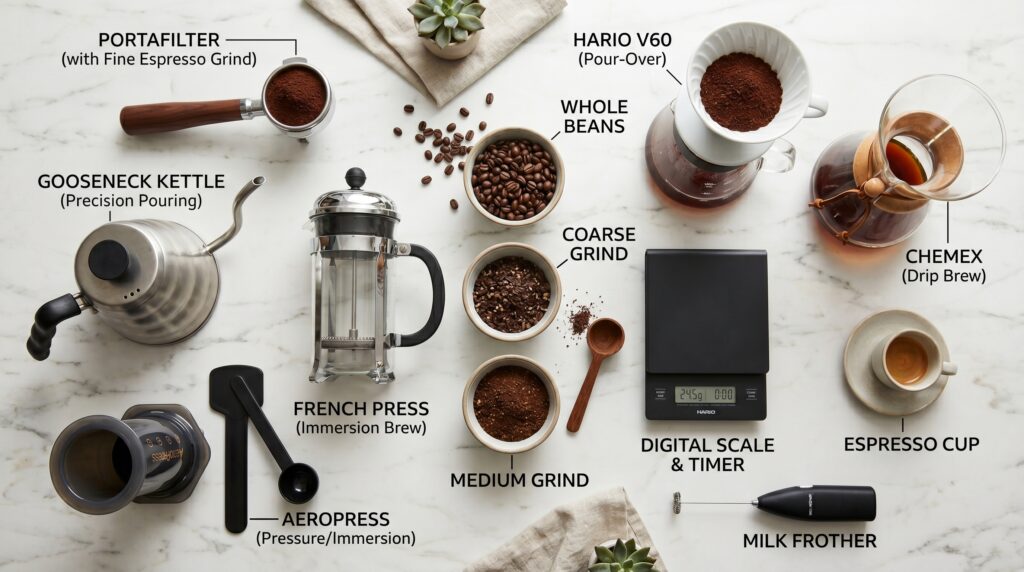
Coffee begins losing its flavor the moment the bean is roasted — the CO2 that carries volatile aromatic compounds slowly escapes, and the coffee’s character diminishes. Use coffee within 2–4 weeks of its roast date. Store whole beans in an airtight container at room temperature — not in the refrigerator (moisture) or freezer (condensation during thawing damages the bean).
Grind fresh: Pre-ground coffee loses most of its aromatic complexity within 15–30 minutes of grinding. A burr grinder — even an entry-level manual one — is the single most impactful investment for home coffee quality.
The Grind: Matching Grind to Method
Different brewing methods extract coffee at different speeds, requiring different grind sizes:
Fine (espresso): Maximum extraction surface for the 25–30 second high-pressure extraction. Like table salt in texture.
Medium-fine (pour-over, Aeropress): Slightly coarser than espresso. Like fine beach sand.
Medium (drip coffee, Moka pot): Like coarse sand. The versatile middle ground.
Coarse (French press, cold brew): Like rough sea salt. Prevents over-extraction in long steeping methods.
The Water: The Most Neglected Variable
Water constitutes 98–99% of a brewed coffee. Hard, heavily mineralized, or heavily chlorinated water produces flat, unpleasant coffee regardless of bean quality. Filtered water — not distilled, which lacks the minerals needed for proper extraction — produces dramatically better coffee than straight tap water in most municipal water systems.
Temperature: The ideal brewing temperature for most coffee methods is 90–96°C (195–205°F) — just off the boil. Boiling water extracts bitter compounds; too-cool water under-extracts, producing sour, weak coffee.
Espresso Fundamentals
For espresso-based drinks — the foundation of the majority of café drinks — understanding the basic extraction parameters:
Dose: 18–20g of finely ground coffee for a double espresso
Yield: 36–40g of liquid espresso (approximately a 1:2 ratio of coffee to liquid)
Time: 25–30 seconds from the moment water first contacts the coffee
Temperature: 90–96°C
An espresso that extracts in less than 20 seconds is under-extracted — sour, thin, and lacking sweetness. More than 35 seconds is over-extracted — bitter, harsh, and dry.
For guidance on precise measurement and temperature management in coffee preparation, our Kitchen Temperatures: The Complete Guide from Simmer to Boil covers relevant temperature principles.
25 Irresistible Coffee Drink Recipes
The Italian Classics
1. Perfect Espresso
Preparation time: 2 minutes | Serves: 1
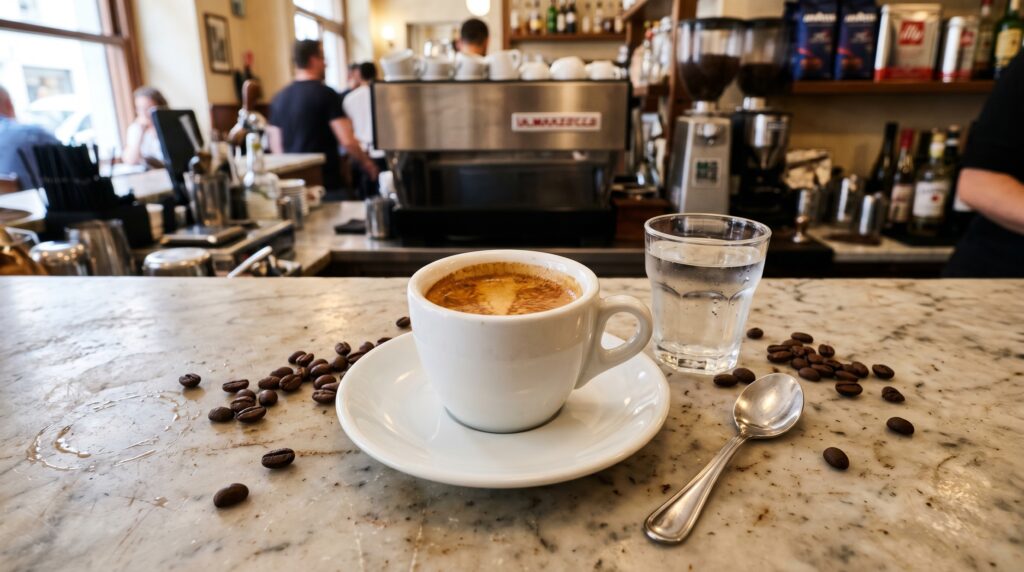
The espresso is the foundation of nearly every coffee drink in this guide and one of the most demanding preparations in food and beverage — a 25–30 second extraction of 18–20g of finely ground coffee through 9 bars of pressure, producing approximately 36–40g of intensely concentrated, complex liquid coffee. Everything else builds from here.
Key parameters: Coffee dose: 18–20g. Grind: fine (like table salt). Water temperature: 93°C. Pressure: 9 bars (espresso machine). Extraction time: 25–30 seconds. Yield: 36–40g.
The crema: The golden-brown, slightly reddish foam that sits on a well-pulled espresso — a colloid of CO2 bubbles, oils, and emulsified compounds — is the visual indicator of a properly extracted shot. Pale, thin crema indicates under-extraction; dark, bitter crema indicates over-extraction; rich, reddish-golden crema with “tiger stripes” indicates a properly dialed-in espresso.
The pre-warm: Always pre-warm the cup by running hot water through it before pulling the shot. Cold ceramic immediately drops the espresso’s temperature, dulling its aromatic complexity. A warm cup maintains the espresso at the ideal drinking temperature for 60–90 seconds before consumption.
What makes it special: A truly great espresso — from excellent beans, freshly ground, properly extracted — contains an extraordinary range of flavor notes that unfold as you drink it: bright fruit acidity at first, transitioning through sweetness, ending in a clean, lingering finish. This complexity in a single 36g serving is one of the most remarkable sensory experiences in all of food and drink.
2. Cappuccino
Preparation time: 5 minutes | Serves: 1
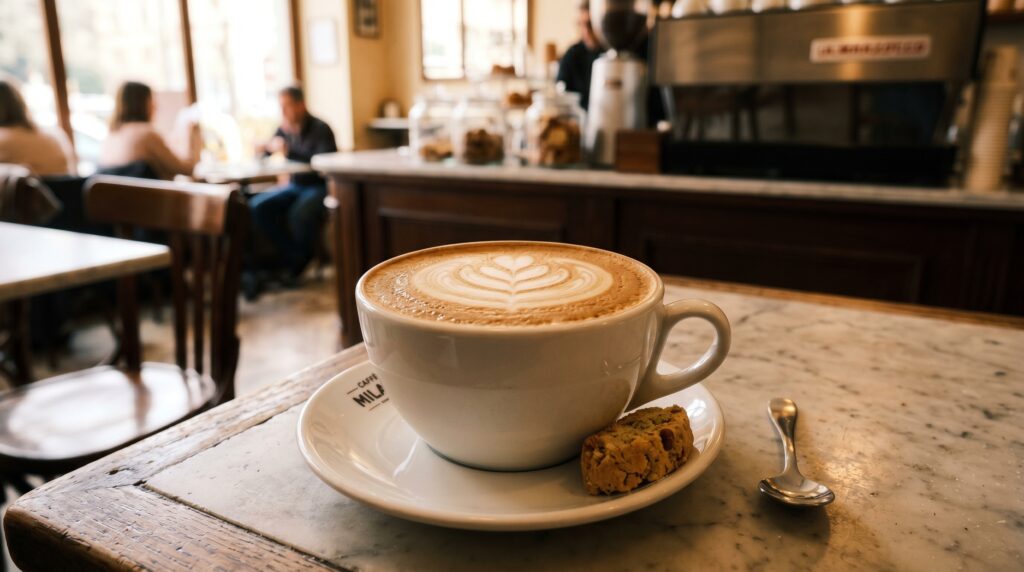
The cappuccino — equal parts espresso, steamed milk, and milk foam in a 150–180ml cup — is the most technically demanding of the classic Italian drinks to prepare correctly. Its defining characteristic is the texture of the milk: dense, velvety, micro-foamed to a consistency that is neither liquid milk nor dry stiff foam but something between, like paint.
Key parameters: Double espresso (36–40g), steamed milk (approximately 60ml), micro-foam (approximately 60ml, integrated with the steamed milk). Total volume: 150–180ml. Cup size: 150–180ml ceramic — no larger.
Milk steaming technique: Submerge the steam wand just below the milk surface at a slight angle. Start with a brief “stretching” phase — keeping the wand near the surface — to incorporate air and increase the milk’s volume by about 30%. Then submerge deeper and angle to create a whirlpool that integrates the foam into the milk. The finished milk should feel like warm velvet with no large bubbles visible.
Temperature: Steam the milk to 60–65°C. Above 70°C, the milk proteins denature and the sweetness decreases. Use a thermometer until your palm-feeling calibration is reliable.
What makes it special: The Italian cappuccino is smaller and more intensely coffee-flavored than many coffee shop interpretations — the 150–180ml volume maintains a strong coffee-to-milk ratio that preserves the espresso’s character rather than diluting it.
3. Latte

Preparation time: 5 minutes | Serves: 1
The café latte — a double espresso with a generous amount of steamed milk and a thin layer of micro-foam — is the gentlest, most accessible, and most widely ordered of the espresso-based drinks. Its larger volume and higher milk ratio produce a coffee that is creamy, slightly sweet from the steamed milk’s natural sugars, and less intense than a cappuccino.
Key parameters: Double espresso (36–40g), steamed milk (approximately 200ml), micro-foam (thin layer on top). Total volume: 240–300ml. Cup: tall 240–300ml ceramic or glass.
The latte pour: Pour the steamed milk into the espresso in a steady stream, starting high (to mix the espresso and milk), then dropping close to the surface for the final pour (to keep the foam on top and allow latte art). The characteristic two-layer appearance — dark espresso below, pale milk above with a thin foam surface — should be visible when served in a clear glass.
What makes it special: The natural sweetness of properly steamed milk — heated between 60–65°C, where the lactose sweetens and the milk proteins create the characteristic velvety texture — means a great latte requires no added sugar to taste pleasantly sweet.
4. Americano

Preparation time: 3 minutes | Serves: 1
The Americano — a double espresso diluted with hot water to approximately the same strength as filter coffee — is the essential everyday black coffee of the espresso-based world. Its preparation is simple, but the order of operations matters significantly for the best result.
Key parameters: Double espresso (36–40g), hot water (approximately 120–150ml). Total volume: approximately 180–200ml.
Order of operations: Pull the espresso into the cup first, then add the hot water — never the reverse. Adding espresso to hot water dissolves the crema immediately and produces a different, slightly more bitter result. Espresso first, water second, preserves the crema and produces the characteristic layered Americano.
The ratio question: Some prefer a stronger Americano (1:2 espresso to water), others a weaker one (1:4). The “correct” ratio is the one that tastes right to the individual — but 1:3 is the standard starting point.
What makes it special: A well-pulled espresso diluted with good quality hot water produces a black coffee of remarkable complexity — the full range of the espresso’s aromatic compounds diluted to a comfortable drinking strength, revealing flavor notes that the concentrated espresso intensity can obscure.
5. Macchiato (Espresso Macchiato)
Preparation time: 3 minutes | Serves: 1
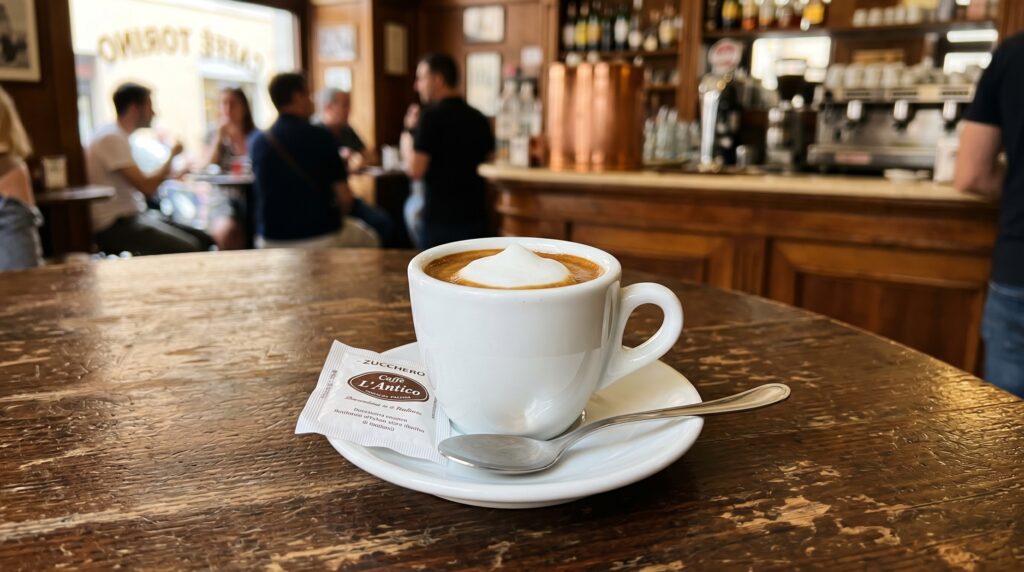
The true Italian macchiato — espresso macchiato — is a double espresso with just a small amount of foamed milk “staining” the surface (macchiato means “stained” or “marked” in Italian). It is not a latte in a smaller cup, nor a layered caramel drink — it is simply an espresso with the smallest amount of milk foam to cut the intensity slightly.
Key parameters: Double espresso (36–40g), a single teaspoon of dense, thick foam.
The foam: The foam for an espresso macchiato should be denser and drier than latte foam — a stiff, almost meringue-like dollop that sits on the surface of the espresso rather than integrating into it. Spoon it onto the espresso surface rather than pouring it.
What makes it special: The tiny amount of milk foam adds just enough sweetness and creaminess to soften the espresso’s edge without diluting its intensity. The macchiato is for those who love espresso but want the smallest possible modification.
6. Flat White
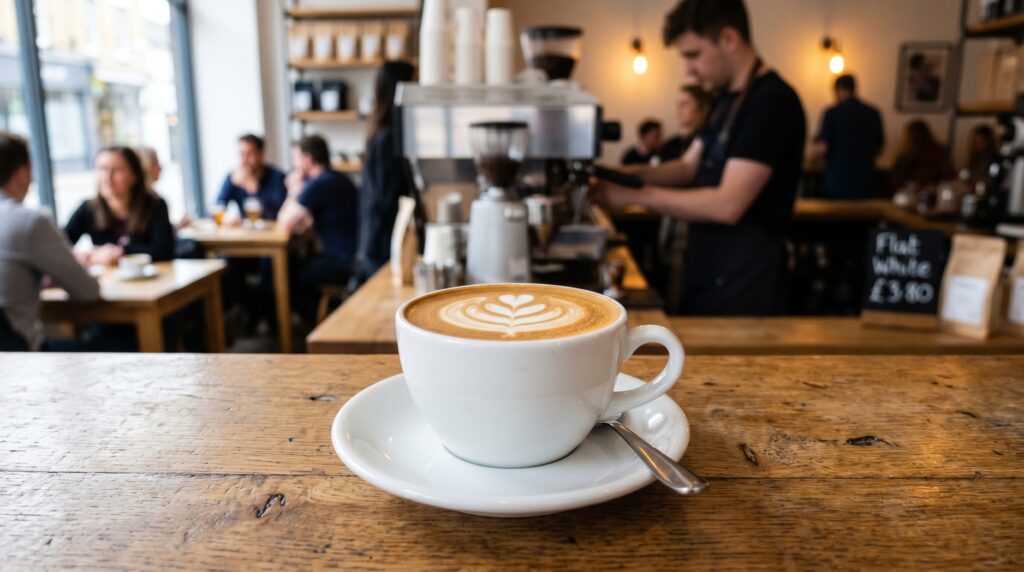
Preparation time: 5 minutes | Serves: 1
The flat white — originating from Australia and New Zealand in the 1980s — occupies the space between a cappuccino and a latte: a double (or ristretto double) espresso with micro-foamed milk in a smaller cup than a latte, producing a more intensely coffee-flavored, creamier drink.
Key parameters: Double ristretto or double espresso (approximately 30–40g), steamed micro-foamed milk (approximately 120ml). Total volume: 160ml. Cup: small 160ml ceramic.
Ristretto vs espresso base: Many flat whites use a double ristretto (a shorter, more concentrated extraction — approximately 20–25g yield from 18g coffee) rather than a standard double espresso, producing a sweeter, more syrupy, less bitter coffee base that integrates beautifully with the milk.
What makes it special: The smaller volume and higher coffee-to-milk ratio of the flat white compared to a latte produces a drink of greater coffee intensity — the milk provides creaminess and sweetness without diluting the coffee’s character as significantly as a larger latte does.
Cold and Iced Coffee Drinks
7. Cold Brew Coffee
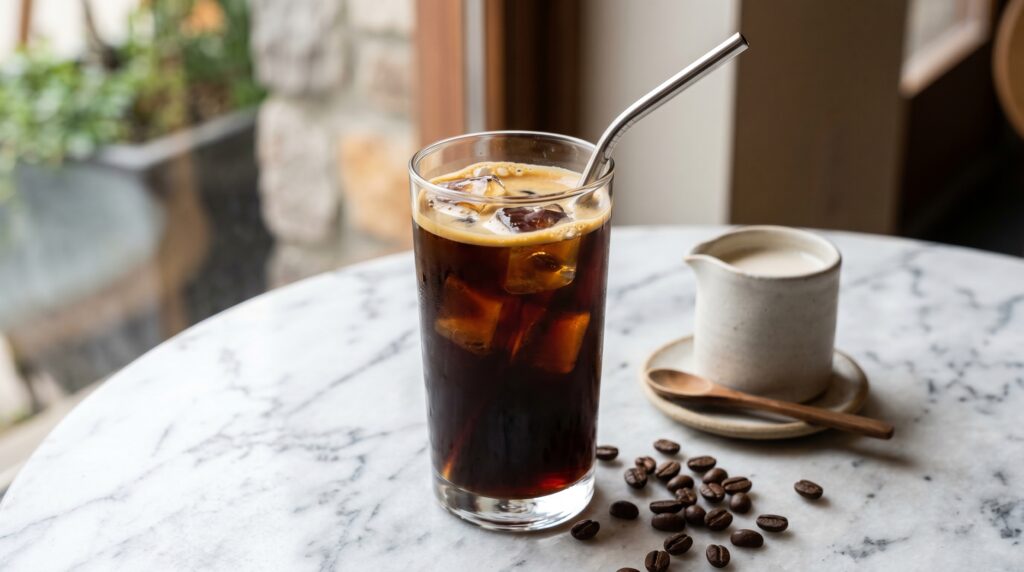
Preparation time: 5 minutes + 12–18 hours | Serves: 4–6 (concentrate)
Cold brew — coarsely ground coffee steeped in cold water for 12–18 hours — produces a concentrate of extraordinary smoothness, natural sweetness, and minimal acidity that is one of the most distinctive and refreshing coffee preparations available.
Key parameters: Coarsely ground coffee (100g), cold filtered water (700ml). Steep time: 12–18 hours refrigerated. Dilute with water or milk 1:1 before serving.
Grind size: The coarse grind is essential — fine ground coffee over-extracts in the long steep time and produces a bitter, muddy concentrate. Aim for a grind roughly the consistency of coarse sea salt.
What makes it special: Cold brew’s naturally low acidity — a result of the cool water temperature, which extracts fewer of the acids that hot water dissolves — makes it significantly gentler on the digestive system than hot coffee and naturally sweeter tasting, requiring less or no added sugar.
Variations: Serve over ice with oat milk for a cold brew latte. Add a splash of vanilla extract for vanilla cold brew. Sweeten with a simple syrup (equal parts sugar and water, heated until dissolved) for a sweetened cold brew. Float a thin layer of cream on top for a Vietnamese coffee-inspired preparation.
8. Iced Latte
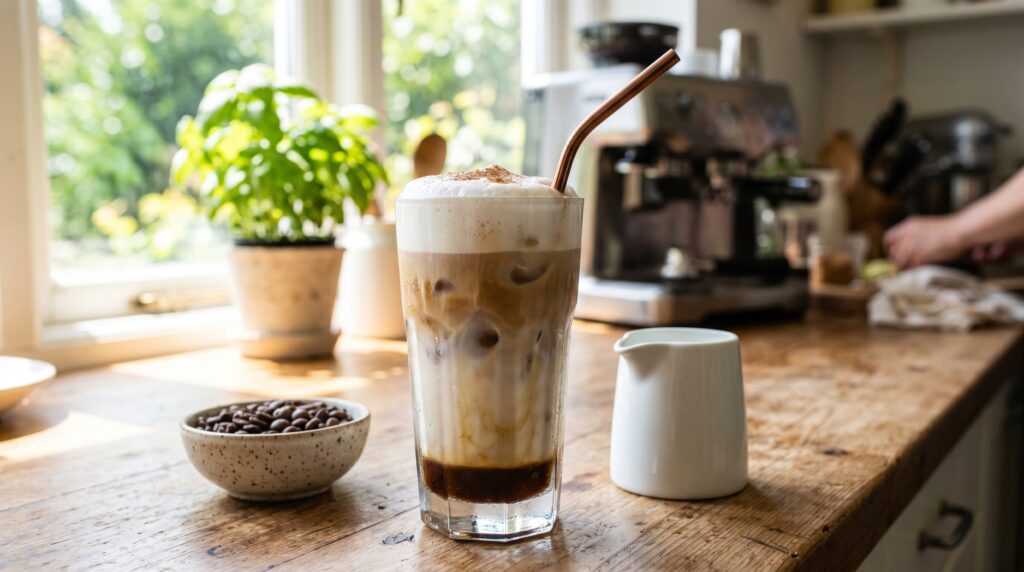
Preparation time: 5 minutes | Serves: 1
The iced latte — espresso poured over ice and cold milk — is one of the most widely consumed coffee drinks globally and one of the simplest to make at home. The key is using a double espresso (not watered-down regular coffee) and cold, full-fat milk for the best flavor and texture.
Key parameters: Double espresso (36–40g), cold whole milk or oat milk (approximately 180ml), ice (large cubes preferred — they melt more slowly).
Method: Fill a tall glass with ice. Pour cold milk over the ice. Pull the double espresso and pour over the milk — it will sink and then rise, creating the characteristic layered appearance. Stir before drinking or leave for the visual effect.
What makes it special: The contrast between the hot, just-pulled espresso and the cold milk produces a temperature gradient that creates the characteristic espresso-drizzle visual — the espresso sinking through the cold milk in a dramatic, slightly smoky, visually captivating pour.
9. Iced Americano

Preparation time: 3 minutes | Serves: 1
The iced americano — espresso diluted with cold water over ice — is the cleanest, most coffee-forward iced coffee drink. Unlike cold brew, it retains the full aromatic complexity of a freshly pulled espresso while being refreshingly cold.
Key parameters: Double espresso (36–40g), cold filtered water (120–150ml), ice.
Method: Fill a glass with ice. Add cold water. Pull the espresso and pour it over the water and ice. Stir briefly and serve immediately.
Hot-to-cold technique: Unlike a hot americano (espresso first, water second), the iced americano benefits from adding the espresso to the cold water — this rapid cooling preserves the aromatic compounds and produces a slightly different, cleaner flavor than slowly cooling hot coffee.
10. Vietnamese Iced Coffee (Cà Phê Đá)
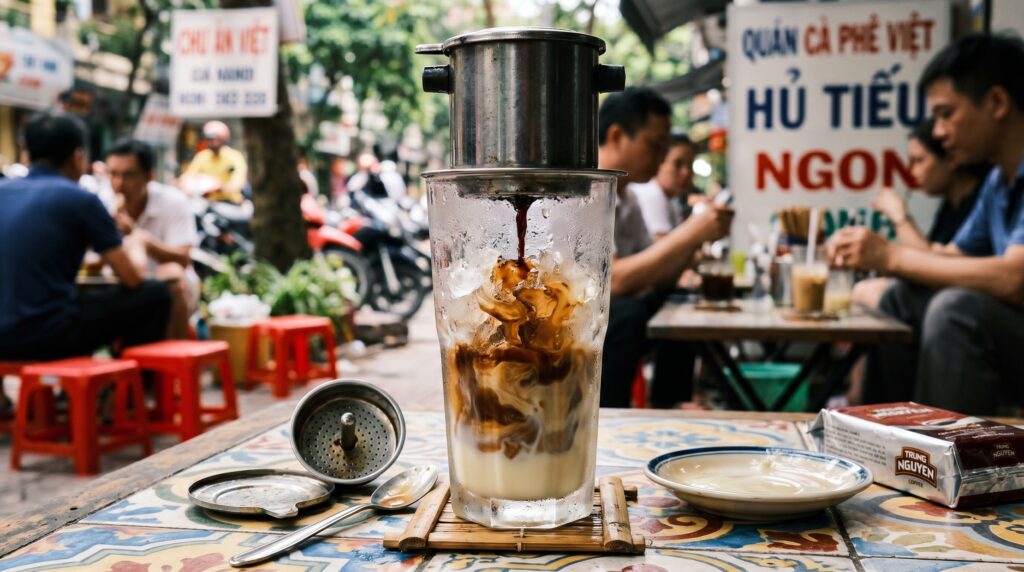
Preparation time: 10 minutes | Serves: 1
Vietnamese iced coffee — ca phe da — is one of the world’s great coffee preparations and one of the most visually beautiful. Strong, dark-roasted Vietnamese coffee dripped through a traditional phin filter over a base of sweetened condensed milk, and ice creates a drink of extraordinary sweetness, richness, and coffee intensity.
Key ingredients: Coarsely ground dark-roasted Vietnamese robusta coffee (or a strong dark roast), sweetened condensed milk (2–3 tbsp per glass), ice, Vietnamese phin filter (or strong espresso as a shortcut)
Method: Place 2–3 tablespoons of sweetened condensed milk in a glass. Place the phin filter on the glass. Add coarsely ground coffee. Place the press disc on top. Pour near-boiling water into the phin filter. Allow to drip for 3–5 minutes. The coffee drips slowly over the condensed milk. Add ice and stir before drinking.
What makes it special: The sweetened condensed milk — with its intense sweetness, slight caramel note, and thick, viscous richness — creates a completely different sweetness profile to sugar and cream. It is the ingredient that defines Vietnamese coffee and cannot be substituted for a comparable result.
11. Greek Freddo Espresso
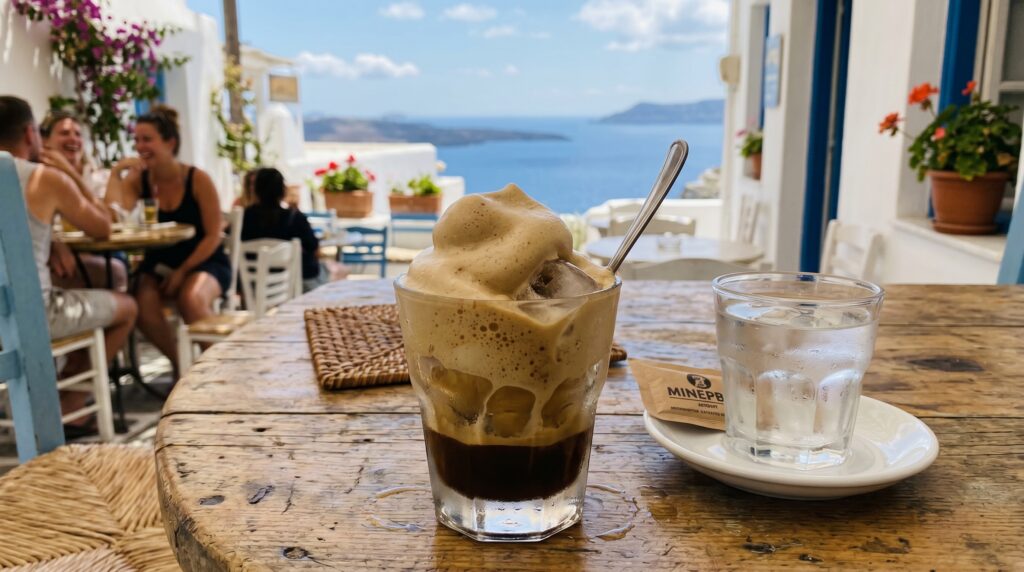
Preparation time: 5 minutes | Serves: 1
The Greek freddo espresso — a double espresso whipped with ice until it becomes a thick, creamy foam — is one of the most texturally unusual and genuinely delicious iced coffee preparations in the world. The whipping transforms the hot espresso into something between a foam and an ice cream in texture.
Key parameters: Double espresso (hot, just pulled — 36–40g), ice cubes (3–4), optional: sugar (1 tsp — added before whipping for sweetness). Equipment: electric milk frother or cocktail shaker.
Method: Pull the double espresso and pour immediately into a cocktail shaker or tall container with ice cubes and optional sugar. Shake or whip vigorously for 30–45 seconds until the coffee has transformed into a thick, pale, frothy foam. Pour over a fresh glass of ice.
What makes it special: The rapid cooling of the hot espresso, combined with the mechanical agitation of shaking, creates a micro-emulsion of espresso and air — a foam of extraordinary stability that sits above a small pool of melted espresso at the base of the glass. The texture is unlike any other coffee preparation.
Flavored and Specialty Coffee Drinks
12. Vanilla Latte
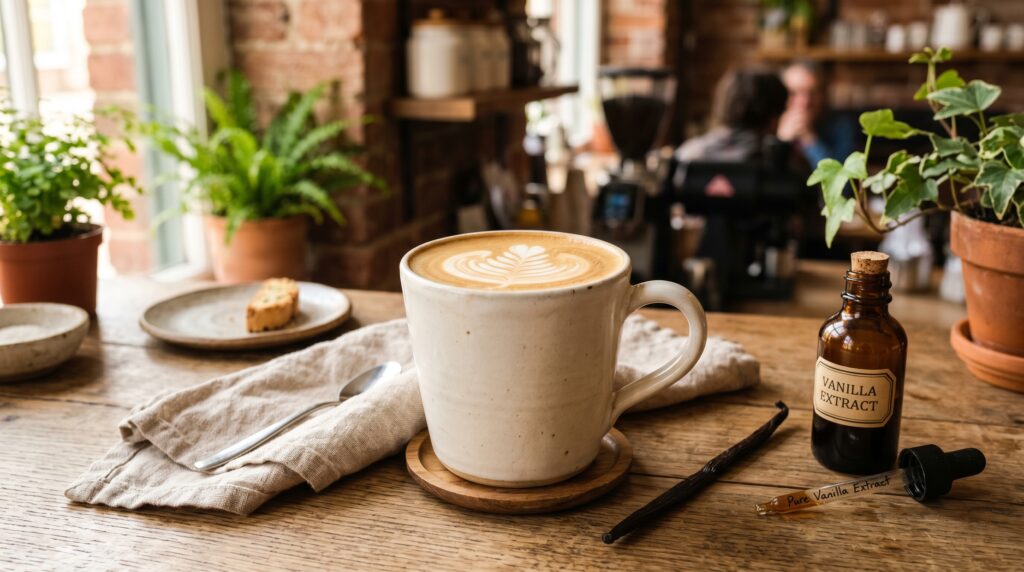
Preparation time: 6 minutes | Serves: 1
Vanilla latte is the gateway flavored latte — the warmth and sweetness of good vanilla enhancing the natural sweetness of steamed milk and the depth of espresso in a combination of genuine harmony. The key is using real vanilla rather than artificial flavoring.
Key ingredients: Double espresso, steamed oat or whole milk (200ml), vanilla simple syrup (1–2 tbsp) or vanilla extract (½ tsp added to the milk before steaming), optional: vanilla bean paste for a more intense result
Vanilla simple syrup: Combine equal parts caster sugar and water in a saucepan with one vanilla pod (split). Heat until the sugar dissolves. Cool, strain, and store refrigerated for up to 2 weeks. This syrup provides a far more complex, genuine vanilla flavor than store-bought flavored syrups.
What makes it special: Adding vanilla extract or vanilla bean paste directly to the cold milk before steaming — rather than adding syrup after — distributes the vanilla flavor evenly through the milk and allows the vanilla’s aromatic compounds to bloom during steaming, producing a more integrated flavor.
13. Caramel Macchiato
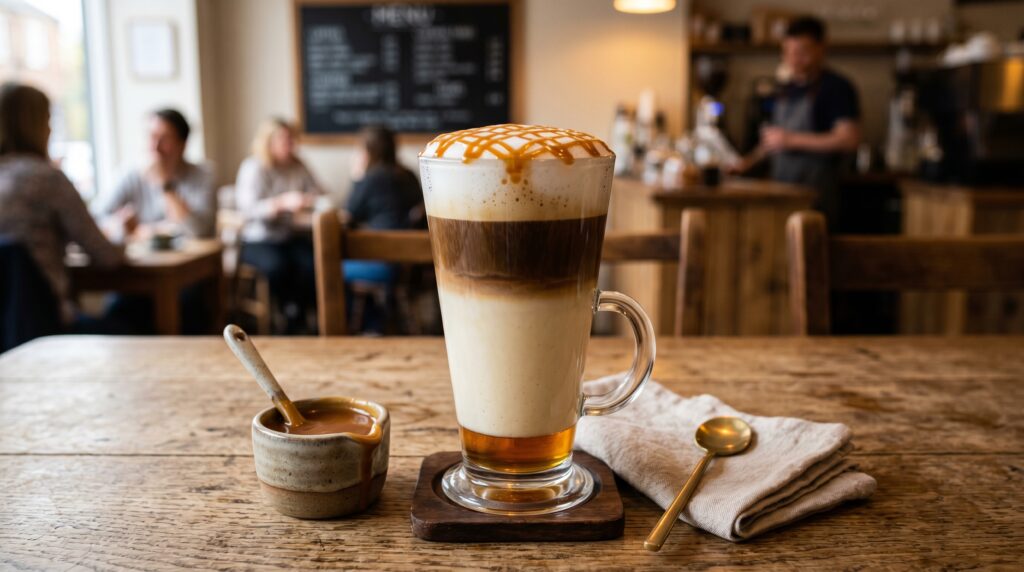
Preparation time: 8 minutes | Serves: 1
The caramel macchiato — layers of vanilla syrup, steamed milk, espresso “marking” the foam, and a caramel drizzle — is the most architecturally dramatic of the flavored espresso drinks, and when made properly with good caramel sauce and fresh espresso, it is one of the most genuinely pleasing.
Key ingredients: Double espresso, steamed milk (200ml), vanilla simple syrup (2 tbsp), caramel sauce (for drizzle and bottom), micro-foam
Method (layered construction): Add vanilla syrup to the cup. Add steamed milk, holding back the foam. Spoon the foam on top. Pull the espresso and pour slowly over the back of a spoon to float it on top of the foam — creating the “macchiato” mark. Drizzle caramel in a crosshatch pattern over the espresso.
What makes it special: The inverted construction — milk first, espresso last — means the first sip tastes of sweet, vanilla milk before the espresso is mixed in. Stirring before drinking combines all layers for a more unified flavor. Both approaches are equally correct — the experience is simply different.
14. Mocha
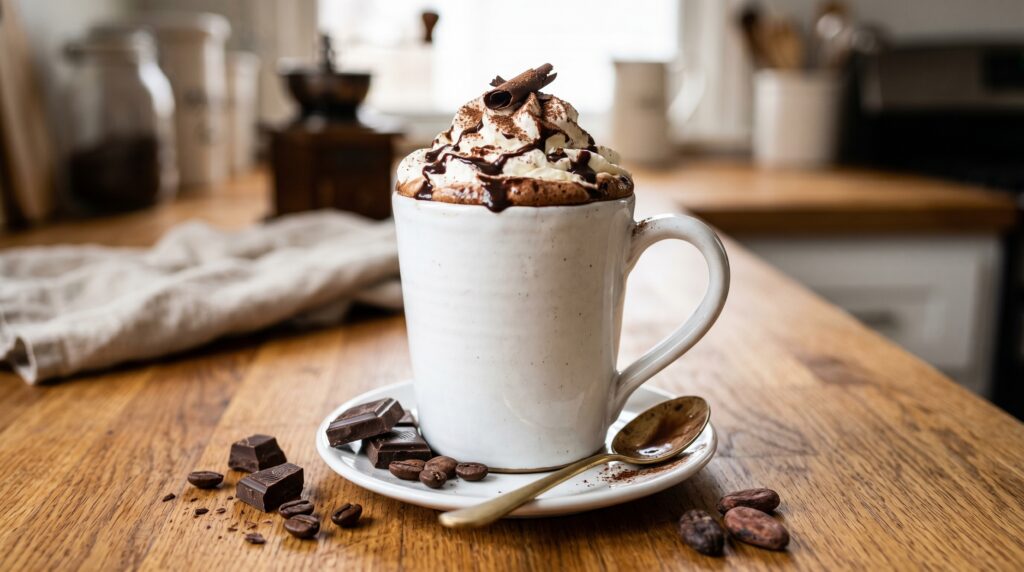
Preparation time: 8 minutes | Serves: 1
Mocha — espresso with chocolate, steamed milk, and whipped cream — is the coffee drink that most successfully bridges the coffee and dessert worlds. When made with genuinely good dark chocolate and quality espresso, it is one of the most deeply satisfying coffee preparations.
Key ingredients: Double espresso, whole milk (150ml, steamed), dark chocolate sauce (homemade: dark chocolate melted with cream and a pinch of salt — far superior to store-bought chocolate syrup), whipped cream (lightly sweetened), cocoa powder or chocolate shavings for dusting
Homemade chocolate sauce: Melt 50g of dark chocolate (70%+) with 50ml of double cream over gentle heat. Stir until smooth. Add a pinch of salt. Cool slightly before using. This sauce has a depth and bitterness that balances the coffee far better than sweet cocoa syrup.
What makes it special: The salt in the chocolate sauce — a tiny pinch — amplifies both the chocolate flavor and the coffee flavor simultaneously, making both taste more intensely of themselves. This is one of the most impactful and least-known flavor improvements in coffee drink-making.
15. Hazelnut Coffee
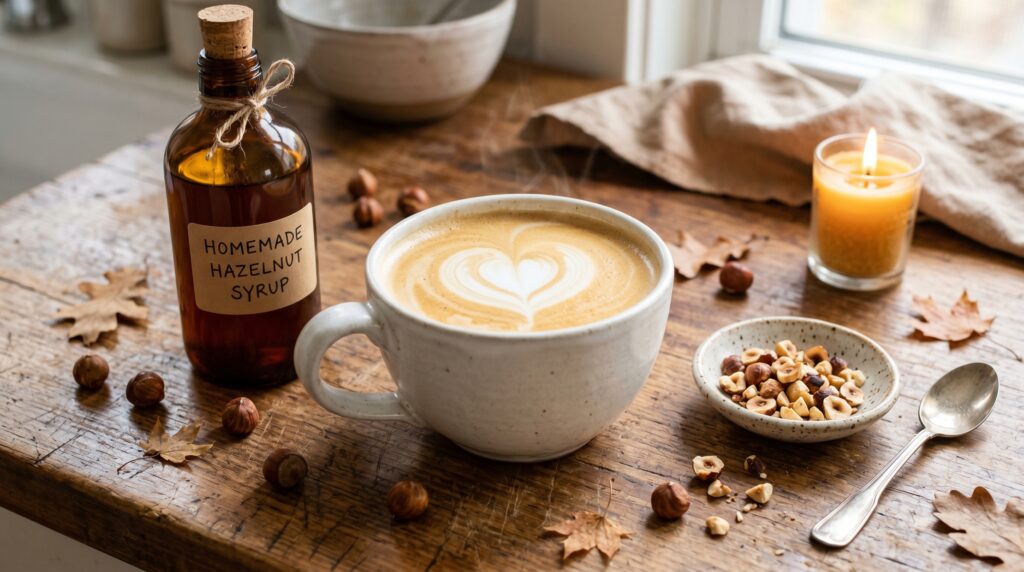
Preparation time: 6 minutes | Serves: 1
Hazelnut coffee — espresso with hazelnut syrup and steamed milk — is the most warmly autumnal of the flavored lattes, the nutty, slightly sweet hazelnut complementing the roasted character of espresso with a natural affinity.
Key ingredients: Double espresso, steamed milk (200ml), hazelnut syrup (homemade: caster sugar + water + toasted hazelnut halves — simmered and strained), optional: a splash of vanilla extract
Homemade hazelnut syrup: Toast 100g of hazelnuts in a dry pan until golden and fragrant. Combine with 200g sugar and 200ml water in a saucepan. Simmer for 5 minutes. Cool and strain through a fine sieve. Refrigerate for up to 2 weeks. The depth of flavor from homemade hazelnut syrup versus commercial imitation is genuinely remarkable.
What makes it special: Using homemade hazelnut syrup — made from actual toasted hazelnuts — produces a subtle, genuine nuttiness that synthetic hazelnut flavoring completely fails to replicate. The slightly bitter, slightly sweet, deeply roasted character of real hazelnut is one of coffee’s most natural flavor partners.
16. Cinnamon Spice Latte
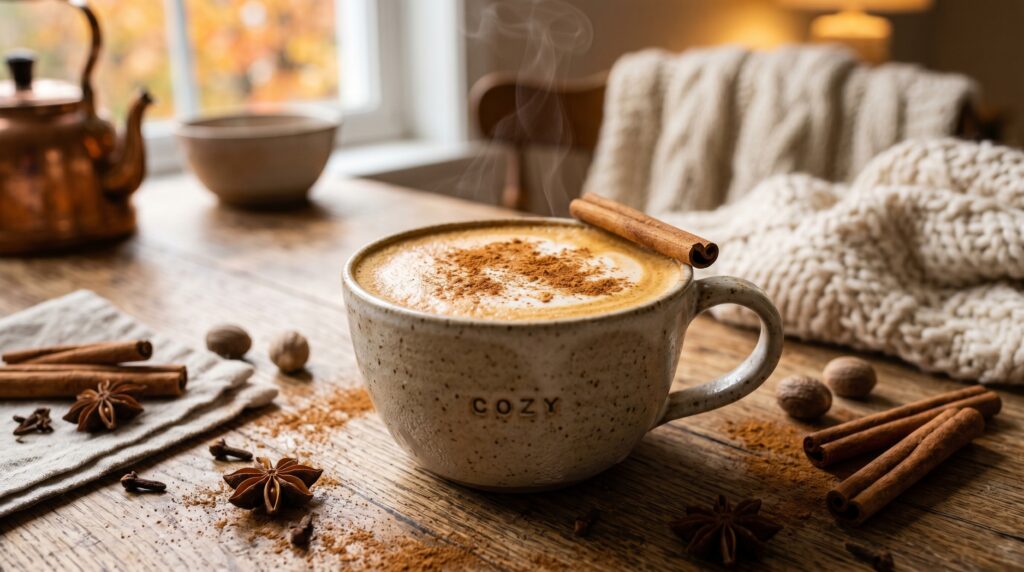
Preparation time: 8 minutes | Serves: 1
Cinnamon spice latte captures the warming, aromatic comfort of autumn in a coffee cup — cinnamon and warming spices combined with espresso and steamed milk create a drink that is both deeply comforting and genuinely complex in flavor.
Key ingredients: Double espresso, steamed milk (200ml), cinnamon simple syrup (caster sugar, water, and 2 cinnamon sticks — simmered and strained), ground cinnamon (for dusting), optional: a pinch of ground cardamom, nutmeg, and clove added to the milk before steaming for a chai-spice character
What makes it special: Adding the spices directly to the cold milk before steaming — rather than simply dusting on top — allows the heat of steaming to bloom the spice’s essential oils into the milk, creating an integrated, aromatic flavor throughout rather than a simple topping.
17. Lavender Latte
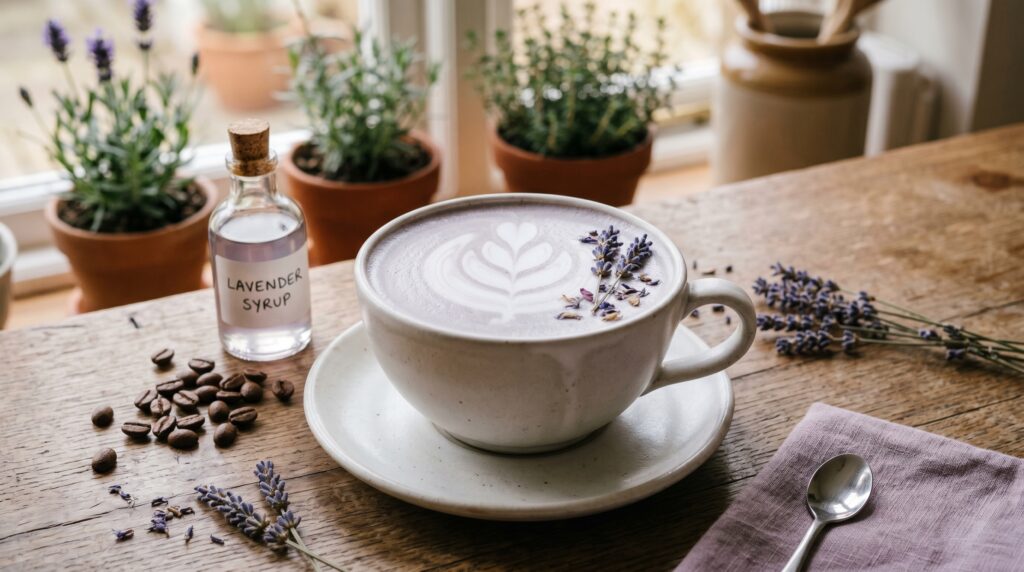
Preparation time: 7 minutes | Serves: 1
Lavender latte is the most unexpectedly beautiful flavored coffee drink — the floral, slightly herbal, honey-like character of culinary lavender in steamed milk with espresso creates a drink of genuine sophistication and surprising flavor harmony.
Key ingredients: Double espresso, steamed oat milk (200ml — oat milk’s creaminess and neutral sweetness complement lavender beautifully), lavender simple syrup (culinary-grade lavender — not ornamental — simmered with sugar and water, then strained carefully)
Lavender quantity caution: Lavender is extraordinarily powerful — too much produces a drink that tastes of soap or perfume. Start with a restrained amount of syrup and increase cautiously. The lavender should be present as a subtle, aromatic note rather than the dominant flavor.
What makes it special: Oat milk rather than dairy milk allows the delicate floral character of the lavender to come through more clearly — the neutral, slightly sweet oat milk provides a less assertive base than whole milk’s richness, giving the lavender more space to express itself.
Spiced and International Coffee Drinks
18. Masala Chai Coffee (Dirty Chai)
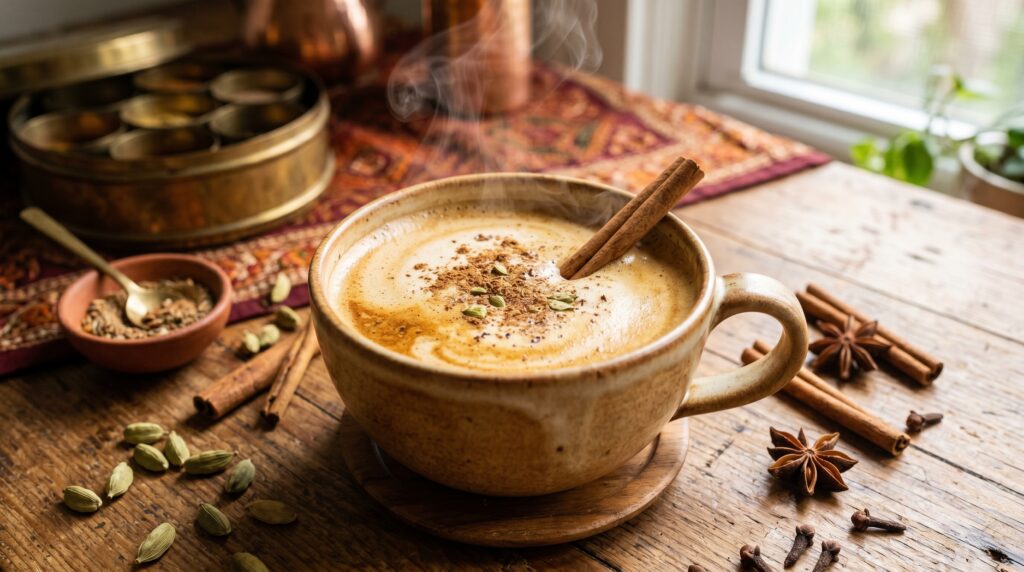
Preparation time: 15 minutes | Serves: 1
Dirty chai — masala chai with a shot of espresso — is the hybrid drink for those who cannot choose between coffee and tea. The warming, complex spices of masala chai (cardamom, ginger, cinnamon, clove, black pepper) combined with the depth of espresso creates a drink of extraordinary aromatic richness.
Key ingredients: Masala chai base (whole milk, strong black tea, green cardamom pods, fresh ginger, cinnamon stick, whole cloves, black peppercorns, sugar — simmered and strained), double espresso
Method: Make the masala chai (bring spices, milk, and water to a simmer, add tea, simmer 3 minutes, strain). Pull the double espresso. Combine — either pour the espresso into the chai or pour the chai over the espresso.
What makes it special: The espresso’s roasted, slightly bitter depth creates a contrast with the sweet, spiced chai that makes both components taste more interesting together than separately. The bitterness of the coffee plays against the warmth of the spices in a way that tea alone or espresso alone cannot achieve.
19. Cardamom Coffee (Arabic Style)

Preparation time: 10 minutes | Serves: 4
Arabic coffee — qahwa — brewed with lightly roasted green or golden coffee beans and cardamom, is one of the world’s oldest coffee preparations and one of the most distinctively flavored. The light roast produces a completely different flavor profile to the dark-roasted espresso tradition — floral, slightly grassy, with a warm cardamom fragrance.
Key ingredients: Lightly roasted Arabic coffee (qahwa) or light roast coffee (coarsely ground), green cardamom pods (lightly crushed — approximately 1 pod per cup), water, optional: saffron (a few threads for a golden color and floral note), optional: rose water (a few drops)
Method: Bring water to a boil with crushed cardamom pods. Add the ground light roast coffee. Reduce the heat and simmer gently for 10 minutes — do not boil vigorously. Strain through a fine sieve into a dallah (traditional Arabic coffee pot) or directly into small cups. Serve with dates.
What makes it special: The light roast of Arabic coffee — golden, not dark brown — retains flavor compounds that dark roasting destroys, producing a coffee with a floral, slightly grassy, more delicate character than any dark-roasted preparation. Combined with cardamom, it is a uniquely aromatic experience.
20. Turmeric Latte with Espresso Shot (Golden Coffee)
Preparation time: 10 minutes | Serves: 1
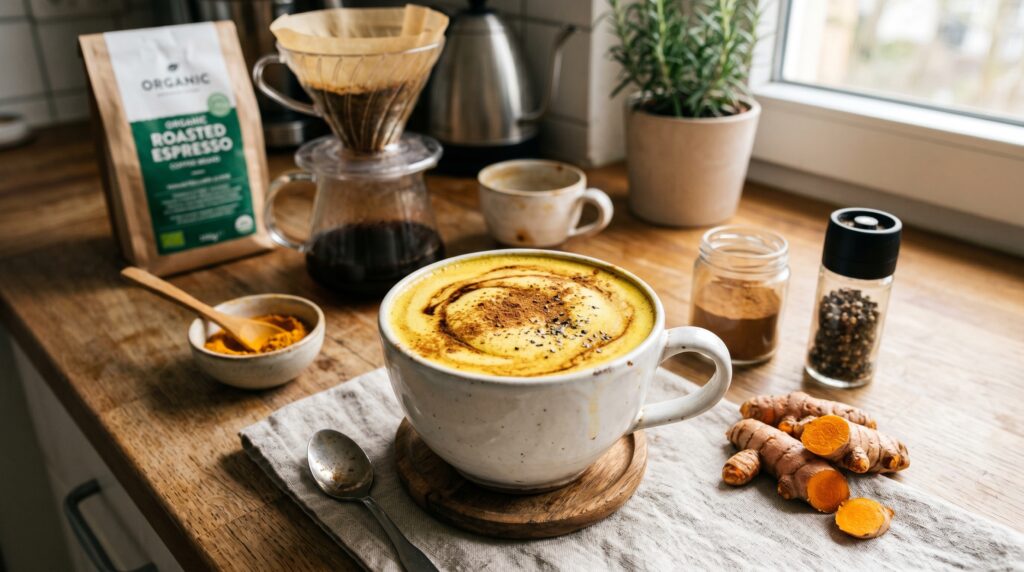
Golden coffee — a turmeric golden latte with a shot of espresso added — is the unexpected but genuinely delicious combination that provides all the warming, anti-inflammatory benefits of turmeric alongside the depth and energy of espresso.
Key ingredients: Whole milk or oat milk (250ml), ground turmeric (1 tsp), ground cinnamon (½ tsp), ground ginger (¼ tsp), freshly ground black pepper (a generous pinch — essential for curcumin absorption), honey (1 tsp), double espresso
Method: Warm the milk with all spices, whisking continuously until steaming. Add honey. Pull the double espresso. Combine — pour the spiced milk over the espresso or vice versa.
What makes it special: The black pepper — physiologically essential for maximum curcumin bioavailability — also adds a barely perceptible warmth that makes the combination more interesting. It is invisible as a flavor, but its absence makes the drink noticeably less complex.
Dessert and Indulgent Coffee Drinks
21. Affogato
Preparation time: 3 minutes | Serves: 1
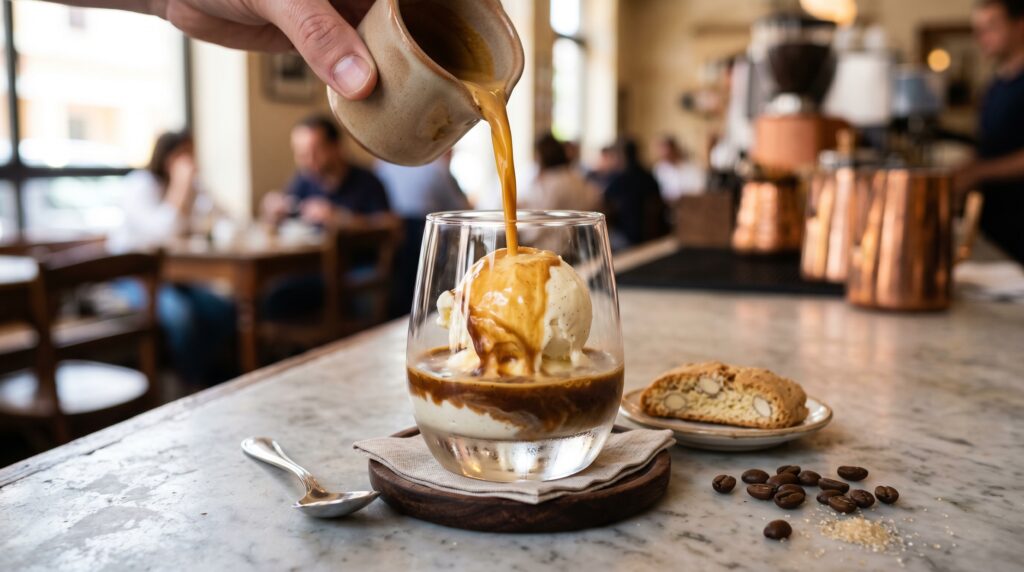
Affogato — a scoop of vanilla gelato or ice cream “drowned” in a hot shot of espresso — is the simplest, most elegant dessert-coffee hybrid in existence. Two ingredients, zero technique, maximum impact. The moment the hot espresso meets the cold ice cream is one of the most immediately beautiful things in all of food service.
Key ingredients: Premium vanilla gelato or ice cream (1–2 scoops), double espresso (hot, just pulled — 36–40g)
Method: Place the gelato in a chilled glass or bowl. Pull the espresso. Pour immediately over the gelato at the table — the pouring should be witnessed by the person eating it; this is a presentation as much as a recipe.
Serving temperature: The contrast between the hot espresso and the cold gelato is the entire experience — serve the gelato frozen hard and pour the espresso at maximum heat for the most dramatic, most delicious result.
What makes it special: The partial melting of the gelato creates a naturally sweetened, vanilla-flavored coffee cream in the glass that is neither ice cream nor espresso but a third thing — an in-between liquid of extraordinary, complex, bittersweet pleasure.
Variations: Use salted caramel gelato for an extra dimension. Add a splash of cold brew instead of espresso for a different character. Place a small biscotti or amaretti biscuit alongside for dunking into the melted affogato liquid.
22. Coffee Smoothie
Preparation time: 5 minutes | Serves: 1
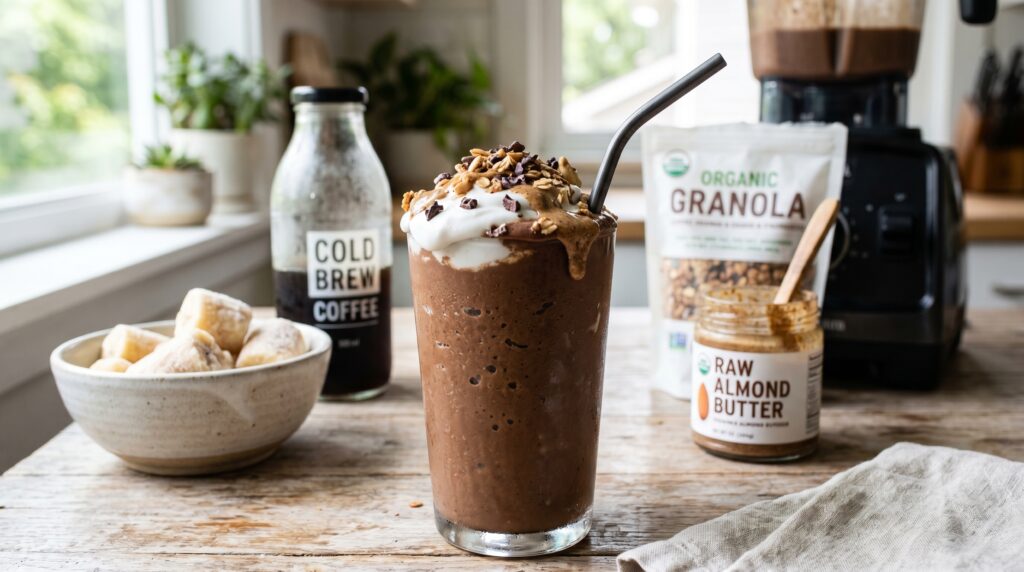
The coffee smoothie is the breakfast coffee and morning meal in a single glass — cold brew, frozen banana, almond butter, and oat milk blended into a thick, protein-rich, energizing preparation that is genuinely satisfying as a complete breakfast.
Key ingredients: Cold brew concentrate (120ml), frozen banana (1 — provides natural sweetness and thick, creamy texture), almond butter (1 tbsp), oat milk (100ml), raw cacao powder (1 tbsp), a pinch of cinnamon, ice (optional — for extra thickness)
Method: Blend all ingredients until completely smooth. The frozen banana provides the thick, creamy base that makes this smoothie genuinely substantial. Taste and adjust — add more cold brew for a stronger coffee flavor, more banana for sweetness.
What makes it special: The frozen banana — acting as both a natural sweetener and texture agent — produces a smoothie with a milkshake-like consistency without any ice cream or dairy, making this simultaneously the most indulgent-tasting and most nutritionally balanced coffee drink in the collection.
23. Dalgona Coffee
Preparation time: 5 minutes | Serves: 1
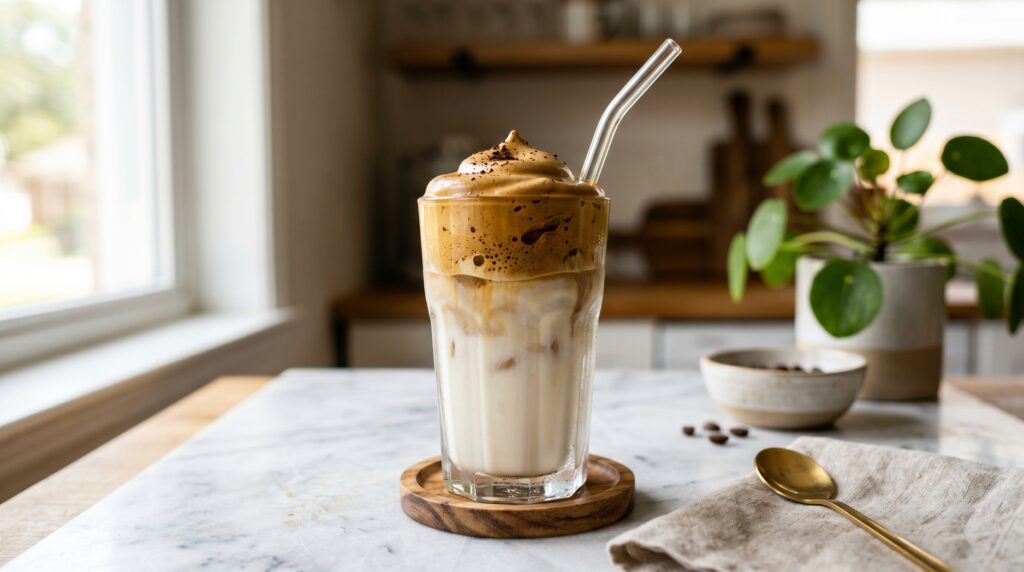
Dalgona coffee — the social media phenomenon of 2020 — takes instant coffee, sugar, and hot water whipped to a thick, pale, meringue-like foam, and spoons it over cold milk. Visually dramatic, surprisingly delicious, and achievable without any equipment.
Key ingredients: Instant coffee (2 tbsp — instant coffee is essential for the whipping properties; espresso cannot be whipped this way), caster sugar (2 tbsp), hot water (2 tbsp), cold milk or oat milk (200ml), ice
Method: Combine instant coffee, sugar, and hot water in a bowl. Whip vigorously with a hand whisk, electric beater, or milk frother for 3–5 minutes until the mixture transforms into a thick, pale, glossy foam that holds stiff peaks — like a coffee meringue. Spoon over cold milk in a glass. Stir before drinking.
What makes it special: The whipping creates a foam of remarkable stability — the coffee foam sits on the milk for 10–15 minutes without collapsing. The experience of stirring the contrasting foam into the cold milk is both visually satisfying and produces a coffee with an unusually smooth, slightly sweet, creamy character.
24. Coffee Tonic
Preparation time: 5 minutes | Serves: 1
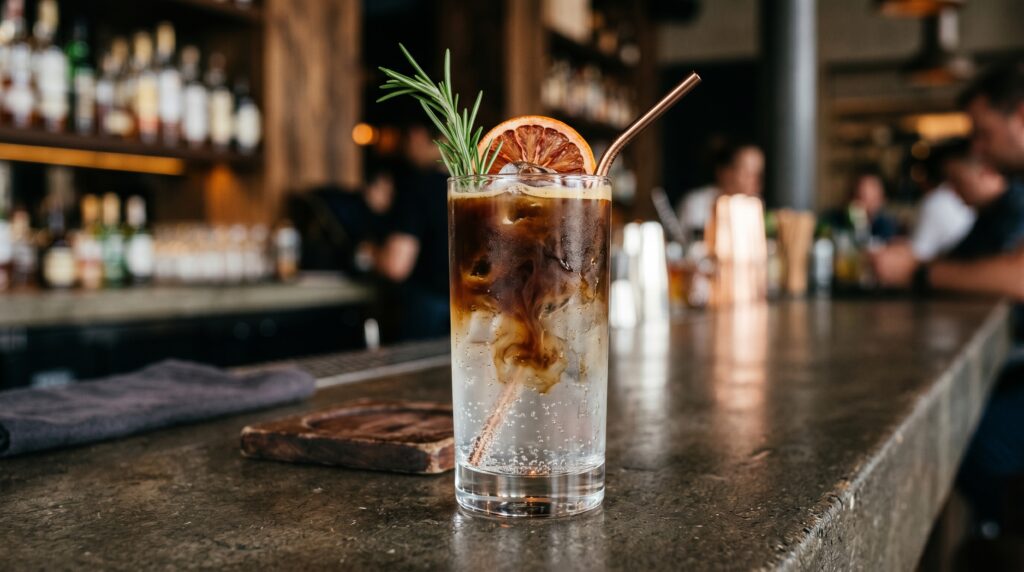
Coffee tonic — espresso poured over tonic water and ice — is the most unexpected and most impressive coffee drink in this collection. The slight bitterness of the tonic water echoes and amplifies the espresso’s character while the effervescence creates a texture of extraordinary liveliness. It should not work. It absolutely works.
Key ingredients: Double espresso (cold or hot — cold produces a more layered visual), premium tonic water (120–150ml), ice, optional garnish: orange or lemon slice, fresh rosemary or thyme
Method: Fill a tall glass with ice. Add the tonic water first — never the reverse (adding tonic to espresso flattens all the carbonation). Carefully pour the cold or room-temperature espresso over the back of a spoon so it floats on the tonic. Do not stir — serve layered and let the drinker combine.
What makes it special: The espresso’s oils create a dramatic visual as they settle through the carbonated tonic — a cloud of dark, smoky coffee dispersing through clear, effervescent liquid. The combination of coffee bitterness, tonic bitterness, citrus from the garnish, and carbonation creates a drink of extraordinary complexity.
25. Iced Chocolate Coffee (Mocha Frappé)
Preparation time: 8 minutes | Serves: 1
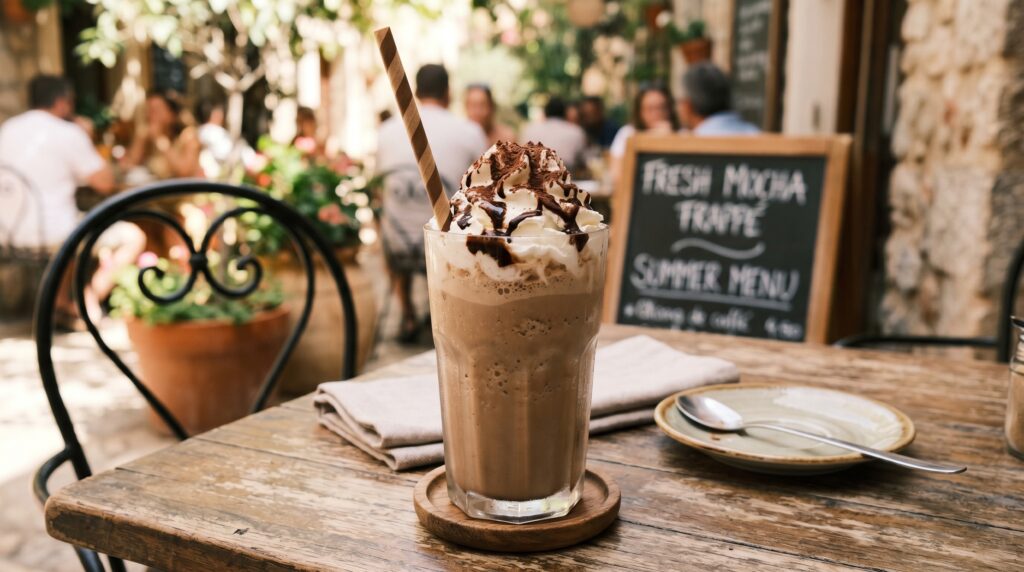
The mocha frappé — blended coffee, chocolate, milk, and ice — is the most indulgent, most dessert-like coffee drink in this collection, combining all the pleasure of a coffee shop frozen blended drink with the quality advantage of homemade ingredients.
Key ingredients: Double espresso (cooled), whole milk (100ml), dark chocolate sauce (homemade — as in recipe 14), ice (a generous amount — 200g), sweetener to taste. Toppings: whipped cream, extra chocolate sauce, cocoa powder
Method: Blend the cooled espresso, milk, chocolate sauce, sweetener, and ice on high power until completely smooth and thick — the consistency should be between a thick smoothie and a soft serve ice cream. The more ice, the thicker the result. Pour into a tall glass and top generously with whipped cream and chocolate drizzle.
What makes it special: Using homemade dark chocolate sauce — with real dark chocolate and cream — rather than commercial chocolate syrup produces a mocha frappé of genuinely complex, slightly bitter chocolate depth that commercial versions with sweet cocoa syrup cannot approach. The quality of the chocolate is as important as the quality of the coffee.
Coffee Drink Quick Reference
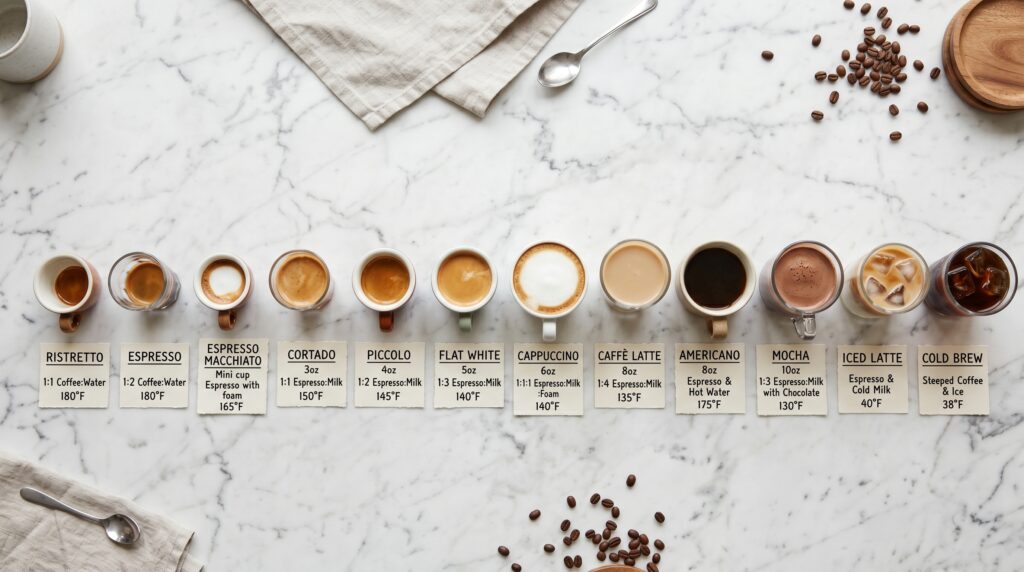
| Drink | Espresso Base | Milk | Volume | Temperature | Character |
|---|---|---|---|---|---|
| Espresso | Double | None | 36–40ml | Hot | Intense, concentrated |
| Macchiato | Double | Tiny foam | 50ml | Hot | Bold with slight creaminess |
| Flat White | Double ristretto | 120ml | 160ml | Hot | Intense, creamy |
| Cappuccino | Double | 60ml + 60ml foam | 160ml | Hot | Balanced, foamy |
| Cortado | Double | 40ml | 80ml | Hot | Bold, slightly creamy |
| Americano | Double | None (water) | 200ml | Hot | Clean, black |
| Latte | Double | 200ml | 240–300ml | Hot | Gentle, creamy |
| Cold Brew | None (steeped) | Optional | 240ml | Cold | Smooth, low-acid |
| Iced Latte | Double | 180ml cold | 240ml | Cold | Refreshing, creamy |
| Vietnamese Iced | Double/Drip | Condensed milk | 200ml | Cold | Sweet, intense |
| Dalgona | Instant | 200ml cold | 250ml | Cold | Sweet, foamy |
| Affogato | Double | Ice cream | 100ml | Hot+Cold | Sweet, dramatic |
Home Coffee Brewing Guide by Equipment
No Espresso Machine Options
Moka Pot (Stovetop Espresso): Produces a strong, concentrated coffee closer to espresso than drip but without the pressure. Use for espresso-based recipes — the slightly different extraction character is excellent in its own right. Use fine-medium grind.
AeroPress: Produces an espresso-strength concentrated coffee with remarkable versatility and a clean, bright flavor. Use fine-medium grind and a 1–2 minute steep. The pressure of pressing amplifies extraction.
French Press: For cold brew, americano-style black coffee, and any recipe calling for a strong concentrate diluted with milk. Use coarse grind and a 4-minute steep.
Pour-Over (V60, Chemex): For black coffee drinks and cold brew. Produces the most nuanced, cleanest expression of a coffee’s origin character. Use medium-fine grind.
Milk Alternatives Guide
| Milk | Texture When Steamed | Flavor | Best For |
|---|---|---|---|
| Whole milk | Silky, thick, stable foam | Creamy, slightly sweet | Traditional lattes, cappuccinos |
| Oat milk | Excellent — creamy and stable | Slightly sweet, neutral | Any latte, lavender and floral drinks |
| Almond milk | Thinner, less stable | Slightly nutty | Lighter drinks, iced lattes |
| Coconut milk | Rich but separates | Tropical, sweet | Iced drinks, cold brew |
| Soy milk | Good foam stability | Slightly beany | Hot lattes |
Frequently Asked Questions
What is the difference between a latte and a flat white?
A flat white uses a double ristretto (shorter, sweeter extraction) rather than a standard double espresso, has less milk (approximately 120ml versus 200ml), and is served in a smaller cup (160ml versus 240ml+). The result is a more intense, more espresso-forward drink with less milk sweetness. A latte is larger, gentler, and more milk-forward.
Can I make espresso-based drinks without an espresso machine?
Yes — a Moka pot (stovetop espresso maker) produces a concentrated, strong coffee that works well in all espresso-based recipes. An AeroPress can also produce espresso-strength concentrated coffee. The flavor profile differs slightly from true espresso (which requires 9 bars of pressure) but is genuinely good and perfectly suitable for lattes, mochas, and flavored drinks.
Why does my homemade latte taste bitter?
Over-extracted espresso produces bitter coffee that no amount of milk can rescue. Check the grind (too fine produces bitter over-extraction), the dose (too much coffee), and the extraction time (too long). A properly extracted espresso should taste sweet, slightly fruity, and complex — not bitter or harsh.
How do I froth milk without a steam wand?
Use a battery-powered milk frother (inexpensive and very effective), shake vigorously in a sealed jar, then microwave for 30 seconds, or use a French press — pump the plunger rapidly in warm milk for 30–40 seconds to create foam. None of these methods produces the micro-foam quality of a steam wand, but all create usable foam for home lattes.
What coffee roast is best for lattes and milk-based drinks?
Medium to medium-dark roast coffees perform best in milk-based drinks — their caramel, chocolate, and nutty notes complement milk sweetness better than the bright, acidic fruit notes of light roasts, which can become lost in milk. For black coffee preparations (americano, pour-over, cold brew), light to medium roasts reveal more complex, origin-specific flavors.
According to the Specialty Coffee Association, specialty coffee — defined as coffee scoring 80 points or above on a 100-point quality scale — represents the highest tier of the global coffee supply chain and is grown, processed, and roasted with attention to quality at every stage. Using specialty-grade coffee in any of these recipes produces a dramatically better result than commodity-grade coffee, regardless of preparation technique.
Conclusion
From the concentrated perfection of a properly pulled espresso to the indulgent drama of an affogato, from the smooth, low-acid depth of cold brew to the warming, aromatic richness of masala chai coffee, from the unexpected sophistication of a coffee tonic to the pure, nostalgic sweetness of Vietnamese iced coffee — these 25 irresistible coffee drink recipes demonstrate the extraordinary breadth and depth of what coffee, approached with care and curiosity, can be.
What elevates a coffee drink from ordinary to genuinely irresistible is never a single factor but the combination of all of them — the quality of the bean, the freshness of the grind, the precision of the extraction, the temperature and texture of the milk, and the intention behind every addition. Coffee prepared with attention and made from genuinely good ingredients is one of the most immediately rewarding sensory experiences available in daily life.
Invest in good beans. Buy a burr grinder. Learn to steam milk properly. Make simple syrups from real ingredients. And discover that the best coffee you have ever tasted is waiting to be made in your own kitchen.
For more drink recipes, technique guides, and culinary inspiration across every category and skill level, explore our full collection at skillsinthekitchen.com.